Is The Opera In Verona Worth It?
An opera night at the Arena di Verona is a 2,000-year-old amphitheatre, an open sky and ticket prices from the EUR 30s. Here is what the official sources say it is worth.
The Arena di Verona, the first-century Roman amphitheatre at the edge of Piazza Bra, stages its opera festival under the open sky every summer, and the question is fair: the stone seats are hard, the night starts late and the cheapest tickets sit far from the stage. The festival's 2026 edition, the 103rd, ran 5 June to 12 September, and the Arena's own site has already announced the 104th for 11 June to 11 September 2027, so this is a summer institution with a long runway, not a one-off. This page sets out what the official sources say about the experience, the prices and the fine print, so the decision rests on facts rather than on postcard romance. Verona itself is an inland city on the Adige in Veneto, a UNESCO World Heritage Site since 2000, and the Arena is its centre of gravity.
Is The Opera In Verona Worth It?
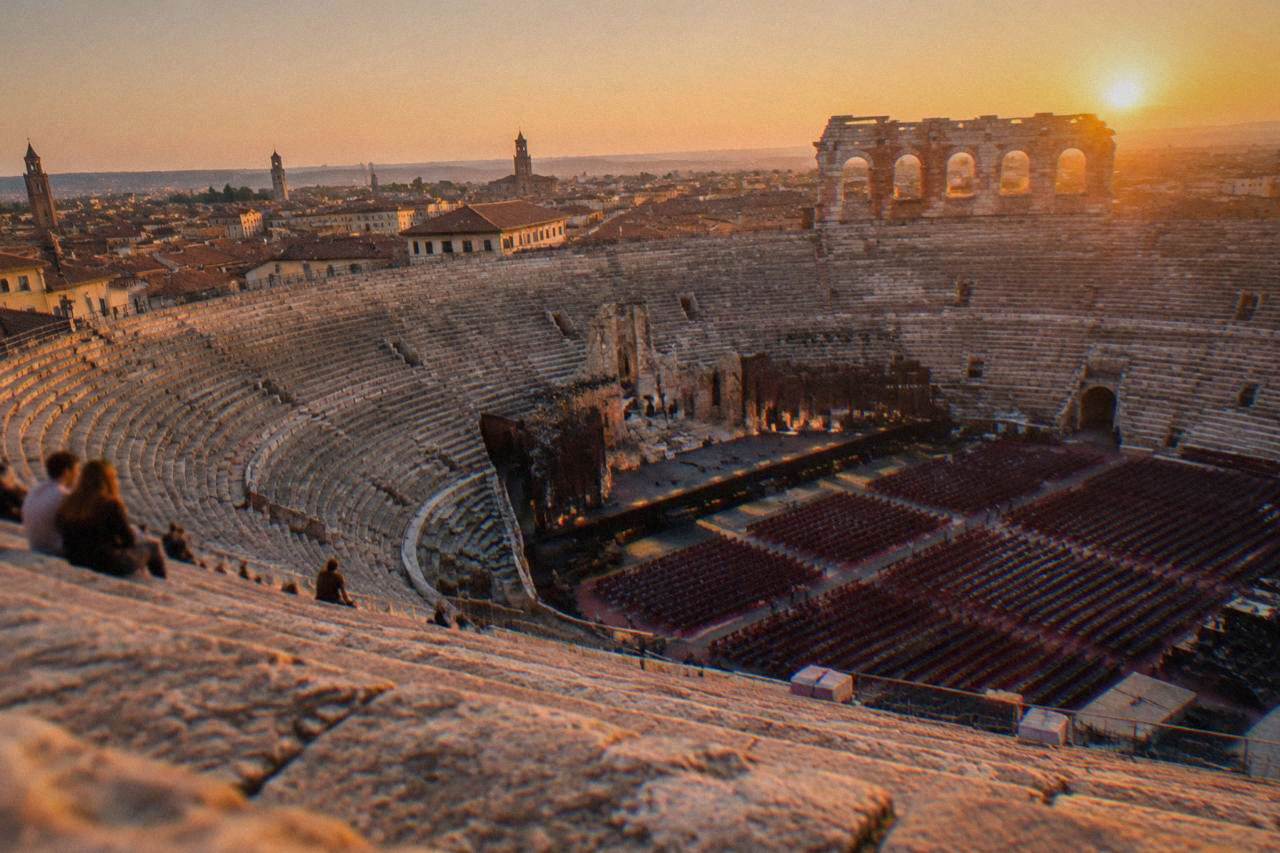
Yes, for the setting alone: the Arena di Verona's own site describes a Roman amphitheatre of about 30 AD holding roughly 30,000 spectators per opera evening, which no conventional opera house in Italy offers, and stone-step seats start in the EUR 30s, a price tier that indoor theatres rarely match for a night of this scale. It is worth it if you accept an amplified, open-air production and a late start, and less worth it if you want close sightlines or a conventional auditorium.
That is the honest frame. An Arena night is a spectacle first and a vocal experience second: the amphitheatre is vast, the sound is carried by a large sound system, and the staging is built to be read from the top rows of the cavea. People who enjoy it treat the evening as theatre-plus-architecture. People who do not usually wanted the acoustic intimacy of an opera house and found a stadium instead.
The economics help. With entry-level stone steps in the EUR 30s and a full festival that runs from mid-June into September, a visitor staying two or three days in summer has several chances to fit a night in. The Verona Italy Travel Guide editorial desk's view, built from the Arena's published material: the value question answers itself for anyone already curious, and the practical questions, seats, weather, timing, are where the real planning sits. Those follow.
What Makes An Opera Night At The Verona Arena Different?
The difference is scale and antiquity: the Arena's own pages place its construction around 30 AD, between the reigns of Augustus and Claudius, and give its current opera configuration at about 30,000 seats, numbers reported by the Arena di Verona's own history pages and worth confirming there before quoting them onward. The Colosseum in Rome, by comparison, is dated around 80 AD, so the Verona building is the earlier of the two.
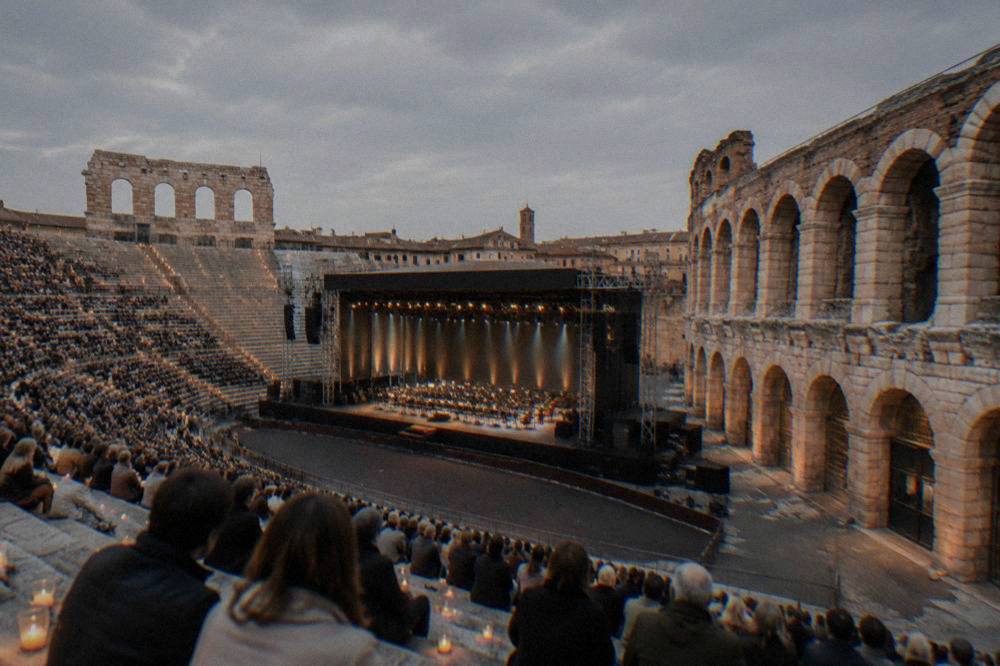
Practically, three things separate the evening from a normal opera night. First, it happens outdoors: the sky darkens during the first act in June, and the building's pink-amber stone holds the day's heat well into the night. Second, the works are staged on a monumental scale, with sets and casts sized for a spectator 80 metres from the stage. Third, the audience behaves like a festival crowd, not a recital audience: the Arena's terms ask visitors to arrive at least an hour early, and gates open about two hours before curtain.
The 2026 season, the longest in the festival's history according to the Arena's own announcement, offered a new production of La Traviata alongside Aida in two stagings, Nabucco, La Boheme and Turandot. The 2027 programme titles had not been announced when the season dates were published, so check the Arena's own pages for the works before booking travel around a specific title. For a fuller picture of the festival's structure, see the site's Verona Opera Festival guide, and for the building's daytime visit at 12 euro full price, the separate Arena di Verona guide covers it.
What Do Verona Opera Tickets Cost And How Do The Sectors Work?
Stone-step seats, the gradinata sectors, start in the EUR 30s, which is the only price wording this page can responsibly print, because the Arena's rates page carries the full sector table and prices move by date, title and sector. Above the steps, numbered stalls and premium sectors rise steeply in price toward the sections closest to the stage, and reduced rates exist for younger audiences, again per the Arena's own ticketing pages. Confirm the current price on the Arena's own ticket page before booking.
The sector logic matters more than any single figure. The gradinata is the amphitheatre's original stone seating, raked and numbered in part, and it trades comfort and proximity for price. The numbered stalls sectors sit on the flat where the Roman arena floor was, closer to the orchestra and the stage. There is no wrong answer between them, only a trade: the steps give the panorama of the full cavea, the floor gives the performance.
| What you are buying | What the official pages say | What to check before you go |
|---|---|---|
| Stone-step (gradinata) seats | Start in the EUR 30s, per the Arena's rates page | Exact sector price for your date, on the Arena's ticket page |
| Numbered stalls sectors | Priced above the steps, rising by sector and title | The rates-and-sectors page on the Arena's own site |
| Reduced rates | Offered for younger audiences, per the Arena's pages | Eligibility rules on the same ticketing page |
| Daytime Arena visit (not opera) | 12 euro full, 9 euro reduced, 3 euro for visitors aged 18 to 25 from EU and reciprocity countries, per the Comune di Verona's price list | Opening calendar, closed Mondays, early close on show days |
One structural point: a daytime visit and an opera ticket are two separate purchases. The amphitheatre is open to visitors by day for 12 euro full price, closing early on performance days, and the evening festival is ticketed entirely separately. Anyone trying to bundle both into one day should check the Arena's calendar first, because a show day cuts the visiting window short.
How Does An Opera Evening In Verona Actually Run?
Performances begin around 21:00 to 21:30 in June and earlier as the season moves toward September, gates open about two hours before the start, and the Arena's terms ask spectators to arrive at least an hour early, so the whole evening runs late and finishes after midnight in the early season. Small backpacks, a cushion and an umbrella are permitted subject to security checks, and no strict dress code appears on the official pages, so check the terms before you go.
The late start is not an inconvenience, it is climate design. July's mean daily high is 29.3 C in the ERA5 reanalysis for Verona, 1991-2020, and the stone amphitheatre holds that heat after sunset, so the schedule pushes the performance into the cooler hours. That also means the walk back to a hotel crosses the historic centre late at night, which the site's page on walking Verona after dark covers in detail.
| Part of the evening | What the Arena's terms and FAQ report |
|---|---|
| Gates | Open about two hours before the scheduled start |
| Arrival | The Arena asks visitors at least one hour before curtain |
| Start time | Around 21:00 to 21:30 in June, earlier later in the season |
| Bags and cushions | Small backpacks, a cushion and an umbrella permitted, subject to security checks |
| Rain | Never cancels a show before the scheduled start; delays up to 150 minutes or suspension possible |
The rain rule deserves its own sentence, because it surprises people. A performance is never cancelled before its scheduled start, per the Arena's terms: it may be delayed up to 150 minutes or suspended mid-performance, and once a performance has started there is no refund. The practical reading is to bring the permitted umbrella, treat a storm as a waiting game, and accept that a suspension part-way through is a real possibility in an open-air theatre. For what to wear, the site's page on dressing for the Arena works through the clothing question from the same official terms.
What If The Opera Schedule Or The Stone Steps Do Not Work For You?
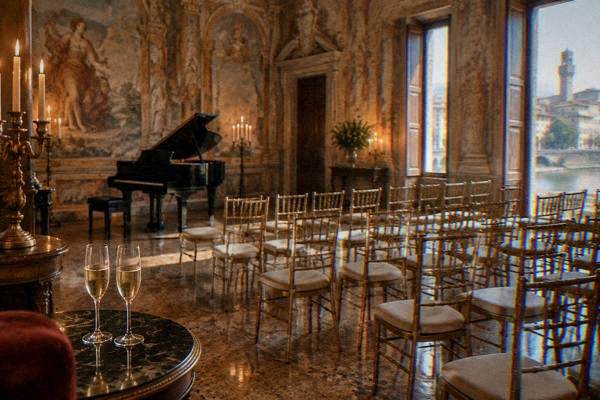
There is a middle option inside Verona itself: an opera concert staged in a historic palace with a prosecco glass included, which covers the music and the occasion without the 30,000-seat scale, the late finish or the weather exposure, and it runs on evenings when the Arena's calendar is dark. It is a reasonable substitute for families with children, visitors on a one-night stop, or anyone who wants the repertoire without a five-hour evening.
That alternative is the related tour on this page, an opera concert in a Verona palace with prosecco, and Check availability on the operator's live listing if the Arena's dates do not line up with your stay. For visitors who want the Arena building but not a full opera evening, a guided visit with entry included is the other half of the equation:
The scheduling reality is that the festival does not run every night, and a short stay can fall entirely between performances. When that happens the palace concert, a moonlit walk through the centre, or an evening in Piazza delle Erbe fills the gap well; the site's planning guide for an opera night in Verona sequences all of these into one evening.
When Is The Best Time To Book Verona Opera Tickets?
Book as early as you can once the season calendar is published, because the 2027 edition, announced for 11 June to 11 September, puts the opening weeks in peak demand, and shoulder-date performances in late August and September offer the same production with milder evenings: the ERA5 reanalysis for Verona shows September's mean daily high falling to 23.7 C against July's 29.3 C. The Arena's own ticketing pages carry the date-by-date availability.
Late-season nights have a second advantage the climate table implies: earlier curtain times. The reported start times drift earlier after June, which shortens an evening that otherwise ends well past midnight. Families and anyone with a morning train the next day should weigh that seriously. The wider question of when to visit the city at all is covered in the site's best time to visit Verona guide, and the summer-specific trade-offs, heat, crowds, festival energy, in Verona in summer.
The verdict, restated plainly: the opera in Verona is worth it for the setting, the price floor and the sheer scale of the production, and it is the single evening in the city that cannot be replicated anywhere else in Italy. It is not worth it for someone seeking acoustic purism or an early night. Everything in between is planning, and the Arena's own pages are the place to confirm the last details before booking.
Common Questions About Opera In Verona
Is The Opera In Verona Worth It?
Yes, if the appeal is a 2,000-year-old open-air amphitheatre with stone-step seats starting in the EUR 30s and staging on a scale no indoor house attempts. No, if you want close sightlines, natural acoustics or a conventional 20:00 curtain. The Arena's own pages carry the current season and rates.
What time does the Verona opera start?
Around 21:00 to 21:30 in June, earlier as the season moves toward September, per the Arena's reported performance times. Gates open about two hours before, and the Arena asks visitors to arrive at least an hour early.
Can you wear shorts to the opera in Verona?
No strict rule against shorts was found on the Arena's official pages; the terms cover bag sizes and security, not clothing. Smart attire is preferred in the stalls sectors by convention, but confirm on the Arena's own terms page before you go.
Does the Verona opera get cancelled for rain?
Never before the scheduled start, per the Arena's terms. A performance can be delayed up to 150 minutes or suspended, and there is no refund once it has started. An umbrella is permitted.
How much are Verona Arena opera tickets?
Stone-step seats start in the EUR 30s. Sector-by-sector prices vary by date and title, and the full table sits on the Arena's own rates page, so check the current price there before booking.
When is the Verona opera season?
The 2026 edition, the 103rd, ran 5 June to 12 September. The 2027 edition, the 104th, is announced for 11 June to 11 September 2027, per the Arena's own site.