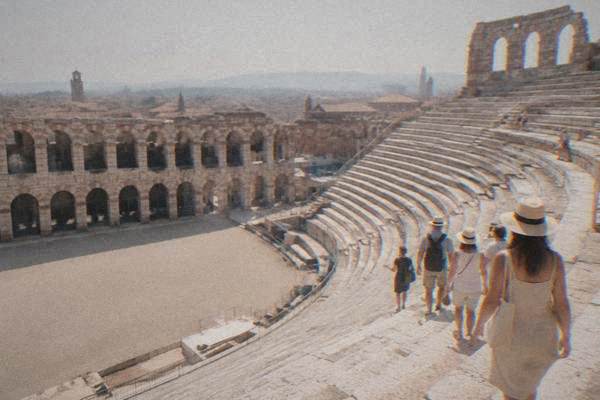
Piazza Bra: The Arena Square And The Liston
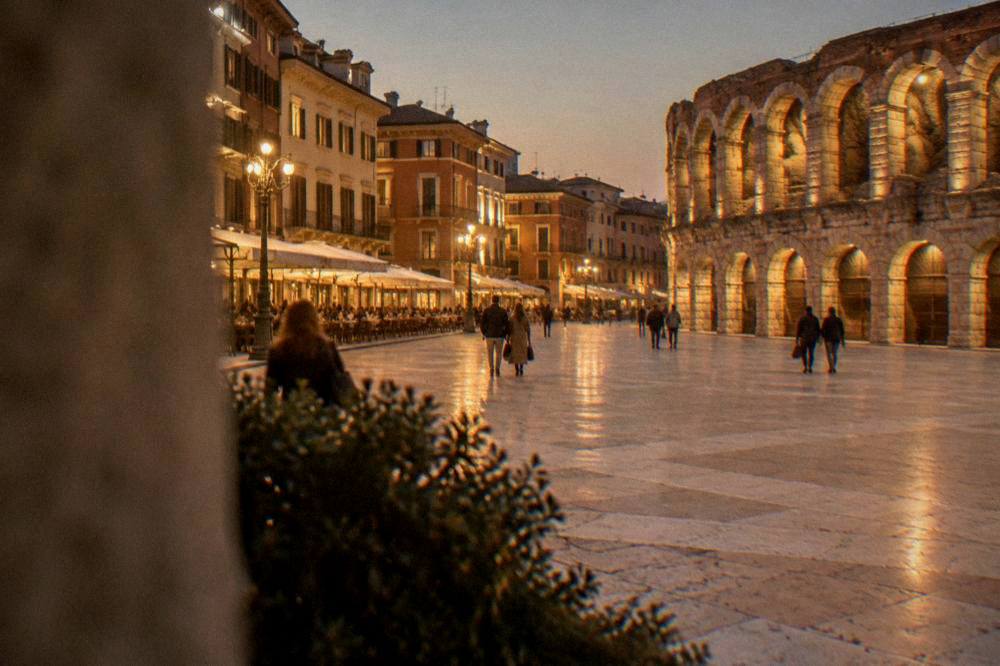
Piazza Bra is the largest square in Verona and the city's front room: one side is the curving wall of the first-century Roman Arena, another is the Liston, the marble promenade of cafés that Veronese, as the local saying goes, treat as an extension of their living room.
Short answer
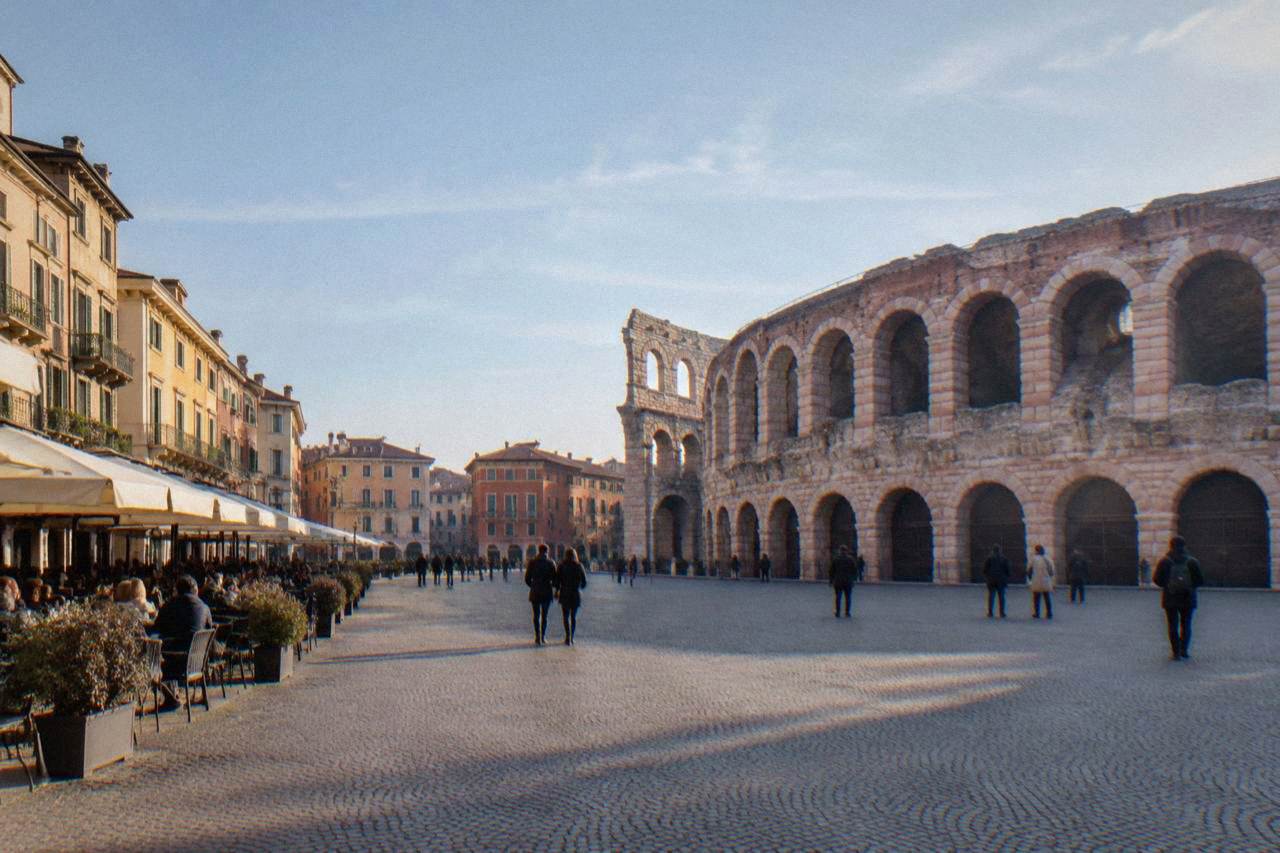
Piazza Bra is a free, always-open public square in central Verona, in Veneto, northern Italy, best known as the forecourt of the Arena di Verona and for the Liston café promenade. The square itself needs no ticket; the Arena inside it charges 12 euro for a full daytime ticket.
Piazza Bra is the largest square in Verona, in Veneto, northern Italy, an inland city on the Adige river whose historic centre has been on the UNESCO World Heritage List since 2000. The square is the city's stage: the Roman Arena curves along its eastern edge, the marble paving of the Liston runs beneath the café awnings on the western side, and the Palazzo della Gran Guardia closes the view to the south. The name itself is Veronese dialect, "braida", a word for a broad open space outside the walls, and no other square in the city plays the same role as an arrival point, meeting place and evening promenade at once. The square is free, open at all hours and needs no ticket of any kind.
This page from the Verona Italy Travel Guide covers what the square actually contains, how the Arena visit on its edge works in 2026, where the Liston fits into Veronese daily life, and how Piazza Bra connects to the rest of the centre on foot. For the wider picture across the city, start with the root guide to things to do in Verona and the one-day plan at Verona in one day.
What Is Piazza Bra In Verona And Why Is It Called That?
Piazza Bra is the largest public square in Verona, a free, always-open space framed by the Roman Arena, the Liston café promenade, the Gran Guardia palace and the neoclassical town hall, and its name comes from the Veronese dialect word "braida", meaning a broad open stretch of ground outside the medieval walls. Locals shorten it to "the Bra" and treat the Liston, its café strip, as the city's parlour.
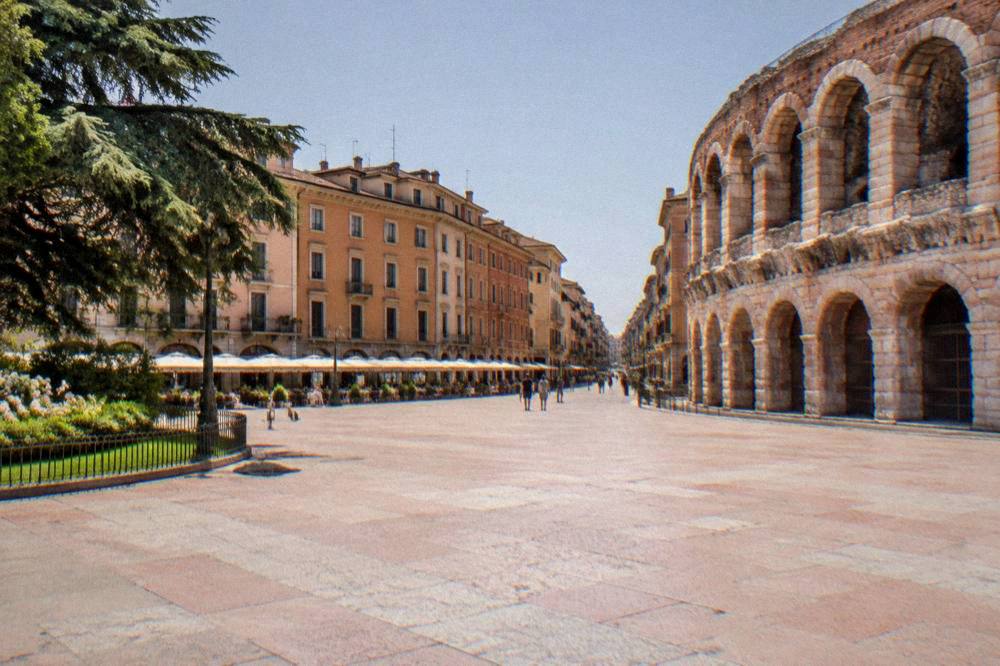
The square works as Verona's front door because nearly every visitor's first view of the city is the Arena's brick and stone arcades rising directly out of the open paving. On one side stands the Arena itself, the first-century Roman amphitheatre that is the reason the square exists at this scale. Facing it, the Palazzo Barbieri, the town hall, and the Gran Guardia, a grand civic building begun under Venetian rule and long used for exhibitions and events, frame the space with rose-pink stone and cream plasterwork that photographs warm in the late afternoon.
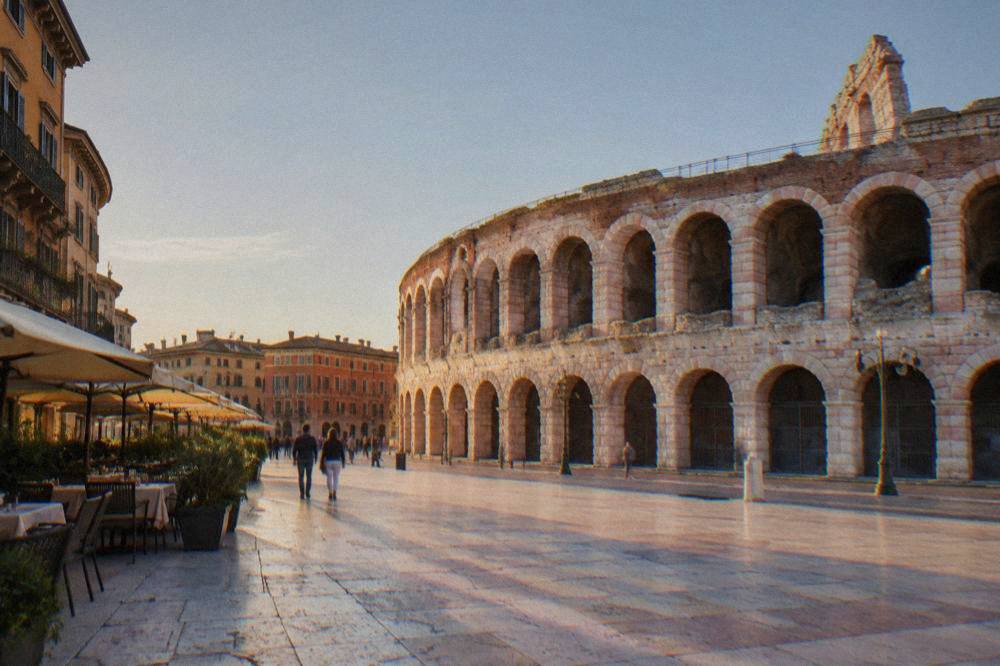
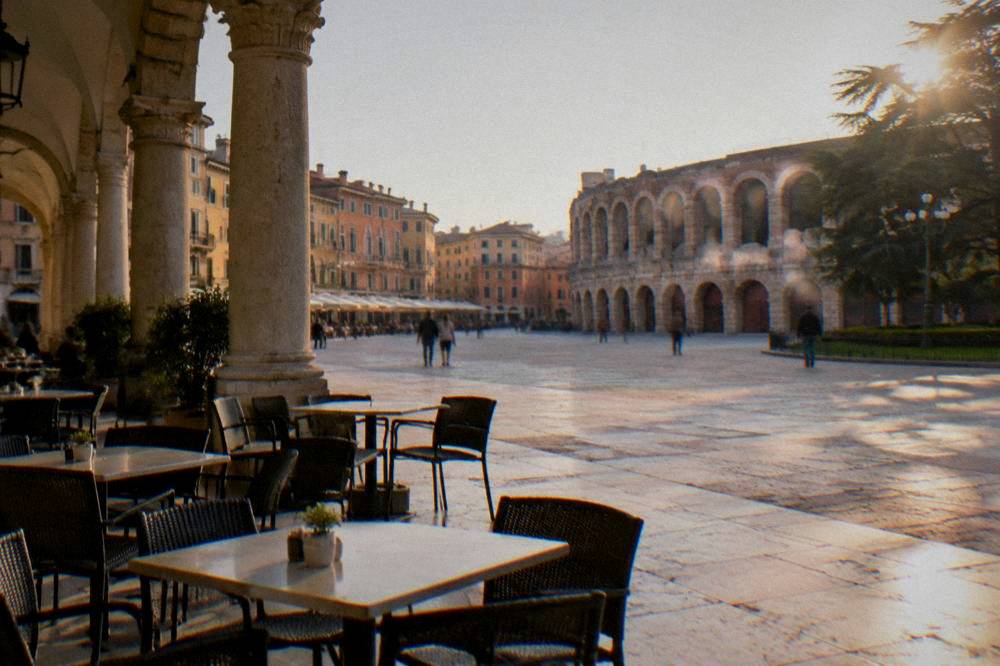
The Liston deserves its own sentence. It is the strip of polished marble flagstones along the western edge where the historic cafés sit, and the Veronese expression "passeggiare in Liston", to stroll the Liston, names the city's slow evening walk. The paving is worn to a soft sheen by two centuries of shoes, and the cafés facing it are the square's living room. Nothing about the square itself is ticketed, closed or timed: it is a public piazza, free to walk at any hour, which is exactly why it anchors the Arena di Verona visit, the opera season and the Christmas-market season alike.
A short orientation table for the square's four sides:
| Side of Piazza Bra | What stands there | Access |
|---|---|---|
| East | The Roman Arena, first-century amphitheatre | Square free; Arena visit ticketed |
| West | The Liston café promenade and Palazzo Barbieri town hall | Free public space |
| South | Palazzo della Gran Guardia | Free to view; event-dependent access |
| North | Continuous palace frontages, Via Mazzini exits northeast | Free public space |
From the square's northern corners, the pedestrian street Via Mazzini runs northeast toward the heart of the old centre, which makes the Bra the natural first stop of any walking route that continues to Piazza delle Erbe and Piazza dei Signori.
What Do You Actually See And Do On Piazza Bra In Verona?
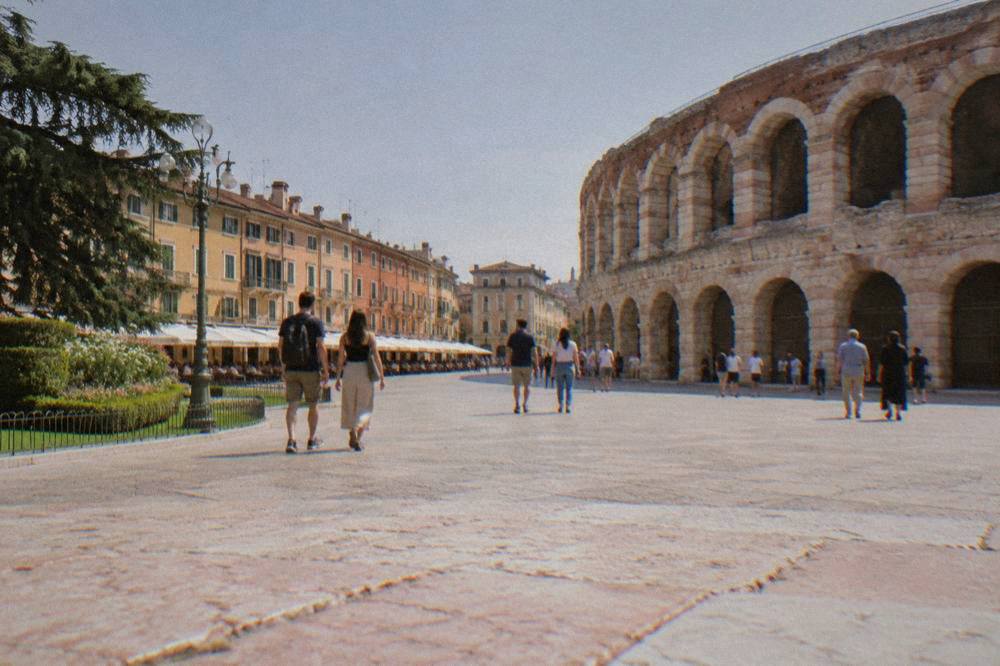
The honest answer is that Piazza Bra is a square you experience rather than a sight you tour: you look at the Arena's outer arcades from the paving, sit or stroll the Liston, view the Gran Guardia and town hall frontages, photograph the Arena from the garden beds at the southern end, and then use the square as the launch point for the Arena visit itself, the opera season and the streets leading into the old centre.
The single thing that makes the square unmistakable is the Arena's outer wall, the "Ala", the only wing of the original outer ring that still stands after an earthquake in 1117 brought the rest down, per the Arena's own historical pages. The wall's double tier of arches in Roman stone and later brick is the backdrop to every photograph taken from the Liston. Whether the amphitheatre is truly older than Rome's Colosseum, built about 80 AD against the Arena's reported origin around 30 AD, is covered in detail on Is The Verona Arena Older Than The Colosseum?.
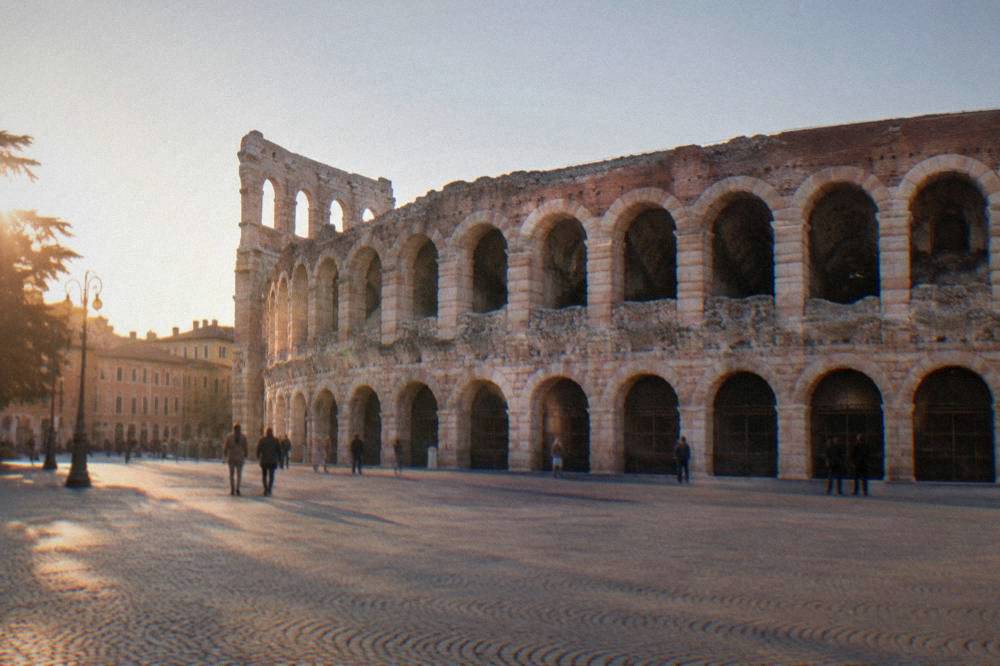
Day to day, the square holds several distinct experiences. Sitting at a café table on the Liston with the Arena in view is the classic one, a stop that costs whatever a coffee costs on the day and no more, since the square itself is free. Strolling comes second: the evening passeggiata along the marble is a genuine Veronese habit, not a performance for visitors. Third comes the Arena itself, whose daytime visit and opera evenings are the square's paid draws and are covered in their own sections below. Fourth, the square is simply the best open-air orientation point in the city: from its corners you can set off toward Via Mazzini, the Gardens, or the river loop around the historic centre.
Two habits worth knowing before you go. The paving is smooth marble and stone, so ordinary city shoes are fine; and the square doubles as the assembly space on opera evenings, when the area around the Arena fills from late afternoon onward and the cafés are at their busiest. The opera season's shape, dates and practical rules are laid out in the Verona Opera Festival guide and the Arena di Verona seating guide.
For visitors who want the square and the city explained rather than only walked, these are the three bookable ways to build a visit around Piazza Bra and its surroundings:
Each of those pairs the square with something adjacent: the Arena interior, a wider walk with the cable car to the hill viewpoint, or a food-and-wine route through the centre. Details, prices and ratings are on each operator's live listing; check availability and the cancellation terms before committing.
How Does The Arena Visit From Piazza Bra Work In 2026?
A daytime visit to the Arena di Verona, entered directly from Piazza Bra, costs 12 euro for a full ticket, 9 euro reduced for groups of 15 or more, over-65s and other concessions, and 3 euro for visitors aged 18 to 25 from EU and reciprocity countries, per the Comune di Verona's own price list; under-18s enter free, and the first Sunday of the month from November to March costs 1 euro. The square outside is free at all times.
Reported daytime hours, per the Arena's own site, are Tuesday to Sunday from about 9:00 to 19:00, closed Monday, with earlier closing on opera or concert days and last entry 30 minutes before closing; confirm the day's calendar before you go, because show days change the schedule. That Monday closure catches out visitors who plan the Arena as a Monday morning stop, and on summer evenings the amphitheatre switches from a daytime monument into an opera house, with stone-step seats reported to start in the 30-euro range and the full sector table on the Arena's own ticket pages.
| Arena daytime ticket | Price | Notes |
|---|---|---|
| Full | 12 euro | Standard adult |
| Reduced | 9 euro | Groups of 15+, over 65, concessions |
| Ages 18 to 25 | 3 euro | EU and reciprocity countries |
| Under 18 | Free | Per the Comune price list |
| First Sunday, Nov to Mar | 1 euro | Civic museums scheme |
| VeronaCard holders | Free | Included with the card |
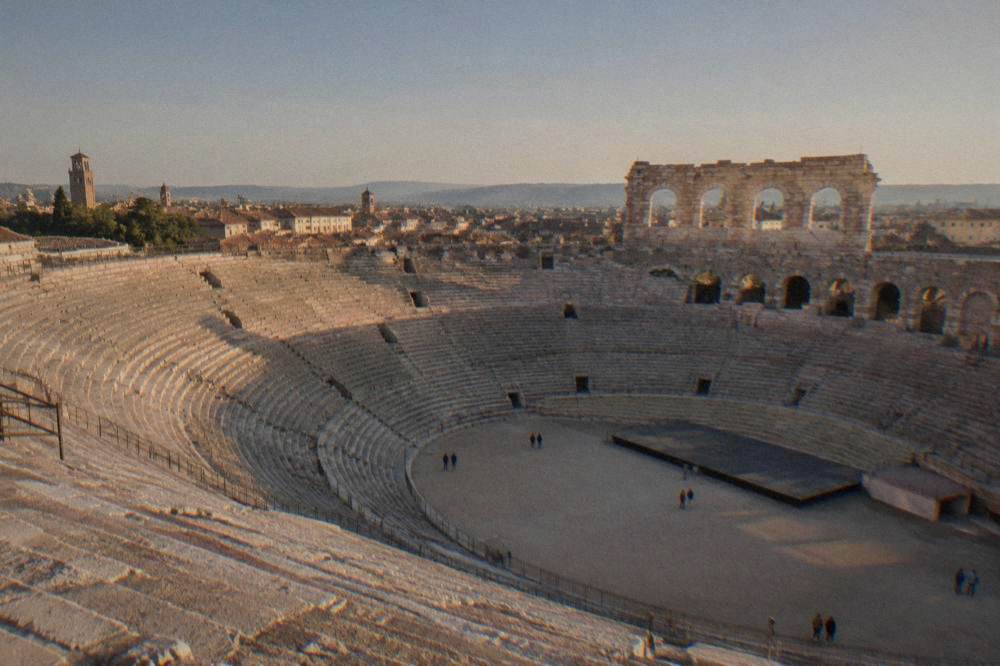
The history printed on the Arena's own pages is worth carrying in your head as you stand under the arches. The amphitheatre was built around 30 AD, is described by its foundation and by Encyclopaedia Britannica as the third-largest surviving Roman amphitheatre after the Colosseum and Capua, and originally staged gladiator games and animal hunts, a use covered at length in Did Gladiators Fight In The Verona Arena?. Its stated capacity for opera today is 30,000 effective seats, a figure explored in How Many People Can The Arena Di Verona Seat?.
The guided option below covers the Arena with priority entry and a local guide, a practical fit for anyone who wants the building explained rather than only entered; read more on the Arena Priority Access Tour page or Check availability on the operator's listing.
One planning note that belongs on this page because it belongs to the square: the VeronaCard, digital since 1 September 2026 at 33 euro for 24 hours and 38 euro for 48 hours with city transport included, or 29 and 32 euro without, covers the Arena among its included sites, per the Comune di Verona's card notice. The card does not include the airport Aerobus, and it never removes the need to check the Arena's own calendar for show-day closures.
Where Do You Eat And Drink Around Piazza Bra In Verona?
Eating around Piazza Bra means the café terraces of the Liston and the restaurants on the streets running off the square, and the dishes to look for are the Veronese classics: pastissada de caval, the long-simmered horse-meat stew served with polenta or gnocchi, risotto all'Amarone, rice cooked in the Valpolicella red, and bollito with pearà, boiled meats with the peppered bread sauce the city is known for.
No restaurant on or off the square is named on this page, because no establishment in Verona has been reviewed or rated by this site; what the sources do support is the dish list itself, reported by Italian food writers as the city's traditional repertoire, and the structural fact that the Liston's cafés face the Arena across open paving. Pandoro, the star-shaped Christmas cake, also originates in Verona and appears in cafés and bakeries everywhere in the city from late autumn. Prices for a coffee or a meal on the Liston are whatever the menu says on the day: check the posted prices before you sit, since a terrace on the city's main square is priced like one.
Amarone is the wine that binds the city's food to its hills. The Valpolicella zone, whose main towns sit about 25 minutes' drive from the Arena, produces the dried-grape red that gives risotto all'Amarone its name, and it is the wine on nearly every list around the square. The wine country itself, and the winery visits there, are covered in the Valpolicella area guide and the Amarone wine page.
For travellers who want the food explained while it is eaten, a guided food-and-wine walk that starts from the city centre and works through tastings, including Amarone, is the most direct route; the operator's listing carries the current itinerary, price and reviews:
Beyond the terraces, the practical rhythm of eating in Verona matters on this square: restaurants typically serve lunch from about 12:00 to 14:30 and dinner from about 19:30 to 22:30, and general shops close on Sundays or keep limited hours, so a late-afternoon arrival on the Bra finds the cafés busy and the kitchens not yet open. Plan the square's food stop as either a slow coffee on the Liston or a booked dinner, not an in-between snack at 17:00.
What Sits Within Walking Distance Of Piazza Bra In Verona?
The whole of Verona's UNESCO-listed historic centre sits within a short walk of Piazza Bra: Via Mazzini leads northeast to Piazza delle Erbe, Piazza dei Signori and the Casa di Giulietta in roughly a straight line, the river Adige bends around the centre a few minutes east with Ponte Pietra and the Teatro Romano beyond it, and the Castelvecchio museum stands at the square's southwestern corner.
The nearest major sight is barely a step away. Castelvecchio, the fortress of the Scaliger dynasty, guards the river end of the square, and its museum is reported at 9 euro full, 6 euro reduced and 2 euro for ages 18 to 25, open Tuesday to Sunday with a Monday closure; the details are on the Castelvecchio page. From there the riverside path east passes the Ponte Pietra, the Roman-footed pedestrian bridge, and climbs to the Teatro Romano and the viewpoint at Castel San Pietro across the river.
The straight-line route northeast is the one first-time visitors take. Via Mazzini, the polished marble shopping street, runs from the Bra's corner to the heart of the old Roman city, where Piazza delle Erbe, the former Roman forum, opens out with its market and frescoed houses, and Piazza dei Signori sits immediately behind it with the Arche Scaligere, the Scaliger tombs, beside the church of Santa Maria Antica. The Casa di Giulietta is a few steps off that axis: its courtyard has been ticketed since 1 April 2026, at 5 euro for the courtyard route and 12 euro for the house and balcony, with online booking and entry via the Teatro Nuovo, a change this site reports in full on the Juliet page. The Torre dei Lamberti tower rises between the two squares, reported at 6 euro and free with the VeronaCard.
The wider walking loop, how the squares, the river and the bridges stitch together in a single day, is laid out in the Verona in one day itinerary. Rough walking distances are left out because no sourced walking-time figure exists in the site's research; the map of the centre, and the distances that were computed over real routing, are on the Verona map page.
For visitors who prefer the centre explained with the hill viewpoint folded in, the walk below covers the city with the Arena and the cable car; the tour's own page carries what is included on the day:
How Do You Get To Piazza Bra In Verona?
Piazza Bra sits at the southwestern edge of Verona's historic centre, about a 15-minute level walk from Porta Nuova station, on the ATV urban bus network whose single 90-minute ticket is 1.50 euro, and outside the camera-enforced ZTL that limits non-resident cars to four entries a month; the square itself is pedestrian-friendly and the airport Aerobus runs to the station area at a reported 7 euro.
Arriving by train, Porta Nuova is the station, and the route from its forecourt to the Bra is the simplest orientation walk in the city: straight down the broad axis into the centre until the Arena's wall appears. The station itself, its facilities and its connections are covered in the Verona train station guide. The urban bus single, per ATV's own fares page, is 1.50 euro valid 90 minutes; day and network passes exist but their prices should be confirmed on the operator's site before you travel.
Driving deserves a warning. The historic centre inside the Adige bend is a limited-traffic zone, the ZTL, camera-enforced, and the Comune di Verona's own rules allow non-residents at most four entries a month by advance booking, in windows of Monday to Friday 10:00 to 18:00 and 20:00 to 23:00, and weekends from 10:00 to 13:30, with hotel guests exempted when the hotel registers the plate. The workable pattern is to park outside the zone and walk in; the rules are reported in full on the Verona ZTL and parking page. From Verona Villafranca airport, the Aerobus line 199 is reported at 7 euro for a roughly 15-minute run into the station area, per the airport's own transport pages; confirm the timetable before you fly.
| Approach to Piazza Bra | Method | Figure from the sources |
|---|---|---|
| From Porta Nuova station | On foot or ATV urban bus | Single bus ticket 1.50 euro, 90 min |
| From Verona Villafranca airport | Aerobus line 199 | Reported 7 euro, about 15 min |
| By car | Park outside the ZTL, walk in | Max 4 ZTL entries a month, booked |
| With VeronaCard transport | ATV urban buses | 24h card 33 euro, 48h 38 euro |
The ZTL windows in plain form:
| ZTL entry window | Days | Times |
|---|---|---|
| Morning to evening | Monday to Friday | 10:00 to 18:00 |
| Evening | Monday to Friday | 20:00 to 23:00 |
| Weekend and holidays | Sat, Sun, holidays | From 10:00 to 13:30 |
When Is The Best Time Of Year To Be On Piazza Bra In Verona?
By climate, the comfortable months on Piazza Bra are April to June and September to October, when the ERA5 reanalysis for Verona, 1991 to 2020, shows mean daily highs of 17.8 to 26.6 degrees and 18.1 to 23.7 degrees respectively, while July and August average 29.3 and 29.1 degrees; by events, June to September brings the Arena opera season and December brings the Christmas market season, so the choice is between comfort and atmosphere.
The climate figures below are modelled normals, ERA5 reanalysis for 1991 to 2020, not a station record, and they describe the grid cell around Verona. They show a continental pattern: winter highs near 7 degrees, summer highs near 29, and November the month with the heaviest rainfall total at 118.2 mm.
| Month | Mean high C | Mean low C | Rain mm |
|---|---|---|---|
| January | 7.3 | -0.4 | 52.3 |
| April | 17.8 | 7.6 | 93.5 |
| July | 29.3 | 19.1 | 79.4 |
| October | 18.1 | 10.5 | 107.2 |
| November | 12.3 | 5.3 | 118.2 |
The event calendar gives each season its own character on the square. The Arena opera season, the 103rd edition of which ran 5 June to 12 September 2026, with the 104th announced for 11 June to 11 September 2027, turns the Bra into a pre-theatre promenade on performance evenings, with reported start times around 21:00 to 21:30 early in the season and gates opening about two hours before. Tocatì, the free street-games festival in the Veronetta district, ran 18 to 20 September 2026; its 2027 dates had not been announced. The Christmas markets fill the square in late November and December in a normal year, though no official 2026 dates had been published; the pattern and what to expect are on the Verona Christmas markets page. Rainy-day alternatives are collected in Verona in the rain.
Season-by-season, the trade-off is simple. Spring and autumn give the square back to walkers and café-sitters at comfortable temperatures. Summer evenings are the square's theatrical peak, hot and busy around every performance. Winter strips the terraces back, prices the hotels for the market season and shows the Arena's stone at its palest, and the Verona in winter guide covers what stays open.
Before the closing questions, one last look at the three bookable ways to build a day around the square, each with live availability on the operator's listing:
Common Questions About Piazza Bra In Verona
Is Piazza Bra free to enter?
Yes. Piazza Bra is an open public square with no ticket, gate or opening hours. Only the Arena on its eastern edge charges admission: 12 euro for a full daytime ticket per the Comune di Verona's price list, with reductions and free entry for under-18s.
What does the name Piazza Bra mean?
The name comes from the Veronese dialect word "braida", a broad open space outside the walls. Veronese locals shorten it to "the Bra", and the marble café strip along its western edge is the Liston.
Can you see the Arena without paying?
Yes, from the square. The Arena's outer wall and arcades line Piazza Bra in full view at no cost, and the square is open at all hours. Entering the amphitheatre itself for the daytime visit requires a ticket, 12 euro full at the time of the Comune's September 2026 price list.
How far is Piazza Bra from Verona train station?
Porta Nuova station sits southwest of the historic centre, and the walk to the square is level and direct down the city's main axis; the ATV urban bus network also links the two, with a single 90-minute ticket at 1.50 euro. Confirm walking routes locally, as walking times vary.
When is Piazza Bra busiest?
On Arena performance evenings during the opera season, which ran 5 June to 12 September in 2026 and is announced for 11 June to 11 September in 2027, and during the Christmas market period in December, when the square hosts the market stalls. Midday in July and August is the warmest time on the open paving, with an ERA5 mean high of about 29 degrees.
Can you drive to Piazza Bra?
The square sits inside the historic centre's camera-enforced ZTL, where non-residents are limited to four entries a month by advance booking in set time windows, unless a hotel inside the zone registers the plate. The practical pattern is to park outside the ZTL and walk in.
Piazza Bra rewards the slow approach: an unhurried coffee on the Liston, a full look at the Arena's surviving outer wall, then a daytime ticket into the amphitheatre itself before the streets northeast carry you toward Piazza delle Erbe and the rest of the old city.