Why Do People Touch Juliet's Statue In Verona?
The bronze Juliet statue in Verona's courtyard has a right breast polished bright by touching, a luck custom the city's own tourism office documents. What the ritual is and why it persists.
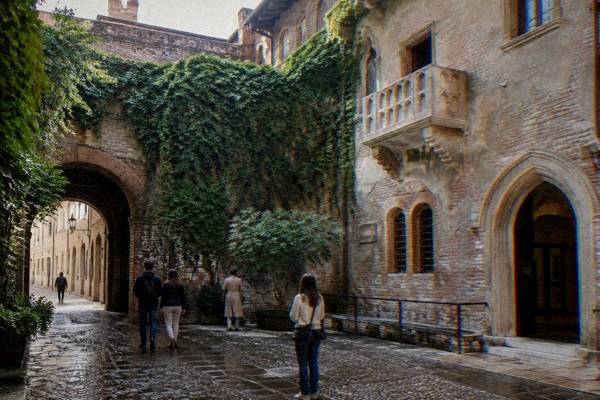
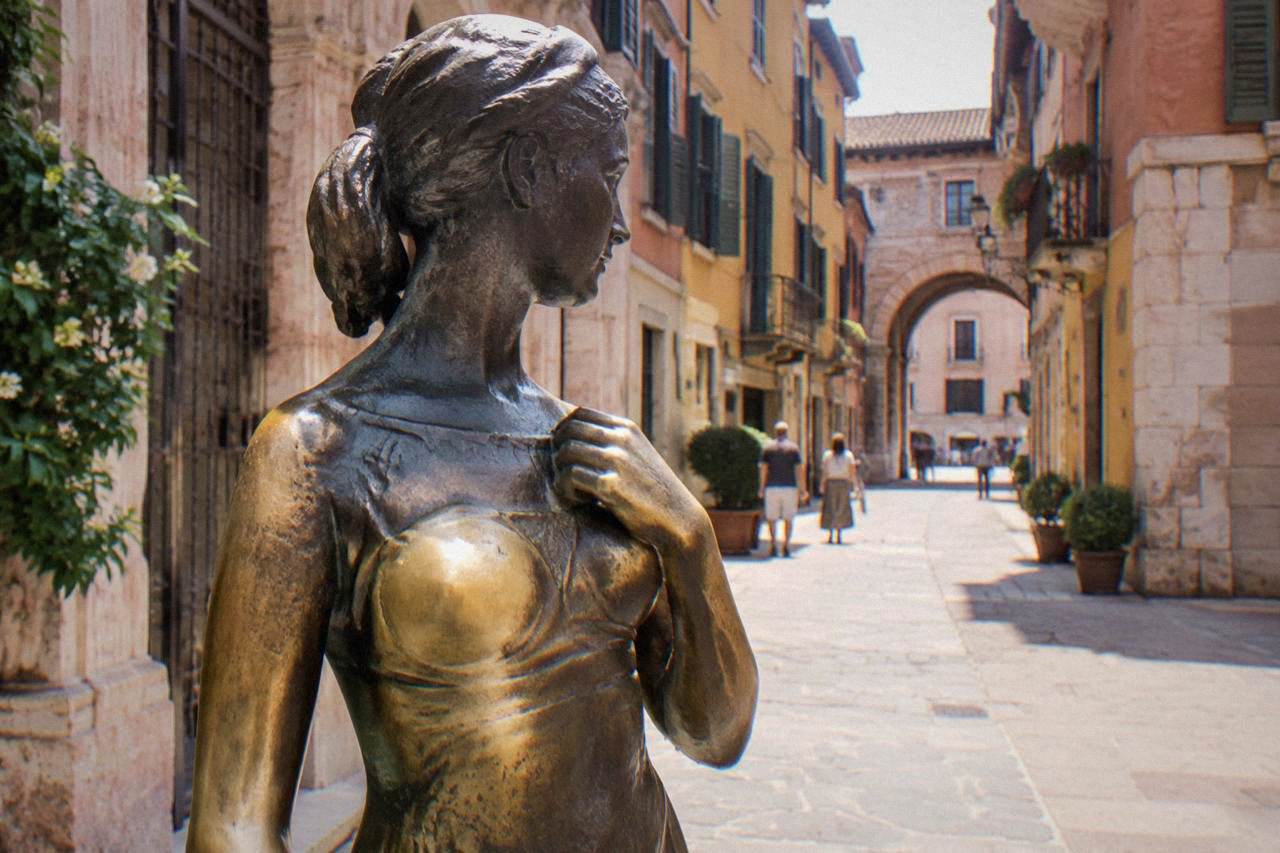
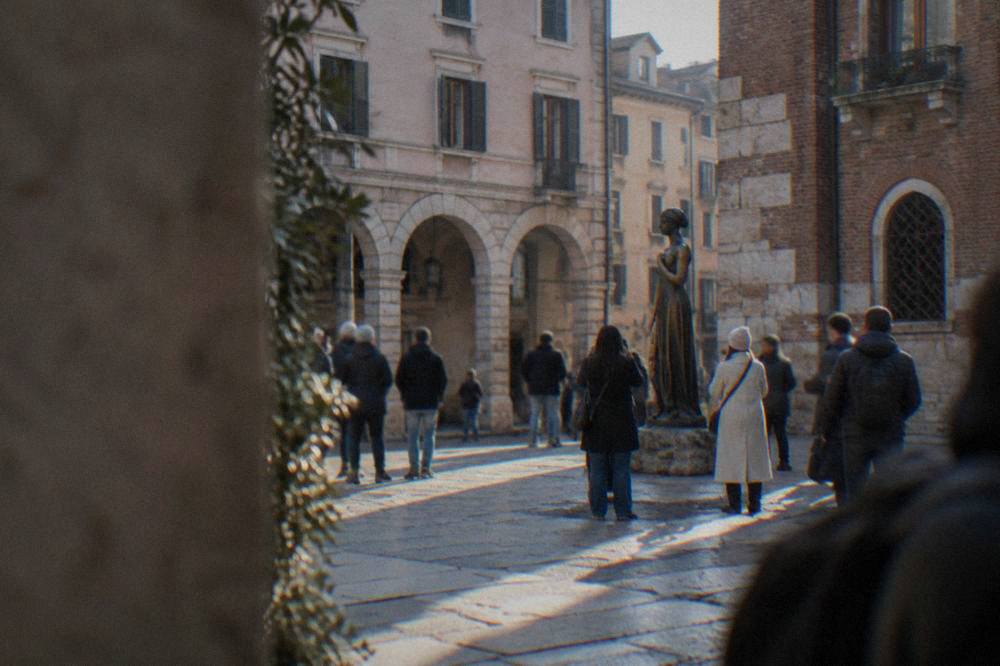
Verona, an inland city on the Adige river in Veneto, northern Italy, keeps a bronze statue of Juliet in the courtyard of the Casa di Giulietta, and the statue's right breast is polished to a bright shine that the rest of the figure does not have. The reason is a custom: touching that spot is said to bring good luck, above all in love. The city's own tourism office describes the gesture and its effect on the bronze, which makes this one of the rare tourist rituals with an official municipal paper trail rather than a folk legend with no anchor. The touching is so constant that the original statue was retired indoors and a copy now stands in the courtyard.
Why Do People Touch Juliet's Statue In Verona?
People touch the right breast of the bronze Juliet statue because a Veronese custom holds that it brings good luck, particularly in love and marriage, and the constant contact has worn the bronze smooth and shiny. The city's tourism office records both the custom and the wearing of the statue, and the original 1969 bronze by Nereo Costantini was replaced with a copy in 2014 while the first casting is now kept inside the house.
The gesture belongs to a wider family of luck rituals at famous statues and stones, but in Verona it attaches to one specific figure in one specific courtyard. The statue was made by the sculptor Nereo Costantini in 1969 and placed in the courtyard in 1972, per the city's tourism pages. Decades of touching left the right breast visibly eroded: metal worn away by hand contact is a physical fact, not a marketing claim, and it is the clearest evidence that the custom is practised rather than merely described. In 2014 the original was moved indoors and a new copy took its place, according to the same municipal account.
Why love, and why Verona? The city is tied to the Romeo and Juliet legend so tightly that the tourism office calls it the city of love on the strength of the story. Shakespeare never visited Verona, and the tale reached him through a chain of earlier writers, but the association stuck and the courtyard became its physical shrine. A bronze girl standing in that shrine was always going to attract gestures of courtship and hope. The touching custom grew up around her the way similar rituals grow around lucky statues across Italy: someone touches, something good happens, the story spreads.
Where Did The Juliet Statue Come From?
The statue is a 1969 bronze by the Veronese sculptor Nereo Costantini, placed in the Casa di Giulietta courtyard in 1972, and the figure standing there now is a 2014 copy, with the worn original kept inside the house, according to the Comune di Verona's tourism pages. The same account records that touching the right breast for luck is the custom that wore the original thin.
Costantini's Juliet is not a Renaissance relic and has no connection to any real person. It is a modern municipal commission, installed when the city was consolidating the courtyard as a Juliet-themed site. That timeline matters for honesty: the statue is younger than many of the people photographing it, and its meaning comes entirely from accumulated custom rather than age or authenticity. More of these guides are collected on Verona Italy Travel Guide.
The balcony above the courtyard is itself a later addition. The city's tourism office reports that the balcony was put on the house in 1940, assembled from an old sarcophagus, and is not an original feature of any real Juliet story. There was no historical Juliet in the way tourists imagine her: the literary heroine descends from Luigi da Porto's 1531 novella, which first set the story in Verona, through Bandello in 1554 and Arthur Brooke's 1562 poem, which was Shakespeare's source. The statue, the balcony and the touching custom are all layers of a legend built on a book. The fuller story is told in the guide to Romeo and Juliet in Verona, and the question of whether Juliet's balcony is real in Verona is answered separately.
The statue's documented timeline:
| Year | Event | Source basis |
|---|---|---|
| 1531 | Luigi da Porto's novella first sets the story in Verona | Reported by literary histories |
| 1940 | Balcony assembled onto the house from an old sarcophagus | Per the city tourism office |
| 1969 | Nereo Costantini casts the bronze Juliet | Per the city tourism office |
| 1972 | Statue placed in the courtyard | Per the city tourism office |
| 2014 | Worn original moved indoors, copy installed | Per the city tourism office |
How Do You See The Juliet Statue In Verona Today?
You see the statue by entering the courtyard of the Casa di Giulietta, which since 1 April 2026 has required a paid, pre-booked ticket: 5 euro for the courtyard route or 12 euro for the full house and balcony route, with access via the Teatro Nuovo and booking online, per the official VisitVerona notice. The courtyard is no longer free, and the VeronaCard does not remove the booking step.
The 2026 change is the single most important practical fact on this page, because older guides describe a free courtyard where anyone could walk in and touch the bronze. That arrangement ended on 1 April 2026. The two routes and their prices, as published by the city:
| Route | Price | What it covers |
|---|---|---|
| Courtyard route | 5 euro | Courtyard, statue and balcony view |
| Full house route | 12 euro | Courtyard, statue, house interior and balcony |
Reported hours are Monday 14:00 to 19:00 and Tuesday to Sunday 9:00 to 19:00, and visitors should confirm them on the official site before going. Free entry applies to children under 5 and to holders of a disability card with a companion, and VeronaCard holders still need to book online for a timed slot. If you would rather not manage the booking yourself, the Juliet's House fast-track ticket with audio guide bundles entry with commentary, and there is a fuller write-up of whether Juliet's courtyard is free elsewhere on this site. The house itself is covered in detail in the guide to the Casa di Giulietta.
Is The Touching Custom Doing Any Harm?
Yes, cumulative harm is the documented reason the original statue was retired: decades of hands wore the right breast thin and left the bronze polished far beyond the sculptor's finish, and in 2014 the city moved the original indoors and installed a copy to absorb the touching instead, per the Comune di Verona's account.
This is a pattern seen at touched statues across Europe: the point of contact slowly dissolves through the protective patina, and eventually the detail is lost. The Veronese solution was substitution rather than prohibition. The copy now standing in the courtyard receives the same treatment the original did, and it will wear in turn. Nothing in the official guidance forbids the touch, and the city's own pages describe the custom neutrally, as a fact of the site rather than a problem to police.
The statue has also been the object of a different kind of attention over the years, from stickers and graffiti on the courtyard walls to souvenir photographs of every description, and the city manages the site as a working museum rather than an open piazza. That management posture, ticketing included, is what keeps the courtyard presentable under heavy footfall. Visitors who want the quietest conditions should aim for the opening hour or the late afternoon on a weekday, and confirm the calendar on the official booking page, since the reported hours can shift for events.
What Else Does The Juliet Legend Include In Verona?
Beyond the statue and the balcony, the Juliet legend in Verona includes Juliet's Tomb, a former monastery site on the other side of the river, plus the wider love branding of the city, which the tourism office ties directly to the Shakespeare association. The tomb's hours and any fee should be confirmed at booking, and the site is covered separately.
The legend is unusually well distributed across one city. The courtyard holds the statue and the 1940 balcony. Juliet's Tomb, reached across the Adige, is the traditional burial site of the story, described in the guide to the Tomba di Giulietta. The question of why Shakespeare chose Verona for Romeo and Juliet has its own answer, and it runs through da Porto's choice of the city rather than any visit by the playwright himself.
For planning purposes, the Juliet sites sit inside a compact UNESCO-listed historic centre, inscribed in 2000, where the Roman Arena, Piazza Bra and Piazza delle Erbe are all within a short walk of the courtyard. Verona is inland on the Adige; Lake Garda and its towns are day trips to the west, and Sirmione, Bardolino and Malcesine are separate destinations, not districts of the city. The touching custom is therefore one stop on a walking route, not a trip in itself, and the courtyard visit takes minutes once inside. More context on the city's scale and walkability is in is Verona walkable and how many days in Verona is enough.
Common Questions About Touching Juliet's Statue In Verona
Why do people touch Juliet's statue in Verona?
Touching the right breast of the bronze statue is a local custom said to bring good luck, especially in love. The city's tourism office records the custom and notes that it has worn the bronze, which is why the original statue was replaced by a copy in 2014.
Is touching the Juliet statue allowed?
Nothing in the official guidance forbids it, and the city describes the custom neutrally. The touching continues on the copy that now stands in the courtyard.
Can you see the Juliet statue for free?
No. Since 1 April 2026 the courtyard requires a ticket: 5 euro for the courtyard route, 12 euro for the full house and balcony route, booked online with access via the Teatro Nuovo.
Who made the Juliet statue and when?
The bronze is by the sculptor Nereo Costantini, cast in 1969 and placed in the courtyard in 1972, per the city's tourism pages. The figure standing today is a 2014 copy; the original is kept inside the house.
Is the Juliet statue historically real?
No. It is a modern sculpture of a literary character. The Romeo and Juliet story descends from Luigi da Porto's 1531 novella through later writers to Shakespeare, who never visited Verona.
Where exactly is the statue in Verona?
In the courtyard of the Casa di Giulietta in the historic centre of Verona, an inland city in Veneto, northern Italy, entered via the Teatro Nuovo from Piazzetta Navona under the ticketing arrangement in place since April 2026.
The custom, in short, is real, documented by the city itself, and physically legible in the polished bronze: a modern statue, a literary legend, and a luck ritual that has already consumed one casting and will likely consume the next.