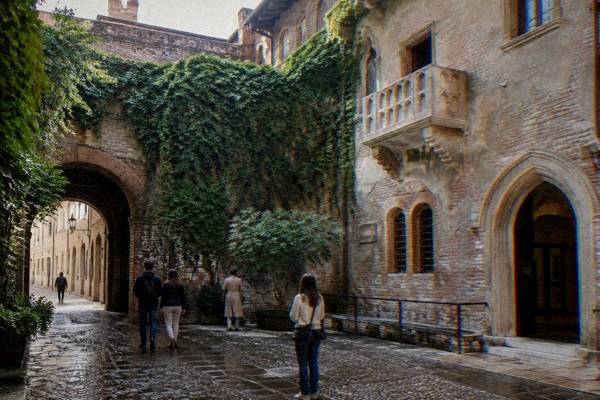
Juliet's Tomb: The Cloister At San Francesco
Juliet's Tomb sits in the crypt of the former Capuchin monastery of San Francesco al Corso in Verona, west of the historic centre, a quieter counterpart to the crowded courtyard at Juliet's House.
Short answer
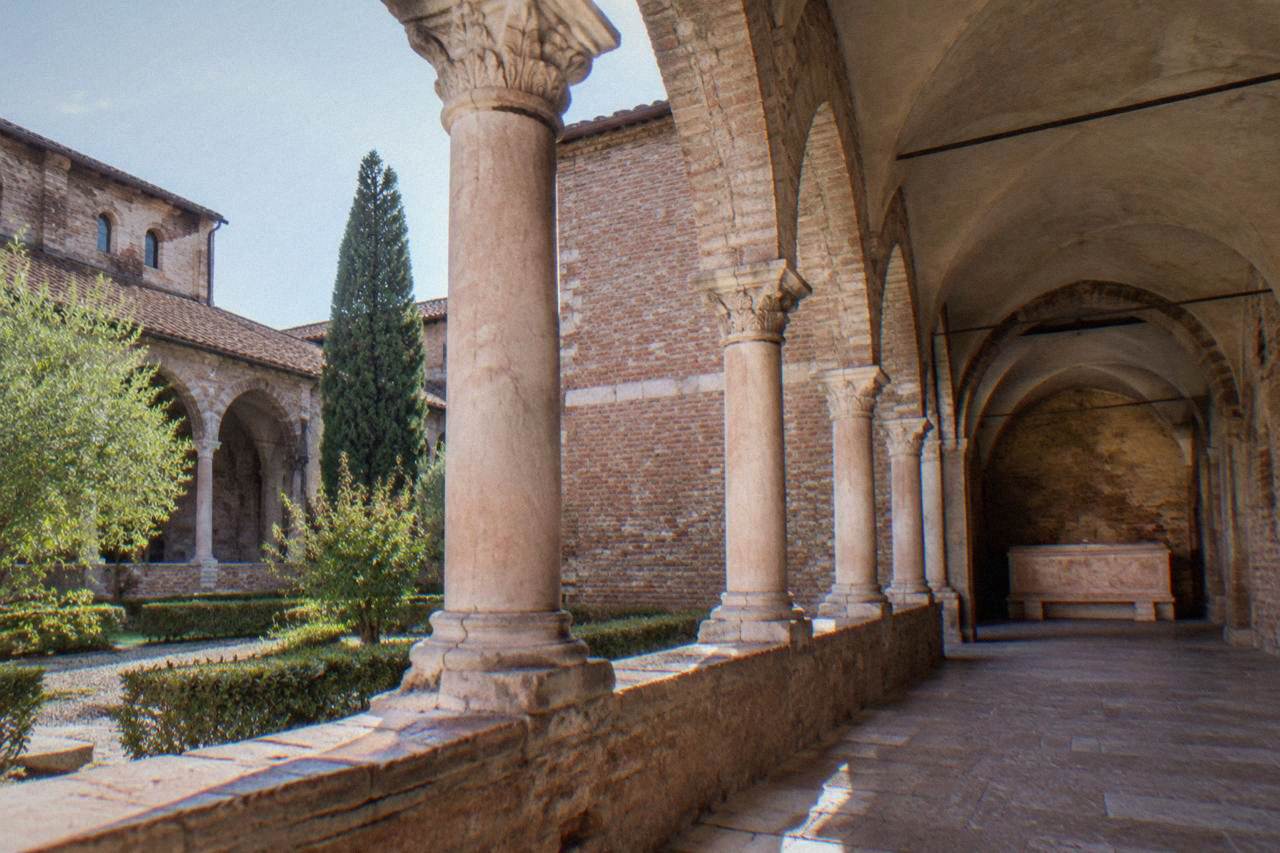
Juliet's Tomb in Verona is the empty open sarcophagus displayed in the crypt of the former Capuchin monastery of San Francesco al Corso, now part of the civic museum complex on the western edge of the centre. Opening hours and the admission fee are published by the civic museums and change with the season, so confirm on the official civic museum pages before setting out.
Juliet's Tomb, the tomba di Giulietta, is the quietest chapter of Verona's Romeo and Juliet legend: an empty, open sarcophagus displayed in the crypt of the former Capuchin monastery of San Francesco al Corso, on the western side of the city inside the loop of the Adige. The courtyard at Juliet's House draws the crowds and the queues; the tomb draws people looking for the melancholy end of the story, in a dim vaulted space that the city presents without theatrical props. Verona itself, an inland city in Veneto on the Adige river and a UNESCO World Heritage Site since 2000, keeps both sights within an easy walk of each other across the historic centre.
What Is Juliet's Tomb In Verona?
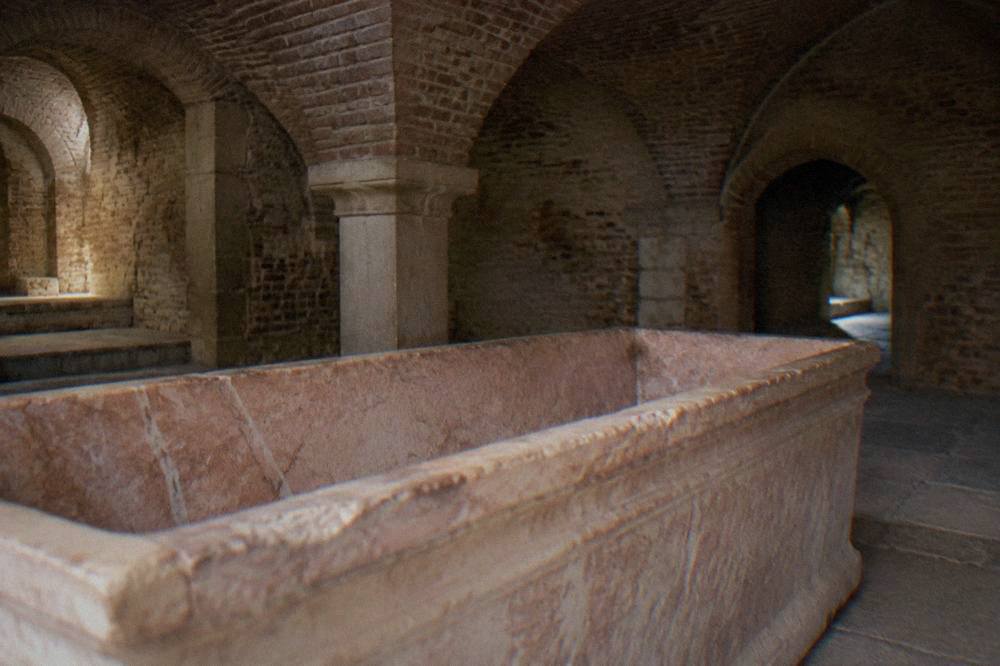
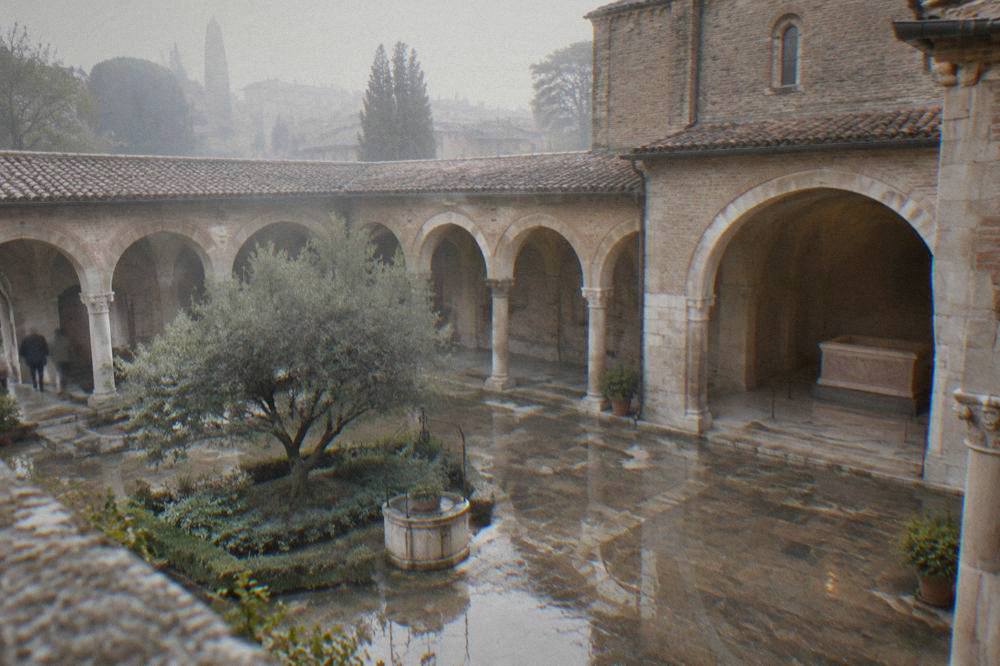
Juliet's Tomb is the empty sarcophagus, shown with its lid open, that Verona displays in the crypt of the former Capuchin monastery of San Francesco al Corso, reached from the street through the museum courtyard rather than from a church nave. The city presents it as the traditional resting place of Juliet in the legend, not as the grave of a documented person, and the setting is a low brick vault kept deliberately bare.
The tomb belongs to the same legend economy as the balcony at Juliet's House, but the two experiences are opposites. The house is bright, central and busy; the tomb is peripheral, hushed and brief. There is no balcony to photograph and no statue to touch, the luck custom of which is covered in Why Do People Touch Juliet's Statue In Verona?. What there is instead is atmosphere: a monastic complex, a courtyard, and a red stone coffin without an occupant.
The site's identity as the former Capuchin monastery of San Francesco al Corso matters to the story. In the legend as told, the friars are the ones who administer the sleeping potion and, in the final act, receive both lovers dead. Placing Juliet's grave in a Franciscan setting is the legend's internal logic at work: the city matched the prop to the plot.
A note on expectations, plainly stated. The civic museum that contains the tomb also holds frescoes salvaged from Verona buildings over the centuries, so the visit is part tomb, part museum gallery. Visitors who arrive expecting only a crypt are sometimes surprised by the museum framing; visitors who enjoy old fresco fragments find the combination rewarding. Confirm current hours and the ticket arrangement on the civic museums' own pages before you go, because the site keeps seasonal schedules.
Where Is Juliet's Tomb And How Do You Reach It?
Juliet's Tomb stands on the western edge of Verona's historic centre, inside the former monastery complex of San Francesco al Corso on Via del Pontiere, a short distance from the Adige river and the Arena side of the city, with the walk from Piazza Bra running through the centre past Castelvecchio. Treat it as a centre-edge sight reachable on foot in a modest stroll, and confirm the entrance position on a map before setting out.
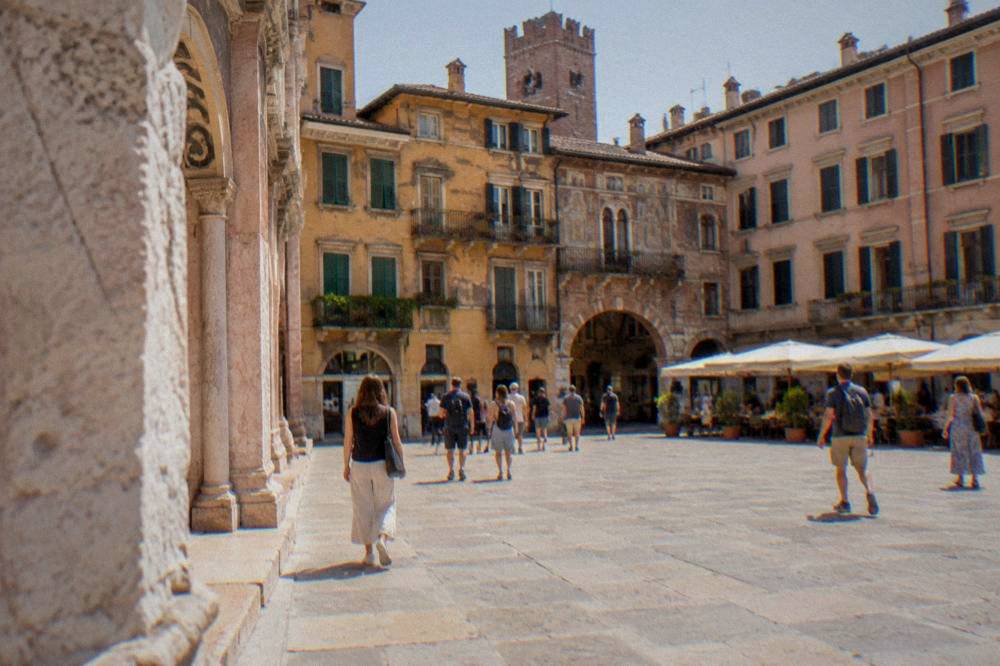
The position is the point. Where Juliet's House sits on a shopping street a few steps from Via Mazzini, the tomb sits outside the busiest tourist stream, in a district where the streets are wider, the traffic real and the visitors few. The route from the centre passes Castelvecchio, the Scaliger castle that now houses the civic art museum, and its bridge over the Adige, one of the photogenic crossings of the city.
For orientation, the useful landmarks in order from the centre are Piazza Bra and the Arena, then Castelvecchio and the Ponte Scaligero, then the San Francesco al Corso complex. Anyone combining the tomb with the rest of the Romeo and Juliet trail can loop back over the river toward Piazza dei Signori and the house itself. The site's own pages and the city's tourism site carry a map of the museum entrance; the entrance is from the street courtyard, not from a church doorway.
Getting there on local transport means ATV urban buses, on which a single 90-minute ticket costs 1.50 euro per the ATV fare page, with the digital VeronaCard (33 euro for 24 hours with transport, 38 euro for 48 hours, since 1 September 2026) also covering urban buses. Both are ordinary ways of crossing the city; neither is specific to this sight.
| Landmark on the route | Position relative to the tomb | What it is |
|---|---|---|
| Piazza Bra | East, across the centre | The main square, with the Arena di Verona |
| Castelvecchio | East, near the river | Scaliger castle, civic art museum |
| Ponte Scaligero | Adjacent, over the Adige | Crenellated medieval bridge, open access |
| San Francesco al Corso | The destination itself | Former Capuchin monastery, civic museum |
| Piazza dei Signori | East, back toward the centre | Squares of the Romeo and Juliet trail |
If the plan is a guided walk with the tomb folded into a wider circuit, the city walking tours cover the classic core, and the compact Small-Group Highlights Walk and the City of Love Small-Group Walk both anchor the Romeo and Juliet stops in a single loop.
Is The Sarcophagus Real, And Whose Tomb Is It Actually?
The sarcophagus on display is a genuine old stone coffin, but there is no documented Juliet buried in it: Verona presents the tomb as the legendary resting place of Shakespeare's character, an empty vessel the city adopted into the story, its lid left open precisely because there is nothing and no one inside. No remains, inscription or archival record ties it to any real person of the legend, and the city makes no such claim on its own materials.
This puts the tomb in the same category of Verona fact as the balcony up at the house: the turismo.comune.verona.it pages report that the famous balcony was added in 1940, assembled from an old sarcophagus fragment, and is not original to the medieval house. The whole Romeo and Juliet apparatus in Verona is a working relationship between a story and a city, and the city is frank about it. The question of how much of the legend is history is taken up in Romeo And Juliet In Verona, which follows the trail from fiction to address.
What the tomb offers, then, is not evidence but mood. The crypt is kept dim and bare, the sarcophagus sits low on the floor, and the effect is closer to a memorial for a literary character than to a museum object. The literary lineage is itself part of the display's interest: the story was first written down by Luigi da Porto in 1531 and set in Verona, retold by Bandello in 1554, and turned into the English poem Shakespeare used, Arthur Brooke's 1562 verse, before reaching the stage. Shakespeare never visited Verona, per the historical accounts; the city came to him through books.
| Year | Step in the story's journey | Note |
|---|---|---|
| 1531 | Luigi da Porto writes the first version, set in Verona | Reported by veronaguide.it |
| 1554 | Bandello retells the tale | Italian novella tradition |
| 1562 | Arthur Brooke's poem, Shakespeare's source | The direct literary link |
| 1940 | The balcony is added at Juliet's House | Reported by turismo.comune.verona.it |
| 1969 | Nereo Costantini's bronze Juliet is sculpted | Placed in the courtyard in 1972 |
| 2014 | A copy replaces the statue outdoors | The original is kept inside |
The pairing of an invented grave with a genuinely old monastery is not unusual in legend tourism, and Verona does not pretend otherwise. What the site can honestly claim is continuity: the association between this monastery and the lovers' end is old enough that the tradition has its own history, separate from the question of whether Juliet existed. For the balcony's own authenticity story, see Is Juliet's Balcony Real In Verona?.
Juliet's House Or Juliet's Tomb: Which One Fits Your Day?
Juliet's House at Via Cappello is the central, ticketed, time-slotted experience: since 1 April 2026 the courtyard route costs 5 euro and the full house and balcony route 12 euro, booked online with access via the Teatro Nuovo, per the city's own notice. Juliet's Tomb is the quieter, peripheral counterpart with seasonal civic-museum hours, and its fee is not published here: confirm the current price on the civic museums' own pages.
The 2026 change at the house matters for planning. The courtyard, free for years, became a ticketed space on 1 April 2026, with the two routes priced at 5 and 12 euro, online booking required, and entry routed through the Teatro Nuovo rather than the old courtyard door. The VeronaCard covers the house but, as the comune's notice states, card holders still need to book a slot online. The fuller story is in Is Juliet's Courtyard Free?. Anyone holding a fast-track ticket with audio guide for the house and balcony, the featured product on this page, sidesteps the ticket-office question altogether; Check availability on the operator's live listing, or read more on the Juliet's House fast-track tour page.
| Juliet's House | Juliet's Tomb | |
|---|---|---|
| Setting | Medieval house on Via Cappello | Former Capuchin monastery, San Francesco al Corso |
| Position | Heart of the centre | Western edge of the centre |
| Entry | 5 euro courtyard, 12 euro house route, online booking, since 1 April 2026 | Civic-museum ticket, confirm price and hours locally |
| Register | Romance: balcony, statue, letters | Tragedy: bare crypt, empty sarcophagus |
| Crowd level | The busiest Juliet stop | The quietest Juliet stop |
| Typical mood | Festive, photographed | Hushed, contemplative |
A practical suggestion for sequencing: book the house slot for the morning, when the courtyard queue logic is at its simplest, walk the centre through Piazza delle Erbe and Piazza dei Signori at midday, then cross toward Castelvecchio and the tomb in the afternoon, when the monastery courtyard is at its warmest. The reverse also works in hot summer weeks, when the crypt's cool is better saved for the peak of the afternoon; the ERA5 reanalysis, 1991-2020, puts the July mean daily high at 29.3 C in Verona.
What Else Is In The Former Monastery Complex?
The San Francesco al Corso complex is best understood as a civic museum first and a legend site second: the buildings hold the city's collection of detached frescoes, rescued over the centuries from buildings around Verona and reinstalled in the old monastery rooms, so a visit pairs the crypt with galleries of painted fragments from demolished chapels and facades. The tomb is the headline, the fresco rooms are the substance, and the courtyard between them is where the visit breathes.
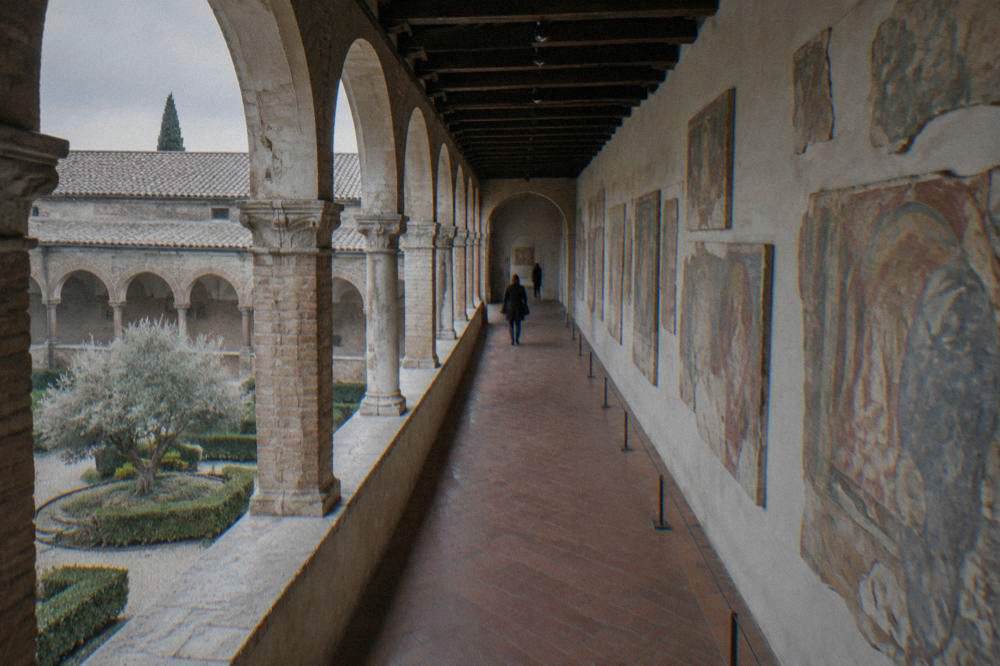
The fresco collection is the part of the visit that surprises people, and it rewards a slower pass. Detached fresco cycles, saints, Madonnas and coats of arms removed from structures that no longer stand, line the former monastery halls, and together they act as a salvage record of the city's painted past. For visitors whose main interest is sacred art in situ rather than in a museum, Verona's churches carry the fuller story: the Duomo Di Verona, Basilica Di San Zeno and San Fermo Maggiore are the standing buildings, all covered by the VeronaCard under the Chiese Vive convention per the comune's card notice.
The monastery's own church, San Francesco al Corso, gives the complex its name and its Franciscan character. The Capuchin order kept it for centuries, and the friars' presence is the narrative hinge that connects the place to the play's final scenes. It is worth holding the two identities in mind at once: a working religious house for generations, and, in one crypt, a stage set for a story that never happened here.
Visitors with an interest in how Verona layers its eras can extend the same walk east along the river. The Teatro Romano and its archaeological museum sit on the hillside across the Adige, and the Ponte Pietra Roman bridge leads to them; the panorama from Castel San Pietro above is the city's classic view. The tomb, by contrast, is the view inward.
How To Plan A Full Romeo And Juliet Day In Verona
A complete Romeo and Juliet day in Verona runs from Juliet's House on Via Cappello in the morning, through Piazza dei Signori at midday, across to Juliet's Tomb at San Francesco al Corso in the mid-afternoon, and back through Piazza Bra and the Arena by evening, folding the literary layers of the legend, da Porto, Bandello, Brooke, into the stops. The sequence keeps the ticketed house slot early, the quiet crypt late, and the open squares in the flexible middle.
The literary thread is what lifts this from a sightseeing list to an itinerary. Begin with the fiction at its source: why an English playwright set his most famous tragedy in a Veneto city he never saw is traced in Why Did Shakespeare Choose Verona For Romeo And Juliet?. Then walk the story's stages in the city that adopted them.
| Stop | What it gives the story | Booking note |
|---|---|---|
| Juliet's House, Via Cappello | The balcony, the statue, the myth machine | Online slot required since 1 April 2026 |
| Piazza delle Erbe | The city Shakespeare never saw, in stone | Open access |
| Piazza dei Signori | Dante's Verona, the factions' backdrop | Open access |
| Juliet's Tomb, San Francesco al Corso | The tragic ending, staged in a real crypt | Civic-museum hours, confirm locally |
| Piazza Bra and the Arena | The Roman city beneath the legend | 12 euro full daytime entry, 9 reduced |
Time of year shapes the day. The shoulder months are the comfortable ones: the ERA5 reanalysis, 1991-2020, gives April a mean daily high of 17.8 C and October 18.1 C in Verona, against July's 29.3 C, and November's 118.2 mm of rain makes it the month least suited to a walking day. The winter version of the route is perfectly viable and far quieter, with January's mean daily high at 7.3 C. For a fuller seasonal treatment, the site's itinerary pages include a Verona In One Day plan that can absorb the tomb as its western leg.
For anyone building the trip around a first visit rather than the legend alone, the umbrella planner at Things To Do In Verona ranks the city's sights and tours, and this Verona Italy Travel Guide page is the quieter corner of it. The tomb rarely makes a first-timer's top list, and that is exactly its value: it is the second-day Verona, the one after the checklist.
What Sits Near The Tomb Worth Adding On?
The immediate neighbourhood of Juliet's Tomb rewards a short extension rather than a second itinerary: Castelvecchio and its Ponte Scaligero sit between the tomb and the centre, the civic art museum inside the castle is one of Verona's substantial collections at a reported 9 euro full entry, and the riverside stretch of the Adige connects onward to the Giardino Giusti and the hillside of Castel San Pietro for anyone with the legs for it. Each stop is an attraction in its own right, and none needs a car.
Castelvecchio deserves more than a pass-through. The reported civic-museum figures put it at 9 euro full, 6 reduced and 2 euro for visitors aged 18 to 25, Tuesday to Sunday 10:00 to 18:00, closed Monday, with a 1 euro first Sunday of the month from November to March; hours and prices should be confirmed on the museum's own pages. The Torre Dei Lamberti up at Piazza delle Erbe, reported at 6 euro and free with VeronaCard, is the other classic add-on, though it belongs to the eastern half of the day.
| Nearby stop | Relation to the tomb | Entry figure |
|---|---|---|
| Castelvecchio museum | Between tomb and centre | Reported 9 euro full, 6 reduced, 2 for 18-25 |
| Ponte Scaligero | At Castelvecchio, over the Adige | Free, open access |
| Arena di Verona daytime visit | Further east at Piazza Bra | 12 euro full, 9 reduced, 3 for 18-25 |
| Giardino Giusti | Across the river, northeast | VeronaCard free/reduced, price not published here |
| Teatro Romano | Across the river, east | Civic-museum ticket, figures not published here |
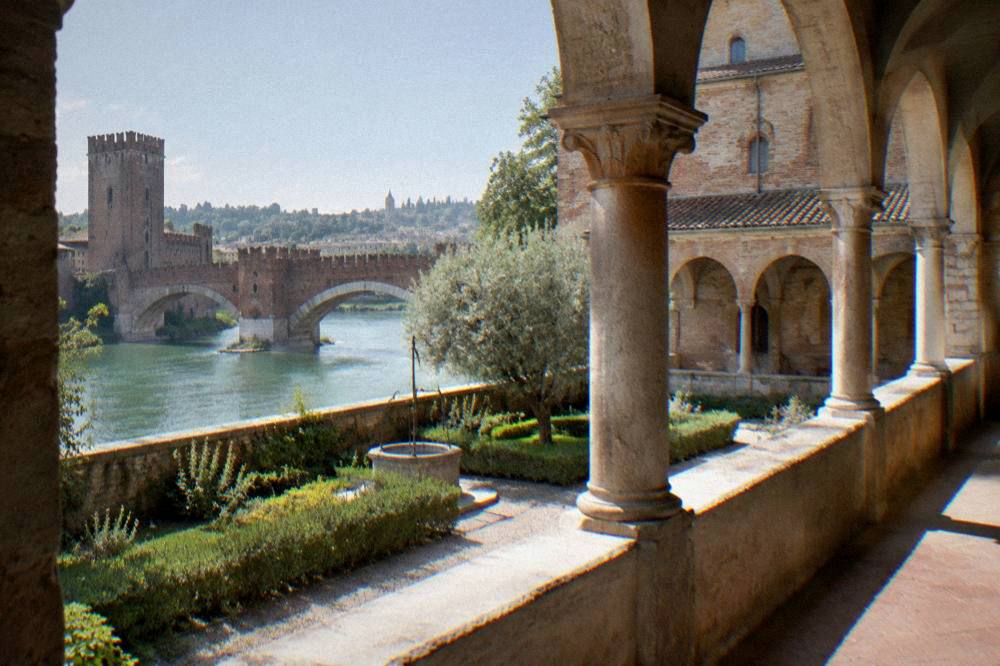
The pairing of tomb and castle makes a coherent western half-day: tragedy, then armour. The Scaliger architecture of Castelvecchio, the family whose tombs at the Arche Scaligere sit near Piazza dei Signori, is the same ruling house whose feuds form the political backdrop of the Romeo and Juliet legend, so the pairing is thematic as well as geographical. The swallows-tail walls of the castle and the open arches of its bridge are among the most photographed structures in a city that also owns a Roman amphitheatre.
For visitors with a second or third day, the wider region opens from the same western side of the city: the San Zeno District around Verona's great Romanesque basilica is a short walk south of the river loop, and the wine hills of Valpolicella begin just beyond the city edge, a reported drive of about 25 minutes to Sant'Ambrogio over free-flow roads. A day trip further afield to Vicenza, about 48 minutes by car from the Arena over the same routing method, works from the same western exit. The tomb is a small stop that sits conveniently on the city's way out.
When Is The Best Time To Visit Juliet's Tomb?
The comfortable months for Juliet's Tomb are April to June and September to October, when the ERA5 reanalysis for Verona, 1991-2020, shows mean daily highs of 17.8 C in April, 22.3 C in May and 23.7 C in September, and when the summer opera crowds at the Arena have not yet arrived or have already gone. The crypt itself is cool year-round, so the choice of season is really about the walk there and the rest of the day, not the vault.
The summer calculation is straightforward. July and August bring the mean daily highs of 29.3 C and 29.1 C, and the Arena's opera season, which ran 5 June to 12 September in 2026 and is announced for 11 June to 11 September in 2027, fills the centre on performance evenings. A summer visit to the tomb is best made in the morning, before the heat and with the crypt as the day's cool interlude. The winter version is quieter still: January's 7.3 C mean high and a thin tourist stream make the monastery courtyard a lonely, atmospheric place, though the shorter daylight compresses the rest of the day.
Rain matters less here than at most Verona sights, because the tomb itself is indoors and the museum galleries around it are too. The wettest months in the reanalysis are November at 118.2 mm, October at 107.2 mm and May at 109.7 mm, and an umbrella covers the walk between the stops. The sight that suffers in rain is the walking tour, not this one.
| Month | Mean daily high (ERA5, 1991-2020) | Rainfall mm | Character for a tomb visit |
|---|---|---|---|
| April | 17.8 C | 93.5 | Mild, green courtyard |
| June | 26.6 C | 92.3 | Warm, opera season begins |
| July | 29.3 C | 79.4 | Hot, peak crowds, cool crypt |
| September | 23.7 C | 99.7 | Warm, season winding down |
| November | 12.3 C | 118.2 | Wet, quiet, indoor-friendly |
| January | 7.3 C | 52.3 | Cold, emptiest, atmospheric |
Whatever the month, the operative planning fact is the same: the tomb keeps civic-museum hours that shift by season, and no figure for them belongs on this page. Check the civic museums' own schedule for the date of the visit, and pair the tomb with an outdoor stop whose hours are fixed, such as the squares and bridges, which never close.
Common Questions About Juliet's Tomb
Is Juliet's Tomb in Verona the real grave of Juliet?
No. The sarcophagus is a genuine old stone coffin but it is empty and unattributed; Verona presents it as the legendary resting place of Shakespeare's character, not the grave of a documented person. No remains or records connect it to a real Juliet.
How much does it cost to visit Juliet's Tomb?
The admission fee is set by Verona's civic museums. Confirm the current price and hours on the official civic museum pages, or at the city tourism office, before visiting.
Where exactly is Juliet's Tomb located?
In the crypt of the former Capuchin monastery of San Francesco al Corso, on the western edge of Verona's historic centre near the Adige, reached from the street through the museum courtyard rather than through a church.
Is Juliet's Tomb worth visiting if time is short?
For a one-day visit centred on the classic sights, the tomb is usually the cut, since the house, the Arena and the squares come first. With a second day, or for anyone following the Romeo and Juliet story specifically, it is the quietest and most atmospheric stop on the trail.
Can you visit Juliet's House and Juliet's Tomb on the same day?
Yes, easily. Both are walkable stops in the historic centre. Book the house slot online in advance, since 1 April 2026 the courtyard route is 5 euro and the house and balcony route 12 euro, and leave the tomb for the quieter mid-afternoon stretch.
Does the VeronaCard cover Juliet's Tomb?
The comune's VeronaCard notice lists the civic museums among the covered sites, but the card's coverage of this specific museum should be confirmed on the official card pages before relying on it, and Juliet's House itself still requires an online booking even for card holders.
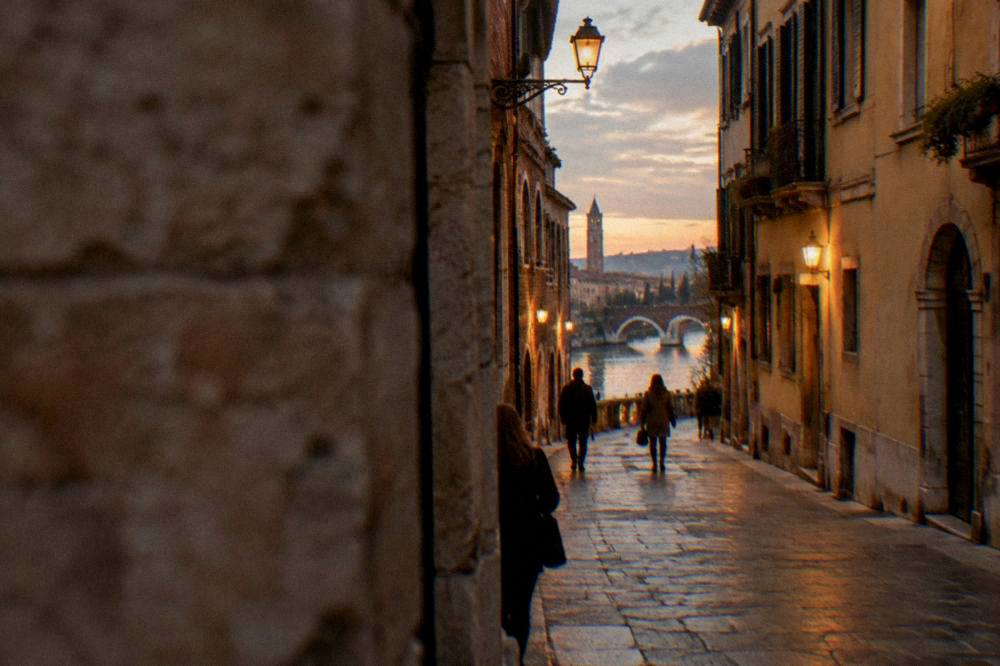
The tomb is the place where the legend stops performing and simply sits still, an empty coffin in a friar's crypt at the edge of a city that has spent centuries telling the story. Visit it late in the day, after the balcony and the crowds, and it does what no other stop on the trail manages: it gives the tragedy an address.