Juliet's House: Courtyard, Balcony And The Statue
Juliet's House in Verona charges for entry since 1 April 2026: 5 euro for the courtyard route and 12 euro for the house and balcony, booked online through the Teatro Nuovo entrance. This guide covers the tickets, the hours, the balcony's real history and the statue custom.
Short answer
Juliet's House in Verona costs 5 euro for the courtyard route and 12 euro for the full house and balcony route since 1 April 2026, with online booking and entry via the Teatro Nuovo. Reported hours are Monday 14:00 to 19:00 and Tuesday to Sunday 9:00 to 19:00.
Juliet's House in Verona, the Casa di Giulietta, is the medieval house on Via Cappello that the Romeo and Juliet legend attached to Juliet's family, and since 1 April 2026 it is fully ticketed: 5 euro for the courtyard route and 12 euro for the house and balcony, booked online, with entry through the Teatro Nuovo. The change ended decades of free courtyard access, and it reshaped how a visit works, from where you line up to what a VeronaCard holder still has to do. This guide lays out the new system, the reported hours, the documented history of the balcony and the bronze statue, and what else sits within a short walk in the heart of this inland city on the Adige.
What Is Juliet's House In Verona?
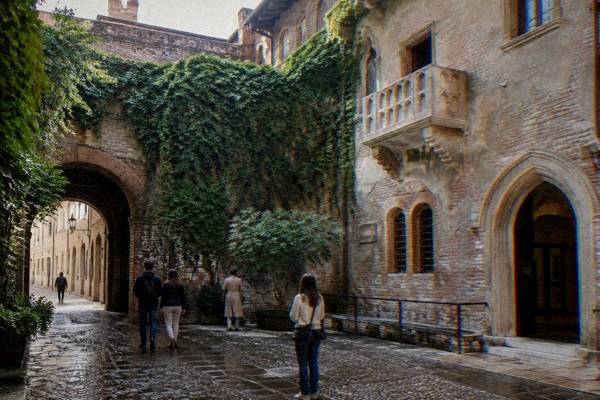
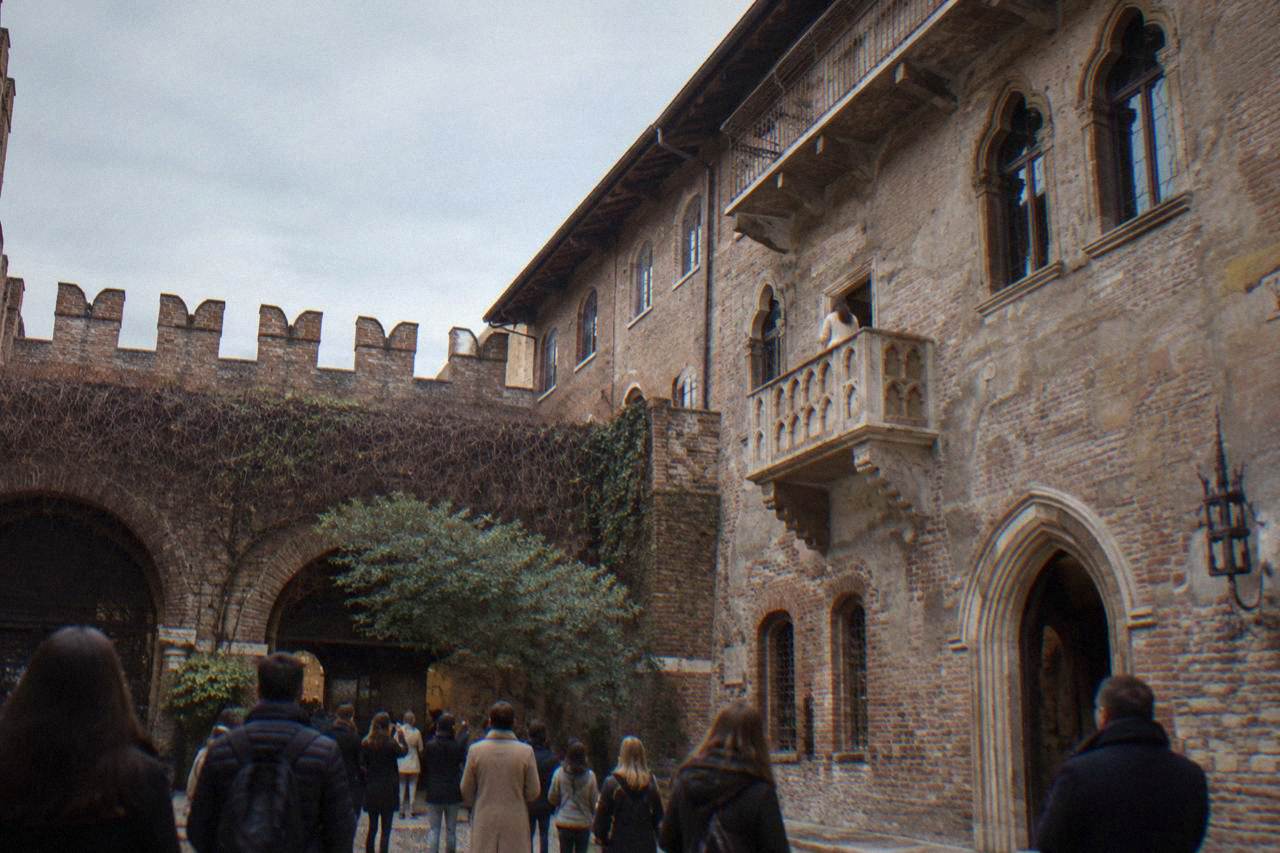
Juliet's House, the Casa di Giulietta, is a medieval house at Via Cappello 23 in central Verona, once owned by the Cappello family and identified in later centuries with the Cappelletti of the Romeo and Juliet legend. Its courtyard holds the stone balcony and the bronze statue of Juliet, and the building now functions as a city museum reached through the Teatro Nuovo. The Comune di Verona runs it as part of the civic museums.
The identification is legend, not archaeology. The story of Romeo and Juliet reached Verona's streets through literature: Luigi da Porto wrote the first version set in Verona in 1531, Matteo Bandello retold it in 1554, and Arthur Brooke's 1562 poem carried it to England, where Shakespeare used it as his source. Nobody in da Porto's era pointed to a specific house. The association of this particular building with Juliet came afterwards, built on the Cappello name echoing Cappelletti, and the city leaned into it. The Comune's own tourism material treats the site as the home of the legend rather than the home of a person, and that framing is the honest one.
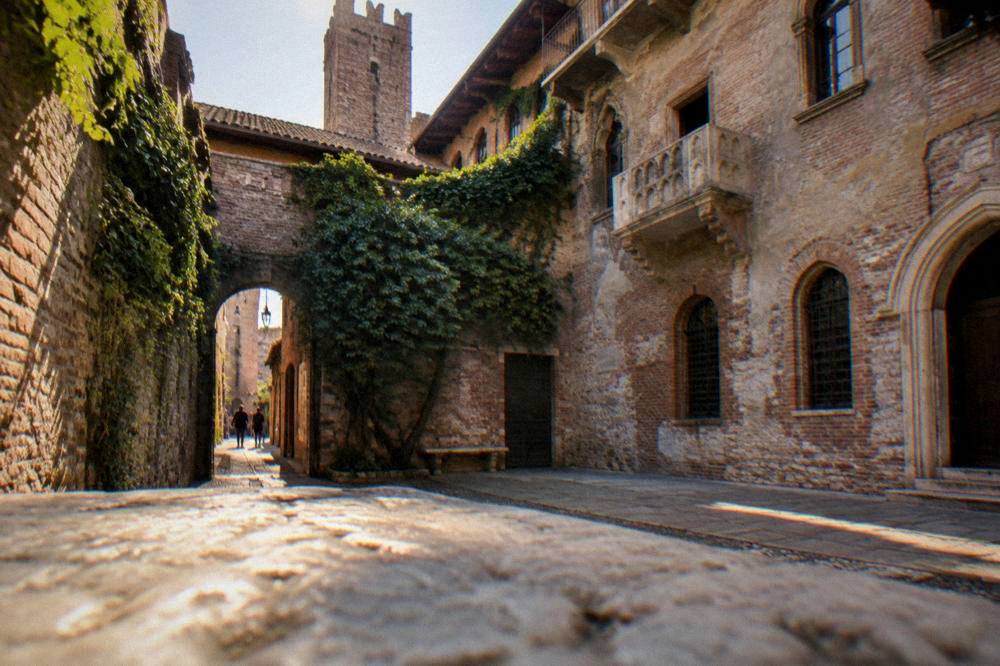
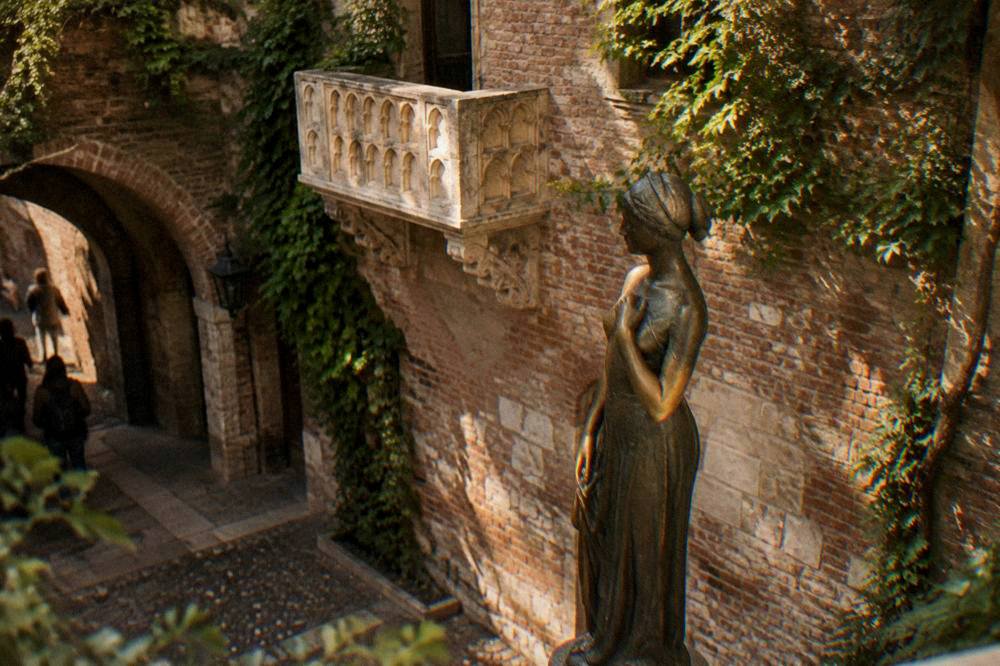
What visitors actually encounter is a small brick courtyard enclosed by the house's walls, with the balcony on an upper facade, the bronze statue standing in the courtyard, and a museum route through the house's rooms furnished in period style. The full route includes the balcony itself, reachable from inside the house. The courtyard-only route lets you see the balcony from below and the statue without entering the house. Both routes are ticketed now, which is the single biggest change to know before arriving, and the details of that system fill the next section.
How Much Do Juliet's House Tickets Cost In 2026?
Since 1 April 2026 the courtyard route at Juliet's House costs 5 euro and the full house and balcony route costs 12 euro, according to the Comune di Verona's own access notice, with booking online and entry via the Teatro Nuovo at Piazzetta Navona. Children under 5 and visitors with a disability card plus a companion enter free, and VeronaCard holders also enter free but still must book online. The free-courtyard era is over.
The ticket notice comes from the official VisitVerona page describing the new access arrangements, and it is worth treating the prices as fixed for the 2026 season. There are no on-site sales reported under the new system, so arriving without an online booking risks a wasted walk. The two routes are distinct products: the 5 euro route covers the courtyard with its view of the balcony and the statue, while the 12 euro route adds the house interior and the balcony itself.
| Route | Price | What It Covers |
|---|---|---|
| Courtyard route | 5 EUR | Courtyard, statue, view of the balcony from below |
| House and balcony route | 12 EUR | Courtyard, statue, house interior and the balcony |
| Under 5 | Free | Either route |
| Disability Card holder plus companion | Free | Either route |
| VeronaCard holders | Free with card | Either route, online booking still required |
For anyone building a Verona itinerary around the legend, the full guide to Romeo and Juliet in Verona traces every site tied to the story, and the companion piece on whether Juliet's balcony is real takes the balcony question in more depth than this page can.
If a timed visit with an audio guide appeals more than a self-booked slot, the operator's live listing for the fast-track ticket is the practical route:
How Do You Book And Enter Juliet's House Now?
Booking is online in advance, and entry is through the Teatro Nuovo at Piazzetta Navona, a change made on 1 April 2026 that replaced the old direct courtyard entrance and all on-site sales. VeronaCard holders must also book online even though their entry is free, per the Comune's VeronaCard notice. There is no reported walk-up ticket office under the new system, so confirm the booking flow on the official Casa di Giulietta pages before travelling.
The shift of the entrance to the Teatro Nuovo is the detail that catches out anyone returning from an earlier trip or following an older guidebook. The courtyard door on Via Cappello that once admitted the queue is no longer the way in. Piazzetta Navona sits a short distance away, and the reported arrangement routes ticket holders through the theatre building into the courtyard.
The three practical rules under the 2026 system, then, are: book online before you arrive, choose the route you actually want because the courtyard-only ticket does not convert on the spot, and head to the Teatro Nuovo rather than the old street door. A timed fast-track product with an audio guide covers the same logistics and suits travellers who would rather not manage the booking themselves. The City Card with Arena priority entrance is a separate bundled product worth knowing about when several paid sights share an itinerary.
What Are The Opening Hours At Juliet's House?
The reported hours at Juliet's House are Monday 14:00 to 19:00 and Tuesday to Sunday 9:00 to 19:00, per the Casa di Giulietta's own site, though hours are the kind of detail that shifts around holidays and events, so confirm before you go. The Monday afternoon opening is the anomaly to plan around: a Monday morning visit finds the doors shut.
These hours carry the usual caveat of any civic museum in an Italian city: special events, private functions and holiday weeks can alter them without much notice. The Comune's pages are the place to check close to your travel date. What the reported schedule does tell you is that the site operates seven days a week in season, with only Monday mornings dark, which makes it one of the more accessible sights in a city where several museums close on Mondays entirely.
| Day | Reported Hours |
|---|---|
| Monday | 14:00 to 19:00 |
| Tuesday to Sunday | 9:00 to 19:00 |
The Monday pattern matters for itinerary design. The Arena di Verona, for comparison, is reported closed on Mondays for daytime visits, so a Monday in Verona is a day for open-access places: squares, bridges and streets rather than interiors. Pairing Juliet's House with the Piazza delle Erbe next door, which is a public square open at all hours, works on any day of the week.
Is Juliet's Balcony Actually Real?
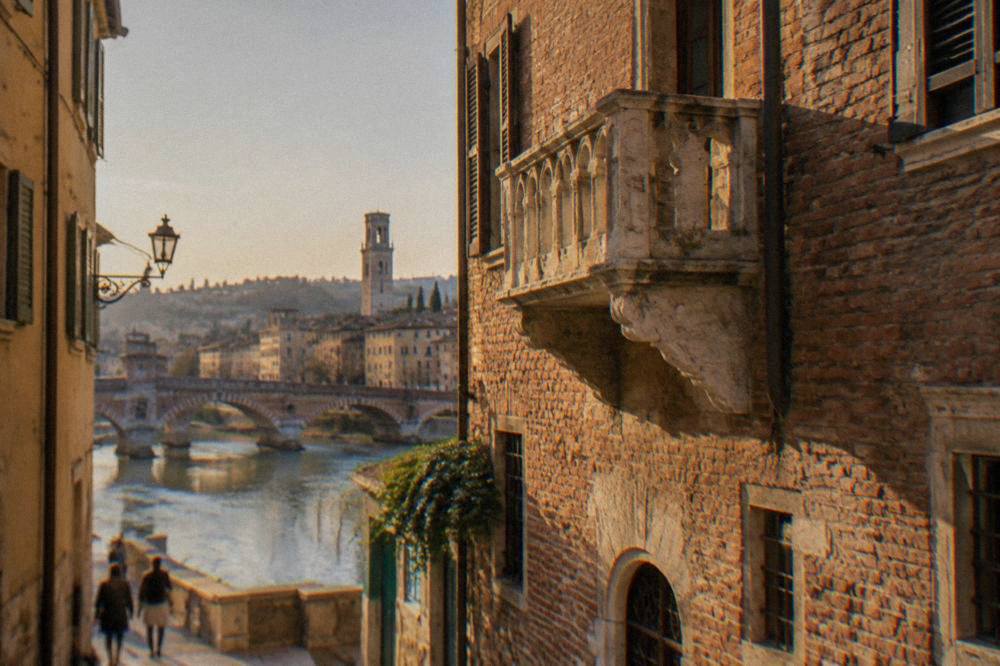
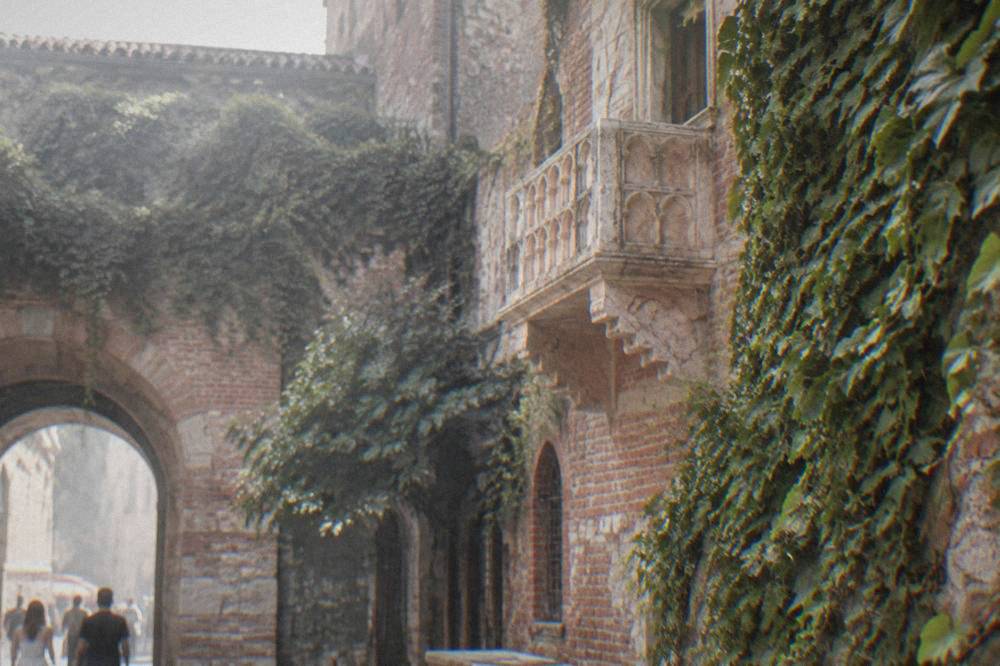
The balcony on Juliet's House was added in 1940, assembled from stone recovered from an old sarcophagus, and it is not original to the house or to any building of the story's era, per the Comune di Verona's own tourism pages. It is a piece of stage dressing from modern times that became, through sheer repetition, one of the most photographed objects in Verona.
The honesty here is not a debunking so much as a clarification of what kind of place this is. The legend of Romeo and Juliet is literary, and the physical sites attached to it in Verona were matched to the story afterwards, not the other way round. The Comune's material is itself candid about the balcony's 1940 origin, which says something good about how the city presents the site: come for the story, know the set was built for it.
| Element | Reported Date | Detail |
|---|---|---|
| Balcony added | 1940 | Built from stone of an old sarcophagus, not original |
| Bronze statue by Nereo Costantini | 1969 | Cast in bronze |
| Statue placed in courtyard | 1972 | Installed at the Casa di Giulietta |
| Statue replaced by a copy | 2014 | Original moved inside, copy placed outdoors |
None of this reduces the courtyard's pull. A 1940 balcony on a genuine medieval house, in the city the legend named, still delivers the scene the story describes, and the full answer to why Shakespeare chose Verona explains how a 1531 novella by Luigi da Porto put the tale in this city in the first place, with Dante's mention of the Montecchi and Cappelletti factions behind the choice.
Why Do People Touch The Statue Of Juliet In Verona?
People touch the right breast of the bronze statue of Juliet because a local custom holds that it brings good fortune in love, a tradition the Comune di Verona's own tourism pages acknowledge while noting that the rubbing has worn the statue's surface. The custom dates from the decades after the statue's 1972 installation, and it is the reason the original 1969 bronze was moved inside in 2014 and replaced with a copy.
The statue's biography is documented in the city's own material. Nereo Costantini cast it in 1969, it was placed in the courtyard in 1972, and by 2014 the accumulated touching had worn it enough that the original went indoors and a copy took its place in the courtyard. The copy now wears the same polished patch, which tells you the custom did not pause for the swap. The deeper story of the touching ritual is covered in the dedicated page on why people touch Juliet's statue in Verona.
Customs like this one are the living layer of the Juliet legend, the part that behaves like folklore rather than museum content. The letters addressed to Juliet, the weddings, the Valentine's season crowds, all of it runs on the same engine: a fictional girl whose address the whole world agreed on. Verona leans into that role every February with the Verona in Love event, which ran 13 to 15 February 2026 in its latest edition, and the city's identity as a destination for couples is built substantially on this courtyard. Everything else covered here is indexed on Verona Italy Travel Guide.
Did Juliet Ever Live In This House?
No person named Juliet Capulet is documented as living in this house, or anywhere in Verona, because Romeo and Juliet are literary characters whose earliest Verona-set source is Luigi da Porto's 1531 novella, and Shakespeare never visited Verona at all, per the historical record summarised by local history sources. The house belonged to the Cappello family, a real dynasty whose name resembles the Cappelletti of the story.
The chain of transmission is the interesting part. Da Porto, a Vicenza nobleman, wrote the story in 1531 and set it in Verona, drawing on Dante's reference to the feuding Montecchi and Cappelletti families. Bandello's 1554 version spread the tale through Italy, and Brooke's 1562 English poem put it in front of Shakespeare, who dramatized it for the stage without ever setting foot in the city. Every physical Juliet site in Verona, the house, the tomb, the wall inscriptions, descends from that literary line.
| Year | Step In The Story's Journey |
|---|---|
| 1531 | Luigi da Porto writes the first version, set in Verona |
| 1554 | Matteo Bandello's retelling circulates in Italy |
| 1562 | Arthur Brooke's poem reaches England |
| After 1562 | Shakespeare dramatizes Brooke's poem |
| 1940 | The balcony is added to the courtyard facade |
Visitors who want the full physical trail can continue from the courtyard to Juliet's Tomb, the former monastery site on the other side of the river, described on the Tomba di Giulietta page. Its hours and fee vary, so check the civic museums' own pages before walking over.
What Sits Within A Short Walk Of Juliet's House?
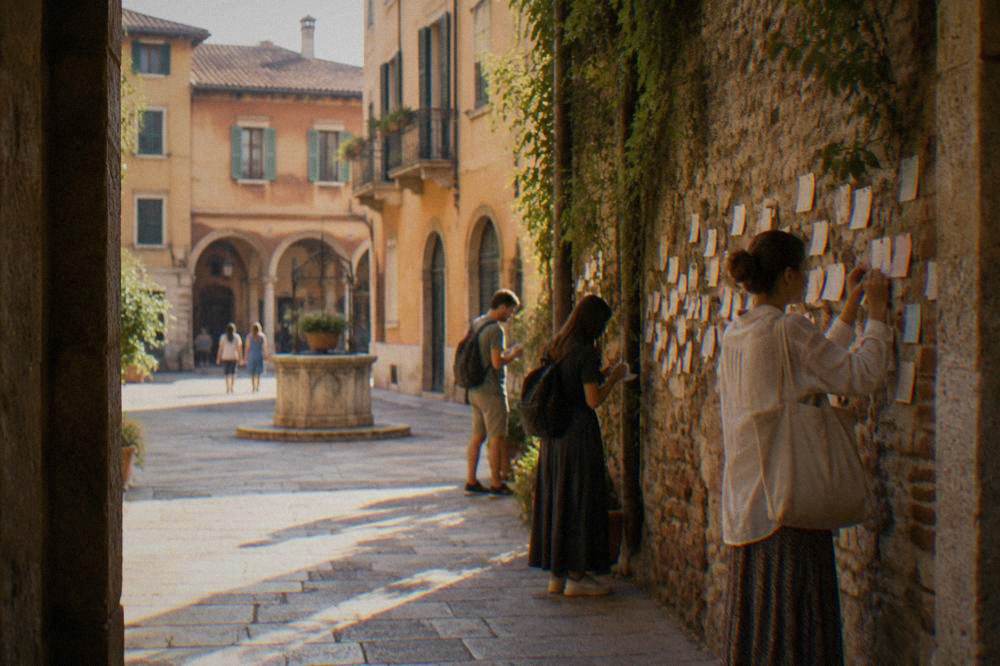
Juliet's House sits on Via Cappello, a few minutes' level walk from Piazza delle Erbe, the Torre dei Lamberti and Piazza dei Signori, and within easy reach of the Arena in Piazza Bra, which makes it the anchor of a compact walking circuit through the historic centre rather than a standalone destination. The whole old city is a UNESCO World Heritage site, inscribed in 2000.
Via Cappello runs from Piazza Erbe towards Porta Leoni, so the house sits naturally on the main axis of the medieval centre. A visitor leaving the courtyard can reach the market square of Piazza delle Erbe almost immediately, then Piazza dei Signori with the Arche Scaligere just beyond, then either the Torre dei Lamberti for a rooftop view or the Arena a few minutes further on. The Piazza dei Signori and the Arche Scaligere sit close together, and the Scaliger tombs tie into the same civic ticket system and VeronaCard coverage as the main museums.
| Nearby Sight | Character | Access |
|---|---|---|
| Piazza delle Erbe | Historic market square | Open access, free |
| Piazza dei Signori | Renaissance square of the Signoria | Open access, free |
| Arche Scaligere | Scaliger family tombs | Viewable from street, civic tie-in |
| Torre dei Lamberti | Civic tower with city view | Ticketed, reported 6 euro, free with VeronaCard |
| Arena di Verona | Roman amphitheatre | Ticketed, 12 euro full daytime |
The Torre dei Lamberti price is reported rather than re-read from the tower's own page, so treat it as a planning figure and confirm on the tower's site. The Arena's daytime price of 12 euro full and 9 euro reduced comes from the Comune's price list and is firm for the season. For anyone assembling the wider circuit, the things to do in Verona page sequences all of it.
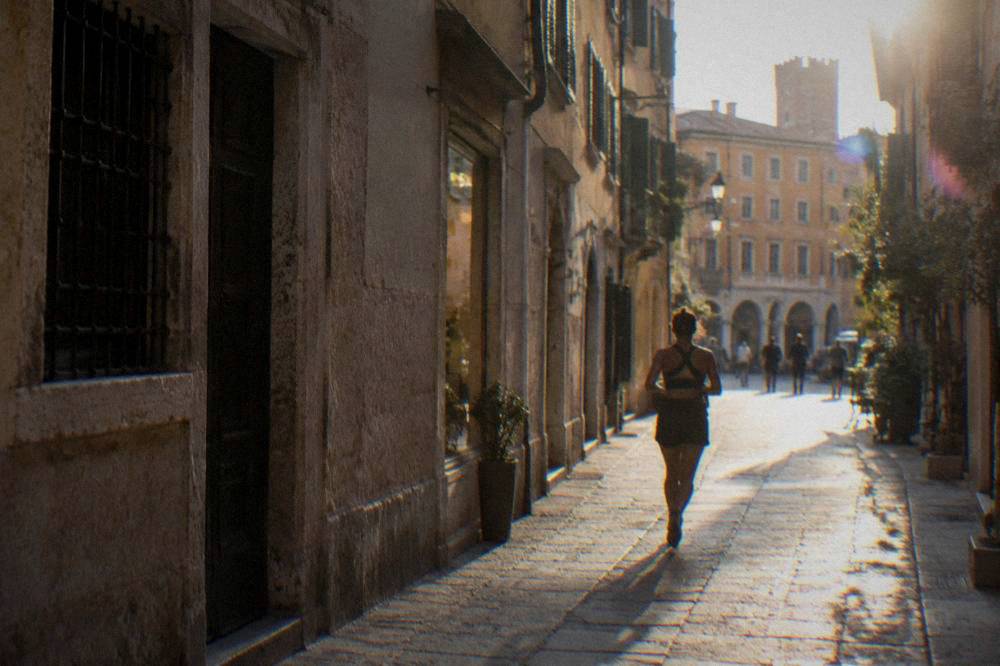
A guided roll through the centre covers the same ground at bicycle pace, which suits visitors compressing Verona into a single day:
Does The VeronaCard Cover Juliet's House?
The VeronaCard includes free entry to Juliet's House, but card holders must still book online for a timed slot, per the Comune di Verona's VeronaCard notice, and the card became digital on 1 September 2026 at 33 euro for 24 hours or 38 euro for 48 hours with ATV transport included, or 29 and 32 euro without transport. The card covers the Arena, Castelvecchio, the Torre dei Lamberti and the civic churches among other sites.
The booking requirement is the detail that trips people up. A VeronaCard does not function as an open pass at Juliet's House the way it does at the Arena's daytime gate, because the timed-entry system put in place in April 2026 applies to everyone, card or no card. Book the slot, carry the card, show both.
| VeronaCard Option | Price | Notes |
|---|---|---|
| 24 hours with ATV transport | 33 EUR | Digital card from 1 September 2026 |
| 48 hours with ATV transport | 38 EUR | Digital card from 1 September 2026 |
| 24 hours without transport | 29 EUR | Sights only |
| 48 hours without transport | 32 EUR | Sights only |
Whether the card pays off depends entirely on how many of the covered sights a visit includes, and this page will not compute a saving because the arithmetic belongs to each reader's plan. The Castelvecchio museum, the Teatro Romano and the church circuit under the Chiese Vive convention are the heavyweight entries on the covered list, and the card's own notice states that the Aerobus from the airport is not included. Old paper cards remain valid to 31 March 2027, per the Comune's announcement.
When Is The Best Time Of Day To Visit Juliet's House?
The reported opening pattern, Tuesday to Sunday from 9:00 and Monday from 14:00, makes early morning the structurally quietest window, because the site opens at a fixed hour and tour groups tend to build through the middle of the day, and the evening close at 19:00 leaves late afternoon as the second calmer option. No queue-length figure is available, so treat this as schedule logic rather than a measured claim.
Timed booking changes the calculus somewhat: a reserved slot removes the uncertainty of the old free-courtyard queue, which could stretch far down Via Cappello on summer weekends. What booking does not remove is crowding inside the courtyard itself, which is a small space that every visitor passes through regardless of route. The photographs that come out of it are better in morning or late light, when the brick facade carries colour and the balcony stands out against the sky rather than the flat glare of midday.
Season matters as much as hour. July and August bring the opera crowds to Verona, with mean daily highs of 29.3 and 29.1 C respectively in the ERA5 reanalysis for 1991-2020, and November is the wettest month at 118.2 mm of rain in the same normals, so spring and early autumn combine milder figures with thinner streets. The dedicated best time to visit Verona guide takes that comparison further.
How Does Juliet's House Fit Into A Day In Verona?
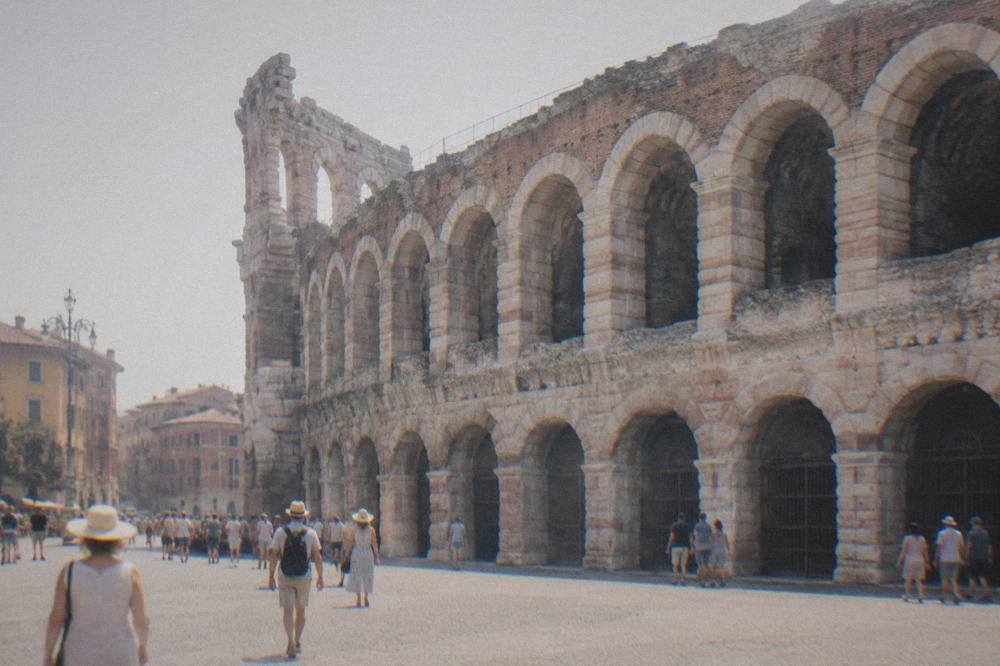
Juliet's House works best as the first or last stop of a central circuit: book a timed slot, walk the Via Cappello axis to Piazza delle Erbe and Piazza dei Signori, then continue to the Arena in Piazza Bra, with the whole sequence covering the heart of the UNESCO-listed centre in a single morning or afternoon on foot. Adding the Ponte Pietra, the Teatro Romano hillside or the Giardino Giusti turns it into a full day.
A sample structure looks like this: a 9:00 slot at the Casa di Giulietta, an hour in the courtyard and house, then Piazza Erbe and Piazza dei Signori, the Torre dei Lamberti if a rooftop view matters, and the Arena by late morning. Lunch in the centre, then the river loop across the Ponte Pietra, described on the Ponte Pietra page, and the Roman theatre hillside for the panorama. Visitors with more time can extend toward the Giardino Giusti or the Castel San Pietro viewpoint above the river bend.
The circuit is walkable end to end, which is one of Verona's strengths as a city: the historic centre is compact, flat along its main axis, and crossed by the Adige at both ends. Travellers pairing the legend with the region's other famous export can cap the day in the Valpolicella hills, about 25 minutes' drive from the Arena by free-flow road:
Common Questions About Juliet's House In Verona
Is Juliet's courtyard free?
No. Since 1 April 2026 the courtyard route costs 5 euro and the house and balcony route costs 12 euro, booked online with entry via the Teatro Nuovo. The detailed answer sits on the page about whether Juliet's courtyard is free.
Can you go on the balcony at Juliet's House?
Yes, on the 12 euro house and balcony route, which includes the interior of the house and access to the balcony itself. The 5 euro courtyard route shows the balcony from below only.
Was the balcony really Juliet's?
No. The balcony was added in 1940 using stone from an old sarcophagus, per the Comune di Verona's tourism pages, so it postdates the medieval house and the legend alike.
Do VeronaCard holders need to book Juliet's House?
Yes. The VeronaCard includes entry but the online booking requirement applies to card holders too, per the Comune's VeronaCard notice.
Did Shakespeare visit Verona?
No. He never visited the city, and his play reached him through Luigi da Porto's 1531 novella, Bandello's 1554 retelling and Arthur Brooke's 1562 poem.
Is Juliet's House open on Mondays?
Reported hours are Monday 14:00 to 19:00, so it opens on Monday afternoons only. Confirm current hours on the official pages before visiting.
Juliet's House rewards visitors who know what it is before they arrive: a literary shrine in a genuine medieval building, ticketed and bookable since April 2026, with a balcony from 1940 and a statue polished by decades of wishing. Book the slot online, enter through the Teatro Nuovo, and give the courtyard its moment before walking on into the squares and stone of one of Europe's best-preserved historic centres, all of it a short stroll from the door.