Romeo And Juliet In Verona: What Is Real And What Is Not
Verona, in Veneto, northern Italy, sells itself as the city of Romeo and Juliet, and the legend pays the bills. But almost nothing of the story happened here in the way the postcards imply. This guide separates the documented facts from the theatre.
Short answer
Juliet's House in Verona is a real medieval house with no documented connection to any real Juliet, its balcony was added in 1940, and since 1 April 2026 the courtyard costs 5 euro (12 euro with the house), booked online. Shakespeare never visited Verona; he drew on Italian and English sources published from 1531 onward.
Verona, an inland city on the Adige river in Veneto, northern Italy, is listed by UNESCO and famous worldwide for a love story that, in its best-known form, was written by a man who never set foot in the place. The Romeo and Juliet industry is nonetheless real: a real medieval house on Via Cappello, a real bronze statue, a real stone balcony, and, since 1 April 2026, a real ticket queue. This page from the Verona Italy Travel Guide editorial desk lays out what the sources actually say, what is invention, and what a visitor in 2026 needs to know before standing in the courtyard.
Is Juliet's House In Verona Real?
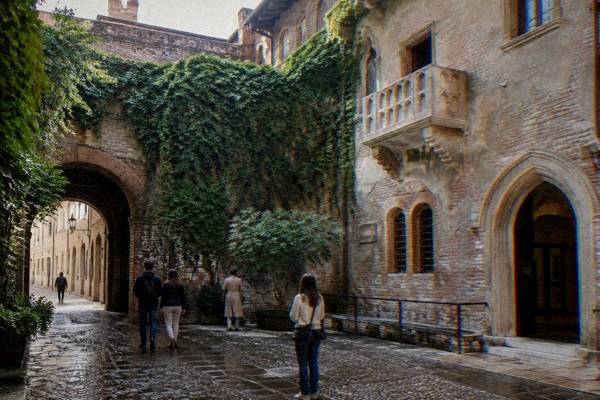
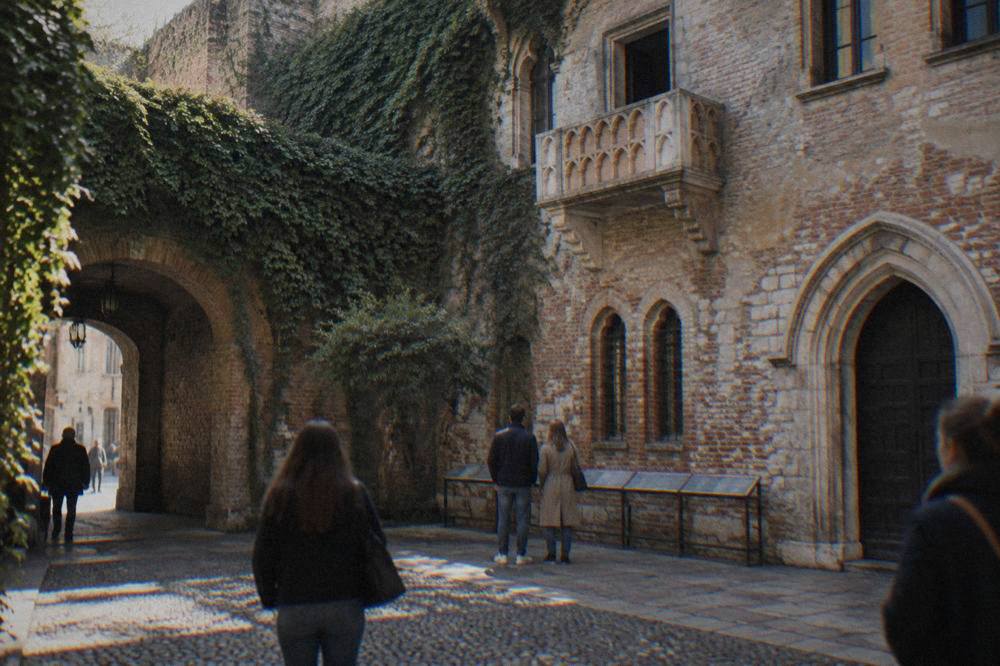
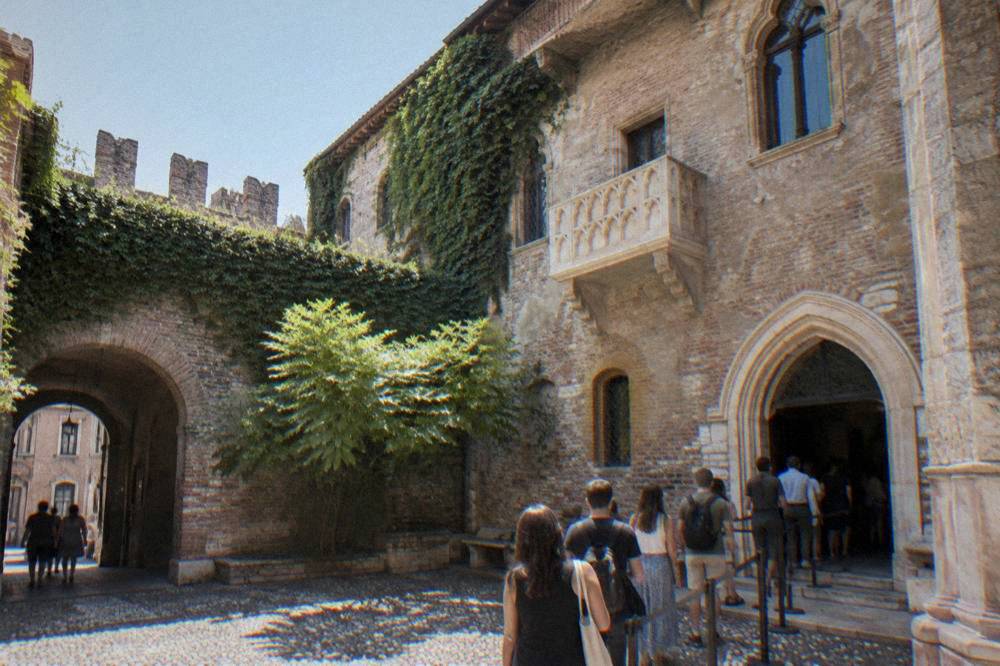
Juliet's House, the Casa di Giulietta at Via Cappello 23, is a genuine medieval house in central Verona, but the city's own tourism pages make no claim that a real Juliet ever lived in it, and no documentary evidence connects any Capulet family to the building. The house was taken over and fitted out as "Juliet's" in modern times, and the Comune di Verona now runs it as a museum. What is real is the house; what is staged is the attribution.
The building itself is old Veronese stock, with the tall brick facade and inner courtyard typical of the city's medieval dwellings. The Comune's tourism material explains the connection as legend rather than record: the house belonged to the Dal Cappello family, a name close enough to Capulet that tradition adopted it, and the city leaned into the association. There is no birth certificate, no lease and no contemporary letter tying a Giulietta to these rooms.
That does not make it a fraud. It makes it a shrine. The statue in the courtyard is by the sculptor Nereo Costantini, completed in 1969 and placed in the courtyard in 1972, per the Comune's own history page. A copy now stands outside after the original was moved indoors in 2014, worn down by the touching custom described further down this page. The museum inside displays period rooms and frescoes moved from Veronese palaces, presented as a setting for the legend rather than as evidence for it.
The deeper answer to the question is literary, and the trail is well documented. The full story of the legend's sources is on the Why Did Shakespeare Choose Verona page, but in short: Luigi da Porto wrote the first version set in Verona, published in 1531; Matteo Bandello retold it in 1554; Arthur Brooke turned it into an English poem in 1562; and Shakespeare worked from Brooke. So the city in the story is genuinely Verona, chosen by da Porto long before anyone sold a ticket to a balcony.
What Does Juliet's House Cost To Visit In 2026?
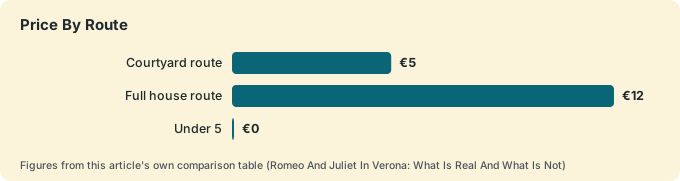
Since 1 April 2026, Juliet's courtyard is no longer free: the courtyard route costs 5 euro and the full house and balcony route costs 12 euro, per the Comune di Verona's own announcement, with booking online in advance and access routed through the Teatro Nuovo at Piazzetta Navona. Reported opening hours are Monday 14:00 to 19:00 and Tuesday to Sunday 9:00 to 19:00, and VeronaCard holders still need the online booking.
This is the single most changed fact about the site, and older guidebooks are wrong about it. For decades the courtyard was a free photo stop and only the house was ticketed. The Comune's visitverona.it notice states the new arrangement plainly: two routes, online booking, and a new entrance through the Teatro Nuovo rather than the old lane off Via Cappello. Visitors who turn up expecting to walk in for a quick statue photo will meet a gate and a queue.
| Route | Price | What it covers |
|---|---|---|
| Courtyard route | 5 EUR | Courtyard, statue, balcony viewed from below |
| Full house route | 12 EUR | Courtyard plus the museum rooms and the balcony itself |
| Under 5 | Free | Stated exemption |
| VeronaCard holders | Card coverage | Booking online still required, per the Comune's notice |
Whether the 5 euro courtyard route is worth it is a fair question, and the honest answer depends on what a visitor wants. The balcony is visible from the courtyard, the statue stands there, and the wall of love letters and notes is part of the scene. The full route adds the interior, the bed and costumes from film adaptations and the chance to stand on the balcony itself. Anyone who wants the deeper history of the site rather than the photo should read the dedicated Casa di Giulietta guide before deciding, and the question "is Juliet's courtyard free?" is answered in full on the courtyard ticket page.
For a fixed itinerary, the fastest way through both the legend and the ticket is a guided option. The walk with Arena and cable car covers the city's highlights with a local guide and offers optional Juliet's House tickets, so the timing of the two queues is handled in one booking: Check availability
Was Juliet's Balcony Really Hers?
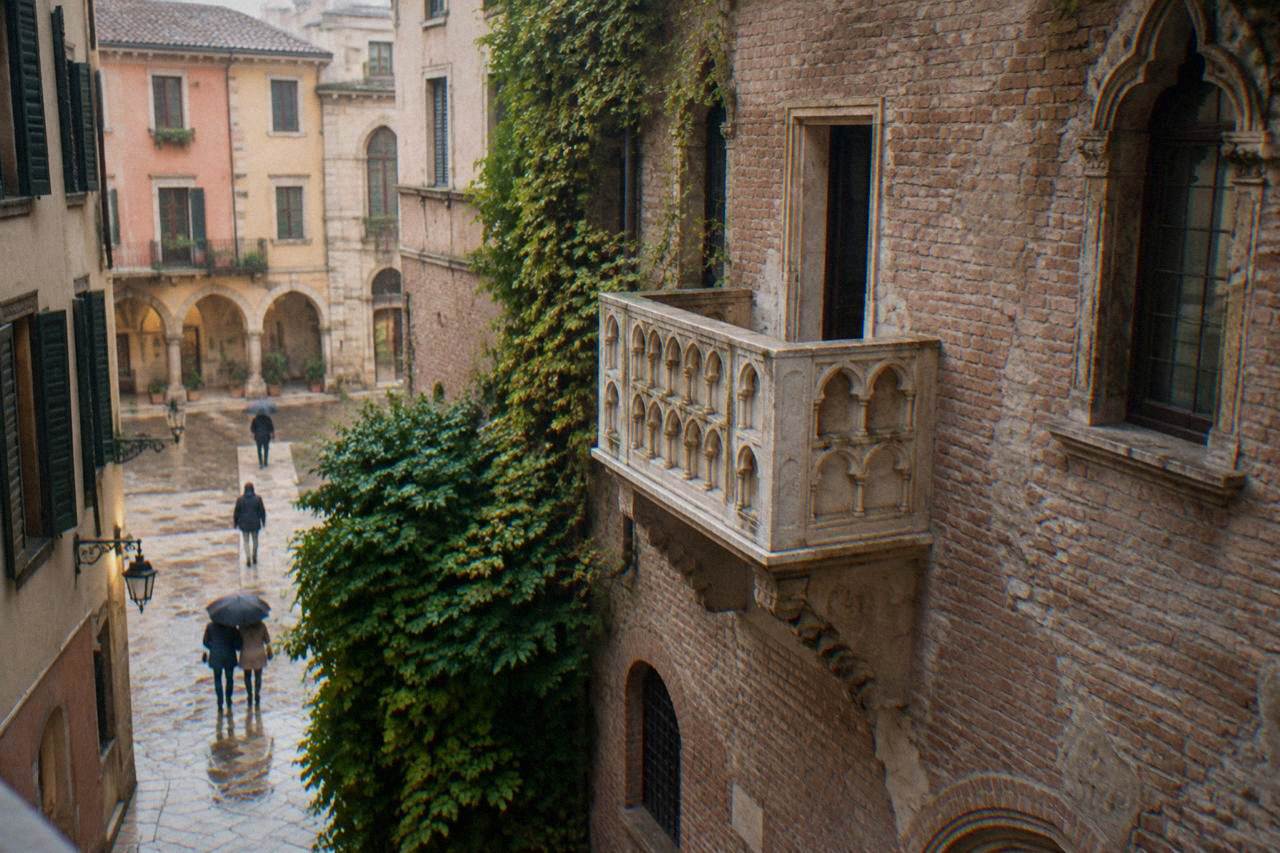
No. The balcony on Juliet's House was assembled and attached to the facade in 1940 from fragments of a centuries-old stone sarcophagus, per the Comune di Verona's own tourism history, because the house described in a 16th-century story had no balcony at all: the word does not appear in any Italian source of the legend, where the famous scene is a window conversation. It is a beautiful, deliberate piece of set design.
The detail is worth dwelling on because it is the clearest window into how Verona built its legend. Shakespeare's play has the famous balcony scene only by tradition; the earliest texts speak of a window. When the city developed the house as a shrine in modern times, a balcony was needed for the myth to have somewhere to happen, and one was supplied from salvaged stone. The Comune's page states the 1940 date and the sarcophagus origin without apology, and that transparency is the right way to read the whole site.
A fuller treatment of this question, including the window-versus-balcony text history, sits on the balcony page. The short version for planning purposes: every picture of the balcony is a picture of a 1940 addition on a genuine medieval house, and knowing that in advance makes the visit more interesting, not less. The stone is old, the house is old, the story is old, and only the combination is new.
| Element | Date or origin | Real or staged |
|---|---|---|
| The house, Via Cappello | Medieval building | Real, but no documented Juliet lived there |
| The balcony | Added 1940 from sarcophagus fragments | Staged for the legend |
| The bronze statue | Nereo Costantini, 1969; placed 1972; copy since 2014 | Real sculpture, deliberately created for the site |
| The love-letter wall | Ongoing custom | Real custom, modern |
| Verona as the story's setting | Luigi da Porto, 1531 | Real literary choice, made long after the story's era |
Why Do People Touch Juliet's Statue In Verona?
The bronze statue of Juliet in the courtyard is rubbed on its right breast for luck in love, a custom so persistent that the original 1969 bronze by Nereo Costantini wore thin and was replaced by a copy in 2014, with the original moved indoors for protection, according to the Comune di Verona's own account of the statue. The custom has no literary basis in Shakespeare or in the Italian sources; it is a modern superstition attached to the object.
Crowds at the statue are a fixed feature of the courtyard, and the wear pattern on the bronze is visible proof. The Comune's history page records the sequence plainly: sculpted, installed in 1972, copied in 2014 after two decades of polishing by hand. There is a fuller account of the custom and its spread on the statue touching page.
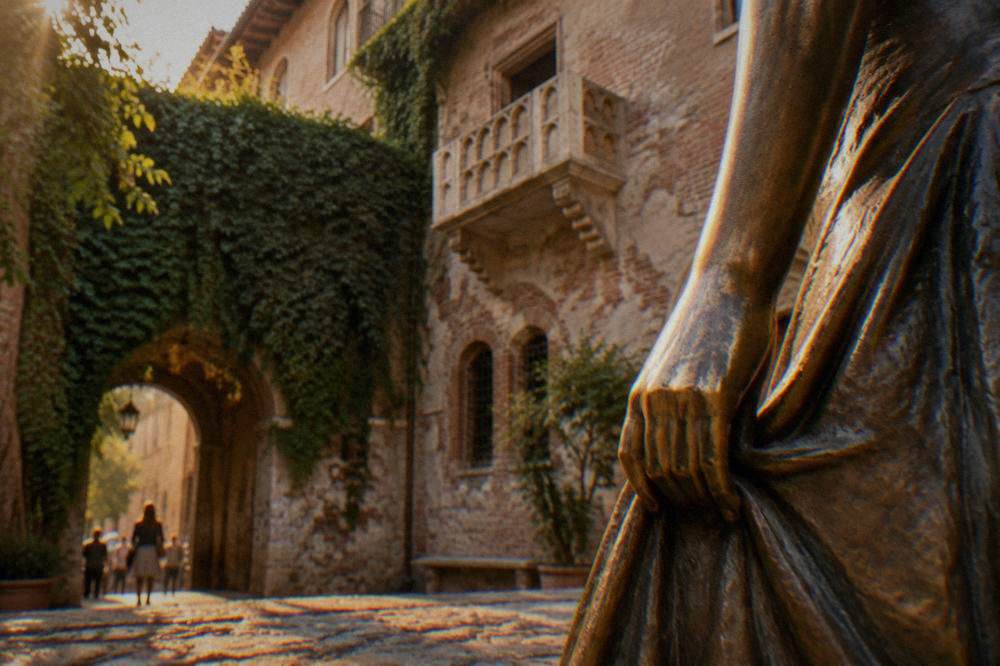
The statue is also the practical centrepiece of the visit. Under the 2026 ticketing, the courtyard route exists largely for this sculpture, the balcony view and the note wall, so anyone photographing the statue should budget for the 5 euro route. Visitors who want the statue without the fee can see copies of the imagery across Veronese souvenir shops, but the courtyard itself is now a paid space.
Where Else In Verona Does The Legend Live?
Beyond the house, the legend has two other anchors in Verona: Juliet's Tomb, in a former monastery location on Via del Pontiere presented as the sarcophagus site, and Romeo's alleged house at Via Arche 2, a private building with a plaque and no public interior. The city also stages Verona in Love each February, which ran 13 to 15 February in 2026, and a Romeo and Juliet event tradition in September; dates for 2027 had not been announced.
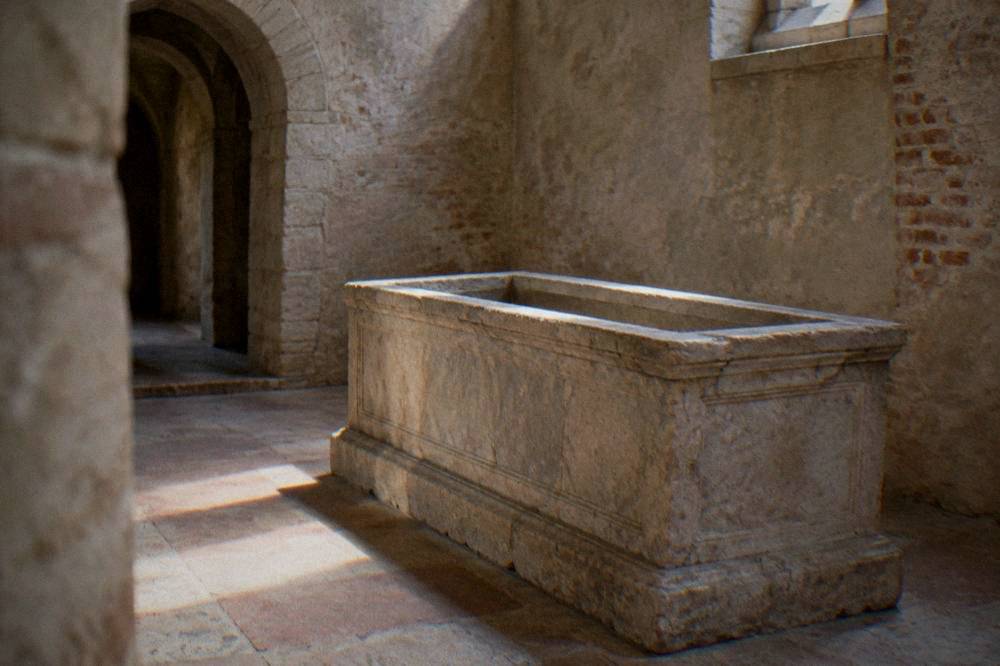
Juliet's Tomb is the quieter, stranger stop. The setting is a low stone chamber with an empty open sarcophagus, and the site's own framing leans on the legend rather than on any claim of remains. Check the current hours and admission fee on the official Verona museum pages before going; the dedicated Tomba di Giulietta guide covers what is known. Romeo's house, a short walk away, is a facade and a plaque only: there is no museum, no ticket and no interior to see, and it earns a five-minute detour on a walk through the centre.
The February festival is the city's other love-themed draw. Verona in Love ran 13 to 15 February in 2026 per the Comune's event page, with the historic centre decorated and themed events around the main sites. It is an annual fixture, but the 2027 dates had not been published, so anyone planning a Valentine's trip should check the Comune's events calendar closer to the date rather than assume.
| Site | Where | Access in 2026 |
|---|---|---|
| Juliet's House and courtyard | Via Cappello, entry via Teatro Nuovo | 5 EUR courtyard, 12 EUR full, book online |
| Juliet's Tomb | Via del Pontiere | Fee and hours: confirm on official pages before visiting |
| Romeo's house | Via Arche 2 | Exterior and plaque only, private building |
| Statue of Juliet | Inside the Casa di Giulietta courtyard | Included in either ticket route |
| Verona in Love festival | City-wide, February | 2026 ran 13 to 15 February; 2027 dates not announced |
How Do You Plan A Romeo And Juliet Day In Verona?
A practical Romeo and Juliet day in Verona fits inside a walk of the historic centre: start at the Casa di Giulietta with a pre-booked ticket, continue past Romeo's house plaque to Piazza delle Erbe and the Scala della Ragione, cross to the Castelvecchio stretch of the Adige, and end at Juliet's Tomb near Porta Palio, with the whole route on foot because the centre is compact and partly closed to traffic. Allow a half-day at an unhurried pace, more with the house interior.
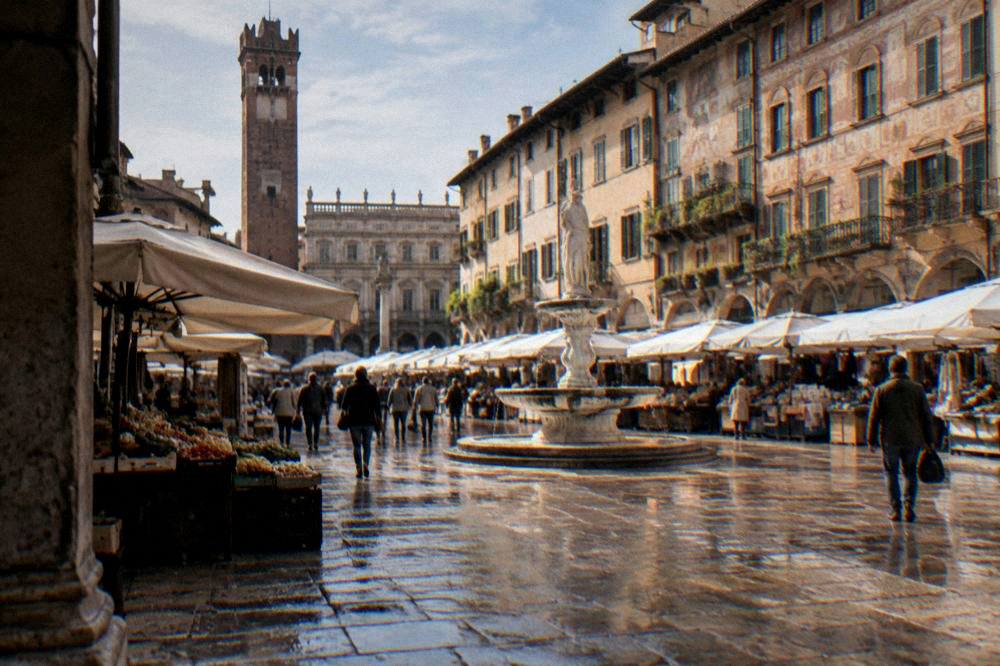
The order matters for one reason: the ticket. Booking the Casa di Giulietta online fixes a time slot, so build the walk around that entry rather than the reverse. The full house route is the slower of the two; the courtyard route is a short stop. Piazza delle Erbe, the old Roman forum and now Verona's market square, is a few minutes from Via Cappello and is covered in detail on the things to do in Verona overview.
The western leg of the walk crosses the Adige past Castelvecchio, the fortified bridge and castle complex on the river, and continues along Via del Pontiere to Juliet's Tomb. This stretch is flat and, away from the courtyard, far thinner of crowds. Visitors with more time can climb to the San Pietro hill viewpoint above the river bend for the classic panorama over the rooftops, then descend to finish the day. A guide-led version of this route with the Arena included is the walk with Arena and cable car mentioned above, and pairing a guided morning with an independent afternoon at the Tomb works well.
Timing through the year is a planning question too. The story is an all-weather product, but the courtyard is an outdoor space: winter highs average 7.3 C in January against 29.3 C in July, per the ERA5 reanalysis, 1991-2020 normals for Verona, and November is the wettest month at 118.2 mm. The seasonal trade-offs are laid out in the best time to visit Verona guide and the Verona weather guide, including the February festival window for anyone planning the trip around Verona in Love.
Is The Romeo And Juliet Story Worth The Trip At All?
Yes, if it is read the right way: the legend's Verona sites are a thin layer of staging laid over a genuinely medieval UNESCO-listed city, and the interesting visit treats the balcony as the start of a walk through real history, the Roman Arena, the Scaliger tombs and the Adige bridges, rather than as the destination. The sources themselves invite this reading, since the Comune openly dates the balcony to 1940 and the statue to 1969.
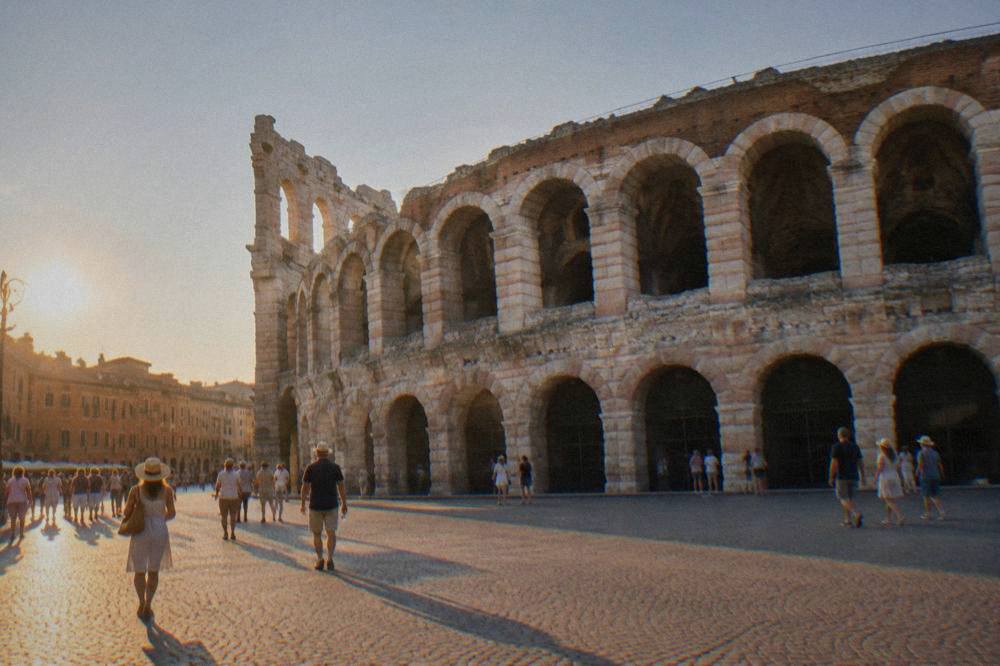
The contrast is what makes the day work. A visitor who knows the balcony is a set piece can enjoy it as one, then spend the rest of the day on things Verona does not have to invent: the Arena, visitable by day for 12 euro full price per the Comune's civic ticket list, the Roman theatre across the river, and the food and wine of the region. The Arena guide covers the summer opera season, which ran 5 June to 12 September in 2026 and is announced for 11 June to 11 September in 2027, and the what to eat in Verona guide handles the other half of the Venetian-Venetan table.
For the wine side of the region, the Valpolicella hills begin about 25 minutes by road from the Arena, and an Amarone tasting pairs naturally with a legend-themed day. The Valpolicella wine tour guide covers the options from the city. A shorter in-town alternative is a tasting with a rooftop view over the historic centre, which pairs the storybook skyline with the local glass.
Practicalities for the day are simple. Verona's historic centre is walkable and the Romeo and Juliet sites sit within a few hundred metres of each other; the getting around Verona guide covers buses and the restricted traffic zone for anyone driving. Anyone arriving by rail should read the Verona train station guide, and the where to stay in Verona guide maps the neighbourhoods nearest the courtyard for anyone who wants the legend on the doorstep at dawn, before the queues form.
Common Questions About Romeo And Juliet In Verona
Is Juliet's balcony real?
The balcony was added to the house in 1940 using fragments of an old sarcophagus, per the Comune di Verona's own history of the site, because the earliest versions of the story describe a window scene rather than a balcony. It is a real piece of carved stone, but it was not there in any Juliet's lifetime and not there when the legend was written.
Did Juliet really live in Verona?
No document places a real Juliet in the house at Via Cappello. The building belonged to the Dal Cappello family, whose name resembles Capulet, and the city developed the site as Juliet's house in modern times. The literary Juliet belongs to Luigi da Porto's 1531 novella and to the works it inspired, including Shakespeare's play.
Did Shakespeare ever visit Verona?
There is no evidence he did, and the site's own historical accounts treat the question as settled: Shakespeare never visited Verona. He worked from Arthur Brooke's 1562 English poem, which followed Bandello's 1554 Italian version, which followed da Porto's 1531 novella that first set the story in Verona.
Can you see Juliet's balcony for free?
Not since 1 April 2026. The courtyard route costs 5 euro and the full house and balcony route 12 euro, with online booking and entry via the Teatro Nuovo, per the Comune di Verona's announcement. The balcony becomes visible only from inside the ticketed courtyard.
Why is Verona called the city of love?
The label comes from the Romeo and Juliet legend, which the city's tourism authority itself credits with making Verona a symbol of romantic love. The balcony, the statue and the letter-writing tradition grew around that association, and the February festival Verona in Love, held 13 to 15 February in 2026, is its annual expression.
Is Juliet's Tomb worth visiting?
It is a quiet, atmospheric stop in a former monastery setting, with an empty open sarcophagus, and it suits visitors who want the full legend circuit away from the crowds. Hours and the admission fee could not be confirmed here, so check the current details on the official Verona museum pages before going.
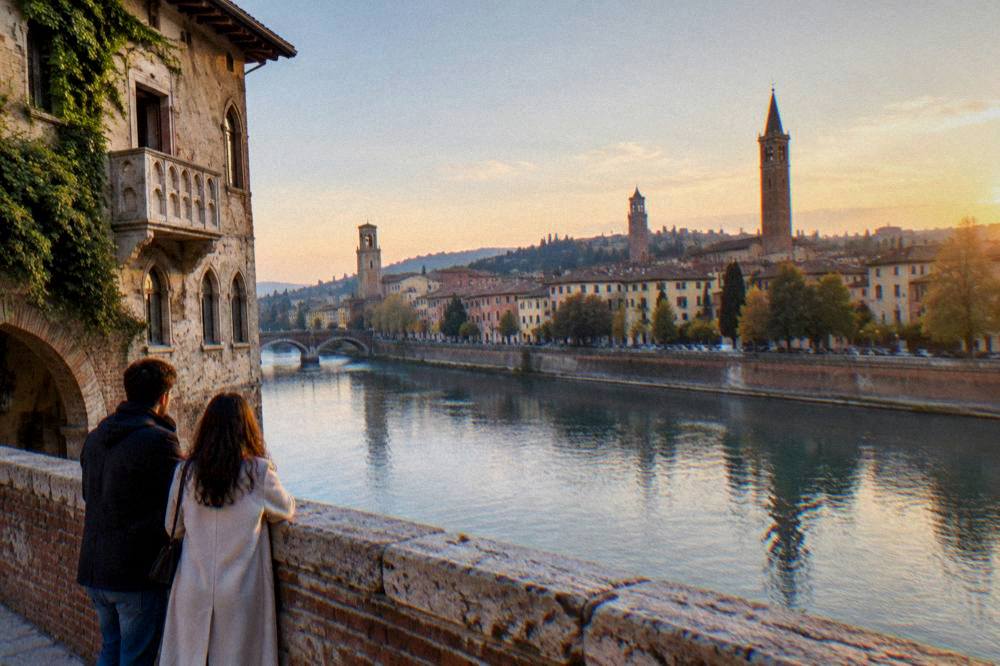
Verona does not need the balcony to justify a visit, and the city's own publications effectively say so by dating every piece of the legend's furniture with candour. Go for the real things, the Arena, the river bends, the food and the wine, and let the staged romance be the frame rather than the picture. That is the version of Romeo and Juliet in Verona the sources actually support, and it is a better day out than the postcard one.