Where Is Verona In Italy?
Verona is an inland city in Veneto, northern Italy, on the Adige river, with Lake Garda 22 to 39 km west as a day trip. Here is exactly where it sits and how to reach it.
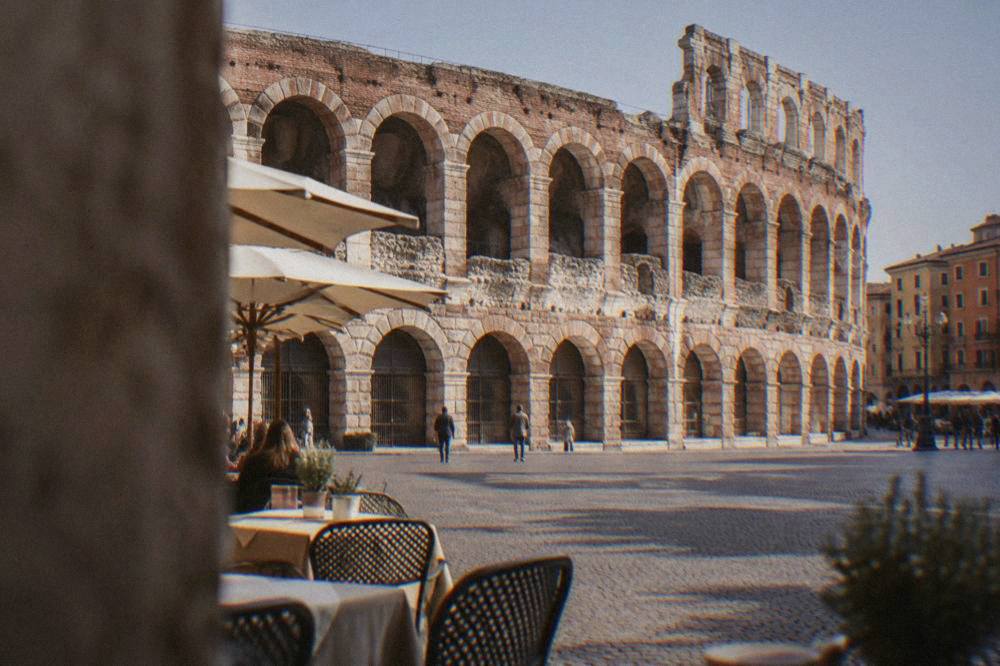
Verona is a city in the Veneto region of northern Italy, built inland on the Adige river at the foot of the pre-Alpine hills, and it is one of the country's UNESCO World Heritage cities, inscribed in 2000. It is not on Lake Garda, a point worth fixing early because the two are constantly confused: the lake and its towns lie 22 to 39 km to the west and are day trips from the city. Verona is the city of the Arena, the first-century Roman amphitheatre in Piazza Bra, of the Romeo and Juliet legend, and of the Valpolicella wine hills immediately to the north. This page from the Verona Italy Travel Guide pins down exactly where the city sits, what surrounds it, and how its position shapes a visit.
Where Is Verona In Italy?
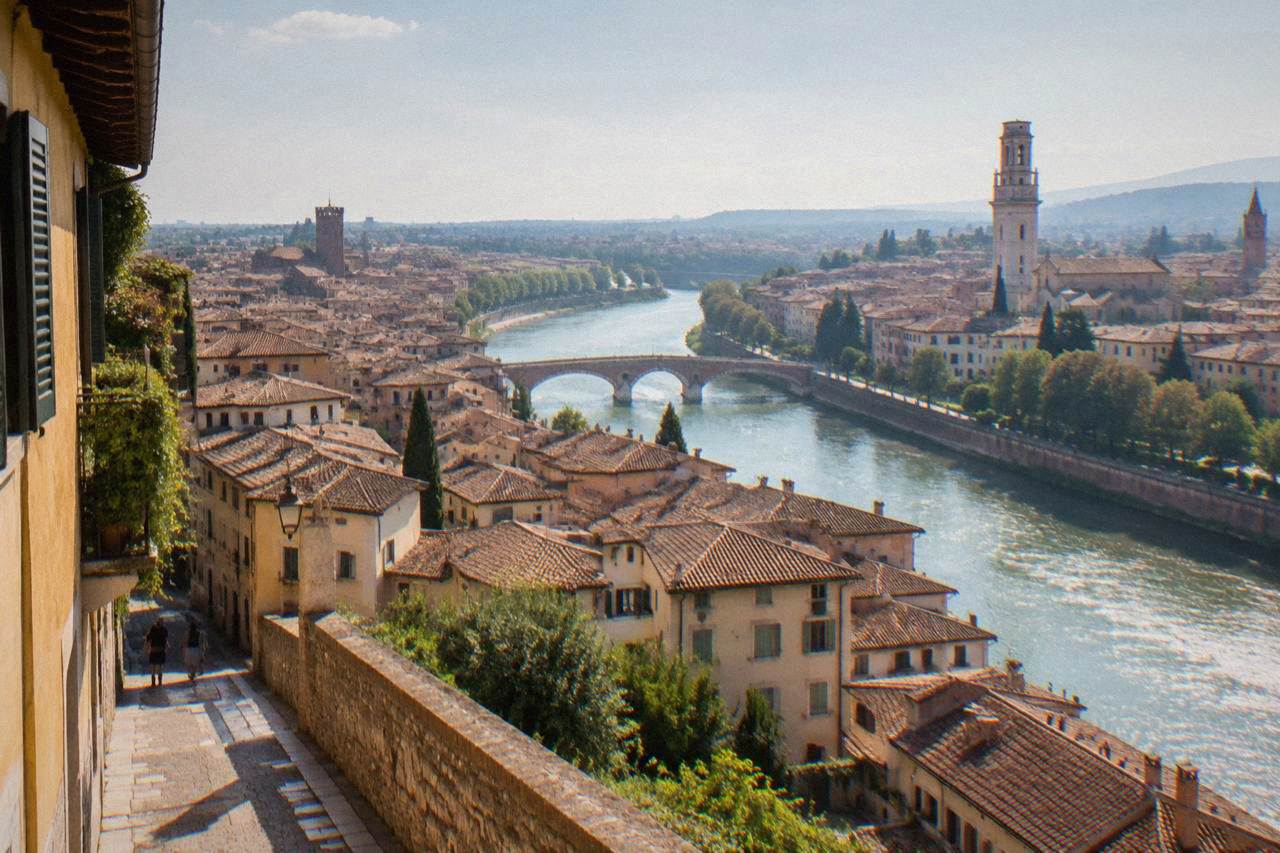
Verona is in the Veneto region of northeastern Italy, standing inland on the Adige river where the Po plain meets the pre-Alpine hills, on the rail line between Milan and Venice. Its historic centre wraps around a tight bend of the river and is inscribed on the UNESCO World Heritage List. It belongs firmly to the north of the country, not to Tuscany, and Lake Garda lies separately to the west, 22 to 39 km away.
Veneto is one of Italy's twenty regions, and Verona is its western gateway. The region also contains Venice, Padua and Vicenza, all of them within a short rail hop of Verona, which is one reason the city works so well as a base. Travellers coming from Austria or Germany down the Brenner corridor historically passed through here, and the rail lines still follow that logic: Verona Porta Nuova is a junction where north-south and east-west high-speed services cross.
The city's position explains its character. It sits where the Alpine foothills drop to the plain, which is why the Valpolicella wine hills rise within 25 minutes' drive of the Arena and why the microclimate suits the dried-grape Amarone winemaking those hills are known for. To the south and east the land flattens into the intensively farmed Po valley, rice and maize country, dotted with towns like Soave, another wine zone about 33 minutes' drive east.
For anyone weighing the city against its neighbours, the comparisons in is Verona worth visiting and how many days in Verona is enough dig into what the city itself offers. The short version is that the geography does half the work: a compact UNESCO-listed centre, wine country on the doorstep and a large lake within an hour.
Which Region Is Verona In, And What Borders It?
Verona is in Veneto, the northeastern Italian region whose capital is Venice, and it is the region's westernmost provincial capital. It borders the Lombardy region immediately to the west, where Lake Garda's southern shore and towns like Sirmione actually sit, and the autonomous province of Trentino to the north. It is not in Tuscany, which lies several hundred kilometres to the south.
The Lombardy border matters more than a map glance suggests. Sirmione, the peninsula town on Lake Garda that day-trippers reach from Verona in about 40 minutes by road, is in Brescia province in Lombardy, not in Verona's own province. The town of Garda, by contrast, is in Verona province, and it should never be confused with Riva del Garda, which is in Trentino, about 51 km further north at the top of the lake. These administrative lines sound pedantic until you are booking a hotel or a tour and the address says a different region than expected.
Trentino begins at the northern tip of Lake Garda, and the mountains above it roll into the Dolomites. That northern wall is what shapes Verona's climate. The ERA5 reanalysis for Verona, 1991 to 2020, gives a January mean of 3.1 C and a July mean high of 29.3 C: cold damp winters, hot summers, with November the wettest month at 118.2 mm of rain. Continental northern Italy, in other words, not Mediterranean south.
A common misconception, tackled head-on in is Verona considered Tuscany, places the city in Tuscany because "romantic old Italian city" collapses into one mental image. Verona shares the brick-and-marble medieval look, but its dialect, food and architecture are distinctly Veneto: think risotto all'Amarone and pandoro rather than Florentine steak.
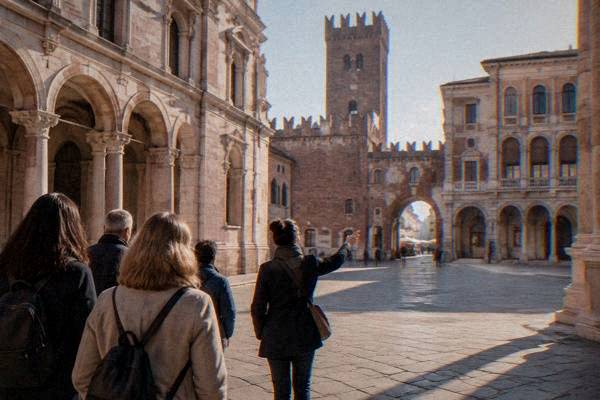
Getting oriented on the ground is easiest with a guide the first morning. A small-group walk such as the Verona guided walking tour traces the city's layout from the Arena through Piazza delle Erbe to the river, which is the fastest way for the geography to click into place.
The tours above all start from the historic centre, which is worth stating plainly because the centre itself is small. The whole UNESCO-listed core fits inside the Adige's great loop, and the distances between the main sights are walking distances, a point expanded in is Verona walkable.
How Far Is Verona From Lake Garda And The Other Big Cities?
Verona sits about 22 to 39 km east of Lake Garda's shores, with Lazise the nearest town at 22.7 km straight line from the Arena and Malcesine the farthest at 38.8 km, so the lake is a day trip rather than a suburb. By road, Sirmione is about 40 minutes away, Bardolino about 37 and Venice about 85, all computed over standard routing in free-flow traffic.
The straight-line figures from the Arena to each lake town, computed from the site's own geographic data, look like this:
| Lake Garda town | Straight-line distance from the Arena | Province |
|---|---|---|
| Lazise | 22.7 km | Verona |
| Peschiera del Garda | 24.5 km | Verona |
| Bardolino | 25.7 km | Verona |
| Garda | 28.7 km | Verona |
| Sirmione | 30.7 km | Brescia, Lombardy |
| Malcesine | 38.8 km | Verona |
Drive times, computed over OSM routing in free-flow conditions, put the same trips in practical terms, alongside the regional cities a visitor is more likely to be combining with Verona:
| Destination | Drive time from the Arena |
|---|---|
| Valpolicella (Sant'Ambrogio) | about 25 minutes |
| Soave | about 33 minutes |
| Bardolino | about 37 minutes |
| Sirmione | about 40 minutes |
| Garda | about 42 minutes |
| Vicenza | about 48 minutes |
| Mantua | about 54 minutes |
| Padua | about 67 minutes |
| Venice | about 85 minutes |
| Verona Villafranca airport | about 26 minutes |
Those numbers explain Verona's role in most itineraries: it is the inland hub from which the lake, the wine hills and the art cities radiate. The pairing question visitors ask most, whether to sleep in the city or beside the water, is covered in detail in is it better to stay in Verona or Lake Garda, and the straight answer is that the two serve different trips. How far the lake really is gets its own treatment in how far is Verona from Lake Garda.
Malcesine deserves one extra line because it is the outlier: about 84 minutes by road up the lake's eastern shore, and from there the Monte Baldo cable car runs to the ridge, with a round trip at 30 euro for an adult, 28 online, per the operator's own fare page. The lake's ferry network matters too: the Navigazione Laghi full-lake day pass is 39.50 euro for an adult on 2026 fares, and the north-south passenger service is reported suspended from 2 November 2026 to 12 March 2027, so confirm sailings before locking a winter plan.
How Do You Get To Verona?
Verona is reached by air through Verona Villafranca airport, about 26 minutes from the centre, by train into Verona Porta Nuova station, or by car along the A4 Milan-Venice motorway, which passes the city's southern edge. The airport is linked to the centre by the Aerobus line 199, reported at 7 euro one way and about 15 minutes, and the station receives high-speed trains from Venice, Milan and Rome.
The train times are the reason many visitors arrive without a car. From Porta Nuova, Venice Mestre is 58 to 75 minutes away by direct high-speed service, Milano Centrale 1 hour 15 to 1 hour 50, and Rome about 3 to 3 hours 30, all reported times that should be confirmed against the operator's own schedules when booking. Bologna and Florence connect through the same corridor, which makes Verona an easy add-on to almost any northern Italian route; the trade-offs are weighed in which is nicer, Verona or Bologna and which is nicer, Florence or Verona.
Inside the city a car is more hindrance than help. The historic centre is a camera-policed limited-traffic zone, the ZTL, where non-residents are capped at four entries a month by advance booking in set time windows; hotel guests are exempt if the hotel registers the plate. The practical pattern, and the one the site's own driving guides recommend, is to park outside the zone and walk in. The urban bus network covers the rest, with a single 90-minute ticket at 1.50 euro per the ATV fare page.
Once oriented, the densest cluster of sights, the Arena, Piazza Bra, Piazza delle Erbe, the Casa di Giulietta and the river bridges, sits within a few minutes' walk of each other, which is the subject of the site's things to do in Verona roundup.
Is Verona Itself A Lake Garda Town?
No, Verona is an inland river city and always has been: it grew around the Adige crossing and the Roman road network, 22 to 39 km from Lake Garda's shores, and none of its historic districts touch the lake. The lake towns people picture when they imagine Verona, Sirmione, Bardolino, Lazise, are separate small municipalities reached by bus, train, ferry or car in under an hour.
The confusion has real consequences for bookings. A traveller who books a Sirmione hotel believing it is "in Verona" faces a 40-minute transfer each way to the Arena, and the reverse mistake strands lake-bound holidaymakers an hour from the beach. The city-vs-lake decision is genuinely close for many itineraries, which is why the site gives it a full comparison page, but it should be made knowingly.
Verona's own identity is riverine and Roman. The Arena stands in Piazza Bra at the edge of the old core, and the Adige loops almost fully around the centre, crossed by the Roman Ponte Pietra upstream and by the Castelvecchio bridge downstream. The UNESCO inscription, granted in 2000, recognises exactly this: a fortified city that has preserved its urban structure across two millennia. Its role in the Romeo and Juliet legend, the reason it is billed as the city of love, adds the literary layer that no lake town shares.
That layered centre rewards a first pass with a guide. The small-group walk mentioned earlier, the City of Love walking tour, is the related pick for this page: it covers the Arena, Juliet's story and the hidden lanes in one loop, and Check availability before locking an itinerary.
Why Does Verona's Location Matter For Planning A Trip?
Verona's position makes it a hub rather than a single sight: an inland UNESCO city with wine hills 25 minutes north, a large lake 40 minutes west, and Venice, Padua, Vicenza and Mantua all within roughly an hour by train or car. That reach, plus a walkable core and a summer opera season in a Roman amphitheatre, is why the city anchors so many northern Italy itineraries.
The opera point belongs in a location discussion because it is seasonal: the Arena's 2026 festival ran 5 June to 12 September, and the 2027 season is announced for 11 June to 11 September. Anyone planning around a performance, a question examined in is the opera in Verona worth it, should treat early June to mid September as the window, not July and August alone.
The 2026 ticketing changes matter just as much. The Arena is open to daytime visitors at 12 euro full price, 9 euro reduced, per the Comune di Verona's price list. Juliet's courtyard has been ticketed since 1 April 2026, at 5 euro for the courtyard route or 12 euro with the house and balcony, booked online with entry via the Teatro Nuovo. And the VeronaCard became a digital card on 1 September 2026, at 33 euro for 24 hours or 38 for 48 with ATV transport included. All three are covered in depth on the site's dedicated pages; the location angle is simply that a city this compact puts all of them within a short walk of each other.
Beyond the city limits, the day-trip menu splits cleanly by direction. West and north: the lake towns and Monte Baldo. North: Valpolicella and its Amarone cellars, the subject of the site's Valpolicella guide and of several tasting tours. East: Soave and its castle hills. South and west by train: Mantua, Vicenza, Padua and Venice. Few Italian cities of Verona's size offer that spread in every direction, and the site's northern Italy itinerary pages sequence it for trips of one, two or three days.
For travellers assembling a first visit, the practical summary is short. Arrive by train or plane, skip the car inside the ZTL, sleep in the centre if the budget allows, and use Verona as the fixed point from which the lake and the wine hills radiate. The city's location, more than any single sight, is what a trip here is built on.
Common Questions About Verona's Location
Where Is Verona In Italy?
Verona is in Veneto, the northeastern region of Italy whose capital is Venice. It stands inland on the Adige river, at the point where the Po plain meets the pre-Alpine hills, and its historic centre is a UNESCO World Heritage Site inscribed in 2000.
Is Verona on Lake Garda?
No. Verona is an inland city on the Adige river. The Lake Garda towns lie 22 to 39 km to the west, and the nearest, Lazise, is about 22.7 km straight line from the Arena, so the lake is a day trip of roughly 40 minutes by road.
Is Verona in Tuscany?
No, Verona is in Veneto, in the north of Italy. Tuscany is a separate region several hundred kilometres to the south, centred on Florence.
Which lake towns are closest to Verona?
Lazise at 22.7 km, Peschiera del Garda at 24.5 km, Bardolino at 25.7 km, Garda at 28.7 km, Sirmione at 30.7 km and Malcesine at 38.8 km, all measured straight line from the Arena. Sirmione is in Brescia province, Lombardy.
How far is Verona from Venice?
About 85 minutes by car from the Arena, and 58 to 75 minutes by direct high-speed train from Verona Porta Nuova to Venice Mestre, a reported time to confirm against the operator's schedules when booking.
What airport serves Verona?
Verona Villafranca, about 26 minutes by road from the centre. The Aerobus line 199 connects airport and city, reported at 7 euro one way and about 15 minutes, running roughly every 20 minutes at peak times.