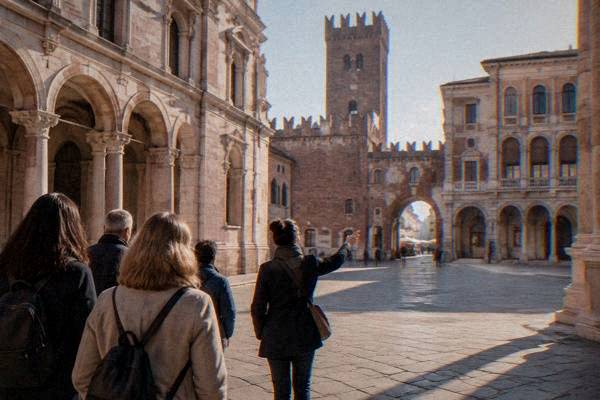
Is Verona Considered Tuscany?
No, Verona is not in Tuscany: it is a city in Veneto, northern Italy, on the Adige river. Here is what that means for wine, travel times and how the two regions differ.
Verona is in Veneto, in the northeast of Italy, an inland city on the Adige river roughly 160 km west of Venice. It is not in Tuscany, and never has been: Tuscany is a separate region in central Italy whose capital is Florence, while Verona answers to the regional government of Veneto in Venice. The confusion is understandable, because both places trade on the same imagery of hillside vineyards, Renaissance squares and old stone bridges, and because "northern Italy" and "Tuscany" get used interchangeably in travel marketing. They are two different regions with different histories, different dialects and, importantly for travellers, very different distances. This page sets out exactly where Verona sits, what region it belongs to, and what that means for planning a trip that might also include Tuscany.
Is Verona Considered Tuscany?
No. Verona is not considered Tuscany and does not sit inside it: Verona is a city in Veneto, the region of northeast Italy whose capital is Venice, while Tuscany is a separate region in central Italy centred on Florence. The two are separated by Emilia-Romagna and the Apennine foothills, and Verona's own cultural identity, from the Valpolicella wine hills to its Veronese dialect, belongs to Veneto rather than to anything Tuscan.
The distinction is administrative and not cosmetic. Italy is divided into twenty regions, and each has its own regional government. Veneto covers the northeast: Verona, Venice, Padua, Vicenza, Treviso and Belluno all sit inside it. Tuscany covers a band of central Italy stretching from the Ligurian coast down past Florence, Siena and Arezzo to the Maremma. Verona's regional neighbours are Lombardy to the west and Trentino-Alto Adige to the north, not Tuscany.
The mix-up usually comes from three directions. First, the imagery overlaps: cypress-lined roads and hilltop vineyards exist in both regions, and stock photography flattens the difference. Second, some visitors assume every romantic Italian city with a balcony story must be Tuscan, because Tuscany's brand is the strongest in the market. Third, Verona's province does touch Lake Garda, whose western and southern shores run toward the Lombard border, and lake itineraries get loosely filed under "Tuscany-adjacent central Italy" by people planning from memory.
It is worth being precise before booking, because the error has real consequences. A traveller who books a hotel in Florence believing it is close to Verona will spend the better part of a day on trains recovering from the mistake. The editors at Verona Italy Travel Guide keep this question near the top of the list because it changes itineraries, not just vocabulary.
What Region Is Verona In If Not Tuscany?
Verona is in Veneto, one of Italy's twenty regions, positioned in the northeast of the country on the Adige river. Veneto's regional capital is Venice, and its other provincial cities include Padua, Vicenza, Treviso and Belluno. Verona is the region's westernmost major city, close to the borders with Lombardy and Trentino-Alto Adige, which places it firmly in the north rather than in central Italy where Tuscany lies.
Veneto has its own history as the Republic of Venice's mainland territory, and that legacy still shapes the area's architecture and food in ways that have nothing to do with Florence or Siena. Verona itself spent centuries under the Scaliger dynasty and later under Venice and the Habsburgs, a lineage that shows in its fortified bridges, its Castelvecchio and its grid of Roman streets. The UNESCO listing, inscribed in 2000, recognises the city on its own terms as "City of Verona", not as part of any Tuscan cultural block.
For trip planning, the practical point is which cities sit within easy reach. From Verona, Milan is the closest metropolis, Venice is a short train ride, and Lake Garda's eastern shore is under an hour by road. Tuscany, by contrast, is a long-haul day trip at best. If your plan mixes Verona with Florence, treat them as two bases, not one.
| Question | Verona | Tuscany (e.g. Florence) |
|---|---|---|
| Region | Veneto | Tuscany |
| Regional capital | Venice | Florence |
| Part of Italy | Northeast | Central |
| Signature red wine | Amarone della Valpolicella | Chianti, Brunello di Montalcino |
| Famous water feature | The Adige river through the city | The Arno river through Florence |
| Nearest lake | Lake Garda, 22.7 to 38.8 km west | Trasimeno, inside the region |
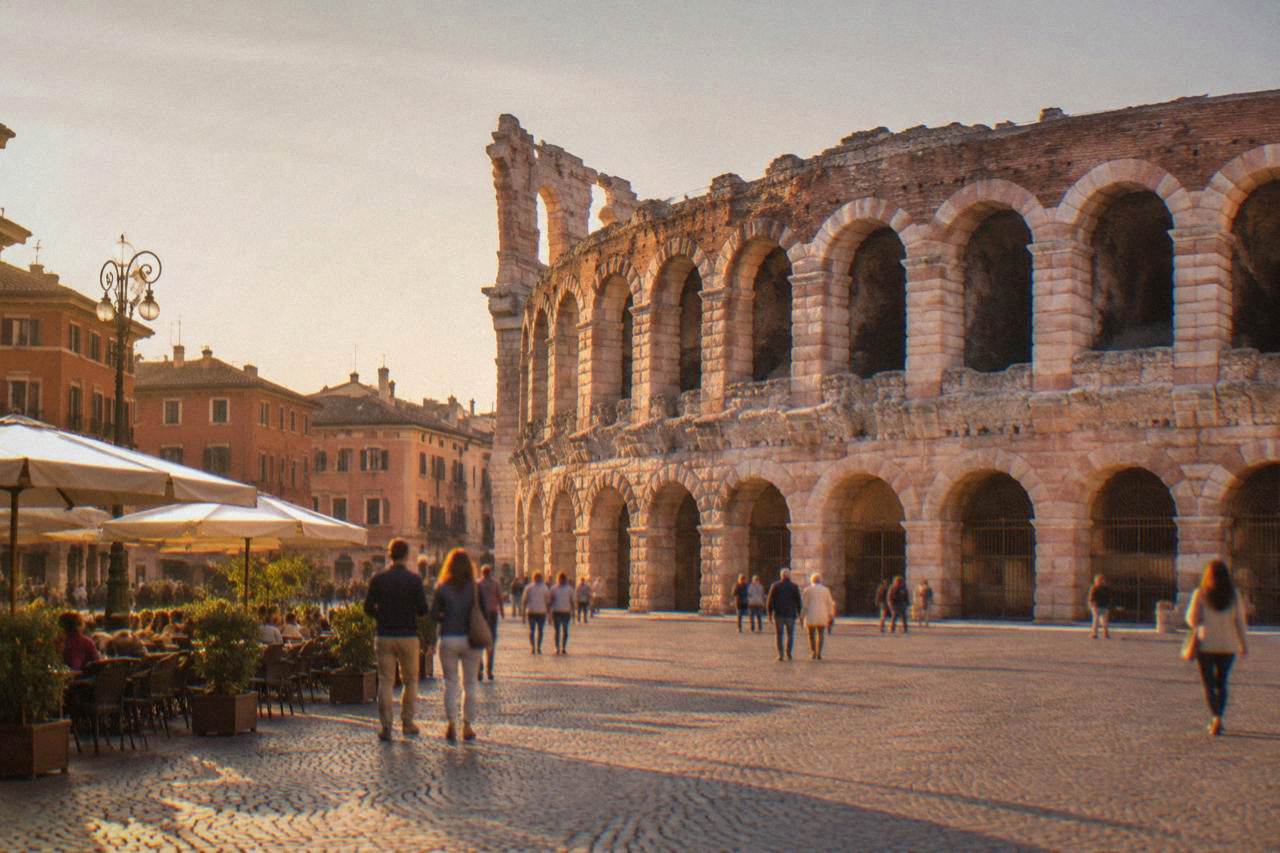
| Iconic Roman monument | The Arena di Verona | No comparable amphitheatre in Florence |
A walking orientation helps here more than a car, since the historic centre is compact and the river bends frame everything. The Verona walking tour guide lays out the standard route from Piazza Bra through the old town, and the evening version is well suited to first-time visitors who arrive in the afternoon. Check availability for the moonlight walk, which covers the lit lanes around the Arena and the Adige.
How Far Is Verona From Tuscany?
Verona sits roughly 230 km from the nearest edge of Tuscany as the crow flies, and the rail journey to Florence, Tuscany's capital, runs through Bologna with a total travel time in the range of two and a half to three hours on direct high-speed services. Florence is the natural Tuscan gateway from Verona, and trains depart from Verona Porta Nuova. No amount of itinerary cleverness turns the two into neighbours.
Those figures are worth internalising before planning. The train from Verona to Bologna takes about an hour to two hours depending on the service, and Bologna is the last Emilia-Romagna city before the Tuscan border. Add another stretch to Florence and the total journey is a half-day affair. It is doable as a very long day trip, but anyone who wants both regions properly should plan at least one night in each.
The geography explains the distance. Between Veneto and Tuscany lies Emilia-Romagna, a wide region of plains and food towns (Bologna, Modena, Parma) that buffers the two. The Apennines then rise toward Tuscany's northern edge. This is why Verona's natural travel companions are Venice, Lake Garda, the Dolomites and Milan, while Florence pairs more logically with Siena, Pisa and the Tuscan hill towns.
For a Verona-centred plan, the closer alternatives are rich enough. Sirmione is a 40-minute drive from the Arena, Bardolino 37 minutes, Valpolicella's wine hills 25 minutes, and Venice about 85 minutes by road or under an hour and a quarter by train. The question of which town on Lake Garda is considered the prettiest is a common follow-up, and the honest answer depends on whether you want a castle, a beach or a vineyard.
Why Do People Confuse Verona With Tuscany?
The confusion comes from overlapping imagery and loose marketing rather than geography: both regions promise vineyards, honey-stone squares and Renaissance romance, and "Tuscany" has become shorthand for all of it. Verona's Valpolicella hills, its Juliet legend and its ochre-washed buildings look Tuscan in photographs, and some travel content compounds the error by describing any northern Italian hill town as Tuscan. None of that moves the regional border.
Language plays a part too. Italian regional names carry precise legal meanings, but English-language travel writing often uses them decoratively. A reader who sees "Tuscan charm" applied to Verona's Piazza delle Erbe may file the city mentally under Tuscany without ever checking a map. The fix is simple: Verona is Veneto, its people are Veronese, and its wine country produces Amarone and Soave rather than Chianti and Vino Nobile.
There is also a Juliet-shaped reason the mix-up persists. The Romeo and Juliet legend makes Verona feel like a generic storybook Italy, and storybook Italy is usually imagined as Tuscany. The city leans into the legend deliberately: the balcony at Juliet's House, added in 1940 from a Roman sarcophagus according to the city's own tourism pages, draws visitors who arrive with no regional framework at all. The question of whether Juliet's balcony is real and the question of why Shakespeare chose Verona both get their own pages on this site.
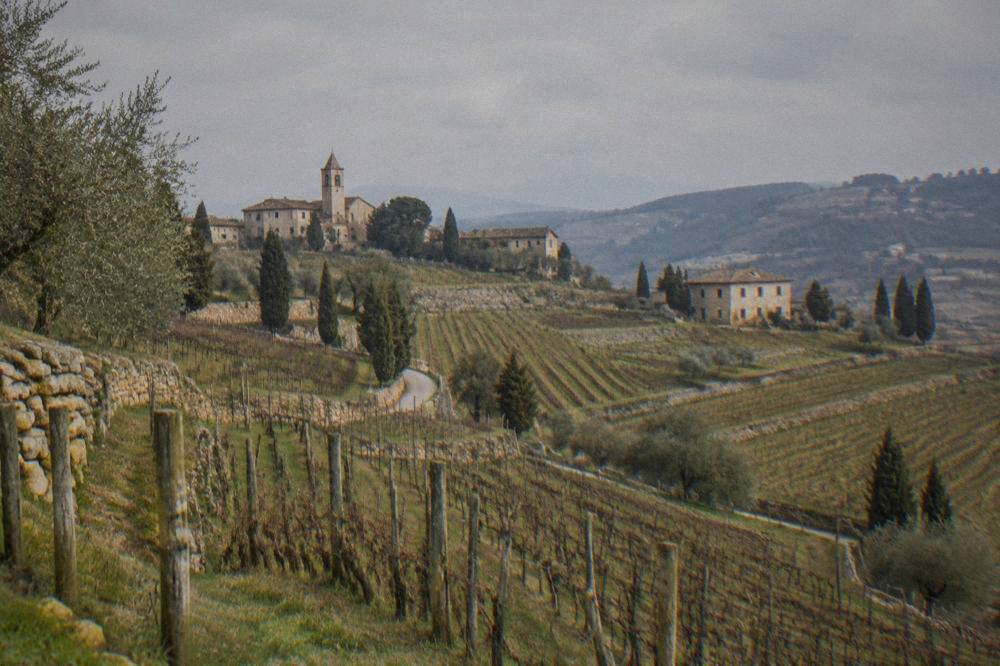
Wine is where the regional identity is easiest to see on the ground. Valpolicella's Corvina-based reds, dried on racks for Amarone, and Soave's Garganega whites east of the city are Veneto products with no Tuscan equivalent, and the tasting culture around them is a Verona speciality.
Can You Combine Verona And Tuscany On One Trip?
Yes, and it works well as a two-base itinerary: three or four nights in Verona covering the city, Lake Garda and the Valpolicella hills, then a train south via Bologna to Florence or Siena for the Tuscan half. The rail link from Verona Porta Nuova through Bologna makes the transfer straightforward, and the two regions complement each other, Veneto for Roman ruins and lake scenery, Tuscany for Renaissance art and hill towns.
The order matters less than the pacing. Starting in Verona means the long transfer happens once, mid-trip, when the rhythm is already established. Starting in Florence reverses the logic and puts the lake and mountains at the end, which suits travellers flying out of Venice or Verona Villafranca. Either way, resist the temptation to day-trip between the two regions repeatedly; the distance makes it exhausting.
| Day-trip target from Verona | Straight-line distance from the Arena | Verdict for a day trip |
|---|---|---|
| Lake Garda (Lazise to Malcesine) | 22.7 to 38.8 km | Easy, half or full day |
| Valpolicella wine hills | About 25 min by road | Easy half day |
| Venice | About 160 km east | Feasible by train, full day |
| Vicenza | 48 min by road | Easy half or full day |
| Florence (Tuscany) | About 230 km south | Long day trip only, better as a second base |
| Siena (Tuscany) | Further than Florence | Overnight stay, not a day trip |
Within Verona itself, the compact centre rewards an evening as much as a morning. The moonlight walk covers the Arena's exterior, the river bend at Ponte Pietra and the quiet lanes of the old town after the day crowds thin out. Check availability if an evening fits the itinerary better than a daytime tour. For those weighing the city against its region, the page on how many days in Verona is enough breaks the choices down by trip length.
Common Questions About Verona And Tuscany
Is Verona Considered Tuscany?
No. Verona is a city in Veneto, in northeast Italy, while Tuscany is a separate region in central Italy with its capital at Florence. The two are separated by Emilia-Romagna, roughly 230 km apart.
Is Verona in northern or central Italy?
Northern. Verona sits in Veneto on the Adige river, close to the borders with Lombardy and Trentino-Alto Adige. Central Italy begins further south, below Emilia-Romagna.
What is the capital of the region Verona is in?
Venice. Verona belongs to Veneto, one of Italy's twenty regions, and Venice is that region's capital even though Verona is one of its largest cities.
Is Verona close to Florence?
Not especially. Florence is about 230 km south of Verona, a train journey of roughly two and a half to three hours via Bologna. The two work better as separate bases than as a single day trip.
Does Verona have Tuscan-style wine country?
Verona has its own wine country, not Tuscan wine country. The Valpolicella hills north of the city produce Amarone and related reds, and Soave produces whites east of the city. Both are Veneto denominations.
Is Lake Garda part of Tuscany?
No. Lake Garda sits at the foot of the Alps between Veneto, Lombardy and Trentino. Its towns, from Lazise to Malcesine, are a day trip west of Verona and have no connection to Tuscany at all.