How Many Days In Verona Is Enough?
Two days covers Verona's Arena, Juliet's House and the historic centre, with a third day for Valpolicella or Lake Garda. A practical answer with tickets, walk times and day-trip options.
Verona, in Veneto in northern Italy, is an inland city on the Adige river, compact enough that its UNESCO-listed historic centre sits within a single loop of the water. The Arena stands at Piazza Bra, Juliet's House is a short walk north, and the Valpolicella wine hills begin about 25 minutes by road outside town. That compactness is exactly why the question of how many days to allow has a real answer: two for the city, three if the wine hills or Lake Garda are on the list. This page works through the arithmetic using the city's own published ticket prices and computed drive times, so the decision rests on figures rather than on impressions.
How Many Days In Verona Is Enough?
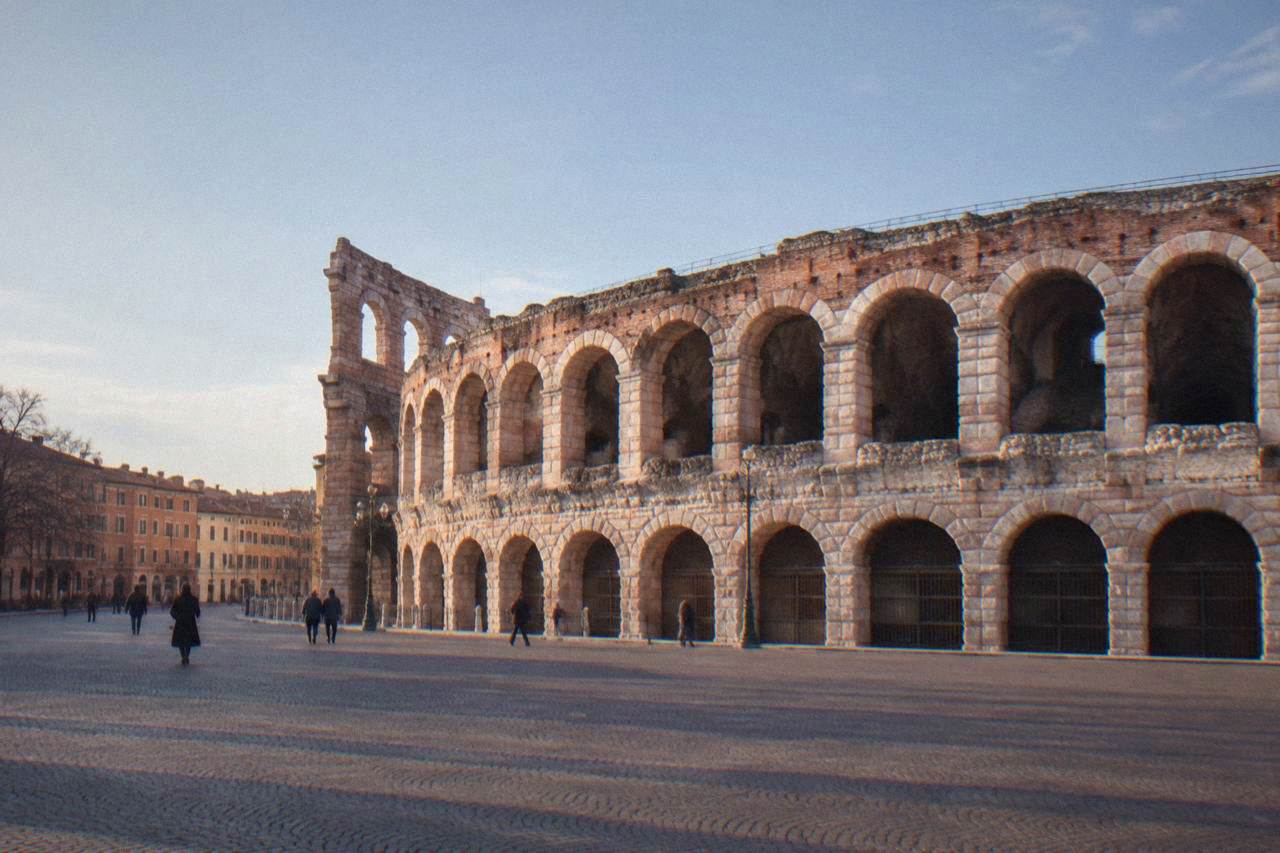
Two full days is enough for Verona itself: one for the Arena, Piazza Bra, Piazza delle Erbe, the Torre dei Lamberti and Juliet's House, and a second for Castelvecchio, the Ponte Pietra, the Teatro Romano hillside and the churches. A third day pays off only if it leaves the city for the Valpolicella wine hills, about 25 minutes by road, or Lake Garda, whose towns start 22 to 39 km west. Fewer than two days means choosing between the Roman core and the river districts, and that choice is a real loss either way. The city is walkable, the walkability question is answered in detail here, so the limit is not distance but opening hours and ticket lines.
The arithmetic behind that answer comes from the ticketed sights. The Arena's daytime visit costs 12 euro full, 9 euro reduced, per the Comune di Verona's price list, and it closes on Mondays with early closes on show days. Juliet's House has been ticketed since 1 April 2026: 5 euro for the courtyard route, 12 euro for the house and balcony, with online booking and entry via the Teatro Nuovo. The Torre dei Lamberti is reported at 6 euro full. Add Castelvecchio at a reported 9 euro and the theatre-and-museum hill across the river, and a single day cannot hold them all without rushing each one.
The mistake to avoid is treating Verona as a half-day stop between Venice and Milan. The city's inscription on the UNESCO World Heritage List, in 2000, covers the whole fortified urban fabric, not one square, and the rewarding districts, Veronetta on the far bank and San Zeno to the west, sit outside the standard quick circuit. The two-day itinerary exists precisely because the one-day version keeps dropping them.
What Does One Day In Verona Actually Cover?
One long day in Verona covers Piazza Bra and the Arena, Via Mazzini, Piazza delle Erbe, Piazza dei Signori, Juliet's House and the Ponte Pietra, but it leaves nothing for Castelvecchio, San Zeno, the Teatro Romano hill or the Giardino Giusti. The Arena's daytime visit at 12 euro and Juliet's courtyard at 5 euro are both affordable, yet both have hours and booking constraints that eat the schedule: the Arena is reported closed on Mondays, and Juliet's House requires online booking with entry via the Teatro Nuovo. A single day works only when it starts at opening time and skips every queue it can.
The practical shape of a one-day visit, with the published figures attached, looks like this:
| Stop | Admission (published) | Constraint to plan around |
|---|---|---|
| Arena di Verona (daytime visit) | 12 EUR full, 9 EUR reduced, 3 EUR ages 18-25 | Closed Mondays; early close on show days, per the Comune |
| Casa di Giulietta | 5 EUR courtyard, 12 EUR house and balcony | Online booking, entry via Teatro Nuovo since 1 April 2026 |
| Piazza delle Erbe, Piazza dei Signori, Porta Borsari | Free, open access | None |
| Ponte Pietra | Free, open access | None |
| Torre dei Lamberti | Reported 6 EUR full, free with VeronaCard | Hours vary seasonally; check before going |
That is a full day, not a spare one. The VeronaCard, digital since 1 September 2026 at 33 euro for 24 hours with ATV transport included, or 29 euro without, covers the Arena, the Torre dei Lamberti and Juliet's House, though Juliet's House still needs its own online booking even for card holders, and the card never includes the Aerobus from the airport. Whether the card pays off on a one-day visit depends on how many of those entries a traveller actually uses; the card's own notice invites the comparison, and the numbers above are the ones to run.
A one-day visit also rules out the opera. The Arena's summer festival ran 5 June to 12 September in 2026, and the 2027 season is announced for 11 June to 11 September. An opera evening occupies a whole night, with gates reported to open about two hours before a start around 21:00 to 21:30, so a same-day arrival plus an opera is a day with no margin at all. The opera question is weighed separately here.
For travellers set on the shortest possible stay, the honest summary is that one day buys the postcard Verona and nothing else. It is a legitimate choice on a northern Italy rail swing, but it should be made knowing what is being cut. The question of whether Verona is worth visiting at all is easier to answer yes to with a second day attached.
Is Two Days In Verona The Sweet Spot?
Two days is the sweet spot for Verona as a city trip: day one takes the Arena, Juliet's House and the two main squares, day two takes Castelvecchio, the Ponte Pietra, the Teatro Romano hillside, San Zeno and a slower afternoon in Veronetta. Two days also absorb the scheduling friction that breaks one-day plans: the Arena's Monday closure, Juliet's online booking, and the separate hill crossing over the river. The city centre is compact, so the second day adds depth rather than distance, and no ticketed stop needs more than half a day.
The second day is where Verona stops feeling like a checklist. Castelvecchio, the civic museum in the medieval castle by the Adige, is reported at 9 euro full and closed on Mondays. The Ponte Pietra, the Roman pedestrian bridge, is free and open, and the climb beyond it leads toward the Teatro Romano and the Castel San Pietro viewpoint across the river bend. San Zeno, the great western basilica, is covered by the VeronaCard under the Chiese Vive convention, though church hours and stand-alone prices should be confirmed on the spot, as the pack publishes none.
What Does A Third Day In Verona Add?
A third day in Verona adds the wine hills or the lake: Valpolicella lies about 25 minutes and 21 km by road from the Arena, Sirmione about 40 minutes, Bardolino about 37, and the town of Garda about 42, all computed over standard routing in free-flow conditions. None of those trips is possible in the leftover hours of a two-day city stay, and each one is a half-day to a full day on its own once tastings, ferries or castle visits are included. The third day is also the buffer that makes an opera evening or a long lunch survivable rather than a scheduling risk.
The distances in play, all computed from the Arena over ordinary road routing, look like this:
| Destination from the Arena | Drive time (free-flow) | Distance |
|---|---|---|
| Valpolicella (Sant'Ambrogio) | about 25 minutes | 21 km |
| Bardolino | about 37 minutes | 34 km |
| Sirmione | about 40 minutes | 39 km |
| Garda | about 42 minutes | 22 km (across the hills) |
| Malcesine | about 84 minutes | 39 km road |
| Vicenza | about 48 minutes | 65 km |
Verona itself sits inland on the Adige; every one of the lake towns above is west of the city, which is why "a day by the lake" always means a real transfer. The Verona and Lake Garda itinerary covers that combination in full, and the three-day Verona itinerary builds the third day into the city plan.
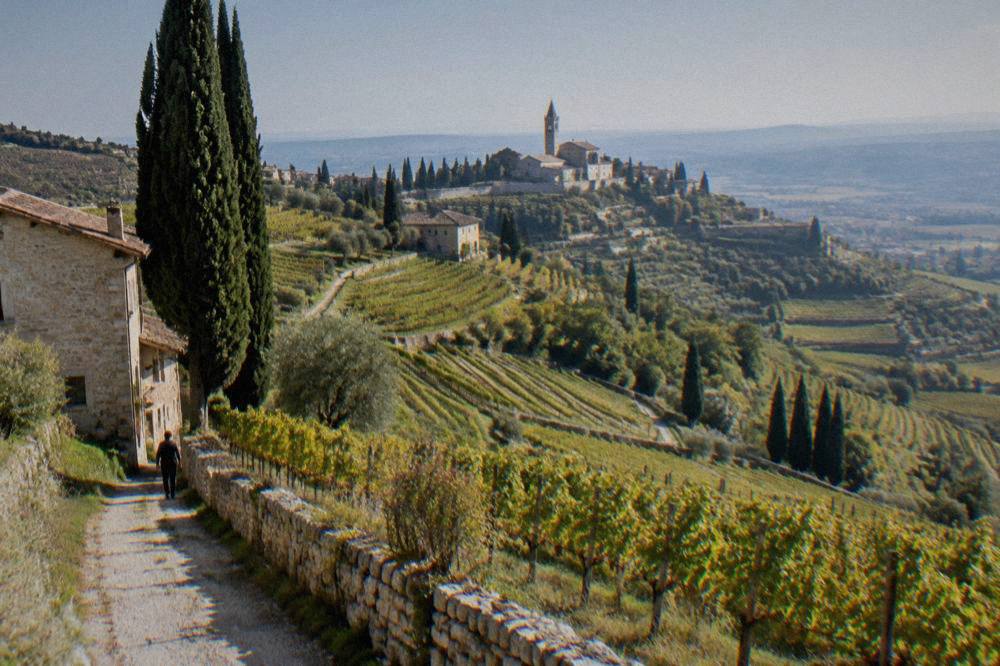
The wine option is the one that keeps the day trip shortest. Valpolicella is Amarone country, and a guided tasting there is the featured reason to stretch a Verona stay past two days: the Amarone Chateau guided tour and tasting covers a chateau visit and tasting in the hills, with details and pricing on the operator's live listing. Spring and autumn are the comfortable seasons for it: the ERA5 reanalysis, 1991-2020, puts April's mean high at 17.8 C and October's at 18.1 C, against July's 29.3 C. The seasonal guide to Verona in spring has more on timing.
Should You Combine Verona With Venice Or Lake Garda?
Verona pairs naturally with Venice, which is about 85 minutes and 122 km by road, or a reported 1 hour to 1 hour 15 by train from Porta Nuova, and with the Lake Garda towns listed above, but pairing both into a two-day Verona stay is not realistic. A sensible split is two nights in Verona plus one or two on the lake or in Venice, rather than three bases in three nights. The train times are reported figures, so confirm current schedules when booking; no Venice access fee details are published in the sources here, so check the official channel before a day trip.
The comparison travellers most often face, Venice or Verona, changes the day count more than the city does. Venice absorbs whole days; Verona absorbs mornings and afternoons. A traveller who wants both should budget four nights in total: two in Verona, two in Venice, using the roughly hourly high-frequency rail link rather than a car. Driving into Verona's centre is a poor plan anyway, since the historic core is a camera-policed limited-traffic zone where non-residents are capped at four entries a month and hotel guests drive in free only when the hotel registers the plate.
Staying on Lake Garda and visiting Verona is the mirror-image question, weighed in this stay-or-stay comparison. The short version: the lake wins for evenings by the water, Verona wins for the Arena, the food and the rail connections, and the drive times above are the cost of crossing between them daily.
The third-day decision, in the end, is a wine decision or a water decision. A tasting in Valpolicella is the shorter journey and the one that keeps the day's rhythm Italian: a morning in the hills, a long lunch, an evening walk back over the Ponte Pietra. The lake is the bigger production, with ferries to time and the Navigazione Laghi full-lake day pass at 39.50 euro for an adult in 2026, and it rewards a whole day rather than a fragment of one. Travellers who cannot decide should keep the third day for the wine hills and give the lake its own trip; the pass prices and the drive times above make the logic plain.
Common Questions About How Many Days To Spend In Verona
How Many Days In Verona Is Enough?
Two full days cover the historic centre, the Arena, Juliet's House, Castelvecchio and the river districts. A third day is worth adding for Valpolicella, about 25 minutes by road, or Lake Garda, whose towns begin about 37 to 40 minutes away. One day is possible but skips the western and hillside districts entirely.
Can You See Verona In One Day?
One day covers Piazza Bra, the Arena, Piazza delle Erbe, Juliet's House and the Ponte Pietra. It does not realistically cover Castelvecchio, San Zeno, the Teatro Romano hill or the Giardino Giusti. The Arena's reported Monday closure and Juliet's House online booking both cut into a single-day schedule.
Is Three Days In Verona Too Many?
No. Two days belong to the city and the third belongs to the region: the Valpolicella wine hills, Sirmione, Bardolino or Garda. With drive times of about 25 minutes to the wine country and about 37 to 42 minutes to the nearer lake towns, a third day fills itself without repeating a single city sight.
Is Verona A Good Base For Day Trips?
Yes. Vicenza is about 48 minutes by road, Mantua about 54, Padua about 67 and Venice about 85, all computed in free-flow conditions, and Venice is a reported 1 hour to 1 hour 15 by train from Porta Nuova. Porta Nuova station sits just south of the centre, which keeps every transfer short.
Does An Opera Night Change The Day Count?
It can. An Arena opera evening takes a whole night, with gates reported to open about two hours before a start around 21:00 to 21:30, so travellers attending the festival should treat that evening as a day's anchor rather than an add-on. The 2027 season runs 11 June to 11 September.
The final word belongs to the Verona Italy Travel Guide overall framing: the city rewards depth over speed, its 2026 ticketing changes reward booking ahead, and every figure on this page comes from the city's own published prices and computed road distances. Two days is enough, three is comfortable, and the third day is where Verona becomes a region rather than a stop.