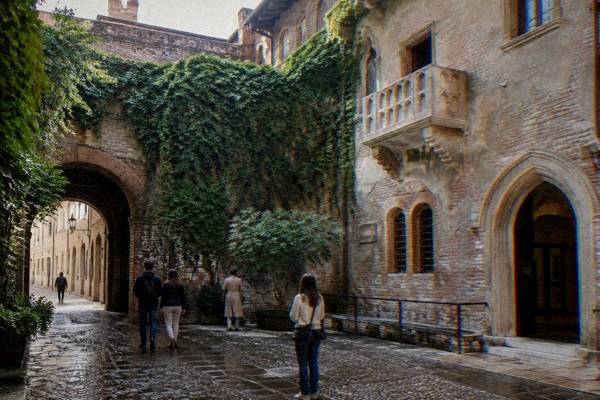
Did Shakespeare Ever Visit Verona?
No, Shakespeare never visited Verona. How the Romeo and Juliet story reached him through Italian sources, and what the city still shows from the legend.
Shakespeare never visited Verona. The city, an inland UNESCO World Heritage centre in Veneto on the Adige river, is the setting of Romeo and Juliet, yet the playwright knew it only through printed sources, and per the city's own tourism pages there is no record of him travelling to Italy at all, let alone to Veneto. Everything he wrote about the city, the feud, the balcony scene and the tomb, came from Italian and English books he read in London. That gap between the writer and the place is precisely what makes Verona interesting: the city has spent centuries absorbing a story that arrived from outside and, in the end, remade its own identity around it.
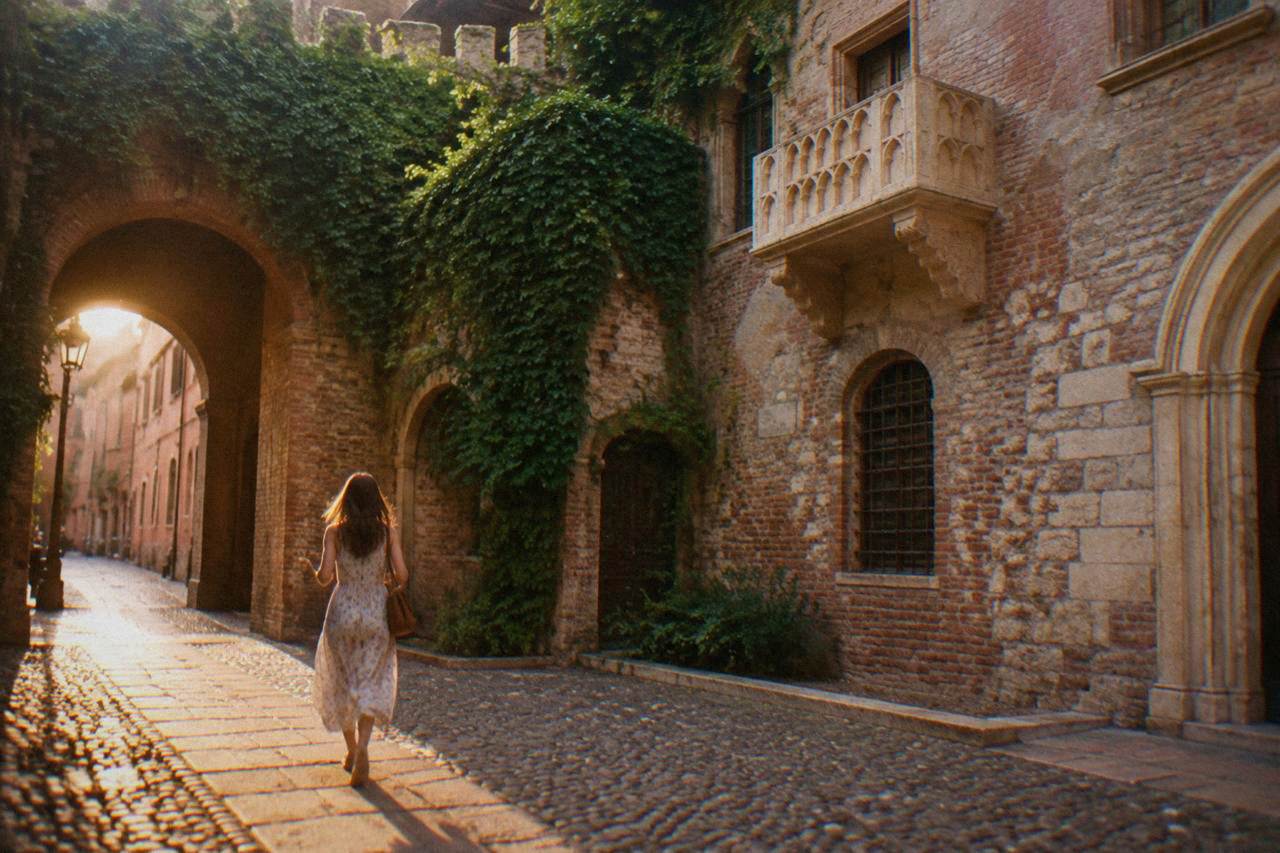
The question matters more than it looks. Verona has a real, documented history, a Roman Arena reportedly dating to about 30 AD per the Arena's own site, medieval Scaliger rule, a devastating earthquake in 1117, and a World Heritage inscription in 2000. The Romeo and Juliet layer sits on top of all that, and separating the documented city from the literary one tells a visitor a great deal about which parts of a Verona trip are ancient, which are medieval and which are, in the nicest possible way, theatre.
Did Shakespeare Ever Visit Verona?
No. Shakespeare never visited Verona, and per the city's own tourism pages there is no evidence he ever travelled to Italy at all. He wrote Romeo and Juliet in England, working from Italian and English printed sources, and his Verona is a literary construction built from books rather than observation. The city he describes, its streets, its feud and its tombs, reached him second-hand through a chain of earlier writers.
The point is worth stating plainly because the opposite assumption is everywhere. Guides, postcards and even some printed walk descriptions quietly imply that Shakespeare walked Verona's streets and chose them for their romance. The documented record points the other way. The story of the two lovers existed in print decades before Shakespeare wrote his play, and the setting of Verona was chosen by an Italian writer, not by him.
What Shakespeare did have was a reader's knowledge of Italy. His Italian-set plays, including this one and The Taming of the Shrew and The Merchant of Venice, draw on translated and original Italian narrative material. For Romeo and Juliet the line of sources is unusually clear, because the earlier texts survive and can be compared line by line with the play. He was a transformer of stories, not a travel writer, and Verona entered his imagination through paper.
How Did The Story Reach Shakespeare Without A Visit?
The tale travelled to Shakespeare through three printed sources: Luigi da Porto's 1531 novella, which first set the story in Verona, Matteo Bandello's 1554 retelling, and Arthur Brooke's 1562 English poem, which was Shakespeare's direct source for the plot. Da Porto chose Verona deliberately, drawing on Dante's reference to the Montecchi and Cappelletti factions, and every later version kept the setting.
Da Porto, a Vicentine nobleman, is the origin point. His 1531 novella, reportedly the first written version of the story, names the lovers Romeo and Giulietta and places them in Verona at the time of the Scaliger court. His reason for choosing the city is documented in the sources themselves: Dante, in the Divine Comedy, had already paired the Montecchi and Cappelletti as emblematic feuding factions of northern Italy, so Verona carried an existing literary reputation for factional violence. That is a sobering origin for a city now billed as the city of love.
Bandello widened the story's circulation. His 1554 version added detail and reached a European audience through French translation. From there the plot passed to Brooke, whose 1562 poem, The Tragicall Historye of Romeus and Juliet, is identified in the scholarship as Shakespeare's primary source. Shakespeare compressed Brooke's months-long action into a handful of days, sharpened the language and produced the play that his London audiences came to know.
| Source | Year | Role in the chain |
|---|---|---|
| Luigi da Porto, novella | 1531 | First written version, set the story in Verona |
| Matteo Bandello, retelling | 1554 | Spread the story across Europe |
| Arthur Brooke, English poem | 1562 | Shakespeare's primary source for the play |
| Shakespeare, Romeo and Juliet | after Brooke's 1562 poem | The version the world remembers |
The interesting result is that Verona's fame as the city of Romeo and Juliet rests on a place Shakespeare never saw, chosen by a writer Shakespeare probably never read in the original. The chain is long and entirely literary, and the reason Shakespeare used Verona at all is a question with a documented answer rather than a romantic mystery.
For a visitor, the chain of sources also explains what is authentic. The feud families were real Veronese factions in the sense Dante used them, loosely and politically. The specific houses, the balcony and the tomb are literary furniture that the city later matched to real buildings. Knowing which layer you are looking at turns a photo stop into history.
Why Is Verona So Strongly Linked To A Playwright Who Never Came?
Because the city adopted the story after the fact, and the adoption was mutual. Verona's tourism identity grew around Romeo and Juliet in the centuries after the play spread across Europe, and the physical anchors, Juliet's House, the balcony and the statue, were fitted to the legend rather than the other way round. The balcony was added in 1940 and the bronze statue was placed in the courtyard in 1972, both long after Shakespeare.
The details here are reported by the city's own tourism pages and are worth knowing before a visit. The balcony at Juliet's House is not original to any medieval house: it was assembled in 1940 from pieces of an old sarcophagus, which is why the question of whether Juliet's balcony is real has a more complicated answer than the souvenir shops suggest. The bronze statue of Juliet is by the sculptor Nereo Costantini, dated 1969, placed in the courtyard in 1972 and replaced in 2014 by a copy, with the original moved inside. The custom of touching the statue's right breast for luck is a modern one, reported by the same city pages, and the polished metal shows it.
None of this makes the site a fraud. It makes it a layered monument: a medieval house, a literary cult that grew up around the play, and the staging of both that followed, all in one courtyard. The city's famous identity as the city of love, which the tourism office itself attributes to the legend, is the direct product of this process.
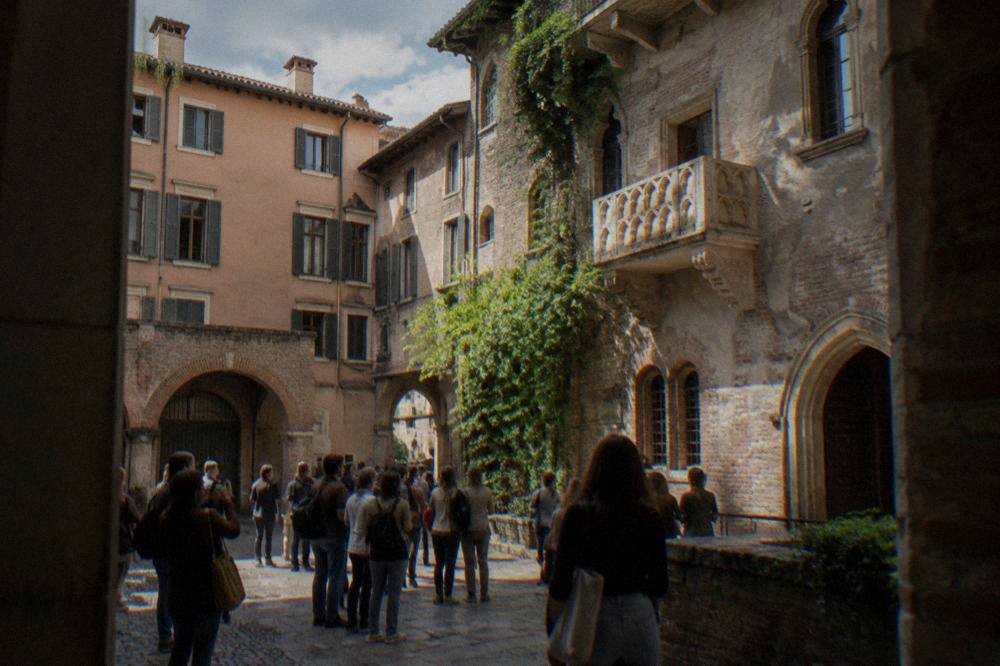
The play, meanwhile, gave Verona something the city's real history could not: a global emotional brand. Venice had its lagoon, Florence its Renaissance, and Verona, a genuinely rich Roman and medieval city, became the place where the world's most famous teenagers fell in love. Whether that trade was fair depends on what you come for, and the question is Verona worth visiting beyond the legend has a firm yes attached to it, for reasons that have nothing to do with Shakespeare.
What In Verona Actually Connects To The Legend?
The tangible connections are Juliet's House with its courtyard, balcony and statue, Juliet's Tomb on the other side of the river, and a set of names, Montecchi and Cappelletti, that trace back to Dante. The Arena, Piazza Bra and the Scaliger tombs are real history that the legend borrows as scenery. A themed walking tour, including a dark-history walk, is the practical way to see both layers in one loop.
Start with the honest inventory. Juliet's House, the Casa di Giulietta, is the single strongest link: a real medieval house on Via Cappello assigned to the Cappelletti family tradition, now a museum with the courtyard, the 1940 balcony and the statue. Since 1 April 2026 the courtyard route costs 5 euro and the full house and balcony route 12 euro, booked online, with entry via the Teatro Nuovo, and the VeronaCard does not remove the booking step.
Then there are the surroundings that the story did not create. The Arena, which can be visited by day for 12 euro full price, reportedly dates to about 30 AD per the Arena's own site and reportedly seated about 30,000 for its original games. The Scaliger tombs, the brick fortress of Castelvecchio and the towers of Piazza delle Erbe belong to the real dynasty da Porto wrote about. A visitor who knows the sources walks past what Verona is famous for and can tell at a glance which layer each belongs to.
| Site | Layer | What the sources say |
|---|---|---|
| Casa di Giulietta, courtyard and balcony | Literary, staged later | Balcony added 1940 from a sarcophagus; statue by Nereo Costantini, 1969, placed 1972, copy since 2014 |
| Casa di Giulietta ticketing | Current rule | Courtyard 5 euro, house and balcony 12 euro, online booking, from 1 April 2026 |
| Montecchi and Cappelletti names | Documented, via Dante | Feuding factions Dante paired in the Divine Comedy, the reason da Porto chose Verona |
| Arena and Scaliger Verona | Real history | Arena reportedly about 30 AD; Scaliger tombs and Castelvecchio from the dynasty da Porto named |
Juliet's Tomb, a former monastery site across the river, is the other named stop, though its hours and any fee should be confirmed locally before going. The empty sarcophagus displayed there is the closest thing the legend has to a relic, and even it belongs to the cult of the story rather than to any documented person.
For seeing the layers efficiently, a guided walk earns its place. The Dark Historical Verona Walking Tour is the pick that matches this page best, a themed route through the city's grimmer documented past, and the full menu of guided walks and tasting routes covers everything from Arena priority entry to Valpolicella. The main overview of things to do puts the individual pieces in order if you would rather go self-guided.
Common Questions About Shakespeare And Verona
Did Shakespeare Ever Visit Verona?
No. Per the city's own tourism pages there is no evidence Shakespeare visited Verona or Italy at all. He wrote Romeo and Juliet in England from printed sources, principally Arthur Brooke's 1562 poem.
Why did Shakespeare set the play in Verona if he never went?
Because his sources did. Luigi da Porto set the story in Verona in 1531, drawing on Dante's reference to the feuding Montecchi and Cappelletti factions, and every later version kept the setting.
Is Juliet's balcony original?
No. The balcony was added in 1940, assembled from pieces of an old sarcophagus, and is not part of a medieval house facade. It is a staged set piece for a legend, and it works as one.
Did Romeo and Juliet really exist?
The story is fiction built on factional names. The Montecchi and Cappelletti appear in Dante as political factions, but the lovers themselves are literary inventions first written down by Luigi da Porto in 1531.
Can you visit Juliet's House in Verona today?
Yes. Since 1 April 2026 the courtyard route costs 5 euro and the full house and balcony route 12 euro, booked online, with access via the Teatro Nuovo. Reported hours are Monday 14:00 to 19:00 and Tuesday to Sunday 9:00 to 19:00, and VeronaCard holders still need the online booking.
Is Verona worth visiting without the Romeo and Juliet story?
Yes. The Roman Arena, the medieval Scaliger centre, the churches and the Valpolicella hills are documented attractions in their own right, and the city's World Heritage inscription in 2000 recognises its urban history, not the play.
The short answer to the question in the title is a clean no, and the longer answer is better than the myth. A playwright who never crossed the Alps gave an inland Veneto city the world's most famous love story, and the city, in return, built the balcony he only imagined, out of a sarcophagus, in 1940. Reading the Verona Italy Travel Guide before a visit makes each layer legible: Roman, medieval, literary and 2026-current.