What Is Verona, Italy Famous For?
Verona is famous for its first-century Roman Arena, the Romeo and Juliet legend, the Valpolicella wine hills and its UNESCO-listed old centre: the full answer, with current 2026 prices.
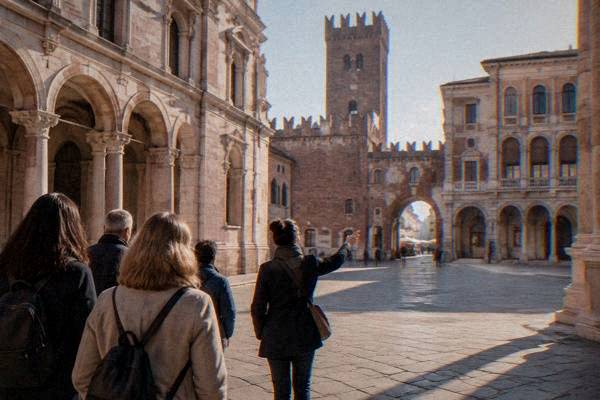
Verona, in Veneto in northern Italy, is famous for four things above all: a first-century Roman amphitheatre that still stages opera every summer, the Romeo and Juliet legend that Shakespeare set here, the Valpolicella wine hills that begin just north of the city, and an old centre inscribed on the UNESCO World Heritage List in 2000. The city sits inland on the Adige river, wrapped in a tight river bend, with Lake Garda a separate day trip 22 to 39 kilometres west rather than a lakeside neighbour. It is a compact city, the Arena standing openly in Piazza Bra at the edge of the centre, and the whole famous core is walkable from there. This page takes each of those four claims in turn and reports what the primary sources say, prices included, because Verona's fame is unusually well documented for a city its size.
What Is Verona, Italy Famous For?
Verona is famous for its Roman Arena, which the Arena's own site dates to about 30 AD, for being the setting of Romeo and Juliet, for the Valpolicella and Amarone wine hills on its northern edge, and for a UNESCO World Heritage historic centre inscribed in 2000. It is also famous as a city of love, an association the Comune di Verona itself traces to the Romeo and Juliet legend. The lake towns of Sirmione and Bardolino belong to its day-trip orbit, not to the city itself.
Those are the headlines. Each one deserves its own section, because each carries a practical detail that generic summaries get wrong: the Arena is a daytime sight as well as an opera house, Juliet's courtyard has been ticketed since 1 April 2026, and the VeronaCard went digital on 1 September 2026. Get those three right and the rest of the city reads accurately too.
The fame is not new. Verona's strategic position on the Adige, guarding the route from the Alps to the plain, made it a Roman city of consequence, then a Scaliger stronghold, then a Venetian possession, and each layer survives in the fabric the UNESCO listing recognises. What follows is what the sources say, not what a postcard implies.
The Arena Di Verona: A Roman Amphitheatre That Still Works
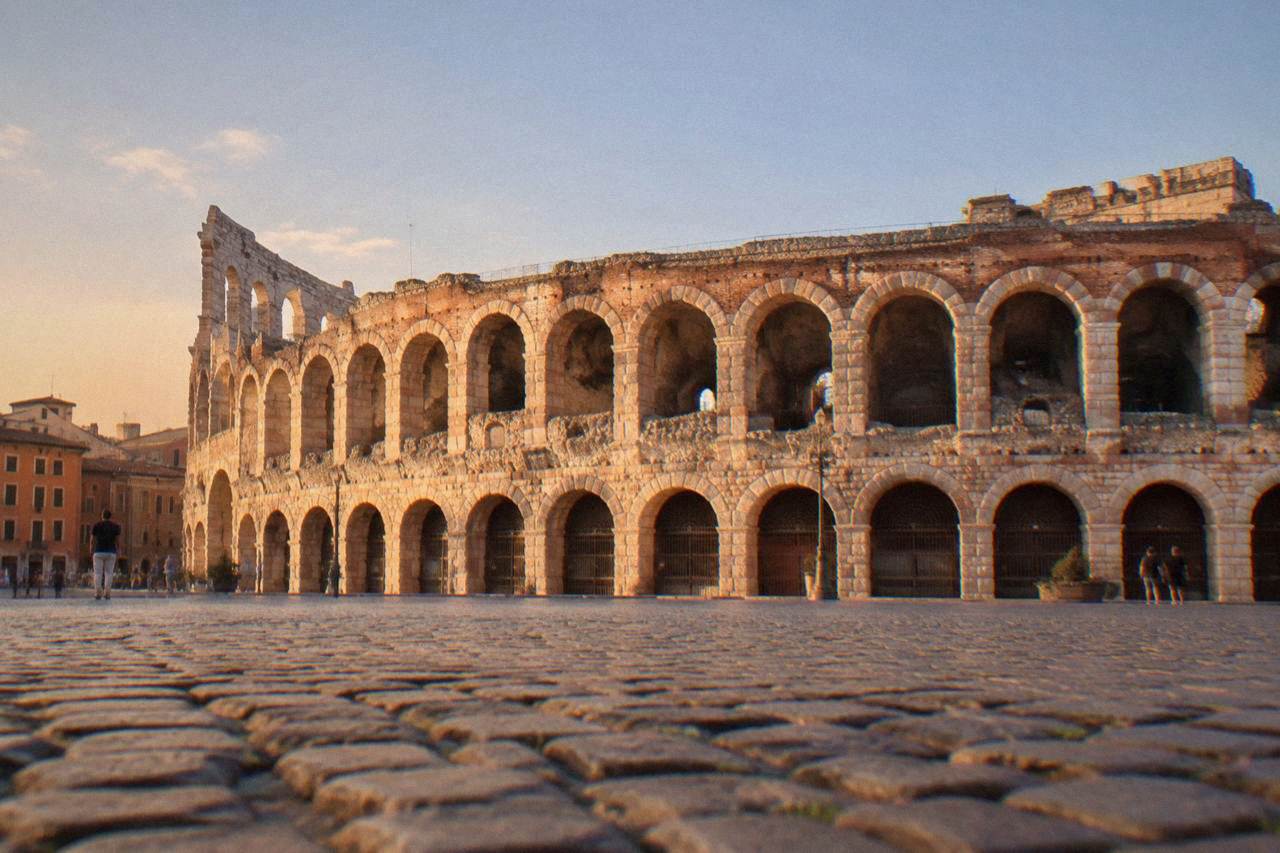
The Arena di Verona is a Roman amphitheatre that the Arena's own site dates to about 30 AD, making it, per the same source, older than the Colosseum and the third-largest surviving Roman amphitheatre after Rome and Capua. Its operators list an effective capacity of 30,000 seats, and it hosts the annual summer Opera Festival, which ran 5 June to 12 September in 2026 and is announced for 11 June to 11 September in 2027.
By day it is an ordinary civic museum with a ticket: the Comune di Verona's price list shows a full daytime ticket at 12 euro, 9 euro reduced for groups of 15 or more, over-65s and other concessions, and 3 euro for visitors aged 18 to 25 from EU and reciprocity countries, with free entry for under-18s and VeronaCard holders. Opening is reported as Tuesday to Sunday from 9:00 to 19:00, closed Mondays, with early closure on show days, so confirm the calendar on the Arena's own ticket page before planning a visit. The claim that the Arena is only for opera is simply wrong; the claim that it is free is wrong too.
By night in summer it becomes the Opera Festival. The 2026 edition, the 103rd, was the longest in the festival's history, and the 104th is announced for 11 June to 11 September 2027. Stone-step seats start in the EUR 30s per the Arena's rates page; confirm exact sectors and dates there. Performances typically begin around 21:00 to 21:30, gates open about two hours before, and the operators' rules allow only small backpacks. Rain does not cancel a performance before its scheduled start; the Arena's terms allow delays of up to 150 minutes.
A guided visit folds the archaeology and the opera story into one loop: the Verona Tour with Arena, Cable Car and Optional Juliet Tickets covers the amphitheatre with a local guide, crosses the river by cable car for the panoramic view, and can bundle Juliet's House. For a first visit with limited time it is the single tour that touches the most of what the city is famous for, and Check availability takes you to the operator's live listing. Whether an opera night justifies the ticket has its own honest answer on is the opera in Verona worth it, and the Arena's age question is settled on is the Verona Arena older than the Colosseum.
Romeo, Juliet And The City Of Love
Verona is famous as the city of love because Shakespeare set Romeo and Juliet here, and the Comune di Verona's tourism pages attribute the association directly to that legend. Juliet's House on Via Cappello is the focal point: since 1 April 2026 the courtyard route costs 5 euro and the house-and-balcony route 12 euro, with online booking and entry via Teatro Nuovo, per the official access notice. The balcony itself was added in 1940 and is not original.
The literary chain is documented: Luigi da Porto wrote the story in 1531 and set it in Verona, Bandello retold it in 1554, Brooke's 1562 poem reached Shakespeare, and the stage did the rest. Shakespeare never visited Verona; the city came to him through his sources. What he gave the city in return is a permanent identity, and the bronze Juliet statue in the courtyard, sculpted by Nereo Costantini and placed there in 1972, is now polished bright on one side by visitors touching it for luck.
The practical change matters. For years the courtyard was free and only the house was ticketed; since 1 April 2026 the whole route is ticketed and booked online, and even VeronaCard holders must reserve a slot. Hours are reported as Monday 14:00 to 19:00 and Tuesday to Sunday 9:00 to 19:00, so check the current slot availability on the official booking platform before going. The wider legend, including why Romeo is banished and whether the balcony is real, is covered on is Juliet's balcony real in Verona and why did Shakespeare choose Verona for Romeo and Juliet, and the statue custom has its own page on why do people touch Juliet's statue in Verona.
Valpolicella, Amarone And The Food Verona Is Famous For
Verona is famous for Amarone della Valpolicella, a DOCG red made from Corvina, Corvinone and Rondinella grapes dried in the appassimento process before fermentation, in the wine hills that begin about 25 minutes' drive north of the Arena. The city's kitchen is famous for risotto all'Amarone, pastissada de caval, bollito with pearà sauce and gnocchi, and for pandoro, the Verona-born Christmas cake.
The Valpolicella zone is close enough that winery visits slot into a half day. Per the OSRM routing used on this site, Sant'Ambrogio di Valpolicella is about 25 minutes' drive from the Arena, Soave, the white-wine DOCG east of the city, about 33. Tasting fees and winery admission vary, so confirm directly with each winery or through a tour operator. What a guided option reliably adds is the drive: the Valpolicella vineyard visits in the site's tour roster include transport and tastings, while a self-guided e-bike version lets riders cross the hills between stops.
In the city itself the food fame is inexpensive and specific. The dishes above appear on osteria menus across the centre; the sources used here name no restaurants, so this desk prints none. The honest companion piece is does Verona have good food, and for the wine itself the site keeps a dedicated Valpolicella wine tour guide.
A UNESCO World Heritage Centre On A River Bend
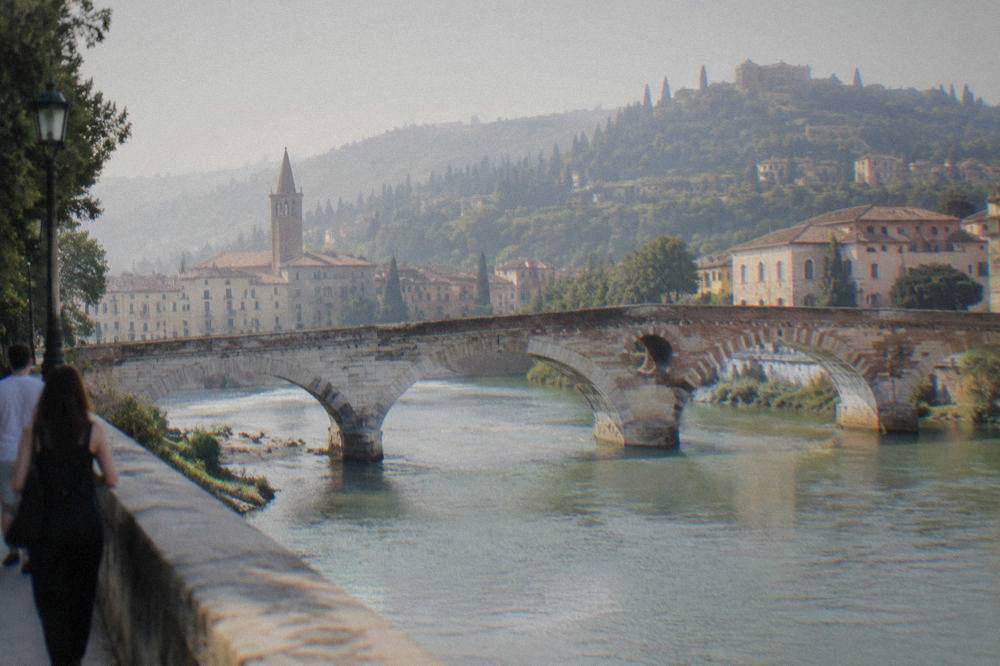
Verona's historic centre was inscribed on the UNESCO World Heritage List in 2000, under criteria (ii) and (iv), recognising two thousand years of urban evolution inside a fortified river bend. The famous core runs from Piazza Bra and the Arena through Piazza delle Erbe and Piazza dei Signori to the Scaliger tombs, with Ponte Pietra, the Roman bridge footbridge, crossing the Adige toward Castel San Pietro and the Teatro Romano.
The squares are free and open at all hours. Piazza delle Erbe, the old Roman forum, holds a daily market; Piazza dei Signori beside it is quieter, framed by the Loggia del Consiglio and the Arche Scaligere, the Scaliger family tombs. Individual museum prices vary: Castelvecchio is reported at 9 euro full, the Torre dei Lamberti at 6 euro, both with VeronaCard coverage, but confirm church admissions locally. The digital VeronaCard, 33 euro for 24 hours or 38 euro for 48 hours with ATV buses included from 1 September 2026, covers the civic museums and the Chiese Vive churches; the Comune's notice states the card does not include the airport Aerobus.
What the UNESCO listing actually recognises is the layering: Roman gates like Porta Borsari, medieval Scaliger rule, Venetian administration, all legible in a walk of under an hour. That density is the quiet answer to how many days in Verona is enough, and it is also why the centre is camera-policed as a ZTL: non-resident drivers get at most four entries a month, though hotel guests enter free if the hotel registers the plate.
| What Verona Is Famous For | The Verified Figure | Where It Sits |
|---|---|---|
| Arena daytime visit | 12 euro full, 9 euro reduced, 3 euro for 18-25 | Piazza Bra, centre |
| Juliet's courtyard and house | 5 euro courtyard, 12 euro with house, since 1 April 2026 | Via Cappello, centre |
| Opera Festival 2027 | Announced 11 June to 11 September | The Arena |
| VeronaCard digital | 33 euro (24 h) / 38 euro (48 h) with ATV transport | City-wide, from 1 Sept 2026 |
| UNESCO inscription | 2000, criteria (ii) and (iv) | Whole historic centre |
| Valpolicella drive | About 25 minutes to Sant'Ambrogio | North of the city |
Lake Garda: The Famous Neighbour That Is Not Verona
Verona is famous as the gateway to Lake Garda, but the city itself is inland on the Adige and no part of it touches the lake. The lake towns sit 22 to 39 kilometres west: Lazise at 22.7 km, Bardolino 25.7, Garda 28.7, Sirmione 30.7 and Malcesine 38.8, straight-line distances computed from the Arena. Sirmione, the famous one with the Scaliger castle and the Grotte di Catullo, is in Brescia province, Lombardy, not Verona's.
The drive times tell the same story: about 40 minutes to Sirmione, 37 to Bardolino, 42 to the town of Garda and 84 to Malcesine at the northern end, computed over free-flow routing. The Monte Baldo cable car above Malcesine, one of the lake's signature sights, costs 30 euro round trip for an adult, 28 online, in a season that ran to about 1 November in 2026. Navigazione Laghi's full-lake day pass is 39.50 euro for an adult in 2026, and the north-south passenger service is reported suspended from 2 November 2026 to 12 March 2027, so check timetables before planning a winter ferry day.
Whether to sleep in the city or on the shore is a real planning question, answered on is it better to stay in Verona or Lake Garda, and the distance question has its own page on how far is Verona from Lake Garda. The short version: famous both, but separate places.
Common Questions About What Verona Is Famous For
What Is Verona, Italy Famous For?
Verona is famous for its first-century Roman Arena, the Romeo and Juliet legend, the Valpolicella and Amarone wine hills at its northern edge and a UNESCO World Heritage centre inscribed in 2000. It is also famous as the city of love, an association the Comune di Verona traces to Shakespeare's play.
Is Verona Famous For Romeo And Juliet?
Yes, that is the city's strongest cultural association. Shakespeare set the play in Verona following earlier Italian sources, and the city's Casa di Giulietta with its balcony, added in 1940, draws visitors worldwide. Since 1 April 2026 the courtyard route costs 5 euro and the house route 12 euro, booked online.
Is Verona On Lake Garda?
No. Verona is an inland city on the Adige river. The Lake Garda towns are 22 to 39 kilometres west and are day trips: about 40 minutes by road to Sirmione, 37 to Bardolino and 84 to Malcesine.
Is The Verona Arena Older Than The Colosseum?
The Arena's own site dates it to about 30 AD and describes it as older than the Colosseum and the third-largest surviving Roman amphitheatre after Rome and Capua. Those claims carry the Arena's attribution rather than standing as independent measurements.
What Food And Wine Is Verona Famous For?
Amarone della Valpolicella from the hills north of the city, plus risotto all'Amarone, pastissada de caval, bollito with pearà, gnocchi and pandoro, the Christmas cake that originated in Verona.
The fame holds up under checking, which is rarer than it sounds. The Arena really is a working Roman amphitheatre with a 12-euro daytime ticket, Juliet really has an address, the wine hills really do start 25 minutes from Piazza Bra, and the UNESCO listing really covers the whole bend of the river. More of the city's standing is documented at is Verona Italy worth visiting, and this Verona Italy Travel Guide keeps every price and date on this page in its facts file.