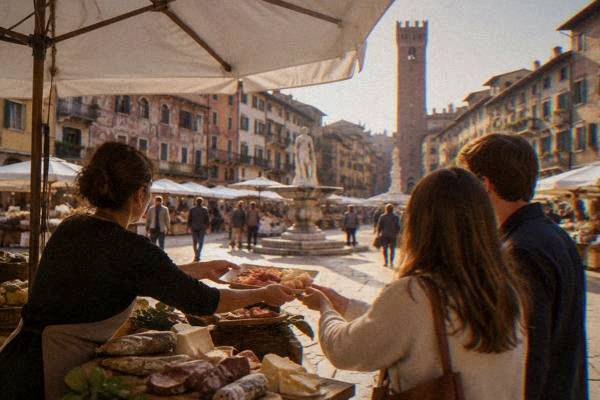
Does Verona Have Good Food?
Yes, Verona has good food: pastissada de caval, risotto all'Amarone, bollito with pearà and pandoro all come from this Veneto city on the Adige. Here is what to eat and how.
Verona, the inland Veneto city on the Adige river that travellers know for its Roman Arena and the Romeo and Juliet legend, is also a serious eating town. Its kitchen belongs to the rustic tradition of the Po valley and the pre-Alpine hills: meat stews cooked long and slow in local wine, rice grown on the nearby plains, boiled beef served with a breadcrumb-and-marrow sauce, and a festive sweet bread, pandoro, that is reported as a Verona invention. Around the city sit two of Italy's protected wine zones, Valpolicella to the north, home of Amarone, and Soave to the east. The short answer to the question of whether the food is good is yes, and it is good in a way you will not find repeated in Florence or Rome.
Does Verona Have Good Food?
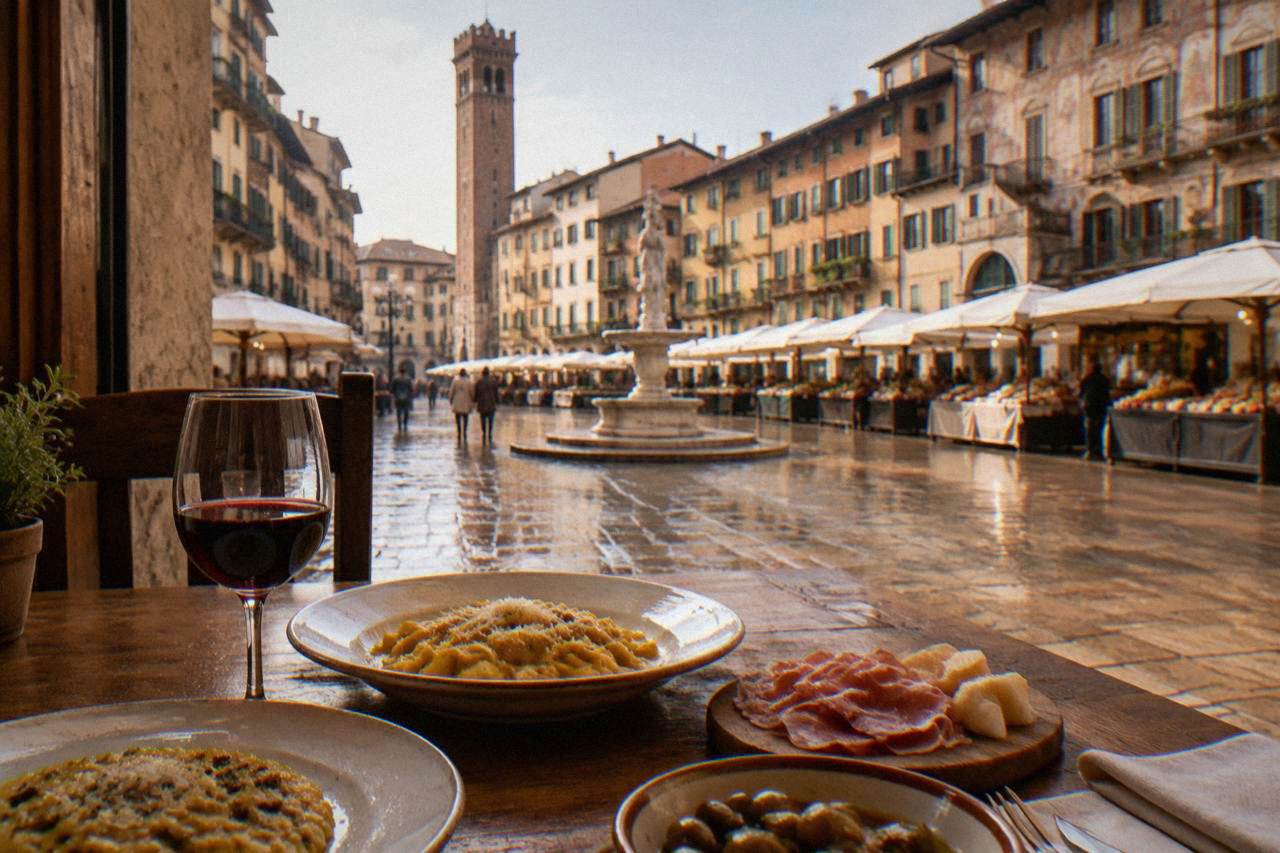
Yes. Verona has a distinctive, well-documented regional kitchen built on pastissada de caval, risotto all'Amarone, bollito with pearà sauce, fresh gnocchi and pandoro, all matched to the Amarone and Soave wines grown within a short drive of the city. Italian food writers repeatedly single out these Veronese dishes in national coverage, which is the strongest signal available that the city's table stands on its own.
The point worth making early is that Verona's food is not a lesser copy of the national canon. It is a specific kitchen with specific dishes. Pastissada de caval is a horse-meat stew simmered for hours in red wine and spices, classically served with polenta or gnocchi. Risotto all'Amarone cooks Vialone Nano rice in the same dried-grape red wine that made the Valpolicella hills famous, finished with Monte Veronese cheese. Bollito is a platter of mixed boiled meats with pearà, a peppery sauce of bread crumbs, beef marrow and Parmigiano. These are working dishes from a provincial capital that happened to sit between a wine region and one of Europe's richest agricultural plains.
For a full dish-by-ditch breakdown, see the site's dedicated guide to what to eat in Verona, which covers each speciality in more depth than this page needs to.
What Are The Dishes Verona Is Actually Known For?
The five dishes most closely tied to Verona are pastissada de caval, risotto all'Amarone, bollito with pearà, homemade gnocchi and pandoro. Each is documented in Italian food coverage as a Veronese speciality rather than a general Italian one, and together they describe a cold-climate, meat-and-rice kitchen quite different from the pasta-first cooking of the south.
Pastissada de caval carries the most local weight. It is a stew of horse meat, though beef versions appear, cooked slowly with wine, spices and sometimes chocolate, and it is the dish old Veronese families associate with winter Sundays. Gnocchi, small potato dumplings, are the city's other historical comfort food and are often served under the pastissada sauce itself rather than as a separate course.
Risotto all'Amarone is the plate that connects the city to its hills. The rice is Vialone Nano, a variety grown in the Verona province and protected in the European Union under its own scheme, and the wine is Amarone della Valpolicella, made from grapes dried on racks for months before fermentation. Bollito with pearà is the third pillar: boiled mixed meats, from beef to cotechino, with a pepper-heavy sauce whose name literally means "pear sauce", a reference to the pear-shaped grinding motion once used to make it. Pandoro, the tall star-shaped sweet bread eaten across Italy at Christmas, is reported as a Verona creation, though no origin date is documented on the sources this site relies on.
| Dish | What It Is | When Veronese Eat It |
|---|---|---|
| Pastissada de caval | Horse-meat (or beef) stew simmered long in red wine and spices, with polenta or gnocchi | Winter, Sunday lunches |
| Risotto all'Amarone | Vialone Nano rice cooked in Amarone wine with Monte Veronese cheese | Year-round, a city signature |
| Bollito con la pearà | Mixed boiled meats with a peppery breadcrumb, marrow and cheese sauce | Autumn and winter |
| Gnocchi | Potato dumplings, often dressed with the pastissada sauce or butter and sage | Year-round, festive occasions |
| Pandoro | Tall, star-shaped sweet yeast bread dusted with vanilla sugar | Christmas season |
How Good Is The Wine Around Verona?
The wine around Verona is internationally significant: Valpolicella to the immediate north produces Amarone della Valpolicella, a DOCG red made from dried Corvina, Corvinone and Rondinella grapes, while Soave to the east produces one of Italy's best-known white DOCG wines from the Garganega grape. Both zones sit within about half an hour of the city by road.
This matters to the food question because Veronese cooking is inseparable from its wine. The same appassimento process that dries grapes for Amarone, and the Valpolicella hills that produce it, lie about a 25-minute drive from the Arena, a computed free-flow routing time over OpenStreetMap. Soave, the white-wine town with its own castle, is about 33 minutes east. Bardolino, the light red grown on the Lake Garda shore, rounds out the local trio.
The practical consequence for a visitor is that "eating well in Verona" almost automatically means "drinking well in Verona". A risotto all'Amarone in the city is made with wine from hills you can see from the Roman Theatre's steps on a clear day. The city's tourism authority itself promotes the wine zones as part of the food offer, and tasting rooms in the historic centre pour these wines by the glass. Which specific bars and wineries to visit is not something this site can responsibly name, so ask at your accommodation or read current reviews before choosing.
Does Verona Food Work For Picky Or Vegetarian Eaters?
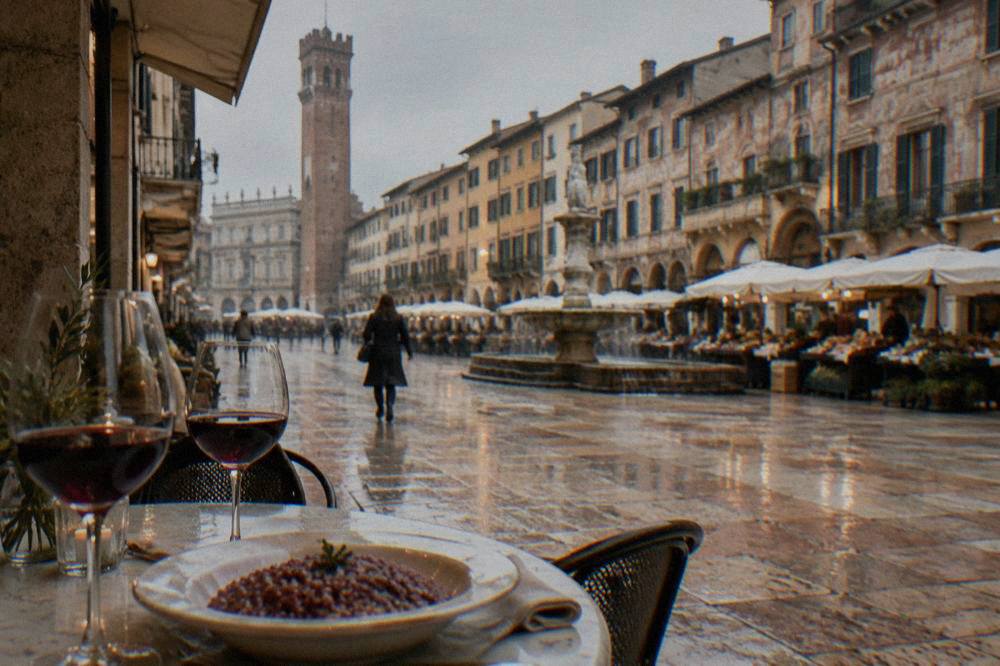
Vegetarians can eat well in Verona even though the historical dishes lean heavily on meat: risotto all'Amarone, potato gnocchi with butter and sage, polenta with cheese, and the Soave and Bardolino wines are all meat-free and central to the local table. Pastissada de caval, bollito and pearà sauce are the dishes to skip, since each is defined by meat or marrow.
That is the honest split. The city's most famous plates divide cleanly: the rice, dumpling and sweet-bread side of the ledger needs no meat at all, while the stew and boiled-meat side does. A vegetarian visitor who orders risotto all'Amarone is still eating one of the city's signature dishes, not settling for a side salad. Vegans have a thinner time of it, since the risotto and gnocchi rely on butter and cheese, though the exact preparation varies kitchen to kitchen, so ask how a dish is made rather than assuming.
For picky eaters, including children, gnocchi with butter and cheese and a simple pizza are the reliable fallbacks, and pizza is everywhere in Verona as it is across Italy. Anyone with allergies should say so directly; Italian kitchens are used to the question, but this site prints no opening hours or menus, so check before booking a table.
Is A Food Tour In Verona Worth Doing?
A food tour in Verona is worth doing if you want the local dishes explained and portioned across several stops in one evening, because the city's signature plates are spread across osterie you would not otherwise find on a first visit, and a guided walk turns a guessing game into a curated meal. Booking one early in the trip also calibrates your own restaurant choices for the days after.
The reasoning is structural rather than culinary. Verona's old centre is compact, but its specialities are scattered, and a dish like pastissada appears on some menus and never on others. A guided tour bundles tastings into a single walk with someone who can name the dishes and say where they come from. The site's featured option is the Verona Gourmet Food Tour with dinner, wine and gelato included, and you can Check availability for your dates. Cooking classes are the other worthwhile food booking: learning to roll pasta by hand turns half a day into a skill you take home, and the pasta-and-tiramisu classes in the city are built around exactly that.
How Does Verona Compare With Other Italian Food Cities?
Verona cannot be ranked against Bologna or Naples on this site, because no source in the facts behind this page compares them, but its food is regionally distinct rather than generic: where Bologna is known for fresh egg pasta and Naples for pizza, Verona is known for wine-braised stews, Vialone Nano risotto and Amarone. A visitor eating only generic tourist menus anywhere in Italy eats worse; a visitor eating the Veronese canon eats specifically Veronese.
That distinction is the useful one. The trap in any popular Italian city is the same: a menu with photographs, a waiter beckoning from the door, and food aimed at people who will never return. The defence is the same everywhere too: order the dishes the place is actually known for. In Verona that means the risotto, the gnocchi, the stew if you eat meat, and a glass of something from the hills behind the city. Readers weighing the city against its neighbours can start from whether Verona is worth visiting and from what Verona is famous for before deciding how food weighs in the balance.
Common Questions About Food In Verona
Does Verona Have Good Food?
Yes. The city has its own documented regional kitchen, including pastissada de caval, risotto all'Amarone, bollito with pearà, gnocchi and pandoro, alongside the Amarone, Soave and Bardolino wines produced in the zones surrounding the city.
What Is The Most Famous Dish In Verona?
No single dish is officially designated the most famous, but risotto all'Amarone and pastissada de caval are the two most closely identified with the city in Italian food coverage. Pandoro is the most exported, eaten across Italy at Christmas and reported as a Verona sweet.
Is Verona Good For Vegetarians?
Yes, within limits. Risotto all'Amarone, gnocchi with butter and sage, polenta and cheese are meat-free local staples. Pastissada de caval, bollito and pearà sauce are meat-based by definition and cannot be adapted.
Can You Drink Local Wine In Verona Without Leaving The City?
Yes. Bars and restaurants across the historic centre pour Amarone, Valpolicella, Soave and Bardolino, all produced within the surrounding province. The wine zones themselves, Valpolicella about 25 minutes and Soave about 33 minutes from the Arena by road, are easy half-day trips.
Are There Good Restaurants Near The Arena?
Verona's historic centre around Piazza Bra, Piazza delle Erbe and the Arena has a full range of dining, but this site prints no individual restaurant names or recommendations. Current review platforms and your accommodation are the practical way to choose.
Verona rewards eating the way it rewards everything else: slowly, and with attention to what is actually local. The city's kitchen is a real one, documented and specific, and a visitor who orders the risotto, the gnocchi and a glass of Valpolicella is eating Verona itself. This Verona Italy Travel Guide covers the city's sights, day trips and practical planning in the rest of its pages.