Verona Food Tour And Cooking Class Options
Verona's food scene runs on horse stew, Amarone risotto, pearà and pandoro, and a guided food tour or cooking class is the quickest way to meet all of it in one afternoon.
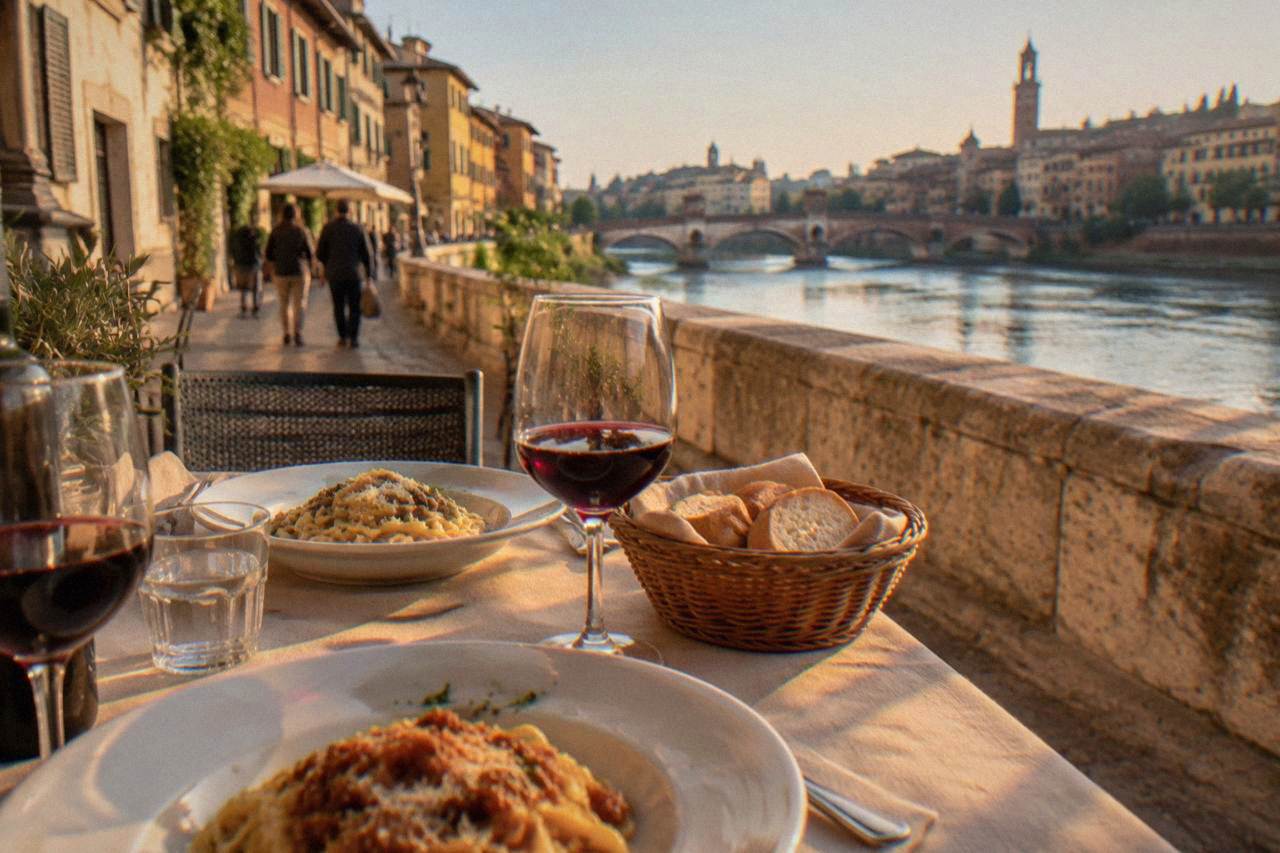
Short answer
A Verona food tour pairs the city's dishes, pastissada de caval, risotto all'Amarone, bollito with pearà and gnocchi, with local wines in the historic centre, while a cooking class puts you at the counter making pasta or tiramisu yourself. Both formats run daily; prices and durations are listed on each operator's live listing.
Verona, in Veneto, northern Italy, is an inland city on the Adige river whose kitchen is as much a reason to visit as its first-century Roman Arena. The local table runs on pastissada de caval, risotto all'Amarone, bollito with pearà sauce and sweet pandoro, and the Valpolicella wine hills that produce Amarone sit about 25 minutes' drive from Piazza Bra. A food tour or cooking class is the structured way to meet that table: a guided walk through tastings in the historic centre, or a hands-on session rolling pasta and assembling tiramisu. This page lays out the options, the dishes behind them and how they fit into a Verona itinerary, with everything bookable rendered live from each operator's listing. The Verona Italy Travel Guide food coverage continues in the guide to what to eat in Verona.
What Is A Verona Food Tour And What Does One Include?
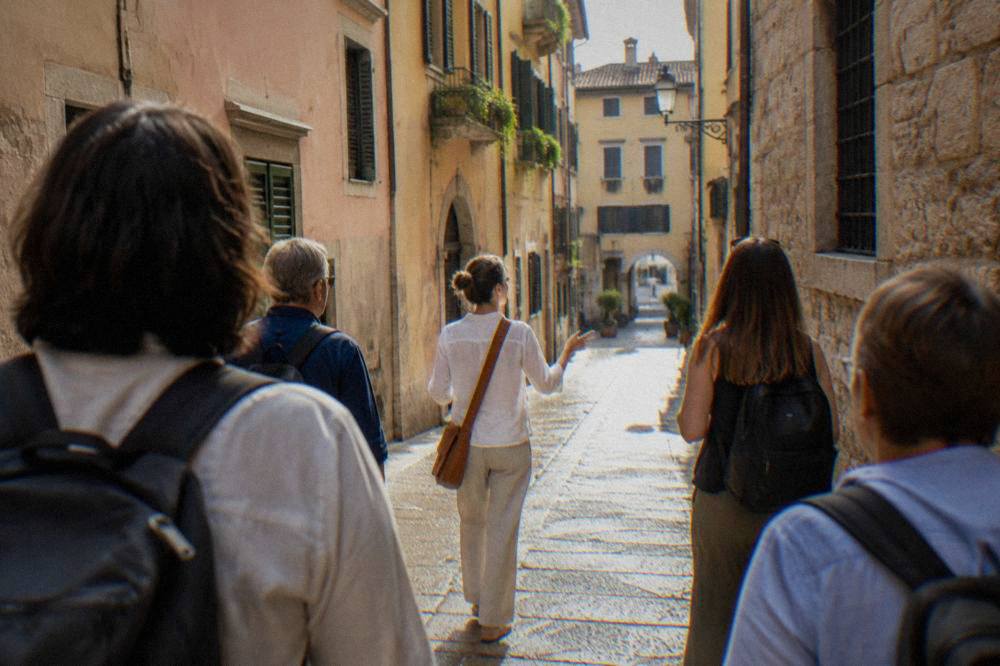
A Verona food tour is a guided walk through the historic centre that stops at several food venues for tastings, typically pairing Veronese dishes such as risotto all'Amarone, gnocchi and local salumi with Valpolicella wines, and running for an afternoon or evening with a local guide who explains each stop. Some formats add a full meal, others a market or hidden-gem route through the medieval lanes.
The format matters more than the label. A tasting walk moves between a handful of stops, small portions at each, with a guide narrating the city between bites. A full-meal version strings the same stops into a complete dinner, course by course, often finishing with gelato. The common thread is geography: these tours work the pedestrian core between Piazza Bra, Piazza delle Erbe and the Adige bridges, so the walking distance between stops stays short. What each tour covers, its price and its duration are printed on the operator's live listing at the point of booking, and both are worth checking against your own pace before reserving.
A food walk also doubles as an orientation. The guide points out the lanes around Piazza delle Erbe and the Scaliger landmarks while the group moves between venues, which is why some travellers book one on their first evening and treat it as a walking tour with lunch attached. If sightseeing is the priority instead, the dedicated Verona walking tour page covers the pure-sightseeing formats.
Which Dishes Should You Look For On A Food Tour In Verona?
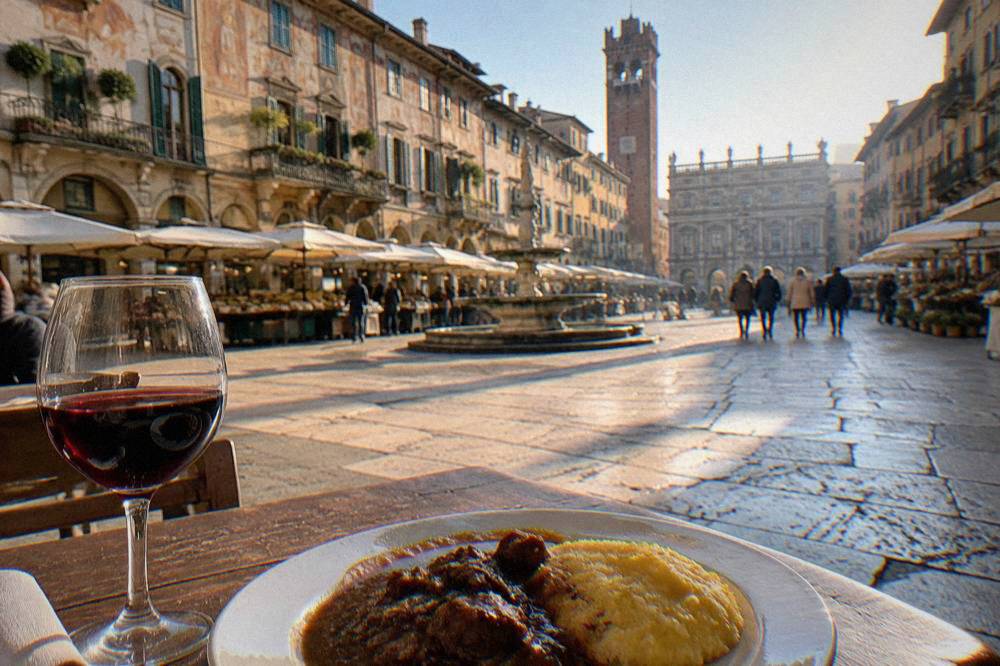
The four dishes that define a Veronese table are pastissada de caval, a horse-meat stew simmered long in wine and spices; risotto all'Amarone, Vialone Nano rice cooked in Amarone wine with Monte Veronese cheese; bollito con la pearà, mixed boiled meats with a peppered bread-crumb sauce; and gnocchi, often served alongside the stew. Pandoro, the butter-rich Veronese sweet, closes the list.
These are the reported signatures of the Veronese kitchen, and a serious food tour will put at least two of them in front of you. Pastissada de caval is the one that surprises visitors: horse stew is a genuinely local tradition, slow-cooked until the wine sauce darkens, and it is traditionally matched with polenta or gnocchi rather than pasta. Risotto all'Amarone is the other pillar, the rice taking its colour and depth from the same dried-grape Amarone wine that made the Valpolicella hills famous. Bollito con la pearà is the Sunday-plate of the province, boiled meats lifted by pearà, a sauce of breadcrumbs, marrow and a generous quantity of black pepper.
| Dish | What It Is | How It Is Served |
|---|---|---|
| Pastissada de caval | Horse-meat stew simmered in wine and spices | With polenta or gnocchi |
| Risotto all'Amarone | Vialone Nano rice cooked in Amarone wine, finished with Monte Veronese cheese | As a primo course |
| Bollito con la pearà | Mixed boiled meats with a peppered bread-crumb and marrow sauce | As a main, traditionally on Sundays |
| Gnocchi | Potato dumplings, a Veronese staple | With butter, ragù or alongside pastissada |
| Pandoro | Tall, butter-rich leavened sweet bread | Dusted with sugar, often with cream |
Pandoro deserves its own sentence: it is reported as a Verona-born sweet, though no origin date is sourced, so treat the cake as local and the legend lightly. None of these dishes needs a superlative attached; the recipes speak in their own voice, and a good guide will tell you which stop does which one best on that day's route. For a deeper run through the same territory, the what to eat in Verona guide covers dish by dish, and the does Verona have good food answer page takes the question head on.
Cooking Classes In Verona: What Do You Actually Make?
In a Verona cooking class you make pasta from scratch, often two shapes, plus tiramisu, working at a counter with an instructor who walks the group through dough, filling and assembly before everyone sits down to eat what they made; gelato classes cover churning and flavouring instead, and some formats run in a local's home with prosecco poured throughout.
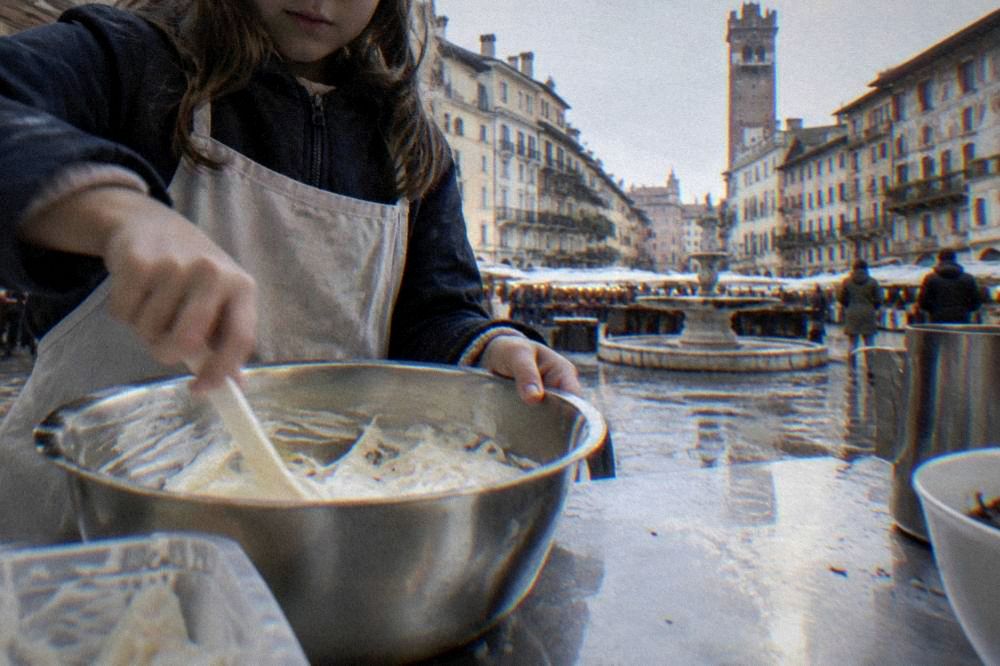
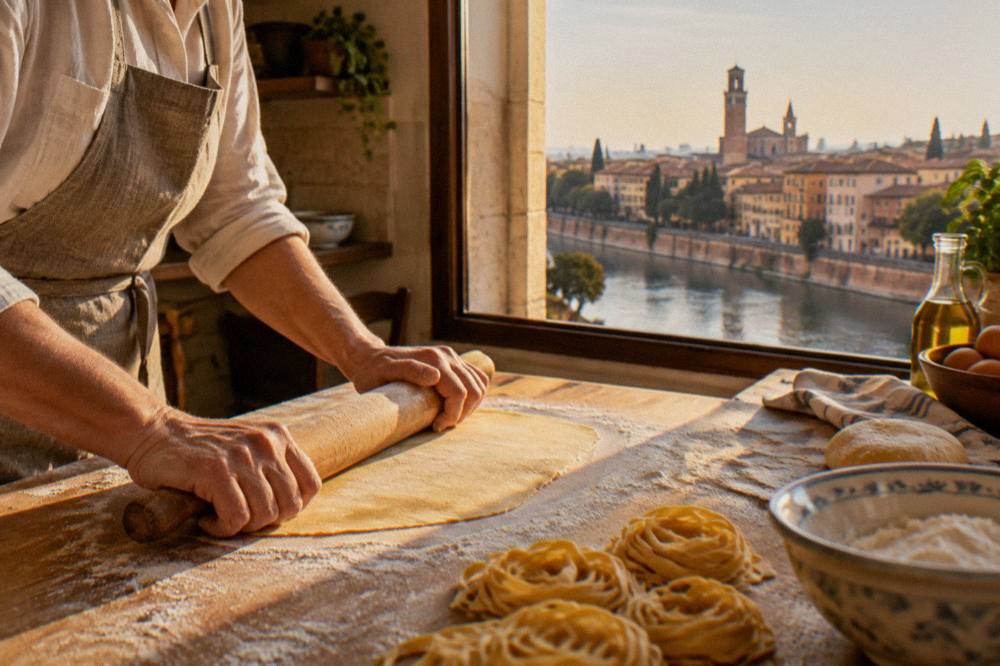
The pasta-and-tiramisu class is the most common format and the one this site features. You knead, roll and shape the dough, then build the tiramisu layer by layer, and the session ends as a meal: your own pasta, cooked and plated, with wine poured alongside. Home formats hosted through local-network operators add a domestic setting and a seat at a family table. Gelato classes are the family-friendly branch, churning and tasting rather than kneading. What each class includes, its price and its duration render on its listing at booking time.
The featured class on this page is the Pasta and Tiramisu Cooking Class with Fine Wine, a hands-on session that finishes with the meal you prepared. If you would rather taste than cook, the full-meal walk below covers the same ground eating instead of kneading. Check availability
A class also solves the Verona rain-day problem. The Verona in the rain guide lists indoor options, and a counter session is among the better ones: it needs no weather at all. Families get a dedicated variant, and the Verona with kids guide places the gelato format in a full child-friendly plan.
How Do Food Tours And Wine Tastings Connect In Verona?
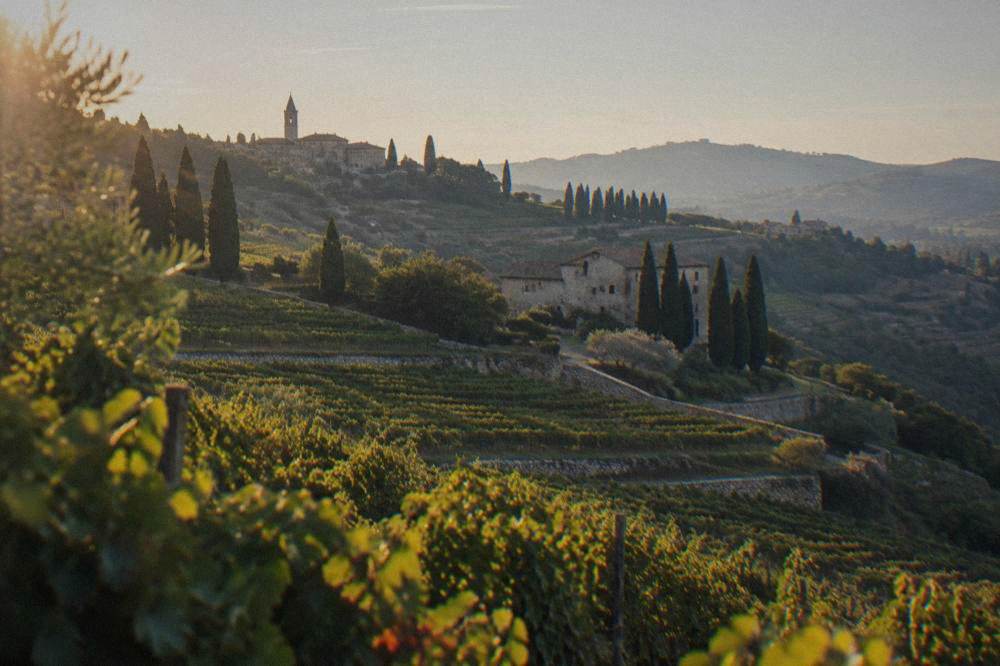
Verona's food and wine are the same story, because the city sits between the Valpolicella hills, which produce Amarone from dried Corvina, Corvinone and Rondinella grapes, and the Soave zone east of the city, which produces Garganega whites; food tours in the centre pour these wines at the table, while wine tours travel out to the vineyards themselves, about 25 minutes' drive to Valpolicella and 33 to Soave.
The practical split is simple. A food tour in the historic centre tastes the wines where they are drunk, glasses alongside the dishes. A wine tour leaves town for the cellar. The drive times are computed over standard routing in free-flow traffic: Valpolicella's Sant'Ambrogio is about 25 minutes from the Arena, Soave about 33. Some formats blur the line, a food walk that ends with a structured Amarone tasting, or a self-guided e-bike route through the Valpolicella lanes with tastings built in. The full range is on the Valpolicella wine tour page.
| Wine Zone | Direction From Verona | Drive Time From The Arena | Signature Wine |
|---|---|---|---|
| Valpolicella (Sant'Ambrogio) | North-west | About 25 minutes | Amarone, Ripasso, Recioto |
| Soave | East | About 33 minutes | Soave (Garganega white) |
| Bardolino | West, on Lake Garda | About 37 minutes | Bardolino red |
Amarone itself is worth understanding before the first glass, because the drying process, appassimento, is what sets it apart: the grapes are air-dried for months before fermentation, concentrating sugar and flavour. The Amarone wine guide unpacks the method. Food tours that pour it usually do so in the guided-tasting format, small pours, explained, rather than as free-flowing table wine.
How Does A Food Tour Fit Into A One-Day Or Two-Day Verona Itinerary?
A food tour slots most naturally into the late afternoon and evening of your first full day: sights in the morning, the Arena and Piazza Bra first, then Piazza delle Erbe and Juliet's house at midday, with the food walk taking over from about 17:00 so the meal becomes dinner; in a two-day plan, day two can carry a cooking class at lunch and the sights you missed on day one.
The one-day version is tight but workable. The morning belongs to the big ticketed sights, the Arena by day costs 12 euro full, 9 reduced, per the Comune di Verona's price list, and Juliet's courtyard has been ticketed since 1 April 2026 at 5 euro, or 12 euro with the house, booked online. The afternoon walk connects Piazza delle Erbe to the bridges, and the food tour closes the day as dinner. The Verona in one day itinerary times this hour by hour, and the Verona in two days version spreads the same logic out.
| Time Slot | One-Day Plan | Two-Day Plan |
|---|---|---|
| Morning | Arena visit, Piazza Bra | Arena and Castelvecchio |
| Midday | Piazza delle Erbe, Juliet's house (ticketed) | Cooking class, pasta or gelato |
| Afternoon | Ponte Pietra, Castel San Pietro walk | Food tour or wine tasting |
| Evening | Food tour as dinner | Free evening, dinner from the day's class |
Ticketing facts shape the day more than visitors expect. The Arena is closed to daytime visits on Mondays and closes early on opera evenings, per the Arena's own site, so confirm the calendar before locking the schedule. The VeronaCard went digital on 1 September 2026 at 33 euro for 24 hours with transport, and it covers the civic museums and churches, though it does not include the airport bus. None of that touches the food plan directly, but the sights around it do.
When Is The Best Season For A Food Tour In Verona?
The shoulder months suit a Verona food tour best, because the ERA5 reanalysis for 1991-2020 shows April at a 17.8 C mean high and September at 23.7 C, warm enough for an evening walk between stops without the July and August heat, which averages 29.3 and 29.1 C mean highs, while December's 7.8 C highs push the tastings indoors and pair well with the Christmas-season sweets.
There is no bad month for eating in Verona, only different rooms. Summer tours lean into the evening, the Opera Festival ran 5 June to 12 September in 2026 and fills Piazza Bra before and after, so an opera night and a food walk can stack into one long evening if the timing is checked. Autumn brings the harvest logic: Valpolicella is in crush, and the wine-poured-on-food format makes more sense once you have seen the hills. Winter is pandoro season, the Christmas markets ran from late November to late December in past years, with 2026 dates not yet published, so confirm before planning a December trip around them. The best time to visit Verona guide weighs all of this for the city as a whole.
| Month | Mean High C | Mean Low C | Rain Mm | Food Tour Note |
|---|---|---|---|---|
| April | 17.8 | 7.6 | 93.5 | Mild evenings, spring menus |
| June | 26.6 | 16.5 | 92.3 | Opera season overlaps |
| July | 29.3 | 19.1 | 79.4 | Evening tours, heat at midday |
| September | 23.7 | 15.1 | 99.7 | Harvest season in Valpolicella |
| December | 7.8 | 0.8 | 71.1 | Pandoro and Christmas sweets, indoor stops |
The figures above are ERA5 reanalysis values for 1991-2020, a modelled grid cell rather than a station record, and they describe climate normals, not a forecast. Rain is spread across the year, with November the wettest month at 118.2 mm, so a food tour's indoor stops make it one of the more weather-proof things on a Verona list; the free things to do in Verona and rain guides carry the same logic for sightseeing.
Can You Combine A Verona Food Tour With A Lake Garda Day Trip?
Yes, and the pairing works in either order, because the Garda towns are close: drive times from the Arena are about 37 minutes to Bardolino, 40 to Sirmione and 42 to the town of Garda, so a full-day lake excursion returns by late afternoon in time for an evening food walk, or a morning food tour can be followed by a lake morning the next day.
Verona is not on Lake Garda, and that distinction is worth holding onto: it is an inland city on the Adige, and the lake is a day trip. Bardolino, which gives its name to the light red wine of the same zone, is the natural food-and-lake combination, its wine country rolling straight down to the shore. Sirmione, on a peninsula in Brescia province, Lombardy, pairs a Scaliger castle with lake fish. Combined formats exist that pack Verona and Sirmione into one booked day from either base, and the Verona and Lake Garda itinerary guide plans the two-centre version in full.
| Lake Town | Drive Time From The Arena | Food And Drink Link |
|---|---|---|
| Bardolino | About 37 minutes | Bardolino red wine zone on the shore |
| Sirmione | About 40 minutes | Lake fish, Scaliger castle, spa town |
| Garda | About 42 minutes | Old lakeside town, olive groves |
| Malcesine | About 84 minutes | Monte Baldo cable car, 30 euro round trip adult |
The Monte Baldo cable car figure above is the operator's own 2026 fare, 28 euro booked online, with junior fares lower, and it runs roughly April to early November. If a booked combined day appeals more than self-driving, the full-day Garda excursion below stacks the lake, Sirmione and a cruise into one tour, leaving a free evening for the city's own table.
What About Diets, Kids And Non-Drinkers On Verona Food Tours?
Verona food operators commonly accommodate vegetarian diets, and pasta-and-tiramisu classes adapt well since the doughs are meatless, but pastissada de caval and bollito are meat-centred dishes, so vegetarians, vegans and anyone with allergies should state their needs at booking rather than on arrival; children are welcome in family-format gelato classes, and non-drinkers can usually be poured a substitute, again if the operator knows in advance.
The honest caveat: this is a meat-and-cheese region, and a traditional tasting walk leans on salumi, stew and aged cheese. The formats that flex best are the cooking classes, where you control the filling, and the gelato sessions, which are dessert-first by design. Family-format classes are built around children at the counter. Booking is the moment to declare any restriction, because guides shop and portion before the group assembles. What each specific tour can accommodate is stated on its own listing, and that page is the authority; confirm it before you reserve rather than trusting a general rule of thumb.
How Do You Choose Between A Tasting Walk And A Cooking Class In Verona?
Choose a tasting walk if you want the city explained while you eat, since the format moves through the historic centre with a guide narrating between stops; choose a cooking class if you want to bring the skill home, because you leave able to roll pasta and build tiramisu yourself; and choose a wine-focused tasting if Amarone is the reason you came, since it pairs the glass with the explanation.
The decision is really about what you want to own afterwards. A walk leaves you oriented: you will know Piazza delle Erbe from the lanes behind it, and you will have eaten the city's signatures in one evening. A class leaves you competent: dough, filling, assembly, and the meal is the proof. A tasting leaves you fluent in one glass. Budget and duration for every option render from the listings at booking, and cancellation terms are standard on nearly all of them, so the choice can be made early and adjusted later.
One practical tiebreaker is the rest of the day. If the schedule already holds a Torre dei Lamberti climb and a Giardino Giusti stroll, a seated tasting walk may fit the legs better than a standing counter class. If the day is sightseeing-light and the weather is doubtful, the class is the safer container. The things to do in Verona page carries the wider list for filling the hours either way.
Common Questions About Verona Food Tours
What is a Verona food tour?
A guided walk through Verona's historic centre that stops at several venues for tastings of local dishes and wines, with a guide explaining each stop; some formats build the stops into a full meal.
What food is Verona Italy known for?
Verona is known for pastissada de caval, risotto all'Amarone, bollito con la pearà, gnocchi and pandoro, alongside the wines of the nearby Valpolicella and Soave zones.
Is a food tour in Verona worth it?
It is worth it if you want the local dishes explained and poured in one structured evening rather than researched across several restaurant visits; the value case is orientation plus tastings combined.
Can children join a Verona food tour or cooking class?
Family-format gelato and pasta classes are built for children, and tasting walks usually admit children with reduced or free participation; state ages at booking because policies vary by operator.
Do Verona food tours include wine?
Most do, typically Valpolicella wines poured alongside the dishes; non-drinkers should say so at booking so the guide can arrange a substitute pour.
How far in advance should you book a Verona food tour?
Book a few days ahead in the shoulder seasons and further ahead if your visit overlaps the Arena opera season, which ran 5 June to 12 September in 2026 and fills the city's evenings.
A food tour or cooking class in Verona is the one booking that pays you back twice: you eat the city's dishes in the order a local would serve them, and you learn enough to order confidently on every night that follows.