Valpolicella From Verona: Villages, Villas And Amarone
Valpolicella is the wine country that starts barely 20 minutes north of Verona's Arena: a band of hills and villages where Amarone is made, close enough for a half-day and rich enough for two.
Short answer
Valpolicella lies about 25 minutes and 21 km by road north of the Arena in Verona. The region makes Amarone della Valpolicella DOCG from Corvina, Corvinone and Rondinella grapes dried before pressing, and its main villages, Negrar, Fumane and Sant'Ambrogio, are reached by car, taxi or an organised wine tour.
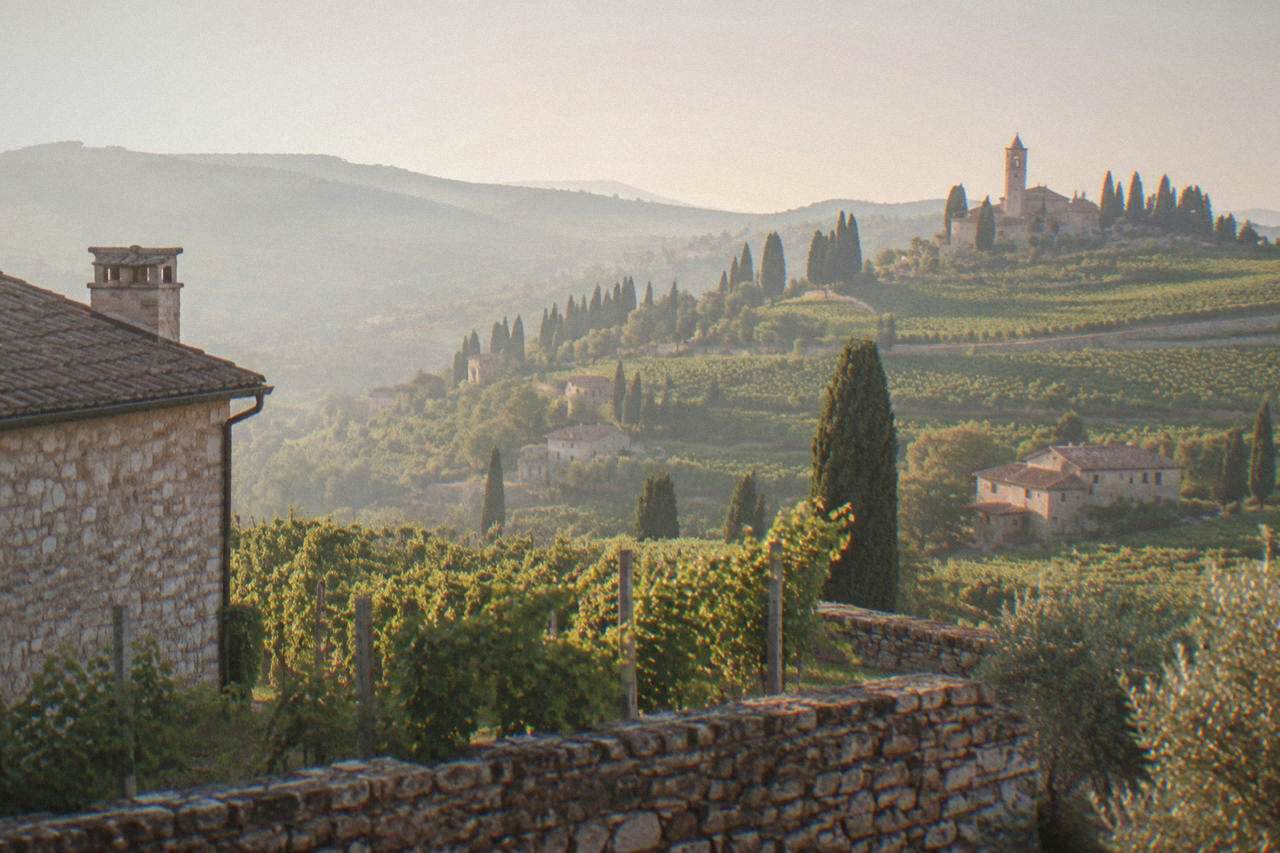
Valpolicella is the wine country that begins almost at Verona's northern edge: a band of hills, dry-stone walls and villages running from the Adige valley toward Lake Garda, and the home of Amarone. The drive from the Arena to Sant'Ambrogio di Valpolicella is about 25 minutes and 21 km by road, which puts one of Italy's most famous red-wine zones within easy reach of a city better known for its Roman Arena and the Romeo and Juliet legend. The hills themselves, not the city, are the destination here, and this page covers the villages, the wine, the villas and the practical choices for a day among the vines.
Verona, in Veneto, is an inland city on the Adige river; the Valpolicella hills rise immediately to its north-west, and the whole area belongs to the same province. The name covers both a classical Valpolicella closer to the city and the Valpolicella Valpantena and eastern extensions that fan out toward the Lessini mountains. Read on for what the region is, what Amarone actually is, how to get there, which villages reward a stop, and how a half-day or full-day plan fits into a wider Verona itinerary such as our three days in Verona route.
What Is Valpolicella And Where Is It Exactly?
Valpolicella is a wine-producing hill region immediately north-west of Verona in Veneto, northern Italy, centred on the villages of Negrar, Fumane and Sant'Ambrogio and extending into the Valpantena valley. It lies about 25 minutes and 21 km by road from the Arena, and its full name, Val Policella, is usually read as "valley of many cellars". The zone makes Valpolicella, Valpolicella Ripasso and Amarone della Valpolicella DOCG wines.
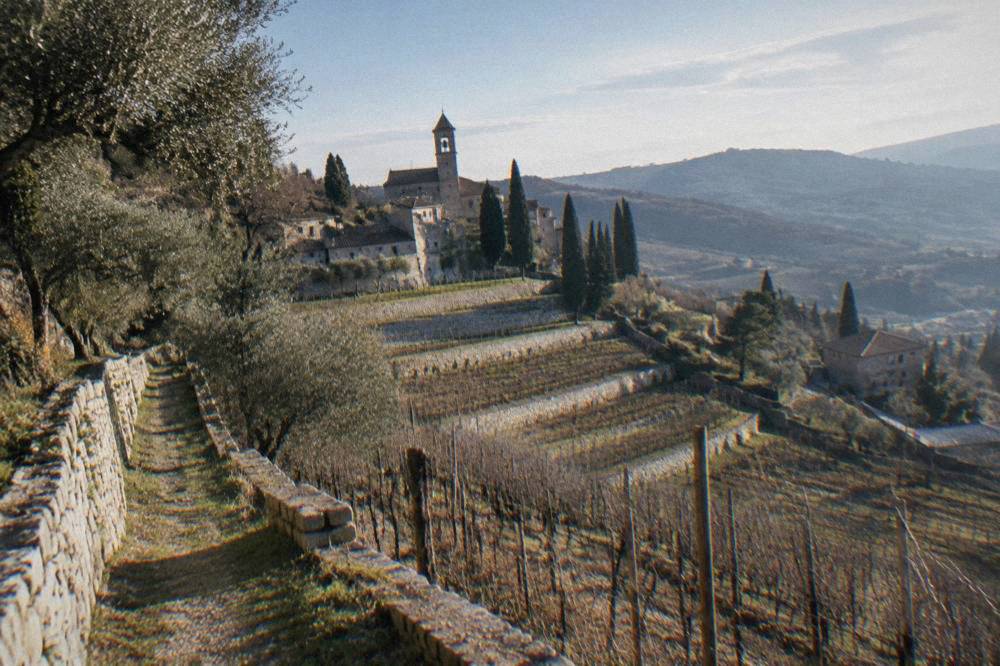
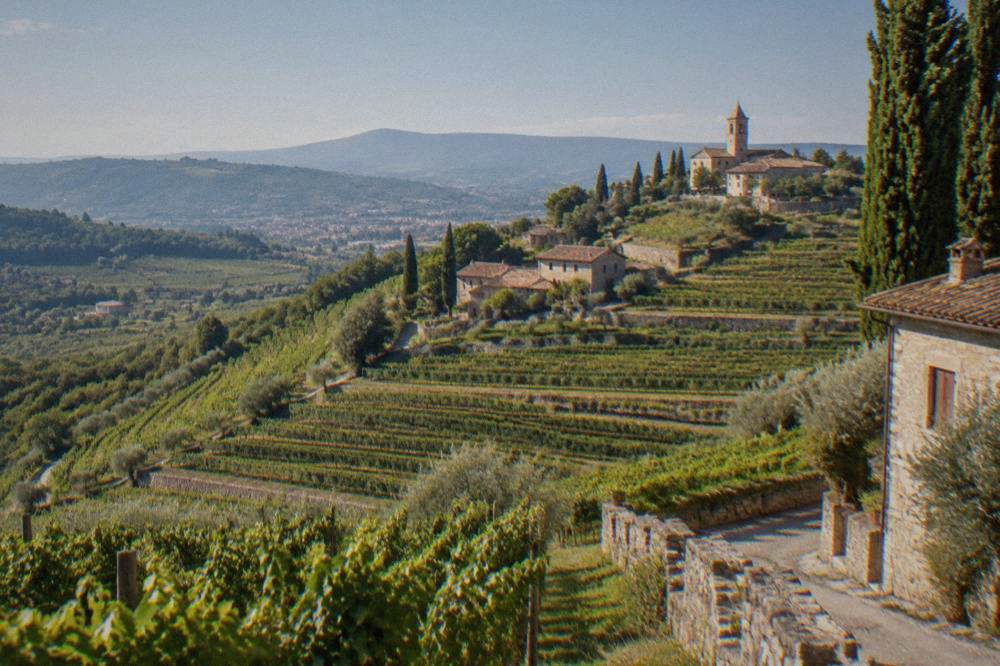
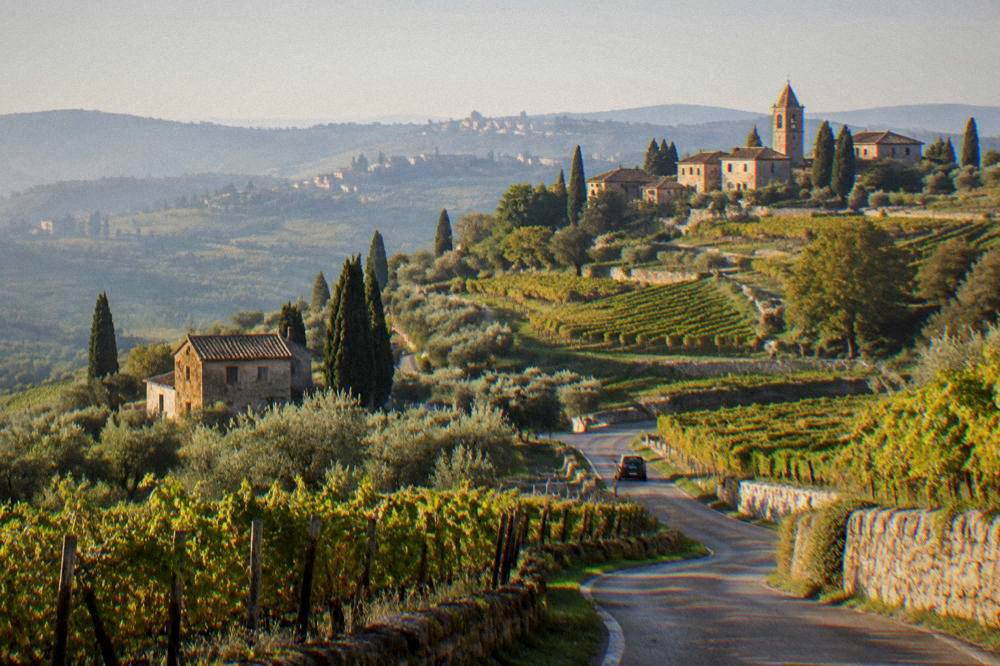
The region sits on the foothills of the Lessini mountains, a fold of limestone hills that rise gently from the Po plain north of Verona. Vineyards climb terraces held by dry-stone walls, a landscape of small properties, cherry orchards and olive rows, with villas and parish churches set on the ridgelines. The nearest shores of Lake Garda lie west of the hills, but the two are separate destinations: Garda is a lake day trip, Valpolicella a wine one, and combining both in a single day means a lot of driving.
Administratively the area is a cluster of communes in the province of Verona, and the wine zone's boundaries are fixed by DOCG rules rather than by any single town. That matters for visitors because a "Valpolicella" tasting can happen in a cellar five minutes from Verona's ring road or deep in a valley 40 minutes out. For background on what ends up in the glass, see our guide to Amarone wine.
What Is Amarone And Why Is It Made From Dried Grapes?
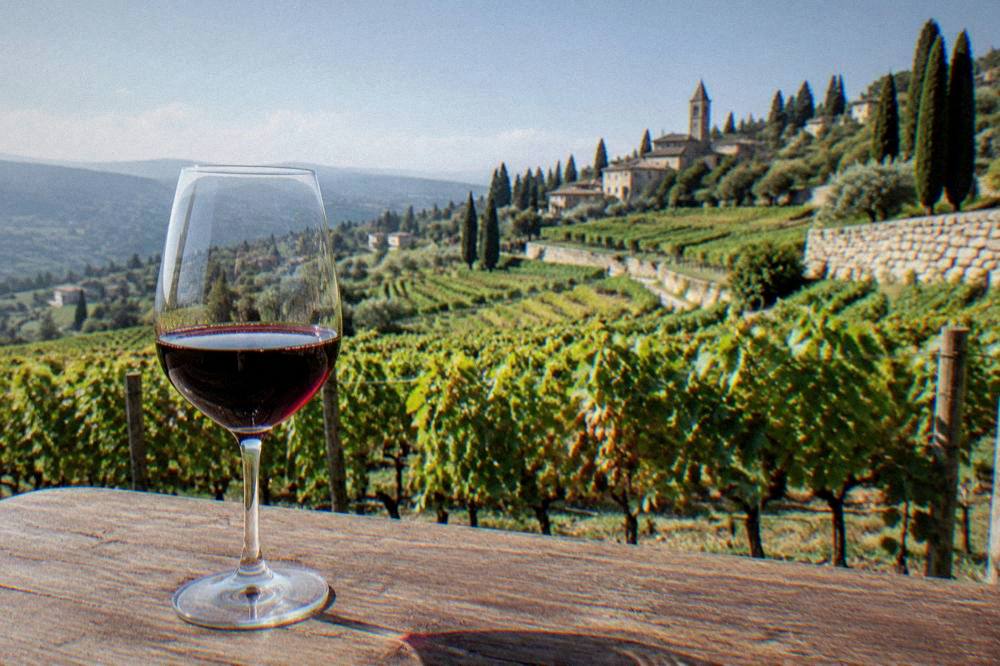
Amarone della Valpolicella DOCG is a strong, dry red wine made mainly from Corvina, Corvinone and Rondinella grapes that are dried on racks in ventilated rooms for months before pressing, a process called appassimento. The reported consequence of that drying is a wine with high alcohol, dense fruit and a characteristic bitter-almond edge, since Amarone takes its name from amaro, meaning bitter.
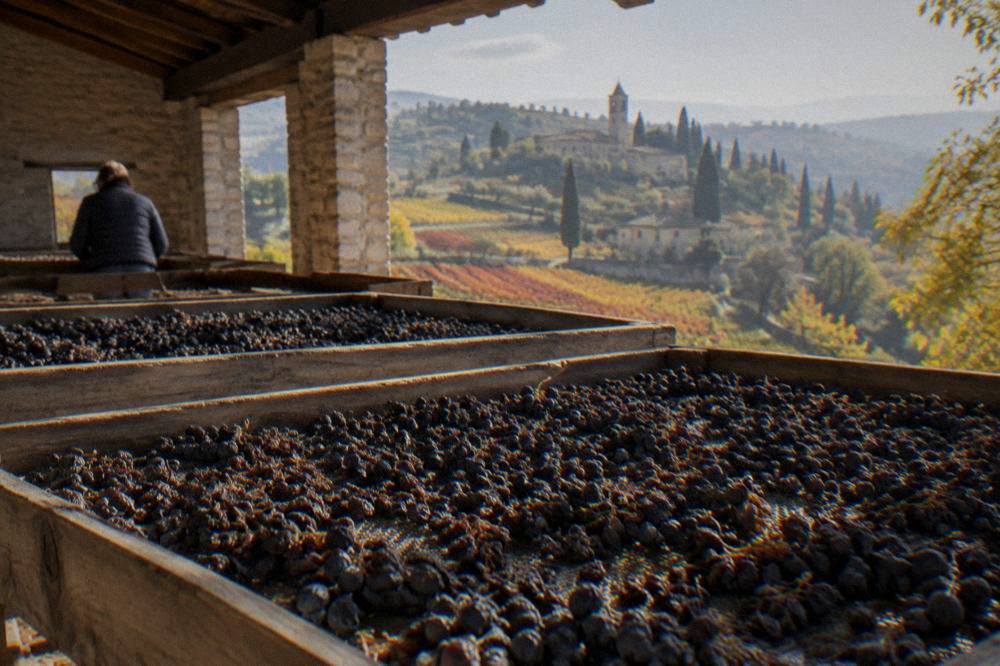
The appassimento method is the region's signature. After the harvest, grapes are laid out in lofts called fruttai, where air movement slowly removes water and concentrates sugars and acids. The same dried grapes, fermented to sweetness instead of dryness, produce Recioto della Valpolicella, the dessert wine that predates Amarone in the region's history, and Amarone itself is often described as the accidental dry cousin of Recioto. Ripasso, a third style, sees young Valpolicella re-passed over the pressed skins of Amarone grapes to add body.
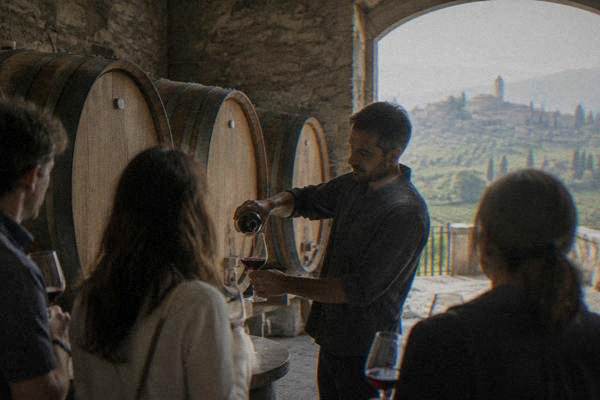
A cellar visit in the region usually walks through exactly this story: the drying lofts in autumn, the small oak casks in the cellar, and a tasting that moves from basic Valpolicella through Ripasso to Amarone, sometimes with Recioto at the end. The consorzio that governs the denominations publishes the grape rules, and the reported figures above come from those consorzio sites; confirm directly with each producer or through a tour before setting out.
How Do You Get From Verona To The Valpolicella Hills?
Driving is the practical way to reach Valpolicella from Verona: about 25 minutes and 21 km by road from the Arena to Sant'Ambrogio di Valpolicella under free-flow conditions, with Negrar and Fumane on intermediate roads. There is no single rail line into the hills, buses to the wine towns are thin and season-dependent, and an organised wine tour with transport is the common car-free option.
The road distance above is a computed free-flow figure, so allow more at commuter hours or on harvest weekends in October, when tractors and grape trailers share the valley roads. Parking in the villages is generally easier than in Verona's ZTL-controlled centre, though the historic centre of Verona itself is camera-policed with at most four entries a month for non-residents; hotel guests are exempt if the hotel registers the plate. Anyone weighing a hire car should read our notes on renting a car and driving in Verona first.
| Route | Distance by road | Free-flow drive time |
|---|---|---|
| Verona (Arena) to Sant'Ambrogio di Valpolicella | 21 km | about 25 minutes |
| Verona (Arena) to Soave | 33 km | about 33 minutes |
| Verona (Arena) to Vicenza | 65 km | about 48 minutes |
| Verona (Arena) to Mantua | 59 km | about 54 minutes |
| Verona (Arena) to Padua | 93 km | about 67 minutes |
| Verona (Arena) to Venice | 122 km | about 85 minutes |
The comparison rows matter for itinerary planning. Soave, the white-wine DOCG east of the city, is a natural second wine trip, and the times above show that a combined Valpolicella morning and Soave afternoon is feasible by car, if rushed. Pairing Valpolicella with Venice, Padua or Vicenza in one day is not realistic. For the practicalities of an organised day out instead of self-driving, a Valpolicella wine tour from Verona handles the transport, the bookings and the question of who drives home after the tasting.
Which Valpolicella Villages Should You Stop In?
Sant'Ambrogio di Valpolicella, Negrar and Fumane are the three villages to anchor a route: Sant'Ambrogio as the historic heart of the denomination with the Romanesque pieve of San Giorgio, Negrar as a market town surrounded by the zone's best-known hillside vineyards, and Fumane as the compact valley centre where tasting rooms cluster. Each is small, so two or three stops fill a relaxed day.
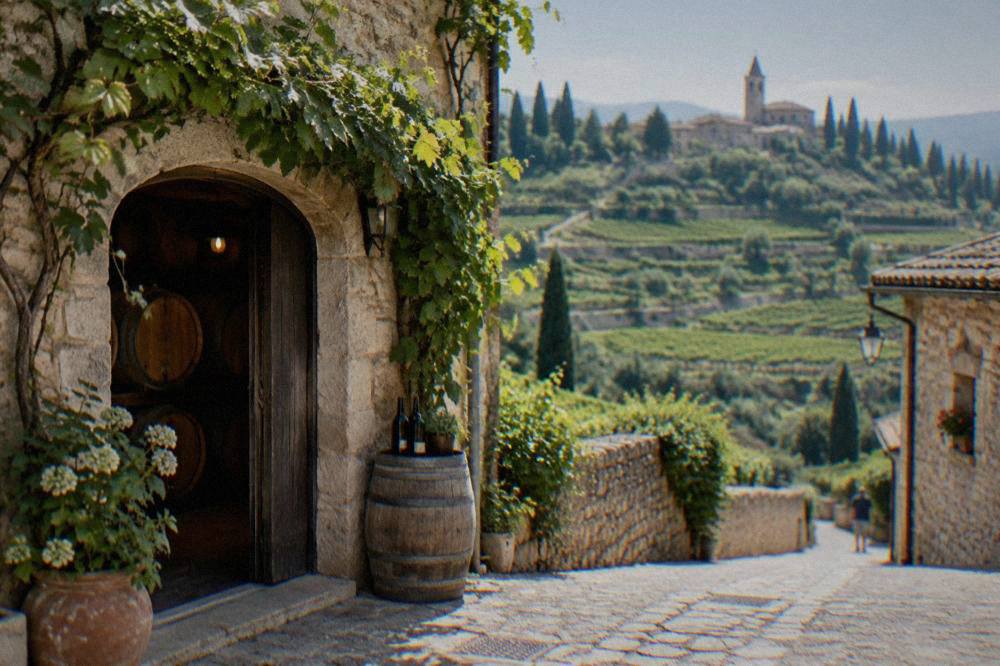
Sant'Ambrogio sits on a ridge with views south toward Verona's plain, and its parish church is one of the landmarks of the valley. Negrar, slightly larger, is where much of the co-operative and family production is based, and the surrounding hills carry the Valpolicella Classica designation. Fumane and the neighbouring Marano valley offer the quietest roads and a string of small producers. Beyond them, the Valpantena, the eastern valley that rejoins the city near Verona's northern suburbs, rounds out the denomination.
| Village | Character | What to look for |
|---|---|---|
| Sant'Ambrogio di Valpolicella | Historic heart of Valpolicella Classica | The Romanesque pieve, ridge views, historic cellars |
| Negrar | Busiest market town of the zone | Hillside vineyards on surrounding slopes, co-operative wineries |
| Fumane | Compact valley centre | Concentration of tasting rooms, quiet valley roads |
| Marano di Valpolicella | Small hill village | Terraced vineyards and stone walls |
| Valpantena (eastern valley) | Lesser-visited extension | Closer to Verona, fewer visitors at cellars |
No restaurant, cellar or shop name is named here, so none is listed. The workable approach is to pick villages first, then book tastings at two producers in or between them, spacing a morning and an afternoon stop with a long lunch in between. Autumn is the scenic season: harvest runs through September and October, and the drying lofts are full, which is when a cellar tour shows appassimento actually happening rather than described.
Can You Visit A Valpolicella Winery Without A Booking?
Book ahead, always: the wineries of Valpolicella are working farms and family cellars, not drop-in tasting bars, and the sources used here publish no walk-in policy, no tasting price list and no standard opening hours for any named producer. Booking through the winery's own site or through an organised tour is the reliable route, and harvest weeks in autumn fill calendars weeks in advance.
What a visit typically includes, once booked, is a walk through the drying loft and cellar followed by a seated tasting of several wines, but the exact shape depends entirely on the producer. Fees vary by cellar, so check the current price with each one before booking. An alternative that needs no booking of your own is a guided tour, where the operator holds the cellar reservations; the half-day option above is one such product, and our wider Verona wine guide covers what else the region pours, from Bardolino on the lake shore to Soave's whites.
One caution worth repeating: the banned fact on this topic is any specific winery name framed as a recommendation. No shortlist of wineries is supported by the sources. What the sources do support is the structure of the region, the three-village geography above and the denominations themselves, and that is what a booking decision should be built on, alongside the reviews and details on each operator's live listing.
What Villas And Sights Sit Among The Vineyards?
The Valpolicella hills hold a string of Venetian villas and Romanesque churches rather than ticketed attractions, and the two landmarks most often named are Villa della Torre in Fumane, a grand 16th-century-style complex now used for wine events, and the pieve of San Giorgio at Sant'Ambrogio, plus the Arche Scaligere-style parish churches scattered through the villages. No villa admission prices or opening hours are published.
The villas are the region's quiet architecture story: wealthy Veronese and Venetian families built country houses among their vineyards from the Renaissance onward, and several are still privately held, which is why hours and access vary and why none is listed here with a price. The churches are older, several pre-dating the Scaliger period, and are usually open or viewable without charge during daylight hours.
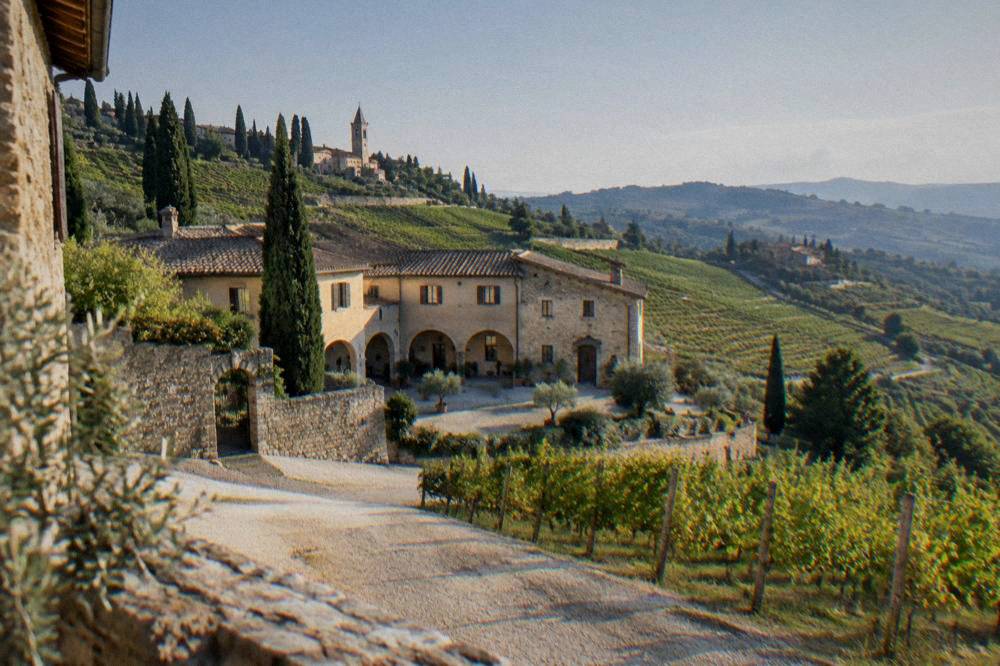
A reasonable non-tasting day in the hills links a village morning, a villa exterior or garden where access is offered, and a ridge road with views back over the plain to Verona. Combine that with a morning in the city, perhaps the Piazza delle Erbe market square or the Arena di Verona, and the day splits neatly into town and country. The classic pairing at lunch is a plate that answers the wine: for that, see what goes into risotto all'Amarone.
How Does A Valpolicella Day Fit A Verona Itinerary?
A half-day tasting trip is the standard fit for a two- or three-night Verona stay, leaving the morning or the evening free for the Arena, Juliet's House and the historic centre, while a full day suits wine-first travellers combining two cellar visits with lunch. With about 25 minutes of driving each way, the hills do not consume a whole day unless you want them to.
The half-day shape works around Verona's fixed sights. The Arena is open for daytime visits, Tuesday to Sunday, with an early close on opera evenings, and Juliet's House has required online booking with entry via the Teatro Nuovo since April 2026, so a morning tasting trip can end back in the city by mid-afternoon with time for both. In summer, an opera night at the Arena pairs naturally with an afternoon in the hills, though note the season runs June into September, not just July and August. Travellers with only one day in the city should weigh the trade-off carefully against the guide to things to do in Verona.
| Stay length | Valpolicella fit | Typical shape |
|---|---|---|
| One night | Skip or a short afternoon drive | City sights only, hills saved for a return |
| Two nights | Half-day tasting trip | Morning or afternoon in the hills, rest in the city |
| Three nights | Full wine day | Two cellars plus a village lunch, or add Soave another day |
| Wine-focused week | Two or three visits | Valpolicella Classica, Valpantena, then Soave or Bardolino |
The wider region offers alternates if a second wine day appeals: Soave's castle-topped white-wine town is 33 minutes away, and the lake shore at Bardolino pours its own light red, both covered in our Lake Garda guide. The trade-off with a lake day is real, since Sirmione and the eastern shore compete for the same day slot; a sensible split is wine on one day, lake on the next.
When Is The Best Season For A Valpolicella Trip?
September and October are the best months for a Valpolicella trip: harvest is under way, the drying lofts are filling with grapes, and the ERA5 reanalysis for Verona, 1991-2020, shows mean highs of 23.7 C in September and 18.1 C in October, with rain picking up from 99.7 mm in September to 107.2 mm in October. Spring, April to June, is the quieter runner-up, with May the wettest spring month at 109.7 mm.
The climate figures are modelled normals for the Verona grid cell, not a station record, and the hills a few hundred metres higher tend to run slightly cooler than the plain. July and August, with mean highs of 29.3 C and 29.1 C, are hot for walking terraced vineyards but fine for cellar visits, which stay cool year-round. Winter visits are possible and quiet, though the scenery is bare and some producers restrict hours; the city's own winter attractions, covered in our Verona in winter pages, pair better then.
| Month | Mean high (C) | Mean low (C) | Rain (mm) | Valpolicella note |
|---|---|---|---|---|
| March | 14.0 | 3.6 | 67.4 | Vines still dormant, quiet cellars |
| April | 17.8 | 7.6 | 93.5 | Bud break, green hills |
| May | 22.3 | 12.2 | 109.7 | Full spring growth, wettest spring month |
| June | 26.6 | 16.5 | 92.3 | Early summer, long evenings |
| September | 23.7 | 15.1 | 99.7 | Harvest begins, lofts filling |
| October | 18.1 | 10.5 | 107.2 | Peak harvest scenery, appassimento under way |
One event worth planning around is Vinitaly, the international wine fair held in Verona on 11 to 14 April 2027, when the city fills with trade visitors and accommodation tightens. It is a professional fair rather than a tourist one, but its dates affect anyone booking an April wine trip.
What Does A Valpolicella Trip Cost, And Is A Tour Worth It?
A self-drive day costs the car, fuel and whatever each cellar charges for a tasting, and an organised tour instead has one printed price that covers transport and the cellar visits, rendered on the operator's live listing. The tour route is the one that answers the question of who drives after the Amarone.
That last point is not small. Amarone is a strong wine, a tasting pours several glasses, and the drive back to Verona is short but real. A guided product removes it, and also removes the booking legwork across two or more producers. Food-led alternatives exist in the city itself for days when the hills do not fit, and the pairing-focused option below is one:
For travellers combining Verona with the lake, a Sirmione boat-and-spritz trip covers the other famous local pour:
Budget beyond the wine itself should include Verona's tourist tax, charged by the accommodation and capped at four nights per person per month, at rates the city sets by category; the current rate table should be confirmed with the hotel at booking. Lunch in the hills is the other variable, so treat lunch as flexible.
Common Questions About Valpolicella From Verona
How far is Valpolicella from Verona?
About 25 minutes and 21 km by road from the Arena to Sant'Ambrogio di Valpolicella under free-flow conditions, with the nearer vineyards starting well before that. Allow longer at commuter hours and during the autumn harvest.
What grapes is Amarone made from?
Amarone della Valpolicella DOCG is made mainly from Corvina, Corvinone and Rondinella grapes, dried in ventilated lofts for months before pressing, per the consorzio rules. The drying process is called appassimento.
Can you visit Valpolicella without a car?
Not easily. Buses to the wine towns are thin and season-dependent, and there is no rail line into the hills, so the practical car-free options are a taxi for part of the way or an organised wine tour with transport included.
What is the difference between Amarone, Ripasso and Valpolicella?
Valpolicella is the basic fresh red; Ripasso is Valpolicella re-passed over the dried grape skins of an Amarone to add body; Amarone itself is the full dry wine made from those dried grapes, stronger and denser than both.
When is Valpolicella harvest season?
Harvest and the appassimento drying period run through September and October, which is also the most scenic time to visit, with the ERA5 reanalysis for Verona, 1991-2020, showing September mean highs of 23.7 C falling to 18.1 C in October.
Is Valpolicella near Lake Garda?
The hills lie between Verona and the lake, but they are a separate destination. The nearest lake towns are a further drive west, and combining a full Garda day with cellar visits in one outing is rushed; pairs of days work better.
Further reading for the wider region: our Soave day trip covers the white-wine alternative east of the city, and the Venice day trip page handles the one long-distance excursion that sometimes squeezes wine days out of a short stay. For everything in the city itself, start with Verona Italy Travel Guide and the things to do in Verona overview.