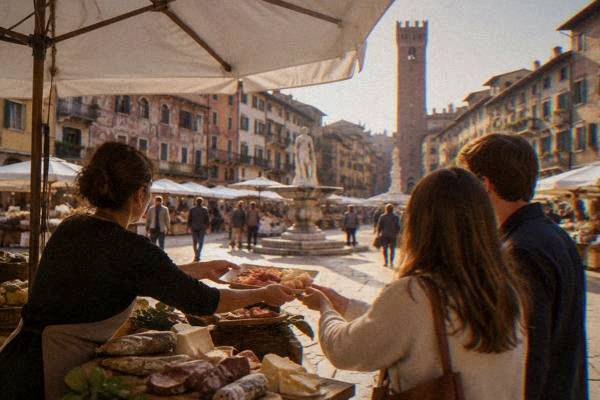
What To Eat In Verona: Ten Dishes And Where To Find Them
Verona food runs on four or five deep local dishes, a Valpolicella wine culture at the edge of town and a butter-rich sweet that was born here.
Short answer
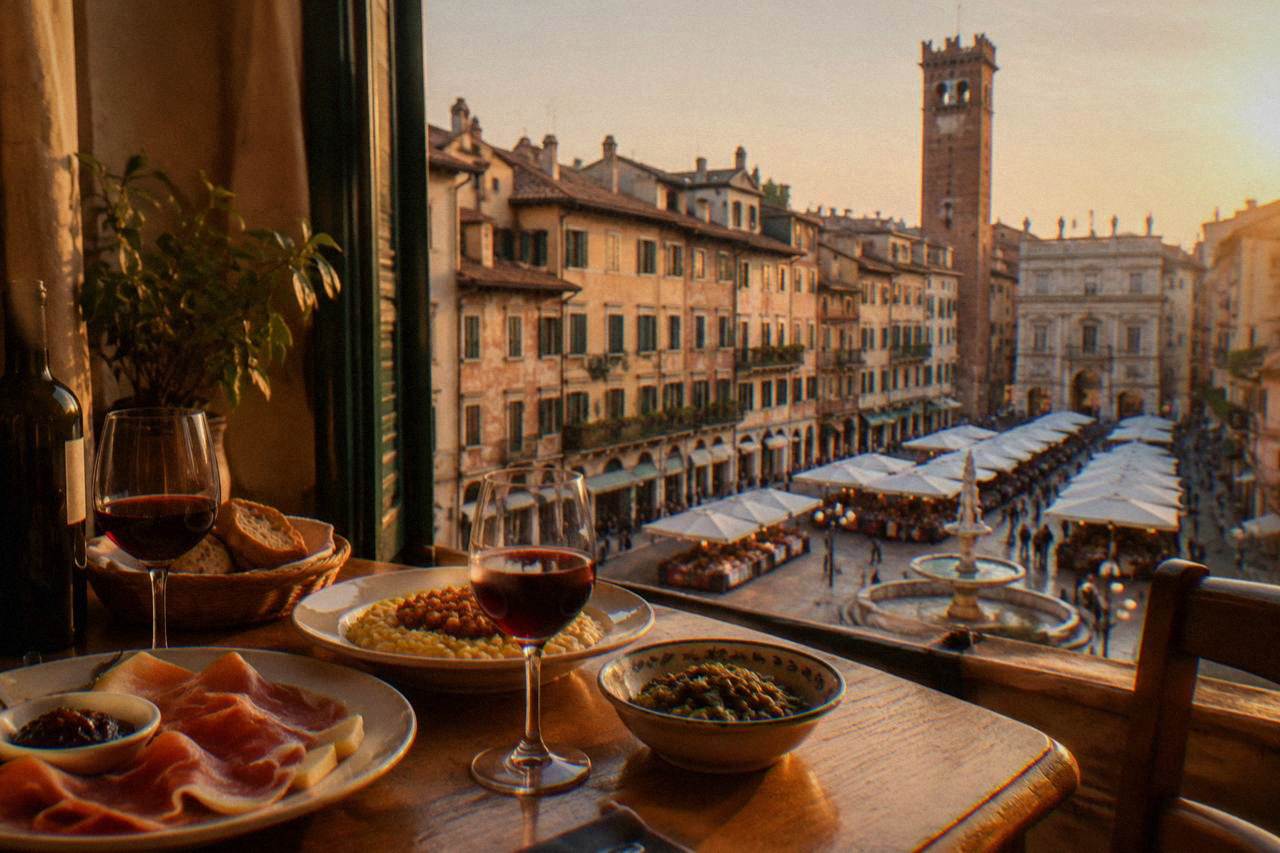
The dishes to order in Verona are pastissada de caval, risotto all'Amarone, bollito with pearà sauce, Veronese gnocchi and pandoro, matched with Amarone or Soave wines from the surrounding hills.
Verona food is a northern Italian kitchen built on the plain and hills of Veneto: slow meat stews, rice cooked in local red wine, boiled meats with a peppered bread sauce, soft gnocchi and a golden butter-and-egg sweet that carries the city's name. Verona itself, an inland city on the Adige river in Veneto, sits between two of Italy's noted wine zones, Valpolicella to the north and Soave to the east, and that geography lands directly on the plate. This page sets out the ten dishes that define eating here, what each one is, how it is made and how to build days around them. The kitchen of this city rewards ordering by name rather than by look, and the sections below explain why, dish by dish.
What Is Verona Food, And What Makes It Different?
Verona food is the cooking of inland Veneto: horse-meat stew simmered in wine, rice braised in Amarone, boiled beef with pearà pepper sauce, potato gnocchi and pandoro, all built on the wines of the Valpolicella and Soave hills at the city's edge. It is a butter, rice and slow-stew kitchen, not the pasta-and-olive-oil cooking further south, and its signature dishes carry the names of local wines and local history rather than national ones.
The distinction matters because travellers arrive expecting a generic Italian menu and find a strongly regional one instead. The Veneto plain grows rice, and the Veronese province grows Vialone Nano rice, the base of the city's signature risotto. The hills immediately north of the city grow the Corvina, Corvinone and Rondinella grapes that become Valpolicella and Amarone, and those wines go into the saucepan as often as into the glass. Horse meat has a long documented place in the local kitchen, and the region's most famous sweet, pandoro, is reported as a Verona creation, though no origin date is reliably sourced and none should be repeated.
The city's position helps. Lake Garda sits 22 to 39 km west, and its fish appears on Veronese tables, but the core dishes are land dishes: stew, rice, boiled meat, gnocchi. Anyone planning a wider trip can pair this page with the site's overview of things to do in Verona, which covers the Arena, Juliet's House and the rest of the historic centre. For the question of whether the city earns its table at all, the site's own answer page on whether Verona has good food digs into that directly.
What Are The Ten Dishes To Order In Verona?
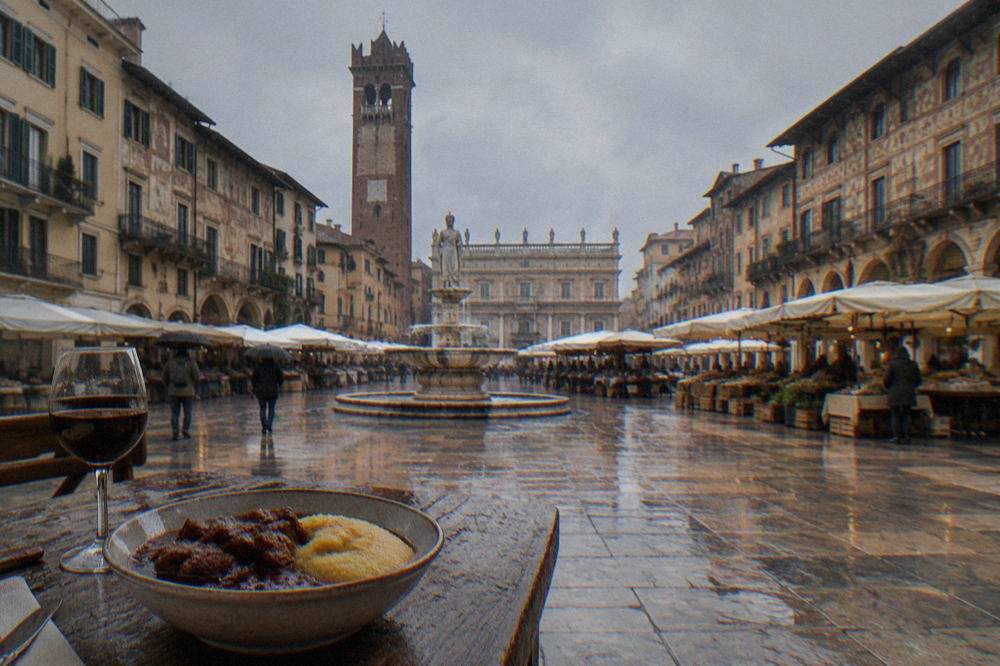
The ten dishes that define Verona's table are pastissada de caval, risotto all'Amarone, bollito con la pearà, Veronese gnocchi, pandoro, polenta with cheese, Lake Garda fish, Valpolicella and Amarone wines, Soave white wine, and Monte Veronese cheese. Not every menu carries all ten, but together they form the cooking of the city and its province, from the wine stews of the plain to the fish of the lake to the west.
The first five are the deep locals. Pastissada de caval is a horse-meat stew simmered for hours in red wine with spices, served with polenta or gnocchi. Risotto all'Amarone is Vialone Nano rice cooked slowly with Amarone della Valpolicella and finished with Monte Veronese cheese, so the wine's dried-grape richness sits inside the grain. Bollito is a plate of mixed boiled meats whose whole point is pearà, a bread-thickened, black-pepper sauce enriched with marrow. Veronese gnocchi are soft potato dumplings, often laid under the same stew sauce. Pandoro is the tall, star-cut, butter-rich Christmas sweet that is reported as a Verona invention.
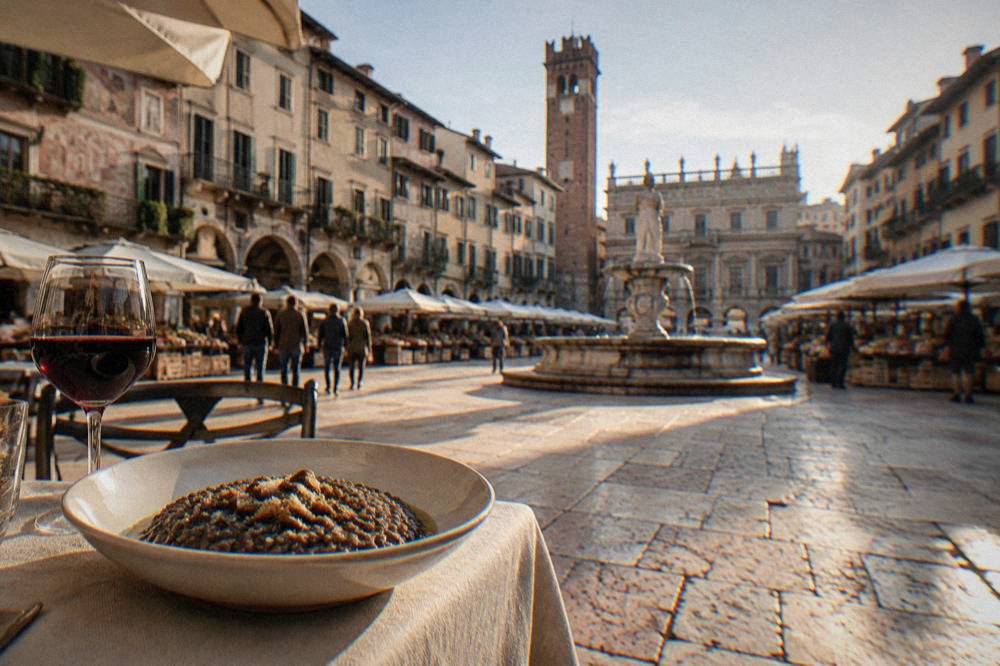
The second five are the supporting cast that a full eating week draws in. Polenta appears under stews and with cheese. Lake Garda fish, a day trip away from this inland city, shows up in the city's better kitchens. The wines deserve treating as dishes in their own right: Amarone is made from grapes dried on racks for months before fermentation, a method called appassimento, and its full process is covered in the site's guide to Amarone wine. Soave, from Garganega grapes east of the city, is the white counterpart. Monte Veronese, a mountain cheese from the hills north of town, finishes both the risotto and the cheese board.
| Dish | What it is | How it is served |
|---|---|---|
| Pastissada de caval | Horse-meat stew simmered long in red wine and spices | With polenta or gnocchi |
| Risotto all'Amarone | Vialone Nano rice braised with Amarone wine | Finished with Monte Veronese cheese |
| Bollito con la pearà | Mixed boiled meats | With pearà, a peppered bread and marrow sauce |
| Veronese gnocchi | Soft potato dumplings | With butter, cheese or stew sauce |
| Pandoro | Tall butter-and-egg leavened sweet | Dusted with icing sugar, star-cut sections |
| Polenta with cheese | Cooked cornmeal, a staple of the Veneto plain | Soft or grilled, with Monte Veronese |
| Lake Garda fish | Freshwater and lake fish from 22 to 39 km west | Grilled or in risotto, seasonal |
| Amarone della Valpolicella | Dried-grape red wine from the hills north of the city | With stews, aged cheese, or on its own |
| Soave | Garganega white from east of the city | With lake fish and lighter courses |
| Monte Veronese | Cheese from the hills north of Verona | On boards or melted into risotto |
Eating your way across that list is exactly what a guided food walk is built for, and the city has a strong one. The full-meal walk by Do Eat Better moves from counter to counter with a local guide, tasting as it goes.
A guided walk suits a first visit because it collapses the ordering problem: the guide names the dishes, the portions arrive already chosen, and the Amarone gets an introduction before you meet it again on a wine list. Independent eaters can do the same work with this page and a willingness to order by name.
Where Do You Actually Find These Dishes In Verona?
You find Veronese dishes in the osterie and trattorie of the historic centre, in the Veronetta and San Zeno districts either side of it, and on the menus of restaurants around Piazza Bra, Piazza delle Erbe and the Adige, with the wine versions out in the Valpolicella hills a 25-minute drive north. The city centre holds the highest concentration, and the residential quarters hold the quieter tables.
The honest structural answer is that the historic centre inside the Adige bend carries the largest number of places serving the classic dishes, because that is where the visitors and the arenas of appetite are. Veronetta, the quarter on the left bank east of Ponte Pietra, is the university-side district with smaller kitchens. San Zeno, west of the centre around its basilica, is a residential quarter where the local dishes still anchor menus. No individual restaurant can be named or recommended here: the sources for this page do not support a single name, and an unsupported name is worse than none. What the sources do support is the pattern of dishes and districts, and the site keeps a fuller treatment of the practical side in its guide to the best restaurants in Verona.
For the wine half of the list, the answer moves out of town. Valpolicella's wine towns, Negrar, Fumane and Sant'Ambrogio, sit in the hills about 25 minutes' drive from the Arena, and winery visits there are common, though specific 2026 admissions and tasting prices should be confirmed with each winery before travelling. A guided option with transport solves the driving question entirely, which is why the tasting tour with transportation is one of the site's featured picks.
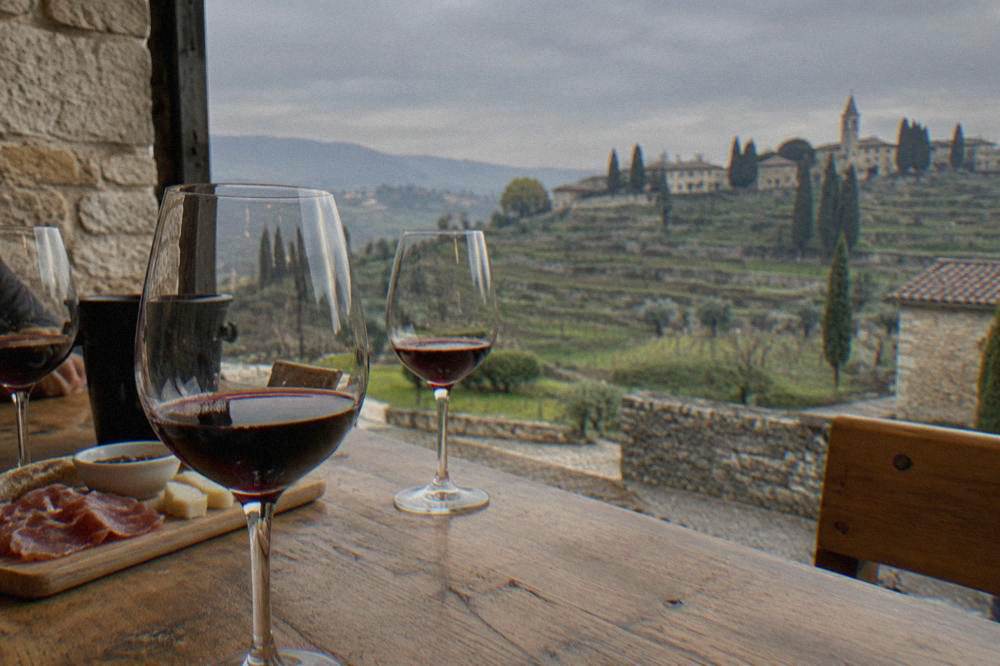
Practical timing shapes the search. Restaurants in Italy typically serve lunch from about 12:00 to 14:30 and dinner from about 19:30 to 22:30, and kitchens outside those windows are closed, so a 17:00 dinner hunt ends at a bar counter. Shops, including food shops, often close for a midday pause. Plan the day around the meals rather than the reverse, and the city cooperates.
| Dish or drink | Where it concentrates | Best timing |
|---|---|---|
| Pastissada de caval | Osterie in the centre and San Zeno | Autumn and winter menus |
| Risotto all'Amarone | Centre restaurants and winery trattorie | Year-round, evenings |
| Bollito con la pearà | Traditional osterie | Colder months |
| Gnocchi | Trattorie across all quarters | Traditional Friday dish in Veneto |
| Pandoro | Bakeries and cafes citywide | Late November through the holidays |
| Amarone and Valpolicella | Valpolicella hills, about 25 minutes out | Book tastings ahead |
| Soave | Soave, about 33 minutes east by car | Day trip with castle town walk |
| Lake Garda fish | Lake towns west, 37 to 84 minutes out | Warmer months |
How Does Each Signature Dish Work?
Pastissada de caval is a long, wine-dark stew of horse meat; risotto all'Amarone is rice cooked until the wine's dried-grape sweetness sits in the grain; pearà is a bread-thickened pepper sauce for boiled meats; Veronese gnocchi are soft potato dumplings; and pandoro is a tall, leavened, butter-rich sweet. Each one is tied to a season, a saucepan technique or a wine, and each rewards knowing what should arrive at the table.
Pastissada de caval carries the deepest local story. The dish is reported as a slow stew in which thin horse-meat pieces soften for hours in red wine with onion, spices and sometimes a little chocolate or mostarda, until the meat falls apart and the sauce turns dark. It is served with polenta or gnocchi to hold the sauce. It is a cold-weather dish at heart, appearing on menus as the temperature drops, and the city's January mean of 3.1 C (ERA5 reanalysis, 1991-2020) is exactly the weather it was built for.
Risotto all'Amarone is the plate that most directly connects the city to its hills. The rice is Vialone Nano, a Veronese variety, and the wine is Amarone, made from grapes dried for months under the appassimento method before fermentation, concentrating sugar and flavour. The finished risotto takes a dusting of Monte Veronese. The result is deep, slightly sweet and rich enough to be a main course, and it pairs with the same wine in the glass. The full story of that wine is in the site's Amarone wine guide.
Bollito con la pearà is boiled meat plus sauce, and the sauce is the event. Pearà, whose name means "peppered", is made by working stale bread into bone-marrow broth with abundant black pepper until it becomes a thick, warming, aggressively peppered cream. It lands on a plate of mixed boiled meats, traditionally several cuts, and it is another cold-months dish. Veronese gnocchi round out the starch side: soft potato dumplings, classically dressed with melted butter and cheese or with the pastissada sauce, and traditionally a Friday dish in this part of Veneto.
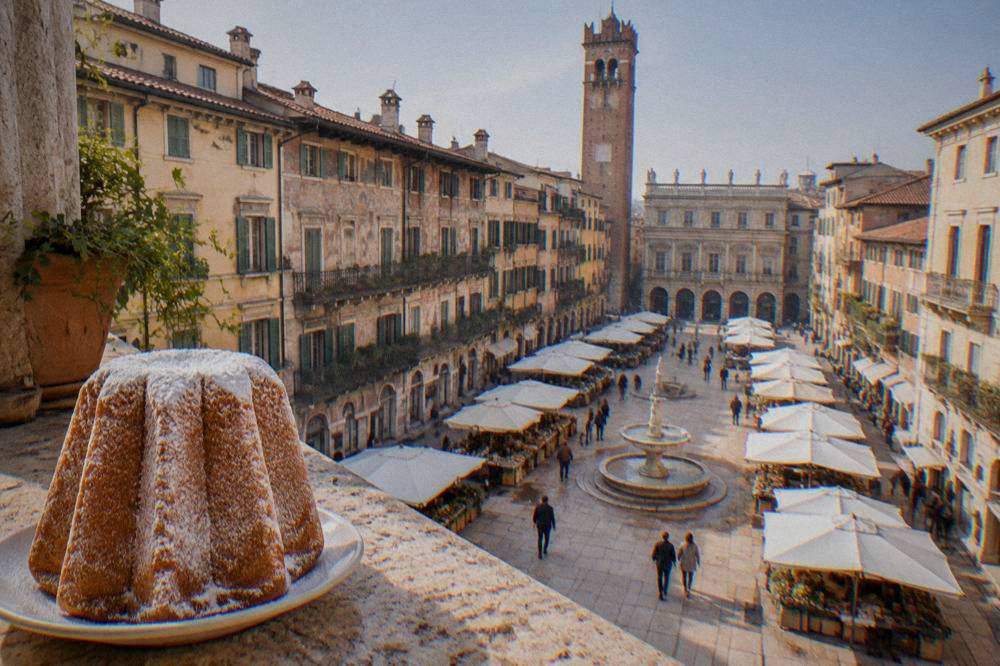
Pandoro stands apart as the sweet. It is a tall, eight-pointed star in cross-section, leavened rich with butter and eggs, served warm and dusted with icing sugar so a cloud of it rises at the first cut. Pandoro is reported as a Verona sweet, and the city owns it commercially and emotionally, though no origin date is reliably sourced. It is a late-November-to-holiday season presence, and the site's pandoro guide gives it a full page.
| Dish | Core ingredients | Season or occasion |
|---|---|---|
| Pastissada de caval | Horse meat, red wine, spices, polenta | Autumn and winter |
| Risotto all'Amarone | Vialone Nano rice, Amarone, Monte Veronese | Year-round |
| Bollito con la pearà | Mixed boiled meats, bread, marrow, black pepper | Cold months |
| Veronese gnocchi | Potato, flour, butter and cheese | Traditionally Fridays |
| Pandoro | Butter, eggs, leavened sweet dough | Holiday season |
What Should You Drink With Veronese Food?
The drinks to match with Veronese food are Amarone and Valpolicella reds from the hills immediately north of the city and Soave white from the east, with the lake's own Bardolino as a lighter red from the Garda shore. Amarone belongs with the stews and aged cheese, Valpolicella with everyday plates, and Soave with fish and lighter courses, and each zone is reachable from the city within the hour.
The wine map around Verona is unusually tight. Valpolicella, the Amarone zone, lies just north of the city: its towns are about 25 minutes' drive from the Arena. Soave, the Garganega white zone with its walled castle town, is about 33 minutes east. Bardolino, the light red named for the lake town, comes from the Garda shore about 37 minutes west. A visitor based in Verona for three days can taste in three different zones without ever changing hotels, and the site's broader coverage of Valpolicella and Soave treats each as its own trip.
The pairing logic is simple and worth stating. Pastissada and bollito want structure and warmth: Amarone's dried-fruit weight, or a standard Valpolicella for a lighter hand. Risotto all'Amarone is best met with the same wine that cooked it. Lake fish and vegetable courses point to Soave, whose Garganega grape gives a dry, floral white. Nothing here requires expertise, only a willingness to order the local name.
For travellers who want the hills without a car, the e-bike route is a genuine alternative: a guided e-bike tour of the city and its panoramic terraces turns the appetite into the itinerary, and a self-guided wine e-bike day covers the Valpolicella lanes between tastings.
When Is The Best Time Of Year To Eat In Verona?
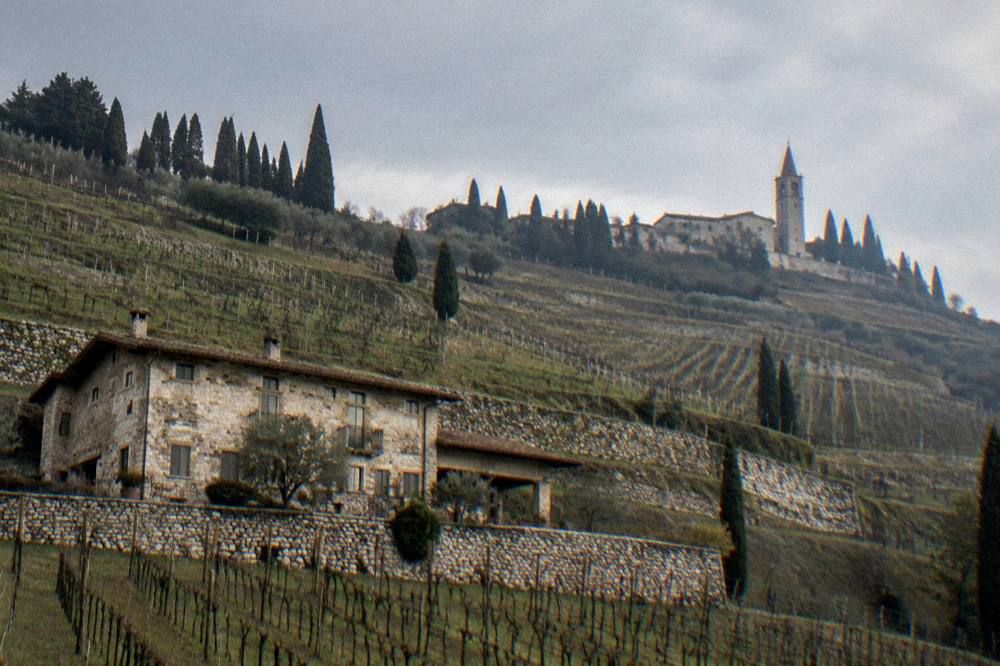
The strongest eating seasons in Verona are late autumn through winter, when pastissada, bollito with pearà and holiday pandoro are on menus, and the harvest window of September and October, when the Valpolicella hills are busiest and the new wine conversation starts. Spring brings gnocchi and Garda fish back to the fore, and the hot July and August weeks lean to lighter plates.
The cold half of the year is when the local kitchen is most itself. The stews and the pearà appear as the temperature drops, and pandoro arrives in bakeries in late November ahead of the Christmas markets, whose 2026 dates had not been published in official sources and should be confirmed on the city's own events pages. The site's guides to Verona in winter and the Christmas markets cover that season fully, and the best time to visit Verona page weighs food against weather and crowds.
September and October belong to the wine hills. The grape harvest and the beginning of the appassimento drying season put Valpolicella at its most active, and the lake's ferry season is still running, with the Navigazione Laghi full summer service running to 4 October 2026 before a reduced autumn service to 1 November and a suspension of the north-south passenger service from 2 November 2026 to 12 March 2027, per the operator's timetable pages. Rain is worth planning around in autumn: ERA5 reanalysis, 1991-2020, puts September at 99.7 mm, October at 107.2 mm and November, the wettest month, at 118.2 mm for Verona.
Summer is the season of the Arena opera festival, which ran 5 June to 12 September in 2026, and eating shifts accordingly: late dinners before a 21:00-ish curtain, lighter plates in the 29 C July mean highs. Spring sits between all stools pleasantly: April's mean high of 17.8 C and May's 22.3 C (same reanalysis) suit long lunches, and the lake fish season opens up.
| Season | Mean high (ERA5 1991-2020) | What is on the plate |
|---|---|---|
| January | 7.3 C | Pastissada, bollito with pearà |
| April | 17.8 C | Gnocchi, spring vegetables, Soave |
| July | 29.3 C | Light plates, lake fish, late opera dinners |
| September | 23.7 C | Harvest menus, Valpolicella visits |
| November | 12.3 C | Stews, new oil, pandoro arriving |
How Much Should You Budget For Eating In Verona?
Only a few food-adjacent figures in Verona are firmly sourced: the Arena's daytime visit at 12 euro full, Juliet's courtyard at 5 euro since 1 April 2026, the urban bus single at 1.50 euro and the VeronaCard at 33 euro for 24 hours with transport from 1 September 2026. Restaurant prices, coffee prices and meal averages are not reliably sourced for this page, so no number can responsibly be printed, and each establishment should be checked directly.
That is a deliberately plain answer, and it is the honest one. This desk prints figures only when the sources carry them, and for restaurant meal prices the sources do not: aggregator numbers exist but do not hold up, and a wrong figure on a budget page is worse than a direction. What can be said is structural. The tourist tax exists, is collected by the accommodation, and is capped at four nights per person per month, but its per-night rate by category should be confirmed with your accommodation. Guided food and wine products price themselves on their own listings, and the tokens on this page carry those figures.
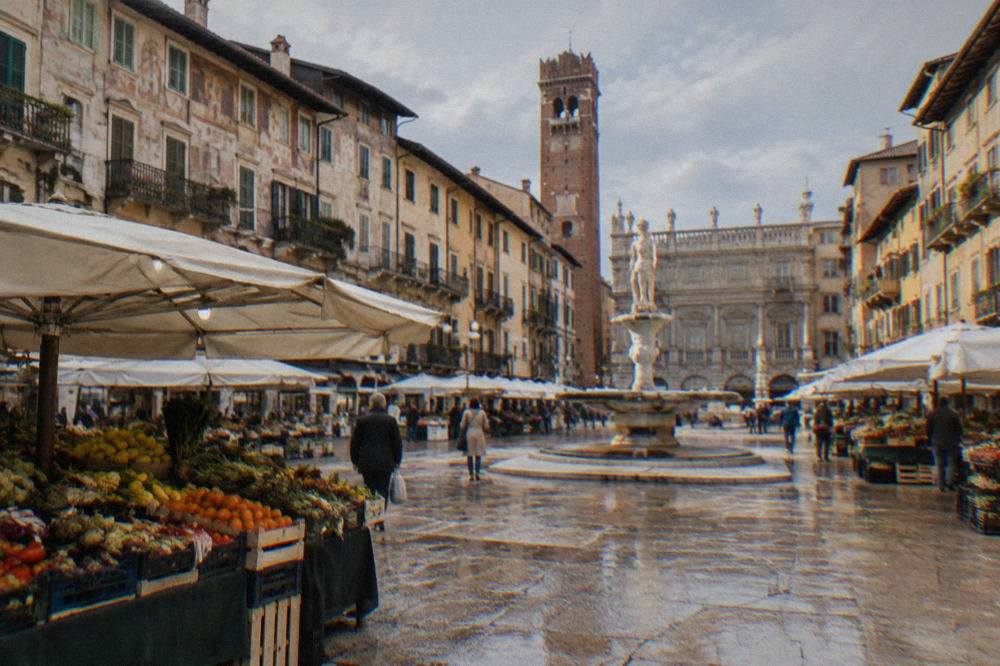
The compensations of a food budget in Verona are structural too. The osterie culture of the Veneto means standing counters, cicchetti-style snacking and wine by the glass exist alongside full restaurants, and a day built around one big local lunch and a lighter evening is both cheaper and more traditional. The city's market squares, Piazza delle Erbe above all, sell fruit, cheese and bread that make a riverside lunch cost almost nothing, and the site's guide to free things to do in Verona stretches a day further.
For the spending question in the round, including accommodation areas that suit different budgets, the site's guide to where to stay in Verona is the companion page. Food-first travellers should note that the historic centre puts the widest choice within a walk, while Veronetta and San Zeno put quieter tables within twenty minutes on foot of the Arena.
Can You Build A Whole Trip Around Veronese Food And Wine?
Yes: a three-day Verona trip can be built entirely around the table, with day one on the city's classic dishes in the centre, day two in the Valpolicella hills 25 minutes north for Amarone tastings, and day three east to Soave or west to Lake Garda for white wine and lake fish, all reachable from a single hotel in the city.
A sample shape makes the point. Day one stays inside the Adige bend: a morning walk through Piazza Bra and Piazza delle Erbe, lunch built on risotto all'Amarone or gnocchi, and an evening food walk that strings the counters together, which is exactly what the full-meal tour above does. Day two leaves town for the Valpolicella hills: a guided tasting with transportation removes the driving question, or an e-bike day covers the lanes between wineries. Day three forks east or west: Soave's walled town and Garganega whites are about 33 minutes out by car, while the lake towns of Bardolino, Garda and Sirmione run 37 to 40 minutes west with ferry connections in season.
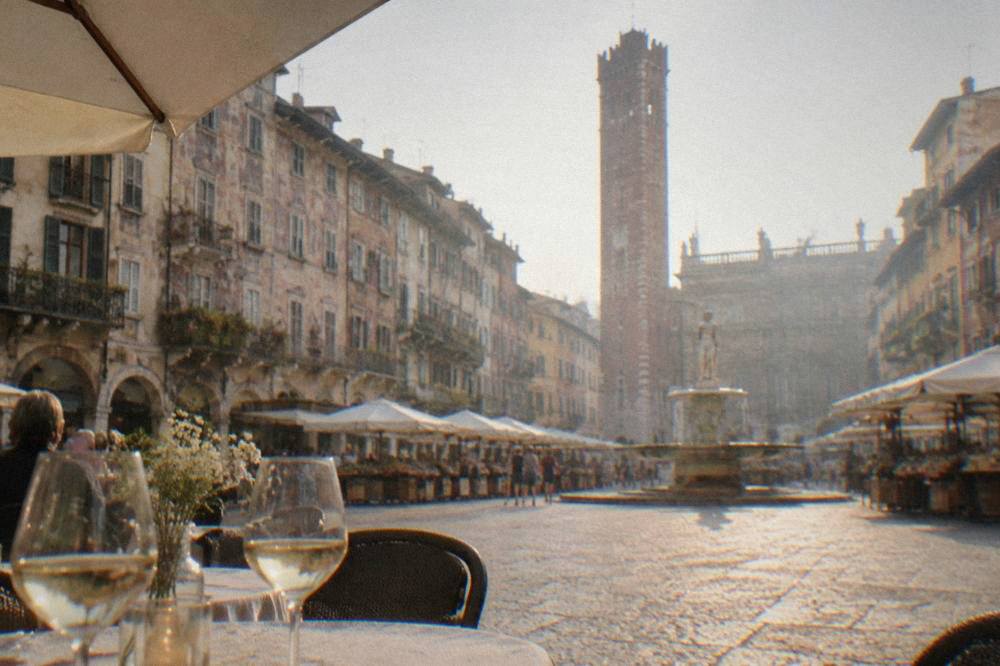
The wine thread deserves a full day of its own rather than a hurried afternoon. Appassimento, the months-long drying of grapes that defines Amarone, is explained in the site's Amarone wine guide, and seeing the drying racks in person is the difference between drinking the wine and understanding it. In the other direction, the lake's fish kitchens and Bardolino reds make the Garda shore a food trip in its own right, covered in the site's Lake Garda guide.
Getting the logistics right is half of a food trip. The city's historic centre is a camera-policed limited-traffic zone, with non-resident entries capped at four a month in booked windows, so a car is a liability for the city days and a help only for the hills; the site's pages on getting around Verona and ZTL and parking handle that in detail. Arrival is covered in how to get to Verona.
One caution keeps the whole plan honest: book the wineries and the popular restaurants ahead, confirm opening days locally, and treat any hours or prices you read anywhere online as provisional. The dishes will still be there; the seating will not always be.
Common Questions About Food In Verona
What food is Verona famous for?
Verona is famous for pastissada de caval, risotto all'Amarone, bollito con la pearà, Veronese gnocchi and pandoro, alongside the Amarone and Soave wines of its surrounding hills.
What is the most traditional dish in Verona?
Pastissada de caval, the long-simmered horse-meat stew in red wine, is the dish with the deepest local roots, traditionally served with polenta or gnocchi in the cold months.
What sweet was invented in Verona?
Pandoro is reported as a Verona sweet: the tall, star-cut, butter-rich leavened cake served with icing sugar in the holiday season. Its exact origin date is not reliably sourced.
What wine should you drink in Verona?
Amarone della Valpolicella with stews and aged cheese, standard Valpolicella for lighter red drinking, and Soave white with fish and vegetable courses, all from zones within an hour of the city.
Is Verona good for a food trip?
Yes. The historic centre concentrates osterie serving the classic dishes, the Valpolicella hills begin 25 minutes away, Soave is 33 minutes east and Lake Garda's fish kitchens are under an hour west, so one base covers a full eating week.
When is pandoro season in Verona?
Pandoro appears in bakeries from late November through the Christmas holidays, alongside the city's Christmas markets, whose dates vary by year and should be confirmed on official city pages.
Whether the plan is one long lunch or a week of wine hills, the Verona Italy Travel Guide keeps the full map of the city's sights, seasons and tables, and the ten dishes above are the shortest route into its kitchen.