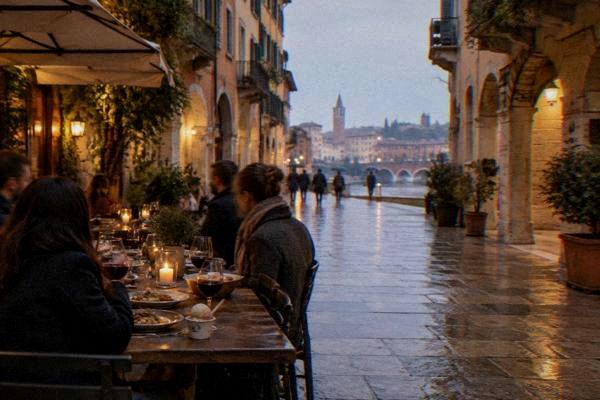
Pandoro: The Golden Christmas Cake From Verona
Pandoro is the tall, star-shaped, butter-rich Christmas cake that food writers consistently place in Verona, an inland city in Veneto on the Adige river. This guide covers what it is, how the Veronese serve it, and how it fits a winter visit.
Short answer
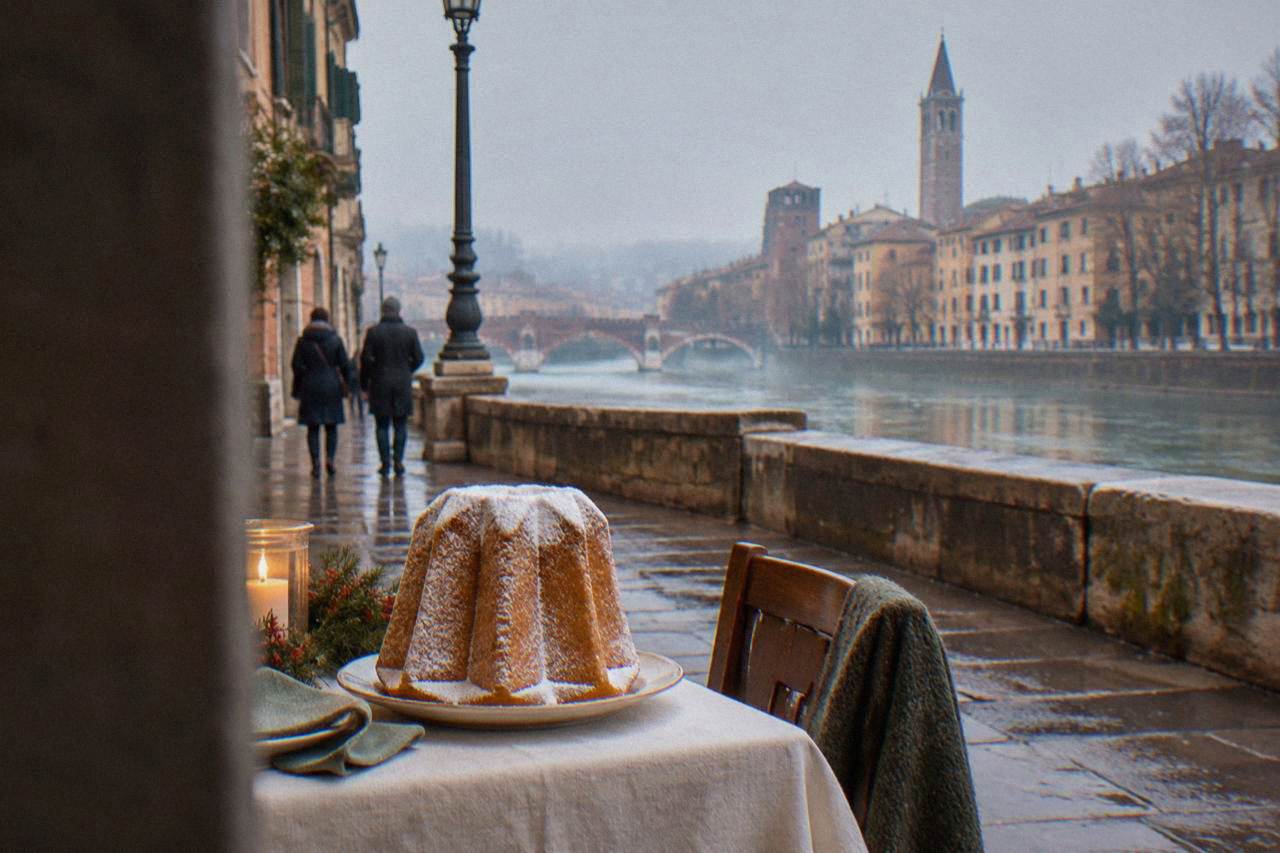
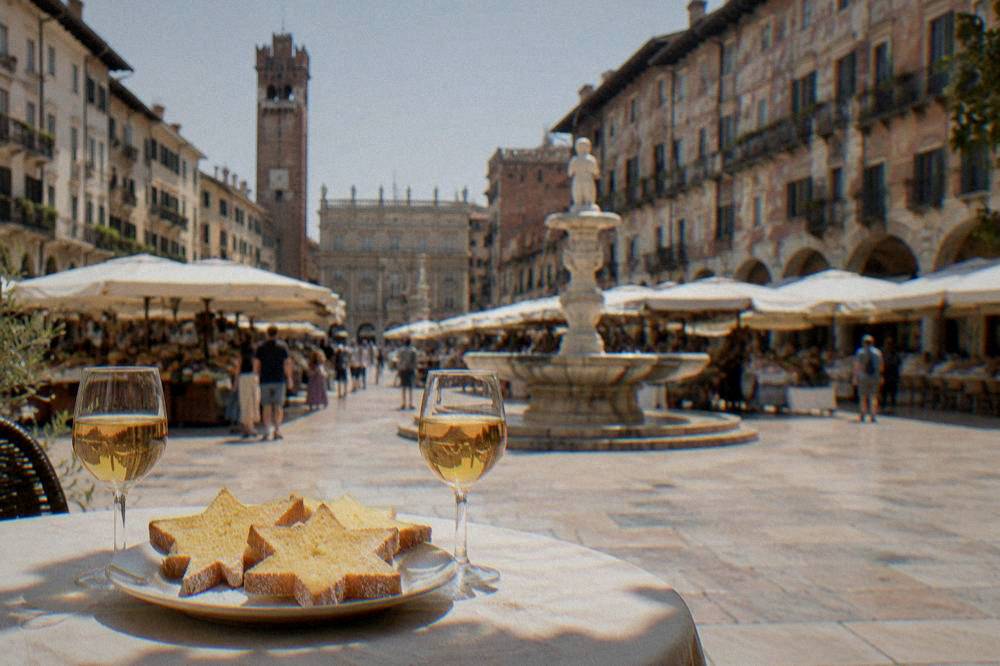
Pandoro is a soft, tall, eight-pointed star cake dusted with vanilla icing sugar, reported by food sources as a Verona sweet. It is eaten from late November through the Christmas season, often with a glass of sweet wine, and is sold boxed across the city each winter.
The tall, eight-pointed star that appears in Verona's bakeries and Christmas stalls each winter is pandoro, a soft, butter-rich cake dusted with icing sugar. Food writers reporting on the city's traditions consistently place the sweet in Verona, an inland city in Veneto, northern Italy, on the Adige river, about 40 minutes by road from Sirmione on Lake Garda. The name is Italian, "golden bread", and the cake's shape, once cut horizontally into star-point slices, is the shape that defines a Veronese Christmas table. No origin date for the recipe appears in the sources used for this guide, so this page prints none, and any bakery claiming an exact year should be read with that in mind.
What Is Pandoro And Why Is It A Verona Sweet?
Pandoro is a tall, soft, star-shaped sweet bread made with butter, eggs and sugar, baked in an eight-pointed mould and served dusted with vanilla icing sugar, and it is reported by food sources covering the city as a Verona sweet. The sources used here supply no invention date for the recipe, so the honest answer on origin is that Verona owns the tradition, while the paperwork belongs to whichever historian publishes it.
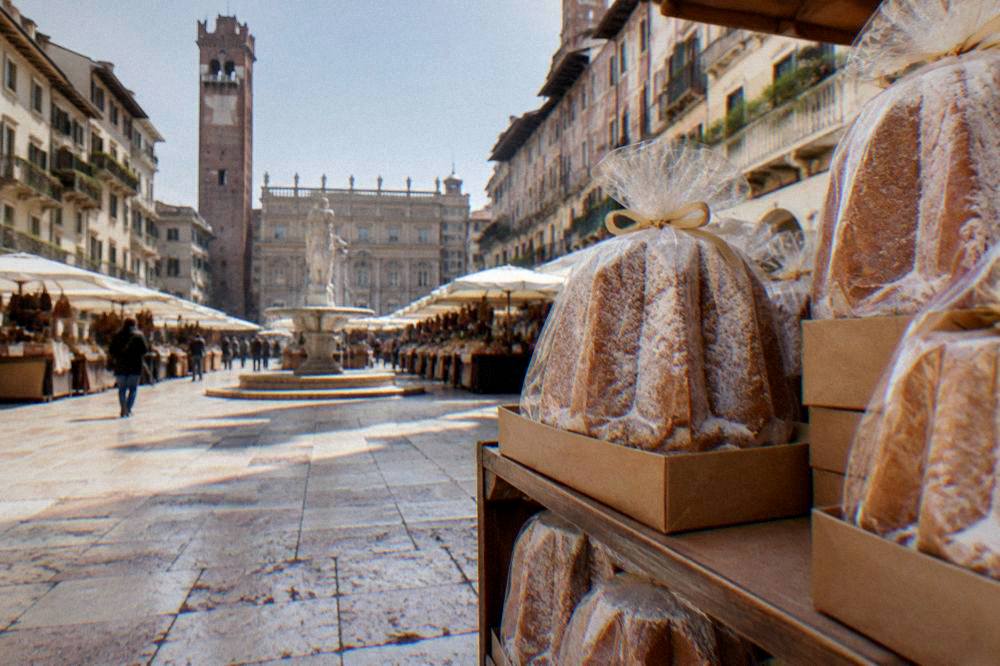
What is certain is the city's claim on the cake. Guides to Veronese food list pandoro alongside pastissada de caval, risotto all'Amarone, bollito with pearà and gnocchi as the dishes that define the local table, and pandoro is the one that travels: boxed, wrapped, and shipped across Italy and far beyond from Veronese producers every December. The cake's texture is the tell of a good one. The crumb should be soft and yellowed by butter and egg yolks, lightly sweet, and pulled into long strands rather than crumbling. The icing sugar that comes in a packet with the cake is sifted over the top just before serving so the points of the star catch the white dust like snow on a rooftop.
The name and the season belong together. "Oro", gold, refers to the colour the crumb takes from eggs and butter, and the icing sugar gives the wintry finish. Cutting matters as much as baking: the classic method slices the cake horizontally, producing flat star-shaped layers that are then cut into wedges, so every piece keeps a point of the star. Vertical slicing, the way you would cut a loaf, is the everyday household shortcut and no bakery will object. For the wider picture of the city's food, see the Verona food and dish guide.
| Element of pandoro | What it is | What to look for |
|---|---|---|
| Shape | Eight-pointed star, tall mould | Clean, sharp points after slicing |
| Crumb | Butter and egg-rich sweet bread | Soft, golden, slightly stringy, not dry |
| Finish | Vanilla icing sugar sifted before serving | Packet included in the box |
| Classic cut | Horizontal slices into star layers | Each wedge keeps one star point |
| Season | Late November through the Christmas period | Sold boxed across Verona in winter |
Where Does Pandoro Fit In A Verona Christmas?
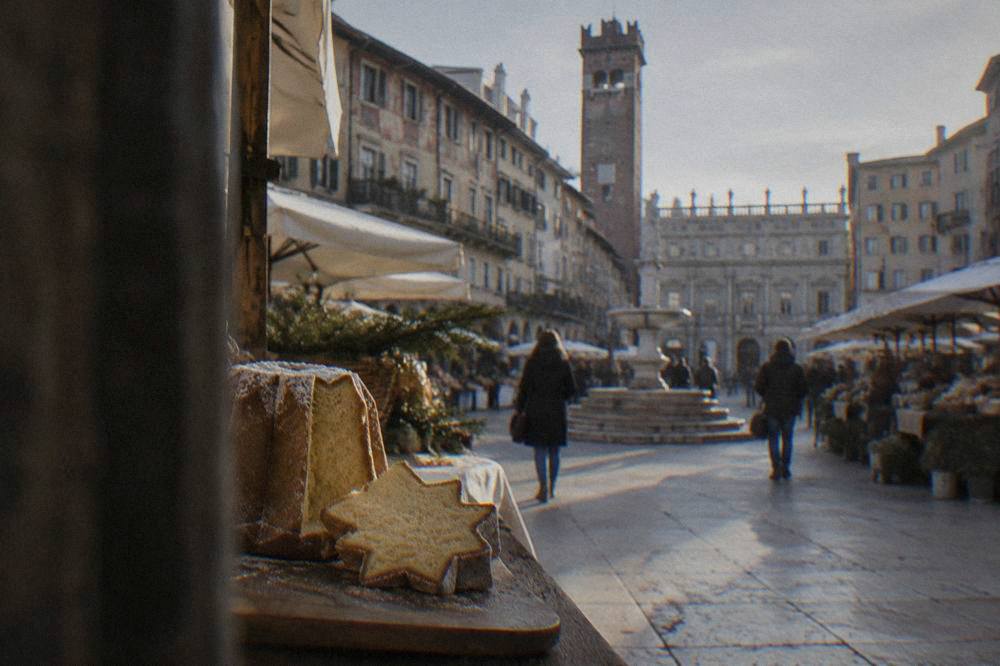
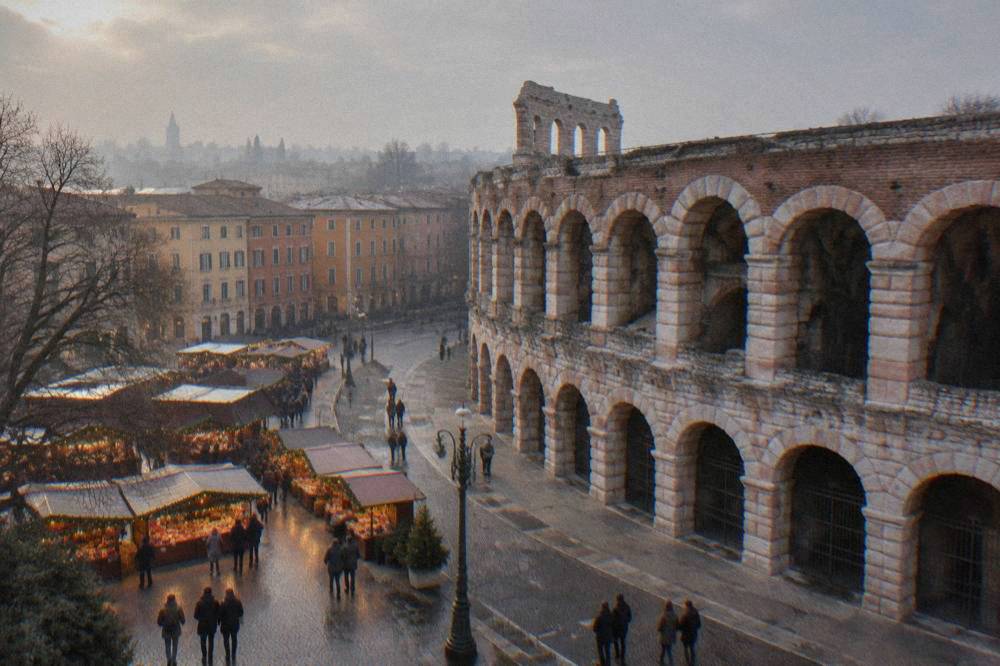
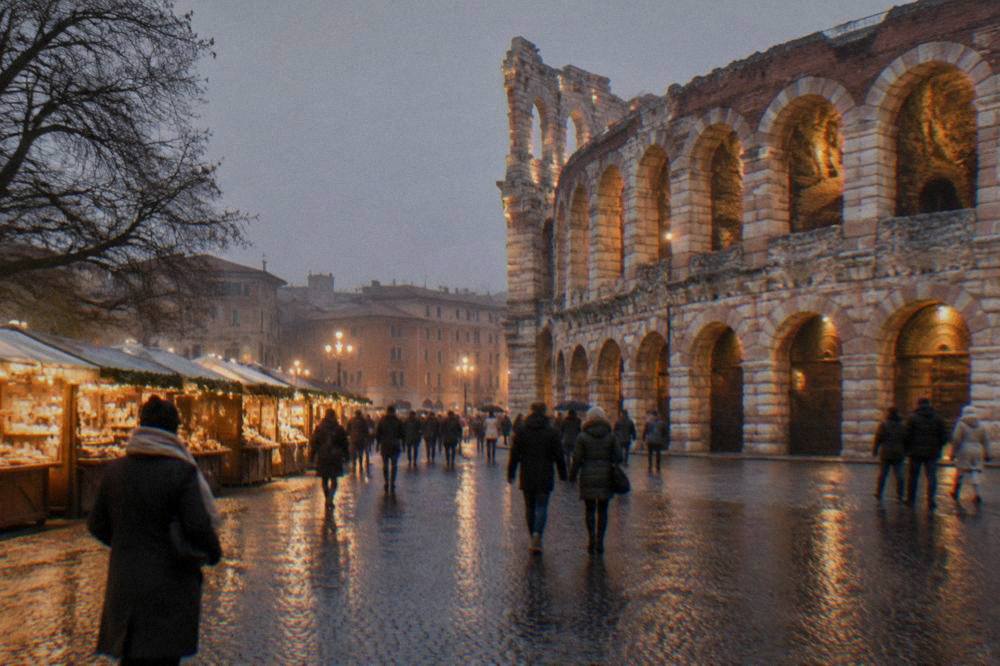
Pandoro sits at the centre of the Verona Christmas table from late November through the festive season, alongside the Christmas market that ran in Piazza Bra from 21 November to 28 December in 2025, per the Comune di Verona's event page. Dates for the 2026 market had not been announced, so check the Comune's site before planning a trip around it. The cake season and the market season overlap almost exactly.
The market is the practical anchor for a pandoro-centred visit. The 2025 edition, reported on comune.verona.it, ran from 21 November to 28 December with its main stalls in Piazza Bra and the market spreading toward Piazza dei Signori, and the full guide to it is at Verona Christmas markets. A winter visitor should treat late November to late December as the pattern and confirm before booking. The city in those weeks is cold in the continental way: the ERA5 reanalysis, 1991-2020, gives January a mean daily high of 7.3 C and a mean low of -0.4 C, so a coat and a warm layer are part of the pandoro experience.
Christmas in Verona is layered. The Arena towers over Piazza Bra at the edge of the market, the Roman amphitheatre reported as dating from about 30 AD on the Arena's own site, and the historic centre inside the Adige bend is a UNESCO World Heritage Site, inscribed in 2000. A sweet bought from a stall under those walls carries a different weight than one bought from a supermarket shelf at home. The wider winter picture, including what stays open and what the season feels like, is covered in Verona in winter and in the general things to do in Verona roundup.
| Verona Christmas marker | Latest reported detail | Source |
|---|---|---|
| Piazza Bra Christmas market | Ran 21 November to 28 December 2025 | Reported by the Comune's event page |
| 2026 market dates | Not announced | Confirm on the Comune's site before travel |
| Pandoro season in bakeries | Late November through Christmas | Reported by food sources |
| Arena Opera Festival | Next season announced for 11 June to 11 September 2027 | Per arena.it |
| Vinitaly 2027 | 11 to 14 April 2027 | Exact days reported |
Food is the thread that ties the season together, and a guided tasting walk is one way into it. The guided food tour with wine and olive oil tastings moves through the centre with stops built around local products, a format that suits a first visit in cold weather when a warm osteria every few hundred metres is its own argument for the city. Check availability if that structure appeals; the season's short days make indoor stops valuable.
Which Veronese Dishes Belong On The Same Table As Pandoro?
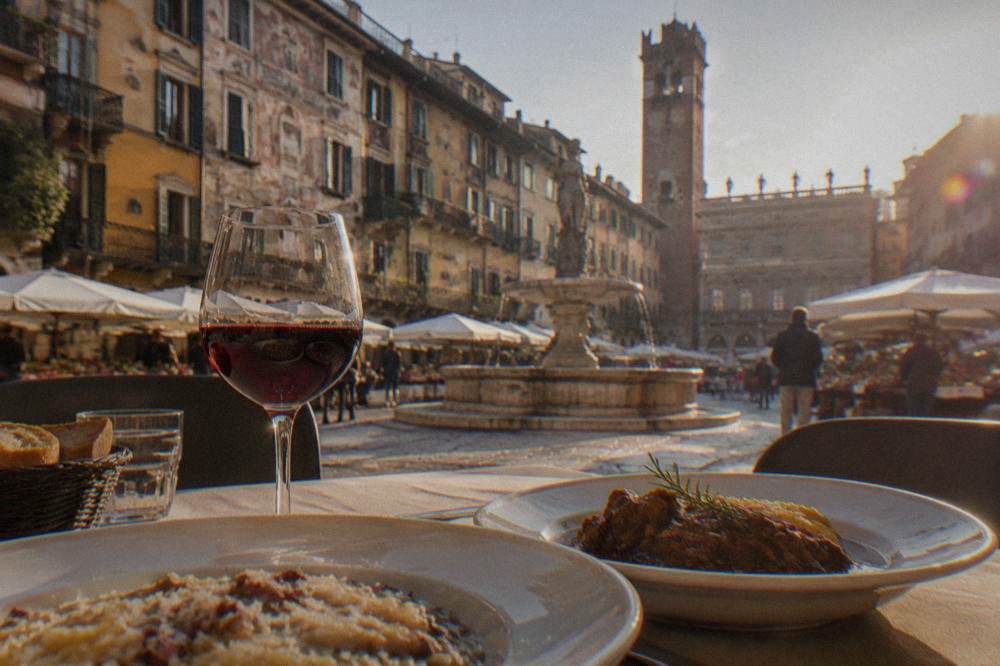
A Veronese festive table reported by food sources carries pastissada de caval, a horse-meat stew simmered long in wine; risotto all'Amarone, Vialone Nano rice cooked in the local Amarone wine; bollito with pearà, boiled meats with a pepper-flecked bread sauce; and gnocchi, with pandoro closing the meal. Each dish ties Verona's kitchen to its wine hills and its winter calendar rather than to a summer one.
The logic of the menu is the logic of the climate. Verona's winters are cold and damp, per the ERA5 reanalysis, 1991-2020, with January averaging a mean of 3.1 C, and the traditional dishes are long-cooked, wine-deepened and heavy in exactly the way that weather rewards. Pastissada de caval is the most distinctively Veronese of them, a stew that food writers describe as slow-simmered with spices and often served with polenta or gnocchi. Risotto all'Amarone folds the city's famous Valpolicella red into rice; the wine behind it has its own page at Amarone wine. Bollito with pearà is the Sunday ceremonial dish, boiled meats served with a sauce of bread, marrow and a sharp dose of black pepper.
Pandoro arrives after all of that, with coffee or a sweet wine, and it is the lightest thing on the table despite its butter. The pairing that food sources return to is a glass of Recioto, the sweet Valpolicella made from dried grapes, though a late-harvest white or even a spiced warm drink does the same job at home. What the sources do not supply is a restaurant list: no establishment name in this guide is confirmed, and the restaurant overview page exists precisely because a visitor needs to confirm current kitchens locally rather than trust a list printed in a guidebook years ago.
| Veronese dish | What it is, per food sources | Where it sits in the meal |
|---|---|---|
| Gnocchi | Potato dumplings, often paired with stew | Starter or alongside |
| Pastissada de caval | Horse-meat stew, long-simmered in wine and spices | Main |
| Risotto all'Amarone | Vialone Nano rice cooked with Amarone wine and Monte Veronese | Main |
| Bollito with pearà | Mixed boiled meats with peppered bread sauce | Main |
| Pandoro | Star-shaped butter cake, icing sugar finish | Dessert, Christmas season |
Cooking the meal rather than only eating it is the other route in. A pasta and tiramisu class with wine covers the fresh-pasta techniques that underpin the Veronese first courses, and for families the gelato-making class below is a warmer half-day than a cold piazza. None of these replaces pandoro, which remains a bakery product first, but they explain the kitchen it comes from.
What Does Pandoro Taste Like And How Is It Served?
Pandoro tastes of butter and egg, gently sweet, with a soft pull-apart crumb and a vanilla finish from the icing sugar, and it is served in horizontal star-cut slices, warm or at room temperature, often with sweet wine, cream or a scoop of gelato. The cake itself is not heavily flavoured: its point is texture and richness, not spice, which separates it cleanly from its Milanese rival.
The serving customs matter because they show what the cake is for. A pandoro is at its best on the day it is cut and slightly stale-proof for a day or two after, wrapped well. The horizontal cut is the ceremony: slice through the cake parallel to the plate, lift off a flat star, cut it into wedges, and repeat downward so the cake shrinks layer by layer rather than being carved. Some households warm slices briefly; others serve them with mascarpone cream folded with a little sweet wine, and gelato is the children's variant that needs no persuasion. The icing sugar is always last, sifted through the packet's own sachet, because a sugared pandoro left overnight draws moisture and loses its snow. Other pages covering the same trip are gathered on Verona Italy Travel Guide.
What the cake does not carry is candied fruit, and that is deliberate. Panettone, the Milanese classic, is studded with candied peel and raisins and flavoured with citrus and sometimes saffron in its historic versions; pandoro is plain, buttery and vanilla-scented, a cake engineered for people who pick the fruit out. Food writers frame the two as a north-Italian rivalry, Milan against Verona, that plays out on every Italian Christmas table in December, with households splitting into camps the way cities split over football. Neither the sources used here nor any honest guide can declare one the winner; the split is the tradition.
| Serving | Method | Notes |
|---|---|---|
| Classic cut | Horizontal star layers, cut to wedges | Standard presentation |
| Plain slice | Vertical loaf-style cut | Household everyday shortcut |
| With cream | Mascarpone, sometimes folded with sweet wine | Festive version |
| With gelato | A scoop beside a warm slice | Family favourite |
| With Recioto | Sweet Valpolicella from dried grapes | The wine-hill pairing |
Pandoro Or Panettone: How Do The Two Christmas Cakes Differ?
Pandoro is a plain, star-shaped, butter-and-egg cake with icing sugar and no fruit, rooted in Verona; panettone is a dome-shaped Milanese cake studded with candied peel and raisins, flavoured with citrus zest. The differences are shape, dough, flavourings and city of origin, and every one of them is visible before the first bite, which is why the comparison is argued every December.
The table makes the differences plain. What it cannot capture is the loyalty each cake commands. An Italian supermarket in December stacks both in towers, and a Veronese bakery will defend the star. The honest position for a visitor is to eat both and decide locally, which in Verona means starting with the star and working outward.
| Feature | Pandoro | Panettone |
|---|---|---|
| City of tradition | Verona | Milan |
| Shape | Tall eight-pointed star | Round dome |
| Fruit | None | Candied peel and raisins |
| Dominant flavour | Butter, egg, vanilla | Citrus zest, fruit, sometimes saffron |
| Finish | Icing sugar sifted on serving | Glazed or plain top |
| Classic accompaniment | Sweet wine or cream | Sweet wine or mascarpone |
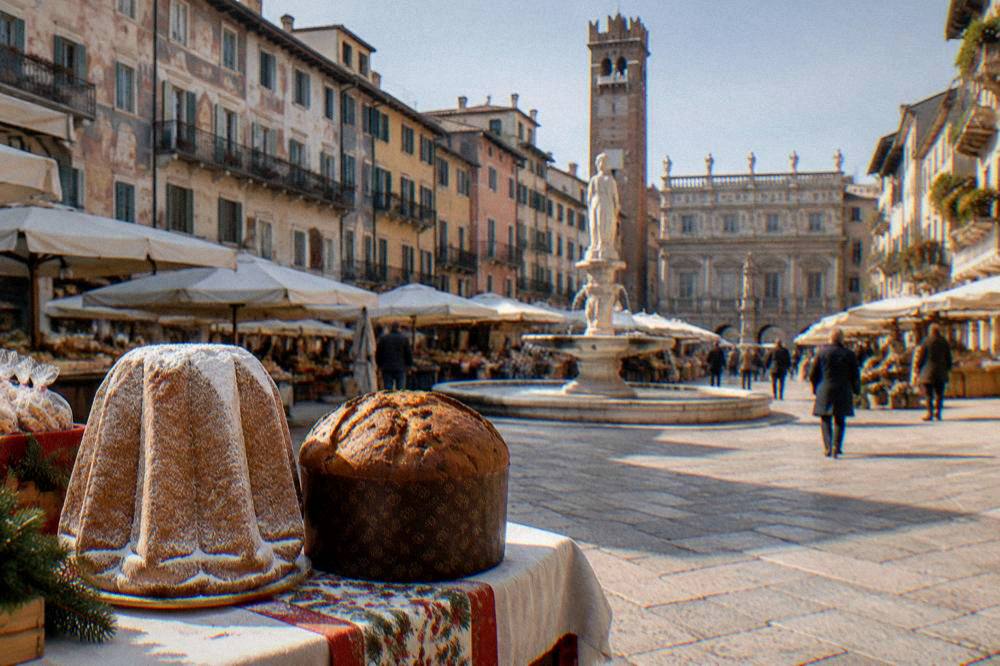
The rivalry also explains the marketing. Pandoro boxes lean on the Verona name, the gold colour and the star, and the city's producers ship enormous volumes each season, reported widely in Italian food media, though the sources used here print no production figure and this page prints none. What a visitor can verify with their own eyes is the shelf: in Verona in December the pandoro section is larger, earlier and more varied than anywhere else in the country, which is as close to a proof of the city's claim as a cake buyer needs.
When Is The Best Time To Visit Verona For Pandoro Season?
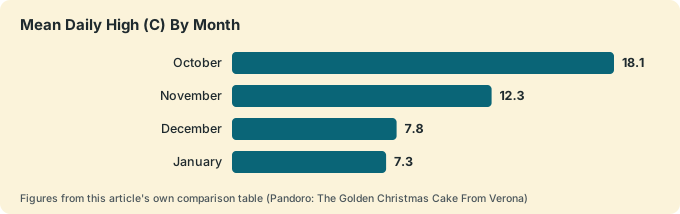
The window for pandoro in Verona runs from late November through the Christmas period, matching the market season that ran 21 November to 28 December in 2025 per the Comune's event page, with cold weather the norm: ERA5 reanalysis, 1991-2020, puts December's mean daily high at 7.8 C and January's at 7.3 C. Arrive in that window and the cake is everywhere; arrive in October or after early January and it is largely gone.
The climate table below shows why the season feels the way it does. December is cold but not the wettest month; November carries more rain, 118.2 mm across the month in the reanalysis normals, so late November visitors should pack for damp as well as cold. January is colder still and quieter, with the market gone but pandoro lingering on some shelves until stocks end. The full month-by-month picture, including the warmer half of the year, is at Verona weather and best time to visit Verona.
| Month | Mean daily high (C) | Mean daily low (C) | Rain (mm) |
|---|---|---|---|
| October | 18.1 | 10.5 | 107.2 |
| November | 12.3 | 5.3 | 118.2 |
| December | 7.8 | 0.8 | 71.1 |
| January | 7.3 | -0.4 | 52.3 |
ERA5 reanalysis, 1991-2020; modelled normals for a grid cell near Verona, not a weather-station record.
A winter visit also changes what the city itself costs and how it moves. The Arena is open to daytime visitors for 12 euro full ticket, 9 euro reduced, with 18 to 25-year-old EU and reciprocity visitors paying 3 euro, per the Comune di Verona's price list, and Juliet's courtyard has been ticketed since 1 April 2026, 5 euro for the courtyard route or 12 euro with the house, booked online through the Teatro Nuovo entrance. The VeronaCard became a digital pass on 1 September 2026 at 33 euro for 24 hours or 38 euro for 48 hours with ATV buses included, per the Comune's notice, and it covers a long list of civic sites. None of that is pandoro, but all of it fills the hours between breakfast cake and dinner cake.
How To Bring Pandoro Home From Verona?
Pandoro travels well by design: the cake is baked, boxed and sealed for a shelf life of weeks, and boxed cakes are the standard way to carry it home from Verona. Buy late in the trip, keep the box cool and flat, and treat the best-before date printed on the packaging as the real limit; the sources used here carry no shop names, prices or opening hours, so buy where the turnover looks fast.
The practicalities are simple. A boxed pandoro is sturdy luggage, designed for exactly this journey, and a cake bought on a Saturday flies home on a Sunday without complaint. The variables to check with your own eyes are the seal on the wrapper, the date on the box and the producer: Verona's large industrial producers ship nationwide, while smaller city bakeries box their own in limited runs, and the differences between them are real. A second, regional option is to buy in the market itself, though market stalls often resell the same boxed brands rather than baking. Confirm what a stall is selling before assuming it is local.
One Verona-specific caveat: this guide names no shop, street or price, and the same caution applies to the Christmas market's 2026 dates, which had not been announced. The Verona map page helps with the geography, the where to stay in Verona page with the base, and the tourist tax, collected by your accommodation and capped at four nights per person per month, is the one cost every visitor should expect regardless of season. Note that Verona's historic centre is a camera-enforced limited-traffic zone with at most four entries a month for non-residents, though hotel guests drive in free if the hotel registers the plate.
Common Questions About Pandoro In Verona
Is pandoro from Verona?
Food sources reporting on the city's traditions consistently place pandoro in Verona, in Veneto, and the cake is boxed and shipped from the city every Christmas season. The sources used here supply no invention date for the recipe, so this site prints none.
What is the difference between pandoro and panettone?
Pandoro is a star-shaped, plain, butter-and-egg cake with icing sugar and no fruit, rooted in Verona. Panettone is a dome-shaped Milanese cake with candied peel, raisins and citrus zest. The shape and the fruit are the giveaways before you cut either.
When is pandoro season in Verona?
From late November through the Christmas period, overlapping the Christmas market that ran 21 November to 28 December in 2025 per the Comune di Verona's event page. The 2026 market dates had not been announced, so confirm on the Comune's site before planning a trip.
How do you cut a pandoro?
The classic method slices the cake horizontally, producing flat star-shaped layers that are then cut into wedges, so each piece keeps one point of the star. Vertical loaf-style slicing is the everyday household shortcut.
What do you serve with pandoro?
Reported pairings include a sweet wine such as Recioto from the Valpolicella hills, mascarpone cream, or a scoop of gelato beside a warm slice. The icing sugar is always sifted on just before serving.
Can you bring a pandoro home on a plane?
Yes. The cake is baked, sealed and boxed for a shelf life of weeks, which makes it travel-friendly luggage. Buy late in the trip, keep the box cool and flat, and follow the best-before date printed on the packaging.
The golden star earns its place at the centre of a Veronese winter, and the city that bakes it, cold, lit and busy with its market stalls, is the version of Verona that the cake was made for.