How Many People Can The Arena Di Verona Seat?
The Arena di Verona holds about 30,000 people for opera, per the Fondazione Arena's own figures. How that capacity works, how it compares, and what a visit costs in 2026.
Verona, an inland city on the Adige river in Veneto, northern Italy, keeps its largest room count in plain sight: the Roman amphitheatre at Piazza Bra, known simply as the Arena, seats about 30,000 people for opera. The Fondazione Arena, the body that runs the building, gives that figure as its stated capacity of effective seats. It is a number that shapes everything about a visit, from the scale of an opera night to why the daytime ticket queue can move slowly in summer. This page on the Verona Italy Travel Guide sets out what the sources say about that capacity, how the seating actually works, and what it costs to stand inside the bowl yourself.
How Many People Can The Arena Di Verona Seat?
The Arena di Verona seats about 30,000 people for opera, which the Fondazione Arena's own site gives as its capacity of 30,000 effective seats. The building dates from about 30 AD, per the Arena's history pages, making it older than the Colosseum, which was completed around 80 AD. Britannica and the Arena's own site describe it as the third-largest surviving Roman amphitheatre after the Colosseum and Capua.
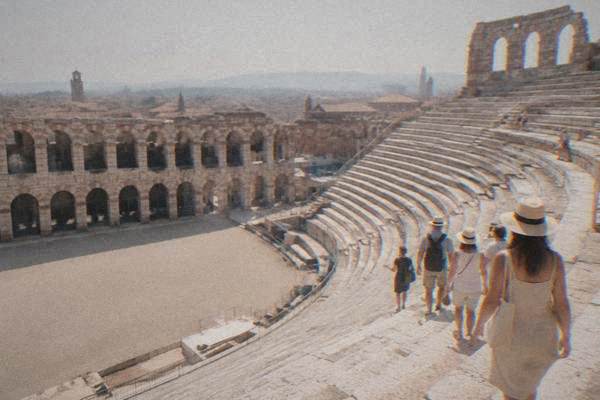
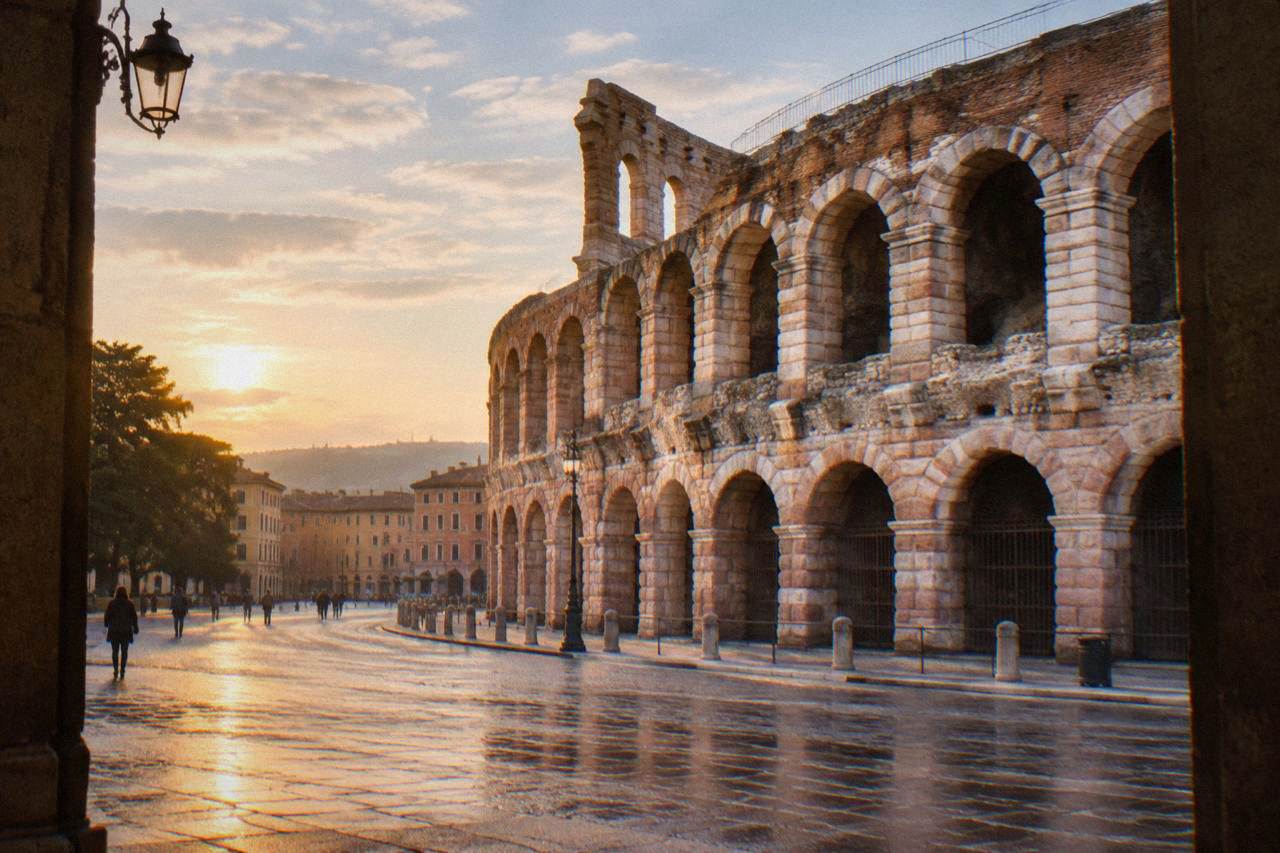
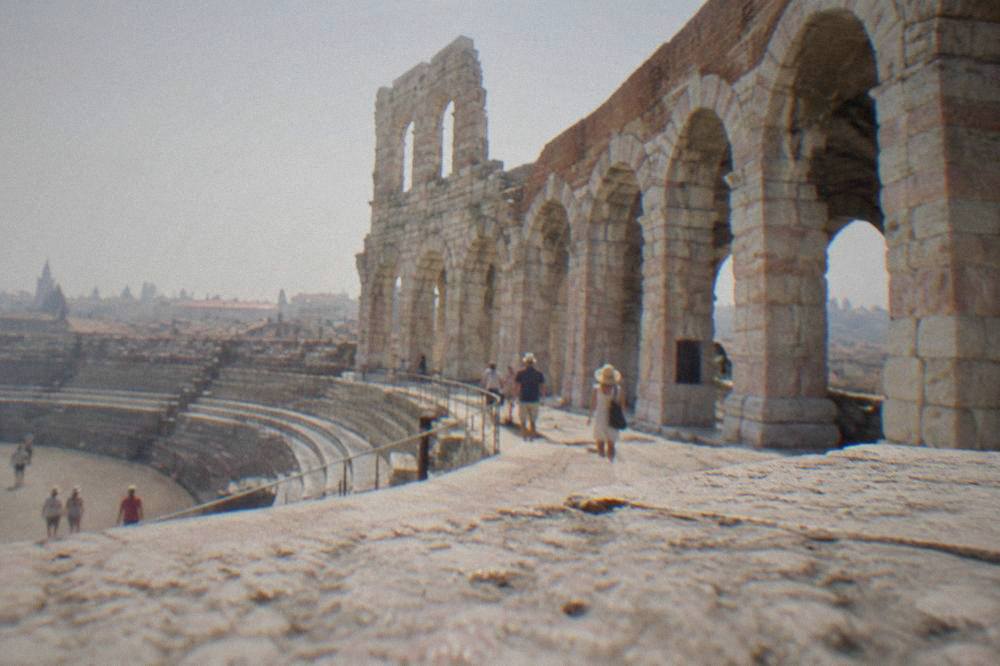
That 30,000 figure is a modern, operational number, not an archaeological reconstruction. It counts the seats the Fondazione Arena actually sells and staffs on an opera night, after centuries of rebuilding. The outer ring of the original amphitheatre collapsed in the earthquake of 1117, and only one wing, the Ala, still stands at its full height. The cavea, the seating bowl, was rebuilt in stages from the 16th century onward, per the Arena's own history pages, so the capacity you can book today is the product of restorations spread over four centuries, capped by the modern systems installed since.
It helps to compare like with like. The number is not a claim about ancient crowds and not a promise that every event uses every seat. The Fondazione Arena's figure of 30,000 effective seats is the one to quote when someone asks the question, and anything beyond it, such as estimates of ancient attendance, is not something the sources support. The full story of the building, its gladiator games and its animal hunts is covered in the Arena di Verona attraction guide.
| Fact | Figure | Who says it |
|---|---|---|
| Capacity for opera | 30,000 effective seats | The Fondazione Arena's own site |
| Construction date | About 30 AD | The Arena's history pages, first century |
| Colosseum comparison | Older than the Colosseum (about 80 AD) | Britannica and the Arena's own site |
| Ranking | Third-largest surviving Roman amphitheatre, after the Colosseum and Capua | Britannica and the Arena's own site |
| Outer ring | Fell in the 1117 earthquake, the Ala wing survives | The Arena's history pages |
| UNESCO status of Verona | Inscribed in 2000 | The UNESCO World Heritage listing |
How Are The 30,000 Seats Arranged On An Opera Night?
On an opera night the 30,000 effective seats split into numbered stalls sectors on the floor of the arena and numbered stone-step sectors, the gradinate, rising around the bowl, per the Arena's own rates and sectors pages. Stone-step seats start in the EUR 30s. Gates open about two hours before the start, and the Arena's terms ask visitors to arrive at least an hour early.
The distinction matters because the gradinata is exactly what it sounds like: marble steps, numbered, with no backrest. Small backpacks, a cushion and an umbrella are permitted subject to security checks, per the Arena's terms and FAQ, and a cushion is a sensible item on a stone step for a performance that begins around 21:00 to 21:30 in June and somewhat earlier later in the season. Bulky bags are not allowed, and there is no cloakroom, so plan for the step, not for a hotel lounge. If you want the sector-by-sector detail, the Arena di Verona seating guide works through it.
One more reported rule from the Arena's terms: rain never cancels a performance before its scheduled start. A show may be delayed or suspended mid-performance, and once it has started there is no refund, with partial protections only for an early suspension. That is worth reading before an evening in an open-air building that has been open to the sky since the outer ring came down. The season itself is long: the 2026 edition, the 103rd, ran 5 June to 12 September, and the 104th is announced for 11 June to 11 September 2027, per arena.it.
A guided entry changes how the number lands. Standing in the bowl with someone who can point at the Ala wing and the rebuilt cavea makes 30,000 feel like a measurement rather than a statistic, and the skip-the-line product exists precisely because the daytime entry queue in summer is the building's slowest-moving feature. The companion pages above cover the two other angles: a walk that pairs the Arena with the river and the hill, and a day trip out of the city entirely.
Is The Arena Bigger Or Older Than The Colosseum?
Older, yes: the Arena in Verona was built about 30 AD, per the Arena's history pages, while the Colosseum in Rome was completed around 80 AD, so Verona's amphitheatre predates it by roughly half a century. Bigger, no: Britannica and the Arena's own site describe the Verona Arena as the third-largest surviving Roman amphitheatre, behind the Colosseum and the amphitheatre at Capua.
The age gap surprises people who assume the capital built first and the provinces copied. Verona was a strategic Roman town on a river crossing and a road network, and its amphitheatre went up in the first century, between the reigns of Augustus and Claudius, with coin evidence placing construction between 30 and 42 AD, per the Arena's own about pages. What survived is unusual: the seating bowl largely did, the outer facade mostly did not, and the 1117 earthquake is the reason the building reads as an open horseshoe today rather than a closed ellipse. The arena versus Colosseum question gets its own full treatment elsewhere on this site.
Scale, though, is where the two buildings part ways, and the comparison is honestly stated rather than flattering. Third-largest among survivors is a ranking, not a consolation prize: of the hundreds of amphitheatres the Roman world built, only two surviving ones hold more. The Arena's own site makes the claim and Britannica repeats it, so it is safe to carry with attribution and worth carrying at all, because it explains why the Fondazione Arena can stage opera for 30,000 people in a building that was drawing crowds for gladiator games and animal hunts within a few decades of its completion, as the Arena's history pages describe.
What Does It Cost To See Inside The Arena Di Verona?
A daytime visit to the Arena di Verona costs 12 euro for a full ticket, 9 euro reduced for groups of 15 or more, visitors over 65 and other concessions, and 3 euro for visitors aged 18 to 25 from EU and reciprocity countries, per the Comune di Verona's own price list. Entry costs 1 euro on the first Sunday of the month from November to March. Under-18s enter free.
Reported daytime hours, per the Arena's own site, are Tuesday to Sunday about 9:00 to 19:00, closed Monday, with earlier closing on show days and last entry 30 minutes before closing, so an opera date on the calendar shrinks the visiting window you would otherwise have. Check the current price on the Arena's own ticket page before booking. The 18-to-25 rate at 3 euro is one of the quiet bargains in Italian sightseeing, and the first-Sunday 1 euro entry applies from November through March, the months when the city is at its coolest: the ERA5 reanalysis for Verona, 1991-2020, puts the January mean high at 7.3 C, with overnight lows around -0.4 C.
| Daytime ticket | Price | Notes from the Comune price list |
|---|---|---|
| Full | 12 euro | Standard adult entry |
| Reduced | 9 euro | Groups of 15 or more, over 65, concessions |
| Ages 18 to 25 | 3 euro | EU and reciprocity countries |
| First Sunday, Nov to Mar | 1 euro | Monthly initiative price |
| Under 18 | Free | Per the price list |
For visitors who want the capacity question answered in three dimensions, the related product below pairs entry with a local guide and covers the amphitheatre itself rather than the queue outside it.
The guided route is not the only way in, but it is the one that converts a ticket into an explanation. The building's survival story, the 1117 collapse, the centuries of rebuilds and the modern opera machinery, is easier to read with someone pointing at the evidence, and the skip-the-line framing exists because a 30,000-seat building has, on a summer morning, exactly one entrance corridor for daytime visitors.
Why Does A 30,000-Seat Building Still Work For Opera?
Because the bowl survived and the city grew around it: Verona's amphitheatre kept its cavea, its acoustic shell of stone and its position at the edge of the historic centre, so the Fondazione Arena can seat 30,000 people, per its own capacity figure, for open-air performances that run through the summer. The 2026 season, the 103rd, ran 5 June to 12 September, per arena.it.
The engineering reality behind the number is that the seating is real stone in the gradinata sectors and modern numbered seating in the stalls, distributed over a cavea that has been rebuilt in stages since the 16th century. That mix is why the capacity is stated as effective seats: it is the operable count, not the theoretical maximum of the ancient fabric. Recent restoration work, including a reported 14 million euro Art Bonus programme of sealing, systems and lighting, keeps the building usable at that scale, per the restoration reporting cited by the Arena's history sources.
The festival context is in the Verona opera festival guide. What the capacity figure means for a visitor is simple: even a popular performance does not inevitably sell out a 30,000-seat room, but the sectors people actually want, the numbered stalls and the central stone steps with a clear view, go first, which is why the practical advice on every page of this site is the same: book the seat, not the day. And when the building is not hosting opera, it is a daytime monument on Piazza Bra, one street from the queue at Juliet's House and a short walk from everything else in the UNESCO-inscribed old city.
The three options above cover the three ways the Arena fits into a Verona trip: entry with a guide, a walk that adds the river and the cable-car hill, and a day trip that leaves the city for the cliffs above Lake Garda. Capacity is a number; the choice between them is about how much Verona you want wrapped around it.
Common Questions About Arena Di Verona Seating
How Many People Can The Arena Di Verona Seat?
About 30,000 for opera, which the Fondazione Arena's own site gives as its capacity of 30,000 effective seats. It is a modern operating figure for the rebuilt bowl, not an estimate of ancient attendance.
Is The Arena Di Verona Bigger Than The Colosseum?
No. Britannica and the Arena's own site describe it as the third-largest surviving Roman amphitheatre, behind the Colosseum in Rome and the amphitheatre at Capua. It is, however, older: built about 30 AD, against the Colosseum's completion around 80 AD.
Can You Sit On The Stone Steps For Opera?
Yes. The gradinata sectors are numbered stone steps, and per the Arena's terms and FAQ a cushion, an umbrella and a small backpack are permitted subject to security checks. Stone-step seats start in the EUR 30s.
Did Gladiators Fight In The Arena Di Verona?
Yes, per the Arena's own history pages, which record gladiator games and animal hunts among the building's original uses. The full story is in did gladiators fight in the Verona Arena.
Can You Visit The Arena Without An Opera Ticket?
Yes. A daytime visit costs 12 euro full, 9 euro reduced and 3 euro for ages 18 to 25 from EU and reciprocity countries, per the Comune di Verona's price list, with 1 euro entry on the first Sunday of the month from November to March. Reported hours are Tuesday to Sunday, closed Monday, with early closing on show days: confirm before you go.
The capacity is the headline, but the number earns its place: a first-century amphitheatre that still seats 30,000 people for opera, in a city inscribed by UNESCO in 2000, is the reason Verona's summer looks the way it does. Book the seat early, visit the bowl by day, and check the Arena's own ticket page for the current prices before you commit to either.