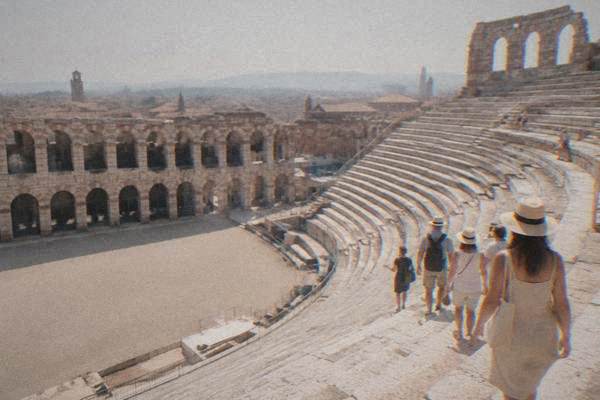
Arena Di Verona: The Roman Amphitheatre Itself
The Arena di Verona is a Roman amphitheatre from about 30 AD that stands at the edge of Piazza Bra in Verona, Veneto, and it works two jobs: a daytime monument you can walk through for 12 euro, and an open-air opera house each summer.
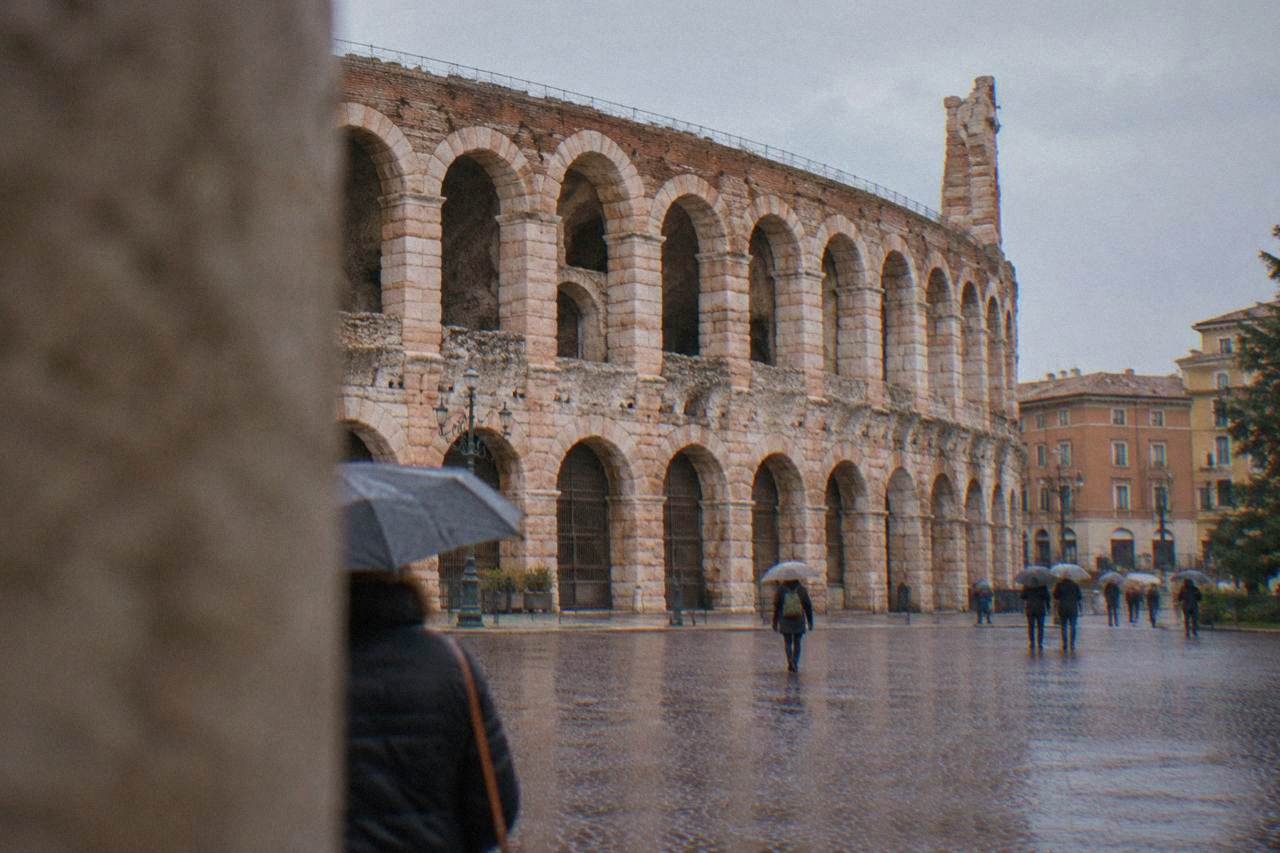
Short answer
The Arena di Verona can be visited by day for 12 euro full price, 9 euro reduced and 3 euro for visitors aged 18 to 25 from EU and reciprocity countries, with free entry under 18. Reported hours are Tuesday to Sunday about 9:00 to 19:00, closed Monday, with earlier closing on opera evenings. The 2027 opera festival runs 11 June to 11 September 2027.
The Arena di Verona is a Roman amphitheatre built about 30 AD, and it still stands at the open end of Piazza Bra in Verona, an inland city on the Adige river in Veneto, northern Italy. It is not a ruin behind rope. It is a working monument: by day it is a walk-through sight with a 12 euro full ticket, and on summer nights it becomes an open-air opera house whose 2027 season is announced for 11 June to 11 September. Per the Arena's own site, it is described as the third-largest surviving Roman amphitheatre after the Colosseum and Capua, and it is older than the Colosseum, which dates to about 80 AD. Few buildings anywhere hold a crowd event and a monument visit in the same stones, which is why the Arena anchors nearly every things to do in Verona list ever written.
What Does A Daytime Visit To The Arena Di Verona Cost?
A daytime visit to the Arena di Verona costs 12 euro full price, 9 euro reduced for groups of 15 or more, visitors over 65 and other concessions, and 3 euro for visitors aged 18 to 25 from EU and reciprocity countries, per the Comune di Verona's own price list. Entry is free for children under 18, and on the first Sunday of the month from November to March the ticket costs 1 euro. VeronaCard holders also enter free.
The reduced categories are worth reading closely because they are not interchangeable. The 9 euro rate covers organised groups, older visitors and listed concessions. The 3 euro rate is an age band, not a concession, and it applies to 18 to 25 year olds from EU member states and countries with a reciprocity agreement. Under 18s pay nothing at all. Confirm your category on the Arena's own ticket page before booking, because the price list is the one document that settles every argument at the desk.
The Comune di Verona's VeronaCard notice also matters here: the card includes Arena entry, and since 1 September 2026 the card is digital, delivered through the "Your Verona" web app, at 33 euro for 24 hours or 38 euro for 48 hours with urban transport included, or 29 and 32 euro without. If the Arena plus Castelvecchio plus the Torre dei Lamberti are all on your list, the card is the arithmetic worth doing before you buy anything separately.
| Ticket category | Price | Notes |
|---|---|---|
| Full ticket | 12 euro | Standard adult daytime entry |
| Reduced | 9 euro | Groups of 15 or more, over 65, listed concessions |
| Ages 18 to 25 | 3 euro | EU and reciprocity countries |
| Under 18 | Free | Stated on the civic price list |
| First Sunday, Nov to Mar | 1 euro | Monthly initiative price |
| VeronaCard holders | Free | Digital card since 1 September 2026 |
For visitors who want the ticket handled for them, the City Card with Arena priority entrance bundles entry with the city's sight network, and Check availability before peak season dates fill up.
When Is The Arena Di Verona Open During The Day?
The Arena di Verona is reported open Tuesday to Sunday from about 9:00 to 19:00, and closed on Mondays, per the Arena's own site, with earlier closing on evenings when an opera or concert is staged, and last entry 30 minutes before closing in every case. These hours are reported rather than etched in stone, so confirm the day's times on the official page before you set out, especially in the festival months.
The show-day caveat is the one that catches people out. Between June and September the Arena empties in the late afternoon so crews can set the stage, which shortens the visiting window even though the date looks ordinary on a calendar. A Monday visit is worse than a shortened one: the doors simply stay shut. The safe pattern is to treat Tuesday to Friday mornings as the reliable core of the week and to check the Arena's calendar for your exact date.
Winter changes the texture more than the schedule. The amphitheatre is unheated stone, and January's mean temperature sits around 3.1 C per the ERA5 reanalysis for 1991 to 2020, so an hour among the tiers in January is a coat-and-gloves hour. The compensation is light: no festival traffic in Piazza Bra, and the 1 euro first-Sunday ticket runs exactly in those months.
| Day | Reported daytime hours | Caveat |
|---|---|---|
| Monday | Closed | Reopening on exceptional dates is announced |
| Tuesday to Sunday | About 9:00 to 19:00 | Early close on show days |
| Show days | Earlier close, times vary | Last entry 30 minutes before closing |
| Festival season, June to September | Shortened afternoons common | Check the calendar for the exact date |
A guided entry saves the queue question entirely, and a local guide adds the layers a bare stone circuit keeps quiet. The Arena skip-the-line tour pairs the ticket with a walk through the building, and Check availability if the morning lines in high summer look long.
How Old Is The Arena Di Verona And What Happened To Its Outer Ring?
The Arena di Verona was built about 30 AD, in the first century, which per the Arena's own site and Britannica makes it older than the Colosseum in Rome, dated to about 80 AD, and it is described as the third-largest surviving Roman amphitheatre after the Colosseum and Capua. The outer ring of the Arena collapsed in the earthquake of 1117, and only one wing, the Ala, still stands.
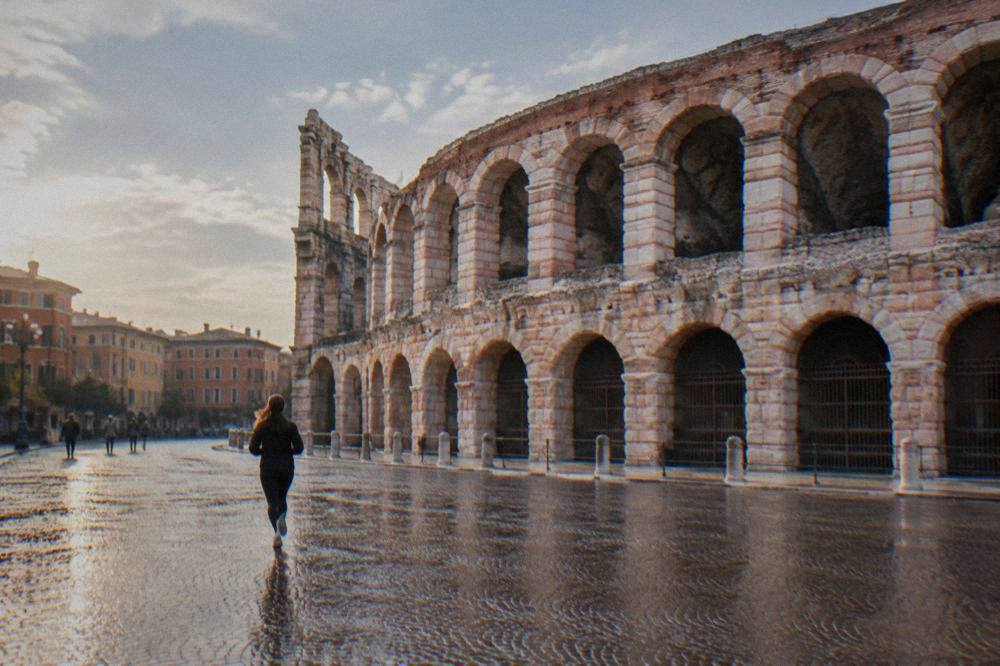
What a visitor sees today is a building that survived by losing gracefully. The full elliptical shell the Romans raised had two outer rings of arches; the 1117 earthquake brought most of them down, and the stones were quarried for centuries of later Veronese building. The Ala, the four-bay wing facing Piazza Bra, is the fragment that kept its full height, and it is the reason every photograph of the Arena shows one grand toothed edge rather than a complete outer wall. Inside, the cavea, the seating bowl, was rebuilt in stages from the 16th century onward, which is why the tiers you climb are a mix of Roman core and later masonry.
The gladiator answer is documented on the Arena's own history pages: the building was used for gladiator games and animal hunts in its original life. That original function explains the geometry. The ellipse is tight, the sightlines are short, and every seat faces the sand, a design for watching combat at close range rather than the stadium distances a modern eye expects. When the opera festival took the building over, that same tightness became the acoustic argument for staging Aida in it.
For readers who want the age question in full, including how the comparison with the Colosseum actually works, the is the Verona Arena older than the Colosseum page takes it apart, and the did gladiators fight in the Verona Arena page covers the games themselves.
| Period | Event | Source basis |
|---|---|---|
| About 30 AD | Construction of the amphitheatre | Reported, arena.it |
| 80 AD | Colosseum completed, later than the Arena | Reported, Britannica |
| 1117 | Earthquake destroys the outer ring, Ala survives | Reported, arena.it |
| 16th century onward | Staged rebuilds of the cavea seating | Reported, arena.it |
| Summer seasons | Opera festival era in the Arena | Reported history pages |
The stonework also carries a detail easy to miss: the rose-tinted limestone and the brick patches are two different repair eras sitting side by side, and reading the wall is half the pleasure of the circuit.
How Many People Does The Arena Di Verona Seat?
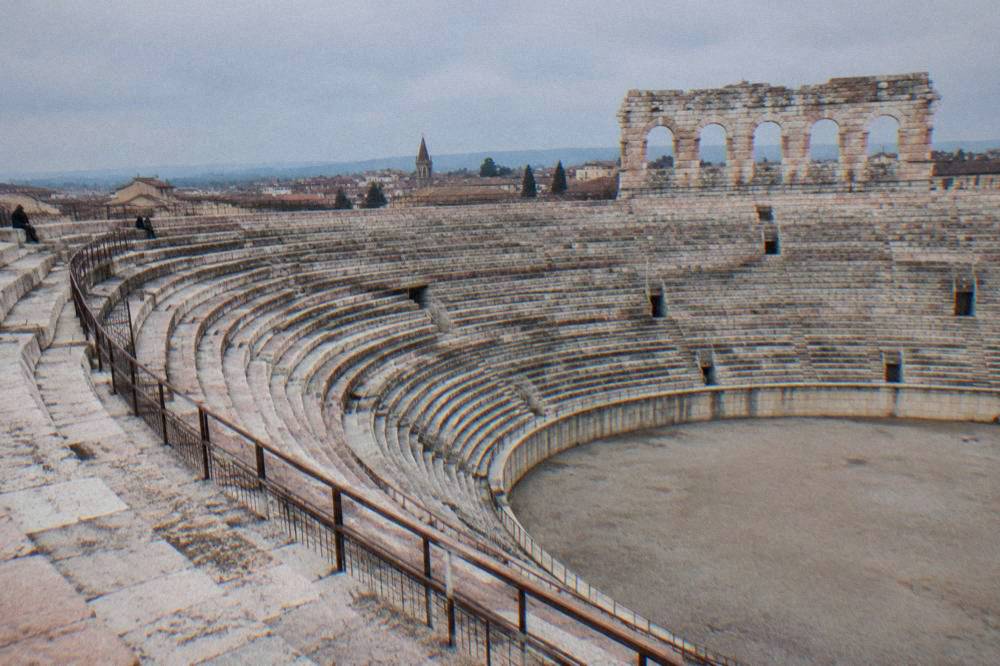
The Arena di Verona has a stated capacity of 30,000 effective seats for the opera festival, per the Arena's own site, which makes it one of the largest working performance venues in Italy. For a building approaching two thousand years of age, that figure is the whole story: the modern festival runs on the Roman seating bowl, not in a modern shell built inside it.
The number deserves its own explanation, and the how many people can the Arena di Verona seat page gives it. What matters for a visitor is how the capacity shapes the night. Thirty thousand people entering one monument means gates open about two hours before the curtain, per the Arena's own terms, and visitors are asked to arrive at least an hour early. The streets around Piazza Bra thicken accordingly, and the stone steps, the gradinata sectors, fill from the bottom up.
Daytime, the capacity works in your favour. The same bowl that holds an opera crowd gives a daytime visitor long empty arcs of seating to walk, and the sense of the building's scale lands harder with nobody in it. Stand on the upper tier and the ellipse reads as a piece of Roman engineering, then look up at the floodlight rigs and it reads as a theatre. Both readings are accurate.
What Is The Opera Festival At The Arena Di Verona?
The Arena di Verona Opera Festival is the summer season staged inside the amphitheatre: the 2026 edition, the 103rd, ran 5 June to 12 September 2026 with La Traviata, Aida in two stagings, Nabucco, La Boheme and Turandot, and the 2027 edition, the 104th, is announced for 11 June to 11 September 2027. Stone-step seats start in the EUR 30s, and performances begin around 21:00 to 21:30 in June, earlier later in the season.
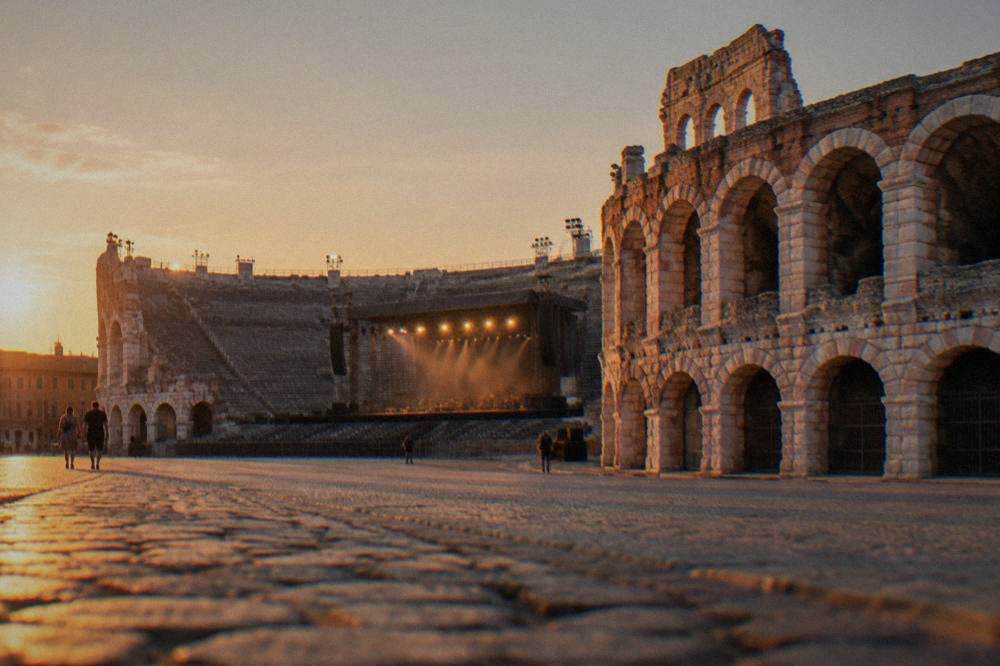
Note the length of that season, because a common guidebook habit calls this a July and August festival. It is not. The 2026 season ran more than three months, and 2027 is announced on the same long pattern, so a mid-June or early-September visit is just as much an opera visit as an August one, with milder evenings attached. The Verona opera festival guide covers the season in depth, and the Arena di Verona seating guide decodes the sectors.
The practical rules are published on the Arena's own terms and FAQ pages, and they answer the questions people actually ask. Small backpacks are allowed subject to security checks, and a cushion and an umbrella are explicitly permitted, which matters because the gradinata seats are literal stone. Rain does not cancel a performance before its scheduled start; a show may be delayed up to 150 minutes or suspended, and there is no refund once a performance has started. On what to wear, no strict rule against shorts was found on the official pages, so check the current terms before you pack. Everything else covered here is indexed on Verona Italy Travel Guide.
| Opera festival fact | Detail | Source |
|---|---|---|
| 2026 season, 103rd edition | 5 June to 12 September 2026 | Per arena.it |
| 2027 season, 104th edition | 11 June to 11 September 2027, announced | Per arena.it |
| 2026 programme | La Traviata, Aida, Nabucco, La Boheme, Turandot | Per arena.it |
| Entry-level ticket wording | Stone-step seats start in the EUR 30s | Reported, arena.it rates page |
| Curtain time | About 21:00 to 21:30 in June, earlier later in the season | Reported, arena.it |
| Gates | Open about two hours before, arrive at least an hour early | Reported, arena.it terms |
The evening a visitor remembers is usually the whole approach: dinner somewhere in the centre, the walk into the lit ellipse, and then the moment the lights drop and the building itself becomes the auditorium. For a fuller night-by-night treatment, the opera night in Verona page and the itinerary guides carry the planning.
Can You Visit The Arena Di Verona Without A Tour?
Yes, the Arena di Verona can be visited independently: you buy the 12 euro daytime ticket directly and walk the amphitheatre at your own pace, and the same ticket desk serves everyone, tour or no tour. A guided visit adds context rather than access, though priority-entry options exist for skipping the line, and the audio and written self-guided formats suit travellers who want commentary without a group.
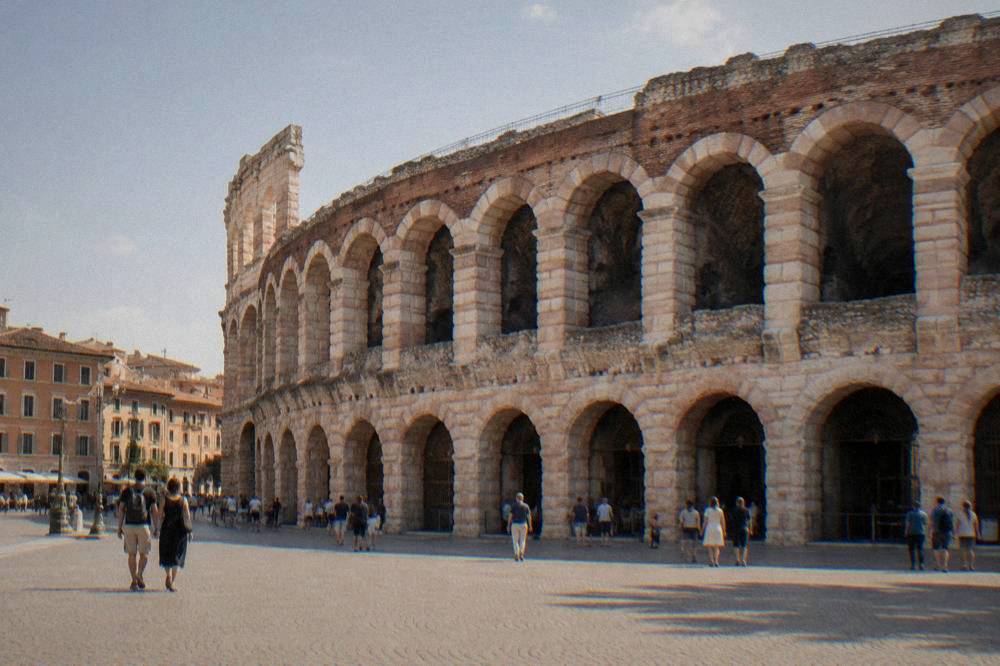
The independent visit is straightforward. The entrance sits off Piazza Bra, the circuit covers the arena floor, the gallery and stretches of the tiers, and an unhurried loop takes as long as your interest in stone does. What a self-guided visit does not supply is the narrative: why the outer ring is missing, which rebuild is which century, what the opera machinery under the sand looks like. A priority-access guided tour covers that ground in the building itself, and Check availability for the dates that overlap the festival, when access windows tighten.
There is also a middle format: a self-guided walk with an audio and written guide produced by a local, which turns the monument visit into a commentary walk without a group or a schedule. It suits repeat visitors and anyone who likes to linger on a tier with a view.
How Does The Arena Fit Into A Day In Verona?
The Arena di Verona anchors the southwest corner of the historic centre, opening directly onto Piazza Bra, and it works as the fixed point around which a day in Verona rotates: Via Mazzini runs north from the piazza to Piazza delle Erbe in a few minutes on foot, and the Casa di Giulietta, the Torre dei Lamberti and the Adige crossings all sit within a compact walk. Two hours for the Arena plus a morning or afternoon of the centre is a realistic single-day shape.
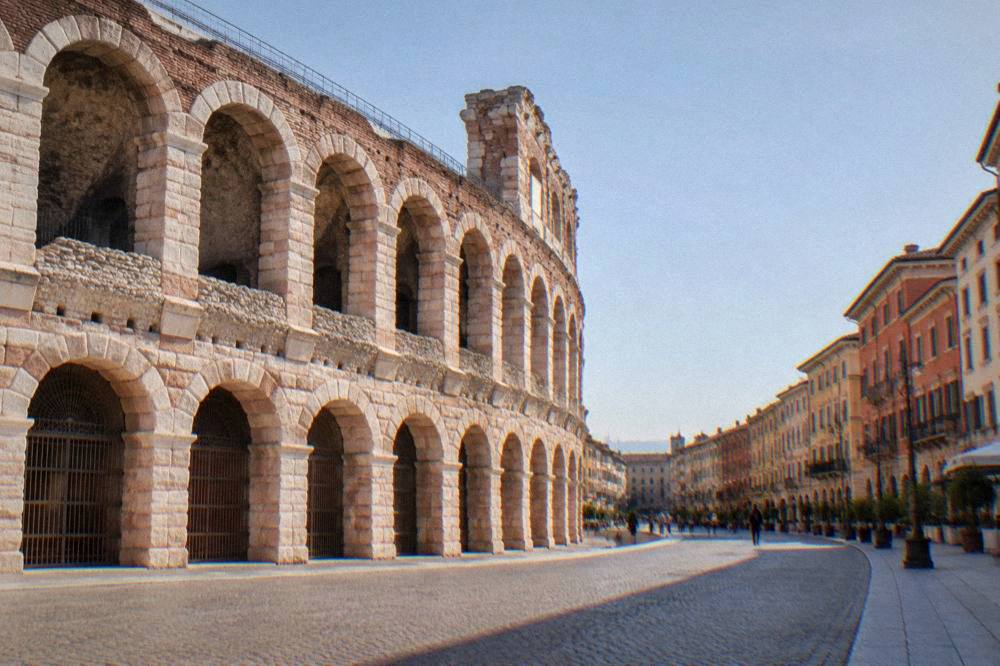
The geography makes the planning easy. Start at the Arena when it opens, then walk Via Mazzini north to Piazza delle Erbe and the market square cluster, with the Casa di Giulietta a short detour off the spine. Cross to the far bank for the Teatro Romano and the river views from Ponte Pietra, then loop back past the Duomo di Verona. The Verona in one day itinerary sequences exactly this, and it is built around the Arena's opening hours rather than against them.
Two timing notes from the facts worth keeping. First, Juliet's House is ticketed since 1 April 2026, 5 euro for the courtyard route or 12 euro with the house and balcony, booked online with entry via Teatro Nuovo, so the old habit of dropping in freely no longer works. Second, if you are arriving by train, the Verona train station guide covers the walk or bus from Porta Nuova into the centre, and the Arena is the natural first stop on that axis.
| Sight near the Arena | Relation to the visit | Walk time shape |
|---|---|---|
| Piazza Bra | The Arena's own piazza | Immediate |
| Piazza delle Erbe | Market square north via Via Mazzini | A few minutes on foot |
| Casa di Giulietta | Ticketed since April 2026, book online | Short detour off Via Mazzini |
| Ponte Pietra | Roman footbridge on the far side of the centre | Across the centre |
| Torre dei Lamberti | Tower view over the rooftops | Adjacent to Piazza delle Erbe |
What Should You Know Before You Go To The Arena?
Before visiting the Arena, know three things: buy the right ticket category and confirm that day's hours, since Monday is closed and show days shorten the afternoon; if you arrive by car, the historic centre is a camera-policed limited traffic zone with at most four entries a month for non-residents on a booking, unless your hotel registers your plate; and for an opera night, gates open about two hours before curtain, so arrive early.
The practical layer around the Arena is mostly the practical layer around Verona itself. The centre is compact and walkable, the 1.50 euro urban bus ticket covers 90 minutes of ATV city transport if you would rather ride, and the tourist tax, charged by your accommodation for up to four nights per person per month, is a line on the hotel bill rather than something you handle at the monument. The emergency number in Italy is 112.
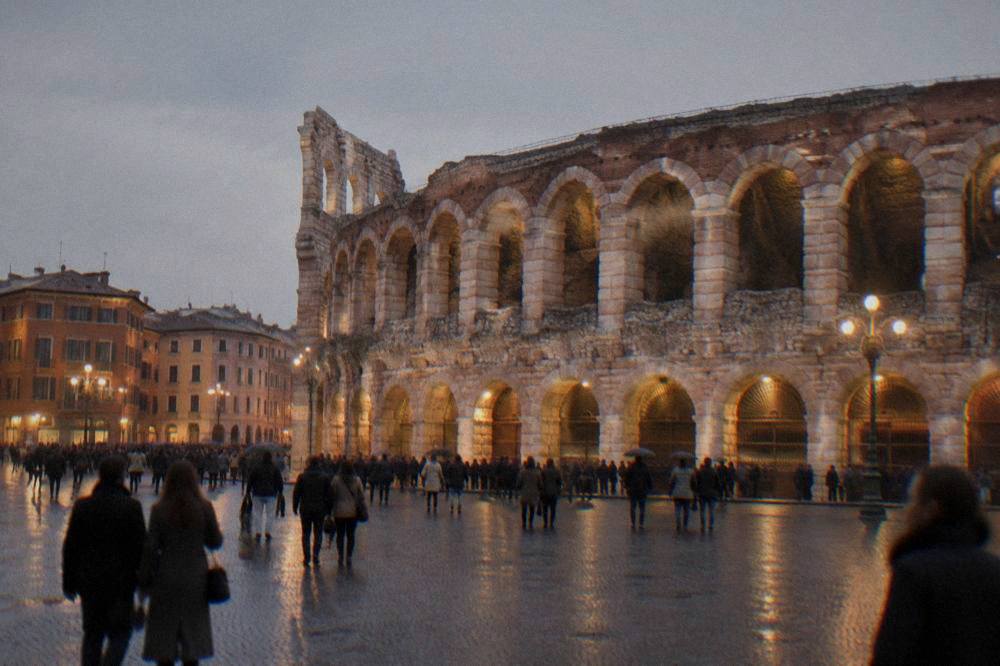
For a fuller monument circuit, the Basilica di San Zeno and Sant'Anastasia reward the traveller with a second half-day, both covered by the VeronaCard's Chiese Vive convention, and the Arche Scaligere and the Museo Lapidario Maffeiano sit close enough to fold into an Arena morning. The Porta Borsari, the Roman gate, is the other piece of imperial Verona still standing in the streets, and it makes a natural pairing with the amphitheatre for anyone tracing the Roman city.
If the visit is part of a wider north-Italian plan, Verona's position does the work: trains reach Venice in under an hour and a quarter, and the lake towns, Sirmione, Bardolino, Garda and Malcesine, are 22 to 39 km west as day trips, not suburbs. The Arena is the anchor; the rest of the region hangs off it conveniently.
Which Arena Di Verona Ticket Or Tour Should You Choose?
Choose the plain 12 euro daytime ticket if you want the monument at your own pace and nothing else; choose a city card with Arena priority entrance if you are visiting several civic sights, since the bundle removes both the Arena queue and separate ticketing; and choose a guided Arena visit or a combined walking tour if you want the history explained on site. Travellers adding food and wine to the same trip often pair the monument with a tasting walk, since Verona's centre puts both within one afternoon.
The decision is really about how much of Verona the trip holds. A single-night stopover justifies the direct ticket and an evening walk past the lit facade. A two- or three-day stay tilts toward the card arithmetic, especially with the digital VeronaCard now live since 1 September 2026, and the priority-entrance product covers the same ground without the do-it-yourself legwork. A first-time visitor who wants stories with the stones takes the guided route. Each of these is a real product on the operator's live listing, with price and current availability shown there.
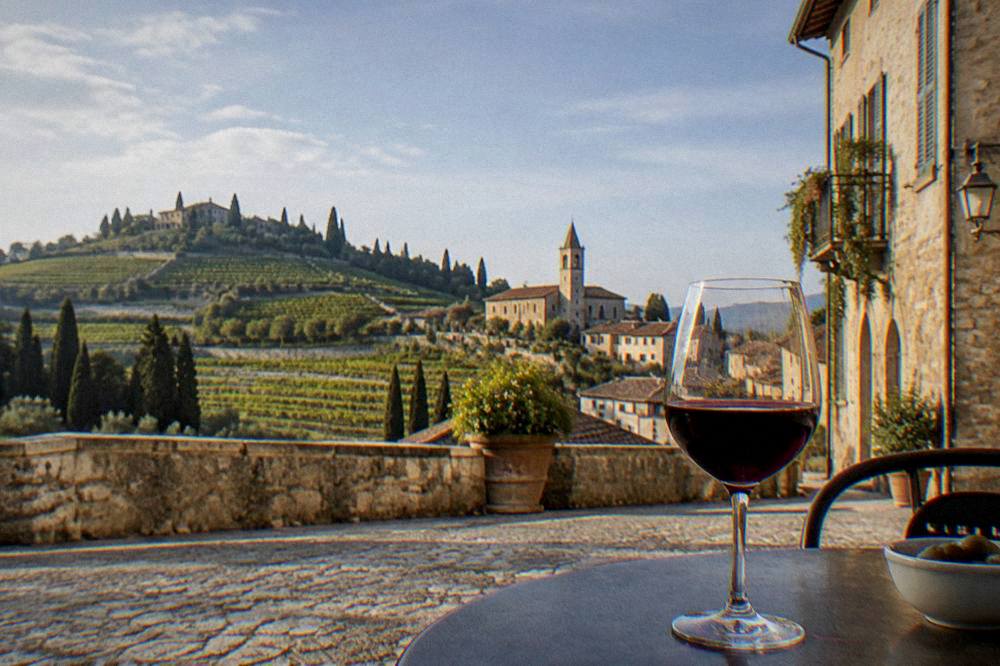
The wine and food pairing deserves one extra sentence, because it is the most Veronese combination of all: the amphitheatre in the afternoon and an Amarone in the evening, with the Valpolicella hills a 25-minute drive from the Arena. The city's kitchen runs on that same country, risotto all'Amarone and the long-simmered pastissada de caval both carrying the wine region onto the plate.
Common Questions About The Arena Di Verona
Is the Arena di Verona open on Mondays?
No. The Arena is reported closed on Mondays for the daytime visit, Tuesday to Sunday about 9:00 to 19:00, with occasional exceptions announced by the city. Confirm the exact date on the Arena's official page before you go.
Can you visit the Arena di Verona without seeing an opera?
Yes. The Arena is a daytime monument with a 12 euro full ticket, 9 euro reduced and 3 euro for ages 18 to 25 from EU and reciprocity countries, free under 18. The visit covers the arena floor, the gallery and the seating tiers, entirely separate from the evening festival.
How much do opera tickets at the Arena di Verona cost?
Stone-step seats start in the EUR 30s per the Arena's reported rates, and exact sector prices vary by date and staging. Check the current rates and sectors page on the Arena's own site before booking, as no full price table is reproduced here.
Can you bring a backpack to the Arena?
Small backpacks are permitted subject to security checks, and a cushion and an umbrella are allowed, per the Arena's own terms. Bulky bags are not, and there is no cloakroom, so travel light for an opera night.
Is the Arena di Verona older than the Colosseum?
Yes, per the Arena's own site and Britannica. The Arena was built about 30 AD and the Colosseum about 80 AD, and the Verona building is described as the third-largest surviving Roman amphitheatre after the Colosseum and Capua.
Does the VeronaCard include the Arena?
Yes, the card includes Arena entry. Since 1 September 2026 the card is digital through the "Your Verona" web app at 33 euro for 24 hours or 38 euro for 48 hours with ATV urban transport, or 29 and 32 euro without. The Aerobus from the airport is not included.