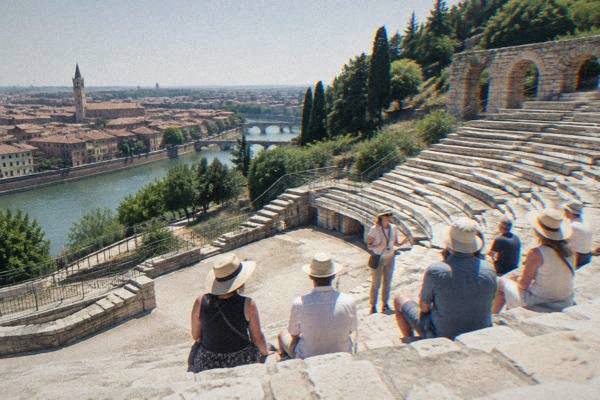
Castelvecchio: Castle, Museum And The Scaliger Bridge
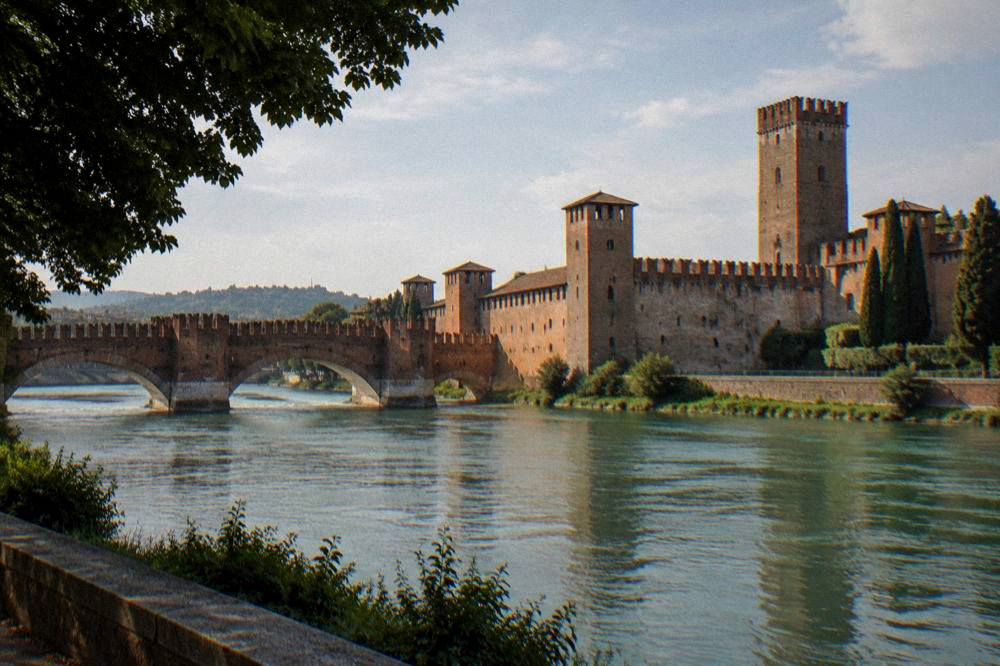
Castelvecchio is Verona's brick fortress on the Adige, now the city's civic museum of medieval and renaissance art, crossed by the crenellated Scaliger Bridge. Reported prices, hours and what to expect inside.
Short answer
Castelvecchio in Verona is reported at 9 EUR full, 6 EUR reduced and 2 EUR for ages 18 to 25, open Tuesday to Sunday 10:00 to 18:00 with last entry at 17:15, closed Monday. The VeronaCard covers entry. The adjoining Scaliger Bridge is visible from the banks at any hour.
Castelvecchio stands on the northwestern edge of Verona's historic centre, where the Adige bends around the old town, a fortress of red brick and pale stone whose crenellated bridge strides straight across the river. Verona itself is an inland city in Veneto, northern Italy, a UNESCO World Heritage Site since 2000, and this castle is one of the few grand buildings in the city that is both a monument and a working museum. The Comune di Verona runs it as the city's civic museum of art, and the reported admission, hours and ticketing details below come from the municipal museum pages. What follows is a full planning guide: prices, what the galleries hold, the Scaliger Bridge itself, the VeronaCard question, and how the castle fits into a day in Verona.
What Is Castelvecchio In Verona?
Castelvecchio is Verona's fortified castle on the Adige river, converted into the city's civic museum of medieval and renaissance art, and it sits a short walk west of Piazza Bra and the Arena, inside the Città Antica quarter. The building is a working museum, not a ruin, and its bridge, the Ponte Scaligero, is one of the most photographed structures in the city. The Comune di Verona lists it among its civic museums.
The castle's role in the city is unusual. Where the Arena is a Roman monument and Juliet's House is a literary shrine, Castelvecchio is the museum where Verona keeps its own artistic heritage: sculpture, frescoes, paintings and weapons, arranged through the courtyards and halls of the fortress itself. The setting does half the work. Visitors move from brick vaulted rooms to open walkways above the river, and the museum route uses the fortress architecture as part of the display.
The building also anchors the western end of the historic centre. The Adige loops around Verona's old town, and Castelvecchio sits at the neck of that loop. From its walls the view runs along the river toward the hills, and the crossing beside it links the castle to the left bank, where the Veronetta quarter begins its climb. The Verona Italy Travel Guide covers the whole city quarter by quarter; this page stays on the castle, its museum and its bridge.
One point of geography matters for planning. Verona is not on Lake Garda. The lake towns, Sirmione, Bardolino, Garda and Malcesine, are 22 to 39 km west and are day trips by bus, train or car. Castelvecchio is firmly in the city, a few minutes on foot from the centre of Verona, and it pairs naturally with river walks and the other civic museums rather than with lake excursions.
How Much Does Castelvecchio Cost And When Is It Open In Verona?
The reported admission to the Castelvecchio Museum is 9 EUR full, 6 EUR reduced for groups and over-65s, and 2 EUR for visitors aged 18 to 25, with the museum open Tuesday to Sunday from 10:00 to 18:00, last entry at 17:15, and closed on Mondays. The VeronaCard is reported to cover entry, and the first Sunday of the month from November to March is reported at 1 EUR. Hours can shift, so confirm before you go.
These figures come from the municipal museum listings and should be treated as reported rather than guaranteed. Show days, civic events and holidays change museum hours in Verona, as they do at the Arena, and the comune's own pages carry the current season's calendar. The reduced categories follow the civic museum pattern used across Verona: group rates, senior rates and a steep discount for young adult visitors aged 18 to 25, with under-18s reported as free. Disabled visitors and a companion are also reported as free under the civic admission rules.
| Ticket type | Reported price | Notes |
|---|---|---|
| Full | 9 EUR | Standard adult admission |
| Reduced | 6 EUR | Groups and over-65s |
| Ages 18 to 25 | 2 EUR | EU and reciprocity countries |
| Under 18 | Free | Per civic museum rules |
| First Sunday, Nov to Mar | 1 EUR | Civic museum initiative |
| VeronaCard | Free entry | Reported coverage, card includes transport option |
Monday closure is the practical detail that catches visitors out. Verona's civic museums, including Castelvecchio, close on Mondays, so a Monday arrival in the city is better spent on the open-air sights: Piazza Bra, Piazza delle Erbe, the river and the Ponte Pietra. On every other day of the week the museum runs a single long block from mid-morning to early evening, which makes it easy to slot into either a morning or an afternoon.
For visitors who want the castle explained rather than simply walked, a guided walk of the city centre covers the fortress from the outside and puts it in context with the rest of Verona. The small-group city of love walking tour route takes in the riverside landmarks, and Check availability on the operator's live listing before locking a date.
What Do You See Inside The Castelvecchio Museum In Verona?
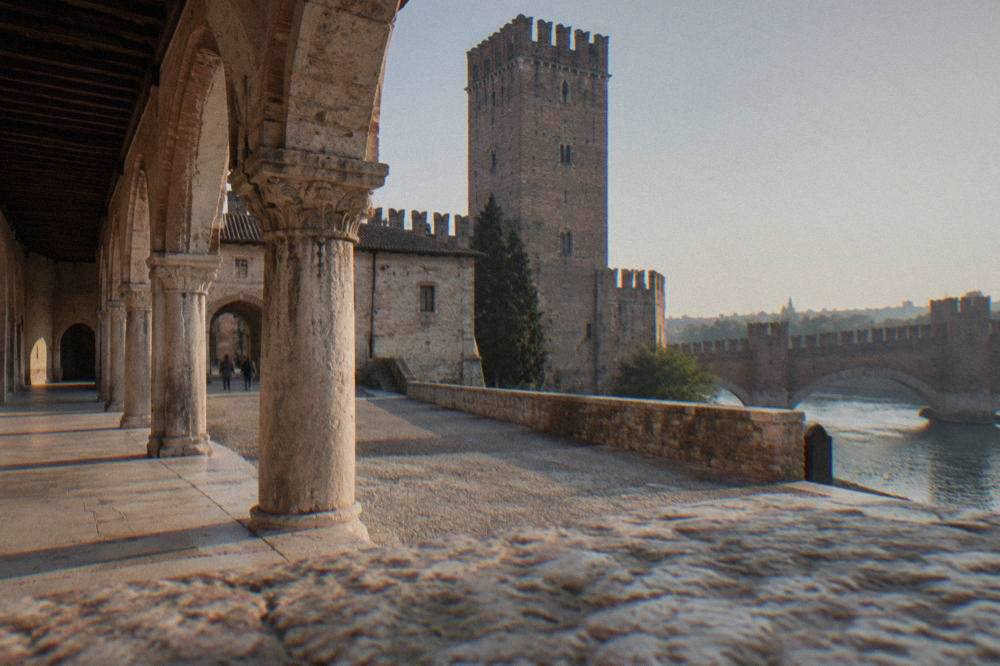
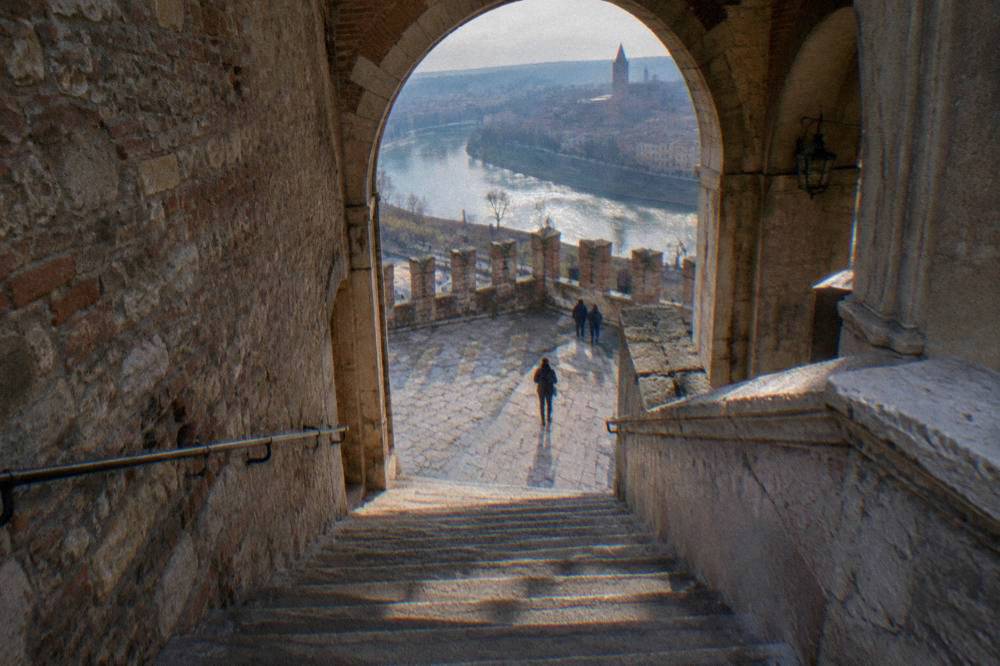
Inside Castelvecchio the route runs through the fortress courtyards, halls and upper walkways of a civic art museum holding Verona's medieval and renaissance collection: stone sculpture and funeral monuments, frescoes removed from city buildings, panel paintings, goldwork, ceramics, bells and weapons, all displayed against the castle's own brick and stone architecture. The museum is reported as one of the main civic collections in the city.
The character of the collection is religious and civic art from the centuries when Verona was a painted city. Fresco cycles and panel paintings dominate the picture galleries, much of it moved from churches and palaces that no longer hold it. Sculpture fills the courtyards and ground-floor halls, where heraldic carvings and tombs sit in the open air. The upper levels add the fortress itself: walkways, wall passages and views over the Adige that no other museum in Verona offers.
The display philosophy is part of the interest. Rather than a neutral gallery box, the museum uses the castle's rooms as they are, so the route alternates between low vaulted spaces, bright courtyards and long halls. Visitors who enjoy architecture as much as art get two attractions in one ticket. Visitors who mainly want paintings should still allow time for the sculpture courts, which are where the castle's atmosphere is strongest.
| Collection area | What it holds | Where it sits in the castle |
|---|---|---|
| Sculpture courts | Stone monuments, heraldry, architectural fragments | Open courtyards at ground level |
| Fresco rooms | Wall paintings moved from city buildings | Interior halls |
| Picture galleries | Medieval and renaissance panel paintings | Upper floors |
| Applied arts | Weapons, armour, ceramics, bells, goldwork | Side halls and tower rooms |
| Fortress route | Walls, walkways, river views | Along the ramparts |
There is no single must-see object to sprint toward, and the museum rewards slow circulation. A reasonable visit takes in the courtyards first, then climbs through the galleries, and finishes on the walls facing the river. Photography is generally possible in the permanent collection, though temporary exhibitions can carry their own rules, and tripods and flash are restricted in civic museums. Large bags may need to be checked, as at Verona's other municipal museums; the museum desk applies the civic rules on the day.
What Is The Scaliger Bridge At Castelvecchio In Verona?
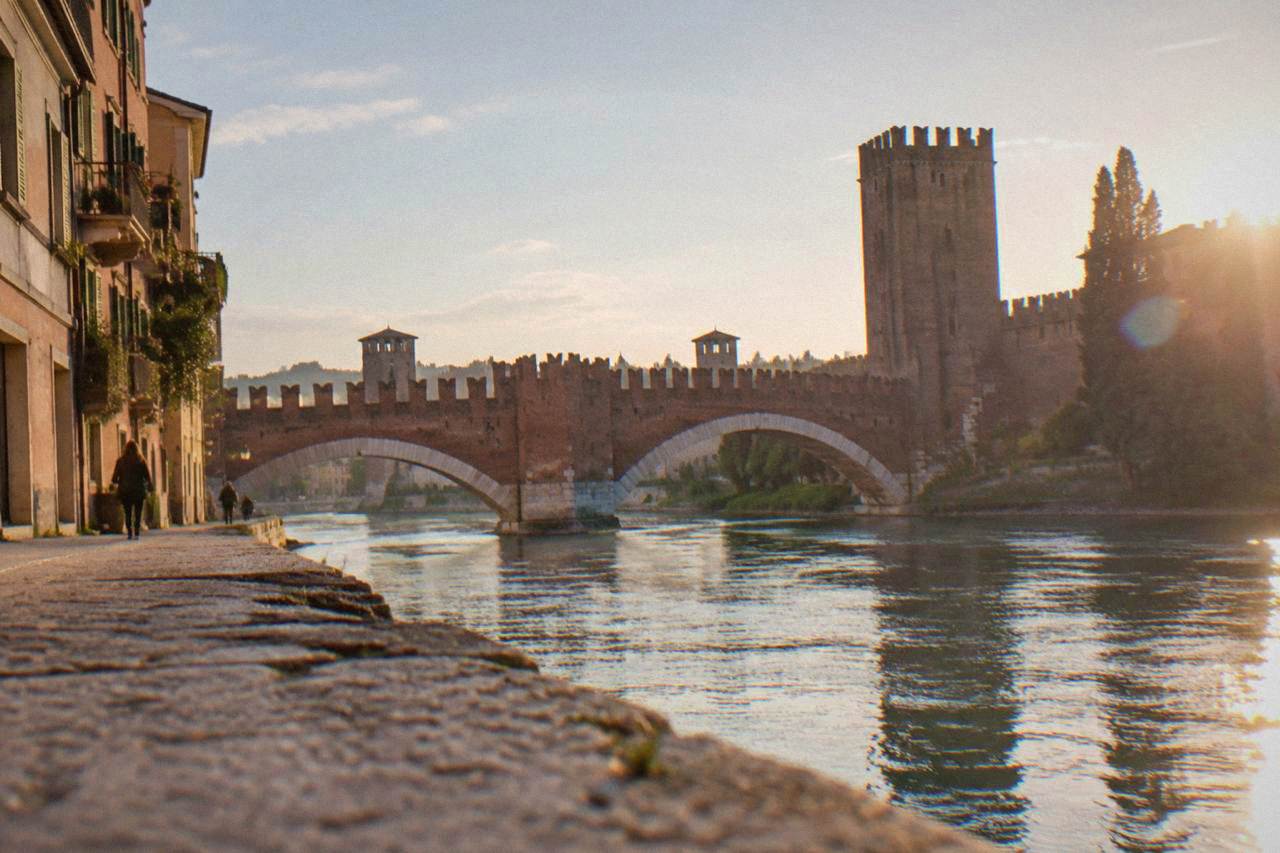
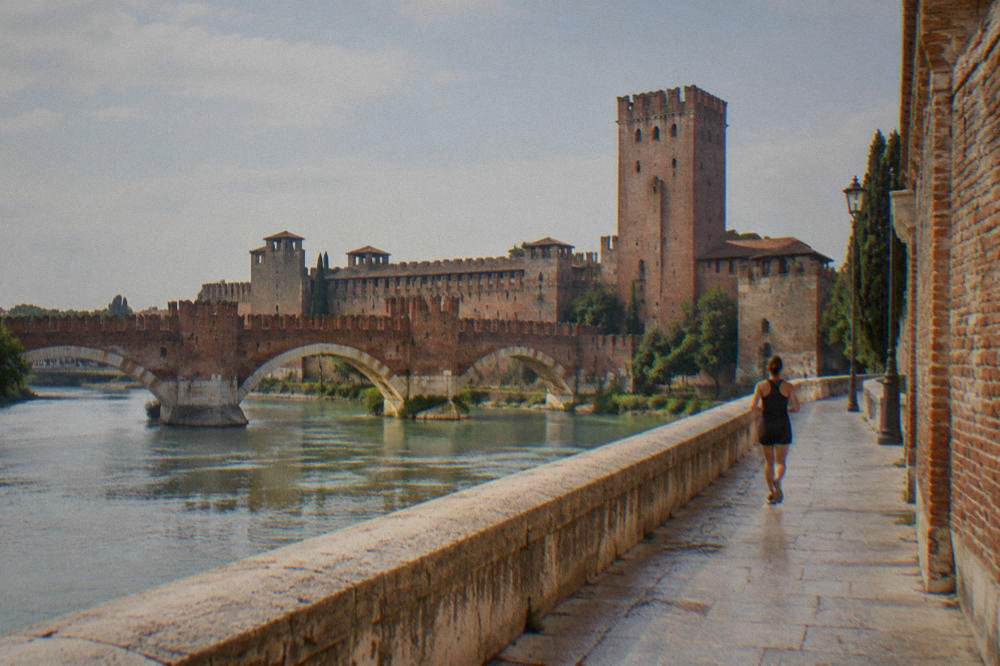
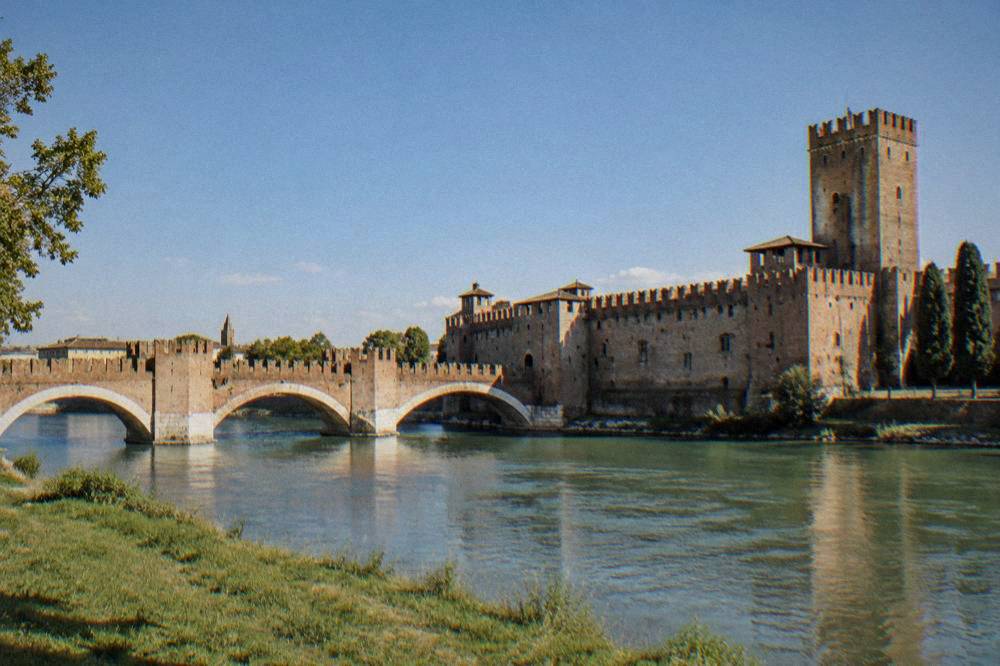
The Scaliger Bridge, the Ponte Scaligero, is the crenellated brick bridge attached to Castelvecchio that crosses the Adige in three low arches, enclosed by walls with merlons like the castle itself, and it is one of the most photographed crossings in Verona. The bridge belongs visually to the castle and is seen from the riverbanks at any hour, day or night.
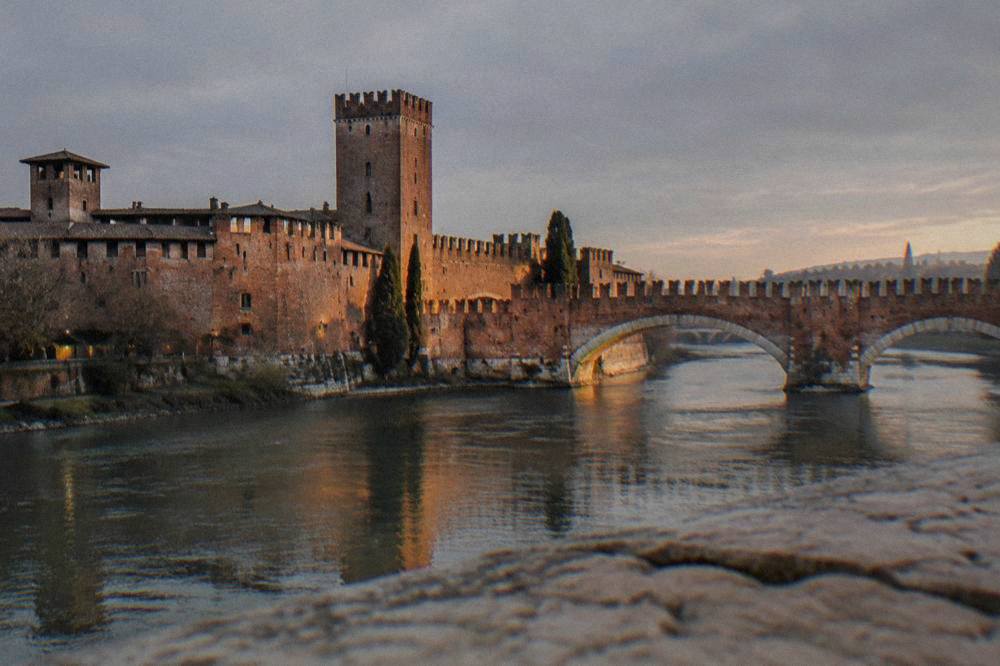
The bridge is what makes Castelvecchio a photographer's stop as much as a museum stop. From the grassy banks below, or from the neighbouring crossing downstream, the bridge and castle read as one structure, a wall of red brick marching across the water. At dusk the stonework catches low light along the river, and the view downstream toward Verona's other bridges is a short walk away. No ticket is needed to see the bridge from the banks; it is part of the free riverside Verona that costs nothing, like the squares and gates listed in the free things to do guide on things to do in Verona.
Crossing the bridge on foot delivers you to the left bank, where a stiff walk up through Veronetta leads to the Castel San Pietro viewpoint above the city. That route, castle to bridge to hill, is one of the better free walking lines in Verona, and it is described in the Castel San Pietro guide. The Ponte Pietra, Verona's Roman crossing further upstream, completes a riverside circuit that takes in the two most storied bridges in the city, covered in the Ponte Pietra guide.
| River sight at Castelvecchio | What you get | Ticket needed |
|---|---|---|
| Scaliger Bridge from the banks | The castle-and-bridge view | No |
| Walking the bridge itself | Crossing to Veronetta and the left bank | No |
| Museum ramparts | River views from inside the walls | Museum ticket |
| Evening riverside walk | Bridge and walls under low light | No |
Is The VeronaCard Worth It For Castelvecchio In Verona?
The VeronaCard is reported to include Castelvecchio among its covered civic museums, alongside the Arena, the Torre dei Lamberti, Juliet's House and the Teatro Romano, and the card costs 33 EUR for 24 hours or 38 EUR for 48 hours with ATV urban buses included, or 29 EUR and 32 EUR without transport. The card became digital on 1 September 2026, so the break-even depends on how many covered sights you stack into the window.
The Comune di Verona's VeronaCard notice states the new prices plainly: 33 EUR for the 24-hour card and 38 EUR for the 48-hour card with ATV transport included, 29 EUR and 32 EUR for the base card without buses. The card is now digital, delivered through the "Your Verona" web app, and old paper cards remain valid only to 31 March 2027. Two caveats come from the same notice: the Aerobus from the airport is not included, and Juliet's House still requires an online booking even for card holders.
Whether the card pays at Castelvecchio is simple arithmetic. A visitor who plans the Arena by day (12 EUR full), Castelvecchio (reported 9 EUR) and the Torre dei Lamberti (reported 6 EUR) is already near the base card price inside a single day, and adding Juliet's House tips it over. A visitor who only visits Castelvecchio and wanders the free squares is better off with single tickets. The card also carries reported free or reduced entry to several Verona churches through the Chiese Vive convention, including the Basilica di San Zeno, Sant'Anastasia and the Duomo complex, which strengthens the case on a dense two-day itinerary. The full picture, including the digital switch, is set out in the VeronaCard coverage across the city.
| VeronaCard option | Price | What it adds |
|---|---|---|
| 24 hours, with ATV buses | 33 EUR | Urban buses plus covered sights |
| 48 hours, with ATV buses | 38 EUR | Two-day validity plus buses |
| 24 hours, base | 29 EUR | Covered sights only |
| 48 hours, base | 32 EUR | Two-day validity, sights only |
Juliet's House deserves its own note because it changed in 2026. Since 1 April 2026 the courtyard route is ticketed at 5 EUR and the full house and balcony route at 12 EUR, booked online, with entry via the Teatro Nuovo. The fast-track ticket with audio guide is the covered option most card holders and independent visitors compare, and the Juliet's House guide walks through the new access rules in detail.
How Does Castelvecchio Compare With Verona's Other Civic Museums?
Castelvecchio is Verona's art museum, the largest of the civic museums at a reported 9 EUR full, while the Arena's daytime visit costs 12 EUR full, the Torre dei Lamberti is reported at 6 EUR, and the Teatro Romano with its archaeological museum is a ticketed visit whose price should be confirmed on site; the same reported rules, Monday closure and 18 to 25 concessions, run across the civic system, so the choice is about content, not price structure.
The civic family shares its skeleton. Reported hours cluster around Tuesday to Sunday, roughly 10:00 to 18:00, with Monday closure and last entries shortly before closing. The concession ladder, full, reduced, 2 EUR for ages 18 to 25, free under 18, repeats at each site, and the VeronaCard is reported to cover them all. What differs is the subject: the Arena is Roman Verona, the Teatro Romano is Roman Verona again with an archaeological museum attached, the Torre dei Lamberti is a view, and Castelvecchio is the city's art collection.
| Civic sight in Verona | Reported admission | Subject | Reported hours |
|---|---|---|---|
| Castelvecchio Museum | 9 EUR full / 6 reduced / 2 for 18-25 | Medieval and renaissance art | Tue to Sun 10:00 to 18:00, closed Mon |
| Arena di Verona | 12 EUR full / 9 reduced / 3 for 18-25 | Roman amphitheatre by day | Tue to Sun, closed Mon, early close on show days |
| Torre dei Lamberti | 6 EUR full | Tower viewpoint | Summer hours reported to about 21:00 |
| Teatro Romano and museum | Ticketed visit, price to confirm | Roman theatre and archaeology | Tue to Sun, hours to confirm |
The pairing that works best is Castelvecchio plus the Arena. They sit within a short walk of each other, one at the western gate of the old centre and one at its heart in Piazza Bra, and together they frame the two Veronas: the Roman city and the later fortified city. A morning at the Arena with a skip-the-line guide, then an afternoon at Castelvecchio, is a full and varied day, and the Arena ticketing is covered in the Arena di Verona guide. Visitors short on time should note that the tower view and the museum art overlap least: if you have seen one panorama from Castel San Pietro, the Torre dei Lamberti can wait.
What Is Near Castelvecchio In Verona?
The sights nearest Castelvecchio are the Arena and Piazza Bra to the southeast, the Piazza delle Erbe and Piazza dei Signori complex a little further into the centre, the Torre dei Lamberti above them, and, across the Scaliger Bridge itself, the Veronetta quarter climbing to the Castel San Pietro viewpoint; all of these sit inside Verona's compact Città Antica, walkable in a loop from the castle.
The castle is a natural starting point for a walking circuit because it sits at the edge of the pedestrian old town. Heading downstream along the river and then inland brings you to Piazza Bra and the Arena within minutes; from there Via Mazzini runs to the Piazza delle Erbe market square, the frescoed houses and the Torre dei Lamberti beside it, and the Arche Scaligere tombs nearby. Crossing back over the Scaliger Bridge instead leads up through Veronetta to the panorama above the river.
| Neighbouring sight | Direction from Castelvecchio | Ticket situation |
|---|---|---|
| Piazza Bra and the Arena | Southeast, minutes on foot | Arena 12 EUR full by day |
| Piazza delle Erbe | Central, short walk | Free public square |
| Torre dei Lamberti | Central, beside Piazza delle Erbe | Reported 6 EUR, free with VeronaCard |
| Castel San Pietro viewpoint | Across the bridge, uphill | Viewpoint free, funicular priced separately |
| Basilica di San Zeno | West, across the river | VeronaCard coverage reported via Chiese Vive |
The Basilica di San Zeno lies west of the centre on the far side of the Adige, a deliberate detour rather than a loop stop, and its coverage under the VeronaCard's church convention is reported rather than ticketed separately on this page; the Basilica di San Zeno guide covers what to look for. For the quarter-by-quarter picture, including Veronetta and the Città Antica around the castle, see the Città Antica area guide.
How To Fit Castelvecchio Into A Day In Verona?
A practical Castelvecchio day runs the castle in the morning while the museum is quiet, walks the Scaliger Bridge and the left-bank riverside after, then spends the afternoon on the Arena and the central squares, finishing with the tower or the hilltop view at dusk; with the museum closed Mondays, the plan needs any other day of the week, and a 1.50 EUR urban bus single covers the legs that walking does not.
Verona's centre is compact enough that sequence matters more than transport. The museum's reported hours, 10:00 to 18:00 with last entry at 17:15, suit a late-morning arrival, and the galleries are quieter in the first hours after opening. After the museum, the free parts of the castle complex, the bridge and the banks, cost nothing and take as long as the light allows. Lunch in the old centre, then the Arena's daytime visit or a guided skip-the-line slot, fills the early afternoon, and the Piazza delle Erbe and Torre dei Lamberti sit directly on the walk between them.
| Time of day | Suggested stop | Cost basis |
|---|---|---|
| Morning | Castelvecchio Museum | Reported 9 EUR full |
| Midday | Scaliger Bridge and riverbanks | Free |
| Early afternoon | Arena daytime visit or guided tour | 12 EUR full, or tour via listing |
| Late afternoon | Piazza delle Erbe and Torre dei Lamberti | Square free, tower reported 6 EUR |
| Evening | Castel San Pietro viewpoint or an opera night in season | Viewpoint walk free |
Two seasonal notes shape the plan. The Arena's opera festival runs deep into September, not just July and August: the 2026 season ran 5 June to 12 September, and the 2027 season is announced for 11 June to 11 September, so an evening performance can finish a castle day in summer. And in winter the reported 1 EUR first-Sunday initiative across the civic museums, November to March, makes a museum-heavy Sunday unusually cheap. Visitors arriving by train from elsewhere in Veneto, or flying into Verona Villafranca, will find the arrival logistics in the airport and station guides; the Aerobus from the airport is reported at 7 EUR and about 15 minutes, and the urban single is 1.50 EUR.
For travellers who prefer food to frescoes at the end of the day, Verona's evening food walks cover the old centre's kitchens and wine bars, and the dinner-with-wine-and-gelato format pairs well with an afternoon at the castle.
What Should You Know Before Visiting Castelvecchio In Verona?
Before visiting Castelvecchio, know that the museum is closed on Mondays, that reported admission is 9 EUR full with a 2 EUR rate for ages 18 to 25, that the VeronaCard covers it, that hours are reported Tuesday to Sunday 10:00 to 18:00 with last entry at 17:15, and that every figure here should be confirmed on the Comune di Verona's museum pages before you travel, since civic hours shift around events and seasons.
A few practicalities round out the plan. The castle sits inside the historic centre's camera-policed ZTL, so drivers should park outside the restricted zone and walk in; non-residents are limited to four entries a month into the ZTL by booking, and hotel guests drive in free only if the hotel registers the plate. Cyclists and pedestrians face no such limits, and the riverside path reaches the castle from both banks. Step-free access within the fortress was not confirmed in the municipal pages, so visitors with mobility needs should ask the museum directly before visiting.
Weather matters less here than at Verona's outdoor sights, which is the castle's quiet advantage. The ERA5 reanalysis for Verona, 1991 to 2020, puts November at 118.2 mm of rain, the wettest month in the normals, and July at a 29.3 C mean daily high; a museum afternoon is the standard wet-day or hot-day refuge, and the covered galleries make Castelvecchio a reliable stop when the open squares lose their charm. Check the current price and hours on the Comune di Verona's own museum pages before booking anything around the visit.
Common Questions About Castelvecchio In Verona
Is Castelvecchio open on Mondays?
No. The Castelvecchio Museum is reported closed on Mondays, opening Tuesday to Sunday from 10:00 to 18:00 with last entry at 17:15. Confirm hours on the Comune di Verona's museum pages before you go.
How much is the Castelvecchio Museum ticket?
Reported admission is 9 EUR full, 6 EUR reduced for groups and over-65s, and 2 EUR for visitors aged 18 to 25, with under-18s free under the civic museum rules. The first Sunday of the month from November to March is reported at 1 EUR.
Does the VeronaCard include Castelvecchio?
Yes, entry is reported as included. The digital VeronaCard, since 1 September 2026, costs 33 EUR for 24 hours or 38 EUR for 48 hours with ATV buses, or 29 EUR and 32 EUR without transport. The Aerobus from the airport is not included.
Can you walk across the Scaliger Bridge for free?
Yes. The crenellated bridge beside the castle is an open crossing and needs no ticket, and the classic castle-and-bridge view is free from the riverbanks on either side at any hour.
How long does a visit to Castelvecchio take?
The museum itself takes a leisurely half-visit of the average day in Verona, with the courtyards, galleries and ramparts all on one ticketed route. Add time for the bridge and the riverside walk, which are free.
Castelvecchio rewards the visitor who treats it as two sights in one: a fortress to walk and a museum to read, joined by the most striking bridge in Verona.