What Are Some Hidden Gems In Verona?
The quieter side of Verona in Veneto: Veronetta, Giardino Giusti, San Zeno, the Arche Scaligere and the towers and terraces away from Piazza Bra, with ticket facts from official sources.
Verona, the inland Veneto city on the Adige river, packs its famous sights into a compact core: the Roman Arena in Piazza Bra, Juliet's House, Piazza delle Erbe. The hidden gems begin one bridge or one lane beyond that core, in Veronetta across the water, in the garden terraces above the city, and among the Scaliger tombs that stand a street away from the busiest squares yet draw a fraction of the attention. The city was inscribed on the UNESCO World Heritage List in 2000, and the inscription covers the whole fortified historic core, not just the Arena's ellipse, which is the simplest argument for wandering past the obvious.
For orientation, the question of what Verona is famous for usually gets answered with the Arena and Juliet, and a good follow-up is how many days in Verona is enough, because the gems below need a second or third day to breathe. This page from the Verona Italy Travel Guide lays out the quiet side of the city sight by sight, using only what official sources say about tickets and hours.
What Are Some Hidden Gems In Verona?
The hidden gems locals and patient visitors name are Veronetta (the left-bank quarter behind the Teatro Romano), the Giardino Giusti terraced garden, the Arche Scaligere tombs off Piazza dei Signori, the Museo Lapidario Maffeiano, the San Zeno district west of the centre, and the views from the Torre dei Lamberti and across Ponte Pietra. None of these needs a tour bus. All sit inside or on the edge of the UNESCO-listed core, and several cost nothing at street level.
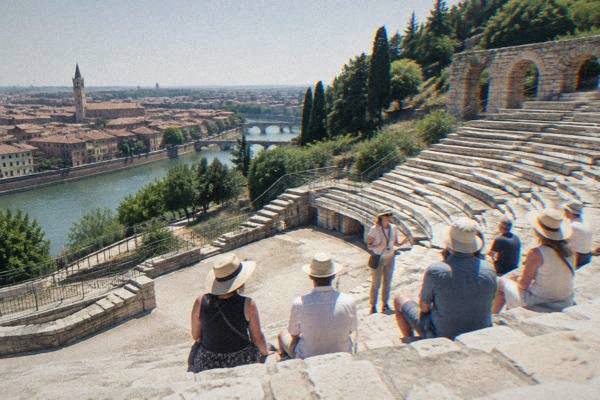
That list rewards a shift of one or two bridges. Veronetta, the quarter across the Ponte Pietra from the centre, holds the Teatro Romano and Museo Archeologico on the hillside and a tangle of student-priced streets beyond it. The Giardino Giusti, a Renaissance terraced garden a short walk east of Piazza Bra, is listed in the Comune's own materials with VeronaCard free or reduced entry, so check the garden's own page for the current price before going. The Arche Scaligere, the ornate Gothic tombs of the Scaliger family, stand in a fenced enclosure beside Santa Maria Antica, steps from Piazza dei Signori, and the civic museums tie them to a same-day ticket; VeronaCard covers them.
The Museo Lapidario Maffeiano, the stone-inscription museum on Piazza Bra's south side, is one of the least-visited civic museums precisely because its entrance is easy to miss; it is reported closed Mondays, like the other civic museums, and free with VeronaCard. And the San Zeno district, around the basilica of the same name west of the centre, is a low, brick, residential quarter that feels closer to a small town than to a UNESCO city, and it is covered by the same Chiese Vive church convention on the VeronaCard.
Which Quiet Corners Of Verona Escape The Crowds?
The quietest corners with real substance are Veronetta across Ponte Pietra, the San Zeno district, the Giardino Giusti in the early afternoon, and the upper end of Via San Sebastiano, plus the riverbanks themselves. The ERA5 reanalysis for Verona, 1991-2020, shows July afternoons averaging a 29.3 C high, so shaded lanes and garden alleys are a practical choice in summer, not just a scenic one. Each of these sits within a 20 to 30 minute walk of Piazza Bra.
Veronetta is the clearest case. Cross the Ponte Pietra, itself a free open bridge with Roman stones on its upstream arches, and the crowd thins within a block. The hillside above holds the Teatro Romano and Museo Archeologico; confirm its hours and prices on the civic museums' own page, and note that VeronaCard covers it. The quarter beyond, crossed by Via Sant'Atanasio and its side lanes, is where the city's student population lives and where the street-games festival Tocati took over the streets for free from 18 to 20 September 2026, per the Comune's event page.
San Zeno works the same way in the opposite direction. The basilica gives the district its name and its reason to exist; the streets around it are brick, low and local, with the kind of afternoon stillness the centre never has. The church is part of the Chiese Vive convention, so the VeronaCard gives free or reduced entry; the standalone ticket price is not in the sources here, so check at the door. For anyone asking is Verona walkable, the answer is yes, and these two quarters are the proof: both are flat enough walks from the centre, with the Teatro Romano hill the only real climb.
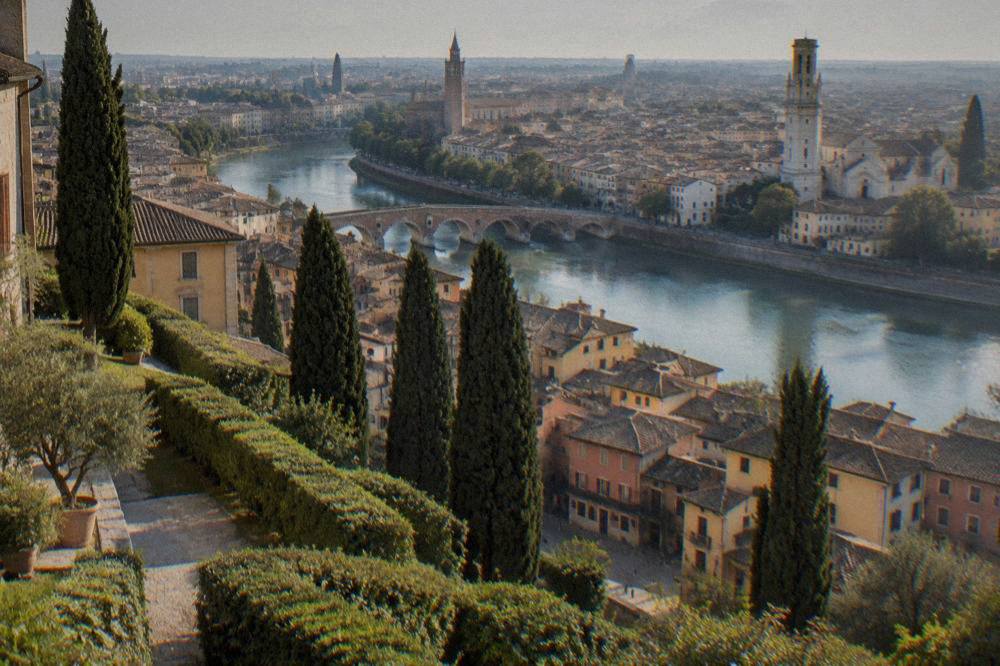
The Giardino Giusti deserves its own sentence. The hedge alley, the stone staircase and the belvedere at the top give one of the enclosed views of the city, framed by cypress rather than open sky, and the Comune's VeronaCard listing confirms garden entry is free or reduced with the card. Its standalone price is not published here: check the current price on the garden's own page before setting out.
Which Overlooked Verona Sights Are Worth A Ticket?
Four overlooked sights are worth paying for: the Torre dei Lamberti (6 euro full, per its own site, free with VeronaCard), Castelvecchio (9 euro full, 6 reduced, 2 for 18 to 25, per the civic museums, closed Mondays), the Arena by day (12 euro full, 9 reduced, 3 for 18 to 25, per the Comune di Verona), and Juliet's courtyard route (5 euro, or 12 euro with the house and balcony, booked online since 1 April 2026).
Two of those four are hidden in plain sight. The Torre dei Lamberti rises over Piazza delle Erbe and is free with the VeronaCard, which has been a digital card since 1 September 2026 at 33 euro for 24 hours or 38 euro for 48 hours with ATV buses included (29 and 32 euro without transport, per the Comune's notice). The climb rewards it: the tower's viewing level looks straight down the Piazza delle Erbe roofline and out to the hills. Castelvecchio, the Scaliger castle by the Ponte Scaligero, is the city's main art museum inside a fortress, and its frescoed rooms are quiet even in high summer; per the civic museums it opens Tuesday to Sunday 10:00 to 18:00, last entry 17:15, closed Mondays, with a 1 euro first Sunday of the month from November to March.
| Sight | District | Ticket fact from official sources | Free with VeronaCard |
|---|---|---|---|
| Torre dei Lamberti | Piazza delle Erbe | 6 euro full, per its own site | Yes |
| Castelvecchio | West of the centre, by the Adige | 9 euro full, 6 reduced, 2 euro ages 18 to 25, per the civic museums | Yes |
| Arena (daytime visit) | Piazza Bra | 12 euro full, 9 reduced, 3 euro ages 18 to 25, per the Comune di Verona | Yes |
| Casa di Giulietta courtyard | Via Cappello, entry via Teatro Nuovo | 5 euro, or 12 euro with the house and balcony, online booking, since 1 April 2026 | Yes, online booking still needed |
| Museo Lapidario Maffeiano | Piazza Bra south side | Civic ticket, free with the card; closed Mondays, reported | Yes |
| Giardino Giusti | East of the centre | Free or reduced with the card, per the Comune listing; standalone price not published | Free or reduced |
The two 2026 traps catch people out here. Juliet's courtyard stopped being free on 1 April 2026: the courtyard route is 5 euro, the house and balcony route 12 euro, entry is via the Teatro Nuovo, and booking is online even for VeronaCard holders, per the Comune's own notice. And the Arena is not only an opera house: it is a daytime visit on the Comune's civic ticket, closed Mondays, with early closes on show days, so check the Arena's own calendar before planning a morning there. A guided visit can carry these facts and the stories behind them; the small-group history walk below is built around exactly the highlights-plus-hidden-gems route.
Where Does Verona Hide Its Food Culture?
Verona's food culture hides in its dishes rather than in named rooms: pastissada de caval (horse meat slow-cooked in wine), risotto all'Amarone (Vialone Nano rice cooked in Amarone), bollito with pearà sauce, and the city's gnocchi tradition, with pandoro as the Christmas cake that originated here. Traditional Veronese cooking pairs these with Valpolicella wines, and the deepest version of that pairing sits in the wine hills about 25 minutes' drive away.
What the sources do say is that these four dishes are the traditional Veronese canon, that Amarone della Valpolicella is made from Corvina, Corvinone and Rondinella grapes dried in the appassimento process, and that the Valpolicella zone lies north of the city, about 25 minutes' drive from the Arena by free-flow road routing. A food-and-wine walk through the centre solves the discovery problem neatly: the tasting route below pairs the dishes with an Amarone tasting, and a guided walk reaches the kind of unmarked osteria a first-time visitor would walk past.
Is the food alone a reason to come? The honest framing is on the traveller's plate: anyone weighing the city against its neighbours can start from is Verona Italy worth visiting, and anyone comparing a city base with a lakeside one should read is it better to stay in Verona or Lake Garda, since the lake towns are 22 to 39 km west and Verona itself is inland.
How Do You Find Hidden Gems In Verona On Foot?
The reliable method is to walk the two river loops: the right-bank loop from Ponte Pietra through Veronetta, and the left-bank loop from Castelvecchio through San Zeno, with the Giardino Giusti as the eastern add-on. A guided small-group walk compresses this into one outing with the context, and the bike option covers the same ground faster. Each loop is walkable, free at street level, and takes in at least one ticketed sight worth stopping for.
The guided option earns its place because Verona's gems are stories as much as places. The Scaliger tombs, for instance, make sense only with the family's narrative attached; the Veronetta lanes reward someone who can point at a doorway and explain it. The small-group history walk below is the related tour for this page, and its route is explicitly the highlights-plus-hidden-gems combination this article maps.
Self-guided, the plan is simple. Morning: Piazza Bra, then the Arena on the civic ticket before the midday heat (July's ERA5 mean high is 29.3 C, and the stone amphitheatre holds heat). Cross to Veronetta via Ponte Pietra, climb to the Teatro Romano hillside, then descend into the quarter's lanes for lunch. Afternoon: the Giardino Giusti terraces, then Piazza dei Signori and the Arche Scaligere, ending on the Torre dei Lamberti before its reported late close. A second day adds San Zeno and Castelvecchio. Anyone with only a single day should follow the sequencing on the site's main things to do in Verona page and cut the gems rather than rush them.
For travellers who prefer wheels, the bike tour below runs the same highlights-and-hidden-gems brief across the centre and the riverside, and the food-and-wine walk covers the tasting quarter.
Common Questions About Hidden Gems In Verona
What Are Some Hidden Gems In Verona?
Veronetta across the Ponte Pietra, the Giardino Giusti terraced garden, the Arche Scaligere tombs beside Santa Maria Antica, the Museo Lapidario Maffeiano, the San Zeno district, and the view from the Torre dei Lamberti. Several are free at street level and several more are covered by the VeronaCard.
Is Juliet's courtyard still free?
No. Since 1 April 2026 the courtyard route costs 5 euro and the full house and balcony route 12 euro, with online booking and entry via the Teatro Nuovo, per the Comune di Verona. VeronaCard holders still need to book online.
Can you visit the Arena without going to the opera?
Yes. The Arena is a daytime visit on the Comune's civic ticket at 12 euro full, 9 reduced and 3 euro for ages 18 to 25 from EU and reciprocity countries, closed Mondays, with early closes on show days. Check the Arena's own calendar before a morning visit.
Is Veronetta worth visiting?
Yes, for the Teatro Romano hillside, the riverside lanes and the quieter bars and streets of the university quarter. It is a short walk across the Ponte Pietra, which is itself free and open at all hours.
What is the best time of day for the hidden gems?
Morning for the climb to the Teatro Romano hill and the Giardino Giusti, late afternoon for the Torre dei Lamberti, whose reported summer hours run to about 21:00. The ERA5 reanalysis for Verona, 1991-2020, puts the July mean high at 29.3 C, so midday is better spent indoors or in the shade.
Does the VeronaCard cover the hidden-gem sights?
Yes, broadly. The digital card (33 euro for 24 hours, 38 euro for 48 hours with ATV buses, from 1 September 2026) covers the Arena, Castelvecchio, the Torre dei Lamberti, Juliet's House with online booking, the Teatro Romano, the Lapidario Maffeiano, the Scaligeri tombs and the Chiese Vive churches including San Zeno, per the Comune's notice. It does not include the Aerobus from the airport.
The quiet half of Verona does not advertise itself, which is the entire point: cross one bridge, climb one hillside, book one tower, and the UNESCO city opens up well beyond the Arena's shadow.