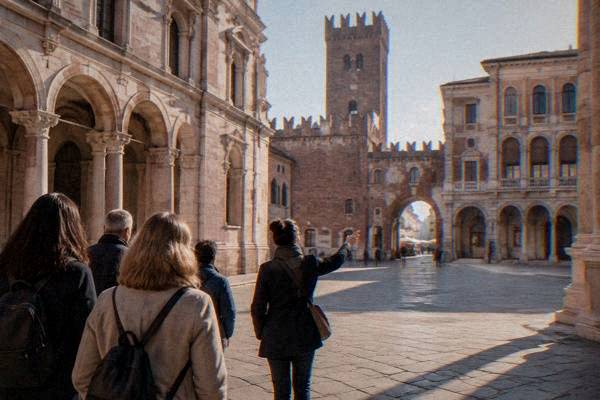
What To Wear In Verona?
A season-by-season packing answer for Verona: what the ERA5 climate normals say, what an Arena opera night actually requires, and which shoes survive the cobblestones.
Verona sits inland on the Adige river in Veneto, northern Italy, and its seasons set the dress code more than any fashion convention does. The ERA5 reanalysis for Verona, 1991-2020, puts the January mean at 3.1 C with nights down to -0.4 C, and the July mean high at 29.3 C, so the gap between a February trip and a July one is effectively two different wardrobes. Add cobbled streets, a ticketed Juliet's courtyard with online booking, an outdoor opera season that ran 5 June to 12 September in 2026, and day trips to Lake Garda and the Valpolicella hills, and the question of what to pack becomes practical rather than stylistic.
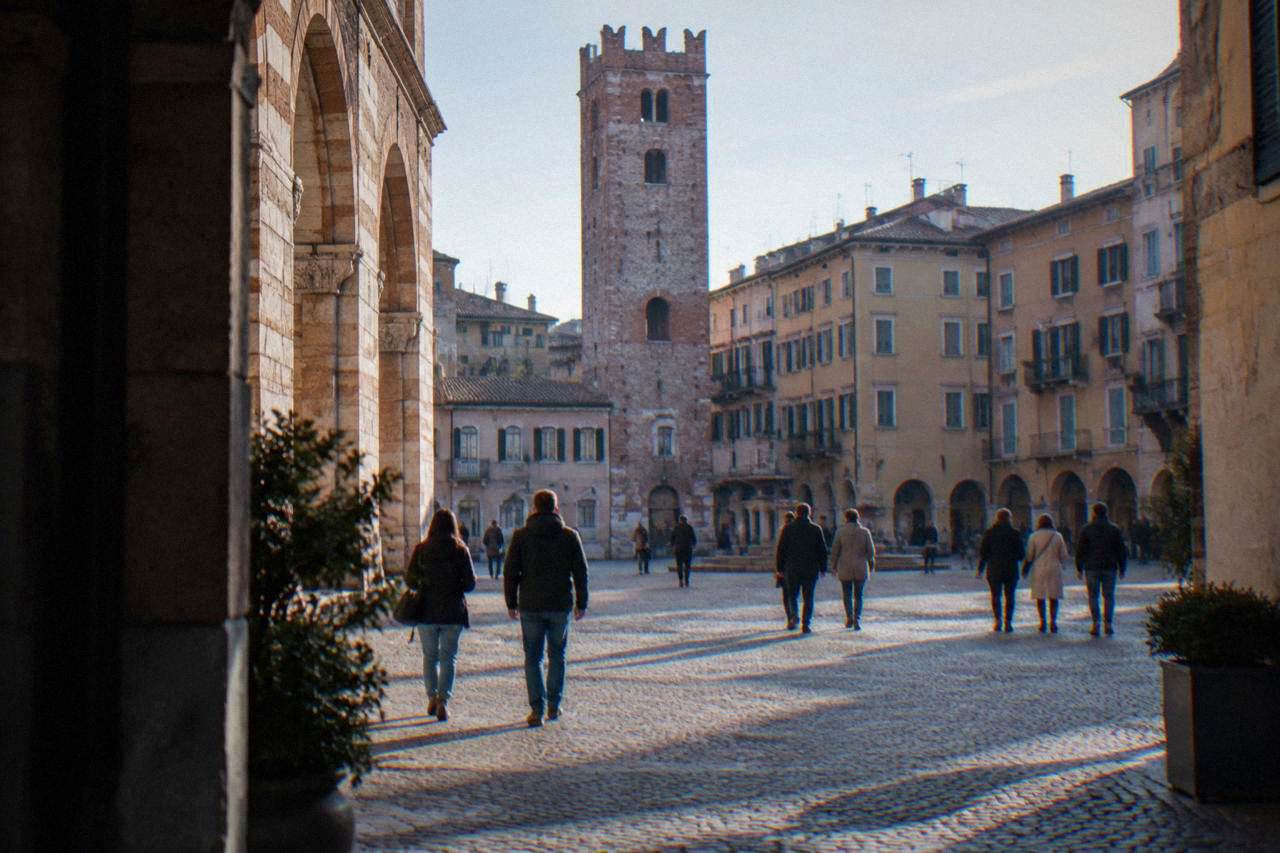
This page works through the seasons in order, then covers the two occasions that trip people up: an evening on the Arena's stone steps and a day on uneven pavements. The short version is layers for spring and autumn, serious sun protection for summer, a real coat for winter, and shoes with grip in every month of the year.
What To Wear In Verona?
Pack for a continental northern-Italian climate: breathable layers and comfortable walking shoes in every season, a warm coat from November to March, and light clothing with sun protection from June to August. The ERA5 reanalysis, 1991-2020, shows January nights at -0.4 C and July mean highs of 29.3 C, with November the wettest month at 118 mm of rain, so a compact umbrella earns its place in the bag year-round.
Verona is not a lakeside town where a breeze softens the afternoon. It is inland, and the same continental pattern that freezes the Piazza Bra pavements in January bakes them in July. The monthly picture from the reanalysis makes the swings plain.
| Month | Mean high | Mean low | Rain |
|---|---|---|---|
| Jan | 7.3 C | -0.4 C | 52 mm |
| Apr | 17.8 C | 7.6 C | 94 mm |
| Jul | 29.3 C | 19.1 C | 79 mm |
| Oct | 18.1 C | 10.5 C | 107 mm |
| Nov | 12.3 C | 5.3 C | 118 mm |
Two readings of that table matter for clothing. First, the shoulder months of April and October are mild by day and genuinely cool by night, a ten-degree swing that rewards a light jacket tied around the waist. Second, autumn rain is real: May, October and November all average above 100 mm, so waterproof shoes and a packable rain layer belong in the suitcase then.
The rest is urban common sense for an Italian city of marble and brick. Dark, plain clothing travels well, churches such as the Duomo complex and Sant'Anastasia still expect shoulders covered, and the historic centre is compact enough that a day easily becomes fifteen kilometres of walking. For more on that last point, see Is Verona Walkable?.
What To Wear In Verona In Spring And Autumn?
April, May, September and October call for layered clothing: a t-shirt or shirt under a light sweater or jacket, long trousers or skirts, and a waterproof outer layer for the rainiest months. The ERA5 reanalysis, 1991-2020, shows April mean highs of 17.8 C against lows of 7.6 C, and October highs of 18.1 C against lows of 10.5 C, so mornings and evenings run cool while afternoons feel warm in the sun.
May deserves a specific mention because it is the second wettest month in the table at 110 mm, close behind November's 118 mm. A compact umbrella rather than a hood keeps hands free for photographs on Ponte Pietra, and waterproof walking shoes handle the polished stone around Piazza delle Erbe after a shower. September is the gentler autumn choice: mean highs of 23.7 C, lows of 15.1 C, and rain picking up toward the month's end.
Spring and autumn are also the seasons of Tocatì, the free street-games festival that filled the Veronetta quarter from 18 to 20 September in 2026, and of the Vinitaly wine fair (11 to 14 April 2027). Neither requires special dress, but both mean crowds and standing, which points again toward supportive footwear.
If an active day is on the plan, a guided walk that moves between the Arena and a cable-car ride covers a lot of ground, and the Walk with Arena and Cable Car is built exactly around that mix of city pavement and viewpoint. Check availability
What Should You Pack For A Verona Summer?
Pack light, loose, breathable clothing plus serious sun protection: a wide-brimmed hat, sunglasses and a refillable water bottle are essentials, not extras, for June through August. The ERA5 reanalysis, 1991-2020, shows July mean highs of 29.3 C with lows of 19.1 C, and August nearly identical at 29.1 C and 19.4 C, so evenings stay warm and the midday sun on open stone squares is the main comfort problem.
Summer dressing in Verona is about the surfaces. Piazza Bra and Piazza delle Erbe are open, unshaded stone for long stretches, and the walk up to Castel San Pietro exposes the climb to full sun. Light-coloured natural fabrics, a shirt with sleeves for church entry, and comfortable sandals or trainers that breathe all earn their keep. A thin layer for air-conditioned interiors rounds out the kit.
Hydration matters more than wardrobe cleverness. Public fountains run in the historic centre, and a bottle that clips to a bag solves the midday stretch between the Arena and Juliet's courtyard, which has been ticketed and booked online since 1 April 2026. Rain is not the summer story: the June, July and August totals in the reanalysis run between 79.4 and 92.3 mm each, mostly as short storms, so a light rain shell suffices.
Summer is also the Arena opera season, which ran 5 June to 12 September in 2026 and is announced for 11 June to 11 September in 2027. That single evening has its own clothing logic, covered in the next section, and it is the one night of a Verona trip when what you wear genuinely affects how well the evening goes. For the fuller argument, see Is The Opera In Verona Worth It?.
What To Wear For An Opera Night At The Arena?
Wear whatever passes a summer-evening comfort test, with the emphasis on warmth layers and cushioning rather than formality: a sweater or light jacket for late-night cooling, a cushion or rental pad for the stone steps, and flat shoes for the walk in and out. No strict dress code was found on the Arena's official pages; smart attire is described as preferred in the stalls, and small backpacks, a cushion and an umbrella are permitted subject to security checks.
The practical notes come from the Arena's own terms and FAQ. Performances begin around 21:00 to 21:30 in June and earlier later in the season, gates open about two hours before, and visitors are asked to arrive at least an hour early. That is an hour or more standing on ancient stone before two hours more sitting on it, in air that cools steadily after sunset even in July, when mean lows are 19.1 C. The cheapest sectors are numbered stone steps, the gradinate, where seats start in the EUR 30s per the Arena's ticket pages; a cushion is not a luxury there.
Rain policy shapes clothing too. The Arena's terms state a show is never cancelled before its scheduled start, may be delayed up to 150 minutes or suspended, and no refund follows once a performance has started. An umbrella is an allowed item, which makes it the obvious pack for any opera night. For the specific and much-asked shorts question, Can You Wear Shorts To The Opera In Verona? covers it directly.
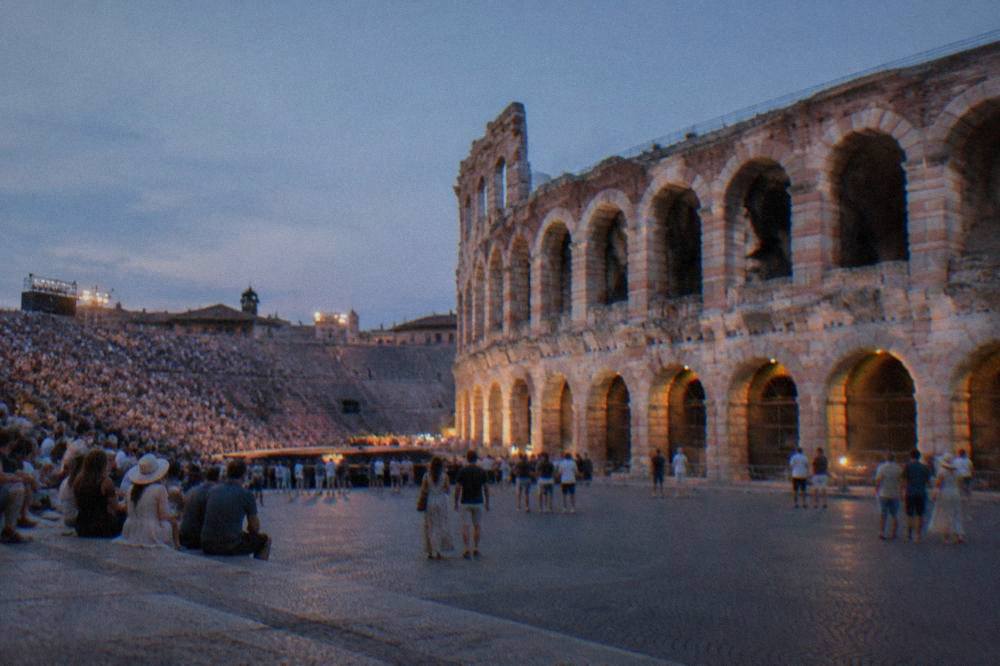
Daytime visitors to the amphitheatre face a different calculation. A daytime Arena visit costs 12 euro full and 9 euro reduced, per the Comune di Verona's price list, and that is a morning of unshaded stone and stairs in summer, so the hat and bottle from the summer section apply in full.
Do You Need Special Shoes For Verona?
Yes to grip and support, no to specialisation: flat shoes with rubber soles and real cushioning are the single most useful clothing item in Verona, because the historic centre is laid over cobbles, polished marble thresholds and riverbank gravel. Nothing in the city requires hiking boots, but thin-soled sandals and slick leather soles turn an ordinary sightseeing day into a hard one on the feet.
The UNESCO-inscribed centre (the City of Verona was listed in 2000) runs from Piazza Bra through Via Mazzini to Piazza delle Erbe and across Ponte Pietra to the Teatro Romano hillside, and the surfaces change every few hundred metres. Cobbles are the default, marble becomes treacherous when wet, and the Adige-side paths to Castel San Pietro add gravel inclines. Broken-in shoes beat new ones on every one of those surfaces.
The same logic applies to seasons. In November, the wettest month at 118 mm, wet cobbles demand soles with tread. In July, the heat makes leather-lined shoes preferable to synthetics. Winter brings its own note: January lows average -0.4 C, so the freezing morning pavement after rain is a real slip risk, and the Verona Italy Travel Guide packing rule for winter is a waterproof sole plus an actual insulated coat, not a fashion wool number.
What To Wear For Day Trips From Verona?
Dress for the destination, not the city: swimwear and a towel plus sun protection for the Lake Garda towns, sturdy shoes and a layer for the Valpolicella hills, and the same city kit for train trips to Venice, Padua or Vicenza. Lake Garda is a day trip from Verona, not a neighbourhood of it: Sirmione is about 40 minutes by road from the Arena, Bardolino about 37, Garda about 42 and Malcesine about 84, computed over standard routing.
The lake changes the wardrobe twice over. First, there is the water: ferries, beaches and the Sirmione boat circuit invite sandals and quick-dry clothing. Second, there is the Monte Baldo cable car from Malcesine, where a round-trip adult ticket is 30 euro, or 28 euro bought online per the operator's own fare page, and the summit ridge is markedly cooler than the shore, so a windproof layer belongs in the day bag even in July.
The wine hills are the opposite case. Valpolicella lies about 25 minutes from the Arena by road, visits involve standing in cellars and walking vineyard tracks, and temperatures shift between cool vaults and warm slopes, which points to closed shoes and a light jacket. For the choice between basing yourself in the city or by the water, Is It Better To Stay In Verona Or Lake Garda? works through the trade-offs.
Winter day trips follow winter city rules, with one addition: January mean highs of 7.3 C and lows of -0.4 C mean the ferry lake and the vineyards both feel raw, so hats and gloves stop being optional. How long to give the city itself is a separate question, answered in How Many Days In Verona Is Enough?.
Common Questions About What To Wear In Verona
What To Wear In Verona?
Layers and comfortable, grippy walking shoes in every season, a warm insulated coat from November to March, and light breathable clothing with a hat and sunscreen from June to August. The ERA5 reanalysis, 1991-2020, gives January lows of -0.4 C and July mean highs of 29.3 C, so the wardrobe follows the season closely.
Is there a dress code for the Arena opera in Verona?
No strict dress code was found on the Arena's official pages. Smart attire is described as preferred in the stalls, stone-step sectors are casual in practice, and small backpacks, a cushion and an umbrella are permitted subject to security checks. Bring a layer for the late evening and a cushion for the gradinata.
Do I need to cover up for churches in Verona?
Yes, as at Italian churches generally: shoulders covered and no very short shorts or skirts for the Duomo complex, Sant'Anastasia, San Zeno and others. A light scarf or a shirt with sleeves covers it. Check opening details locally before a visit.
What shoes are best for Verona?
Flat shoes with rubber soles and real cushioning. The centre is cobbles and polished stone, wet in the rainiest months of May, October and November, so grip matters; nothing in the city needs hiking boots.
Does it rain enough in Verona to pack rain gear?
Yes in autumn and spring. November averages 118 mm of rain, May 110 mm and October 107 mm per the ERA5 reanalysis, 1991-2020, so a compact umbrella and a packable rain jacket are worth their space in those months.
How cold does a Verona winter get for clothing purposes?
The January mean is 3.1 C, with mean highs of 7.3 C and mean lows of -0.4 C per the ERA5 reanalysis, 1991-2020. That is damp cold in an outdoor-oriented city, so an insulated waterproof coat, hat and gloves are the right call.