Is Verona Cheap Or Expensive?
An honest cost breakdown of Verona: sight tickets, transport, the tourist tax, wine trips and day tours, with every figure taken from official sources.
Verona, the inland Veneto city on the Adige river, is neither a bargain basement nor a rip-off: it is a mid-priced Italian city break whose real costs concentrate in a handful of ticketed sights, a modest urban transport network and the wine hills to the north. The city itself is compact and walkable, its two main squares and its Roman bridge cost nothing to see, and the big single expenses, the Arena and the Casa di Giulietta, have clearly published prices. What catches people out in 2026 are the changes: Juliet's courtyard stopped being free on 1 April 2026, and the VeronaCard went digital on 1 September 2026 with new prices.
Is Verona Cheap Or Expensive?
Verona lands in the middle of the Italian price range: more expensive than a small provincial town, generally less punishing than Venice at its worst, and cheap in the ways that matter for planning, because the historic centre is free to walk, the bus single is 1.50 euro, and the two headline sights cost 12 euro and 5 euro respectively. The costs that add up are lodging, the per-night tourist tax and any wine or lake excursions. A fuller city-by-city comparison, including the Venice question, is covered in Is Verona Italy Worth Visiting?, and the day-count question affects the bill directly, see How Many Days In Verona Is Enough?.
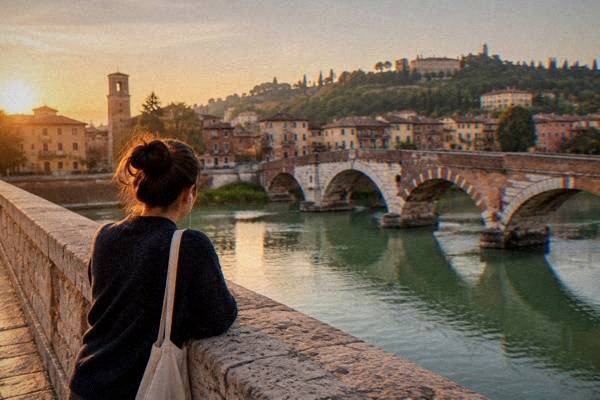
The honest framing is this: Verona is expensive where every Italian art city is expensive, at the table and in the bed, and inexpensive where Verona is unusually generous, in its open public spaces. Piazza Bra, Piazza delle Erbe, Piazza dei Signori, Ponte Pietra and the Roman gate Porta Borsari all have no ticket, and the whole UNESCO-inscribed core, listed in 2000, can be crossed on foot in under half an hour. The question is really how many ticketed interiors you stack on top of that free fabric.
Two structural facts keep the budget honest. First, the city charges an imposta di soggiorno, a tourist tax collected by your accommodation per person per night, capped at four nights per person per month; the rate depends on the category of the place you book, so confirm the exact amount at booking rather than assuming. Second, Verona is a day-trip base for Lake Garda, and the lake is where budgets go to die if you are not careful: the Monte Baldo cable car alone lists a 30 euro adult round trip (28 euro online) for the 2026 season.
What Do The Main Verona Sights Cost?
The five anchor prices are these: the Arena amphitheatre visit is 12 euro full and 9 euro reduced, with visitors aged 18 to 25 paying 3 euro; Juliet's courtyard route is 5 euro and the full house-and-balcony route is 12 euro; the VeronaCard is 33 euro for 24 hours or 38 euro for 48 hours with ATV buses included, or 29 and 32 euro without transport; and the urban bus single is 1.50 euro for 90 minutes. Everything else in the centre, the squares, the bridge, the gate, is free open public space.
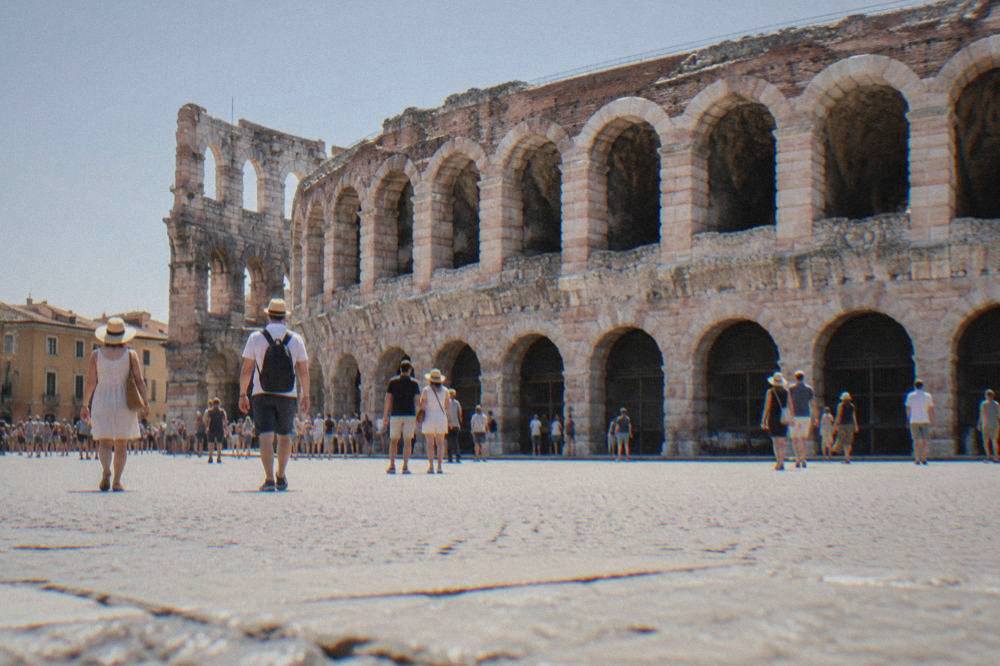
The Arena figures come from the Comune di Verona's own price list, and the reductions are worth reading closely: 9 euro applies to groups of 15 or more, over-65s and other concessions, under-18s enter free, and the first Sunday of the month from November to March costs 1 euro. Reported opening is Tuesday to Sunday with Monday closures and early closing on opera show days, so confirm the day's hours on the Arena's own ticket page before booking. The Juliet figures are the 2026 news: since 1 April 2026 the courtyard itself is a 5 euro ticketed route, entry is via the Teatro Nuovo, and booking is online, so the old habit of wandering in for a photograph is gone. The balcony itself is not original, it was added in 1940, per the city's tourism pages.
| Sight or pass | Price | Notes |
|---|---|---|
| Arena di Verona (day visit) | 12 EUR full / 9 EUR reduced / 3 EUR ages 18-25 | Per the Comune price list; 1 EUR first Sundays Nov-Mar |
| Casa di Giulietta courtyard route | 5 EUR | Since 1 April 2026, online booking, entry via Teatro Nuovo |
| Casa di Giulietta house and balcony | 12 EUR | Includes the courtyard route |
| VeronaCard 24 h / 48 h with transport | 33 / 38 EUR | Digital since 1 Sept 2026, includes ATV urban buses |
| VeronaCard 24 h / 48 h without transport | 29 / 32 EUR | Same entries, no buses |
| Torre dei Lamberti | 6 EUR full, reported | Reported free with VeronaCard; check torredeilamberti.it |
| Urban bus single | 1.50 EUR | 90 minutes, verified on ATV's ticket page |
The VeronaCard arithmetic is not automatic. The Comune's notice states the card covers the Arena, the Castelvecchio, the Torre dei Lamberti, Juliet's House (which still needs an online booking even for card holders) and the civic museums, plus the main churches under the Chiese Vive convention, and it does not include the airport Aerobus. Whether 33 euro beats four separate tickets depends entirely on how many interiors you plan to enter; for a one-day visit built around free squares and one paid sight, it does not pay for itself. The deeper cost picture, including what a whole budget looks like, is laid out in How Expensive Is Verona?.
A guided walk is one of the few ways to buy context cheaply, and the trio below spans the price range from a paid small-group walk to a pay-what-you-want option.
The free option there is the GuruWalk free walking tour of Verona, which genuinely costs nothing to join: you pay what you want at the end, tipping the guide as you see fit. It is not a paid tour dressed up, and the meeting point and current details are on its own listing page, so check those before you set out.
How Much Does Getting Around Verona Cost?
Getting around Verona itself costs very little: the urban bus single is 1.50 euro for 90 minutes, the historic centre is entirely walkable so many visitors never buy a bus ticket at all, and the airport link, the Aerobus line 199, is reported at 7 euro one way for a ride of about 15 minutes. Trains radiate from Porta Nuova to the rest of the north, Venice Mestre in 58 to 75 minutes, Milan in about 1 h 15 to 1 h 50, and Rome in 3 to 3 h 30, all reported times to confirm when booking.
The airport figure is reported by ATV, the local operator, and includes luggage with the ticket valid for 75 minutes on urban buses; check the current fare on ATV's own site before flying. Inside the city, the walkability is the real economy: the answer to Is Verona Walkable? is yes, end to end, and that removes the daily transport line from the budget entirely. Taxis exist but no fixed fare from the airport has been published, so ask for a quote rather than expecting one.
One cost that does bite drivers is the ZTL, the camera-policed limited-traffic zone over the historic centre. Non-residents are limited to at most four entries a month, booked in advance in set time windows, and the fines are camera-enforced; hotel guests get free entry only if the hotel registers the plate, which works for hotels but not for short-term rentals. The budget advice is blunt: park outside the zone and walk, or skip the car altogether.
If a sightseeing day needs a decision moment, this is it, and the box below covers the walking option with a cancellation safeguard.
Is Food And Wine In Verona Expensive?
Eating and drinking in Verona follows ordinary Italian city pricing rather than resort pricing, and the published costs sit in the wine excursions rather than the restaurants: no meal or hotel price appears in the official sources, so treat any euro figure a guide quotes you for dinner as folklore, while the wine hills, Valpolicella and Soave, are the region where money is genuinely spent. The tourist tax, up to four nights per person per month, is the one food-and-lodging-adjacent cost that is confirmed, and it is collected by the accommodation.
What can be said with sources is the shape of the local table: pastissada de caval, risotto all'Amarone, bollito with pearà sauce and gnocchi are the traditional Veronese dishes, and pandoro, the star-shaped Christmas bread, originates in Verona. Where a coffee or a pizza actually costs is not something official sources publish, so check the posted prices at the bar or the menu before sitting down, and expect the coperto, a cover charge, to appear on restaurant bills as a separate line in much of Italy. No restaurant names, Michelin listings or price ranges can responsibly be given.
Wine is the differentiator. Valpolicella, the Amarone zone, starts about 25 minutes' drive from the Arena, and Soave is 33 minutes; a tasting visit is the single excursion where the cost is real and the return, in what you learn about the appassimento drying process behind Amarone, is equally real. Rather than quoting nightly rates or tasting prices that no official source confirms, the practical route is a guided wine experience, where the price on the listing is the price you pay with transport handled.
| Cost item | Figure | Where it comes from |
|---|---|---|
| Tourist tax | Collected per person per night, max 4 nights per person per month | Comune di Verona, Ufficio Imposta di Soggiorno |
| Valpolicella drive from the Arena | About 25 minutes | Computed routing, free-flow |
| Soave drive from the Arena | About 33 minutes | Computed routing, free-flow |
| Sirmione drive from the Arena | About 40 minutes | Computed routing, free-flow |
| Gardaland day trip drive | Via Peschiera, about 30 minutes to Peschiera | Computed routing, free-flow |
Is Verona Expensive Compared With Venice And The Other Cities Around It?
No official comparison exists, and the honest answer is that Verona's costs are structurally different rather than uniformly lower: it has no lake to cross or access fee drama of its own, its headline sights are fixed published prices (12 euro, 5 euro, 33 euro for the card), and its position on the Milan-Venice rail axis means the surrounding cities, Vicenza 48 minutes away, Padua 67, Venice 85 by car, are cheap to bolt on. What Verona does not have is a low-cost reputation: the Which Is Nicer, Venice Or Verona? comparison is about character, but cost-wise the Venice day trip by train, 58 to 75 minutes each way, is the classic add-on.
The comparison trap is location. People who book Verona expecting a Lake Garda holiday discover the lake is a separate, paid ecosystem: Sirmione's Grotte di Catullo lists 10 euro full, the Scaliger Castle 10 euro, the Navigazione Laghi full-lake day pass is 39.50 euro for an adult in 2026, and the Monte Baldo cable car is the 30 euro round trip already mentioned. The lake's north-south passenger ferry service is reported suspended from 2 November 2026 to 12 March 2027, which matters if a cheap-weather plan assumed a boat. Verona proper, by contrast, is the free-walking city: squares, bridges, riverbanks and the whole UNESCO-listed fabric cost nothing but shoe leather.
The full decision between basing in the city or on the lake, with the cost logic spelled out, is in Is It Better To Stay In Verona Or Lake Garda?. The short version for this page: a Verona base with lake day trips keeps the expensive nights in the cheaper city and buys the lake à la carte.
For the active day-trip budget, the self-guided e-bike option below bundles a lake ride and lunch at a single listed price, which is the cleanest way to cap a Garda spend.
Where The Verona Budget Actually Goes
The Verona budget breaks into three layers: a near-zero base layer (walking the centre, the free squares, Ponte Pietra, a 1.50 euro bus if needed), a fixed sight layer of roughly 5 to 12 euro per interior with the 33 to 38 euro VeronaCard as the ceiling, and an open-ended excursion layer of wine tastings and lake trips that no source caps for you. The tax and lodging sit underneath all three, with the four-night cap the only confirmed figure.
Two habits keep it cheap without cheapening the trip. Enter one or two interiors that genuinely matter to you, the Arena by day for the architecture or Juliet's House for the legend, and take the rest of the city as the free open-air museum it is, a logic expanded in What Is Verona Italy Famous For?. Then put the savings into one paid experience that needs a guide to work, a Valpolicella tasting or a lake ride, where the listing price is transparent before you commit.
The final trio of picks spans that spectrum: a paid small-group walk, a self-guided lake e-bike day, and the GuruWalk free tour where you pay what you want at the end.
Whatever the mix, the numbers that are actually confirmed are friendly: 12 euro for the Arena, 5 euro for the courtyard, 1.50 euro for the bus, and a tax that stops after four nights. That is the arithmetic of a mid-priced city, and this Verona Italy Travel Guide keeps every figure on it tied to the official source that published it.
Common Questions About The Cost Of Verona
Is Verona Cheap Or Expensive?
Verona is mid-priced for an Italian art city: the historic centre is free to walk, the bus single is 1.50 euro, the Arena costs 12 euro to visit by day and Juliet's courtyard 5 euro since April 2026, while lodging, the tourist tax and wine or lake excursions are where the budget grows.
Is Juliet's courtyard still free?
No. Since 1 April 2026 the courtyard route costs 5 euro and the full house-and-balcony route 12 euro, with online booking and entry via the Teatro Nuovo, per the official Casa di Giulietta notice.
Is the VeronaCard worth it?
It depends on how many interiors you plan to enter. The digital card costs 33 euro (24 h) or 38 euro (48 h) with ATV buses, 29 and 32 euro without, and covers the civic museums and main churches, but not the airport Aerobus, and Juliet's House still needs a separate online booking.
How much is the tourist tax in Verona?
The tax is charged per person per night for a maximum of four nights per person per month and is collected by the accommodation; the rate varies by accommodation category, so confirm the exact amount when booking.
Is a day trip to Lake Garda expensive from Verona?
It can be: the drive to Sirmione is about 40 minutes, but entry to the Grotte di Catullo or Scaliger Castle lists at 10 euro each, the full-lake ferry day pass is 39.50 euro in 2026 and the Monte Baldo cable car round trip is 30 euro, so a lake day adds up quickly.