Is Verona Known As The City Of Love?
Yes, Verona in Veneto, northern Italy is known as the city of love, and the nickname comes straight from the Romeo and Juliet legend. Here is what that means on the ground today.
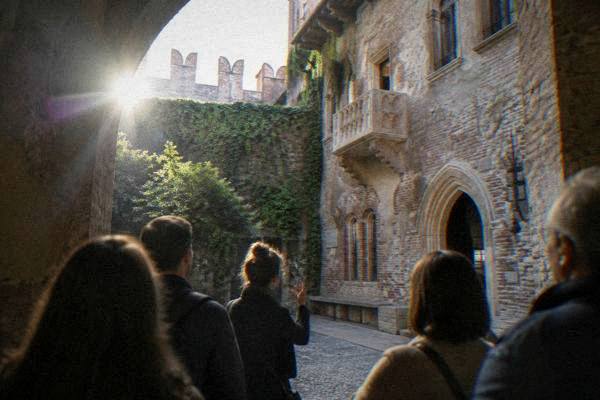
Verona, a city in Veneto, northern Italy, built inland on the Adige river and inscribed on the UNESCO World Heritage List in 2000, is known as the city of love. The nickname is not a modern marketing invention: the Comune di Verona's own tourism pages explain it by pointing to the Romeo and Juliet legend, which has been attached to the city since the story was first written down in 1531. Shakespeare never visited, but his play fixed Verona in the world's imagination as the place where the world's most famous lovers lived and died, and the city has kept the association ever since.
Is Verona Known As The City Of Love?
Yes, Verona is widely known as the city of love, and the label is official rather than folkloric: the Comune di Verona's tourism pages attribute it directly to the Romeo and Juliet legend, which the city has embraced through Juliet's House, the bronze statue in her courtyard, the Verona in Love festival each February and centuries of literary tradition. The nickname sits alongside Verona's UNESCO World Heritage inscription of 2000, one mythic and one administrative, and both draw visitors to the same rose-pink city on the Adige.
The nickname does the heavy lifting in how Verona sells itself. It is not that Verona lacks other attractions, because the Arena, the Roman bridge at Ponte Pietra and the Valpolicella wine hills a short drive north would justify a trip on their own. It is that love is the thread the city pulls first. Verona in Love, the Valentine's season festival, ran 13 to 15 February in its latest edition, per the Comune di Verona's events page, and the city's marketing leans on the legend year round.
There is a practical consequence for travellers. The romantic branding concentrates crowds at a handful of places, above all the Casa di Giulietta, and since 1 April 2026 that concentration has a price on it. The free-courtyard era is over: the courtyard route now costs 5 euro and the full house and balcony route 12 euro, booked online, with access via the Teatro Nuovo, as the official VisitVerona notice states. If you want a fuller picture of what the city of love actually offers, the things to do in Verona overview runs well past Juliet's door.
Where Does The City Of Love Nickname Come From?
The nickname comes from the Romeo and Juliet legend and from one writer's choice in particular: Luigi da Porto, who wrote the story down in 1531 and set it in Verona, citing the city's real medieval feuding families. Matteo Bandello retold it in 1554, Arthur Brooke turned it into a poem in 1562, and Shakespeare based his play on Brooke. Shakespeare never set foot in Verona, but his play made the city's name inseparable from the lovers, and Verona has been known as the city of love ever since.
The chain of sources matters because it explains why Verona and not, say, some other Italian town. The legend is older than Shakespeare and older than print. Da Porto, a Venetian aristocrat, placed the tale in Verona deliberately, drawing on Dante's earlier reference to the Montecchi and Cappelletti factions, two real Veronese families whose feud gave the story its local anchor. Bandello and Brooke carried the plot forward, and Shakespeare, working from Brooke's poem, kept the setting without ever having seen it.
| Source | Year | Role in the legend |
|---|---|---|
| Luigi da Porto | 1531 | First written version, chose Verona as the setting |
| Matteo Bandello | 1554 | Retold and spread the story in Italian |
| Arthur Brooke | 1562 | Poem that became Shakespeare's direct source |
| William Shakespeare | 1562 onwards | Play that made the pairing globally famous |
None of the sites associated with Juliet in Verona is a documented historical home of a documented historical girl. That does not stop the nickname, because the legend never needed documentation to work. What the city offers instead is a layered set of places, a medieval house with a famous balcony, a tomb, a statue, where the story has been physically staged, and the staging itself is now centuries old in parts. The question of how much of it is real is covered in is Juliet's balcony real in Verona, and the short answer is that the balcony was added in 1940, according to the city's own tourism material.
A guided walk is an efficient way to see how the legend maps onto the streets, and the site's featured tour for this topic is the City of Love walk, a small-group guided walking tour that covers the main squares and the Juliet landmarks. Check availability if that framing suits your trip.
How Does Verona Show Its Romantic Side Today?
Verona shows its romantic side through a working set of places and events rather than through slogans: the ticketed Casa di Giulietta with its 1940 balcony and Costantini bronze, the Verona in Love festival each February, love notes left at the house, the opera season in the first-century Arena from June to September, and a centre small enough that the whole romantic circuit is walkable. Every one of those is bookable, timed or ticketed in 2026, so the romance now runs on planning as much as passion.
The Casa di Giulietta is the anchor, and since 1 April 2026 it operates on new rules: the courtyard route costs 5 euro, the full house and balcony route 12 euro, entry is via the Teatro Nuovo and booking is online, per the official VisitVerona notice. Reported opening hours are Monday 14:00 to 19:00 and Tuesday to Sunday 9:00 to 19:00, and holders of the VeronaCard, which went fully digital on 1 September 2026, still need to book, per the Comune's card notice. The bronze Juliet in the courtyard is by Nereo Costantini, placed there in 1972 and replaced by a copy in 2014, and touching its right breast for luck is the custom the city itself describes, covered in more detail in why people touch Juliet's statue.
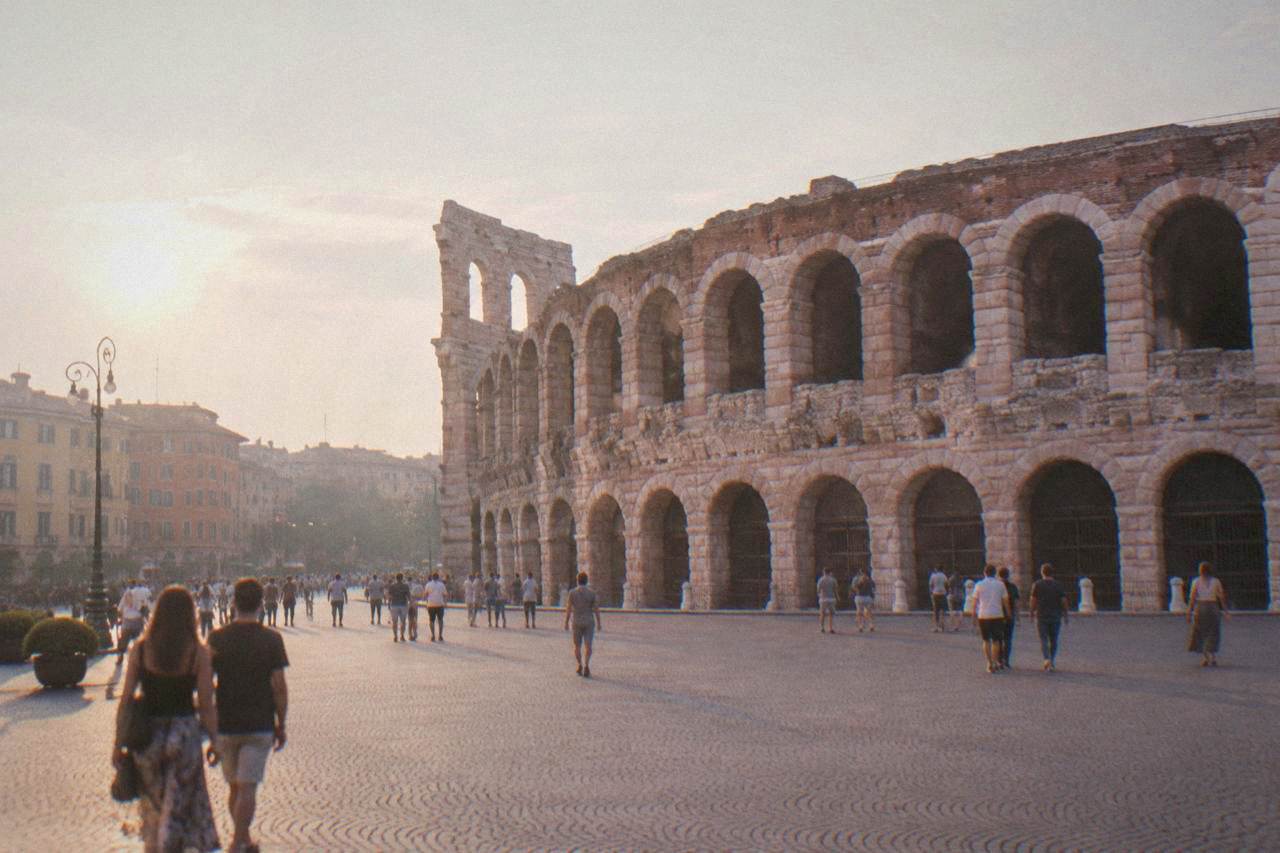
Beyond Juliet, the romantic register shifts to the Arena. An opera night under the open sky in a Roman amphitheatre is the other half of Verona's romantic identity, and the 2026 season ran 5 June to 12 September with the 2027 season announced for 11 June to 11 September. A daytime visit costs 12 euro full price, per the Comune di Verona's price list, so the amphitheatre does double duty, love story by night and monument by day. Whether the night version justifies the cost is tackled in is the opera in Verona worth it.
Which Places In Verona Carry The City Of Love Label?
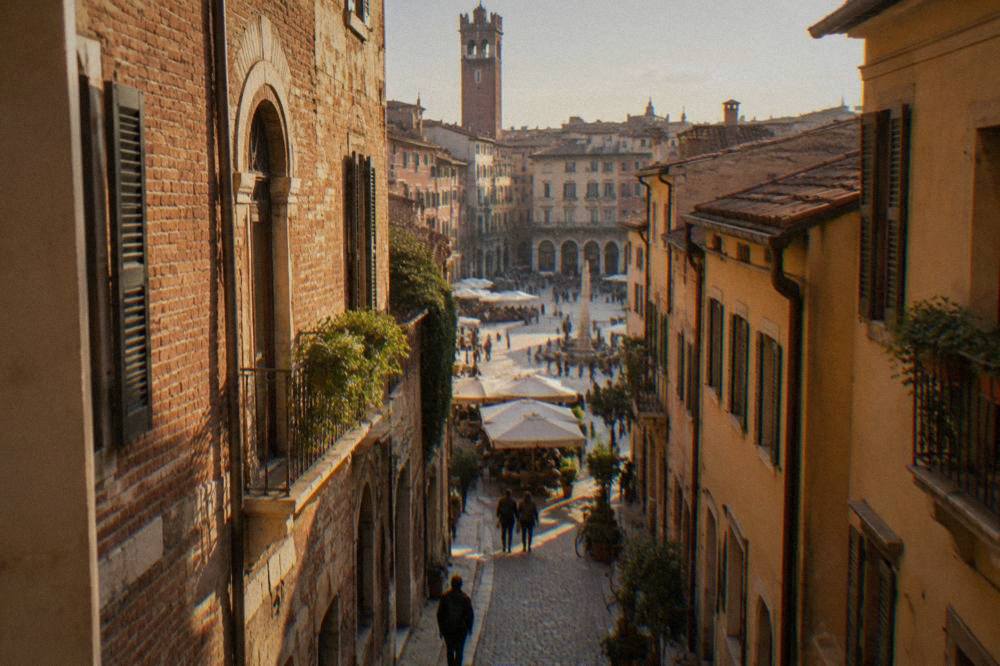
Four places carry the label in practice: the Casa di Giulietta on Via Cappello, Juliet's Tomb on the riverside, the Arena in Piazza Bra as the stage for opera nights, and the interleaving of Piazza delle Erbe and Piazza dei Signori, which the Verona in Love festival uses as its February backdrop. Each is inside the historic centre except the tomb, and none of the four requires a car, because Verona is compact and walkable end to end.
The distribution matters when planning a day. The house draws the crowds, the tomb is quieter, the Arena sells by night, and the squares carry the festivals and the everyday theatre of Veronese life. The table below is what the label physically consists of. The full index of guides sits on Verona Italy Travel Guide.
| Place | Romantic association | Access in 2026 |
|---|---|---|
| Casa di Giulietta | The balcony, the statue, the letters | Courtyard 5 euro, house 12 euro, online booking |
| Juliet's Tomb | The empty sarcophagus linked to the legend | Hours and fee not published: confirm locally |
| Arena di Verona | Opera nights, June to September | Day visit 12 euro full, per the Comune price list |
| Piazza delle Erbe and Piazza dei Signori | Verona in Love festival, February | Open public squares |
The tomb deserves one honest note: its hours and admission figure should be confirmed on site before going. The squares, by contrast, cost nothing and need no schedule, and Piazza delle Erbe in the morning is as close as Verona gets to an unscripted scene.
Does The City Of Love Label Survive A Real Visit?
The label survives a real visit, but it behaves differently once you are standing in it: the romantic core of Verona is ticketed, timed and busy at Juliet's House, while the parts that feel romantic for free are the ones the label does not sell, the Adige bends, the Ponte Pietra and the plain evening ritual of the squares. July, with mean highs of 29.3 C in the ERA5 1991-2020 reanalysis, is a hot, busy city of love, so the shoulder months deliver the mood more comfortably.
The gap between marketing and pavement is not unique to Verona, but Verona handles it unusually well because the underlying city is genuinely strong. The UNESCO inscription of 2000 covers the whole historic centre, not just the Juliet sites, and the Roman, medieval and Scaliger layers give the romance a setting that would stand without the play. For anyone weighing the trip itself, is Verona worth visiting works through the case, and how many days in Verona is enough covers the practical sizing of a stay.
Couples with specific plans have options that lean into the theme. A prosecco-and-opera evening in a Verona palace extends the Arena idea into the colder months, and a self-guided e-bike route into the Valpolicella hills, about a 25-minute drive from the Arena by road, turns the city of love into the region of wine. Both are among the trio below.
Is Verona The City Of Love Or Just A City With A Love Story?
Verona is both, and the two identities are now fused: the city of love label began as a literary accident of setting, da Porto's 1531 choice of Verona, but five centuries of retelling, staging and tourism have made the romance a physical fact of the city, from a ticketed courtyard to a February festival. The honest reading is that Verona did not earn the nickname by being objectively more romantic than its neighbours, it earned it by being written into the world's most famous love story and never letting go.
That is not a cynical conclusion. A city that maintains a Juliet museum, stages opera in a Roman amphitheatre and fills its squares for a Valentine's festival is doing real cultural work with its legend, and the visitor experience is better for it. The VeronaCard, digital since 1 September 2026 at 33 euro for 24 hours with transport included, bundles several of the civic sights, though the Comune's notice is clear that it does not remove the need to book Juliet's House separately.
The final word on scale: Lake Garda, whose towns are 22 to 39 km west, is a day trip from Verona and not part of the city, as explained in how far is Verona from Lake Garda. The city of love is the inland city on the Adige, and it keeps its nickname the way it keeps its Arena, by staying open.
Common Questions About Verona As The City Of Love
Is Verona Known As The City Of Love?
Yes. The Comune di Verona's own tourism material attributes the nickname to the Romeo and Juliet legend, which has been set in the city since Luigi da Porto's 1531 version of the story.
Why is Verona called the city of love and not another Italian city?
Because Luigi da Porto chose Verona as the setting in 1531, drawing on the city's real feuding families, and every later version, including Shakespeare's play, kept the setting. Shakespeare himself never visited Verona.
Is Juliet's House free to visit in Verona?
No. Since 1 April 2026 the courtyard route costs 5 euro and the full house and balcony route 12 euro, with online booking and access via the Teatro Nuovo, per the official VisitVerona notice.
Is Juliet's balcony in Verona real?
The balcony is not original to any real Juliet: the city's tourism material reports it was added to the medieval house in 1940, using material from an old sarcophagus.
When is the most romantic time of year in Verona?
February, when the Verona in Love festival runs around Valentine's Day, ran 13 to 15 February in its latest edition, and June, when the Arena opera season opens. The ERA5 1991-2020 reanalysis puts July mean highs at 29.3 C, so late spring and early autumn carry the mood more comfortably.
How many days does the city of love need?
Two days covers the romantic core, Juliet's House, the Arena, the squares and the river, with room for one evening of opera or a Valpolicella wine trip, as set out in the site's guide to how many days in Verona is enough.