What Movie Was Filmed In Verona?
What movie was filmed in Verona? An honest look at the Romeo and Juliet screen legend, the city's documented literary history, and the real places that carry the story.
Verona, the inland city on the Adige in Veneto, is wrapped so tightly in the Romeo and Juliet legend that film crews and film fans arrive expecting a shooting location around every corner of Piazza Bra. The reality recorded by the city's own institutions is more interesting: what Verona can document is not a production list but a chain of literature, five hundred years long, that made the city a byword for romance long before anyone pointed a camera at the Arena. This page walks through what the sources actually say, where the screen association comes from, and how to spend a day in the places that carry the story, in a city that is a UNESCO World Heritage Site, inscribed in 2000.
What Movie Was Filmed In Verona?
No list of films shot in Verona appears in the city's own published sources, so this site names no title as a Verona production. What is documented instead is the reason the question exists at all: the Romeo and Juliet legend, first written down by Luigi da Porto in 1531 and set in Verona by his choice, later carried into Arthur Brooke's 1562 poem and from there into Shakespeare's play. Every screen version of that story, whatever its shooting location, keeps the city's name in its title or its setting, and that is the thread the tourist office itself promotes. The city's official tourism pages describe the balcony, the bronze statue and the legend's hold on visitors, not a filmography. Anyone hoping to pin a specific production to a specific piazza should ask at the tourist office or check the credits of the adaptation in question, because the documented record here is literary, and it is rich enough to be worth the trip on its own.
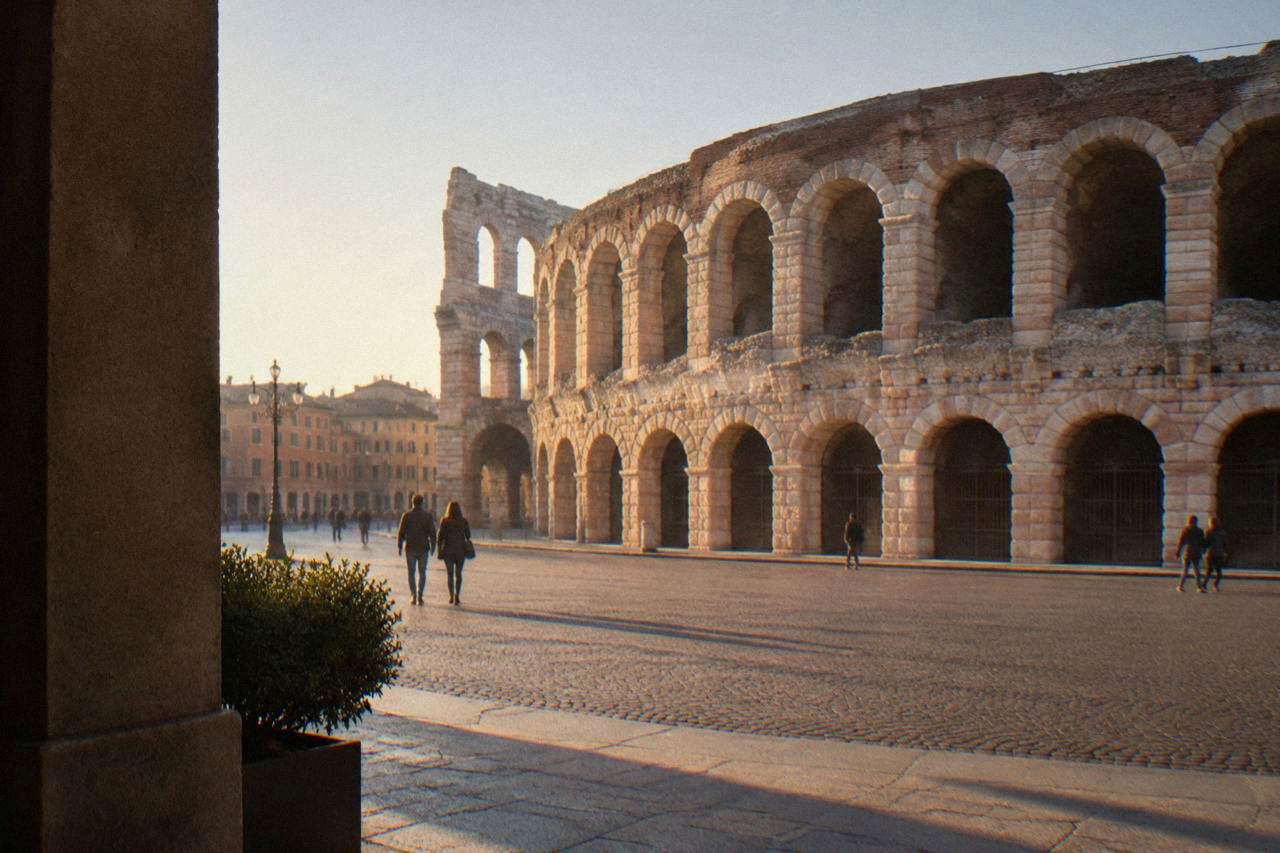
The distinction matters more than it might seem. A traveller who comes looking for a movie set often leaves having found something better: a real first-century Roman amphitheatre, reported by the Arena's own site as built around 30 AD and seating an effective 30,000 for opera today, plus a medieval core the UN recognised in 2000. The films borrowed the city's name. The city was here first, and its history stands on its own.
That said, the screen association is not empty. Adaptations of Romeo and Juliet have kept Verona in the global imagination for a century of cinema, and the pilgrimages they fuel are real enough to have changed how the city manages its most famous courtyard, which since 1 April 2026 requires a paid, pre-booked ticket. The story below explains how that happened, and the sections after it turn the question into a practical day out.
How A Sixteenth-Century Novella Made Verona A Screen Legend
The legend reached the screen through three writers, none of whom needed a film set: Luigi da Porto wrote the story down in 1531 and chose Verona as its home, Matteo Bandello retold it in 1554, and Arthur Brooke turned it into a poem in 1562 that Shakespeare used as his primary source. Reported by the tourism and local-history sources this site relies on, Shakespeare himself never visited Verona, and da Porto's choice of the city drew on Dante's reference to the Montecchi and Cappelletti factions rather than on any real pair of doomed lovers. The playwright followed his sources, and the city inherited the myth.
| Year | Step in the legend | What the sources report |
|---|---|---|
| 1531 | Luigi da Porto writes the story | First written version, set in Verona by the author's choice |
| 1554 | Matteo Bandello retells it | The tale circulates widely in Italy |
| 1562 | Arthur Brooke's poem | The English version Shakespeare used as a source |
| 1940 | The balcony is installed | Added from an old sarcophagus; not original to any house |
| 1969 | Nereo Costantini's bronze Juliet | Placed in the courtyard in 1972; a copy stands there today |
| 2000 | UNESCO inscription | The City of Verona joins the World Heritage List |
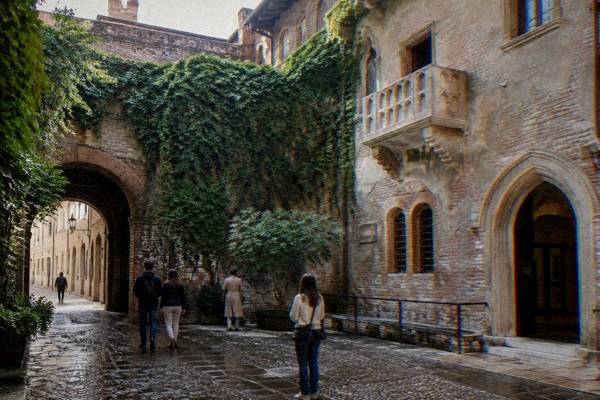
The balcony deserves its own sentence, because it is where the movie question usually starts. The turismo.comune.verona.it record reports that the famous balcony was added to the medieval house in 1940, assembled from a carved sarcophagus, and that the bronze statue by Nereo Costantini dates from 1969 and was placed in the courtyard in 1972, replaced in 2014 by a copy while the original is kept inside. In other words, the physical shrine that adaptations and postcards made famous is itself a set, built for the legend rather than discovered by it. If the question "what movie was filmed in Verona?" has an honest twist, it is that Verona's most filmed-looking spot was staged for a story, not the other way round. The Is Juliet's balcony real? question gets the full treatment elsewhere on this site.
Writers have kept the myth warm ever since, and the city leaned into it: the official record names the right breast of the statue as the touch-point for good fortune, a custom the bronze's own worn surface testifies to, and Verona is described on the city's pages as the city of love because of exactly this association. For a fuller argument on whether the city earns that billing beyond one courtyard, see is Verona known as the city of love.
For visitors who want the story told aloud in the streets where it is set, two guided options stand out. The Dark Historical Verona Walking Tour walks the darker chapters of the city's past, and the Juliet's House fast-track ticket with audio guide covers the shrine itself with the queue handled in advance.
Where The Story Lives On The Ground In Verona
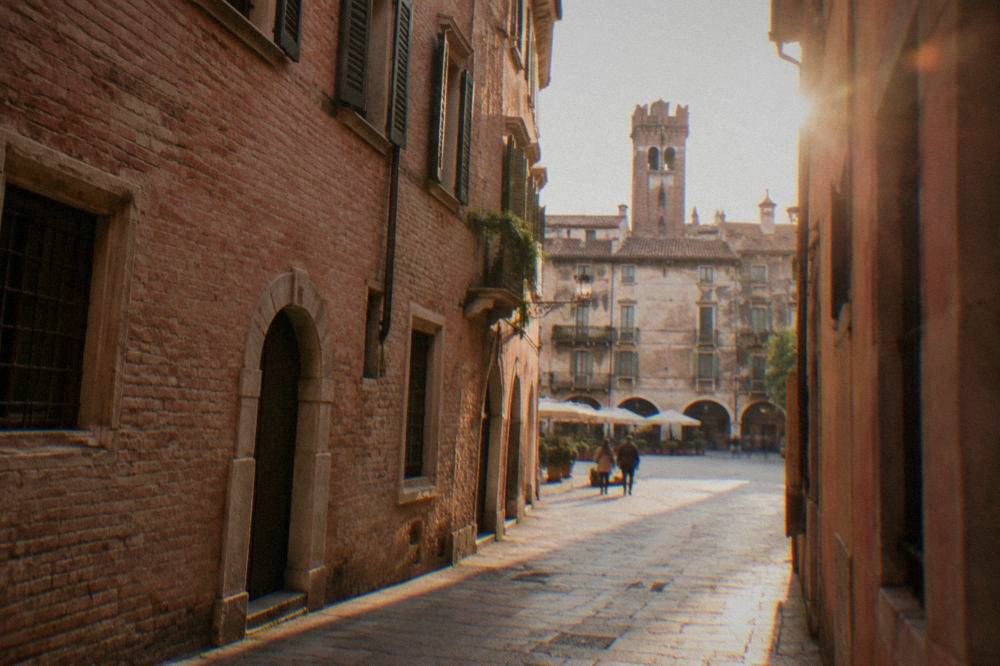
The legend's landmarks sit inside a walkable rectangle a few hundred metres across: Casa di Giulietta on Via Cappello, Piazza delle Erbe and Piazza dei Signori a short walk west, and the Arena closing the loop at Piazza Bra, with the whole historic centre a UNESCO-listed core since 2000. Since 1 April 2026 the courtyard itself is ticketed, per the VisitVerona notice: 5 euro for the courtyard route and 12 euro for the full house and balcony route, booked online, with entry via the Teatro Nuovo. Reported hours are Monday 14:00 to 19:00 and Tuesday to Sunday 9:00 to 19:00, and holders of the VeronaCard still need to book a slot online.
| Place | Connection to the legend | What a visit involves |
|---|---|---|
| Casa di Giulietta | The balcony, added in 1940, and the bronze Juliet | 5 euro courtyard, 12 euro house route, online booking, via Teatro Nuovo |
| Piazza delle Erbe | The market square of the medieval city the story inhabits | Open access, free |
| Piazza dei Signori | The rulers' square of the Della Scala era behind the factions | Open access, free |
| Arena di Verona | The first-century backdrop every visitor photographs | 12 euro full daytime ticket, 9 reduced, closed Mondays |
| Ponte Pietra | The Roman bridge over the Adige, open access | Free |
The Arena deserves its line in a film-flavoured article, because it is the single most cinematic object in the city without needing a crew. The Arena's own site reports an origin around 30 AD, an outer ring destroyed by the 1117 earthquake, and an effective opera seating of 30,000. By day it is a visited monument, at full price 12 euro with reductions to 9 euro, and on summer nights it becomes the stage of the Opera Festival, which ran 5 June to 12 September in 2026 and is announced for 11 June to 11 September in 2027. Stone-step seats start in the 30-euro range, per the Arena's own rates pages, and the exact tables live on arena.it, so check the current price on the Arena's own ticket page before booking. Whether an opera night justifies the ticket is weighed in is the opera in Verona worth it.
Can You Visit Verona's Screen Landmarks On Foot?
Yes, and comfortably: the legend's whole circuit fits inside the historic centre, which this site's walkability analysis covers in detail, and every landmark in the table above sits within a few minutes' walk of the others, on flat ground between Piazza Bra and Via Cappello. Verona is an inland city on the Adige, compact and walkable, with Lake Garda and its towns, Sirmione, Bardolino and Malcesine, an hour or less away as day trips rather than part of the city itself. A film-minded visitor can cover the courtyard, both squares, the Arena's exterior and Ponte Pietra between lunch and dinner without hurrying.
The practical details of the courtyard trip changed more in 2026 than in the previous decade, so it bears repeating in full. Book online, arrive at the Teatro Nuovo entrance in Piazzetta Navona, and expect the courtyard route and the house route to be separate products at separate prices. The statue's right breast is the documented luck custom, though the 2014 copy now bears the polish. From the courtyard, Piazza delle Erbe is a short walk north, and the Arche Scaligere, the stone tombs of the ruling family whose feuds shadow the play, stand a few steps further beside Santa Maria Antica. The full question of how many days in Verona is enough depends on whether the Garda day trip makes the itinerary, but the legend circuit alone is a single afternoon.
For an evening that matches the mood of the story rather than its credits, the moonlit walking tour and the pagus Amarone half-day in the Valpolicella hills, the wine country 25 minutes' drive north of the Arena, both put the romance in the glass. The Valpolicella route is covered at length in this site's Valpolicella guide.
Why The Honest Answer Is Better Than A Filmography
The strongest reason to visit Verona as a film fan is not a credit list but the discovery that the city out-romances its adaptations: a documented 1531 novella, a staged 1940 balcony, a bronze Juliet polished by five decades of pilgrims, and an opera stage the Romans would recognise, all inside a UNESCO core inscribed in 2000. The films, whatever and wherever they were, keep the name alive; the sources this site reports from keep the history straight. Between the two, the history makes the better itinerary, and it is the one the city's own institutions stand behind.
The contrast with the legend's handling is sharpest at the courtyard gate, where a five-euro ticket now mediates the myth. That price, and the twelve-euro house route, are the costs of a story so successfully sold that the city had to manage it. The playwright who never saw the place would recognise the irony: the fiction became the industry, and the industry became the monument. What Shakespeare actually knew of Verona, and why he set the play there, is traced in why did Shakespeare choose Verona for Romeo and Juliet, and his non-visit is confirmed in did Shakespeare ever visit Verona.
A final planning note: the story's stages are busiest in the opera-summer months, when the Arena's season draws the city's biggest crowds, and the shoulder months, April to June and September to October, offer milder walking weather for the same circuit, per the ERA5 reanalysis 1991-2020, which puts July's mean daily high at 29.3 C against April's 17.8 C. Whenever the trip lands, the courtyard ticket, the Arena ticket and the opera seat are the three things to book ahead; the rest of the legend is standing in the open air, free, as it has been since da Porto imagined it there.
The Dark Historical Verona Walking Tour, this site's related pick for the theme, covers the city's darker record with a local guide and can be held alongside the courtyard and Arena visits in a single day; Check availability on the operator's live listing, and read more from Verona Italy Travel Guide before you commit the itinerary.
Common Questions About Movies Filmed In Verona
What Movie Was Filmed In Verona?
No list of films shot in Verona appears in the city's own sources, so this site names no title. The screen association rests on Romeo and Juliet adaptations that kept the city's name, while the documented record is literary: da Porto (1531), Bandello (1554), Brooke (1562) and Shakespeare's play.
Is Juliet's balcony real?
Reported by the city's tourism record, the balcony was added in 1940, assembled from an old sarcophagus, and is not original to the house. The house is real and medieval; the balcony is a stage set built for the legend.
How much does Juliet's House cost in 2026?
Since 1 April 2026 the courtyard route costs 5 euro and the full house and balcony route 12 euro, booked online, with access via the Teatro Nuovo. VeronaCard holders still need to book a slot online.
Did Shakespeare ever visit Verona?
No, per the local-history record this site reports from. He drew the story from written sources, chiefly Arthur Brooke's 1562 poem, which itself traces back to Luigi da Porto's 1531 novella that chose Verona as the setting.
Where else can I follow the legend in Verona?
Piazza delle Erbe, Piazza dei Signori, the Arche Scaligere beside Santa Maria Antica and Juliet's Tomb on the far side of the Adige all belong to the story's world, and the first three are free to walk through at any time.
Before you go, the pick for this guide:
Juliet's House Fast-Track Audio
★ 4.1 1,660 reviews · From $16
Check availability →