Which City Is Better To Visit, Milan Or Verona?
A side-by-side answer to which city is better to visit, Milan or Verona, using Verona's sight, transport and day-trip figures to frame the choice honestly.
Verona and Milan sit about 122 km apart by road in northern Italy's Po basin, and they answer two different travel questions. Verona is a compact inland city on the Adige river in Veneto, built around a first-century Roman amphitheatre, inscribed on the UNESCO World Heritage List in 2000, with the Valpolicella wine hills about 25 minutes away by road and the Lake Garda towns a day trip to the west. Milan is Lombardy's capital, a large metropolis built around commerce, fashion and the Duomo. This page frames the choice using Verona's own figures, because those are the numbers this desk can source, and leaves Milan's sight lists and prices to Milan's own guides.
Which City Is Better To Visit, Milan Or Verona?
Neither city wins outright: Verona suits a shorter, walkable stay built on Roman ruins, opera, wine and a Lake Garda day trip, while Milan suits a city break aimed at fashion, design, football and one of the largest cathedrals in Europe. Verona's core sights sit within walking distance of each other, the Arena sells full daytime tickets at 12 euro, and the Valpolicella hills begin about 25 minutes away by road. Milan offers scale and shopping; Verona offers density and a UNESCO-listed historic centre.
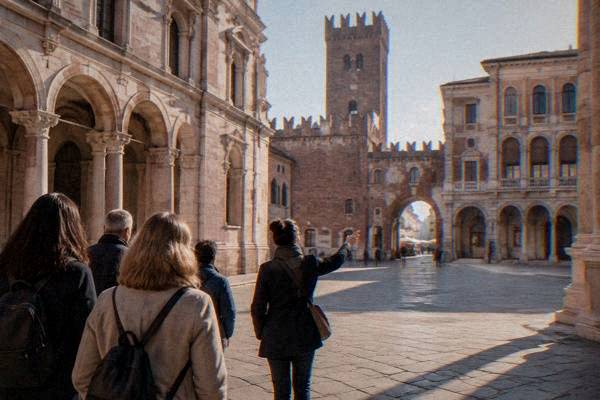
The comparison usually collapses into the question of scale. Verona's historic centre folds into a bend of the Adige and is genuinely walkable, a point this site covers in detail in is Verona walkable. Milan is a working capital of well over a million people spread across a metro system; a Milan visit means moving between districts, while a Verona visit means moving between piazzas.
Neither city is on the water, which surprises people in both cases. Verona is inland, on the Adige; the nearest Lake Garda towns are 22 to 39 km west, covered in how far is Verona from Lake Garda. Milan is inland on the Po plain. If water matters to the trip, the answer is neither city centre, but Verona has the lake within day-trip range: Sirmione about 40 minutes by road, Bardolino 37, Garda 42, Malcesine 84.
What Does Each City Offer A First-Time Visitor?
Verona's first-visit core is the Arena di Verona, Casa di Giulietta, Piazza delle Erbe, Castelvecchio and the Ponte Pietra, all within a walkable UNESCO-listed centre, with a daytime Arena ticket at 12 euro full and Juliet's courtyard at 5 euro since 1 April 2026. Milan's first-visit core is its cathedral, the Galleria, the fashion district and the Last Supper, with no sourced figures available for any Milan sight. The honest comparison of sightseeing value can only be run on Verona's numbers.
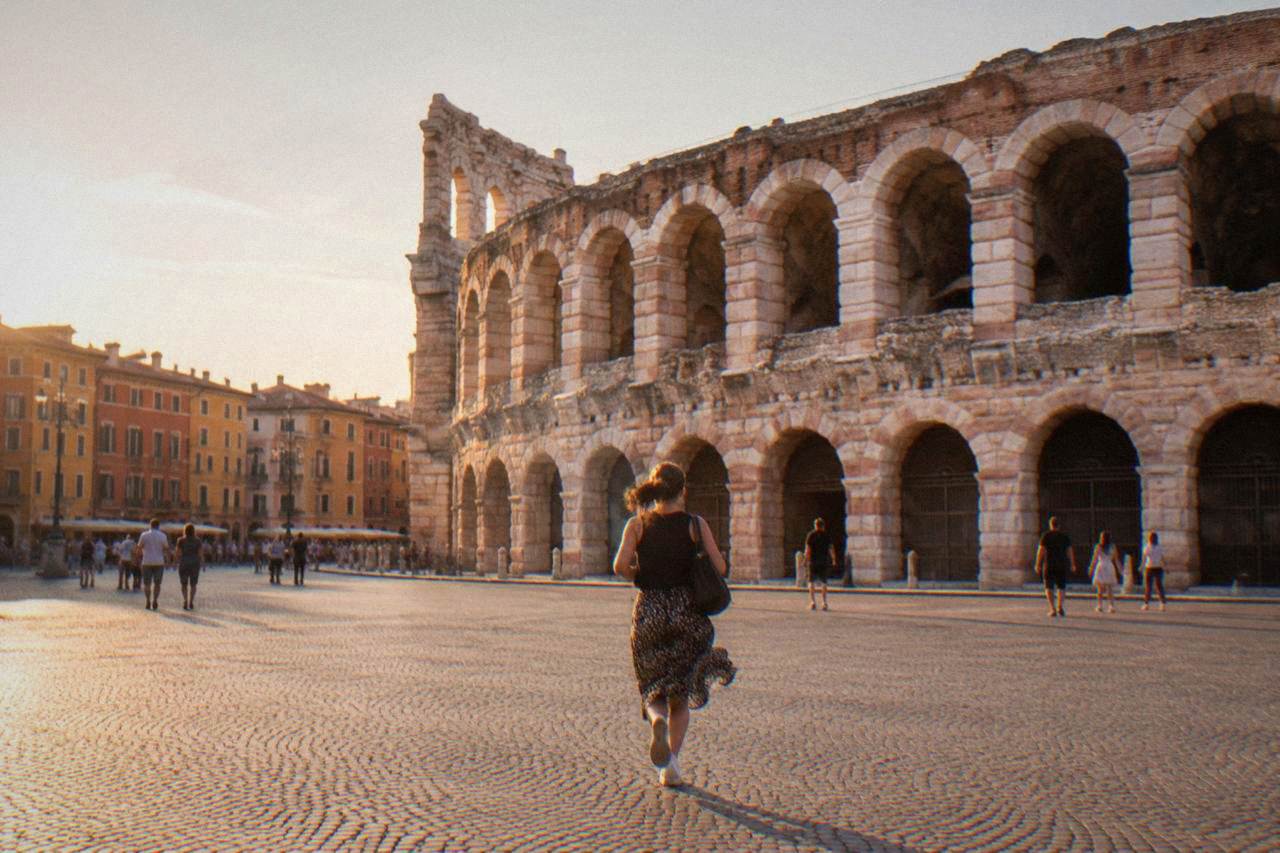
The Arena is Verona's anchor and it is not an opera-only monument, a common mistake. The Comune di Verona's price list gives a full daytime ticket at 12 euro, 9 euro reduced for groups of 15 or more, over-65s and other concessions, and 3 euro for visitors aged 18 to 25 from EU and reciprocity countries. The Arena's own site dates the building to about 30 AD, reports an effective opera seating capacity of 30,000, and describes it as older than the Colosseum, a comparison this site treats in full in is the Verona Arena older than the Colosseum.
Juliet's House changed in 2026 and older guides are wrong: from 1 April 2026 the courtyard alone costs 5 euro, the house and balcony route 12 euro, entry runs via the Teatro Nuovo, and booking is online. The balcony itself is not original; the Comune's tourism pages report it was added in 1940. The love-story layer of the city is real but partly modern, and it is covered in is Juliet's balcony real in Verona.
For Milan, this desk can only say what the sourced facts allow: Milan is the rail hub of the north, and from Verona Porta Nuova the trains to Milano Centrale are reported at 1 hour 15 to 1 hour 50. Any sight list, price or queue claim for Milan would be unsourced here, so none is printed.
A compact sense of Verona's sight costs:
| Sight | Admission (full) | Note |
|---|---|---|
| Arena di Verona, daytime visit | 12 euro | 9 euro reduced, 3 euro for 18-25, per the Comune price list |
| Casa di Giulietta, courtyard route | 5 euro | From 1 April 2026, online booking, entry via Teatro Nuovo |
| Casa di Giulietta, house and balcony | 12 euro | Same booking system |
| VeronaCard 24h with transport | 33 euro | Digital from 1 September 2026, per the Comune notice |
Wine is the other Verona lever. The Valpolicella hills are about 25 minutes and 21 km by road from the centre, and an Amarone-focused half-day is one of the easiest ways to spend an afternoon outside the city. The Pagus Amarone half-day tour covers the winery visit and tasting; check live details on the operator's listing. More options appear below.
Which City Is Better For Opera, Roman Ruins And History?
Verona is the clear pick for anyone whose trip is built on opera or Roman remains: the Arena hosts a summer festival, the 2027 season is announced for 11 June to 11 September, stone-step seats are reported to start in the 30-euro range, and the amphitheatre itself dates to about 30 AD. Milan has La Scala, one of the world's great opera houses, but no sourced comparison of tickets or repertoire exists in this desk's facts, so no verdict beyond that is supportable.
The Arena's opera festival is not a July-and-August affair, another common error. The 2026 edition, the 103rd, ran 5 June to 12 September, billed by the Arena as the longest season in the festival's history, and the 104th is announced for 11 June to 11 September 2027. Start times are reported at about 21:00 to 21:30 early in the season, moving earlier later on; gates open about two hours before, and small backpacks are permitted while bulky bags are not. Whether an Arena night justifies the ticket is its own question, treated in is the opera in Verona worth it.
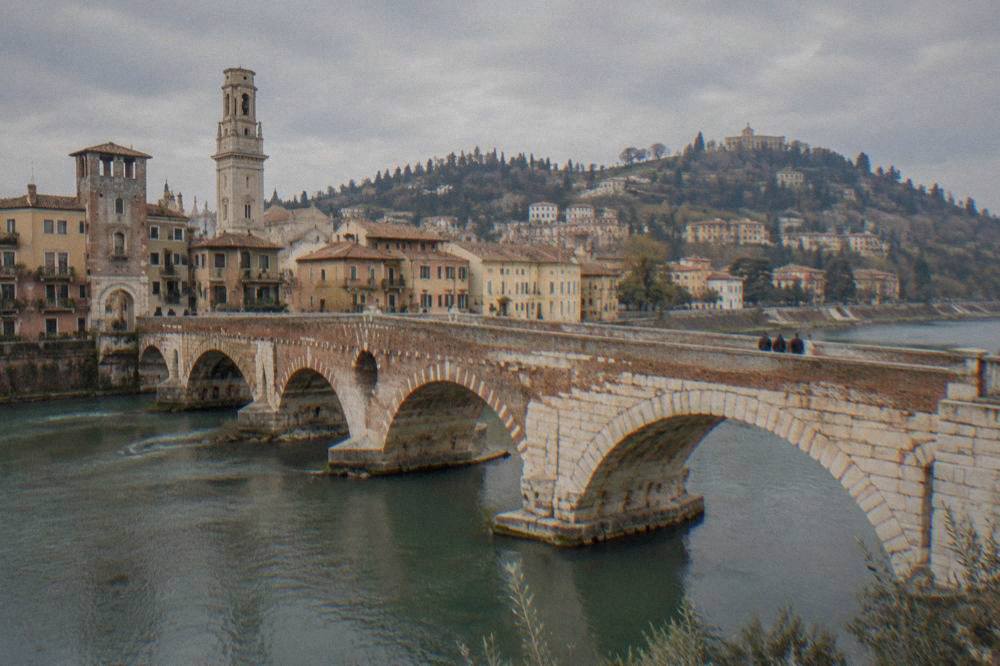
On the Roman layer, Verona's standing remains are exceptional for a city its size: the Arena, the Roman theatre across the river, the Ponte Pietra and the Porta Borsari gate. Milan's Roman past survives mostly below the modern street level. For trip planning, the practical split is simple: ancient stone and open-air opera point to Verona; La Scala's indoor season and Milan's museums point to Milan.
Which City Is Better As A Base For Day Trips?
Verona is the stronger base for day trips by car or regional train: Lake Garda's towns are 22 to 39 km away, Valpolicella about 25 minutes, Soave 33, Vicenza 48, Mantua 54 and Padua 67 minutes by road, and Venice is a reported 1 hour to 1 hour 15 by train from Porta Nuova. Milan's own day-trip range is outside this desk's sourced facts, apart from the reported 1 hour 15 to 1 hour 50 train back the other way.
The drive times are computed over OpenStreetMap routing in free-flow conditions, so treat them as planning figures, not timetables:
| Destination from Verona | Road distance | Drive time |
|---|---|---|
| Valpolicella (Sant'Ambrogio) | 21 km | about 25 min |
| Soave | 33 km | about 33 min |
| Vicenza | 65 km | about 48 min |
| Mantua | 59 km | about 54 min |
| Padua | 93 km | about 67 min |
| Sirmione, Lake Garda | 30 km | about 40 min |
| Venice | 122 km | about 85 min |
For lake days, the practicals matter as much as the distances. The Monte Baldo cable car at Malcesine lists a 30 euro adult round trip, 28 online, for its roughly April-to-early-November season, and Navigazione Laghi's own rates page lists a full-lake day pass at 39.50 euro for an adult in 2026, with the north-south passenger service reported suspended from 2 November 2026 to 12 March 2027. Confirm both before locking a date. Everything else covered here is indexed on Verona Italy Travel Guide.
Verona also works as one half of a two-city plan. The train times make a Milan-Verona pairing straightforward in either direction, and the question of how to split the nights is covered in how many days in Verona is enough. Travellers weighing the Veneto rivals instead should see which is better to visit, Padua or Verona and is it better to stay in Verona or Vicenza.
How Do Costs, Weather And Logistics Compare?
Verona is a mid-priced northern Italian city by the figures this desk holds: a daytime Arena ticket at 12 euro, an urban bus single at 1.50 euro for 90 minutes, a tourist tax capped at four nights per person per month, and a climate that runs from a January mean of 3.1 C to a July mean high of 29.3 C. No comparable Milan figures exist in the sourced pack, so no cost or weather verdict between the two cities can be given.
What can be said about Verona's practical side is concrete. The ERA5 reanalysis for Verona, 1991-2020, puts January's mean daily high at 7.3 C and July's at 29.3 C, with November the wettest month at 118.2 mm of rain. The historic centre is a camera-policed limited-traffic zone: non-residents get at most four entries a month by booking, in reported windows on weekdays and weekends, and hotel guests drive in free if the hotel registers the plate. The airport bus, the Aerobus line 199, is reported at 7 euro and about 15 minutes from Verona Villafranca.
Verona's eating identity is also part of the value case: pastissada de caval, risotto all'Amarone, bollito with pearà and pandoro are the city's signatures, covered in what Verona is famous for. A food-and-wine walk is the fastest way to sample several of them in one evening; the options below are a place to start.
So Which City Should You Choose?
Choose Verona for a two-or-three-night stay of walkable Roman and medieval streets, an Arena opera night, Amarone in the Valpolicella hills about 25 minutes away and a Lake Garda day trip; choose Milan for a big-city break of shopping, design and La Scala, or as a flight hub added on to a Verona stay using the reported 1 hour 15 to 1 hour 50 train. Travellers with a week can honestly do both.
The cleanest planning frame is nights. Verona rewards a short stay because the core is dense: the Arena, Piazza delle Erbe, Juliet's house, Castelvecchio and the Ponte Pietra sit inside one walkable loop, and a highlights walk such as the small-group highlights walking tour covers that loop efficiently; check availability for current dates. Milan rewards a longer stay because its attractions are spread and its queues are part of the experience.
If the trip is a northern Italy circuit rather than a single-city break, Verona's position is a genuine asset, as laid out in the northern Italy itinerary and the Milan to Verona connection guide. For the wider question of whether the city earns the journey at all, see is Verona worth visiting.
Common Questions About Milan Or Verona
Which City Is Better To Visit, Milan Or Verona?
It depends on the trip: Verona for Roman ruins, open-air opera, wine hills and a Lake Garda day trip in a walkable UNESCO-listed centre; Milan for fashion, design, La Scala and a big-city pace. The two are about 122 km apart and connected by trains reported at 1 hour 15 to 1 hour 50 each way.
Can You Visit Milan And Verona On The Same Trip?
Yes. Trains from Verona Porta Nuova to Milano Centrale are reported at 1 hour 15 to 1 hour 50, so a split stay or a day trip in either direction is workable. Check trenitalia.com for current times and fares.
Is Verona Cheaper Than Milan?
No sourced cost comparison between the two cities is available here. Verona's own printed figures include a 12 euro daytime Arena ticket, a 1.50 euro urban bus single and a tourist tax capped at four nights per person per month; check current prices before booking.
Which City Is Closer To Lake Garda?
Verona. The lake towns are 22 to 39 km west of the city: Sirmione about 40 minutes by road, Bardolino 37, Garda 42 and Malcesine 84. Milan is not a practical Lake Garda base.
How Many Days Does Verona Need Compared With Milan?
Verona's core sights sit inside one walkable centre and reward a short stay; the details are in the how-many-days guide on this site. Milan's attractions are spread across districts and typically take longer to cover.
The choice, in the end, is between density and scale, and both cities deliver what they promise. Verona's promise is written in rose-pink marble, a first-century amphitheatre and a glass of Amarone 25 minutes up the hill.