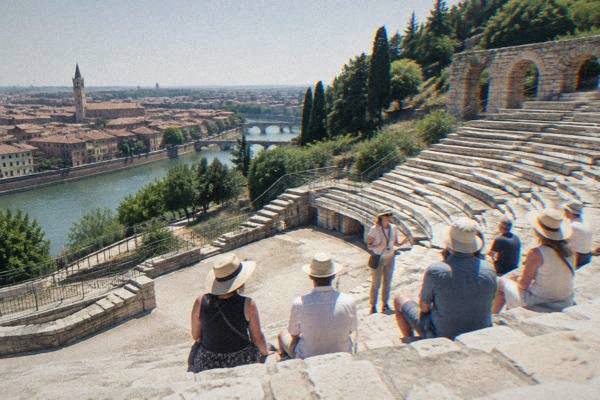
Porta Borsari: The Roman Gate On Corso Porta Borsari
Porta Borsari is a free, open-air Roman gate in the centre of Verona, standing where Corso Porta Borsari meets Piazza Bra, and it costs nothing to see at any hour.
Short answer
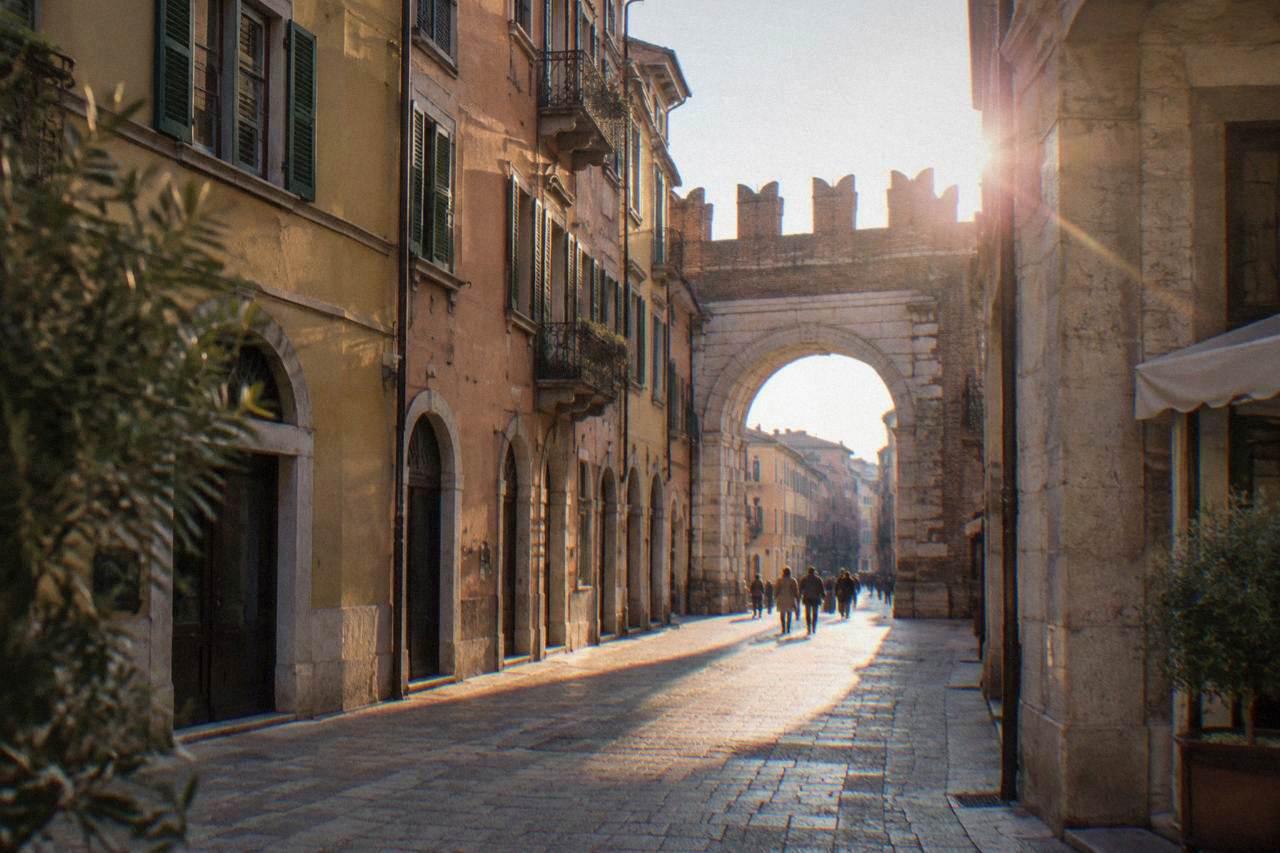
Porta Borsari is a Roman city gate in central Verona, in Veneto, northern Italy. It has no ticket, no opening hours and no queue: it stands in the open street at the head of Corso Porta Borsari, a two-minute walk from Piazza Bra, and can be seen in a few minutes on any walk through the historic centre.
Porta Borsari is a Roman city gate in the middle of Verona, an inland city on the Adige river in Veneto, northern Italy, about half an hour's drive from the Valpolicella wine hills and a day trip away from Lake Garda. It has no ticket desk, no rope and no opening hours, because it is simply part of the street: a cream-stone archway carrying Renaissance and later facades on top, standing where the straight shopping street called Corso Porta Borsari meets the head of Piazza Bra. The gate is one of the free open-access Roman remains the city protects inside its UNESCO World Heritage listing, inscribed in 2000, and it costs nothing at any hour of the day.
What Is Porta Borsari In Verona?
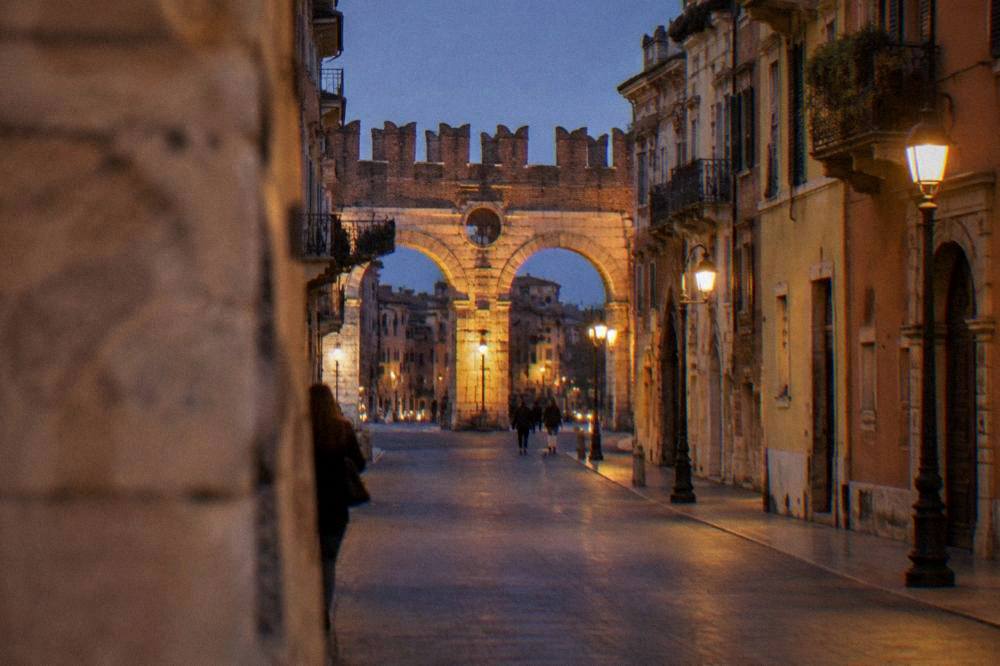
Porta Borsari is a Roman gate that once formed part of Verona's city walls, and today it survives as a free-standing stone arch at the head of Corso Porta Borsari, roughly two minutes on foot from Piazza Bra and the Arena. Visitors walk under it, around it and past it without paying anything, because the gate is an open public structure rather than a museum, and its two faces can be studied from the pavement on both sides.
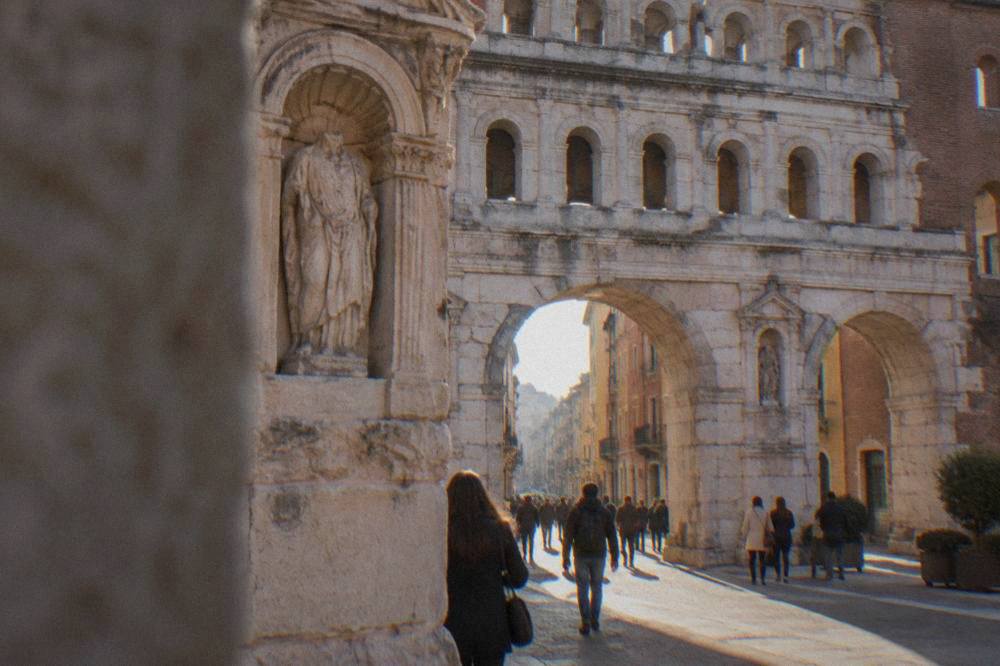
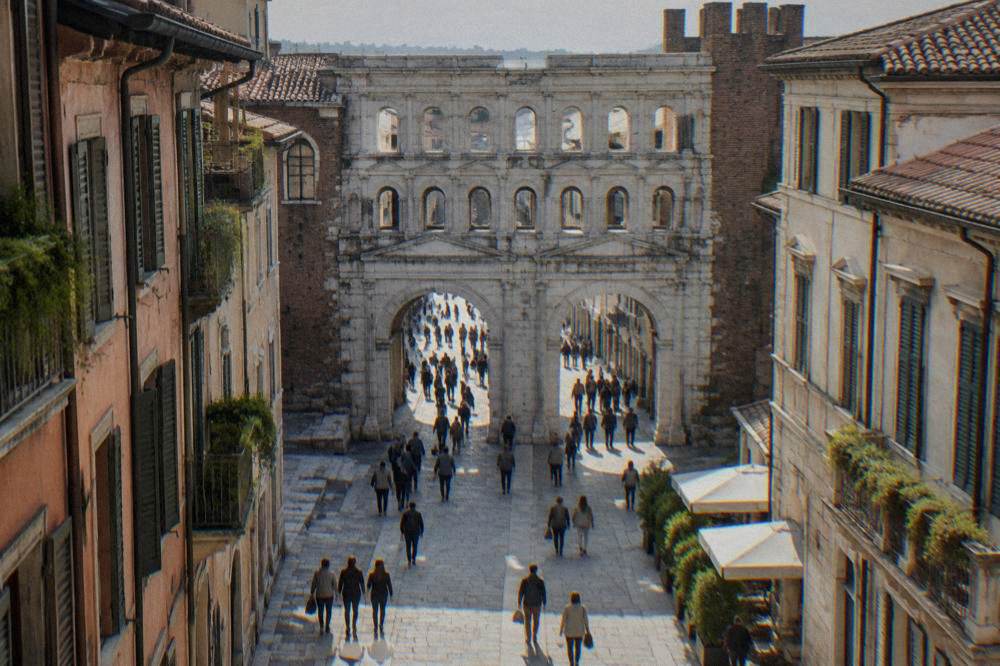
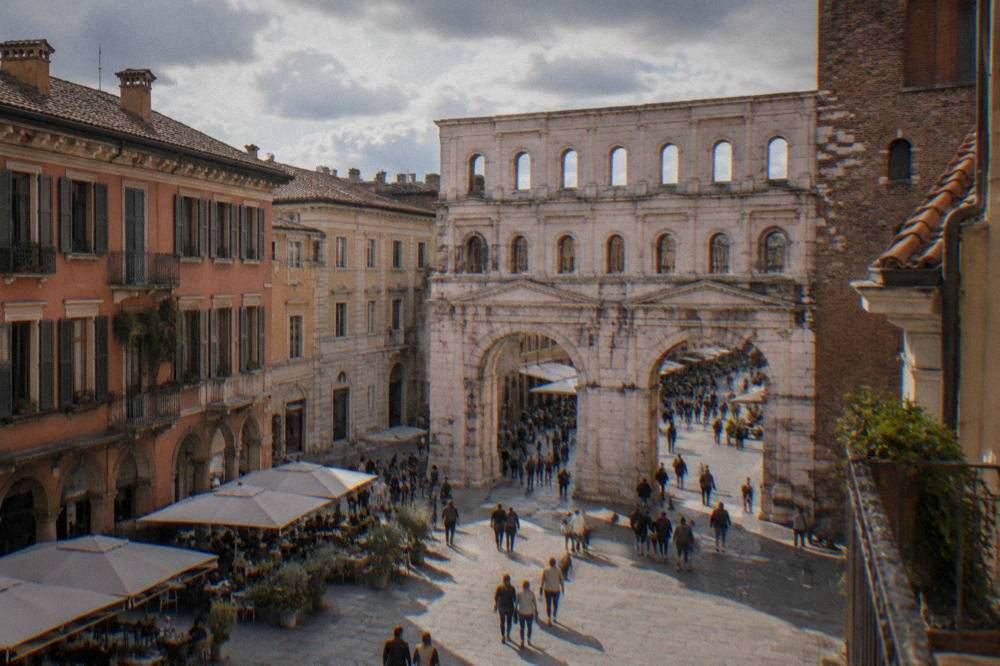
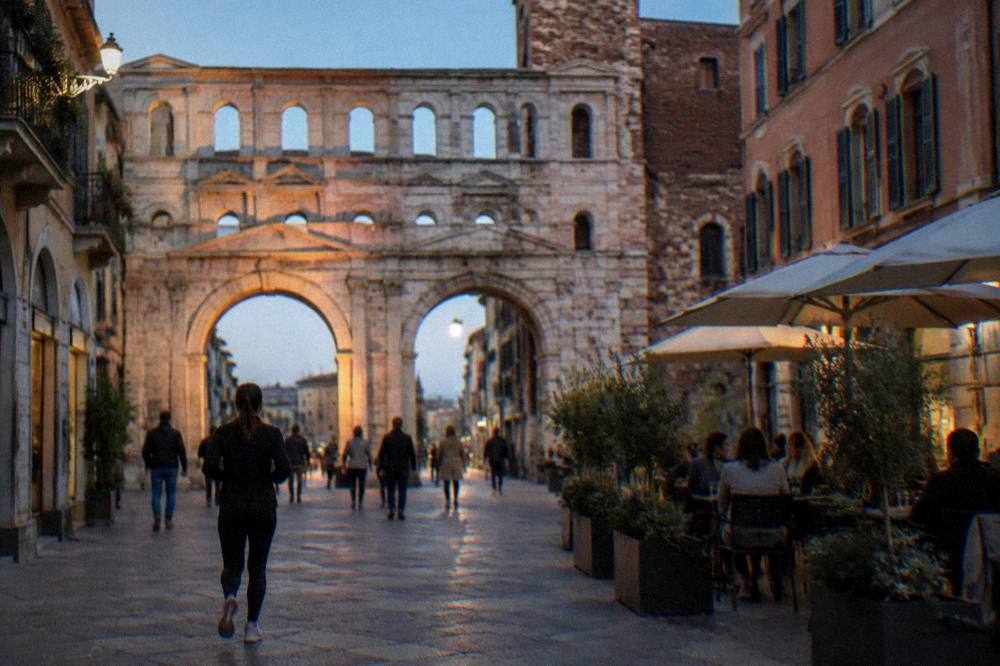
What a visitor actually sees is a tall rectangular block of pale local stone with a central arched passage flanked by smaller arched niches, stacked over two decorative orders. The lower face, turned toward the historic centre, is the more ornate: it carries a carved inscription and the fragmentary wording that has given scholars the gate's ancient name, Iovia. The upper storeys are later. Houses and palaces were built onto and through the gate over the centuries, so the Roman core now supports masonry from periods that followed it, and that layering is exactly what makes the structure worth a slow look. You are not looking at a cleaned-up monument in a glass case. You are looking at a working street corner where antiquity was never cleared away.
The site's own voice here is quiet, and that is deliberate. The gate stands at the point where the Roman grid of the city met one of its main axes: the Corso that begins at Piazza Bra and runs straight through the gate toward Piazza delle Erbe follows the line of a Roman street. No sourced figure exists in this desk's material for the gate's exact construction date, its architect or its dimensions, so this page prints none of them. What can be said plainly is what the stones show: a Roman gate, richly faced, later built over, still open to the sky. For a fuller picture of how Verona's Roman layer sits under the modern city, the companion pages on the Arena, the Roman Theatre and Ponte Pietra cover the other surviving pieces.
Readers who want the gate explained in context rather than inspected alone may like the themed walk below: a dark-history walking tour of Verona is this site's featured pick for the area, because the gate, the courts and the towers of the old city belong to the same story, and the tour's listing covers the highlights and the hidden corners in one guided loop.
Is Porta Borsari Free To Visit In Verona?
Yes, Porta Borsari is completely free. The gate is an open public structure with no ticket, no desk, no booking system and no opening hours of its own, and it can be seen from the street at any time of day or night. It sits alongside Piazza Bra, Piazza delle Erbe, Piazza dei Signori and Ponte Pietra on the list of Verona sights that charge nothing.
That free access is worth spelling out, because the assumption cuts the other way elsewhere in the city. Two of Verona's headline sights changed their access rules in 2026, and visitors who remember older guidebooks get caught out. Juliet's courtyard at the Casa di Giulietta stopped being free on 1 April 2026: the courtyard route now costs 5 euro and the full house and balcony route 12 euro, with online booking and entry organised via the Teatro Nuovo. The Arena, meanwhile, was never free: a daytime visit costs 12 euro full, 9 euro reduced and 3 euro for visitors aged 18 to 25 from EU and reciprocity countries, per the Comune di Verona's own price list. The gate, by contrast, asks for nothing and always has.
| Sight | Admission | Notes |
|---|---|---|
| Porta Borsari | Free, open access | Public street structure, no hours |
| Piazza Bra | Free | Open square |
| Piazza delle Erbe | Free | Open square, market site |
| Piazza dei Signori | Free | Open square |
| Ponte Pietra | Free | Open pedestrian bridge |
| Arena di Verona | 12 euro full, 9 reduced, 3 for 18-25 | Closed Mondays per the Arena's site; book for show-day visits |
| Casa di Giulietta | 5 euro courtyard, 12 euro with house | Ticketed since 1 April 2026, online booking |
The contrast in that table is the practical point. A walk that takes in the gate, the two squares and Ponte Pietra costs nothing at all, and the first ticketed item you are likely to meet on that route is either the Arena at one end or Juliet's House at the other. Visitors planning to visit several ticketed civic sites should also know that the VeronaCard became a digital card on 1 September 2026, priced at 33 euro for 24 hours and 38 euro for 48 hours with ATV urban transport included, or 29 and 32 euro without transport, per the Comune di Verona's card notice. The card's inclusions are listed by the Comune; confirm current coverage on the official notice before buying.
What Can You See At The Gate Today?
The visible attractions at Porta Borsari are the two decorated faces of the Roman core, the carved inscription and niches on the inner face, the later buildings riding on top of the gate, and the framed view straight down Corso Porta Borsari toward the heart of the old city. Ten unhurried minutes on the pavement cover all of it, longer if the light is good for photographs.
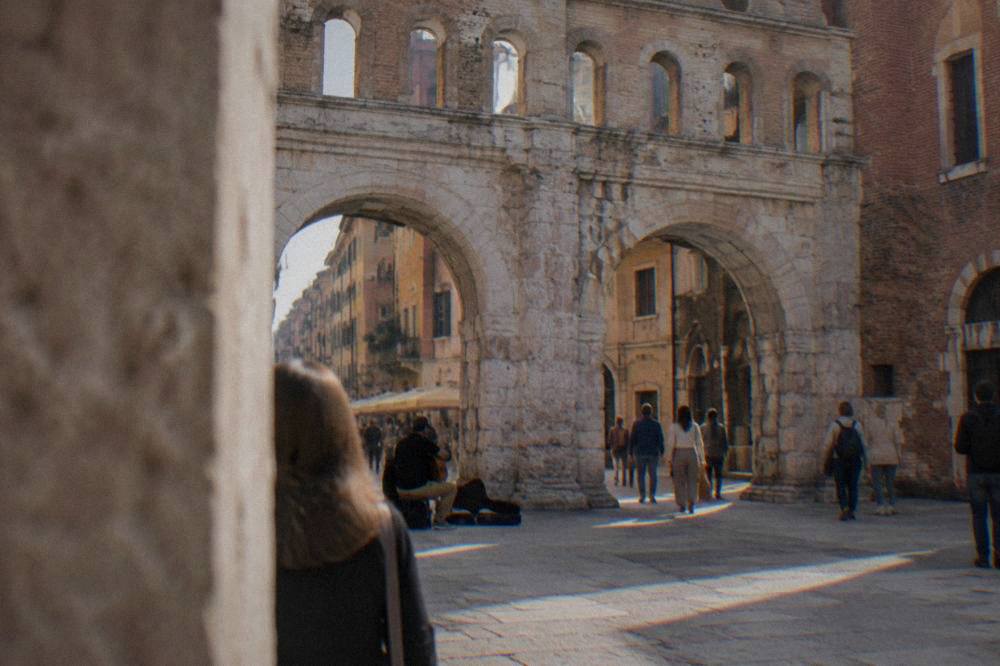
Start with the inner face, the one you meet walking up from the centre. The niche orders and the inscription panel are the reward for stopping: look for the lettering that names the gate's ancient identity, and for how much of the carved surface survives at full height. Then walk through the arch itself, which is the only way most people ever pass it, and turn around. The outer face is plainer, but the through-passage shows the depth of the Roman masonry and how the later street level sits against it. Finally, stand back on the Corso and look along the gate's axis. The street runs dead straight toward Piazza delle Erbe, and the gate frames that view on one side and the open head of Piazza Bra on the other.
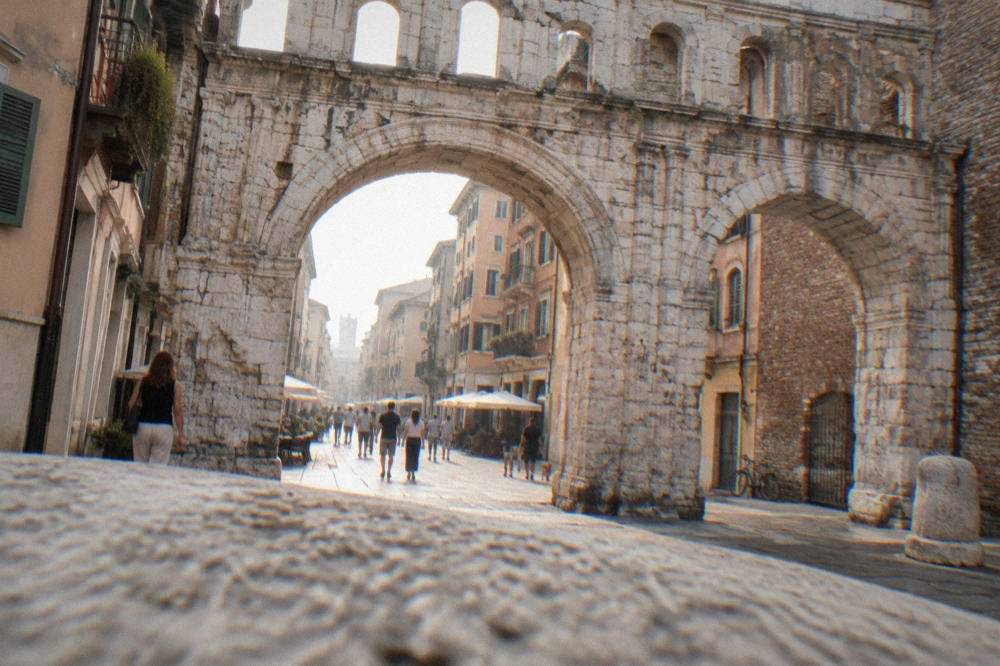
Photographers get the best results early or late, when low sun rakes the stone and brings out the carving. Midday light flattens the niches. There is no barrier to keep you off the pavement on either face, so the practical limits are traffic and courtesy rather than rules: the gate stands on a working city street with shops and residents, and the Corso itself is one of Verona's walking arteries. The site's photography page, Verona photography spots, collects this kind of framing across the city for anyone building a shot list.
For visitors who prefer a guide to a self-directed look, the picks below include a themed walk, a city card with Arena priority entry and a full-meal food walk: each suits a different way of using the morning that starts at the gate.
A Closer Look At The Stone
The gate rewards attention rather than speed. The lower order of arches is the deepest, the upper order is a screen of niches that once carried figures, and the whole face was built to be seen by anyone entering the Roman city from this direction. Later builders punched windows and walls into and around it, and those scars are legible too. A lens or binoculars help with the upper carving, which sits above normal eye level. Nothing on the gate requires a ticket, a guide or a booking, and nothing about it changes with the seasons, so it earns its place on a rainy-day walk as easily as a summer one.
Where Is Porta Borsari And How Do You Reach It?
Porta Borsari stands at the junction of Corso Porta Borsari and the head of Piazza Bra, in the pedestrianised historic centre of Verona, about a two-minute walk from the Arena's flank and roughly ten minutes on foot from Verona Porta Nuova station along the main axis of the modern city. It has no car access of its own because the centre around it is a restricted ZTL.
On foot, the gate is hard to miss. From Piazza Bra, walk to the top corner of the square away from the Arena's long curve and the Corso begins at the gate itself. From the station district, the route runs through the Porta Nuova and station district and into the centre; allow an unhurried quarter hour and treat it as the natural approach, since the walk enters the old city exactly where the modern one leaves it. Full rail connections are covered on the Verona train station page.
Drivers should note the ZTL before they plan anything. The historic centre inside the Adige bend is camera-policed: non-residents may enter at most four times a month on an advance booking, in stated windows, and hotel guests drive in free only if the hotel registers their plate with the system. The gate has no parking of its own. The practical pattern, spelled out across the city's ZTL and parking guidance, is to leave the car outside the centre and walk in.
| Approach | How it works | Best for |
|---|---|---|
| On foot from Piazza Bra | Two minutes level walk, no crossings of note | Everyone starting at the Arena |
| On foot from Porta Nuova station | Straight main-axis walk into the centre, about a quarter hour | Rail arrivals |
| ATV urban bus | 1.50 euro single, valid 90 minutes, per ATV's fare page | Staying outside the centre |
| Car | Park outside the ZTL and walk in; centre entry is limited to four booked entries a month for non-residents | Day trippers only, with planning |
The bus fare above is the one printed on ATV's own urban fares page; any other fare, taxi quote or transfer price should be confirmed at booking, because this desk's material does not carry them.
For anyone assembling a ticket plan rather than a driving plan, the city card below pairs the free gate walk with priority entry at the Arena, which is the single sight in the neighbourhood where a queue genuinely forms.
Which Verona Sights Sit Within A Short Walk Of The Gate?
The gate is the hinge of the densest sightseeing cluster in Verona: Piazza Bra and the Arena sit two minutes away at one end of the Corso, Piazza delle Erbe and Piazza dei Signori a few minutes beyond the other end, and the Casa di Giulietta, the Torre dei Lamberti, Castelvecchio, the Duomo and the Sant'Anastasia quarter all lie within the same compact walking radius. Every one of them is reachable on flat city pavements without transport.
The Corso that starts at the gate runs straight to Piazza delle Erbe, Verona's old market square, and from there the whole core unrolls. Piazza dei Signori opens off it, the Torre dei Lamberti rises above it, and the Casa di Giulietta is a couple of streets away, now ticketed since the April 2026 change. Toward the river, Castelvecchio and its bridge close the western edge of the centre, while across the Adige the Giardino Giusti and the climb to Castel San Pietro reward a longer loop. The Duomo, Sant'Anastasia and the Basilica di San Zeno complete the ecclesiastical set at varying distances.
| Sight | Direction from the gate | Admission situation |
|---|---|---|
| Piazza Bra and the Arena | Down the slope at the Corso's start | Square free; Arena 12 euro full by day |
| Piazza delle Erbe | Straight up the Corso | Free |
| Piazza dei Signori | Beyond Piazza delle Erbe | Free |
| Casa di Giulietta | Short side street off the Corso cluster | 5 euro courtyard, 12 euro with house, booked online |
| Torre dei Lamberti | At Piazza delle Erbe | Reported 6 euro; free with VeronaCard, confirm before you go |
| Castelvecchio | West toward the river | Reported 9 euro full; confirm before you go |
| Ponte Pietra | Across the centre toward the hills | Free, open bridge |
| Teatro Romano | Across Ponte Pietra | Ticketed civic site; confirm prices locally |
Church admission prices are deliberately absent from that table. Verona's main churches are covered by the VeronaCard's Chiese Vive convention, but this desk's material holds no standalone church prices or hours, so the honest instruction is the one that fits: confirm church admissions locally or through the card's official notice. The same caution applies to anything not printed above.
The gate also sits inside Verona's eating streets, and a food walk is a natural companion to this cluster: the pick below builds a full meal with wine around the same lanes the gate anchors.
How Does The Gate Fit Into A Verona Day Plan?
Porta Borsari works best as a pass-through rather than a destination: anchor the day at Piazza Bra and the Arena, walk the Corso through the gate to Piazza delle Erbe, Piazza dei Signori and Juliet's House, then continue to the river for Ponte Pietra and the Roman Theatre. The gate costs nothing and takes minutes, so it slots into any itinerary without competing with the ticketed sights for time.
A natural single-day shape starts at Piazza Bra in the morning, visits the Arena when it opens, then climbs the Corso through the gate mid-morning when the shopfronts are open and the street has its everyday life back. Piazza delle Erbe and Piazza dei Signori fill the late morning, Juliet's House takes a booked slot around lunch, and the afternoon crosses to the river. A fuller pattern for two or three days is laid out in the site's itinerary guides under things to do in Verona, which spread the same cluster over a calmer pace.
Season matters less here than for the ticketed sights, because a free street monument cannot sell out. The ERA5 reanalysis for Verona, 1991-2020, puts July's mean daily high at 29.3 C and January's at 7.3 C, with November the wettest month at 118.2 mm of rain; the gate is equally visible in all of it, though the carved stone photographs better in the slanting light of spring and autumn mornings. Visitors coming for the Christmas period should know that no official 2026 market dates had been published in this desk's material; recent editions have run from late November into late December, and the Comune's events pages carry the confirmed dates when they appear.
| Month | Mean daily high (C) | Mean daily low (C) | Rain (mm) |
|---|---|---|---|
| January | 7.3 | -0.4 | 52.3 |
| April | 17.8 | 7.6 | 93.5 |
| July | 29.3 | 19.1 | 79.4 |
| October | 18.1 | 10.5 | 107.2 |
| November | 12.3 | 5.3 | 118.2 |
Climate figures above are ERA5 reanalysis values, 1991-2020, a modelled grid cell rather than a station record, and they are printed for planning rather than prediction.
What Should You Know Before You Go?
Take nothing but a camera and a sense of direction: the gate needs no ticket, no booking and no fixed time slot, it stands on a public street that never closes, and the only real planning is around the ticketed sights either side of it, the Arena's Monday closure on reported daytime hours, and the ZTL rules if you arrive by car. Everything else is a matter of pace.
Three practical notes carry the weight. First, the 2026 access changes elsewhere in the city mean old advice about free courtyards and free Arena entry is wrong: Juliet's courtyard has been ticketed since 1 April 2026, and the Arena has always charged for daytime visits. Second, the VeronaCard's move to a digital format on 1 September 2026 changed prices and delivery, so any card advice printed before that date is stale; the Comune's notice carries the current figures of 33 and 38 euro with transport, 29 and 32 without. Third, the historic centre's ZTL limits casual driving to four booked entries a month for non-residents, with hotel-registered plates the exception.
| Topic | Situation for 2026 | Where to confirm |
|---|---|---|
| Gate access | Free, always open, no booking | Nowhere needed |
| Arena daytime visit | 12 euro full, 9 reduced, 3 for ages 18-25; closed Mondays per reported hours | The Arena's own ticket page |
| Juliet's House | 5 euro courtyard, 12 euro with house, online booking, entry via Teatro Nuovo | The official Casa di Giulietta booking page |
| VeronaCard | Digital, 33/38 euro with ATV transport, 29/32 without | The Comune di Verona card notice |
| ZTL driving | Max four booked entries a month, hotel plates free if registered | The Comune's ZTL page |
For visitors who want the gate, the legends and the darker chapters of the old city explained in one pass, the themed walk below is this site's featured pick for the neighbourhood, and its listing carries the current details and availability.
The gate is small, free and easy, and that is its role in every plan: the moment of Roman Verona you get without a ticket, standing between the city's two great squares on a street you were going to walk anyway. Readers building a longer stay can extend from here to the free bridge at Ponte Pietra, the river theatre across it, or the wine hills north of the city, and the surrounding pages on this site, beginning with the Verona Italy Travel Guide root guide, carry each of those onward steps in detail.
Common Questions About Porta Borsari In Verona
Is Porta Borsari free to visit?
Yes. The gate is an open public structure with no ticket, no desk and no opening hours, and it can be seen from the street at any time.
Do you need to book Porta Borsari in Verona?
No. There is nothing to book and nothing to queue for. The gate stands on a public street, and visits take as long as you choose to look.
How far is Porta Borsari from the Arena di Verona?
The gate stands at the head of Piazza Bra, about a two-minute walk from the Arena's flank, at the start of the Corso that leads to Piazza delle Erbe.
How old is Porta Borsari?
The gate is a Roman structure, and its carved inscription carries its ancient name. No sourced construction date appears in this site's material, so none is printed; the visible stone is what a visit offers.
Can you walk through Porta Borsari?
Yes. The central arch is a live pedestrian passage on the Corso, and walking through it is the normal way the street is used, with shopfronts and buildings continuing on either side.
Is Porta Borsari included with the VeronaCard?
It does not need to be. The gate is free to everyone, with or without a card; the VeronaCard's coverage applies to ticketed civic sites and churches listed in the Comune's notice.