Why Is Romeo Banned From Verona?
Why the Prince banishes Romeo from Verona in Shakespeare's play, what banishment meant in the story, and which real Verona places the legend touches today.
In Shakespeare's play Romeo is banned from Verona because he kills Juliet's cousin Tybalt in a duel hours after his wedding, and the Prince, who had sworn that the next street fighter would pay with his life, commutes the sentence to exile. Romeo must leave the city or die. He waits in Mantua, and the fatal letter explaining Juliet's sleeping potion never reaches him there. The banishment is the hinge of the tragedy's second half.
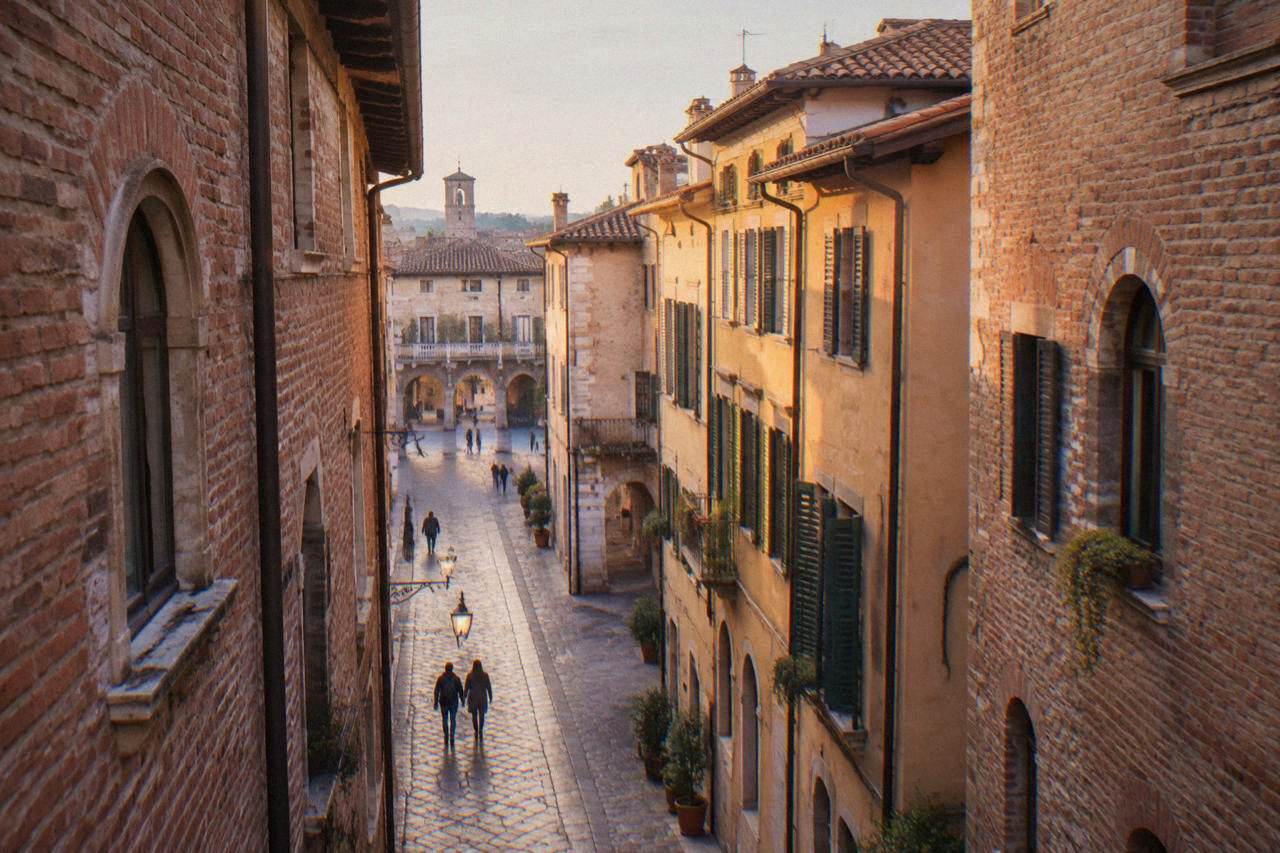
That is the short answer. The longer one runs through the feud, the Prince's warning, the fight itself and the legal world Shakespeare imagined, and then through the genuinely Veronese history underneath it. Verona, in Veneto in northern Italy, is an inland city on the Adige river whose UNESCO-listed old centre, inscribed in 2000, gives the legend a real stone backdrop: Piazza Bra with its first-century Arena, Piazza delle Erbe, Juliet's House in Via Cappello. The play's geography is invented on top of a real city that the poet, as far as any record shows, never saw. The city's own tourism pages report that Shakespeare never visited Verona, and this desk covers Verona Italy Travel Guide in that same spirit, reporting what the sources say rather than what the legend would prefer.
Why Is Romeo Banned From Verona?
Romeo is banned from Verona because he kills Tybalt in a duel in Act 3, Scene 1. Earlier the Prince had declared that any further public fighting between the Montagues and Capulets would be punished by death. When Romeo kills Juliet's kinsman, the Prince instead decrees immediate and permanent exile: Romeo must leave Verona before dawn or face execution, and he spends the rest of the play in Mantua.
The chain of events matters. The Prince's edict comes after an earlier brawl, and it is explicit: disturb the peace again and you die. Then Tybalt, furious that Romeo had crashed the Capulet feast, picks the fight in the street. Romeo refuses to rise to it, being secretly married to Tybalt's cousin. Mercutio draws instead and is killed, in the famous "a plague o' both your houses" moment, and only then does Romeo fight and kill Tybalt.
Banishment rather than execution is the Prince's mercy, and the play makes clear that the grieving Lady Capulet wants blood and Benvolio's account is the only thing that saves Romeo's life. To modern readers "banned" can sound like a slap on the wrist. In the play it is closer to a death sentence by other means: Romeo is cut off from Juliet, and the messenger's failed trip to Mantua turns exile into catastrophe.
The word itself, exile, also mattered in the real legal world of Renaissance Italy, where banishment from a city was a common punishment for killing, sometimes with a price on the exile's head if he returned. Shakespeare does not stage any of that machinery; he only needs the decree, the deadline and the distance.
Was Romeo And Juliet A True Story Set In Verona?
No single historical Romeo is documented, and the names Romeo and Juliet come from literature rather than civic records, but the feud the story describes has a real Veronese shadow. Dante, writing long before the novellas, names the Montecchi and Cappelletti as factions torn by conflict, and that reference is what pointed the later storytellers at Verona. The surviving plot, in which a banished lover dies believing his beloved dead, is fiction built on those names.
The line of sources is unusually clear, and the city's tourism pages report it directly. Luigi da Porto wrote the story down first, in 1531, and it was da Porto who set it in Verona. Matteo Bandello retold it in 1554. Arthur Brooke turned it into a poem in 1562, and Brooke's poem was Shakespeare's principal source when he wrote the play. Each link in that chain handed on Verona as the setting.
| Source | Year | What it contributed |
|---|---|---|
| Dante (Purgatorio) | before the novellas | Names the Montecchi and Cappelletti as feuding factions |
| Luigi da Porto | 1531 | First written version of the plot; sets it in Verona |
| Matteo Bandello | 1554 | Retells and circulates the tale in novella form |
| Arthur Brooke | 1562 | English poem, Shakespeare's main source |
| Shakespeare | after Brooke | The play, including the banishment decree |
So the question of why Verona at all has a documented answer: da Porto chose it, and the reason he chose it was the factional strife Dante had already attached to those family names centuries earlier. More on that choice sits in the companion answer on why Shakespeare chose Verona for Romeo and Juliet, and the fuller sight-by-sight treatment is in the guide to Romeo and Juliet in Verona.
Where Does Romeo Go When He Is Banished?
Romeo goes to Mantua, a city that in the play's geography is close enough to reach quickly and far enough to be unreachable when it matters. Mantua is a real place, about 54 minutes by road from Verona's Arena today, and it sits outside the hills. Friar Laurence's letter, explaining that Juliet is only sleeping, never gets through, and the failure of that one message to one exile is what kills them both.
The choice of Mantua is not decorative. In the sources da Porto and his successors needed a refuge near enough that a messenger could plausibly ride there with news, and Shakespeare keeps it for exactly that machinery. Friar John is quarantined before he can leave, the letter never arrives, and Romeo's servant brings worse news first.
A traveller tracing the legend today covers the same ground in under an hour by car, and Mantua makes a fine day trip in its own right. But the play's emotional geography is all Veronese: the tomb, the balcony, the street where Mercutio dies. The evening is when the old centre feels closest to that mood, and a guided Check availability link beside the Verona Moonlight Walking Tour page is the natural fit, since that walk covers the legend's sites after dark, when the day crowds thin and the brick glows.
What Did Banishment Mean In The Play's Verona?
In the play banishment means a death sentence on sight, announced by the Prince in open court: if Romeo is found within Verona's walls, that hour is his last. There is no appeal, no fixed term and no pardon coming, and when Romeo hears the sentence he reacts as though it were death itself, because to him exile from Juliet is the same thing. The Friar spends the rest of the plot trying to manage the consequences of that one decree.
The Prince's exact logic is spelled out on stage. He had already lost patience with the families after the opening brawl, when he threatened death for the next breach of the peace. Tybalt's killing of Mercutio and Romeo's killing of Tybalt force his hand, and he chooses exile for Romeo partly in acknowledgment that Tybalt slew Mercutio first. Mercy, in this Verona, still has a deadline.
Three things make the decree so heavy in the text. First, Romeo has been married for hours, so the sentence lands on the wedding day itself. Second, the marriage is secret, so no one in power knows that the punishment cuts a husband off from a wife. Third, the whole plan for reunion depends on messages, and messages are the play's weakest link. Every later death traces back to that single act of clemency.
| Plot beat | What the decree does |
|---|---|
| Prince's first warning | Death for the next public fight between the houses |
| The duel | Mercutio killed by Tybalt, then Tybalt killed by Romeo |
| The sentence | Exile: Romeo must leave before dawn or die |
| Life in Mantua | Exile, dependent entirely on word from Verona |
| The failed letter | Quarantine stops the Friar's message, and the ending follows |
Readers who want the city's other layers, from the Roman Arena that stood here long before Dante to the medieval towers of Piazza dei Signori, can start with the main things to do in Verona and the answer to what Verona Italy is famous for.
Can You Still See The Verona Of The Story Today?
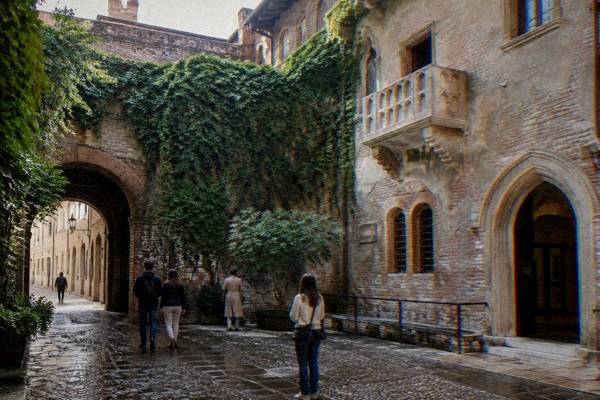
Yes, in the sense that the streets, squares and towers of the old centre survive, but almost nothing of the story does, because the story is literature. Juliet's House in Via Cappello is a real medieval house with a balcony the city's tourism pages report was added in 1940 from an old sarcophagus, not an original feature, and since 1 April 2026 even the courtyard is ticketed at 5 euro, or 12 euro with the house and balcony, booked online. The city embraces the legend knowingly.
That 2026 change catches out a lot of older guides, which still describe a free courtyard. Access is now via the Teatro Nuovo, with online booking, and VeronaCard holders must also book, according to the reported notice. The bronze statue, reported as the work of Nereo Costantini, was placed in the courtyard in 1972 and replaced by a copy in 2014, with the original kept inside. The custom of touching its right breast for luck is reported by the city's own tourism pages, and it has worn the bronze accordingly.
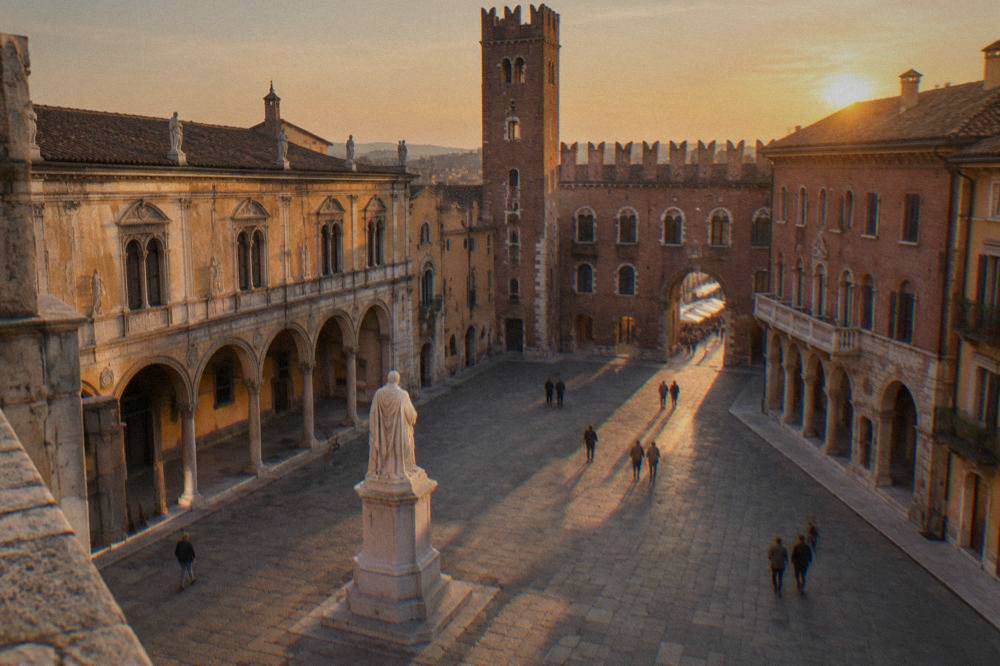
Beyond Juliet's House, the legend's Verona is mostly the city's ordinary, extraordinary fabric: Piazza Bra and the Arena, Piazza delle Erbe, the Scaliger tombs, the bend of the Adige under Ponte Pietra. Those stones are older than the story and indifferent to it, which is part of their charm. The practical question of how long to give the city is answered in how many days in Verona is enough, and whether the city earns a detour at all in is Verona Italy worth visiting.
Common Questions About Romeo's Banishment From Verona
Why Is Romeo Banned From Verona?
Because he kills Tybalt in a street duel after the Prince had sworn that the next brawl between the houses would cost the offenders their lives. The Prince softens the death sentence into exile, and Romeo must leave the city or be executed on sight.
Why does the Prince spare Romeo's life?
Because Tybalt had killed Mercutio first, and Benvolio's eyewitness account makes that clear. The Prince weighs the two deaths against each other and substitutes banishment for execution.
Where does Romeo go after the banishment?
To Mantua, a real city about 54 minutes by road from Verona's Arena today. He waits there for news, and the Friar's letter explaining Juliet's fake death never reaches him.
Did Romeo and Juliet really exist in Verona?
No historical Romeo and Juliet are documented. The story is literature that reached Shakespeare through Luigi da Porto's 1531 novella, Bandello's 1554 retelling and Brooke's 1562 poem, with da Porto the one who set it in Verona.
Did Shakespeare ever visit Verona?
The city's own tourism pages report that he never did. He wrote the Verona of the play entirely from his sources, without ever seeing the Arena or the Adige.
Is Juliet's balcony in Verona real?
The house is a real medieval building, but the city's tourism pages report the balcony was added in 1940, made from an old sarcophagus. Since 1 April 2026 the courtyard is ticketed, 5 euro for the courtyard route and 12 euro for the house and balcony, booked online.
The banishment, in the end, is the play's one act of mercy, and the tragedy is what that mercy costs. Verona keeps the memory not because it happened but because da Porto set a good story in a good city, and the city has been living with the cast ever since.