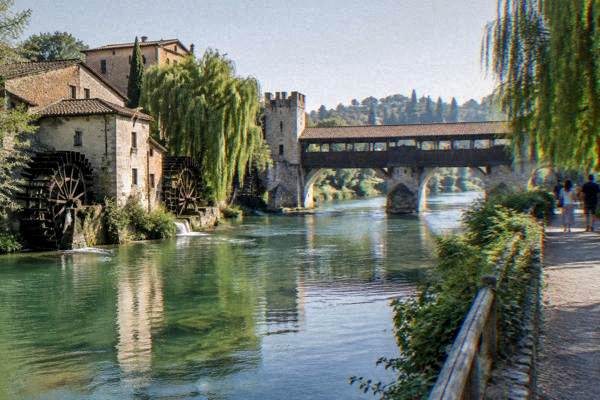
Gardaland From Verona: Tickets And Timing
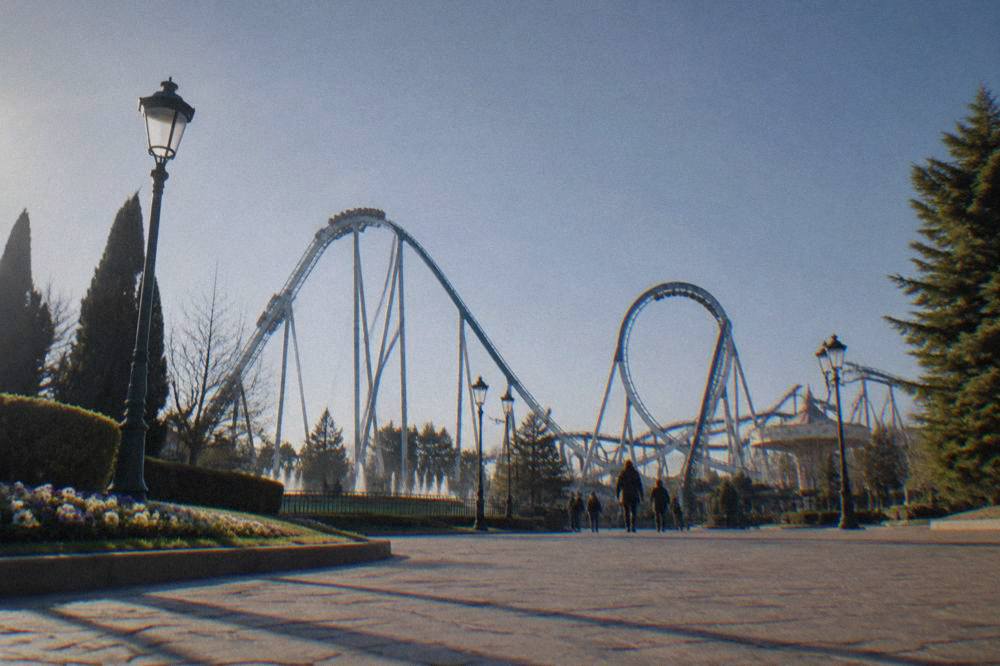
Gardaland is Italy's large theme park on the Lake Garda plain southwest of Verona, close to Peschiera del Garda. Verona is the natural base for a visit: this guide covers how to get there, what the ticketing involves and how to fold the park into a wider lake itinerary.
Short answer
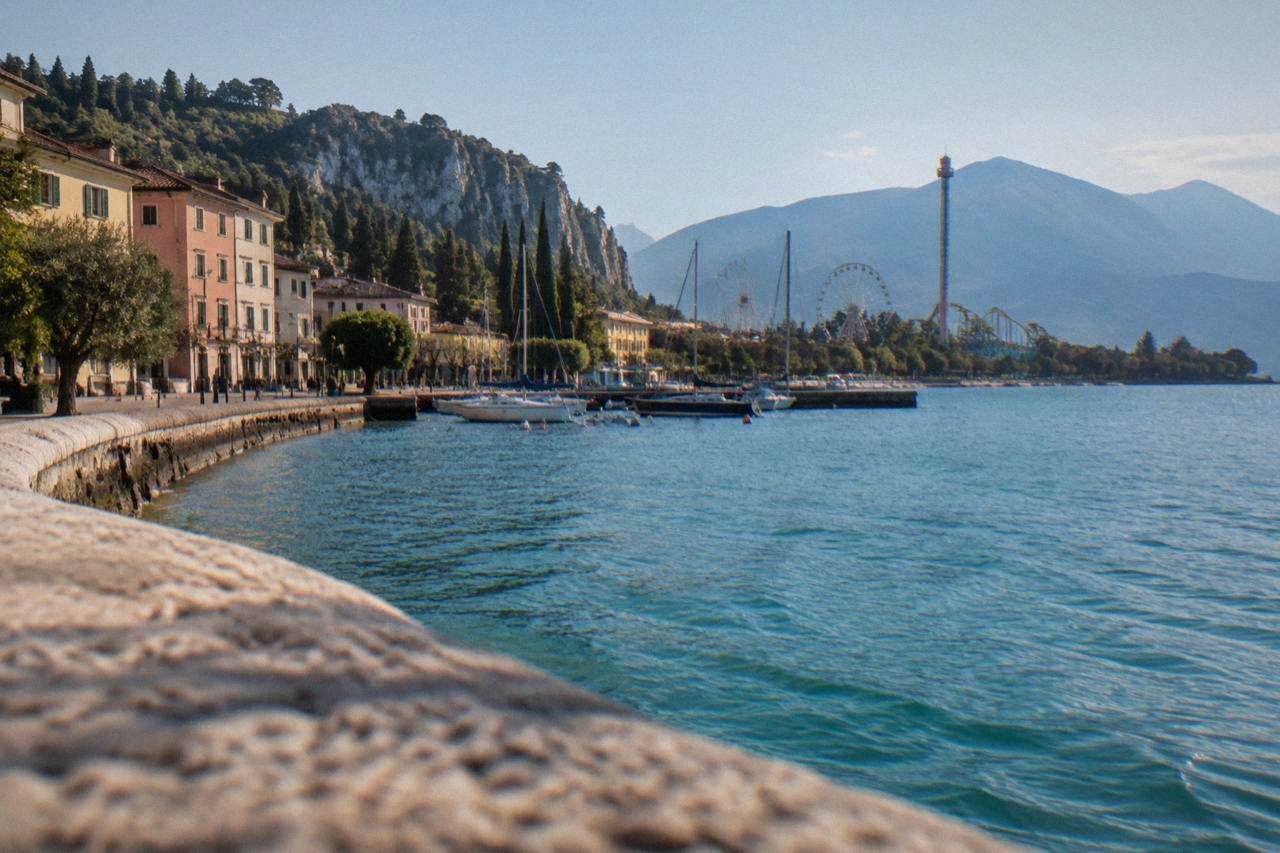
Gardaland sits near Peschiera del Garda on the Lake Garda plain, roughly half an hour's drive from Verona. The park is not a Verona attraction: Verona is an inland city on the Adige, and the lake and its theme park are day trips. Ticket prices and opening dates vary by date and promotion, so they are checked on the park's own ticketing site rather than quoted here.
Gardaland is Italy's large amusement park, and it stands on the Lake Garda plain near Peschiera del Garda, southwest of Verona in the direction of Sirmione and Lazise. Verona, an inland city on the Adige river in Veneto, is the natural base for the trip: trains and buses run from the city toward the southeastern lake shore, and the drive is short. Everything here is about geography, timing and planning, with the money left to the park's own ticketing site.
Where Is Gardaland Relative To Verona?
Gardaland is not in Verona and not on the lake shore itself: it sits inland near Peschiera del Garda and Castelnuovo del Garda on the flat plain at the southeastern corner of Lake Garda, southwest of Verona. Verona itself is an inland city on the Adige river in Veneto, and every Lake Garda town, Sirmione, Bardolino, Garda and Malcesine among them, is a day trip from it. The park is one of several attractions clustered on that southeastern shore, alongside the lake towns of Peschiera del Garda and Lazise.
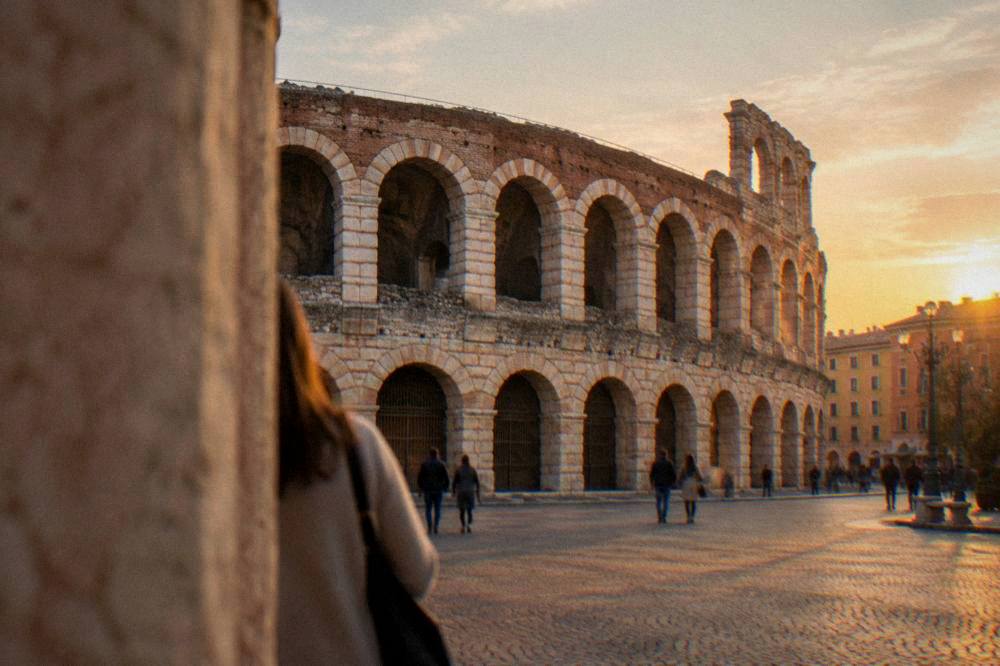
This distinction matters because a surprising amount of travel copy blurs it. Verona is famous for its first-century Roman Arena, the Romeo and Juliet legend and the Valpolicella wine hills, and its historic centre is a UNESCO World Heritage Site, inscribed in 2000. None of that is lakeside. The lake begins roughly 22 to 39 kilometres west of the city, and Gardaland sits in that same corridor, close to Peschiera del Garda. A visitor who books a hotel in Verona and plans Gardaland for one day, Sirmione for another and the city itself for a third has the geography right.
The surrounding area rewards a slow look. Peschiera del Garda sits on the lake's outflow, the Mincio river, and Lazise and Bardolino line the eastern shore a few minutes further north. Sirmione, on its long peninsula, is the best known of them all, and the Sirmione day-trip guide covers it in detail. The Lake Garda overview collects the whole shore in one place.
For orientation, the computed drive times from Verona's Arena look like this. They are free-flow routing estimates over OpenStreetMap, so add margin in summer traffic.
| Destination from the Arena | Drive time (about) | Road distance |
|---|---|---|
| Bardolino | 37 minutes | 30 km |
| Sirmione | 40 minutes | 43 km |
| Garda town | 42 minutes | 42 km |
| Malcesine | 84 minutes | 66 km |
| Valpolicella (Sant'Ambrogio) | 25 minutes | short hill run |
Gardaland itself sits in the Peschiera corridor, in the same corner as Bardolino and Sirmione, so the 35 to 45 minute band is the right planning figure for that whole southeastern shore. The pack does not carry a drive time to the park gates themselves, so treat that band, not a precise number, as the working estimate.
How To Get From Verona To Gardaland
The two practical routes from Verona are the train to Peschiera del Garda and the road: regional trains run from Verona Porta Nuova to Peschiera in a short hop, reported at roughly 20 to 40 minutes, and the ATV bus line 164 runs from Verona toward Peschiera, Lazise, Bardolino, Garda and Sirmione, about 55 minutes direct to Sirmione and hourly. Line 164 is also reported to serve the Gardaland area alongside Peschiera, per ATV and Rome2rio listings; its fare was not confirmed, so confirm the current fare and timetable on ATV's own site before travelling. The urban ATV single inside Verona is 1.50 euro, valid 90 minutes, but that is a city ticket, not a lake-corridor one.
By car, the route runs out of Verona toward the A4 Milan-Venice motorway and the Peschiera exit, on the same corridor as the drive times above. Two things are worth knowing before driving anywhere near Verona's centre. First, the historic centre is a camera-policed limited-traffic zone, the ZTL: non-residents are limited to four entries a month by advance booking, in windows the Comune di Verona publishes (weekday late morning through afternoon, an evening window, and a shorter weekend morning window), and hotel guests enter free if the hotel registers the plate. Second, parking near the park and around the lake towns is paid and seasonal; the pack carries no hourly rates, so check before you go.
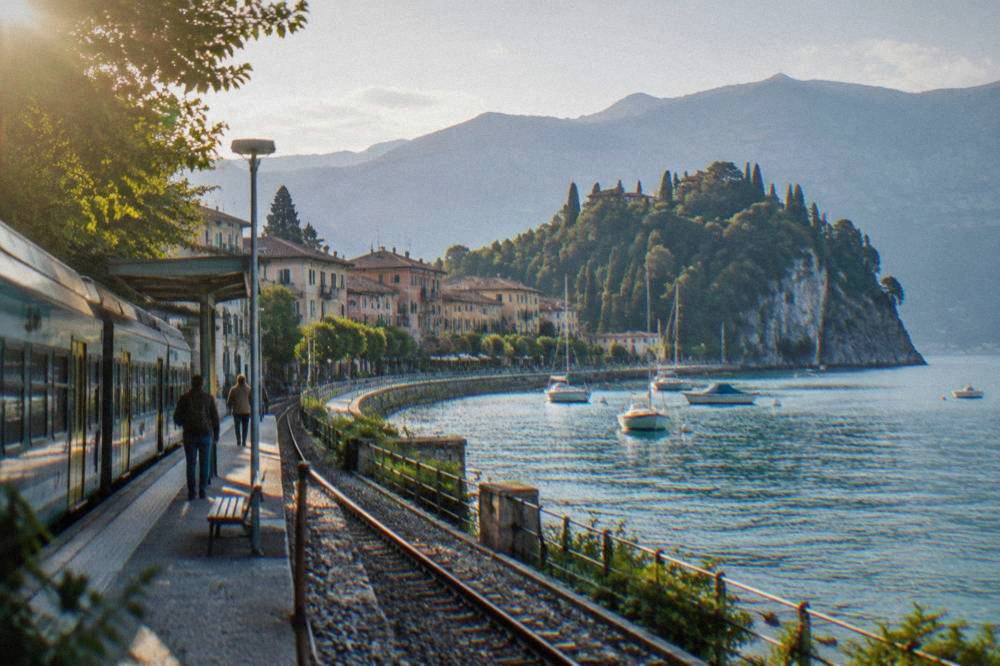
The train option deserves a fair hearing. Verona Porta Nuova is the city's main station, and regional services run south to Peschiera del Garda and Desenzano on the lake's south shore. Peschiera station is a short hop from the lakefront, and the park lies in the same corridor; local buses and shuttles bridge the last stretch, though the pack does not carry a shuttle timetable, so confirm locally. For anyone without a car, the combination of train to Peschiera plus a local connection is the standard plan.
A day built around water rather than rides fits the same geography. The Adige river rafting trip past Verona's historic bridges runs in the city itself, on the river that loops around the old town, and makes a good contrast with a park day: one day of engineering and adrenaline east of the city, another of coasters on the lake plain.
For visitors who would rather not plan the day around Gardaland at all, the lake corridor offers gentler options. The Peschiera del Garda guide covers the town whose station serves the corridor, and the Lazise guide covers its walled neighbour up the shore.
What Do Gardaland Tickets Cover And How Should You Buy Them?
Gardaland tickets are date-based and sold in several tiers, from single-day park entry through two-day and combined tickets that add the adjacent aquarium, with prices varying by visit date and promotion; because the figures move, the only reliable source is the park's own ticketing site, and this guide deliberately quotes no price. What can be said with confidence is structural: one-day entry, dated and undated variants, child pricing with free entry below a low height threshold, multi-day and aquarium combinations, and season passes have all featured in the park's own sales channels. Which of those is right for a family depends on the day, not on a fixed price list.
The timing question matters as much as the ticket question. The park operates on a seasonal calendar rather than year-round opening, with the main season spanning spring through autumn; the exact opening dates shift each year and are published by the park. Confirm the operating calendar for your dates on the official site before booking anything non-refundable, especially for shoulder-season visits, when weekday openings can be thinner than weekend ones. Halloween and early-season events extend the calendar at both ends in some years, but the 2026 event dates are not in this site's sources, so treat event scheduling as unconfirmed until the park publishes it.
Buying in advance online is the standard advice for large European theme parks, and Gardaland follows the pattern: online purchase is recommended by the park's own channels, and it is the only way to lock a dated ticket at the lower end of the range. Two planning notes from the wider corridor are worth carrying. First, summer weekends on the lake plain are the busiest combination in the region, and the same roads that carry Gardaland traffic also carry the Sirmione and Bardolino crowds. Second, show days at Verona's Arena, during the opera season that ran 5 June to 12 September in 2026 and returns 11 June to 11 September 2027, push Verona hotel demand up, which indirectly raises lake-corridor demand too. The Verona opera festival guide has those dates in context.
| Ticketing question | What is settled | What to confirm on the park's own site |
|---|---|---|
| One-day entry | Exists, sold dated and undated | Price for your date |
| Child pricing | Exists, with a height-based free threshold | Current thresholds and ages |
| Aquarium combination | Sold as a combined product | Price and whether same-day |
| Two-day tickets | Sold by the park | Price and validity rules |
| Season passes | Sold by the park | Tiers and blockout dates |
| Opening calendar | Seasonal, spring to autumn pattern | Exact dates for your visit |
That table is deliberately honest about its own limits. The structure of Gardaland's ticketing is stable; the numbers are not, and quoting a number that floats would be worse than pointing at the counter.
For the Verona half of the trip, the city's own headline tickets behave the same way and are easier to pin down. The Arena's daytime visit costs 12 euro full, 9 euro reduced, per the Comune di Verona's own price list, and Juliet's House has been ticketed since 1 April 2026, at 5 euro for the courtyard route and 12 euro for the house and balcony, booked online. A fast-track ticket with audio guide for Juliet's House and the balcony spares the queue at the city's most visited courtyard:
When Is The Best Time To Visit Gardaland From Verona?
The best window for a Gardaland day trip from Verona is late spring through early autumn, when the park's main season and the lake's full transport schedule overlap, with May, June and September offering the mildest weather of that stretch; July and August bring the highest heat, with ERA5 reanalysis for Verona showing July mean daily highs of 29.3 C, plus the year's thickest crowds. The park's own operating calendar is the binding constraint, not the weather, so the sequence is: confirm the park is open on your date, then pick the day of week and the month around it.
The climate figures come from the ERA5 reanalysis for 1991-2020, a modelled grid cell near Verona, not a weather-station record, and they describe the plain the park shares with the city. Spring warms steadily, autumn cools the same way, and rain is distributed across the year with a late-autumn peak. The wider set of guides lives on Verona Italy Travel Guide.
| Month | Mean daily high (C) | Mean daily low (C) | Rain (mm) |
|---|---|---|---|
| April | 17.8 | 7.6 | 93.5 |
| May | 22.3 | 12.2 | 109.7 |
| June | 26.6 | 16.5 | 92.3 |
| July | 29.3 | 19.1 | 79.4 |
| August | 29.1 | 19.4 | 84.1 |
| September | 23.7 | 15.1 | 99.7 |
Two scheduling notes sharpen the picture. First, the lake's own services run on a parallel calendar: Navigazione Laghi ran its full summer service on the lake from 16 May to 4 October 2026, reduced it to 1 November, and suspends the north-south passenger service from 2 November 2026 to 12 March 2027, per the operator's timetable pages. A plan that mixes Gardaland with a ferry ride needs the ferry calendar, not just the park's. Second, if the trip folds into a longer Verona stay, the city's own calendar has pressure points: Vinitaly, the wine fair, runs 11 to 14 April 2027 and fills hotels, and the opera season runs through mid-September. The best time to visit Verona guide unpacks those in depth.
Can You Combine Gardaland With Sirmione Or The Lake Garda Towns?
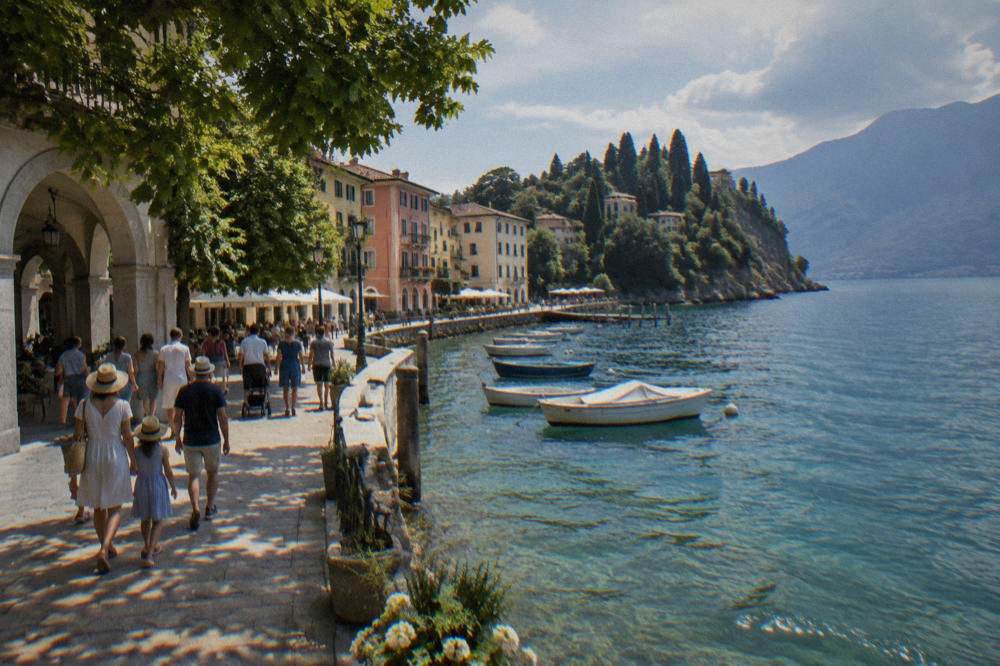
Yes, and the geography makes it easy: Gardaland, Peschiera del Garda, Lazise, Bardolino and Sirmione all sit in the same southeastern corner of Lake Garda, within roughly 40 minutes' drive of one another, so a park morning can be followed by a lake-town afternoon without retracing steps. The classic pairing is Gardaland with Sirmione, the peninsula town a short hop north of Peschiera; the more relaxed alternative is Bardolino or Lazise, whose lakeside walks suit a slower wind-down after a day of rides.
Sirmione is the heavyweight of the group. Its Roman villa site, the Grotte di Catullo, is reported at 10 euro full, 2 euro for ages 18 to 25, free under 18, with a joint ticket covering the Scaliger Castle too at a reported 20 euro, closed Mondays; the Scaliger Castle itself is reported at 10 euro full and 2 euro reduced, Tuesday to Sunday. These are reported figures, so confirm them at the official portals before going. The Sirmione guide carries the fuller itinerary.
| Southeastern lake stop | Reported admission | Notes |
|---|---|---|
| Grotte di Catullo, Sirmione | 10 euro full, 2 euro ages 18-25, under 18 free | Closed Monday; booking advised |
| Scaliger Castle, Sirmione | 10 euro full, 2 euro reduced | Closed Monday |
| Grotte plus castle joint ticket | 20 euro reported | Seven-day validity reported |
| Lazise and Bardolino lakefront | Open access | Ferry and bus served |
For a day that skips the park entirely, the same corridor supports a slower lake circuit. Navigazione Laghi's full-lake day pass is 39.50 euro for an adult at 2026 fares, per the operator's own rates page, and hopping the shore towns by boat is the calmest way to see them. Further north, Malcesine anchors the Monte Baldo cable car, at 30 euro round trip for an adult, 28 euro online, with junior fares at 18 and 16 euro, though Malcesine is a 84-minute drive from Verona and belongs to a second day, not a Gardaland add-on. The Malcesine guide covers that leg.
Back in Verona, a city tour that pairs a guided walk with the Arena and the funicular to Castel San Pietro is the natural counterweight to two park-and-lake days:
What Should Families Know Before A Gardaland Day Trip?
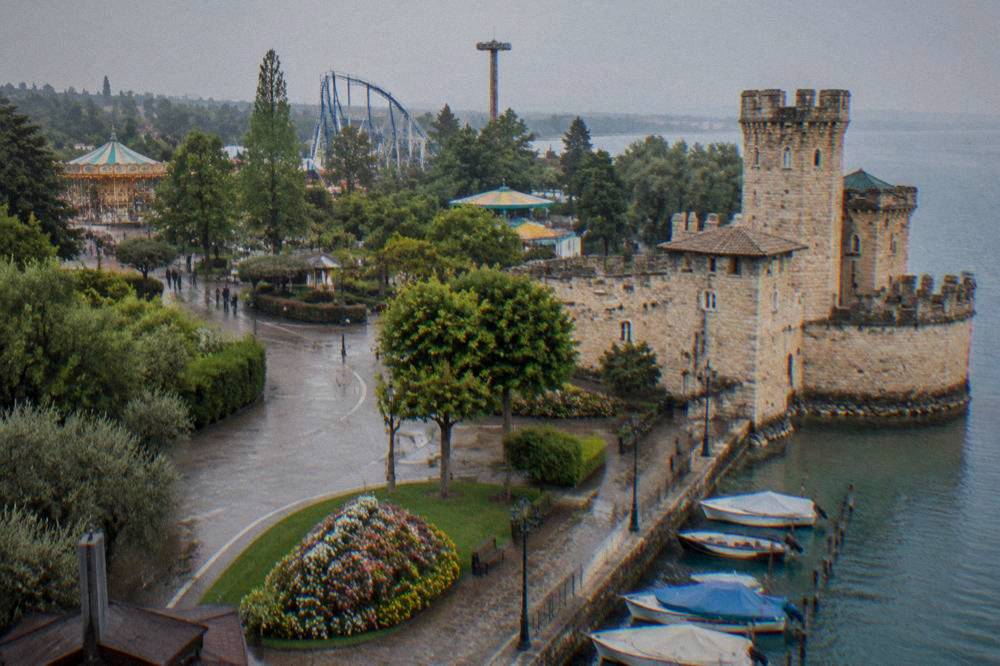
Families should plan Gardaland around three things the sources settle: the park sits beside Peschiera del Garda with good rail and road links from Verona, ticketing is date-based with child pricing and height-based free entry, and the surrounding corridor, from Lazise's lakefront to Sirmione's castle, gives non-riding family members a full day of their own. Height thresholds, ride-by-ride restrictions and the aquarium's separate ticketing all live on the park's own site, and they change often enough that quoting them here would mislead.
The practical rhythm matters more than any single rule. Theme-park days with children run long: the drive or train ride out, a full day inside, and a return that lands after Verona's dinner hour. Building the Verona half of the trip around shorter, city-centre activities balances that, and Verona is well set up for it. The Arena's daytime visit, Juliet's ticketed courtyard, and the open squares, Piazza Bra, Piazza delle Erbe and Piazza dei Signori, all sit inside the river loop within a short walk of one another. The Verona with kids guide covers the city's family side in depth.
A few trip-structure rules of thumb hold up well here. Alternate park days with quiet days, because two consecutive high-stimulation days are hard on small children and adults alike. Use the train where it fits, since Peschiera's station removes parking from the equation entirely. And keep one genuinely empty afternoon in Verona itself, because the city's scale, a compact UNESCO-listed centre inside a river bend, is the opposite of a theme park's and resets everyone's tolerance.
What Are The Alternatives To Gardaland Around Verona?
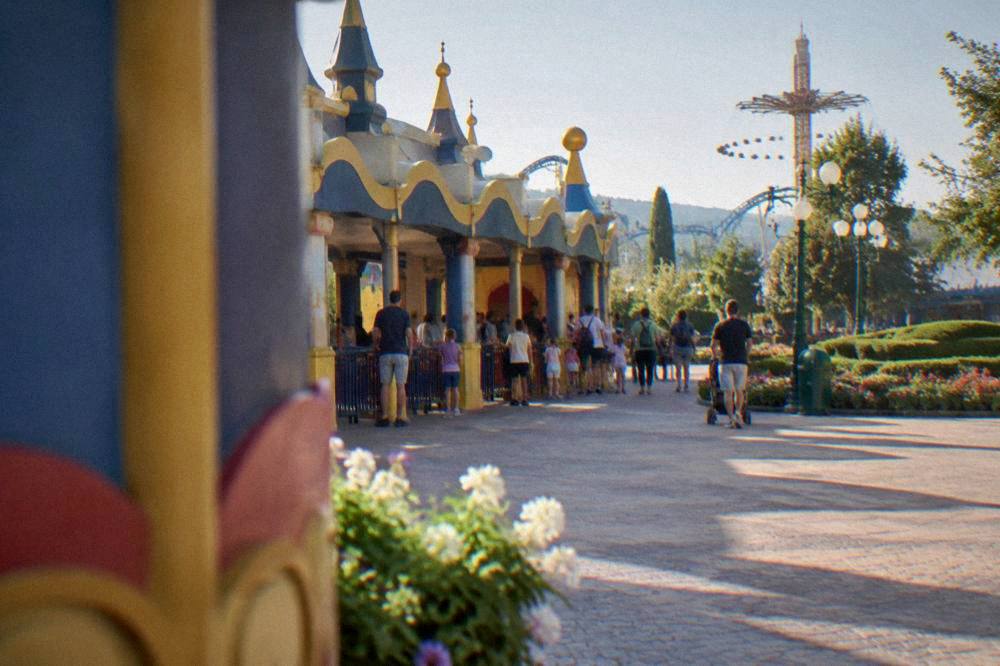
The strongest alternatives to a Gardaland day are the Lake Garda shore towns, the Valpolicella wine hills 25 minutes from the Arena, and the smaller cities on Verona's rail lines, Vicenza at about 48 minutes by road and Mantua at about 54, with Padua at about 67 and Venice at about 85; each gives a full day without theme-park pricing or queues. The choice usually comes down to what the group wants from the word "day out": water and boats, wine and hills, or art and arcades.
The lake is the obvious first alternative. Sirmione for its peninsula and Roman villa, Bardolino for the lakeside walk, Malcesine for the cable car to Monte Baldo: all are covered in their own guides, and the ferry network ties several together in one ticketed day. The wine hills run the other direction, north from the city into Valpolicella, where Amarone is made from dried Corvina, Corvinone and Rondinella grapes; the Valpolicella guide and the Soave guide cover the two wine zones closest to Verona.
| Alternative day trip from Verona | Drive time from Arena (about) | Character |
|---|---|---|
| Valpolicella (Sant'Ambrogio) | 25 minutes | Wine hills, Amarone cellars |
| Vicenza | 48 minutes | Palladio's city, museums |
| Mantua | 54 minutes | Renaissance lakeside city |
| Padua | 67 minutes | Frescoed chapels, old university |
| Venice | 85 minutes | Lagoon city, full day needed |
Train times run parallel to the roads where the high-speed network reaches: Verona to Venice Mestre is reported at 58 to 75 minutes, to Milano Centrale at 1 hour 15 to 1 hour 50, and to Rome at about 3 to 3 hours 30, per the operators' schedules; for fares, check the booking sites. The Venice guide and the Vicenza guide cover the two easiest rail swaps.
None of this is an argument against Gardaland. A big theme park is exactly right for some families on some days, and Verona's position, between the wine hills and the lake plain, makes it one of the few Italian cities where both fit inside a single week without a long transfer. The things to do in Verona overview collects the city-side options, and Verona Italy Travel Guide keeps the whole corridor, city, hills and shore, under one roof.
How Does A Gardaland Day Fit Into A Verona Itinerary?
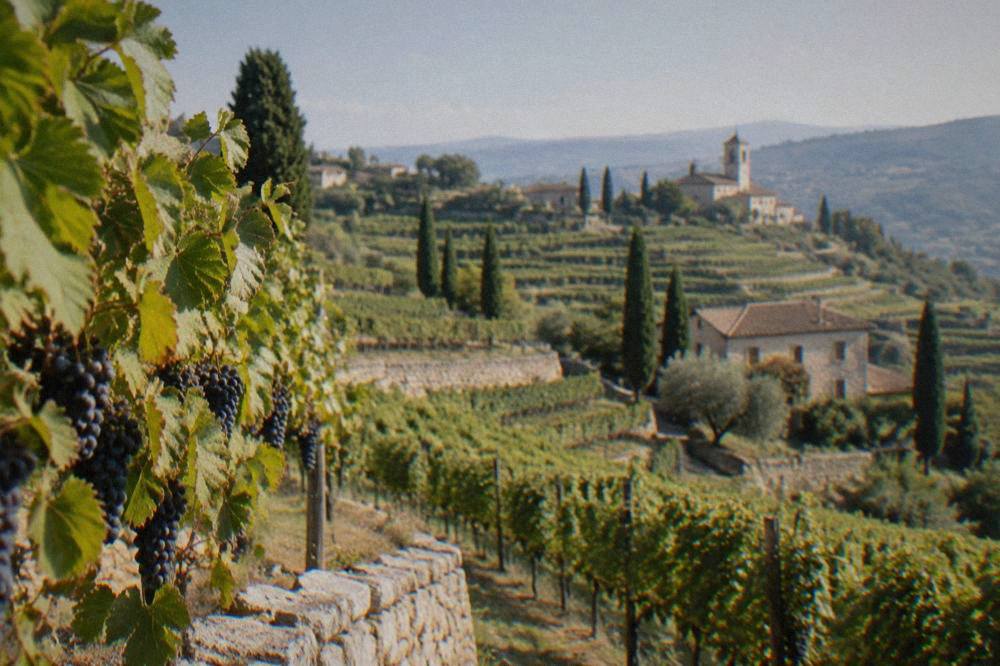
A Gardaland day fits best as the middle day of a three-day Verona itinerary: day one for the city core, the Arena's daytime visit at 12 euro full, Juliet's ticketed courtyard at 5 euro or the house route at 12 euro, and the squares inside the river loop; day two for the park; day three for the lake shore at Sirmione or Bardolino, unwinding at human pace before the journey home. That order front-loads the fixed-date items, the Arena and Juliet's House both need booking awareness, and leaves the most flexible day last.
Two structural facts shape the itinerary. Verona's historic centre is compact and walkable, with every city-tier landmark within five kilometres of the centre, so a Verona day costs shoe leather, not transport. And the VeronaCard went digital on 1 September 2026, at 33 euro for 24 hours and 38 euro for 48 with ATV transport included, 29 and 32 euro without, per the Comune di Verona's own announcement; the card covers civic sights and reported to include the Torre dei Lamberti and the Chiese Vive churches, though the full inclusion list is not confirmed, so check what it covers for your own plan rather than assuming.
The itinerary question also has a longer form. Visitors staying four or more days can add Valpolicella or Soave as a wine day, or push out to Vicenza or Mantua by train, and the Verona in three days guide sequences all of it. The single rule worth keeping is the one this page opened with: Verona is the base, the lake plain, Gardaland included, is the excursion, and the two halves of the trip reward being planned as halves.
Common Questions About Gardaland From Verona
Is Gardaland in Verona?
No. Gardaland stands near Peschiera del Garda and Castelnuovo del Garda on the Lake Garda plain, southwest of Verona. Verona is an inland city on the Adige river, and the park is a day trip from it, in the same corridor as Sirmione and Lazise.
How far is Gardaland from Verona?
The park sits in the southeastern Lake Garda corner, in the same corridor as Bardolino at about 37 minutes' drive from Verona's Arena and Sirmione at about 40 minutes, so plan for roughly a 35 to 45 minute drive. Regional trains from Verona Porta Nuova to Peschiera del Garda are reported at roughly 20 to 40 minutes, with a local connection for the last stretch.
How much do Gardaland tickets cost?
Ticket prices vary by date, ticket type and promotion, from single-day entry to two-day and aquarium combinations, and this site does not quote them. Check the current price on the park's own ticketing site before booking, and buy dated tickets online for the lower end of the range.
When is Gardaland open?
The park runs a seasonal calendar, broadly spring through autumn, with exact dates published each year by the park itself. Event extensions such as Halloween and early-season openings shift annually; confirm the operating calendar for your dates before booking travel.
Can you visit Gardaland and Sirmione on the same day?
Yes. Both sit in the lake's southeastern corner within a short drive of one another, so a park morning and a Sirmione afternoon is a workable day. Sirmione's Grotte di Catullo is reported at 10 euro full and the Scaliger Castle at 10 euro, both closed Monday, so check opening days before committing.
Is Gardaland worth it from Verona?
For families, it is one of the few large theme parks within an hour of a major Italian art city, and the train-plus-bus route from Verona Porta Nuova keeps it car-free. Whether it beats a lake or wine-hill day depends on the group; the alternatives, Sirmione, Valpolicella, Vicenza and Mantua, are all covered in this site's day-trip guides.