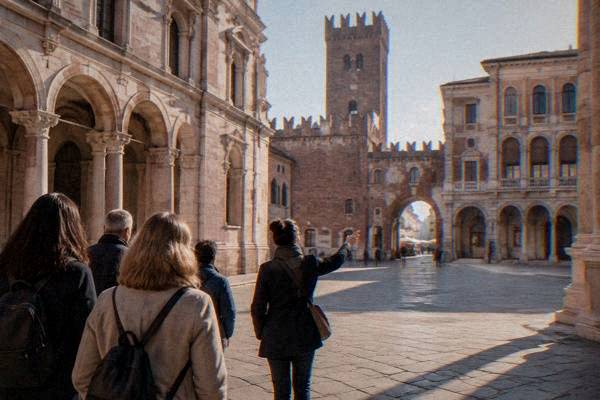
Two Days In Verona: Old Town Then The Hills
Two days in Verona cover the old town on day one, the river loop, Veronetta and the hills on day two, with the 2026 ticket changes built in.
Short answer
Spend day one on Piazza Bra, the Arena, Piazza delle Erbe, the Torre dei Lamberti and Juliet's House, then day two on Castelvecchio, the Adige crossing, Veronetta and either the Valpolicella hills or Lake Garda. The Arena costs 12 euro by day and Juliet's courtyard has been ticketed at 5 euro since 1 April 2026.
Two days in Verona, the inland Veneto city on the Adige river, is enough for the whole UNESCO-listed old town plus a half-day taste of the wine hills or Lake Garda, because the historic centre is compact and everything in it walks. The Arena, Juliet's House, Piazza delle Erbe, Castelvecchio and the Roman Theatre sit inside a river bend roughly twenty minutes across on foot. The choices that matter are ticketing, three of which changed in 2026, and what to do with the second afternoon, and this itinerary covers both.
The plan below is built around what the city's own sources say. The Comune di Verona's price list puts a daytime Arena visit at 12 euro full and 9 euro reduced, Juliet's courtyard became a 5 euro ticketed route on 1 April 2026, and the VeronaCard went digital on 1 September 2026 at 33 euro for 24 hours with transport. Day one stays inside the old town, day two crosses the Adige and then branches into the hills. For a shorter version, the one day in Verona itinerary compresses day one only, and the three day Verona itinerary adds a full Garda day.
Is Two Days In Verona The Right Amount?
Two days is the point where Verona stops being a transit stop and starts being a city, because day one clears the five headline sights inside the river bend while day two reaches the left bank, the Roman Theatre and one half-day escape. The old town is a UNESCO World Heritage Site, inscribed in 2000, and its core measures about twenty minutes on foot from Piazza Bra to the Teatro Romano. With one day only, the left bank and the wine hills are usually the parts that get cut.
The trade-off is real. Venice is one hour to one hour 15 by train from Porta Nuova, reported by the rail operators, and plenty of travellers use Verona as a stop between Venice and Milan. That works for day one of this itinerary. What it loses is the quiet half of the city: Veronetta, the Ponte Pietra, the view from Castel San Pietro, and the drive into Valpolicella, which is about 25 minutes and 21 km by road from the centre, computed over standard routing.
There is no single correct answer, but the shape of the decision is consistent. Solo travellers and couples who like walking cities get full value from two days. Families with children may want to slow day one and borrow structure from the Verona with kids itinerary. Anyone arriving from Venice for a single day is better served by the dedicated one day in Verona from Venice plan. For the pure question of how long is enough, the site's answer on how many days in Verona goes deeper.
| Question | One day | Two days | Three days |
|---|---|---|---|
| Old town headline sights | Yes, briskly | Yes, at walking pace | Yes, with revisits |
| Left bank and Roman Theatre | Usually skipped | Yes | Yes |
| Valpolicella or Lake Garda half-day | No | One of the two | Both possible |
| Opera evening at the Arena (season) | Only if it falls that night | Fits night one or two | Fits easily |
Day One Morning In Verona: Piazza Bra And The Arena
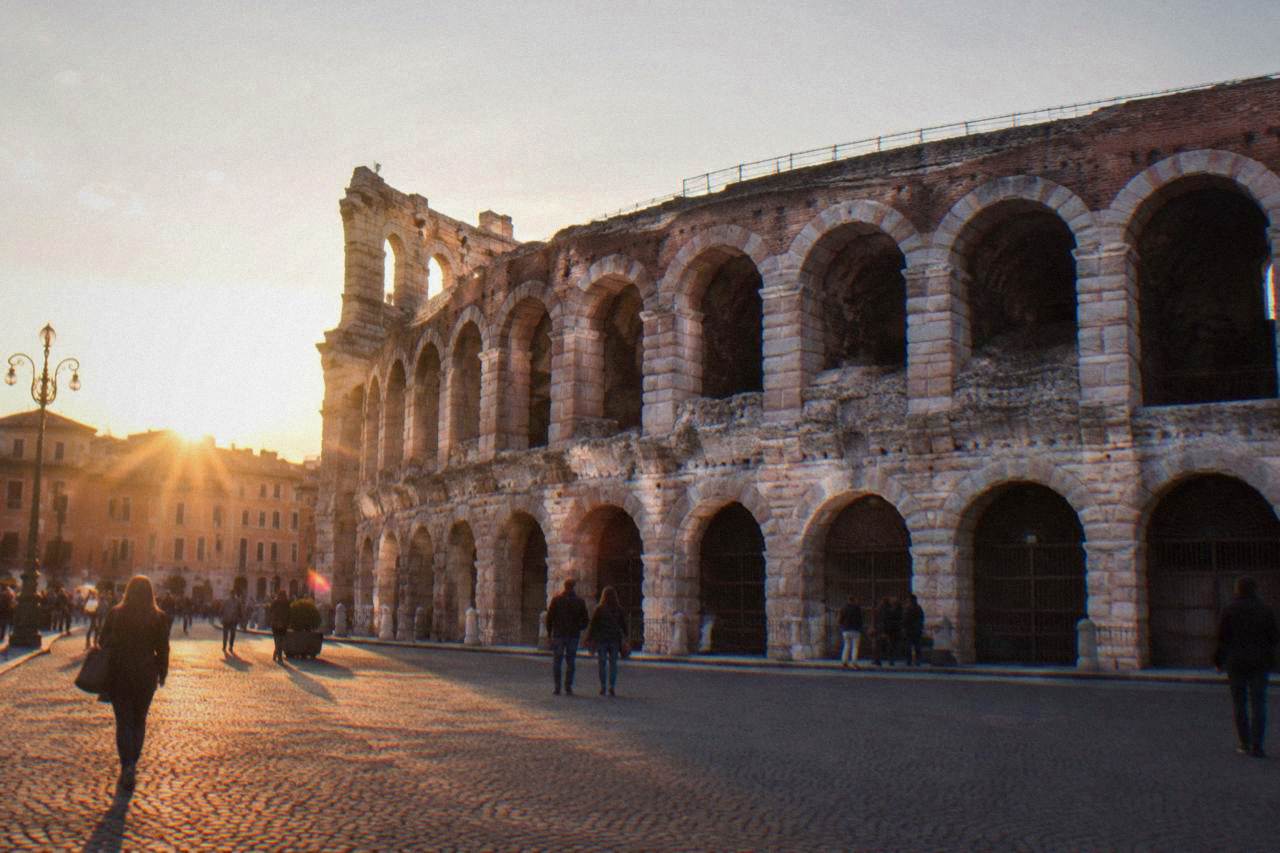
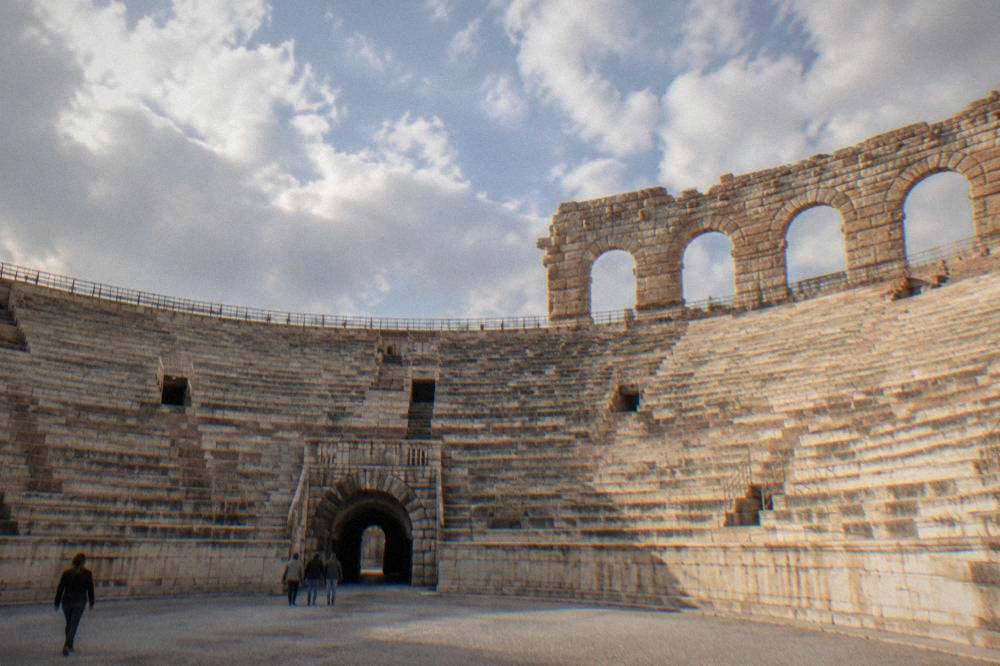
Start on Piazza Bra and enter the Arena di Verona when it opens at 9:00, because the amphitheatre is open to daytime visitors, contrary to the idea that it only exists for opera, and the Comune's own price list charges 12 euro full, 9 euro reduced for groups of 15 or more, over-65s and other concessions, and 3 euro for visitors aged 18 to 25 from EU and reciprocity countries. Reported hours are Tuesday to Sunday, closed Monday, with an early close on show days, so confirm the calendar before you go.
The Arena is the anchor of the city and the reason Piazza Bra exists at its scale. Its own foundation pages date it to about 30 AD, before the Colosseum, with an effective opera capacity of about 30,000 seats, and the outer ring was destroyed by the 1117 earthquake, leaving the inner Ala wing that stands today. All of that is tier-reported by the Arena's own site and worth repeating here only as attribution. What matters for a two-day visit is the ticket line: it moves, but the morning queue before opening is the shortest of the day.
If a guided entry suits the morning better, the Arena priority access tour bundles entry with a local guide, and the site's full Arena di Verona guide covers the seating, the visit and the opera separately. For the neighbourhood itself, the Citta Antica area guide maps every stop on this first morning.
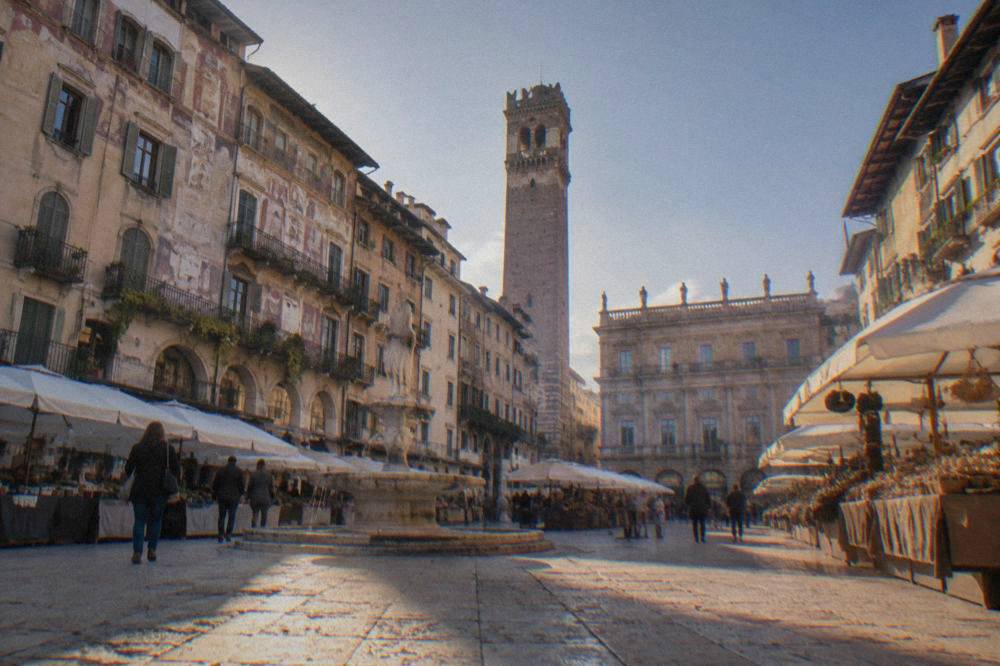
After the Arena, walk north up Via Mazzini, the marble-paved shopping street, to Piazza delle Erbe. This is the old Roman forum, now a market square ringed with frescoed facades, and it costs nothing. The Piazza delle Erbe guide details the buildings; for a two-day plan, treat it as the hinge between morning and afternoon rather than a destination with a queue. A coffee at the bar in Italy is a standing affair and cheap, and this desk prints no price for it.
| Day one morning | Stop | Entry | Notes |
|---|---|---|---|
| 09:00 | Piazza Bra | Free | Open square, Arena on the north side |
| 09:10 | Arena di Verona | 12 euro full, 9 reduced, 3 for 18-25 | Reported Tue-Sun, closed Mon |
| 10:30 | Via Mazzini | Free | Pedestrian shopping street |
| 11:00 | Piazza delle Erbe | Free | Market square, former Roman forum |
Day One Afternoon: Juliet's House, The Torre Dei Lamberti And The Scaliger Tombs
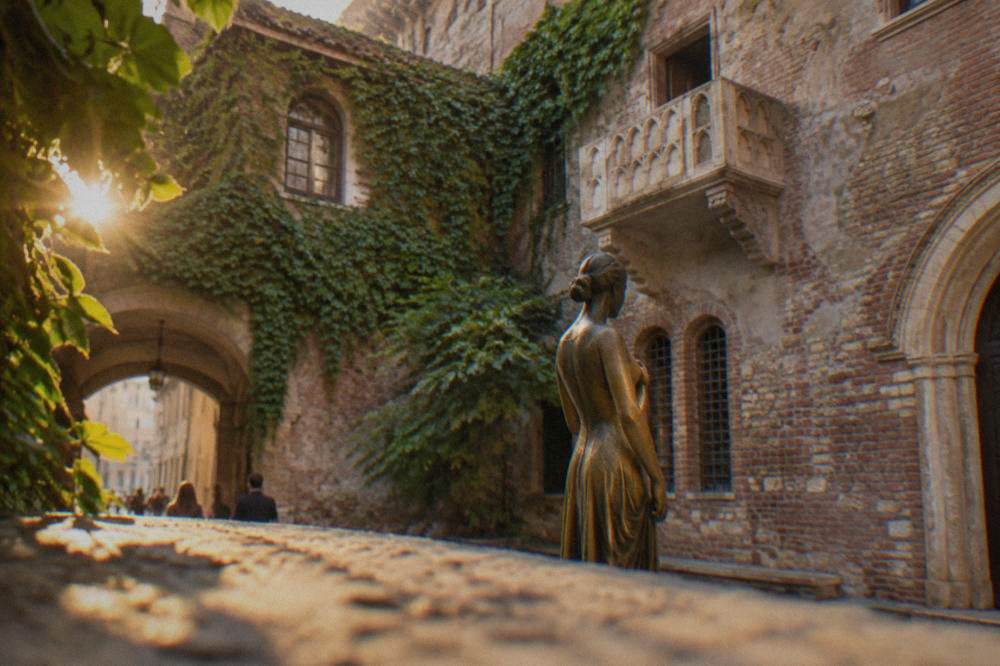
Work from Piazza delle Erbe south through Piazza dei Signori to Juliet's House, but book online first: since 1 April 2026 the courtyard is a ticketed route at 5 euro, the full house and balcony route is 12 euro, and entry is via the Teatro Nuovo with no on-site sales. Reported hours are Monday 14:00 to 19:00 and Tuesday to Sunday 9:00 to 19:00. The balcony itself was added in 1940, per the city's tourism pages, so photograph it as theatre, not archaeology.
Piazza dei Signori, between Erbe and Juliet, holds the open loggia and, through an archway, the Arche Scaligere, the Scaliger family tombs in their fenced enclosure. Access there is tied to the civic ticket system on the same day, and VeronaCard covers it. The Casa di Giulietta guide has the full ticket detail, including the free categories: under-5s, disabled visitors with a companion, and card holders, though even card holders must book the timed slot online.
The Torre dei Lamberti, back on Piazza delle Erbe, is the vertical finish to the afternoon: reported at 6 euro full, free with VeronaCard, with long summer opening hours and no lift mentioned in the reporting, so treat the climb as stairs. The Torre dei Lamberti guide collects what is known. If the afternoon clouds over, the Verona in the rain itinerary swaps the tower and courtyards for covered stops without losing the day.
By late afternoon the old town's big five are done. A guided wrap-up works well here: the Verona small-group walking tour page on this site lays out the options, and a first-visit orientation walk with the highlights and the hidden corners in one loop is exactly what the last hour of day one wants. The Check availability link goes to the operator's live listing for the small-group history walk that covers both the famous squares and the passages between them.
Day One Evening: Dinner And, In Season, The Opera
Plan dinner for 19:30 or later, because that is when Veronese restaurants start the evening service, and if the visit falls between 11 June and 11 September 2027, the 104th Arena Opera Festival runs on those dates with performances starting around 21:00 to 21:30 and gates opening about two hours before. Stone-step seats start in the EUR 30s; the top stalls cost several times that. No strict dress code is published, and small backpacks and seat cushions are permitted.
An opera night is the single most distinctive evening Verona offers, and the opera night in Verona itinerary is the full treatment. The rain rule deserves repeating from the Arena's own terms: a performance is never cancelled before its scheduled start, it can be delayed for a time, and there is no refund once it has begun. Outside the summer season the evening belongs to the old town's osterie, and the traditional dishes to look for are pastissada de caval, risotto all'Amarone, bollito with pearà sauce and gnocchi; this desk names no individual restaurant.
Day Two Morning: Castelvecchio, The Adige And San Zeno
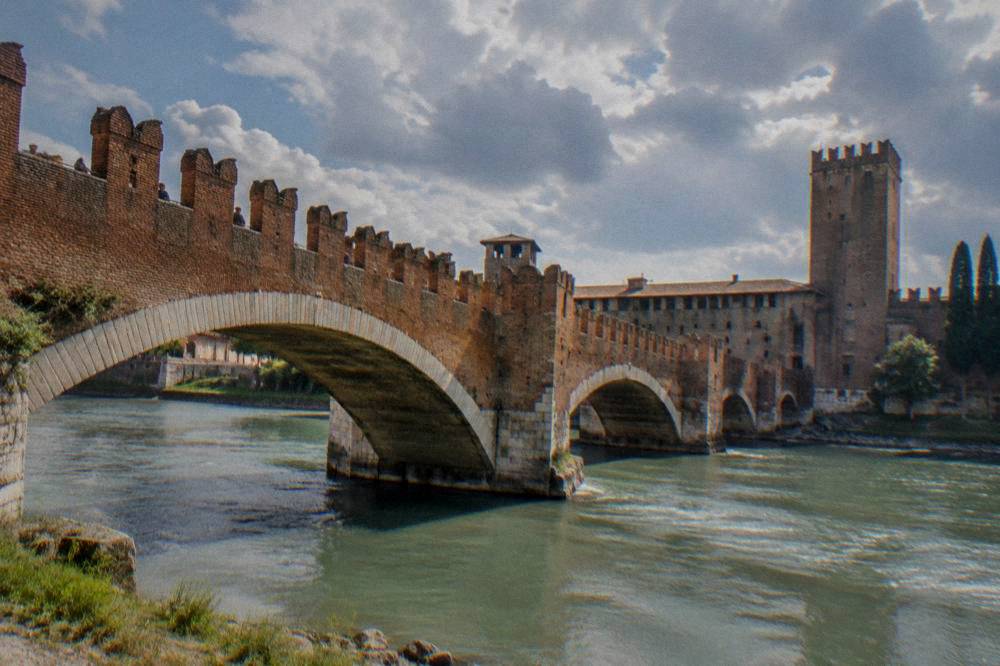
Open day two at Castelvecchio, the brick Scaliger castle on the Adige, reported at 9 euro full, 6 euro reduced and 2 euro for 18-25s, open Tuesday to Sunday 10:00 to 18:00 with last entry at 17:15 and closed Monday, then cross its crenellated Ponte Scaligero for the river walk east. The museum inside is the city's civic art collection.
The walk on to the Basilica di San Zeno passes through the quiet San Zeno district; the basilica is covered by VeronaCard, with no standalone ticket price confirmed.
Day two is deliberately the slower day. The crowds of day one are behind, and the left-bank sights are spread along the river rather than stacked in squares. The Castelvecchio guide covers the castle and museum; the San Fermo Maggiore sibling pages cover the church circuit. Practical note for drivers: the historic centre is a camera-policed ZTL, non-residents get at most four entries a month in booked windows, and hotel guests drive in free only if the hotel registers the plate. The detail sits in the where to stay in Verona guide.
From San Zeno, cut back east across the centre or catch an ATV urban bus, at 1.50 euro for a 90-minute single. Lunch back near the centre is the pivot point of the whole itinerary, because the afternoon of day two is a choice, covered in the next section. Anyone storing bags before a late train should read the site's notes on Verona luggage storage first, since details at Porta Nuova on operators and fees can change. The rest of the planning pages sit on Verona Italy Travel Guide.
| Day two morning | Stop | Entry | Notes |
|---|---|---|---|
| 10:00 | Castelvecchio | Reported 9 euro full, 6 reduced, 2 for 18-25 | Closed Monday, last entry 17:15 |
| 11:00 | Ponte Scaligero | Free | Pedestrian river crossing |
| 11:30 | San Zeno district walk | Free | Quiet western quarter |
| 12:00 | Basilica di San Zeno | VeronaCard covered, price not confirmed | Book nothing, confirm on arrival |
Day Two Afternoon: Veronetta, The Teatro Romano And Castel San Pietro
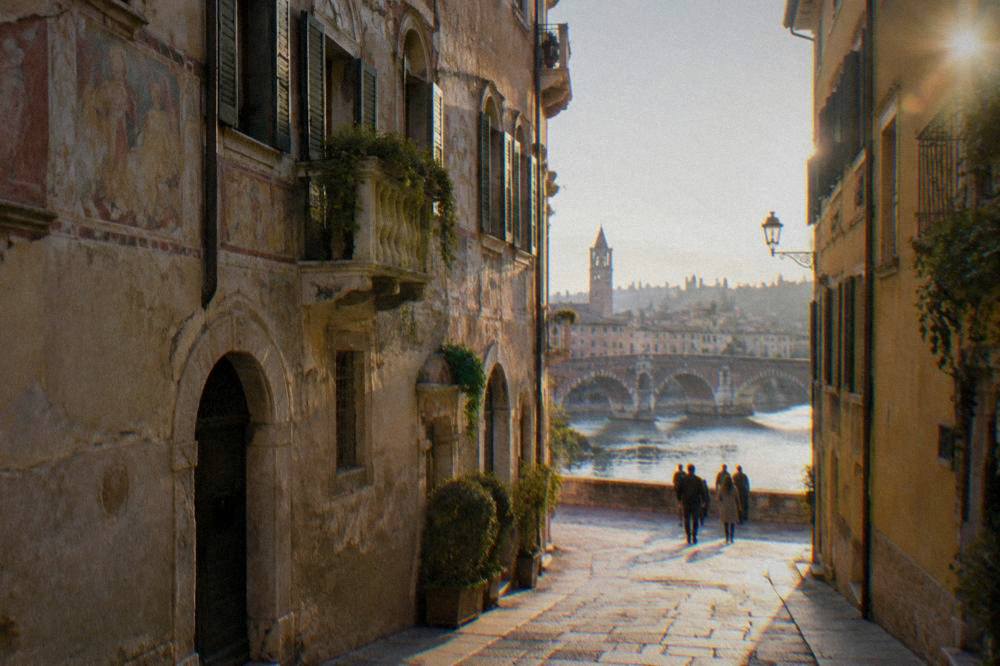
If the second afternoon stays in the city, cross the Ponte Pietra into Veronetta and climb to the Teatro Romano and Museo Archeologico, reported at roughly 9 to 6 euro with an under-2-euro youth rate and Tuesday-to-Sunday hours, then continue up to Castel San Pietro for the rooftop view over the whole river bend. The Ponte Pietra itself is a free open pedestrian bridge, the Roman Theatre sits in its hillside, and the funicular or the steps to Castel San Pietro close the loop.
Veronetta is the student quarter on the left bank, and it is where the city stops posing. The stone seats of the Roman Theatre face the river; the museum above it holds the excavations; the terraces above that hold the view. None of it needs booking, but the exact theatre figures are reported rather than confirmed, so check the current price at the museum entrance before committing the afternoon. The Teatro Romano and Ponte Pietra pages on this site hold the current details.
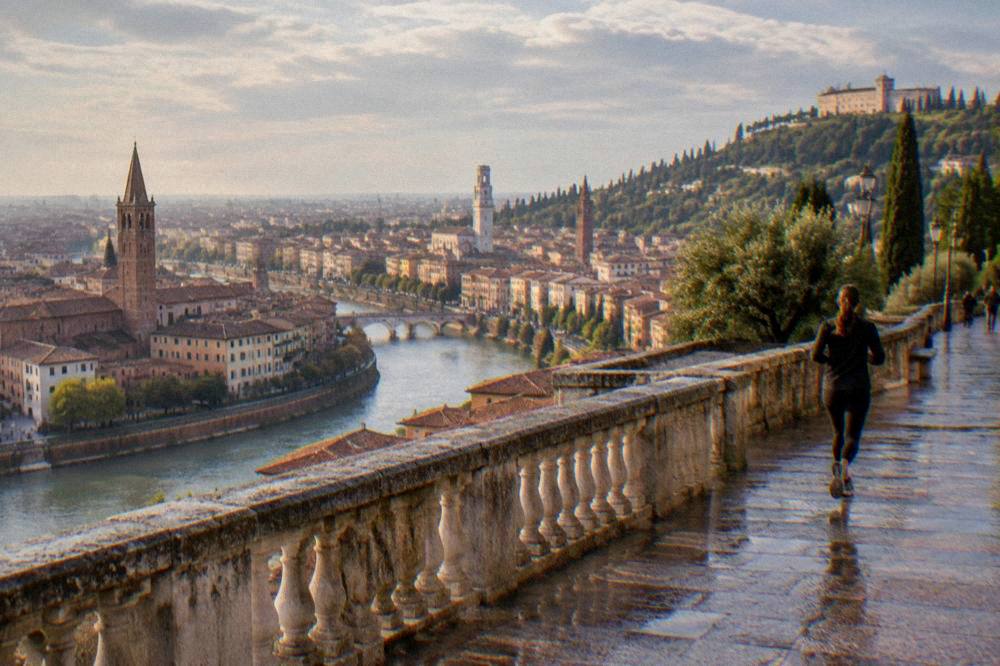
One warning that belongs to two-day visitors specifically: by late day two the tourist map fatigue is real, and the temptation is to skip the climb. Do not. The panorama from Castel San Pietro is the only place where the shape of the city, the tight bend of the Adige around the old town, is visible as a single picture, and it costs nothing but the steps. The Verona map guide places every stop in this itinerary on one sheet for anyone who navigates that way.
Day Two Alternative: Valpolicella Or Lake Garda?
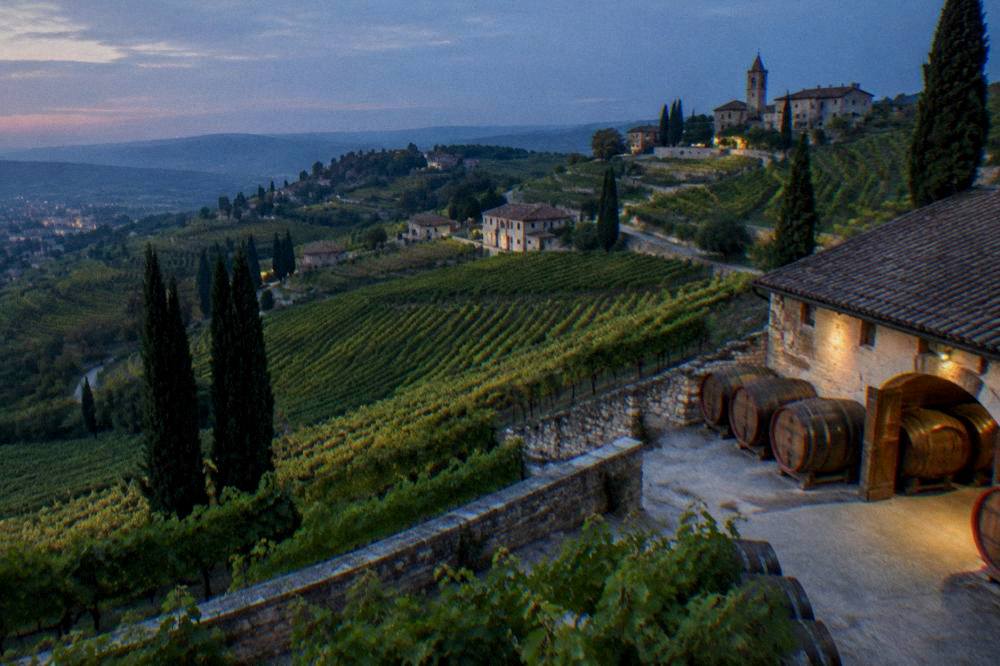
The stronger half-day escape is Valpolicella, the Amarone wine hills about 25 minutes and 21 km by road from the centre, because it is the closest, the most Veronese and the least dependent on timetables. Lake Garda needs a half-day of its own: Sirmione is about 40 minutes by road, Bardolino 37, the town of Garda 42 and Malcesine 84.
The Navigazione Laghi full-lake day pass is 39.50 euro for an adult in 2026, and the north-south passenger service is reported suspended from 2 November 2026 to 12 March 2027.
The wine option is the one this desk would schedule. A guided half-day into Valpolicella covers vineyard visits and Amarone tastings without a car, which matters because the wineries are scattered and bus access is thin. The Valpolicella wine tour guide section on this site is the entry point, and the picks further down include both a vineyard tasting experience and a truffle hunt with lunch for anyone who wants the food version of the same hills.
The lake option, taken as a half-day, is really a Sirmione option: the bus line 164 runs about 55 minutes direct from Porta Nuova, hourly, also serving Peschiera, Lazise, Bardolino and Garda. The Verona and Lake Garda itinerary is the full plan, and the Sirmione and Garda town pages hold the ferry and Scaliger Castle detail. Note that Sirmione is in Brescia province, Lombardy, not Verona province, a distinction that surprises visitors who assume the whole lake is Veneto. If a lake afternoon appeals, spring is the season this site rates for it, and the Verona in spring guide explains why.
| Day two afternoon option | Road time from the centre | Best for | Watch out for |
|---|---|---|---|
| Valpolicella hills | About 25 min, 21 km | Wine, scenery, no timetables | Winery visits need booking |
| Sirmione | About 40 min | Castle, peninsula, spa town | Bus 164 about 55 min, hourly |
| Bardolino | About 37 min | Lakeside walk, wine village | Ferry season ends 1 Nov, reduced |
| Malcesine and Monte Baldo | About 84 min | Cable car to the ridge | Needs most of a day, not a half |
| Stay in Veronetta | None | Roman Theatre, views, quiet | Theatre price is reported only |
What Does Two Days In Verona Cost In Tickets?
Counting only attractions with listed or reported prices, the day-one core costs 12 euro for the Arena, 5 euro for Juliet's courtyard or 12 euro with the house, and a reported 6 euro for the Torre dei Lamberti, so the two-day sight total runs from about 23 euro per person to about 40 euro with the full Juliet route and the tower, before food.
The VeronaCard at 33 euro for 24 hours with transport, or 38 euro for 48 hours, covers the Arena, Juliet's House with an online booking, the tower and the civic museums, but not the Aerobus.
The card math is genuinely itinerary-dependent, and this desk refuses to fake a saving figure. What the Comune di Verona's own notice states is the coverage list and the prices: 33 euro for 24 hours and 38 euro for 48 hours with ATV urban buses included, 29 and 32 euro without transport, digital through the Your Verona web app from 1 September 2026, with old paper cards valid to 31 March 2027. Whether that beats single tickets depends on whether day two's reported-price museums are all visited. Check the entries against the card list before buying.
Two further costs are structural. The tourist tax, the imposta di soggiorno, is charged by the accommodation per person per night and is capped at four nights per person per month; the rate table was not parsed here, so expect it at the desk rather than in a price. Getting in from Verona Villafranca airport is the reported Aerobus line 199 at 7 euro and about 15 minutes, which is the one airport fare that may be printed. Train times to elsewhere, Venice at 1 hour to 1 hour 15, are reported by the operators.
| Ticket | Price | Source |
|---|---|---|
| Arena daytime visit | 12 euro full, 9 reduced, 3 for 18-25 | Comune di Verona price list |
| Juliet's courtyard route | 5 euro since 1 April 2026, online booking | City announcement |
| Juliet's house and balcony route | 12 euro | City announcement |
| Torre dei Lamberti | 6 euro reported | Confirm on site |
| Castelvecchio | 9 euro reported | Confirm on site |
| VeronaCard 24h / 48h with transport | 33 / 38 euro, digital since 1 Sept 2026 | Comune notice |
| ATV urban single | 1.50 euro, 90 minutes | ATV site |
What Is The Weather Like Across Two Days In Verona?
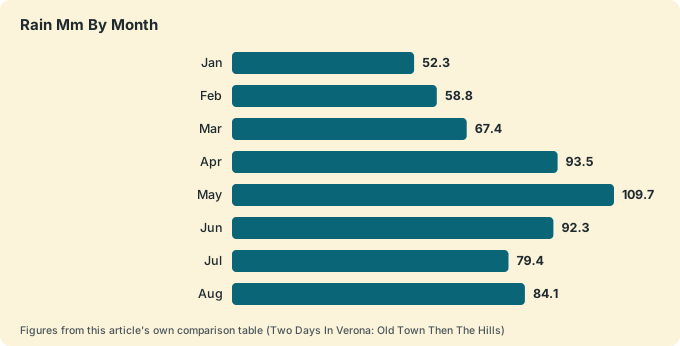
Verona's climate, per the ERA5 reanalysis for 1991-2020, runs from a January mean daily high of 7.3 C with lows below freezing to a July mean daily high of 29.3 C, with November the wettest month at 118.2 mm and January the driest at 52.3 mm, so the two-day plan above holds in every season but wants an umbrella margin in autumn and a slow morning tempo in July and August.
The table below is the full monthly picture, modelled normals rather than a station record, and it is the only climate source this site prints. What it means for the itinerary is simple. Spring and autumn are the two-day sweet spots: April averages a 17.8 C high, October 18.1 C, and both sit under 110 mm of monthly rain. July and August afternoons argue for flipping day two, doing the Castel San Pietro climb early and the museums at midday. Winter days at 7 to 8 C high suit the old town perfectly, and the seasonal guides cover the cold months in full.
| Month | Mean high C | Mean low C | Rain mm |
|---|---|---|---|
| Jan | 7.3 | -0.4 | 52.3 |
| Feb | 9.5 | 0.4 | 58.8 |
| Mar | 14.0 | 3.6 | 67.4 |
| Apr | 17.8 | 7.6 | 93.5 |
| May | 22.3 | 12.2 | 109.7 |
| Jun | 26.6 | 16.5 | 92.3 |
| Jul | 29.3 | 19.1 | 79.4 |
| Aug | 29.1 | 19.4 | 84.1 |
| Sep | 23.7 | 15.1 | 99.7 |
| Oct | 18.1 | 10.5 | 107.2 |
| Nov | 12.3 | 5.3 | 118.2 |
| Dec | 7.8 | 0.8 | 71.1 |
For packing, the site's own answer on what to wear in Verona is the practical companion, and the season guides, spring included above, carry the month-by-month detail. The one rule that matters for this itinerary specifically: day two's hill option, Valpolicella, is an outdoor half-day, so in March or November the city option, Veronetta and the Roman Theatre, is the safer booking. When the plan is set, the trio below covers the three tours this itinerary leans on: the small-group history walk for orientation, the Arena guided entry, and the truffle hunt with lunch for the food day.
Common Questions About Two Days In Verona
Is 2 days in Verona enough?
Two days cover the entire old town, the left bank with the Teatro Romano and Castel San Pietro, and one half-day escape to Valpolicella or Sirmione. What two days do not cover is Lake Garda beyond a single town, or a leisurely opera-plus-day-trip combination in high summer.
What is the best order for two days in Verona?
Day one for Piazza Bra, the Arena, Piazza delle Erbe, the Torre dei Lamberti and Juliet's House, in that order, then day two for Castelvecchio, San Zeno, Veronetta and the Roman Theatre. The order exists because day one is compact and ticketed while day two is spread out and mostly free.
Should I spend day two in Verona or at Lake Garda?
Spend it in Verona if the visit is a first one, because the left bank is the half of the city that one-day visitors never reach. Take the lake only as a deliberate half-day to Sirmione, about 40 minutes by road, and expect the bus to take about 55 minutes each way.
Is the VeronaCard worth it for two days?
The 48-hour card at 38 euro with ATV transport covers the Arena, Juliet's House, the Torre dei Lamberti and the civic museums, per the Comune di Verona's notice. It pays off only if most of those are actually visited, and Juliet's House still needs a separate online booking even for card holders, so compare against the single-ticket totals above before buying.
Can you see Verona and Venice in one trip?
Yes, and the train makes it simple: Venice is one hour to one hour 15 from Verona Porta Nuova, reported by the rail operators. A common split is two nights in Verona with the old town and the hills, then Venice by train, or the reverse using the one day in Verona from Venice plan.
Do I need to book the Arena and Juliet's House in advance?
Juliet's House yes, without exception: since 1 April 2026 entry is online-booked only, via the Teatro Nuovo, at 5 euro for the courtyard or 12 euro for the house. The Arena by day is bought on site at 12 euro full, though a show evening in season needs advance booking on the Arena's own ticket pages.
Two days in Verona, spent this way, closes with the view from Castel San Pietro or a glass of Amarone in the hills, either of which explains why the city keeps its World Heritage listing and its reputation with a single frame. Book Juliet's House first, carry the 2026 ticket facts, and let the second afternoon choose itself.