Veronetta: The Student Quarter Across The River
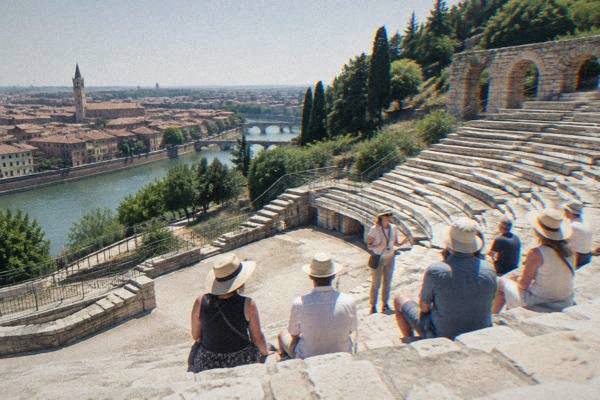
Veronetta is the quarter of Verona that spreads up the hillside across the Adige from the old town, a student and residential area wrapped around the Teatro Romano and the steps to Castel San Pietro.
Short answer
Veronetta is the left-bank district of Verona, Veneto, directly across the Adige from the old town, holding the Teatro Romano, Giardino Giusti approach and the climb to Castel San Pietro.
Veronetta is the quarter of Verona, in Veneto, northern Italy, that rises on the left bank of the Adige, directly opposite the old town and the Arena. The name itself is a nickname: "little Verona", the residential sprawl that grew outside the Roman and medieval walls while the nobility kept the houses inside the river bend. Today it is where the university has settled, where rents and menus sit below the Piazza Bra level, and where two of the city's sightseeing anchors stand, the Teatro Romano and the Museo Archeologico, with the stone stairs to the Castel San Pietro viewpoint climbing the hillside above them. Verona itself is inland, on the Adige, a UNESCO World Heritage city inscribed in 2000; Lake Garda and its towns are a separate day trip, not part of this district at all. This page from the Verona Italy Travel Guide covers what Veronetta is, what stands in it, what entry costs and how the quarter fits a city itinerary.
What Is Veronetta In Verona?
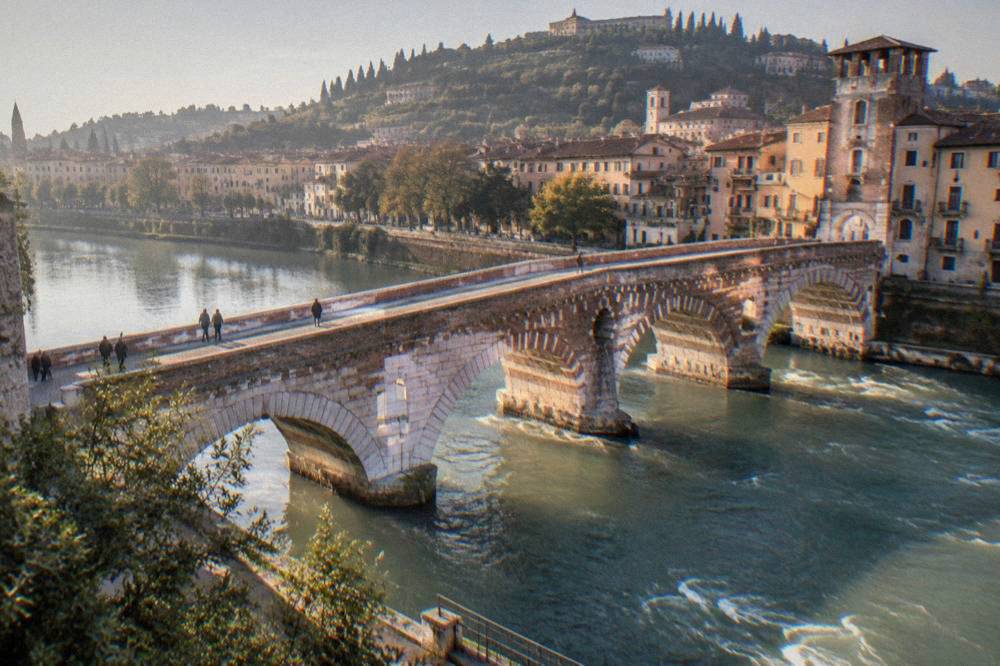
Veronetta is Verona's left-bank quarter, the district on the east side of the Adige that faces the old town across the river, named as a diminutive of the city itself and known today as the student and residential heart of the city. It holds the Teatro Romano and Museo Archeologico, sits beneath the hill of Castel San Pietro, and is crossed by the Ponte Pietra, the Roman pedestrian bridge that links it to the historic centre.
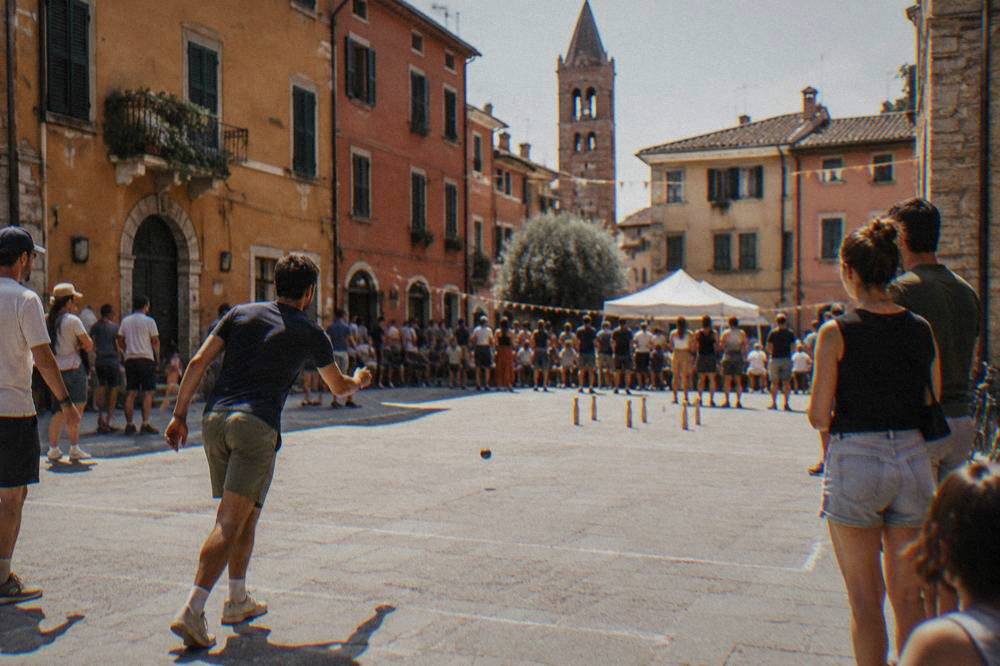
The name records a division that goes back centuries. The walled city inside the Adige bend was Verona proper, the seat of the Scala signoria and the noble palaces; the slope across the water was the overflow, given the affectionate diminutive Veronetta. Nothing in the sources rates the quarter's character beyond that map position, so this guide sticks to what the sources do say: where it is, what stands in it, and what entry to those sights costs. The university's presence is visible in the streets around Via San Francesco and the quarter's lanes, and the Comune's own event listings give Veronetta its one fixed annual appointment, the Tocatì festival of traditional street games, which filled the quarter from 18 to 20 September 2026 with free entry and Ireland as guest of honour.
What that means practically is a district that behaves differently from the old town across the water. The old town concentrates the ticketed sights, Piazza Bra, Piazza delle Erbe, the Casa di Giulietta; Veronetta spreads wider, climbs higher and costs less to walk. Its sights are real ones, not filler, and the climb out of the river valley gives the best free panorama of the city that the sources describe, from the Castel San Pietro terrace over the whole World Heritage rooftops.
Where Is Veronetta On The Map Of Verona?
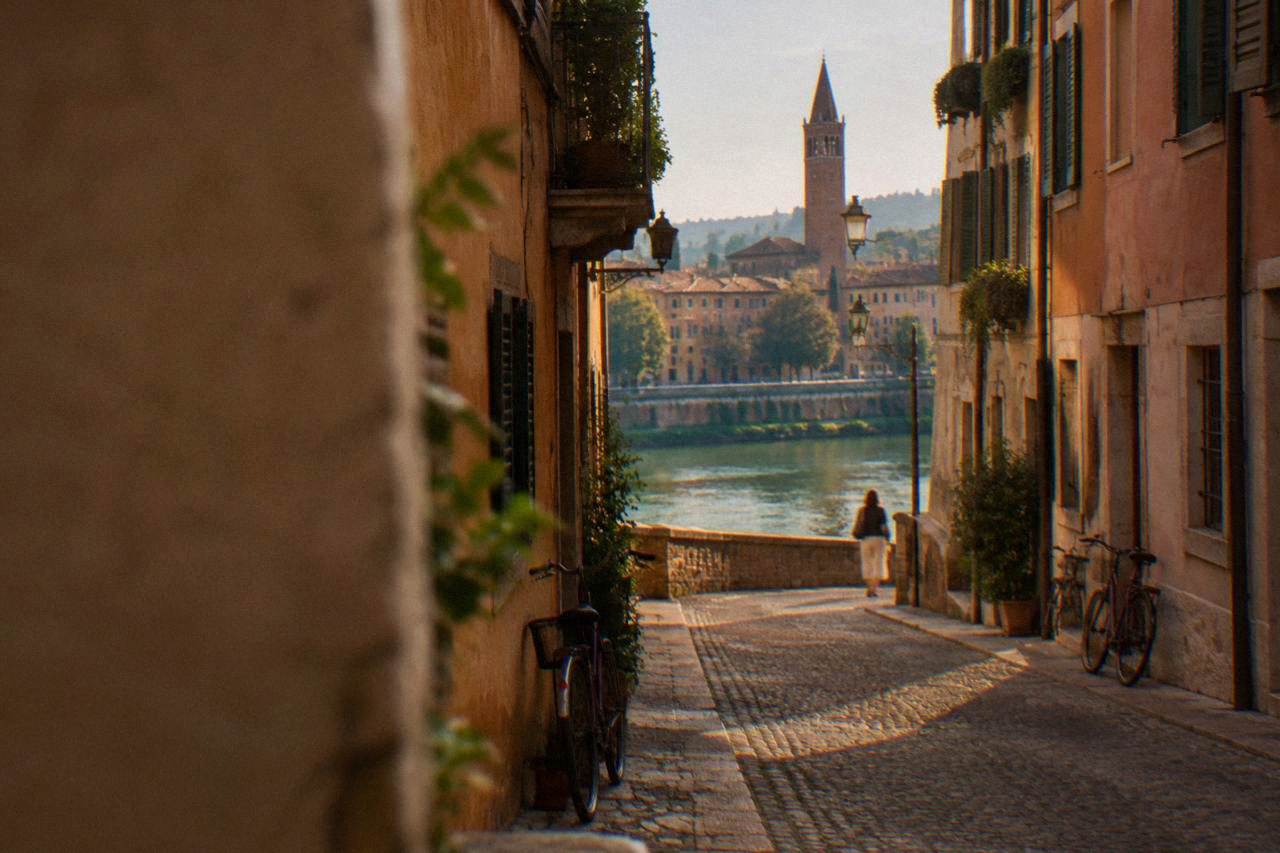
Veronetta occupies the left bank of the Adige in Verona, the slope east of the river that rises from the Ponte Pietra and the Ponte Nuovo crossings up toward the hill of San Pietro. Every part of it faces the old town: across the Ponte Pietra is the Roman city and the Duomo approach, and across the Ponte Nuovo lies the Citta Antica, with the Arena a further short walk southwest inside the old walls.
The city's five mapped areas divide simply, and the site's own area guide places each one by position rather than by any scored character. No neighbourhood in Verona has a sourced safety score, price level or atmosphere rating, so position and walking relation are what the sources support.
| Area of Verona | Position on the map |
|---|---|
| Citta Antica (old town) | Inside the Adige bend, holding the Arena, Piazza Bra and Piazza delle Erbe |
| Veronetta | Left bank, across the river from the old town, rising to the San Pietro hill |
| Borgo Trento | North side of the Adige, upstream of the old town |
| San Zeno district | West of the centre, around the Basilica di San Zeno |
| Porta Nuova station area | South of the centre, around the main rail station |
The crossings matter because they are the whole relationship. Ponte Pietra is the Roman pedestrian bridge, open access and free, and it is the natural way in from the Duomo side of the old town; the wider bridges further downstream carry the busier traffic. The urban bus single in Verona is 1.50 euro for 90 minutes, per ATV's own fare page, though Veronetta's core is walkable from the centre on foot. The historic centre on the far bank is a camera-policed ZTL limited to four entries a month for non-residents, which matters only if a hire car is involved; hotel guests inside the zone drive in free when the hotel registers the plate.
What Are The Main Sights In Veronetta?
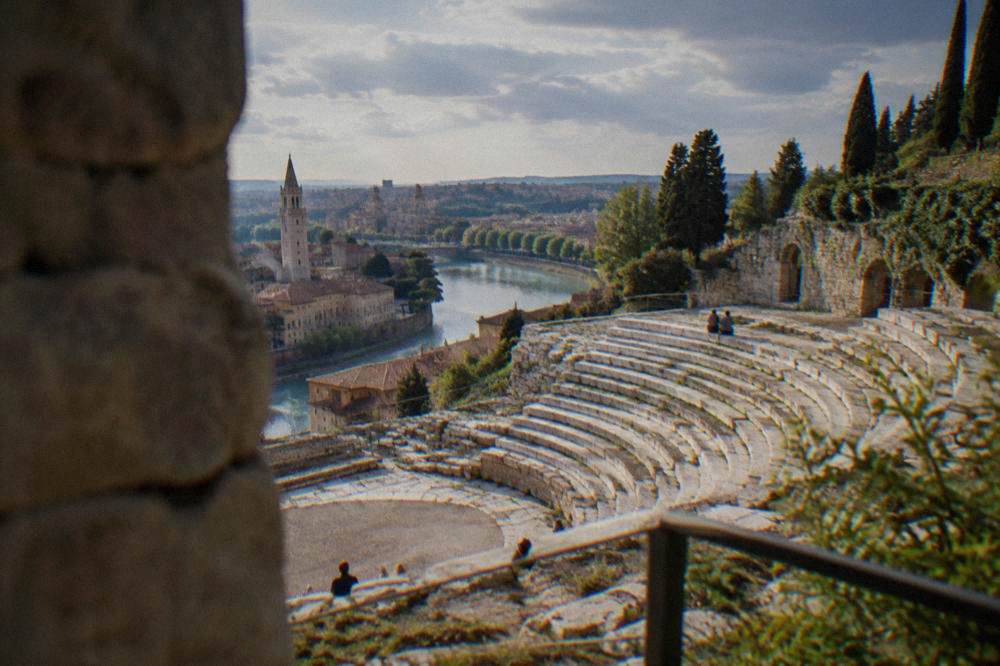
The main sights of Veronetta are the Teatro Romano and its Museo Archeologico, the Roman cavea dug into the hillside, the stone staircase that climbs past them to the Castel San Pietro terrace, and the Giardino Giusti gardens on the quarter's southern edge near the Ponte Nuovo. The Teatro Romano is covered by the VeronaCard under the same civic list as the Arena; Castel San Pietro's terrace is the viewpoint above it, and Giardino Giusti is listed by the tourism board with VeronaCard free or reduced entry.
Start with the Teatro Romano, because it is the quarter's anchor. The site's hours and prices are reported rather than confirmed in readable text, so check the current price and hours on the civic museums' own page before going; what the sources do state plainly is that the Teatro Romano and Museo Archeologico sit on the VeronaCard's covered list, alongside the Arena, Castelvecchio and the Torre dei Lamberti. From the theatre's upper galleries the whole cavea opens toward the river, and the stairs continue above it to the Castel San Pietro terrace, from which the old town's rooftops, the Arena's outer ring and the Adige loop sit in one frame. No source confirms a lift or ramp at any of these sites, so treat the climb as stairs throughout.
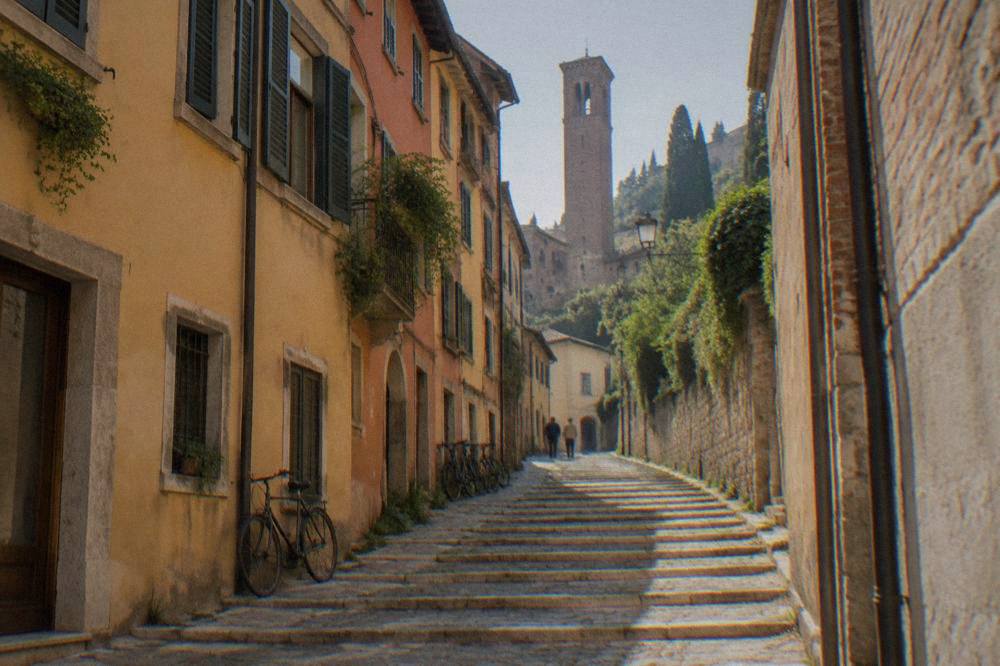
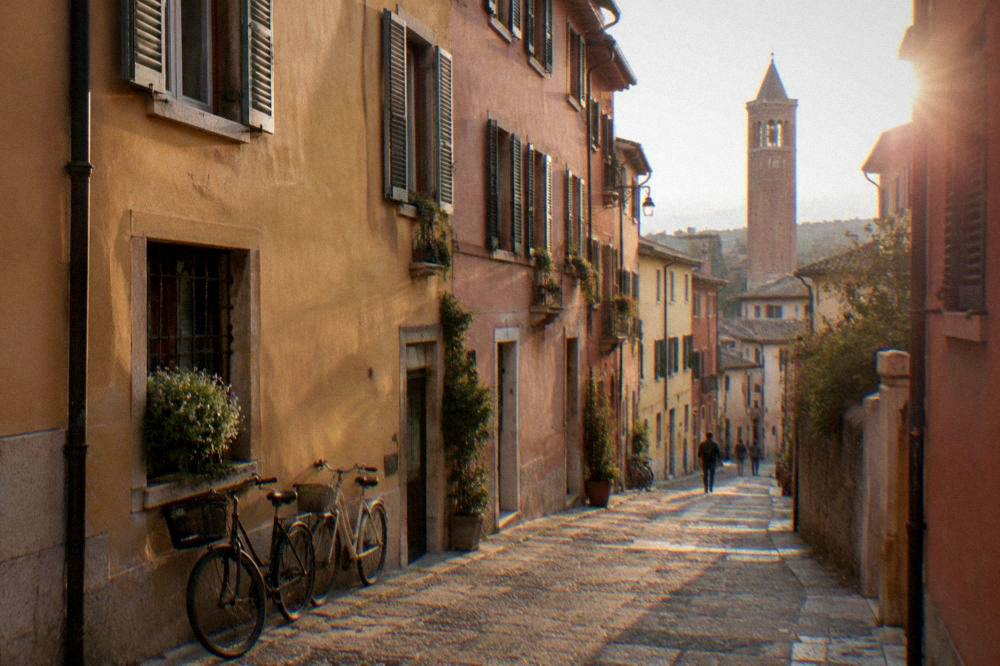
The lower quarter adds the Giardino Giusti, the Renaissance garden whose entry price was not captured by the sources; the tourism board lists it with VeronaCard free or reduced entry, so card holders should confirm the current terms on the garden's own channels. Around and between these sights the quarter itself is the attraction: lanes of painted plaster, student bars, the university buildings and the churches that the Chiese Vive convention folds into the VeronaCard.
A guided walk puts the quarter in context without the guesswork, and the roster's audio-and-written-guide walking tour covers the centre and river crossings at a walker's pace. The self-guided Verona walking tour with audio and written guide{: target="_blank"} is one option, and Check availability on the operator's live listing for current times.
| Sight in or beside Veronetta | What the sources say about entry |
|---|---|
| Teatro Romano and Museo Archeologico | On the VeronaCard covered list; current price and hours reported only, confirm before going |
| Castel San Pietro terrace | Viewpoint above the Teatro Romano, reached by stairs |
| Giardino Giusti | Listed with VeronaCard free or reduced entry; price not published in the sources |
| Ponte Pietra | Open access, free, pedestrian |
| Arena di Verona (across the river) | 12 euro full daytime ticket, 9 reduced, 3 for visitors aged 18 to 25, per the Comune's price list |
Is Veronetta Worth Visiting On A Verona Trip?
Veronetta is worth visiting for three reasons the sources support: its sights are on the same civic ticket system as the Arena, its hillside gives the terrace view over the World Heritage old town, and its September festival, Tocatì, fills the quarter with a free street-games programme that ran 18 to 20 September 2026 as its latest edition. A Verona trip of two days or more has room for it; a rushed single day may not.
The honest framing is positional. The old town holds the hits: the Arena, Juliet's House, Piazza delle Erbe. Veronetta holds depth. The Teatro Romano pairs naturally with the Arena, two Roman performance buildings on opposite banks, and the Comune's own price list treats them as one civic family. The climb to Castel San Pietro costs nothing but effort and returns the panorama that postcards of the city are shot from. The quarter's restaurants and bars go unnamed here, and hotel and apartment prices in the area are not stated either; what can be said is that the tourist tax applies citywide, is collected by the accommodation, and is capped at four nights per person per month.
Timing the visit against the calendar helps. The Arena's opera season ran 5 June to 12 September in 2026 and returns 11 June to 11 September in 2027, and on opera evenings the whole river bend, both banks included, fills early. Tocatì is the quarter's own event, free and in its streets. Christmas market dates for 2026 had not been published by the Comune when this page was written, so confirm locally if a December trip is planned.
How Does A Veronetta Visit Fit A Verona Itinerary?
A Veronetta visit fits a Verona itinerary as the second half of a centre day or the morning of day two: cross the Ponte Pietra from the Duomo side, visit the Teatro Romano, climb to Castel San Pietro, then descend through the quarter's lanes toward the Giardino Giusti. The site's one-day itinerary puts the river crossings late in the day; a two-day itinerary gives Veronetta a full half day without squeezing the Arena.
The sequencing logic is simple. The old town's sights cluster and queue; Veronetta's spread and climb. Doing the Arena and Piazza Bra first, in the morning, leaves the afternoon for the quieter bank, and the late light across the valley is the reason the terrace is worth the stairs. Families get the same benefit, with the caveat that step-free access at the Teatro Romano or anywhere on the climb remains unconfirmed, so the Verona with kids itinerary treats the hill as an optional extra rather than a given.
| Itinerary shape | Where Veronetta slots in |
|---|---|
| One day in Verona | Late afternoon: Ponte Pietra, Teatro Romano, terrace view, return by dusk |
| Two days in Verona | Day two morning: full quarter including Giardino Giusti |
| One day from Venice | Centre sights only; Veronetta's terrace if the train back is late |
| Verona plus Lake Garda | City day one with Veronetta, lake day two |
Visitors arriving from Venice for a single day have the tightest arithmetic, and the one day in Verona from Venice itinerary is built around exactly that constraint; trains run the Venice to Verona corridor in about an hour to an hour and a quarter, per the reported timetables. For anyone staying longer, the two days in Verona itinerary gives the left bank its own block, and the things to do in Verona overview places Veronetta among the city's five mapped areas.
What Does A Visit To Veronetta Cost In Verona?
A visit to Veronetta costs nothing to walk: the quarter's lanes, the Ponte Pietra and the Castel San Pietro terrace are open access and free. The ticketed items are the Teatro Romano, whose current price is reported rather than confirmed, and the Giardino Giusti, whose price is likewise unconfirmed; the VeronaCard covers the Teatro Romano and gives free or reduced entry to the Giardino Giusti, and the card costs 33 euro for 24 hours or 38 for 48 hours with ATV buses from 1 September 2026.
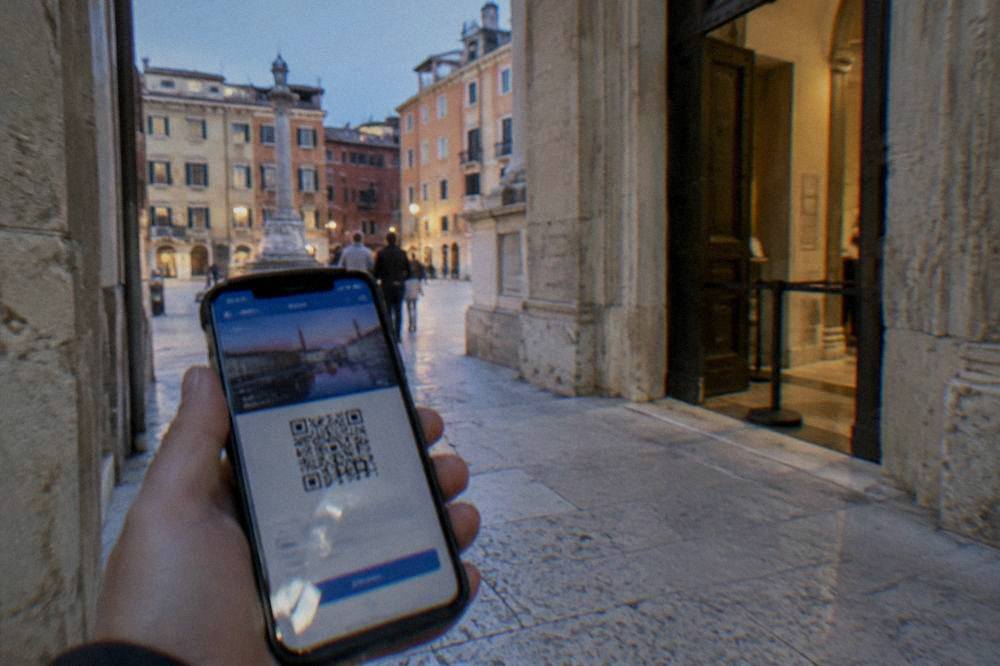
The VeronaCard's 2026 change matters here more than anywhere else in the city, because the left bank is where the card earns its keep. From 1 September 2026 the card is digital, delivered through the "Your Verona" web app, and it covers the civic museums on both banks, including the Arena, the Teatro Romano, Castelvecchio and the Torre dei Lamberti, plus the Chiese Vive churches. The Comune's notice states the prices plainly.
| VeronaCard type | With ATV urban buses | Without buses |
|---|---|---|
| 24 hours | 33 euro | 29 euro |
| 48 hours | 38 euro | 32 euro |
Two cautions from the Comune's own notice. The Aerobus from the airport is not included, so the reported 7 euro airport fare stays separate. And Juliet's House, back across the river, requires an online booking even for card holders, because the courtyard has been ticketed since 1 April 2026, 5 euro for the courtyard route and 12 euro with the house and balcony. Never compute a saving off the card; whether it pays depends on how many covered sights a day includes. For travellers who want the museums handled in one purchase, the city card with Arena priority entry is on the roster, and Check availability shows the current terms on the operator's listing.
| Ticketed sight near the quarter | 2026 figure, with source status |
|---|---|
| Arena di Verona, daytime visit | 12 euro full, 9 reduced, 3 euro aged 18 to 25, per the Comune's price list |
| Juliet's House, courtyard route | 5 euro since 1 April 2026, online booking, entry via Teatro Nuovo |
| Juliet's House, house and balcony | 12 euro, same booking system |
| Torre dei Lamberti | Reported at 6 euro full, free with VeronaCard; confirm on the tower's own site |
| Teatro Romano | Reported at about 9 euro full; covered by VeronaCard; confirm before going |
When Is The Best Time To Walk Through Veronetta?
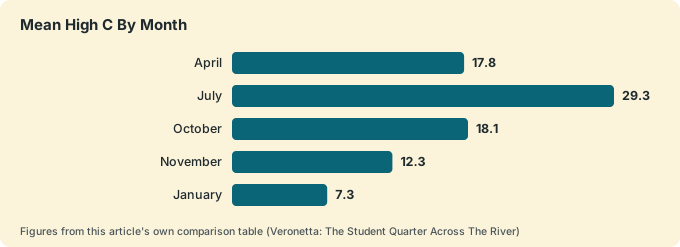
The best time to walk through Veronetta is spring or early autumn: the ERA5 reanalysis for Verona, 1991 to 2020, shows April mean highs of 17.8 C with 93.5 mm of rain and October highs of 18.1 C with 107.2 mm, conditions that suit a hill climb. July and August average 29.3 and 29.1 C highs, which makes the staircases to Castel San Pietro a morning job, and November is the wettest month at 118.2 mm.
The climb is the reason the calendar matters. The terrace is reached by stone stairs, and the same reanalysis shows January lows of minus 0.4 C with highs of 7.3 C, so a winter walk is cold rather than blocked, provided the light lasts. Summer visitors should do the quarter before the afternoon heat and be off the hill by early evening, when opera nights pull the crowds toward the Arena across the river; the 2027 season runs 11 June to 11 September.
| Month | Mean high C | Mean low C | Rain mm |
|---|---|---|---|
| April | 17.8 | 7.6 | 93.5 |
| July | 29.3 | 19.1 | 79.4 |
| October | 18.1 | 10.5 | 107.2 |
| November | 12.3 | 5.3 | 118.2 |
| January | 7.3 | -0.4 | 52.3 |
Rain in Verona is spread across the year rather than concentrated in one season, and the figures above are modelled normals from the ERA5 reanalysis, 1991 to 2020, not a station record. The practical rule for the left bank is the same as for the old town: mornings for the climb, afternoons for the lanes, and a rain plan that leans on the covered sights, the Teatro Romano's museum galleries among them.
Where Does Veronetta Sit Among Verona's Other Areas?
Veronetta sits directly across the Adige from the Citta Antica, Verona's old town, and uphill from everything else: Borgo Trento lies upstream on the opposite bank to the northwest, the San Zeno district spreads west around its basilica, and the Porta Nuova station area lies south, so Veronetta is the easternmost of the city's five mapped areas and the only one that climbs a hill.
Each of the other areas has its own page and its own logic. The Citta Antica holds the Arena and the ticketed headliners. Borgo Trento is the quieter northern bank, and the San Zeno district is the basilica quarter furthest from the river crossings. The Porta Nuova station area is where trains arrive, about a quarter of an hour's reported ride from Verona Villafranca airport on the Aerobus. Choosing between them is a matter of position: Veronetta trades proximity to the headliners for space, stairs and the terrace.
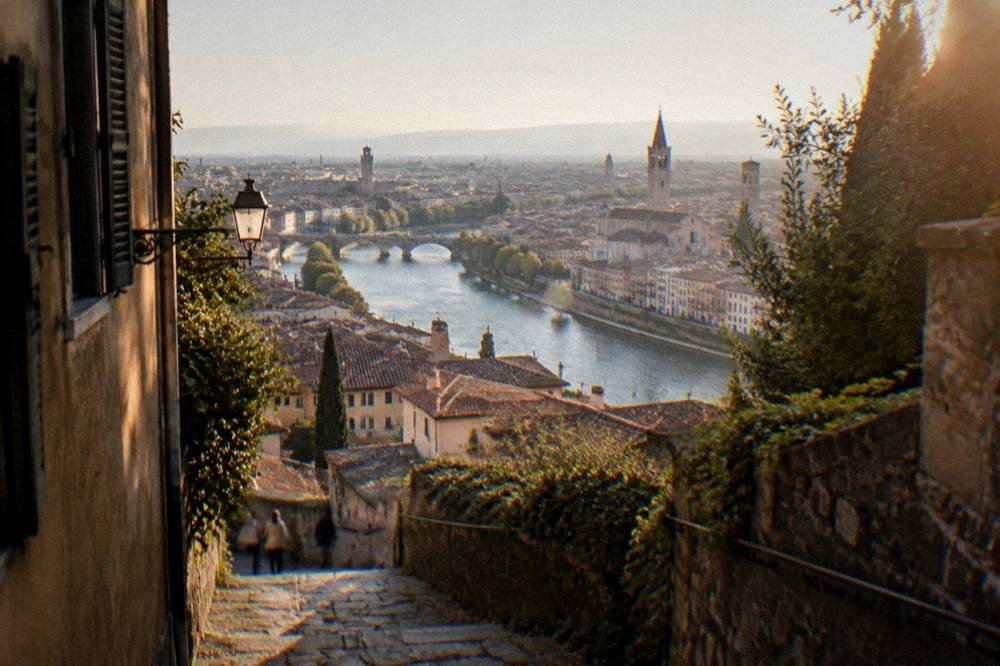
The contrast with the old town is the one that decides most itineraries. Inside the bend, everything is flat, ticketed and busy; across the Ponte Pietra, the gradient starts immediately and the crowd thins within two streets. Both banks belong to the same World Heritage inscription, awarded to the city in 2000, and the view from the San Pietro terrace is the one place the whole inscription reads as a single picture: the river loop, the Arena's surviving ring and the rooftops the listing protects.
A food and wine walk makes a natural pairing with the quarter, since the tasting stops of the guided food tour sit within walking range of both banks; Check availability for the current schedule on the operator's listing. Beyond the city, the quarter's position makes it a reasonable base for the wine hills: the Valpolicella towns are about 25 minutes by road from the Arena, and Soave about 33, drive times computed over standard routing, while Lake Garda day trips start from the 37 to 84 minute range depending on the town. Those are separate journeys, planned on the Lake Garda page, not extensions of a Veronetta walk.
Common Questions About Veronetta In Verona
Is Veronetta in Verona walkable from the old town?
Yes. Veronetta begins directly across the Ponte Pietra, a free pedestrian bridge, and the Teatro Romano sits a short walk up from the crossing. The climb to the Castel San Pietro terrace is on stone stairs, and step-free access on that route is not assured.
What does the Teatro Romano in Veronetta cost?
The current price and hours are reported rather than confirmed in readable text, so check the civic museums' own page before going. The site is on the VeronaCard covered list, which from 1 September 2026 costs 33 euro for 24 hours or 38 euro for 48 hours with ATV buses.
Is the Castel San Pietro viewpoint free?
The terrace is the open viewpoint above the Teatro Romano, reached by stairs. No admission figure for it appears in the sources, and no lift or ramp is confirmed, so treat it as an open-air stair climb with a panorama over the old town.
When is the Tocati festival in Veronetta?
Tocati, the international festival of traditional street games, ran 18 to 20 September 2026 with free entry and Ireland as guest of honour, per the Comune's event listing. It is an annual event, and 2027 dates had not been published, so confirm locally closer to the time.
Can you see the Arena from Veronetta?
Yes, from height. The San Pietro terrace above the Teatro Romano looks over the whole old town, including the Arena's outer ring, the Adige loop and the rooftops of the World Heritage inscription awarded in 2000.
Is Veronetta a good place to stay in Verona?
No source rates any Verona neighbourhood for price, safety or character, and no hotel or apartment price was found, so no recommendation can be made. What the sources do support is position: Veronetta is across the river from the old town, uphill, with the tourist tax capped at four nights per person per month citywide.