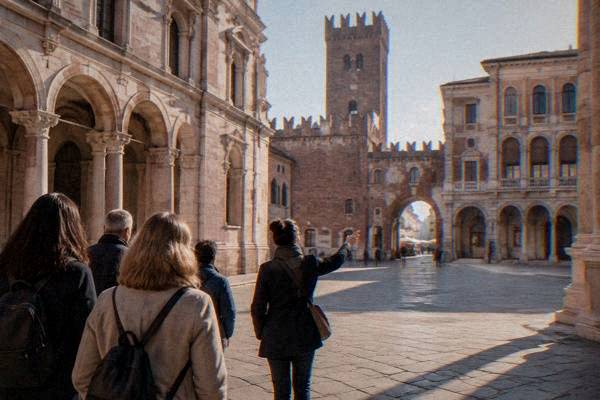
Citta Antica: The Old Town Inside The Adige Loop
Verona's Citta Antica is the compact World Heritage old town inside the tight loop of the Adige river: the Arena, Piazza delle Erbe, Juliet's House and the Scaliger heart of the city, all within a short walk of each other.
Short answer
The Citta Antica is the historic centre of Verona, in Veneto, northern Italy: the UNESCO-listed old town inside the bend of the Adige, anchored by the Arena at Piazza Bra and walkable end to end in well under an hour. Daytime entry to the Arena costs 12 euro full price, Juliet's courtyard is ticketed at 5 euro since 1 April 2026, and the centre is a camera-policed ZTL with limited car access for non-residents.
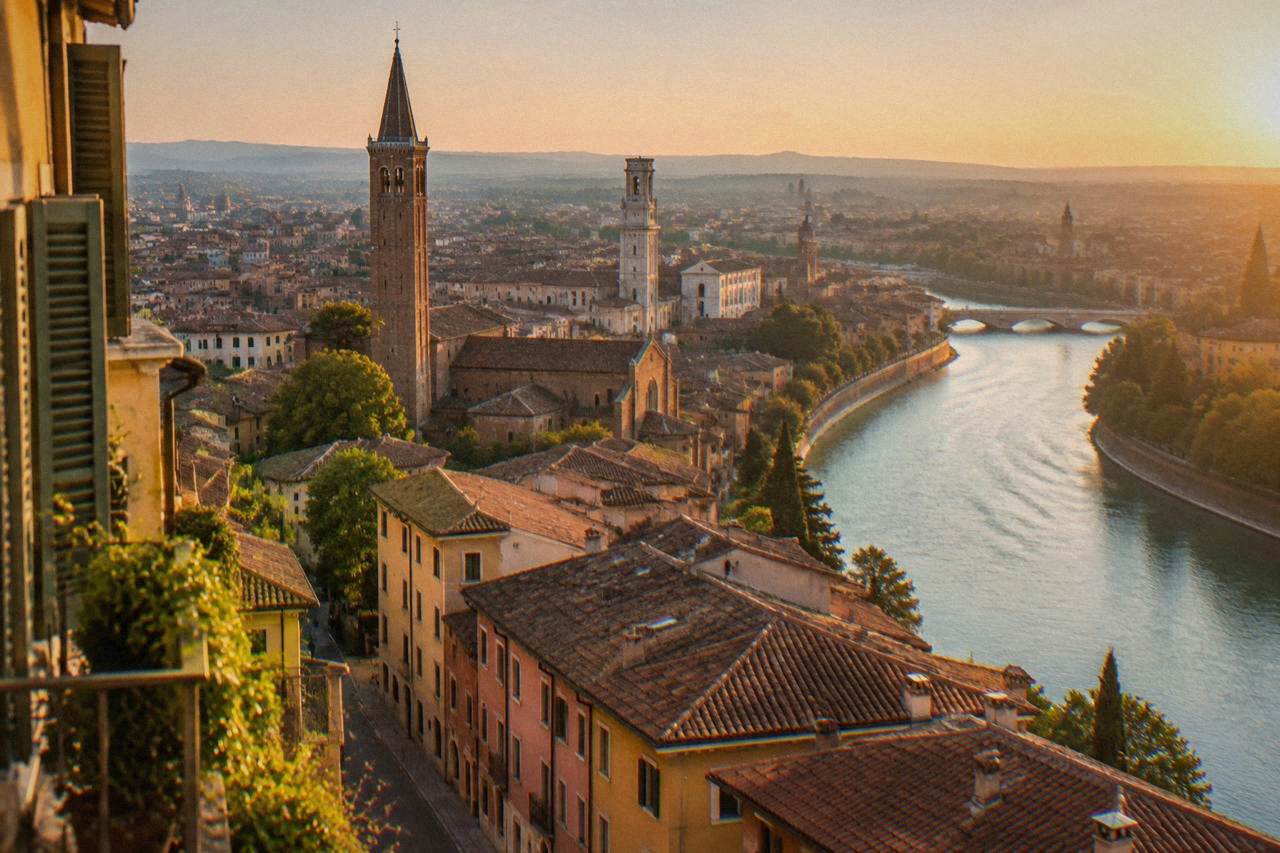
The Citta Antica of Verona is the old town that sits inside the tight double bend of the Adige river, a piece of geography that has shaped the city since Roman times. The Arena stands at its south-western corner on Piazza Bra; from there the streets run north-east through Piazza delle Erbe and Piazza dei Signori to the cathedral quarter and Ponte Pietra, where the river closes the loop. The whole district was inscribed on the UNESCO World Heritage List in 2000 as the "City of Verona", recognised for the way two thousand years of urban layers sit on top of each other without erasing what came before. This page from the Verona Italy Travel Guide covers what the Citta Antica holds, what entry costs in 2026, how to walk it, and how the restricted-traffic zone works if a car is part of the plan.
What Is The Citta Antica Of Verona?
The Citta Antica is the historic centre of Verona, in Veneto, northern Italy: the UNESCO-listed old town that fills the loop of the Adige river, bounded by the water on three sides and anchored by the first-century Arena at Piazza Bra. It is compact, largely pedestrian in feel, and holds the Roman, medieval and Renaissance layers of the city within a walk of roughly twenty minutes end to end, from Piazza Bra to Ponte Pietra.
The name simply means "old city", and in Verona it maps onto something precise: the land the river encircles. The Adige arrives from the north, turns sharply west around the Castel San Pietro hill, loops back east under Ponte Pietra, and swings south past Castelvecchio before leaving town. Almost everything a visitor comes to Verona for sits inside that horseshoe or on its immediate edge. The map guide lays out the same geography street by street.
The UNESCO inscription, granted in 2000, covers this urban fabric as a whole rather than a single monument. The listing cites the city's evolution as a fortified town and its exceptional collection of monuments, and the Comune di Verona's own World Heritage pages treat the historic centre as the inscribed property. In practice that means the old town's value lies in the ensemble: a Roman gate at Porta Borsari feeding into a medieval market square, a Scaliger palace beside a Renaissance loggia, a Roman bridge whose stones carry the marks of a long rebuild history.
Verona itself is an inland city, and the Citta Antica is nowhere near a lake. Lake Garda and its towns, Sirmione, Bardolino, Garda and Malcesine, are 22 to 39 km west and are day trips, not neighbourhoods. The old town's water is river water, and it moves fast.
What Are The Main Sights Inside The Verona Old Town?
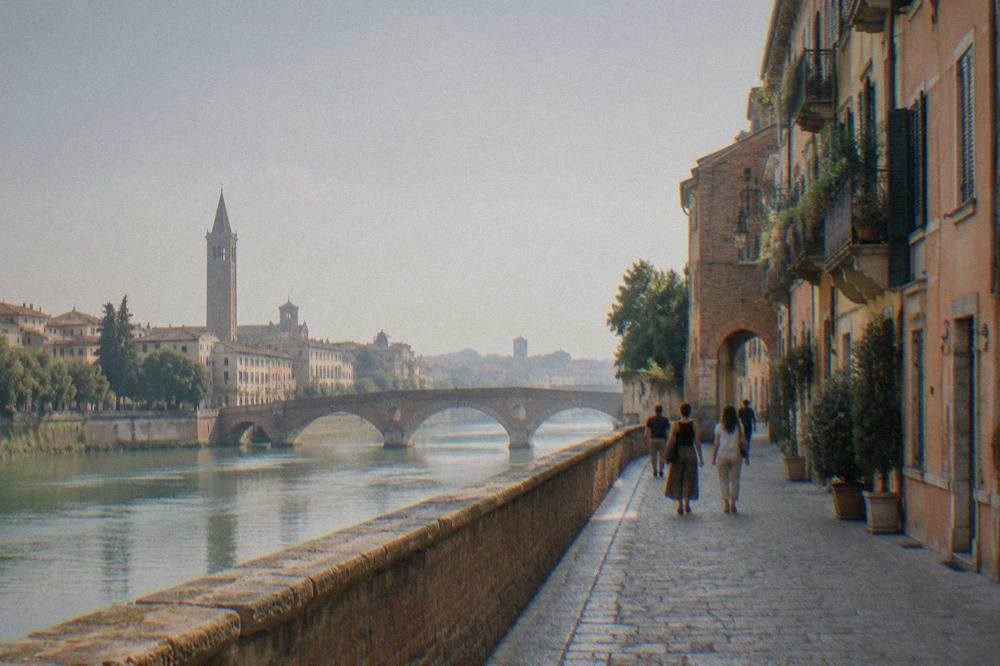
The Citta Antica holds the Arena di Verona at Piazza Bra, Casa di Giulietta, Piazza delle Erbe and the adjoining Piazza dei Signori, the Torre dei Lamberti, Castelvecchio at the western edge, the Duomo complex, Ponte Pietra on the river, and the Teatro Romano across the water. Every one of these sits inside the Adige loop or on its bank, and the fixed open spaces, the two main squares and the Roman bridge, cost nothing to enter.
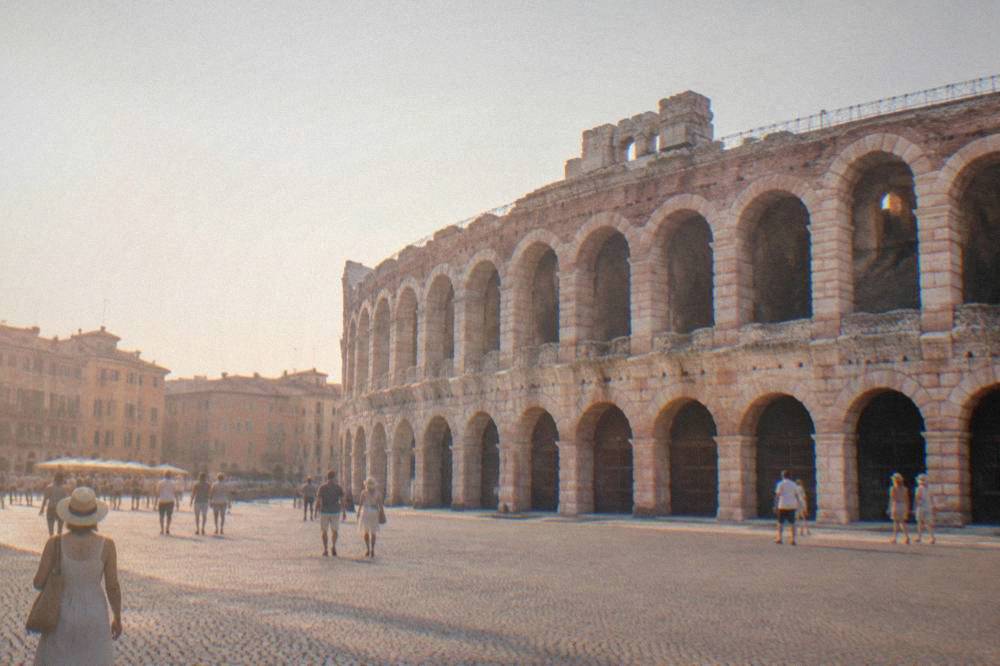
The Arena is the natural starting point, standing at the edge of Piazza Bra where the old town begins. Per the Arena's own site it dates to about 30 AD, making it older than the Colosseum, and its current opera configuration seats about 30,000. It works two ways: a daytime visit to the amphitheatre, and the summer opera festival, whose 2026 edition ran 5 June to 12 September and whose 2027 season is announced for 11 June to 11 September.
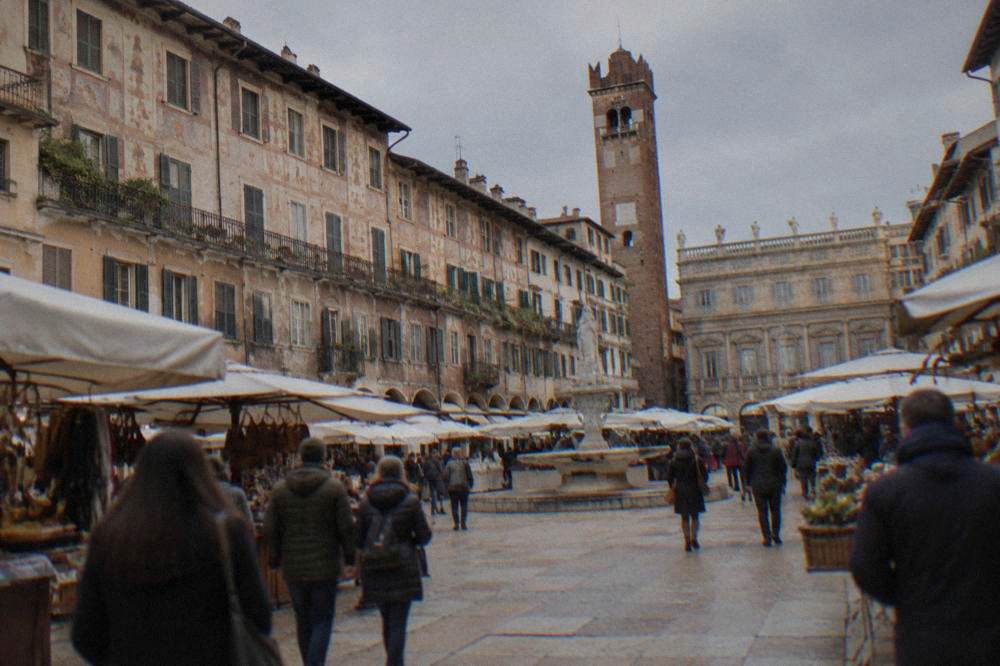
From Piazza Bra, Via Mazzini, the paved shopping street, runs north-east to Piazza delle Erbe, the old Roman forum and still the market heart of the city. Piazza dei Signori adjoins it, with the Scaliger tombs, the Arche Scaligere, fenced beside Santa Maria Antica. A few steps south stands the Casa di Giulietta, whose entry rules changed on 1 April 2026 and are covered below. The Torre dei Lamberti rises between the two squares and, per the tower's own site, charges 6 euro full price for the climb.
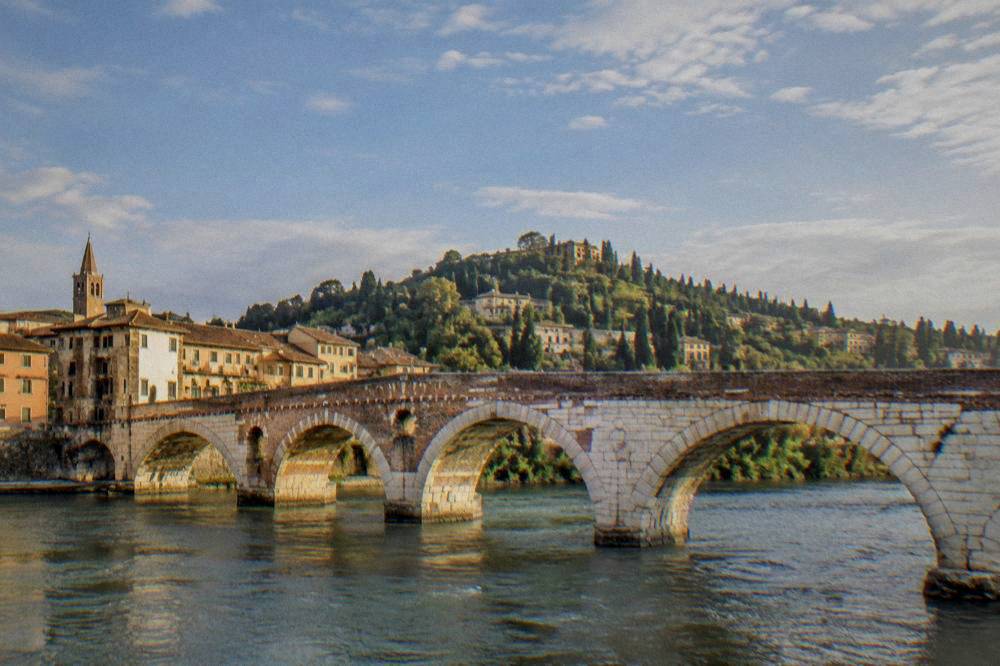
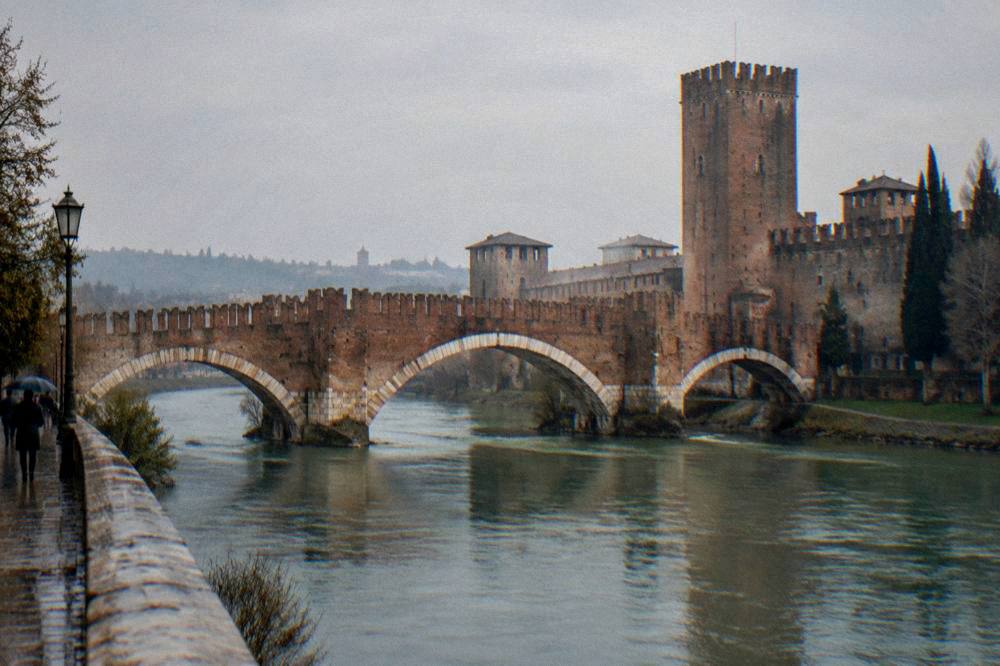
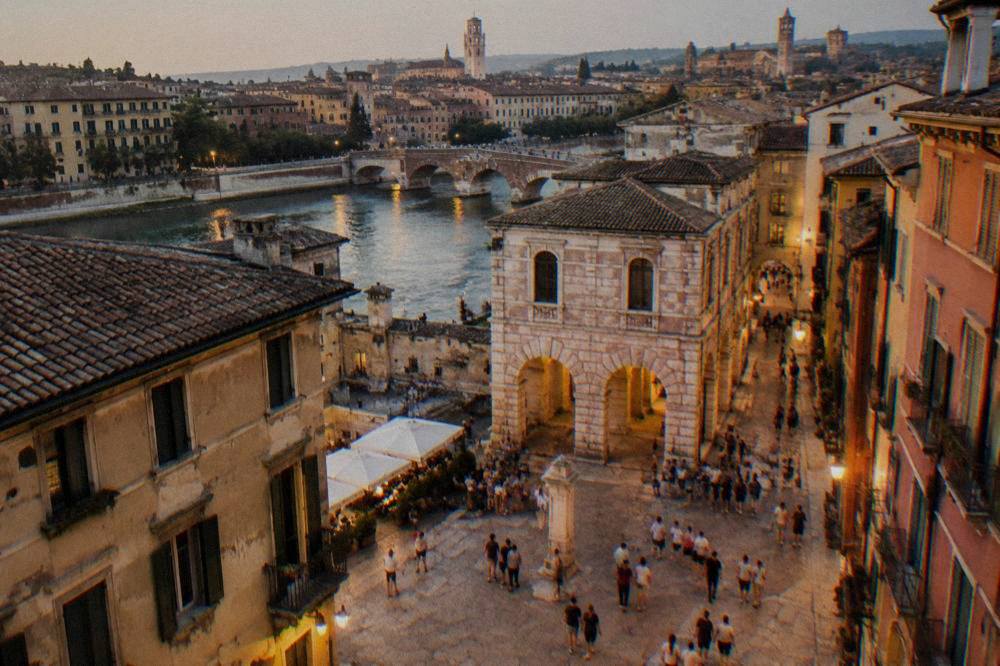
The river edge supplies the rest. Castelvecchio and its crenellated bridge guard the western exit; the Duomo quarter and Sant'Anastasia fill the north-east; Ponte Pietra crosses to the Teatro Romano and the funicular path up to Castel San Pietro, whose terrace gives the classic view down onto the loop.
How Much Do Tickets Cost In The Verona Old Town In 2026?
A daytime visit to the Arena costs 12 euro full price, with 9 euro reduced entry for groups of 15 or more, over-65s and other concessions, and 3 euro for visitors aged 18 to 25 from EU and reciprocity countries, per the Comune di Verona's price list. Juliet's courtyard costs 5 euro, or 12 euro with the house and balcony, since 1 April 2026, booked online. The digital VeronaCard from 1 September 2026 costs 33 euro for 24 hours or 38 for 48 with ATV buses, 29 and 32 without.
Three pricing changes define the 2026 old town, and older guides get all three wrong. The Arena is visitable by day: the Comune's price list confirms 12 euro full, 9 reduced, 3 euro for the 18-to-25 band, free under 18, and 1 euro on the first Sunday of the month from November to March. Reported hours, per the civic museums' site, are Tuesday to Sunday 9:00 to 19:00, closed Monday, with early closing on opera evenings; confirm the day's calendar before going.
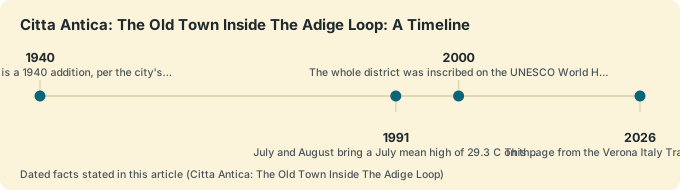
Juliet's House stopped being a free courtyard on 1 April 2026. The courtyard route is 5 euro, the full house-and-balcony route 12 euro, booking is online, and entry is now via the Teatro Nuovo on Piazzetta Navona rather than the old lane off Via Cappello. The Casa di Giulietta guide has the detail. The balcony itself is a 1940 addition, per the city's tourism office, not a medieval structure.
The VeronaCard went digital on 1 September 2026 through the "Your Verona" web app: 33 euro for 24 hours and 38 for 48 hours including ATV urban buses, or 29 and 32 euro without transport. The card covers civic sites including the Arena, Castelvecchio and the Torre dei Lamberti, but Juliet's House still requires an online booking even for card holders, and the airport Aerobus is not included.
A quick cost picture for the fixed sights, from the sources above:
| Sight in the Citta Antica | Full entry | Notes |
|---|---|---|
| Arena di Verona (day visit) | 12 euro | 9 euro reduced, 3 euro ages 18-25, free under 18; 1 euro first Sundays Nov-Mar |
| Casa di Giulietta courtyard | 5 euro | Online booking, entry via Teatro Nuovo, since 1 April 2026 |
| Casa di Giulietta house and balcony | 12 euro | Includes courtyard route |
| Torre dei Lamberti | 6 euro | Per the tower's own site; free with VeronaCard |
| Piazza delle Erbe, Piazza dei Signori, Ponte Pietra, Porta Borsari | Free | Open public space at all hours |
Churches inside the loop, the Duomo complex, San Zeno, Sant'Anastasia and San Fermo, are covered by the VeronaCard under the Chiese Vive convention, but individual ticket prices and hours vary: check at the door or on the VeronaCard site before planning a church circuit.
How Do You Walk The Citta Antica Of Verona In One Day?
A one-day walk of the Citta Antica runs Piazza Bra and the Arena, then Via Mazzini north to Piazza delle Erbe and Piazza dei Signori, on to the Torre dei Lamberti and Juliet's House, then east to Sant'Anastasia and the Duomo, finishing at Ponte Pietra and the climb or funicular path to Castel San Pietro for the view over the loop. The whole circuit is under four kilometres of walking with stops.
The order matters less than the geometry: the old town is a loop, so a visitor never needs to backtrack if the route runs in one direction. Start at the Arena in the morning, when the amphitheatre opens at 9:00 on days it is open, then take Via Mazzini while the shops are still shuttered and the street belongs to walkers. Piazza delle Erbe rewards a slow lap: the market stalls, the frescoed facades, the Madonna Verona fountain at its centre. Piazza dei Signori, through the arched passage of the della Ragione, is quieter, framed by loggias and the Scaliger tombs.
The afternoon half heads east. Juliet's House sits a few streets south of the squares, and with the ticketed courtyard the queue problem has largely moved online. Sant'Anastasia and the Duomo complex carry the route toward the river, and Ponte Pietra ends it: the Roman bridge, partly rebuilt, with the Teatro Romano on the far bank and Castel San Pietro above. The one-day itinerary expands this route with timings, and the two-day version adds Veronetta, the quarter across the river, at a slower pace.
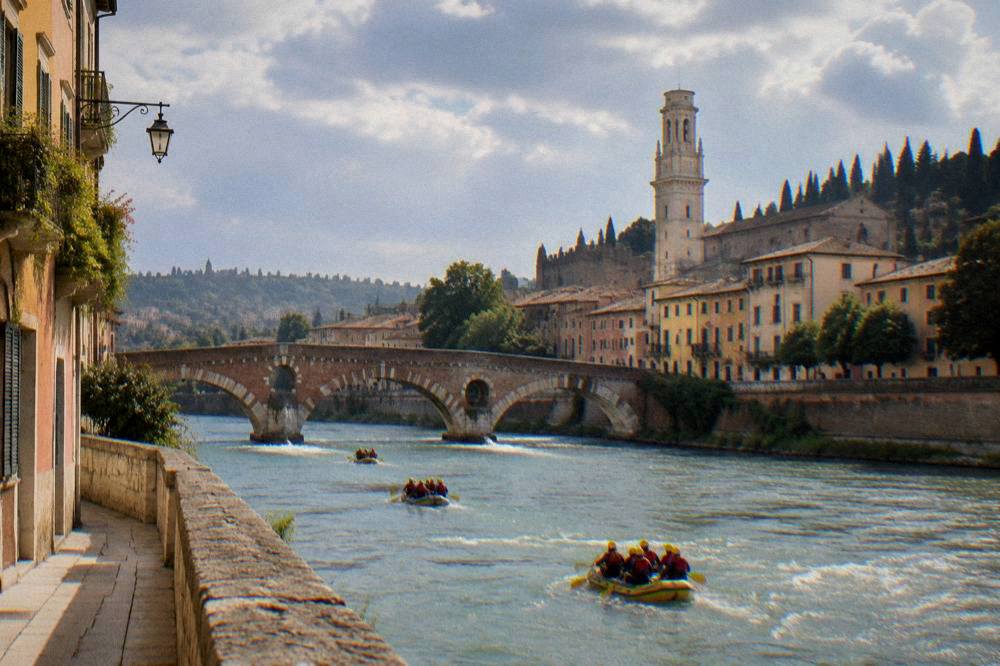
Two additions earn their keep. The Adige itself is the old town's best open space in summer, and a guided rafting trip on the river passes under the historic bridges inside the loop; the operator's listing covers the route. And an evening walk reverses the morning circuit with different light on the stone, a format the moonlight walking tours have built themselves around.
A walking plan for one day in the old town:
| Time | Stop | What it involves |
|---|---|---|
| Morning | Piazza Bra and the Arena | Daytime amphitheatre visit, 12 euro full price |
| Mid-morning | Via Mazzini to Piazza delle Erbe | Pedestrian shopping street, market square |
| Midday | Piazza dei Signori and Arche Scaligere | Loggias, Scaliger tombs, free squares |
| Early afternoon | Casa di Giulietta | Courtyard 5 euro or house 12 euro, booked online |
| Afternoon | Sant'Anastasia toward the Duomo | Check entry at the door |
| Late afternoon | Ponte Pietra and Castel San Pietro | Roman bridge, terrace view over the loop |
Where Does The Citta Antica Sit Among Verona's Neighbourhoods?
The Citta Antica is the core of Verona and the reference point for every other district: Veronetta lies directly across the Adige to the east, Borgo Trento north-west of the centre, the San Zeno district west beyond Castelvecchio, and the Porta Nuova station area south of Piazza Bra. Each sits on the map relative to the old town, and none of them is more than a short walk or bus ride from Piazza Bra.
The site's area guides divide the city this way because the river makes the divisions visible. Veronetta, reached over Ponte Pietra or the Ponte Nuovo, holds the Teatro Romano, Giardino Giusti and a university-quarter character; the Veronetta guide covers it. Borgo Trento spreads north-west toward the stadium side of the river. The San Zeno district is the basilica quarter west of Castelvecchio, and the Porta Nuova station district is where trains arrive, a straight road south of Piazza Bra.
For sleeping, the trade-off is simple and no sourced price comparison exists for any of them: inside the loop puts everything at the door, while the surrounding quarters trade a longer walk for quieter streets. The where-to-stay guide works through the options without quoting rates. Luggage storage near the station has no confirmed operators either: the luggage storage guide says what is known and nothing more.
One practical fact belongs here: the tourist tax. It is charged per person per night, collected by the accommodation, and capped at four nights per person per month; the rates vary by category and are on the Comune's tariff pages. That is the whole picture.
How Does The ZTL Affect Driving Into The Verona Old Town?
The Citta Antica sits inside Verona's camera-enforced limited-traffic zone, where non-residents may enter at most four times a month by advance booking, in windows the city defines: Monday to Friday 10:00 to 18:00 and 20:00 to 23:00, and Saturdays, Sundays and holidays 10:00 to 13:30, per the Comune di Verona's ZTL notice. Hotel guests inside the zone enter free if the hotel registers the car's plate with the system.
The practical translation: do not drive into the old town on arrival without either a booked slot or a hotel that has filed the plate. Cameras read every entry, and fines are issued automatically. The overwhelming majority of visitors never need a car inside the loop at all; the centre is walkable end to end, and the urban bus single is 1.50 euro for 90 minutes. The getting-around guide and the car rental and driving guide carry the fuller picture, and the ZTL rules are worth rereading on the Comune's page before any rental-car arrival.
Parking sits outside the zone, and hourly rates vary by car park: check the current price at the car park's own signage or site. The airport connection is separate from all this: the Aerobus line 199 from Verona Villafranca is reported at about 15 minutes and 7 euro one way, running every 20 minutes at peak times, per ATV's service pages; confirm the timetable before flying.
| ZTL rule for the Citta Antica | What applies |
|---|---|
| Who is restricted | All non-resident vehicles entering the historic centre |
| Entry allowance | Maximum 4 entries per month, by advance booking |
| Weekday windows | Mon-Fri 10:00-18:00 and 20:00-23:00, with exit deadlines |
| Weekend windows | Sat, Sun and holidays 10:00-13:30 |
| Hotel guests | Free access when the hotel registers the plate |
| Enforcement | Automatic number-plate cameras |
When Is The Best Time Of Day In The Verona Old Town?
The Citta Antica is at its calmest in the early morning before shops open and in the hour after sunset, when the day-trip flow has thinned and the Arena's exterior lighting carries Piazza Bra; the middle of the day carries the largest crowds around Piazza delle Erbe, Via Mazzini and Juliet's House. July and August bring a July mean high of 29.3 C on the ERA5 1991-2020 reanalysis, so shade and water matter by early afternoon.
The climate table for Verona, from the ERA5 reanalysis for 1991-2020, shapes the day. July's mean daily high is 29.3 C and August's 29.1 C, with June at 26.6 C; January's mean low drops to -0.4 C with a mean high of 7.3 C. November is the wettest month at 118.2 mm of rain, with October at 107.2 mm and May at 109.7 mm. No sunshine-hour figures are printed because the reanalysis does not provide a measured record of them.
What that means for the old town is a rhythm. In summer, the squares belong to early walkers and evening diners, and the opera nights of the Arena season, which in 2026 ran from 5 June to 12 September, put thousands of people on Piazza Bra from the late afternoon onward; gates open about two hours before curtain, per the Arena's visitor guidance. In winter, the same streets empty after dark and the Christmas market season, in past years running late November to late December, fills Piazza Bra with stalls; the 2026 dates had not been announced on official pages, so check the Comune's events listing.
An evening plan that keeps its shape in any season: Piazza Bra at dusk, a lap of Piazza delle Erbe, and the riverbank at Ponte Pietra, where the Torre dei Lamberti's reported summer hours run to about 21:00 for anyone who wants the tower view at nightfall. Confirm hours on the tower's own site before going.
Which Guided Tours Cover The Citta Antica Of Verona?
Guided coverage of the Citta Antica falls into three shapes: small-group walking tours that trace the squares and monuments on foot, river trips on the Adige that pass under the loop's historic bridges, and evening formats such as opera concerts in historic palazzi and moonlight walks. A first visit is well served by a walking tour for orientation and a river or evening format for a second angle on the same streets.
The walking option is the standard first move, and the city-of-love small-group walk is the roster's core example, covering the Arena's exterior, the squares, Juliet's House from outside and the Scaliger quarter. The bike and e-bike formats cover the same loop with the riverbanks added, and the Adige rafting trip gives the only view of the old town from the water, drifting under the bridges that define the loop; the operator's listing says what is included. Check availability alongside the rafting tour page if the river angle appeals.
Evening formats suit the opera-season visitor especially: the palace concerts with prosecco run indoors in historic buildings, a different experience from the Arena's open-air scale, and the moonlight walking tours compress the old town into a lit-up evening circuit.
For tickets rather than tours, the skip-the-line Arena products bundle entry with a guide, which matters on the days the amphitheatre is open and busy; the Arena guide explains the daytime visit fully.
How the formats compare:
| Format | What it covers | Best for |
|---|---|---|
| Small-group walking tour | Squares, monuments, Romeo and Juliet sites on foot | First-visit orientation |
| Adige river rafting trip | The loop's historic bridges from the water | A second angle, warm months |
| Opera concert in a palace | Indoor classical programme with a glass of prosecco | Evening, opera-season visitors |
| Moonlight walking tour | The lit old town after dark | Short evening circuit |
| Arena skip-the-line tour | Amphitheatre entry with a guide | Busy daytime visits |
What Is Worth Knowing Before A First Visit To The Verona Old Town?
Five things define a first visit to the Citta Antica: the Arena is open by day and costs 12 euro full price, Juliet's courtyard has required a 5 euro online-booked ticket since 1 April 2026, the VeronaCard is digital and priced 33 or 38 euro with transport from 1 September 2026, the historic centre is a ZTL with a four-entries-a-month limit for non-residents, and the whole loop is walkable, so a car inside it is a burden rather than a help.
Beyond those, a few smaller realities. Monday is the closed day for several civic sites, the Arena included per its reported hours, so a Monday arrival is better spent on the open squares, Ponte Pietra and the riverbanks than on museum-hopping. Churches keep their own hours, and the sources here do not carry them: check at the door. The emergency number in Italy is 112. The currency is the euro, Italy is a Schengen member, and the language is Italian, though the old town's tourist-facing businesses handle English across the counter.
Food inside the loop runs to the Veronese standards, risotto all'Amarone, pastissada de caval, bollito with pearà, and pandoro is the city's own export; the food guides cover where these dishes come from. No restaurant name, address or price on this page is presented as fact, and none is invented.
The old town also connects outward. Verona in one day and Verona in two days extend this circuit; the northern Italy itinerary places the city in a wider trip; and the lake towns, from Sirmione at a 40-minute drive to Malcesine at about 84 minutes, are the classic second day out, computed over standard routing. The old town is the anchor; everything else in Veneto is measured from it.
| Before you go | What to know |
|---|---|
| Arena day visit | 12 euro full, closed Monday, early close on show days |
| Juliet's courtyard | 5 euro, 12 euro with the house, online booking, via Teatro Nuovo |
| VeronaCard | Digital since 1 Sept 2026, 33/38 euro with buses, 29/32 without |
| Driving in | ZTL: max 4 entries a month booked, hotel plates registered free |
| Buses | 1.50 euro urban single, 90 minutes, per ATV |
| Emergency number | 112 |
Common Questions About The Verona Old Town
Is the Citta Antica of Verona walkable?
Yes. The old town inside the Adige loop runs roughly twenty minutes end to end on foot, Piazza Bra to Ponte Pietra, with the main squares strung along the way. The site's walkability article covers pavement, riverbanks and gradients in detail.
Is Juliet's courtyard free in the Verona old town?
No. Since 1 April 2026 the courtyard route costs 5 euro and the house-and-balcony route 12 euro, with online booking and entry via the Teatro Nuovo. VeronaCard holders enter free but still need the online booking.
Can you visit the Arena during the day?
Yes. The amphitheatre is open to visitors by day, Tuesday to Sunday per its reported hours, for 12 euro full price, 9 euro reduced and 3 euro for ages 18 to 25 from EU and reciprocity countries, per the Comune di Verona's price list. It closes early on opera evenings.
Can you drive into the Verona old town?
Only under the ZTL rules: non-residents may enter at most four times a month with an advance booking, in set daytime windows, and hotel guests enter free when the hotel registers their number plate. Cameras enforce every entry.
Is Verona old town the same as Lake Garda?
No. Verona is an inland city on the Adige river. Lake Garda and its towns are 22 to 39 km west and are day trips, roughly 40 minutes by car to Sirmione or Bardolino.
Is the Verona old town worth a full day?
Yes, and the one-day itinerary on this site fills it without leaving the loop: the Arena, both main squares, Juliet's House, the cathedral quarter and Ponte Pietra, with Castel San Pietro's terrace as the finish.