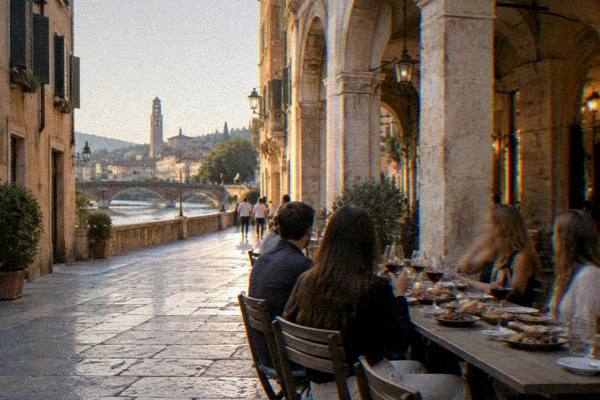
San Zeno District: Waterfront Taverns And A Local Feel
West of the Arena, past the Adige bend, the San Zeno district of Verona keeps a church at its centre and a slower rhythm than the old town across the river.
Short answer
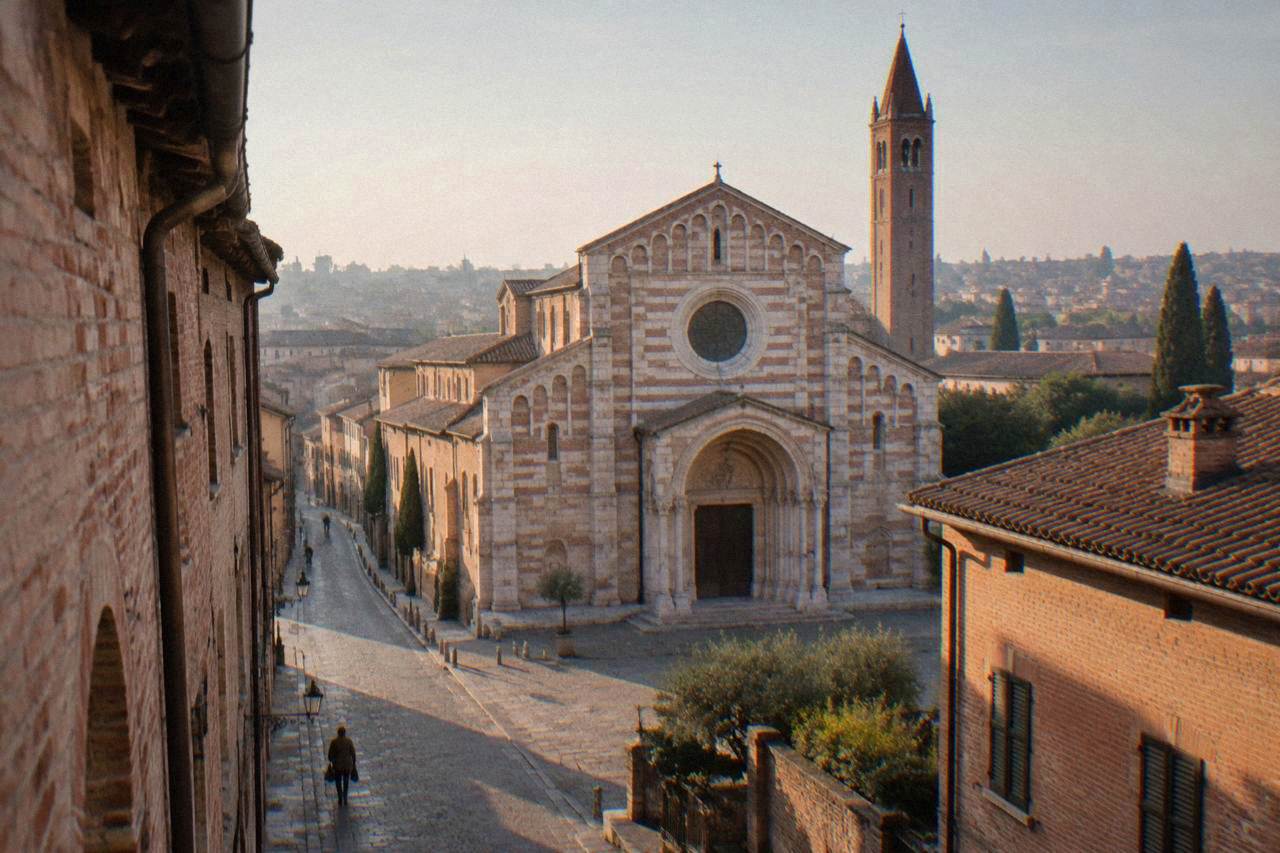
The San Zeno district is the western quarter of Verona, in Veneto, northern Italy, centred on the Basilica di San Zeno and lying between the Adige river and the road out toward the Valpolicella wine hills.
The San Zeno district is the western quarter of Verona, an inland city on the Adige river in Veneto, northern Italy, whose historic centre was inscribed on the UNESCO World Heritage List in 2000. The quarter takes its name from the Basilica di San Zeno, the great Romanesque church that stands at its heart, and it stretches from the Adige embankments toward the road that leaves the city for the Valpolicella wine hills. Lake Garda is not here: Verona is not a lakeside town, and the lake, Sirmione, Bardolino, Garda and Malcesine among its towns, lies 22 to 39 km west and is a day trip. What the San Zeno district offers instead is the version of Verona that the Verona Italy Travel Guide map gives its own area page: a church, a river, tavern-lined streets and a pace set by residents rather than by the Piazza Bra crowds.
Where Is The San Zeno District In Verona?
The San Zeno district sits on the left, southern side of the Adige river, west of the Arena and the old town, and it is one of the five areas the city map of Verona divides itself into: Citta Antica, Veronetta across the river, Borgo Trento, San Zeno and the Porta Nuova station area. Its anchor is the Basilica di San Zeno, which stands a short walk west of the Arena along the line of the old Roman road. The quarter faces Borgo Trento across the water.
The Adige makes the geography easy to read. The river loops around the historic centre in a long double bend, and the San Zeno district occupies the ground between the western arm of that bend and the edge of the built-up city. Cross the river to the north and you are in Borgo Trento; cross at the eastern side and you reach Veronetta, the quarter on the far bank from the old town. The centre itself, Citta Antica, with the Arena and Piazza Bra, lies east of San Zeno inside the river loop.
The district's position is the reason it feels different. The old town absorbs the day-visitors who arrive for Juliet's House and the Roman amphitheatre; San Zeno, one bend of the river away, keeps the everyday city: bread shops, small squares, the church forecourt where locals cut through. What the map does establish is plain: San Zeno is the westernmost of the five named areas, the quarter you pass through on the way toward Valpolicella, and a district whose defining sights are religious, riverside and residential rather than theatrical.
For orientation, one comparison holds for every visitor. Veronetta, across the Adige from the old town, clusters around the Teatro Romano hillside; the Porta Nuova station area clusters around the rail hub; San Zeno clusters around its basilica. Each quarter has one landmark and its own street grain, and the Adige with its bridges is what stitches them together.
What Defines The San Zeno District Of Verona Beyond The Basilica?
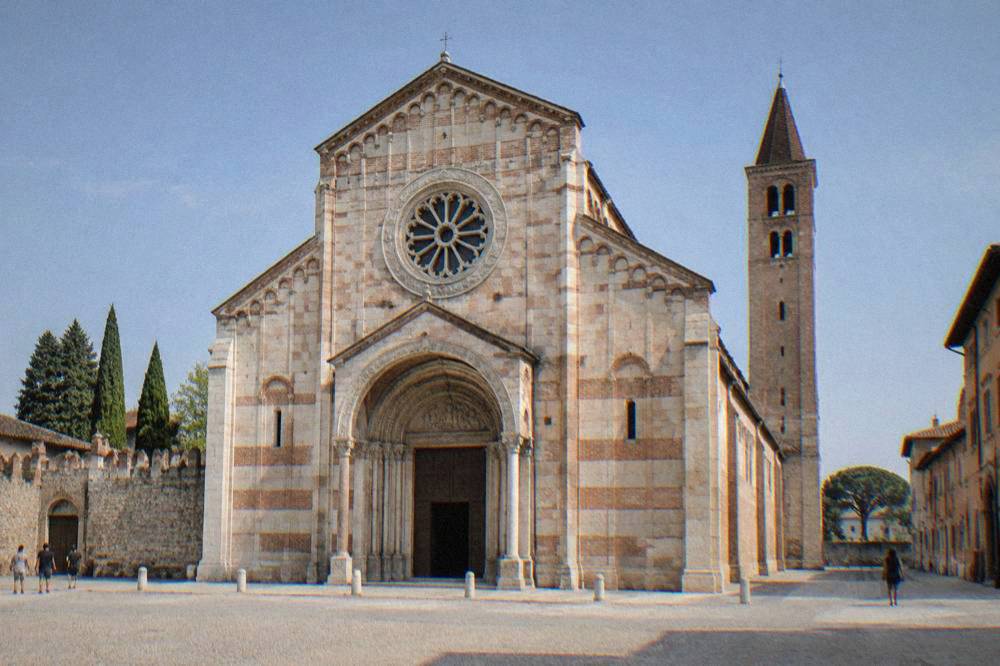
What defines the San Zeno district is a combination the other four quarters of Verona do not repeat: a major Romanesque basilica as its centrepiece, a stretch of the Adige embankment running the length of its northern edge, low brick residential streets rather than a retail spine, and a direct line west toward the Valpolicella wine hills, which the computed drive-time file places about 25 minutes by road from the Arena. The quarter reads as a parish scaled up, not as a sightseeing district.
The basilica dominates, and the full guide to the Basilica di San Zeno covers the church itself in detail. Around it, the district's fabric is residential Verona: ochre and rose-painted walls, shutters, the brick that the whole city is built from, and taverns and small eating places rather than international retail. No restaurant, bar or shop name in the district is sourced in the facts file, so none appears here; the honest description is of type, not of name, and visitors will find the taverns the title of this page refers to by walking the streets between the basilica and the river.
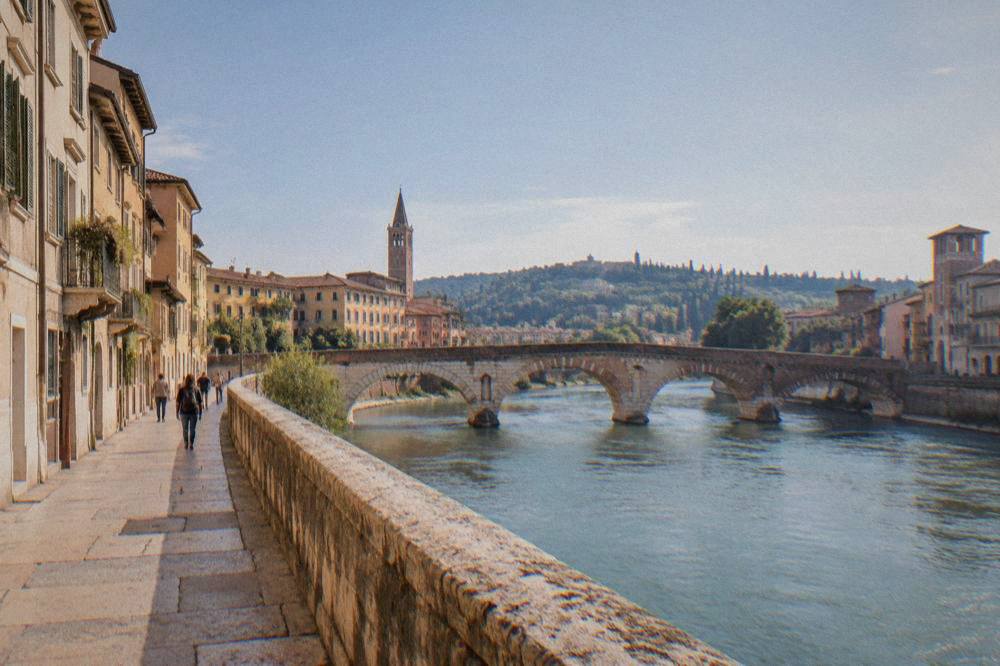
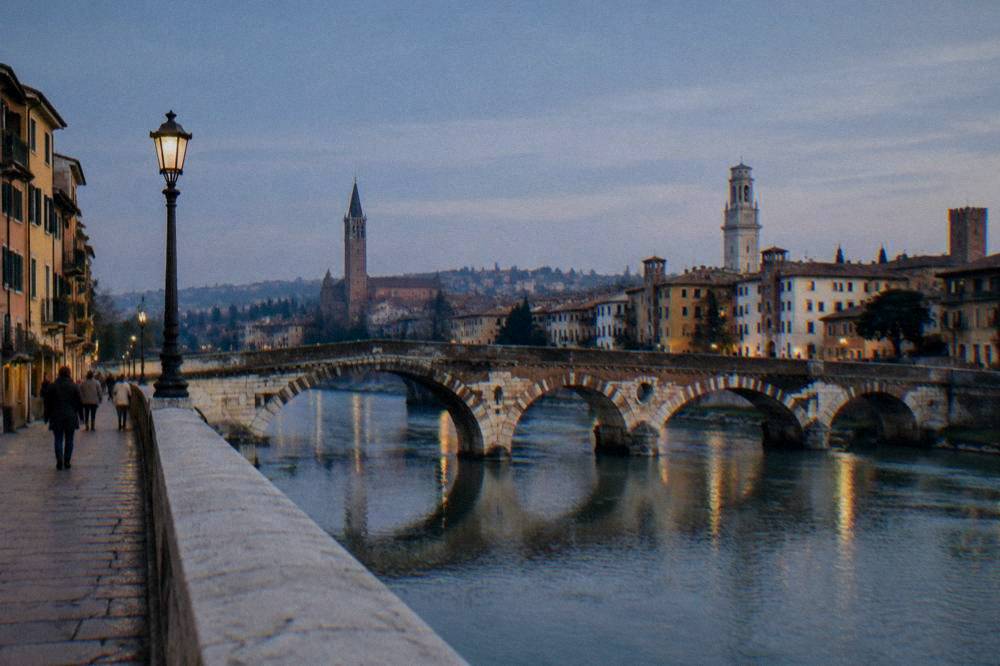
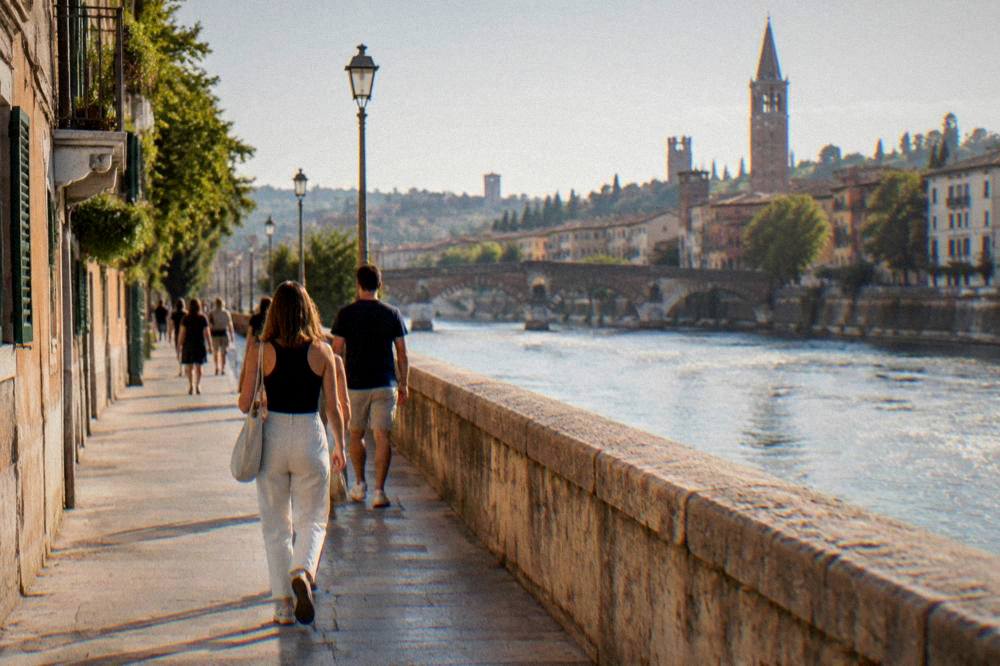
The riverside is the quarter's second feature. The Adige embankments are open, free public space, and from the San Zeno bank the view runs across the water to Borgo Trento and along the river toward the hills that frame the city. The river walk connects eastward toward Ponte Pietra and the old town for anyone on foot, and westward the water leaves the city for the valley that becomes Valpolicella. The climate file, ERA5 reanalysis for 1991-2020, puts July mean highs at 29.3 C and January mean lows at minus 0.4 C, which is worth knowing before planning a long embankment walk: this is a continental northern Italian city, hot in summer and cold at the winter's floor.
A third defining trait is the district's role as the quiet end of a Verona walk. The standard one-day circuit of the city, set out in the site's one day in Verona itinerary, runs the old town's greatest hits from Piazza Bra to Piazza delle Erbe. San Zeno suits a second visit, or a slower afternoon, when the amphitheatre queues hold no appeal and a basilica forecourt and a riverside bench do.
For visitors who prefer to walk with commentary, the site's featured Verona walking tour page gathers the guided options, and the self-guided audio walk that leads this article's picks covers the whole centre at the reader's own pace; check its live listing for what the current version includes.
How Do You Visit The Basilica Di San Zeno In Verona?
The Basilica di San Zeno is reported to be covered by the VeronaCard under the Chiese Vive church circuit, so card holders enter free or at a reduced rate, and no separate church ticket price or opening hours were captured for it, so confirm both on the city's own tourism pages before going. The card itself became digital on 1 September 2026: 33 euro for 24 hours or 38 euro for 48 hours with ATV urban buses included, 29 and 32 euro without transport.
The attribution matters. The VeronaCard coverage of San Zeno is a reported fact, not one read directly from the basilica's own page, and the Comune di Verona's notice on the card's relaunch is the source to check. What the notice does state plainly, and what this site has read directly, is the new pricing structure: digital delivery through the "Your Verona" web app, the four price points above, and validity from first use. The card also covers the Arena, Castelvecchio, the Torre dei Lamberti, Juliet's House, the Teatro Romano and the other Chiese Vive churches including the Duomo complex, Sant'Anastasia and San Fermo Maggiore; old paper cards stay valid to 31 March 2027.
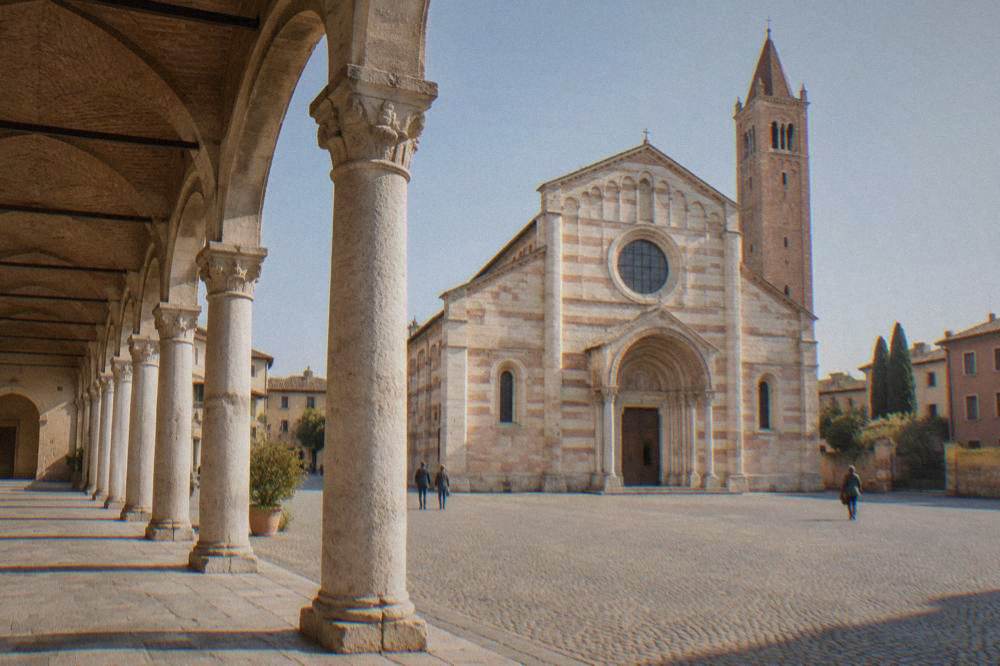
Two rules protect the honest reader here. No church admission price for San Zeno is printed on this page because none was captured; and no construction date, architect or artwork attribution is offered, because the file holds none for this church. A visitor sees a Romanesque building with a detached bell tower and a forecourt, and the card in hand if they carry one. That is the full sourced description.
The basilica pairs naturally with a longer circuit of Verona's churches. A card-driven church day can run San Zeno in the morning, the Duomo complex and Sant'Anastasia in the old town at midday, and San Fermo near the river in the afternoon, all under the same Chiese Vive coverage, with the Juliet's House booking, which card holders must still make online, as the one entry that cannot be improvised.
| Sight in or near San Zeno | Standard ticket | VeronaCard position |
|---|---|---|
| Basilica di San Zeno | Not captured: confirm locally | Reported free or reduced under Chiese Vive |
| Arena di Verona, daytime visit | 12 euro full, 9 euro reduced, 3 euro ages 18 to 25 | Included |
| Casa di Giulietta | 5 euro courtyard route, 12 euro with house and balcony | Included, online booking still required |
| Castelvecchio | Reported 9 euro full | Included |
| Torre dei Lamberti | Reported 6 euro | Included |
The Arena and Juliet figures in the table are the current prices, and the reduced or included rows are the ones to check against the operator's or the city's own page before a visit, since the church and tower figures are reported rather than directly read.
Where Does San Zeno Sit On The Map Of Verona Quarters?
San Zeno is the western quarter on the five-area map of Verona, lying outside the old-town river loop on the left bank, with Borgo Trento opposite across the Adige, the Porta Nuova station area to its south-west, Citta Antica to its east and Veronetta beyond the old town on the far bank. Every one of the other four quarters is reachable across a bridge or along the embankment without crossing the whole city.
The practical reading of the map is about bridges and the river. Verona's centre is a loop; the San Zeno district sits against the loop's western flank. Walk east and you arrive at the Arena and Piazza Bra; walk north over the nearest crossing and Borgo Trento begins on the far bank; follow the embankment south and west and the ground rises toward the station district around Porta Nuova, where trains arrive from Venice, Milan and Rome. The urban bus single fare is 1.50 euro for 90 minutes on the ATV network, which covers the hop between San Zeno and the centre when legs tire.
For a first-time visitor the quarter works best as a bookend. Arrive in the morning, take the old town first, the Arena in the morning queue or the Torre dei Lamberti for the view, then cross into San Zeno for the basilica and an early evening on the embankment. The site's two days in Verona itinerary is built on exactly this split, and the second day is where a quarter like San Zeno earns its place.
One caution belongs on any page about Verona geography: the historic centre inside the river loop is a camera-policed limited-traffic zone, the ZTL, where non-residents are limited to at most four entries a month by advance booking in set time windows, and hotel guests drive in free only if the hotel registers the plate. San Zeno itself sits partly outside that loop, but anyone driving between quarters should read the site's guidance before bringing a car into the centre at all.
What Is Eating And Drinking In The San Zeno District Like?
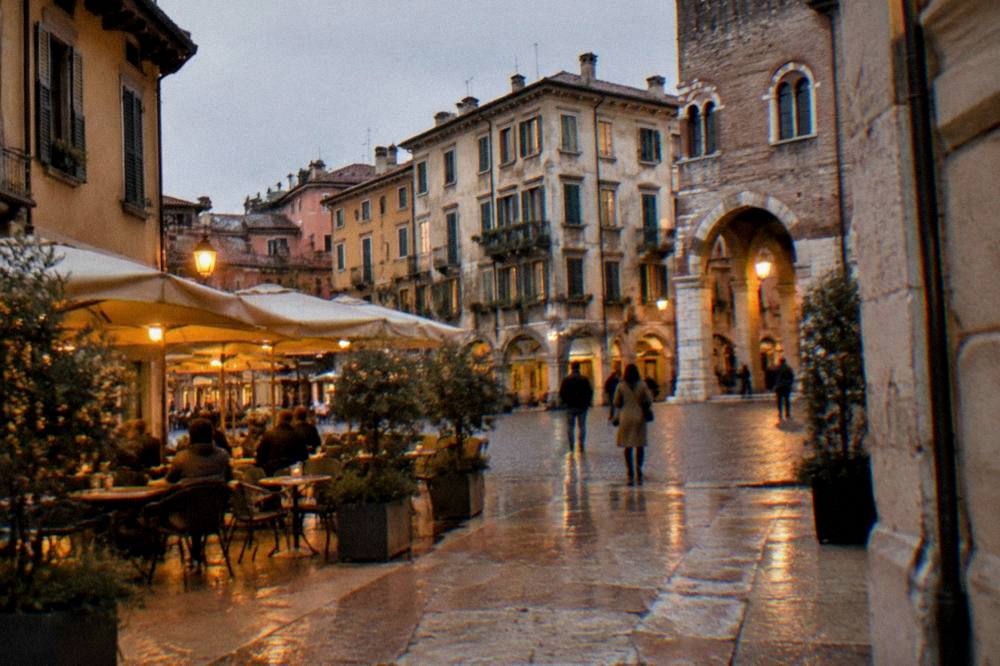
Eating and drinking in the San Zeno district follows the Veronese parish model: small taverns and osterie serving the city's documented traditional dishes rather than a sightseeing strip, with pastissada de caval, risotto all'Amarone, bollito with peara sauce and gnocchi the named local specialities reported in the food sources. No individual restaurant, osteria or bar in the district is named on this page and no price is quoted, so menus should be checked on the spot.
The named dishes come from the reporting on Veronese food, and they are the same dishes the whole city claims: the horse-meat stew pastissada de caval simmered in wine, the Amarone risotto, the boiled meats with peara, the gnocchi that carry their own carnival tradition. The district's difference is setting. An evening table near the basilica or on the road toward the river is an evening in a residential quarter, and the taverns of the title are that: places with a neighbourhood clientele, described in type only.
Wine is the district's natural companion. San Zeno sits on the road out of the city toward Valpolicella, the Amarone country whose hills the drive-time file places about 25 minutes from the Arena, and the Amarone poured in a San Zeno tavern comes from the same hills a visitor can reach the next morning. No winery name, tasting price or vineyard in the Valpolicella zone is sourced in the facts file, so the honest advice is to let the tavern pour and book any winery visit through its own listing.
Visitors who want the food tradition explained rather than just served have two good options among this site's featured picks. The food-and-wine walking tour of Verona covers local tastings across the centre and its hidden corners, and its live listing carries the current itinerary; the same tour appears again below alongside the others, because food is the second reason, after the basilica, that people give for crossing the river into the western quarters.
| Veronese dish or drink | What the sources say it is | Where it fits a San Zeno evening |
|---|---|---|
| Pastissada de caval | Long-simmered horse-meat stew in wine and spices, reported as traditional | A main course in the district's taverns |
| Risotto all'Amarone | Rice cooked in Amarone wine with Monte Veronese cheese, reported as traditional | Pairs with the local reds |
| Bollito con la peara | Mixed boiled meats with pepper-bread sauce, reported as traditional | A winter-centred dish |
| Gnocchi | A Veronese staple tied to the city's carnival tradition | Often served with pastissada |
| Amarone della Valpolicella | DOCG red from the hills about 25 drive-minutes west, dried-grape method | The quarter's house wine by geography |
Prices for a meal or a glass are not given, and the site prints none. What the table records is what the food reporting supports: the dish names and their place in the local table, nothing more.
Which Day Trips Run Best From The San Zeno District Of Verona?
The San Zeno district is the best-placed of Verona's five quarters for the western day trips, because it already sits on the road out of the city: computed drive times from the Arena put Valpolicella's Sant'Ambrogio about 25 minutes away, Soave 33 minutes east, Lake Garda's Bardolino 37 minutes, Sirmione 40 and Malcesine 84, all free-flow estimates over OpenStreetMap routing. The nearest wine hills are the trip the district was made for.
Valpolicella is the obvious first choice. The Amarone zone begins directly west of the city, and a morning in the vineyards followed by an afternoon in the basilica forecourt is a day that uses the quarter's position twice. No winery admission or tasting fee is included, so bookings go through each operator's own listing. Soave, the white-wine town east of Verona, is the mirror-image trip at a reported 33 minutes, and its castle details are likewise not covered: confirm at source.
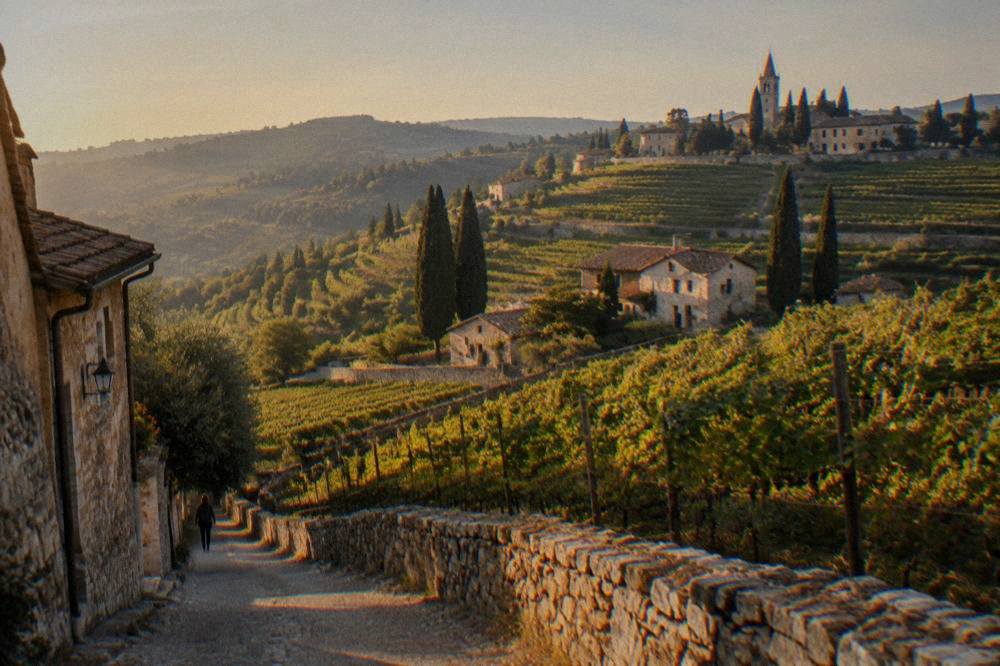
Lake Garda trips are the other western option, and one correction repeats on every page of this site because it is the most common error about the city: Verona is not on the lake. The lake towns are day trips, Sirmione in Brescia province, Lombardy, reached from Verona by the ATV line 164 bus reported at about 55 minutes direct, and Bardolino, Garda town and Malcesine strung along the eastern shore. The Navigazione Laghi full-lake day pass is listed at 39.50 euro for an adult at current fares, and the north-south passenger service is reported suspended from 2 November 2026 to 12 March 2027, so ferry-based plans need a seasonal check.
| Day trip from the Verona side | Computed or reported time | Method and caution |
|---|---|---|
| Valpolicella, Sant'Ambrogio | About 25 minutes by road | Computed free-flow drive from the Arena |
| Soave | About 33 minutes | Computed free-flow drive |
| Bardolino, Lake Garda | About 37 minutes | Computed free-flow drive |
| Sirmione | About 40 minutes by road, about 55 by line 164 bus | Drive computed; bus time reported |
| Garda town | About 42 minutes | Computed free-flow drive |
| Malcesine and Monte Baldo | About 84 minutes | Computed free-flow drive |
The Monte Baldo cable car at Malcesine, for anyone extending the lake day, has adult round-trip fares of 30 euro, 28 bought online, with junior rates at 18 and 16, per the operator's published price list; its season is reported at about 4 April to 1 November. Gardaland prices and dates are reported but variable, and the pack marks them not for printing: check the park's own page.
What Practical Tips Matter For Visiting The San Zeno District?
The practical rules that matter are the city-wide ones: the ZTL camera zone limits non-resident driving in the centre, the tourist tax is collected by the accommodation and capped at four nights per person per month with no rate printed, the urban bus single is 1.50 euro for 90 minutes, and the emergency number in Italy is 112. For the basilica, confirm opening times and any ticket locally.
Getting there is simple. On foot from Piazza Bra the district is reached by walking west out of the old centre, and the riverside embankment gives a car-free approach along the Adige for the whole final stretch. By urban bus the ATV network covers the quarter on the same 1.50 euro single, valid 90 minutes. From Verona Villafranca airport the reported Aerobus line 199 runs about 15 minutes to the station area at a reported 7 euro, from where the quarter is one bus or a walk further; the fare is reported, so confirm before relying on it.
Timing follows the seasons. The ERA5 reanalysis for Verona, 1991-2020, gives July a mean daily high of 29.3 C and January a mean daily low of minus 0.4 C, with November the wettest month at 118.2 mm of rain against January's 52.3 mm. Late spring and early autumn sit between those poles; the basilica forecourt and the embankment are outdoor spaces, so the numbers are worth a glance when packing. The city's big calendar items reach the quarter too: the 2026 Arena opera season ran 5 June to 12 September, and the 104th edition is announced for 11 June to 11 September 2027, dates that raise central hotel demand city-wide even in quiet quarters.
Accessibility claims are off-limits on this site: no lift, ramp or step-free route at the basilica or anywhere in the quarter is named here, so visitors with mobility needs should ask the city's tourism office directly rather than rely on any page, including this one. Luggage storage, pharmacies and similar services are likewise left unnamed here.
How Does San Zeno Fit Into A Full Verona Visit?
San Zeno fits a Verona visit as the slow half-day: a basilica visit under the reported Chiese Vive coverage, a walk on the Adige embankment, an evening meal in a neighbourhood tavern, and, on a second day, the springboard for the 25-minute run out to the Valpolicella hills. Visitors with one day should see the old town's core first; visitors with two or more should give the western quarter the afternoon the centre never allows.
The sequencing is the advice. A single day belongs to the Arena, Piazza delle Erbe, Juliet's House and the river views from Castel San Pietro or the Torre dei Lamberti, and the site's itineraries sequence exactly that. Add time and the map opens: Veronetta's Teatro Romano hillside, the Tomba di Giulietta south of the centre, Giardino Giusti and its garden, and San Zeno as the westernmost piece. Shopping stays in the old town, where the site's Verona shopping guide puts it; San Zeno's shops are daily-life shops, not souvenir ones.
For travellers arriving from Venice for the day, the pairing of the old town in the morning and a basilica-and-river afternoon in San Zeno is a compact second half that needs no booking beyond the church check described above. And for anyone who wants the whole story told while walking, the self-guided audio tour that this page features, with written and audio commentary by a local, remains the standing option: Check availability on the operator's live listing before arrival, since its coverage and meeting details live there.
The Arena itself, if the amphitheatre interior is on the list, can be taken with a guide on the skip-the-line tour below; the pair of picks that close this page cover the two experiences the district leads to best, a walk through the centre and a food-and-wine circuit of the taverns.
Common Questions About The San Zeno District In Verona
Is the San Zeno district of Verona worth visiting?
Yes, for travellers with more than a day in the city. The quarter holds the Basilica di San Zeno, reported covered by the VeronaCard's Chiese Vive circuit, a quiet stretch of the Adige embankment, and a residential pace the old town cannot offer. Confirm the basilica's hours and ticket locally before going.
How far is the San Zeno district from the Arena in Verona?
The district lies immediately west of the old town, across the western side of the Adige loop from the Arena and Piazza Bra. It is reached on foot through the old centre or along the river embankment; allow an easy stroll rather than a timed connection.
Does the VeronaCard include the Basilica di San Zeno?
The card is reported to include San Zeno free or at a reduced rate under the Chiese Vive church circuit. Since 1 September 2026 the card is digital: 33 euro for 24 hours or 38 euro for 48 hours with ATV buses, 29 and 32 euro without. Check the Comune's notice before purchase.
Is the San Zeno district of Verona safe?
No neighbourhood safety score for San Zeno, or for any Verona quarter, is claimed on this site. General Italian advisories note pickpocketing risk in crowded tourist spots city-wide, and the emergency number in Italy is 112.
Can you walk from San Zeno to Lake Garda?
No. Verona is an inland city on the Adige, and Lake Garda is a day trip: computed drive times from the Arena run about 37 minutes to Bardolino, 40 to Sirmione and 84 to Malcesine, with the ATV line 164 bus to Sirmione reported at about 55 minutes.
What is the best time of year to visit the San Zeno district?
Late spring and early autumn suit the quarter's outdoor life of the basilica forecourt and the embankment. The ERA5 reanalysis for Verona, 1991-2020, gives July a mean daily high of 29.3 C and January a mean daily low of minus 0.4 C, with November the wettest month at 118.2 mm.