One Day In Verona When You Sleep In Venice: Timings That Work
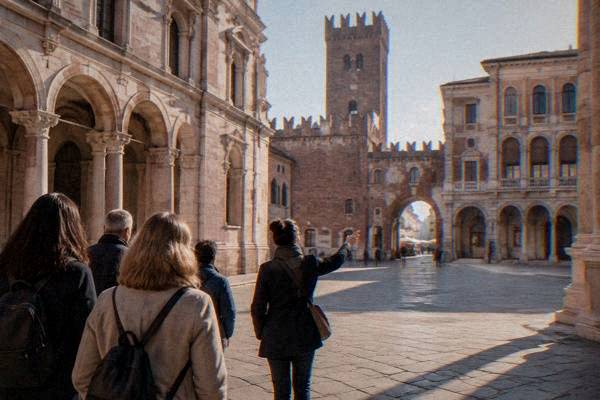
Verona, an inland city on the Adige in Veneto, sits about an hour to an hour and fifteen minutes from Venice by train, and a single well-timed day covers the Arena, Juliet's House and the historic centre.
Short answer
Yes. Trains from Venice to Verona Porta Nuova are reported at 1 hour to 1 hour 15 minutes, so an early start gives you roughly ten hours in the city: the Arena in the morning, Juliet's House at midday, lunch near Piazza delle Erbe, and an optional Valpolicella afternoon before an evening train back.
Verona, in Veneto in northern Italy, is an inland city on the Adige river, roughly 122 km west of Venice by road, and the train between the two is reported at 1 hour to 1 hour 15 minutes each way. That proximity is why the day trip works at all: leave Venice early, arrive at Verona Porta Nuova before the crowds build, and you have a full day of Roman amphitheatre, medieval squares and the Romeo and Juliet legend before an evening train home. This page sets out the timings that hold together, the 2026 ticket prices that changed this year, and where the plan bends if something runs late. The wider question of whether the pairing beats a Venice-only day is covered in can you do Verona and Venice in one day, and the full rail routing detail lives in the Venice to Verona guide.
Can You Really See Verona In One Day From Venice?
Yes, one day in Verona from Venice works, because the train between Venice and Verona Porta Nuova is reported at 1 hour to 1 hour 15 minutes each way, which puts roughly ten usable hours in the city between an early arrival and an evening departure. That is enough for the Arena, Juliet's House, the main squares and a long lunch, though not enough to add Lake Garda, which is a separate day trip 22 to 39 km further west.
The arithmetic is the whole plan. A train leaving Venice in the early morning lands you at Porta Nuova by mid-morning; the station is a short hop from the historic centre, which is compact and walkable, a point examined in detail on the site's is Verona walkable answer page in the wider collection, and more practically in the one day in Verona itinerary. Verona's UNESCO World Heritage inscription, awarded in 2000, covers the historic centre inside the Adige bend, and nearly everything a first-time visitor wants sits inside that loop.
What one day does not cover: Lake Garda. Verona is not on the lake, and the lake towns are further out. Sirmione is about 40 minutes by car from the Arena, Bardolino about 37, Garda about 42 and Malcesine about 84, all computed over free-flow road routing, not a timetable. Trying to bolt Sirmione onto a Venice-Verona day compresses both. If the lake is the priority, the Verona and Lake Garda itinerary is the right page instead.
Which Train From Venice Gets You To Verona Early Enough?
Trains from Venice arrive at Verona Porta Nuova, and the journey is reported at 1 hour to 1 hour 15 minutes on direct high-speed services, so a departure from Venice in the first hours of the morning puts you in Verona by late morning with the full day ahead. Fares are not given here: check the operators' own sites for prices and the exact timetable before committing to a time.
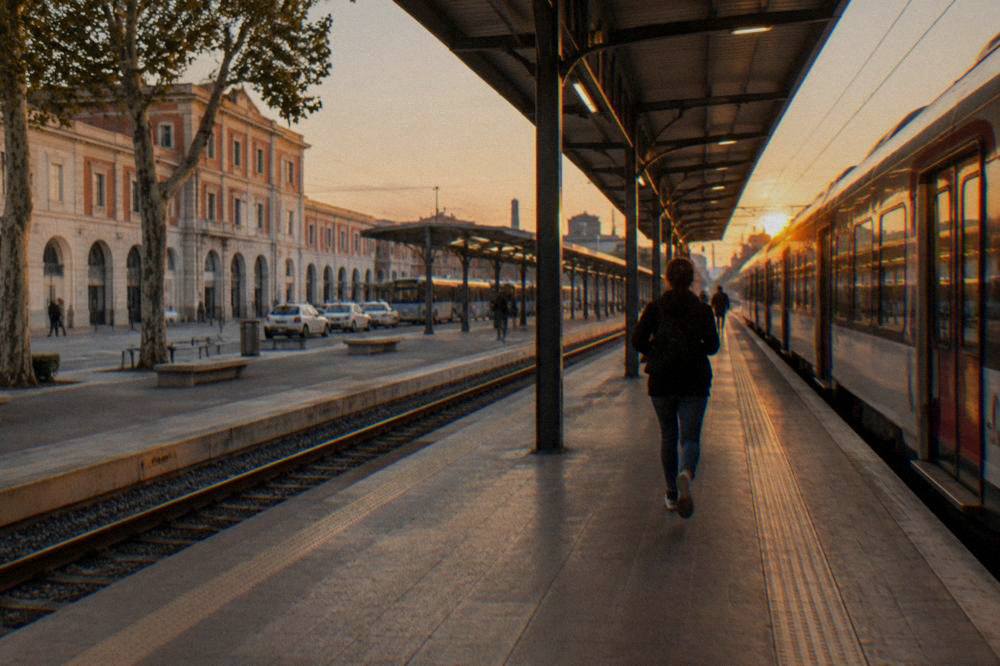
The single most useful fact for planning is the station's position: Porta Nuova sits just south of the historic centre, and the Arena is a level walk or one short bus ride away. The urban single bus ticket costs 1.50 euro and is valid 90 minutes, per ATV's own fares page. The station district itself has its own character, covered in the site's Porta Nuova guide, but on a one-day schedule you pass through it rather than linger.
Reported rail times from Verona Porta Nuova, for planning the return leg or a different base city:
| Route | Reported journey time | Notes |
|---|---|---|
| Venice to Verona | 1 hour to 1 hour 15 minutes | Direct high-speed services reported; confirm the timetable |
| Verona to Venice Mestre | 58 to 75 minutes | Reported times only, no fare printed |
| Verona to Milano Centrale | 1 hour 15 to 1 hour 50 | Reported |
| Verona to Rome | about 3 hours to 3 hours 30 | Reported |
Book the return leg before dinner, not after. Evening capacity out of Verona thins later, and a missed connection in Mestre turns a one-day trip into an unplanned overnight. The safe pattern: pick a return train around 20:00 to 21:00, then work the day backwards from it.
If the morning is about orientation rather than a fixed first sight, a guided walk is an efficient opener for a short visit. The Verona Highlights Walking Tour in Small-group covers the centre's landmarks with a local guide, and this trio covers the three formats that suit a one-day schedule:
What Does A Morning In Verona Look Like?
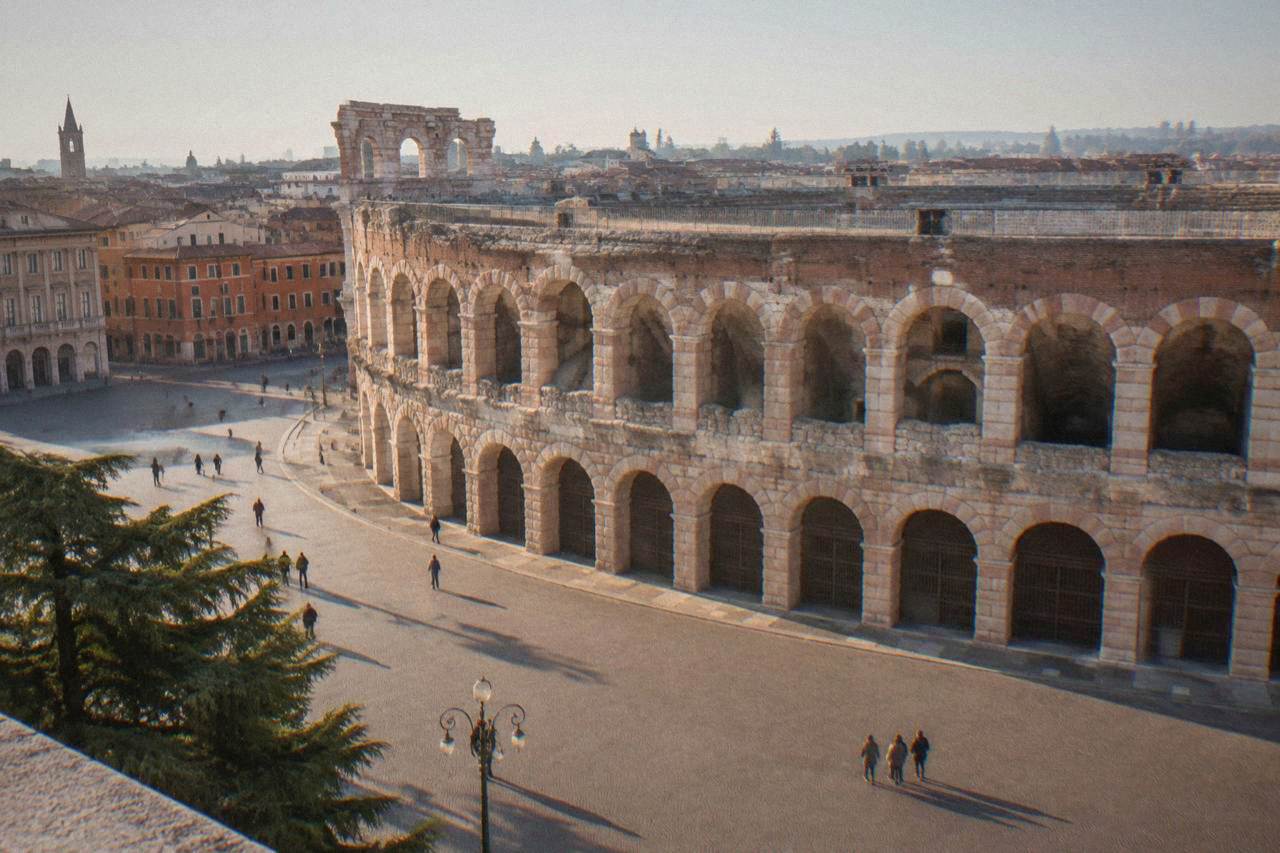
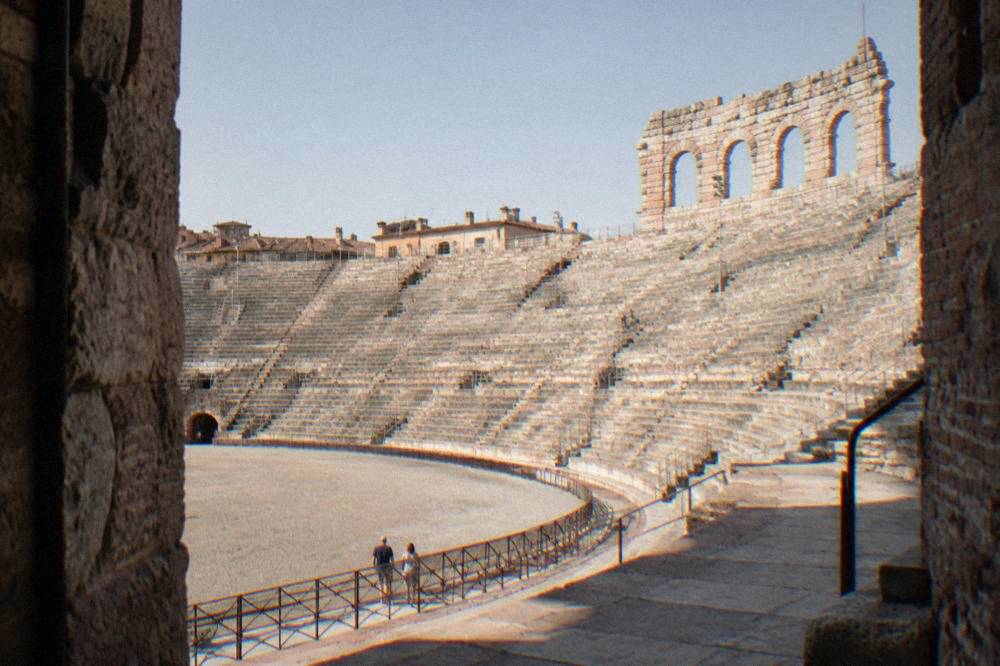
A workable morning is Piazza Bra and the Arena first, then Piazza delle Erbe and the Torre dei Lamberti, with Juliet's House held for midday: the Arena's daytime visit costs 12 euro full, 9 euro reduced, with visitors aged 18 to 25 paying 3 euro, and reported hours are Tuesday to Sunday 9:00 to 19:00, closed Monday, with early closes on show days, so check the Arena's own calendar before you go.
The Arena is the anchor sight, and the Arena di Verona guide covers it in full. What matters on a one-day schedule is the timing trap: the amphitheatre closes early on opera evenings, and in season those are frequent. The 2026 festival ran 5 June to 12 September, and the 104th edition is announced for 11 June to 11 September 2027, so a summer visit needs a same-day check of the calendar. The reported origin of the building is about 30 AD, per the Arena's own history pages, which also report a 30,000-seat capacity for the opera configuration and an outer ring destroyed by the 1117 earthquake.
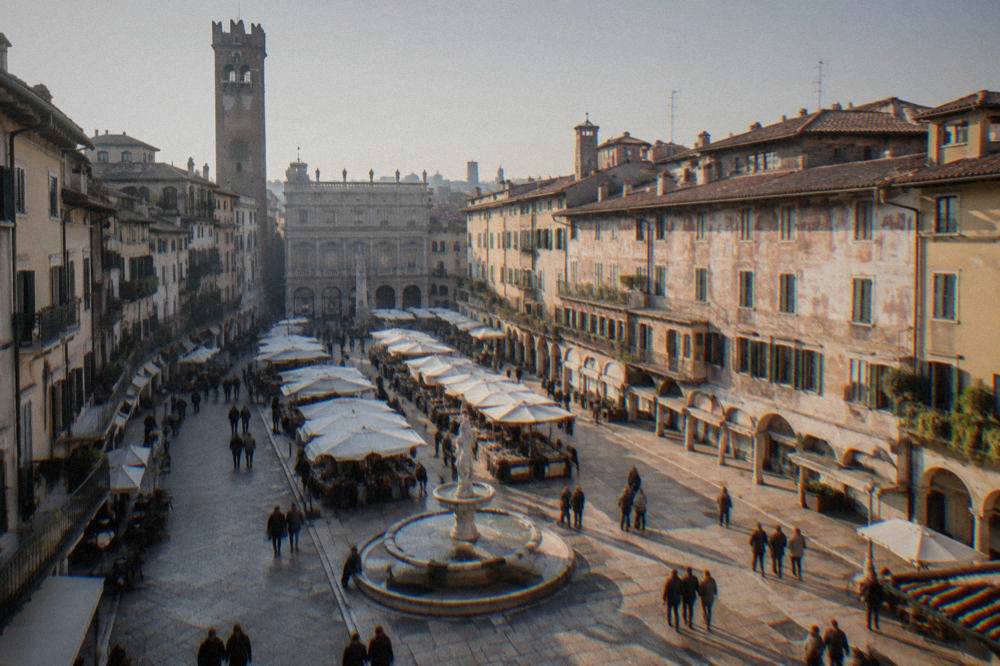
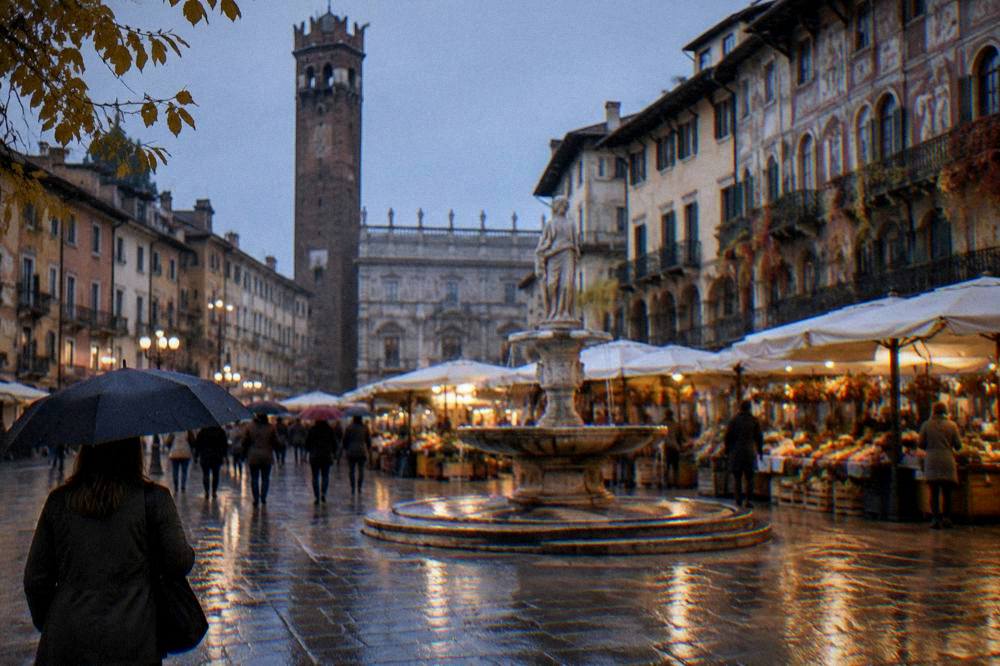
From Piazza Bra, Via Mazzini runs north to Piazza delle Erbe, the old Roman forum and now the market square, with the Torre dei Lamberti rising at its edge. The tower's reported ticket is 6 euro, free with the VeronaCard, and its hours shift by season, so confirm at the tower's own site. From the top of the square, Piazza dei Signori and the Scaliger tombs are steps away.
Ticket facts that matter for a one-day budget:
| Sight | 2026 price | Notes |
|---|---|---|
| Arena daytime visit | 12 euro full, 9 euro reduced, 3 euro ages 18-25 | 1 euro first Sunday of the month, November to March; closed Mondays, reported hours |
| Juliet's House courtyard route | 5 euro | From 1 April 2026, online booking, entry via Teatro Nuovo |
| Juliet's House full route | 12 euro | Courtyard plus house and balcony |
| Torre dei Lamberti | 6 euro, reported | Free with VeronaCard |
| VeronaCard 24h | 33 euro with ATV buses, 29 euro without | Digital card from 1 September 2026 |
A guided Arena visit can compress the queue question on a tight day. The Arena skip-the-line tour pairs the entry with a local guide:
Is Juliet's House Worth The Stop On A One-Day Verona Trip?
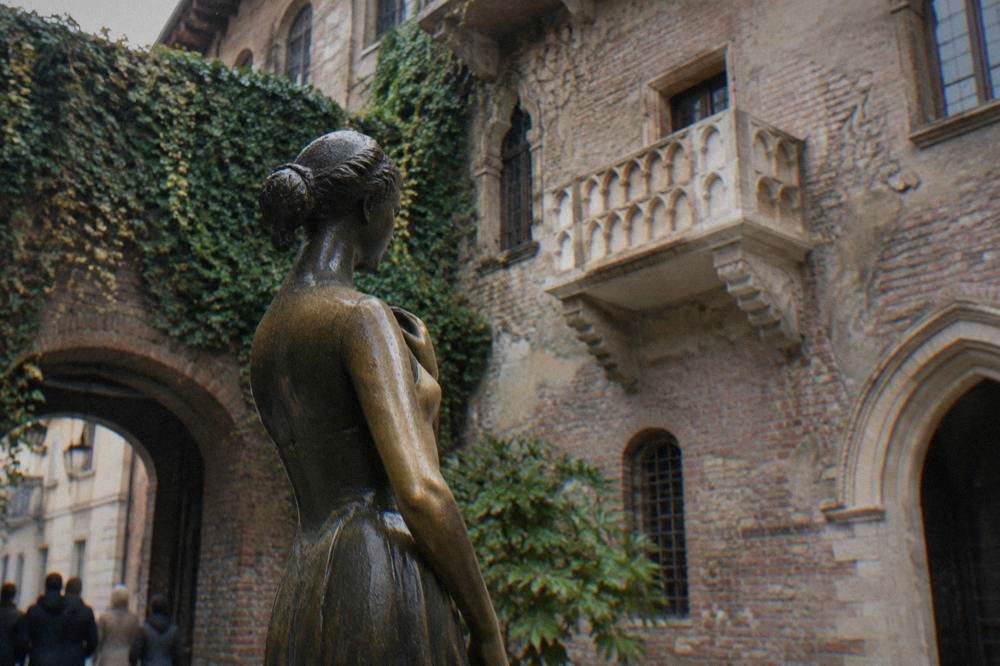
Juliet's House is worth the stop if you go expecting the 2026 system rather than the old free courtyard: since 1 April 2026 the courtyard route costs 5 euro and the full house-and-balcony route 12 euro, both booked online with entry via Teatro Nuovo in Piazzetta Navona, and the balcony itself is not original, it was added in 1940 from a sarcophagus, per the city's own tourism pages.
The change is the single biggest practical shift in Verona this year. The courtyard was free for decades, and older guides still say so; the city's own notice now states the ticketed system, with reported hours of Monday 14:00 to 19:00 and Tuesday to Sunday 9:00 to 19:00. VeronaCard holders get in free but still need the online booking. The bronze statue of Juliet in the courtyard, by Nereo Costantini, dates from 1969, and the touching custom that has worn its right breast is documented on the city's tourism pages.
On a one-day schedule, book a timed slot for early afternoon, after lunch, when the morning rush at the Teatro Nuovo entrance has passed. The house itself is small; the courtyard, the balcony view from below and the museum rooms take a short visit, which is why it slots between lunch and the afternoon block rather than opening the day.
The Romeo and Juliet layer of the city runs deeper than the courtyard, and the Romeo and Juliet in Verona guide traces it: Shakespeare never visited, and the story reached him through Luigi da Porto's 1531 novella, Bandello's 1554 version and Brooke's 1562 poem. Whether the legend justifies the city's "city of love" label is a separate question, answered on the site's dedicated page.
Where Should You Eat Lunch In Verona On A Short Visit?
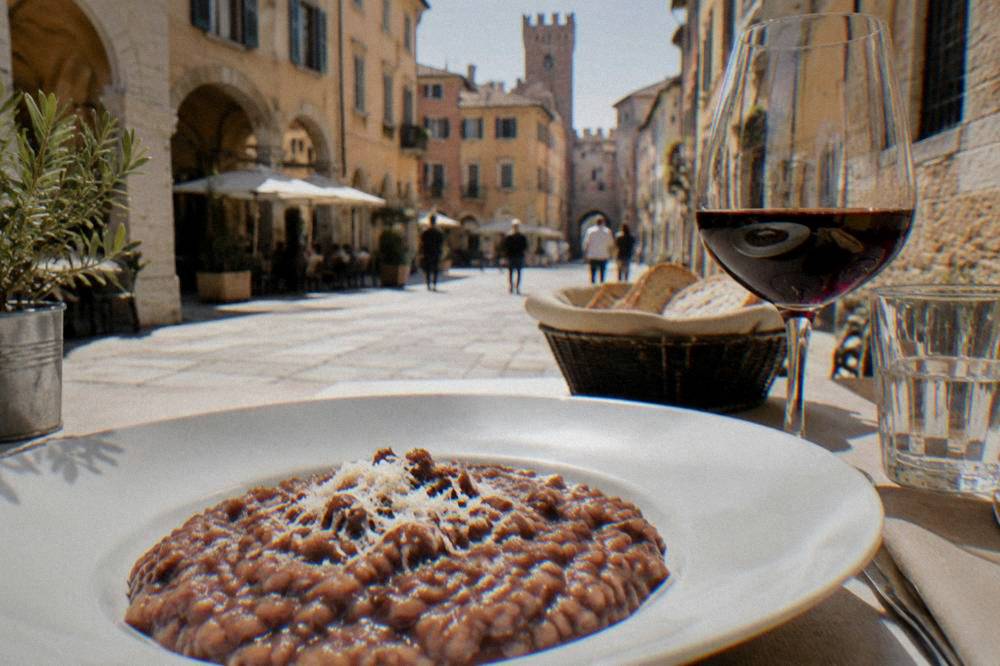
Lunch in Verona should sit near Piazza delle Erbe or in the side streets off it, ordered around the city's documented dishes: risotto all'Amarone, made with Vialone Nano rice and Amarone wine; pastissada de caval, a long-simmered horse-meat stew served with polenta or gnocchi; and bollito with pearà sauce, boiled meats with a peppered bread sauce, all reported by Italian food guides as the Veronese classics.
No restaurant is named here, and the best restaurants in Verona guide is where that question is handled properly. What a one-day visitor needs is the structural advice: the historic centre's eating window follows the Italian norm, with lunch service roughly 12:00 to 14:30, and kitchens close between services. A 13:00 seating is the safe middle. Pandoro, the star-shaped leavened cake, originated in Verona and is the standard dessert order in season.
Timing the lunch against the Juliet's House slot is the one collision risk in the day. Booking the house for 14:30 or later and seating at 12:45 gives a relaxed meal without cutting the museum short.
A food walk is the alternative to a seated lunch on days when the schedule is tight, since the tastings replace the meal rather than following it. The Verona food tour guide compares the formats.
What About An Afternoon In Valpolicella From Verona?
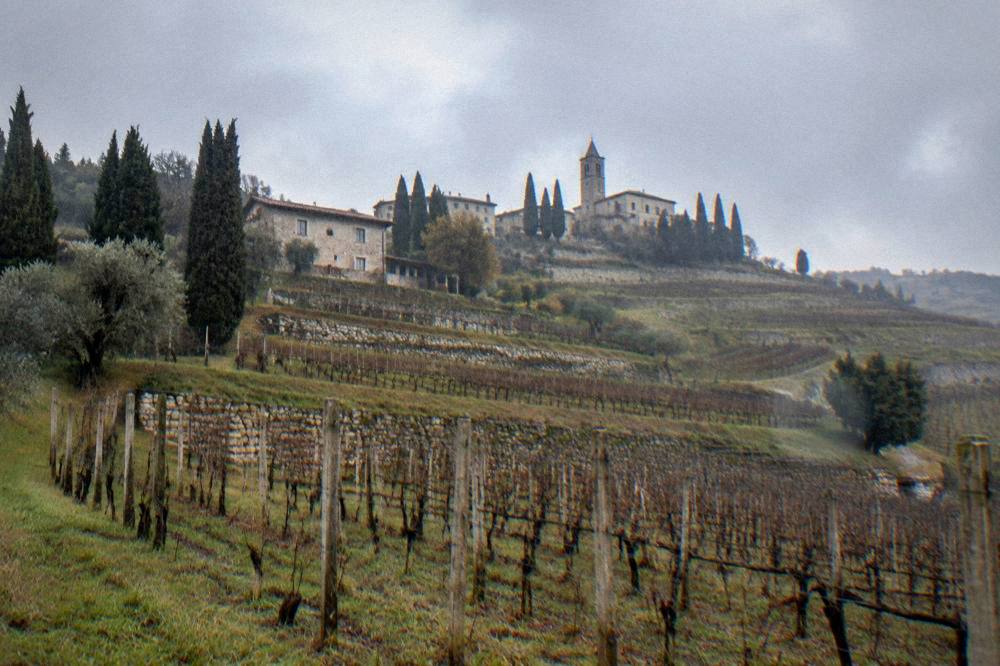
Valpolicella, the Amarone wine hills north of Verona, is about 25 minutes and 21 km by road from the Arena, computed over free-flow routing, which makes a half-day afternoon visit the one excursion that genuinely fits a one-day trip from Venice: a morning of sights in the centre, a winery afternoon in the hills, and a direct return to Porta Nuova for the evening train.
The region's reds, built on Corvina, Corvinone and Rondinella grapes dried in the appassimento process, are documented on the city's own tourism pages, and the Valpolicella guide covers the zone and its wines in depth. Individual winery names, tasting prices and opening hours may change, so confirm directly with whichever producer or tour you choose.
The half-day Amarone experience is this site's featured pick for the afternoon block: the Half-Day Valpolicella and Amarone tour runs from Verona into the hills with tastings, or check a live slot with Check availability.
If wine is not the afternoon, the alternatives ranked by travel time from the Arena, all computed and all day trips in their own right:
| Destination | Drive time from the Arena | Distance |
|---|---|---|
| Valpolicella (Sant'Ambrogio) | about 25 minutes | 21 km |
| Soave | about 33 minutes | 33 km |
| Vicenza | about 48 minutes | 65 km |
| Mantua | about 54 minutes | 59 km |
| Sirmione | about 40 minutes | via road routing |
| Padua | about 67 minutes | 93 km |
Padua and Vicenza are also reachable by rail, but their sight prices and hours may change, so confirm locally before adding either to a tight day. Sirmione's own guide covers the Scaliger castle and the Grotte di Catullo, whose reported tickets are 10 euro full and 2 euro reduced for EU visitors aged 18 to 25, with a 20 euro combined ticket, all closed Mondays, all worth confirming on the official culture-ministry pages before travel.
What Time Should You Leave Verona To Get Back To Venice?
Plan to be at Verona Porta Nuova by about 45 minutes before your booked evening train, which on the reported 1 hour to 1 hour 15 minute journey means leaving the historic centre roughly two hours before you want to be back in Venice: a 20:00 departure from Porta Nuova has you in Venice by about 21:15, with buffer for a late-running afternoon or a platform change.
Work the evening backwards. Dinner before the train is possible if it is an early one, since restaurant dinner service in Verona typically runs from about 19:30, which is exactly the wrong hour for a 20:00 train. The realistic pattern is a late-afternoon spritz or gelato in Piazza Bra, the walk or bus to the station, and dinner in Venice. The urban bus single at 1.50 euro, valid 90 minutes, covers the station run; taxis exist as an alternative.
A sample skeleton for the day, using only the times reported above:
| Time | Block | Notes |
|---|---|---|
| Early morning | Venice departure | Train reported 1 hour to 1 hour 15 minutes |
| Late morning | Arena and Piazza Bra | 12 euro full ticket; closed Mondays, check show-day closes |
| 12:45 | Lunch near Piazza delle Erbe | Kitchens typically 12:00 to 14:30 |
| 14:30 | Juliet's House slot | 5 or 12 euro, booked online, via Teatro Nuovo |
| 16:00 | Valpolicella half-day or centre stroll | Hills about 25 minutes by road |
| 19:00 | Station arrival for a 20:00 train | Bus single 1.50 euro, valid 90 minutes |
| About 21:15 | Back in Venice | Reported journey time |
For travellers who decide one day is not enough, the two days in Verona itinerary and the three days in Verona itinerary stretch the same skeleton with Veronetta, San Zeno and the churches. And if the question is which city deserves the bed, the is it better to stay in Verona or Lake Garda comparison and the Venice-Verona matchup both sit in the site's answers section.
When the plan is this compressed, pre-booked formats carry the day. These three cover the morning walk, the Arena entry and the wine afternoon:
What If It Rains Or Your Train Back Is Late?
If it rains, the day reorganises around the roofed sights, the Arena's covered galleries, Castelvecchio's museum, reported at 9 euro full with Tuesday-to-Sunday hours and Monday closure, and Juliet's House itself, while the open squares and the riverside walks shrink to the gaps between them; Verona's wettest months by ERA5 reanalysis 1991-2020 are November at 118.2 mm, October at 107.2 mm and May at 109.7 mm, so an autumn visit should carry this fallback.
The full rainy-day plan is laid out in Verona in the rain. The short version for a day-tripper: the Arena visit is substantially outdoor but tolerates brief rain, Castelvecchio and the Civic Museums are the reliable indoor hours, and a long osteria lunch is itself a Veronese institution. Church interiors, including Sant'Anastasia and the Duomo complex, are covered by the VeronaCard under the Chiese Vive convention, though this site prints no church admission price.
A late train back is the other failure mode. If the booked evening service is missed, later departures exist toward Mestre into the late evening, so confirm times and frequency at the station or on the operators' apps rather than assuming. The tourist-tax detail does not apply to a day trip, but if the missed train forces an unplanned night, the tax is capped at four nights per person per month and is collected by the accommodation.
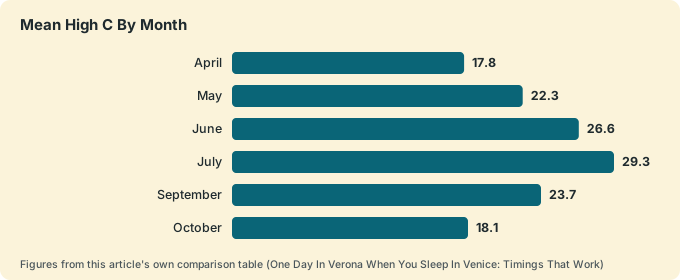
Monthly climate context for choosing the travel month, ERA5 reanalysis, 1991-2020:
| Month | Mean high C | Mean low C | Rain mm |
|---|---|---|---|
| April | 17.8 | 7.6 | 93.5 |
| May | 22.3 | 12.2 | 109.7 |
| June | 26.6 | 16.5 | 92.3 |
| July | 29.3 | 19.1 | 79.4 |
| September | 23.7 | 15.1 | 99.7 |
| October | 18.1 | 10.5 | 107.2 |
The trade-off in summer is the opera: an Arena performance is a reason to take a later train or even reconsider the day-trip frame entirely, and opera night in Verona covers that scenario, including the fact that stone-step seats are reported to start in the 30-euro range, with exact sectors on the Arena's own ticket pages. For everything the city offers beyond a single day, the root things to do in Verona page is the full index, and Verona Italy Travel Guide publishes the sight, wine and itinerary guides.
For a final orientation option, a small-group walk in the late morning covers the ground between the Arena and Juliet's House with a guide who can flex the route around the day's weather and crowds:
Common Questions About One Day In Verona From Venice
How far is Verona from Venice by train?
The train from Venice to Verona Porta Nuova is reported at 1 hour to 1 hour 15 minutes on direct services. Confirm the exact timetable and fares on the operators' own sites before booking.
Is one day in Verona from Venice enough?
One day covers the Arena, Juliet's House, the main squares and a long lunch, with an optional half-day in Valpolicella. It does not cover Lake Garda, whose towns are 22 to 39 km further west and are day trips in their own right.
Can you visit the Verona Arena by day?
Yes. The daytime visit costs 12 euro full and 9 euro reduced, with 3 euro for visitors aged 18 to 25 from EU and reciprocity countries, per the Comune di Verona's price list. Reported hours are Tuesday to Sunday 9:00 to 19:00, closed Monday, with early closes on opera show days.
Is Juliet's courtyard free in Verona?
No. Since 1 April 2026 the courtyard route costs 5 euro and the full house-and-balcony route 12 euro, booked online, with entry via Teatro Nuovo. VeronaCard holders enter free but still need the online booking.
Can you add Lake Garda to a Venice-Verona day trip?
Not realistically. Sirmione is about 40 minutes by car from the Arena, Malcesine about 84, and the train from Venice already consumes two to two and a half hours of the day in both directions. The lake deserves its own day, planned from Verona or as an overnight base.
What happens if it rains on a one-day Verona visit?
The day shifts indoors: Castelvecchio's museum, reported at 9 euro full, Juliet's House and a long lunch carry the hours, and the Arena's galleries tolerate brief rain. November is the wettest month in the ERA5 1991-2020 reanalysis at 118.2 mm.