Best Restaurants In Verona: Where To Book By Budget
Verona's restaurant scene runs on a small set of local dishes, a handful of clearly defined eating neighbourhoods and Italian meal hours that catch visitors out. Here is what the sources say about each, and how to build your own shortlist rather than follow a list of names.
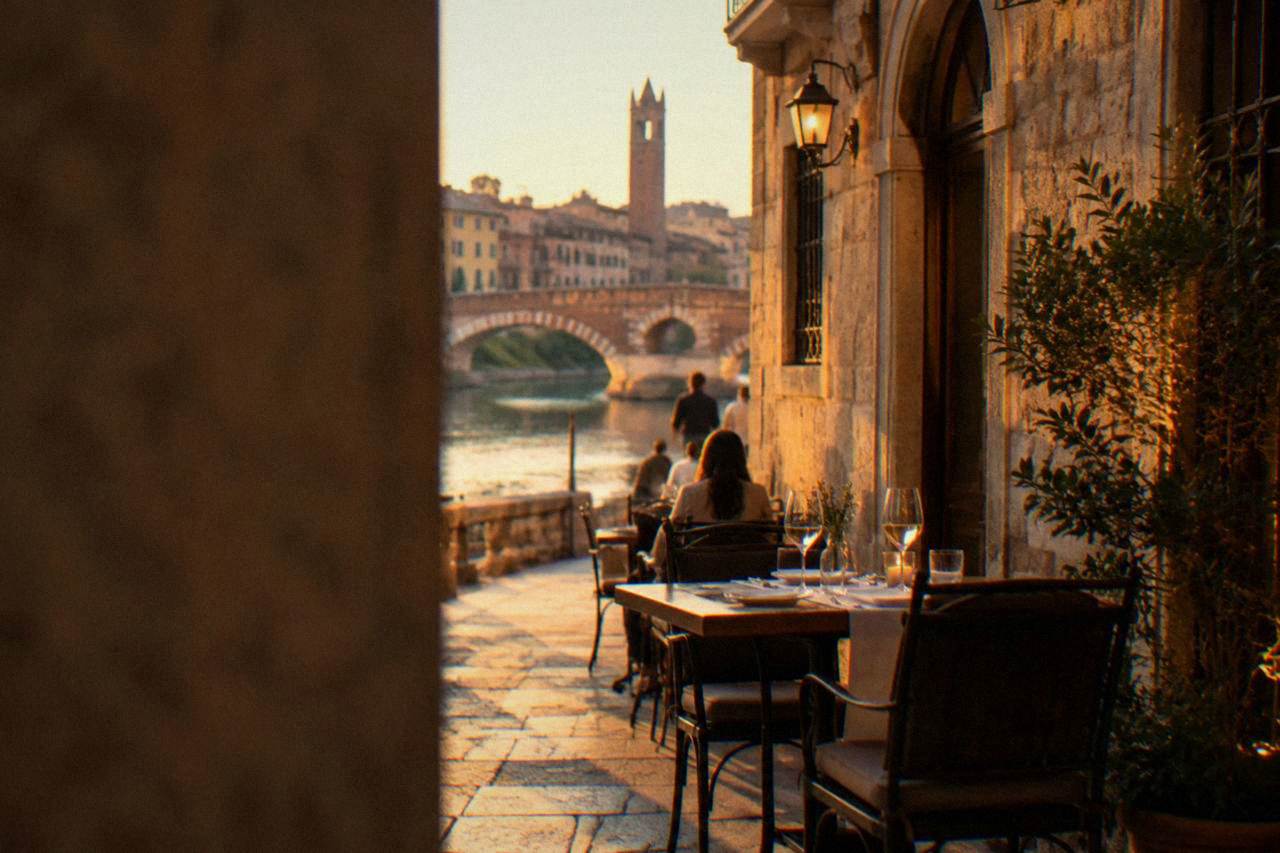
Short answer
Verona's restaurant culture is defined by pastissada de caval, risotto all'Amarone, bollito with pearà sauce and gnocchi, served in the historic centre, Veronetta, San Zeno and across the river in Borgo Trento. Restaurant names, star ratings and meal prices are not verifiable in the sources this site uses, so this guide explains the dishes, the districts, the hours and the booking habits that let you judge a menu yourself.
Verona, in Veneto in northern Italy, eats the way the whole Veneto eats: slowly, at fixed hours, and around a short list of dishes that appear on nearly every serious menu in the city. This page is deliberately not a list of restaurant names. No restaurant, osteria or trattoria name in Verona could be confirmed in the sources this site is built on, and a food recommendation printed without a source is just a rumour with a tablecloth. What the sources do support, and what this guide gives you, is everything around the names: which dishes belong to Verona, which neighbourhoods to search in, when kitchens actually open, what to drink, and how to read a menu in the ten minutes between sitting down and ordering. For the wider sightseeing picture, start with things to do in Verona, then come back hungry.
What Food Is Verona Actually Known For?
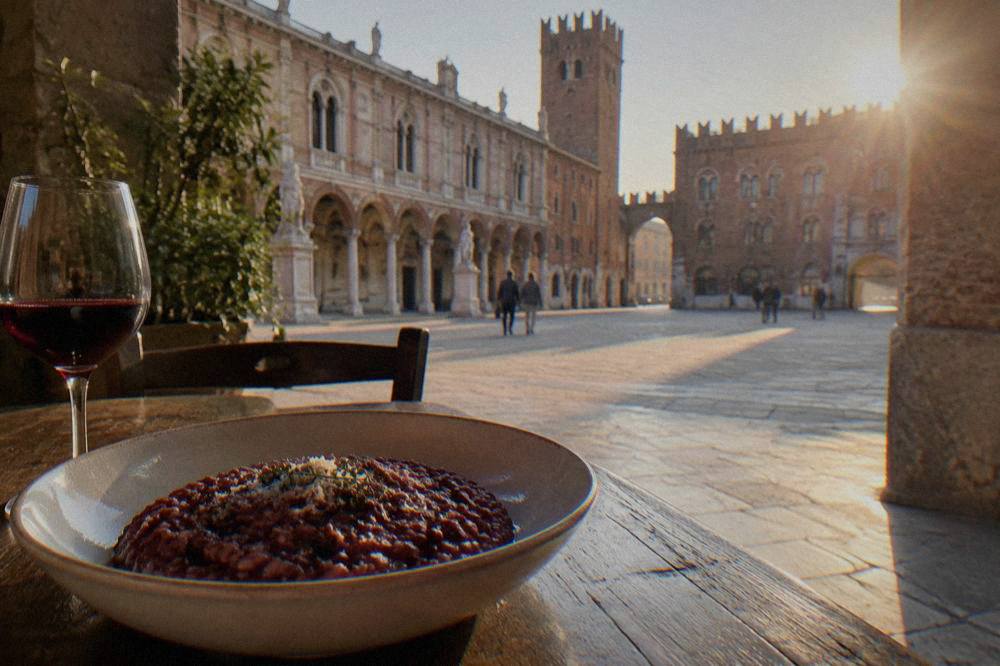
Verona's kitchen is a horse-meat, rice and slow-stew tradition built on four dishes: pastissada de caval, a horse stew simmered long in wine and spices; risotto all'Amarone, Vialone Nano rice cooked in the Valpolicella region's Amarone wine; bollito, mixed boiled meats served with pearà, a bread-and-pepper sauce; and gnocchi, often paired with the stew. Pandoro, the star-shaped Christmas sweet, is also reported as Veronese, though no origin date is sourced. These are the names to look for on a menu, and their presence is itself a signal: a kitchen that makes its own pearà or cooks a proper Amarone risotto is telling you something about how it sources and how it cooks. The full dish-by-dish background, including what each one actually contains and when it appears on menus, is covered in what to eat in Verona.
The deeper context for half of these dishes is wine rather than meat. Risotto all'Amarone only makes sense because the Valpolicella hills north of the city produce Amarone at all, and the appassimento drying method that concentrates the grapes shows up in the dish's dark, bitter-cherry depth. The wine side of that story, including the Corvina, Corvinone and Rondinella grapes that go into it, is in Amarone wine explained, and it is worth reading before you sit down, because a Verona menu pairs its food with local bottles the way a coastal town pairs with fish.
One honest limitation, stated once and then set aside: restaurant names, Michelin mentions, coffee prices and meal prices are all outside what the sources for this site contain. So instead of a ranking that cannot be checked, the rest of this page is a method. Dishes first, then districts, then hours, then wine, then booking.
Which Dishes Should You Look For On A Verona Menu?
Scan every menu for five words: pastissada, Amarone, pearà, bollito and gnocchi, plus pandoro on a dessert list in winter. Pastissada de caval is the horse stew long-simmered in wine and spices, usually with polenta or gnocchi; risotto all'Amarone is Vialone Nano rice in Amarone wine with Monte Veronese cheese; bollito is mixed boiled meats with the pearà bread-and-pepper sauce; gnocchi in Verona are traditionally served alongside the stew rather than as a standalone pasta course. That is the core canon as the food sources report it, and a menu carrying three or more of these is playing the local game rather than the tourist one.
The table below is your menu decoder. Take a photo of it, or just read it once on the walk to dinner.
| Dish | What it is | How it is usually served |
|---|---|---|
| Pastissada de caval | Horse stew, long-simmered in wine and spices | With polenta or gnocchi |
| Risotto all'Amarone | Vialone Nano rice cooked in Amarone wine, finished with Monte Veronese cheese | As a primo, alone |
| Bollito | Mixed boiled meats | With pearà sauce on the side |
| Pearà | Bread, marrow and black-pepper sauce | Spooned over bollito |
| Gnocchi | Potato dumplings, a Veronese tradition | Paired with pastissada or meat sauces |
| Pandoro | Soft, star-shaped leavened sweet bread | Dessert, dusted with sugar |
Two cautions on the canon. The sources describe these dishes but never rank any kitchen's version, so no page on this site will tell you where the "best" or the "most authentic" pastissada lives. And the Bacanal del Gnoco, Verona's gnocchi festival held at Carnival time, exists in the sources only as a name: no date is confirmed, so check locally if you want to catch it. The sweet side of the city, including pandoro's place in the Verona Christmas table, gets its own page in pandoro and the Verona sweet tradition.
How Do You Tell A Serious Verona Kitchen From A Tourist Menu?
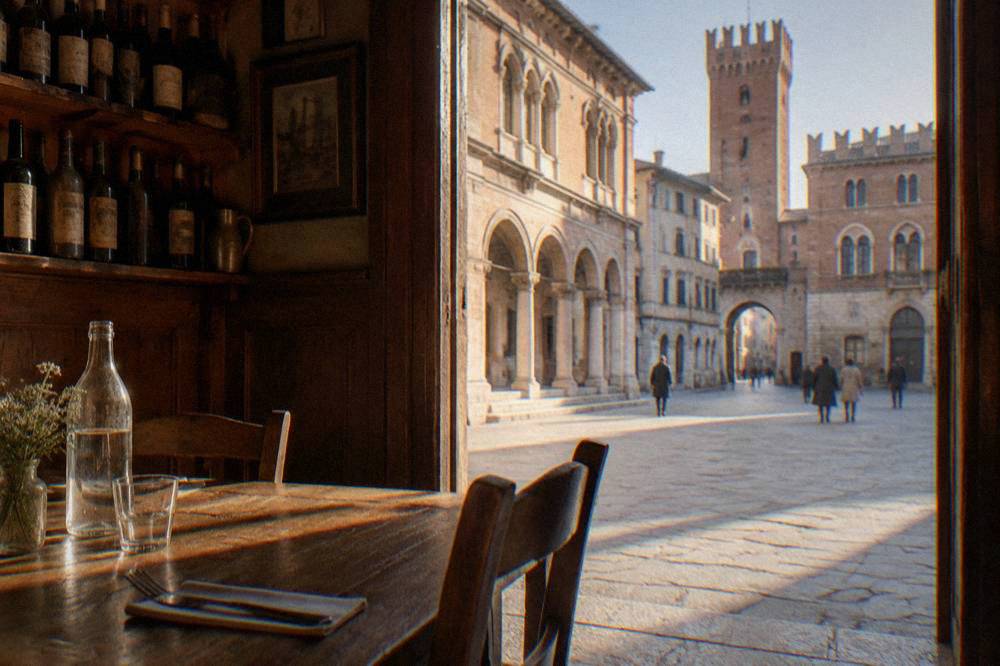
Judge a Verona restaurant by its menu before you judge it by its room: the signals that matter are local dish names spelled correctly in Italian, a short card rather than a leather-bound encyclopaedia, Veronese and Veneto wines by the glass, a hand-written daily addition, and a dining room with Italian being spoken at other tables.
The signals against are photographed food on the pavement, a host inviting you in, a menu in four languages with no Italian, and pizza-and-pasta sameness in a city whose own kitchen is stew and rice based. None of this names a single restaurant, and that is the point: it is a checklist you can run in ninety seconds on any street in the city.
| Check | In favour | Against |
|---|---|---|
| Menu length | Short, seasonal card | Dozens of dishes across cuisines |
| Language | Italian first, translations after | No Italian version visible |
| Dishes | Pastissada, pearà, Amarone risotto present | Generic pizza and cream pasta only |
| Wine list | Valpolicella, Soave, Bardolino by the glass | Same three internationals |
| Entrance | Open door, no persuasion | Host on the pavement with a photo menu |
| Timing | Kitchen clearly serves lunch and dinner hours only | Anything, any time |
Location shapes the odds too. The streets immediately around Piazza Bra and the Arena, and the approaches to Juliet's House, carry the heaviest tourist footfall in the city, and that is where the photographed menus cluster. Walk five minutes in almost any direction and the odds improve: across the Ponte Pietra into Veronetta, or west across the Adige, the ratio of local menus to visitor menus shifts plainly. The districts themselves are the next section, because in Verona the where matters nearly as much as the what.
If running that checklist yourself on night one sounds like work, the alternative is to let a guide do the filtering. A guided food tour with wine and olive oil tastings moves through a set of local tastings with someone who knows the kitchens, which is a fast way to calibrate your own standards for the rest of the trip. Check availability
Where Should You Eat In Verona By Neighbourhood?
Verona's eating runs across five areas: the historic centre inside the Adige bend, where the density is highest and the tourist menus thickest; Veronetta east of Piazza Bra across the river, cheaper and student-flavoured; the San Zeno district around its basilica west of the centre; Borgo Trento north across the water, residential and solid; and the station district around Porta Nuova, functional rather than charming, useful on arrival and departure days. Search your booking platform or map by district name rather than by landmark, and the results improve immediately, because the algorithm stops anchoring on the Arena.
| Neighbourhood | Position | Character | Best for |
|---|---|---|---|
| Historic centre | Inside the Adige bend, around Piazza Bra and Piazza delle Erbe | Highest density, priciest seats, most variety | A splurge dinner near the sights |
| Veronetta | East of the centre, across Ponte Pietra side streets | Student area, smaller kitchens, lower prices | Casual weeknight dinners |
| San Zeno district | West of the centre around the basilica | Neighbourhood restaurants, local crowd | Sunday lunch |
| Borgo Trento | North across the Adige from the centre | Residential, traditional osterie | Slow dinners away from crowds |
| Porta Nuova station district | South of the centre | Functional, quick options | Arrival and departure days |
Where you sleep and where you eat should be chosen together, and the trade-offs between staying central in the ZTL ring or out in Borgo Trento and Veronetta are laid out in where to stay in Verona. One planning note that belongs here rather than in a hotel article: if you rent a car, the historic centre is a camera-policed limited-traffic zone with at most four entries a month for non-residents, so a restaurant inside the bend is one you walk to or take a bus to, not one you drive to, and hotel guests get plate registration only where they are actually staying the night.
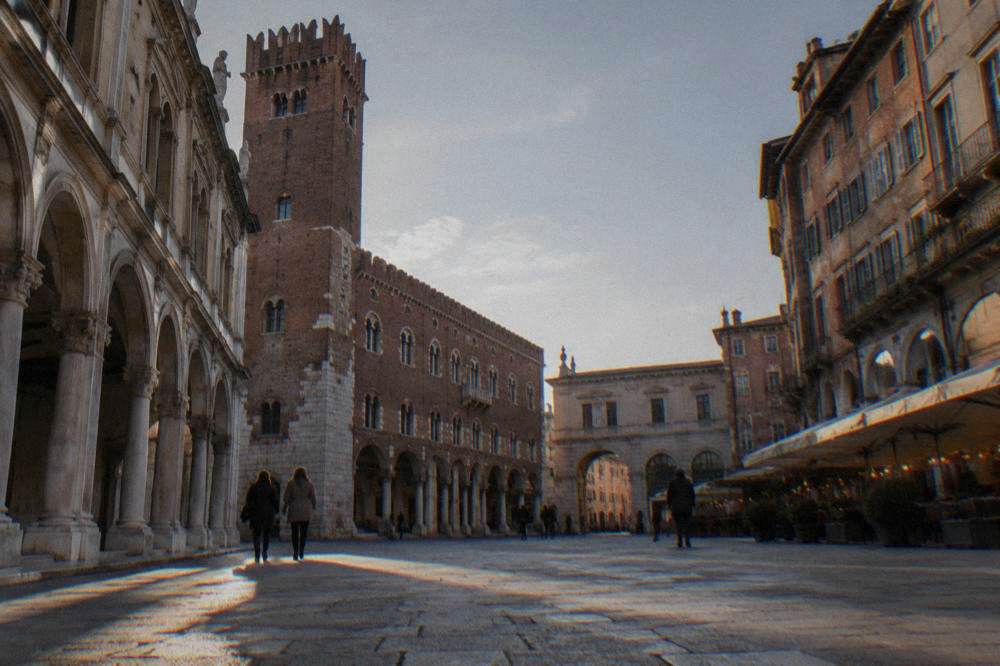
When Do Verona Kitchens Actually Open?
Restaurants in Verona serve lunch from roughly 12:00 to 14:30 and dinner from roughly 19:30 to 22:30, with kitchens closing between the two, and the practical consequence is that a 18:00 dinner or a 15:00 lunch mostly does not exist outside expressly tourist-facing places near the Arena. Individual hours vary and are not verifiable kitchen by kitchen in this site's sources, so treat these as the planning window and confirm the specific time when you book. The pattern is the standard Italian one, and it holds harder in the residential districts than in the centre.
| Meal | Typical window | Planning note |
|---|---|---|
| Breakfast | At the bar, early | Coffee and a sweet, not a seated restaurant meal |
| Lunch | About 12:00 to 14:30 | Kitchens close after, staff eat |
| Merenda | Late afternoon | Bar snack territory |
| Dinner | About 19:30 to 22:30 | Veronese dine late; 19:30 seats are quiet ones |
| Monday | Some kitchens closed | Check the day, not just the hour |
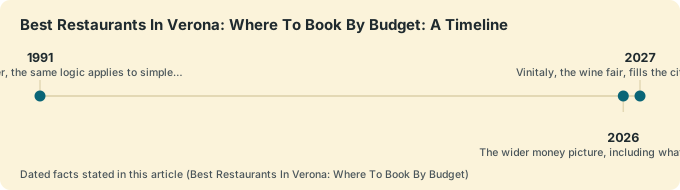
The hours interact with everything else you will do in the city. An Arena opera evening starts around 21:00 to 21:30 in June and earlier as the season moves toward September, per the Opera Festival's own practicals, which makes dinner at 19:30 the standard opera-night plan rather than a coincidence; the season's structure is covered in the Verona Opera Festival guide. Outside high summer, the same logic applies to simple daylight: in winter the ERA5 reanalysis for Verona, 1991-2020, puts January mean highs at 7.3 C, so a 19:30 walk to dinner is a coat-and-scarf affair, worth knowing when you pick a restaurant ten minutes from your door.
What Should You Drink With A Verona Meal?
Order wine from the Verona side of the list: Valpolicella and its concentrated Amarone for red-meat dishes like pastissada and bollito with pearà, the Soave DOCG from east of the city for lighter primi and fish, and Bardolino from the Lake Garda shore for easy by-the-glass reds. The sources also name Lessini Durello among the local zones. A safe rule on any Verona menu is that at least half your bottle list should be Veneto, and if it is not, the kitchen probably is not either. The wine landscape, grape by grape, is in Amarone and the Verona wine guide.
| Wine | Zone | Natural pairing |
|---|---|---|
| Amarone della Valpolicella | Valpolicella hills, north of Verona | Pastissada de caval, aged cheese |
| Valpolicella | Same hills, lighter style | Salumi, mid-weight primi |
| Ripasso and Recioto | Valpolicella zone | Recioto with dessert, Ripasso with stews |
| Soave DOCG | East of Verona, Garganega grape | Light primi, vegetables, fish |
| Bardolino | Lake Garda shore | By-the-glass red, casual meals |
| Lessini Durello | Lessini hills | Sparkling, aperitivo |
Amarone deserves a second sentence because it explains a Verona menu's logic. The wine is made from Corvina, Corvinone and Rondinella grapes dried on racks after harvest, the appassimento method, which concentrates sugar and flavour, and the same intensity is what makes risotto all'Amarone taste the way it does. If you want to see the hills the bottles come from, the Valpolicella zone is about a 25-minute drive from the Arena, and many visitors turn the trip into a tasting day; that itinerary has its own treatment in the site's Valpolicella pages. Other pages covering the same trip are gathered on Verona Italy Travel Guide.
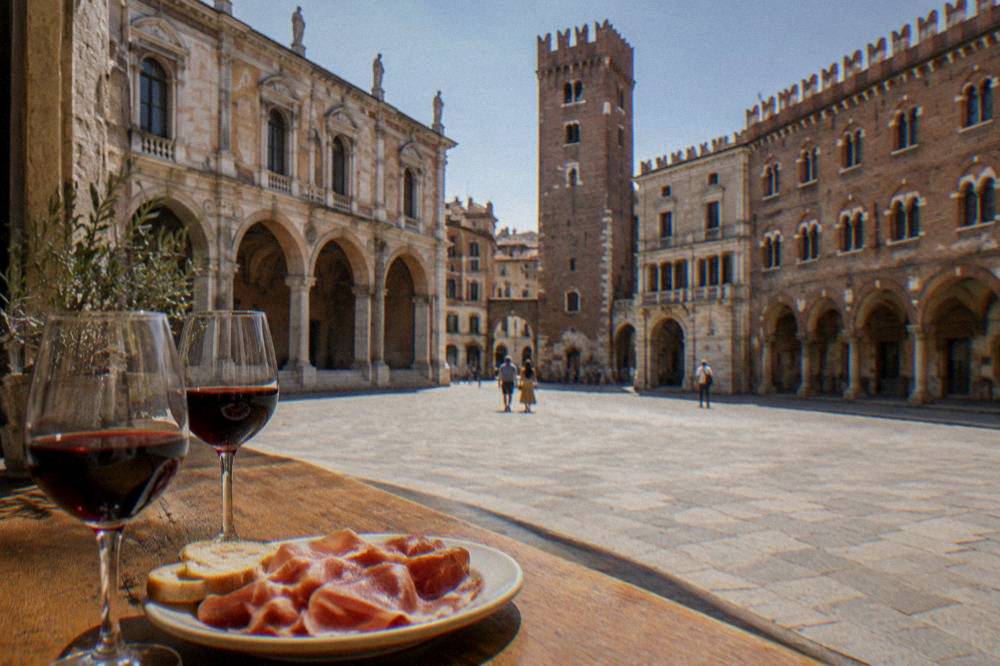
Can A Food Tour Help You Choose Restaurants Later?
Yes, and the mechanism matters more than the tour: a guided food walk in Verona puts a local between you and the kitchens for an evening, samples the region's wines, olive oil and staple bites at a series of stops, and leaves you with a calibrated sense of portion, price feel and neighbourhood that no online list transfers.
This site's featured pick is the Verona guided food tour with wine and olive oil tastings, which you can weigh against a gelato-making class and a small-group history walk depending on whether the trip's centre of gravity is food, family or sightseeing. The tour pages print the current prices and ratings; this page does not.
The gelato class is worth flagging for families specifically, because it converts dessert from something you order into something the children make, which on a city break with kids is a different kind of afternoon entirely. More ideas for travelling with children are scattered through the site's family coverage, and the evening side of the city, aperitivo onward, is in Verona nightlife.
How Do You Book, And What Extra Costs Should You Expect?
Book dinner in Verona the same week, not the same hour: a table for 19:45 on any evening between Thursday and Sunday is worth reserving, opera nights fill the centre earliest, and the two costs to expect beyond the menu are a possible cover charge, the coperto, on the bill, and the city's tourist tax on your accommodation, charged per person per night for a maximum of four nights per person per month and collected by where you stay. The coperto is a normal Italian practice; if it appears, it is not a scam, but menus are expected to indicate it, and the amounts are not verifiable in this site's sources, so read the menu footer before ordering.
| Situation | Booking advice |
|---|---|
| Weeknight, party of two | Same-day or walk-in often works outside the centre |
| Weekend dinner | Book a day or two ahead |
| Opera night at the Arena | Book well ahead; the centre fills first |
| Sunday lunch | Book; it is the Veronese family meal |
| Large group | Book and say the number; Italian kitchens plan portions |
| Allergies or dietary needs | State at booking, not at the table |
Payment practicalities are ordinary Italian ones: cards are widely taken but a cash fallback is sensible for small bars, tipping is a rounded-up gesture rather than a percentage, and a receipt is issued by law. None of that is Verona-specific, but it answers the questions that arrive with the bill. The wider money picture, including what sights cost and how the digital VeronaCard, reissued on 1 September 2026, interacts with museum entries, is in the VeronaCard guide and the free-sights coverage at free things to do in Verona.
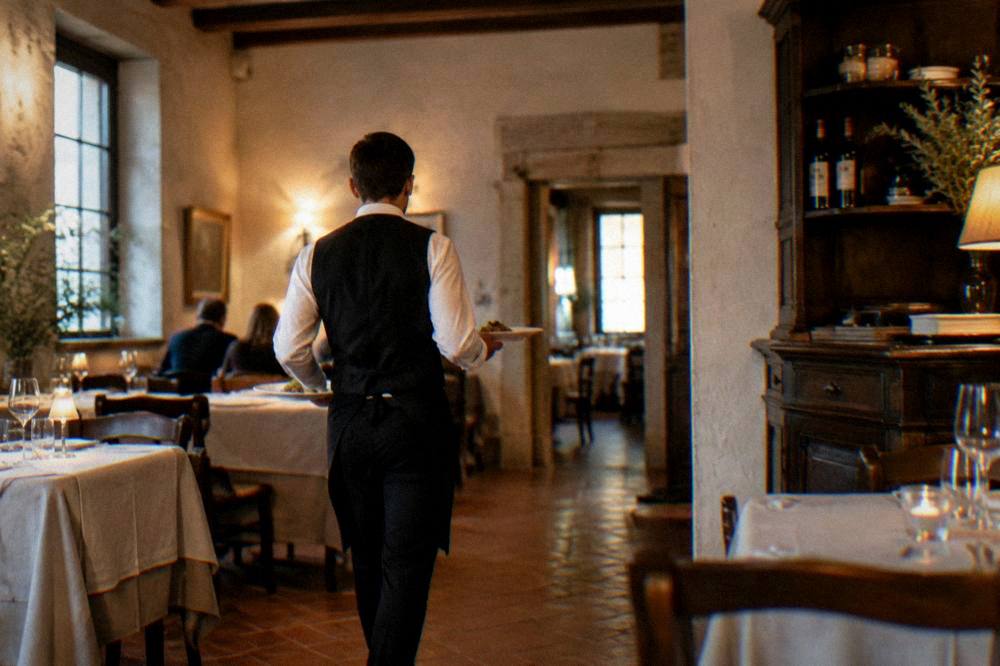
Should You Plan Meals Around The Season You Visit?
Yes, because Verona's menu moves with the year: stew and bollito season runs through the cold months, when the ERA5 reanalysis, 1991-2020, puts January mean highs at 7.3 C and the city wants slow-cooked food; spring and early autumn bring the rice and vegetable primi forward; summer, with July mean highs of 29.3 C, shifts plates toward lighter fare, Garda fish and cold bottles of Soave. Eating with the calendar is the cheapest upgrade available, because it costs nothing and changes what every kitchen is cooking.
Seasonality also changes the table logistics. Opera season, which ran 5 June to 12 September in 2026 and is announced for 11 June to 11 September in 2027, puts tens of thousands of extra diners within ten minutes' walk of the Arena on performance nights, so a summer visit that includes an opera should book dinner as early in the evening as the 19:30 opening allows. Vinitaly, the wine fair, fills the city in April, with 2027 dates of 11 to 14 April, and that week the centre's tables tighten too. The month-by-month trade-offs are laid out in the best time to visit Verona and the climate detail in Verona weather.
What About Gelato, Coffee And The Spaces Between Meals?
Treat gelato, coffee and the aperitivo as a separate meal with its own rules: gelato is judged by the pistachio and the fruit colours, dull and brownish rather than neon; coffee in Verona is a bar counter ritual, an espresso taken standing, with milky cappuccino a morning-only drink by local convention; and aperitivo, the early-evening drink with olives or chips, is the bridge between sightseeing and dinner at 19:30. Coffee prices, like all meal prices, are not quoted here, but the rhythm itself is well established and costs little to learn.
The gelato-making class the site carries turns that last point into an activity, and it is a genuine option for families whose children have hit their limit of churches and squares. The class pages carry the details; the pitch here is simply that making gelato and eating gelato are different memories.
For the visitor building a full day rather than a full meal, the sequencing usually writes itself: sights in the morning when the ERA5 reanalysis shows the day still under 20 C in every month except June to August, a proper seated lunch inside the 12:00 to 14:30 window, an afternoon of squares and shops, aperitivo at 18:30, and dinner at 19:30 or later. The sightseeing half of that day is covered across the site's attraction pages, and a small-group history walk with a guide is a common way to spend the morning half intelligently; the tour trio below includes one, alongside the food walk and the gelato class.
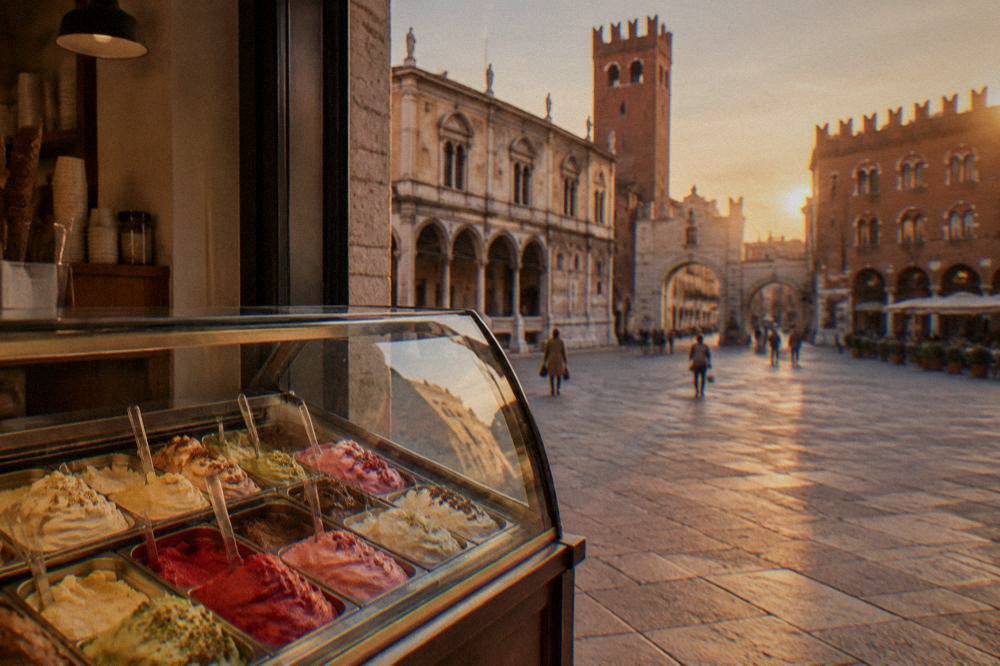
Common Questions About Eating Out In Verona
What is the most famous dish in Verona?
The sources name pastissada de caval, risotto all'Amarone, bollito with pearà and gnocchi as the core Veronese dishes, with pandoro as the city's famous sweet. No single ranking exists, and no kitchen's version is verifiably the best.
What time do restaurants open for dinner in Verona?
Dinner service typically runs from about 19:30 to 22:30, with lunch from about 12:00 to 14:30. Hours vary by restaurant, so confirm the specific time when you book.
Do I need to book restaurants in Verona in advance?
For weekend dinners, Sunday lunch and any night the Arena is staging an opera, yes, book ahead. Weeknights outside the historic centre are often manageable same-day, and the residential districts are more forgiving than the streets around Piazza Bra.
Is there a cover charge in Verona restaurants?
A coperto, a per-person cover charge, is a normal Italian practice and may appear on the bill; menus are expected to indicate it. Amounts are not verifiable in this site's sources, so read the menu footer before ordering.
Which wine should I order with dinner in Verona?
Local logic: Amarone or Valpolicella with pastissada and bollito, Soave with lighter primi and fish, Bardolino as an easy glass. If half the wine list is not Veneto, that itself is information about the kitchen.
Where should I eat near the Arena before an opera?
Book a table for the moment kitchens open, around 19:30, because performances start around 21:00 to 21:30 early in the season and earlier toward September. Walking a few streets beyond the Piazza Bra ring widens the choice considerably on performance nights.
The honest summary of eating in Verona is that the city makes the choosing easy once you know the canon: five dish names, five neighbourhoods, two meal windows and one wine region, and every menu in the city becomes legible. Walk the side streets off Piazza Bra, cross a bridge for dinner at least once, order what the Veronese order when the weather says so, and let the stews do what they were cooked to do. For the rest of the city between meals, the editorial desk's full coverage continues from the Verona Italy Travel Guide homepage, and the three tours below cover the food walk, the gelato class and the history walk in one place.
Before you go, the pick for this guide:
Gourmet Dinner, Wine, Gelato
★ 4.8 145 reviews · From $74
Check availability →