Pastissada De Caval: The Horse Stew Of Verona
Pastissada de caval is Verona's slow-cooked horse meat stew, a dish the city's own food writers list alongside risotto all'Amarone and bollito con la pearà as one of the cornerstones of Veronese cooking.
Short answer
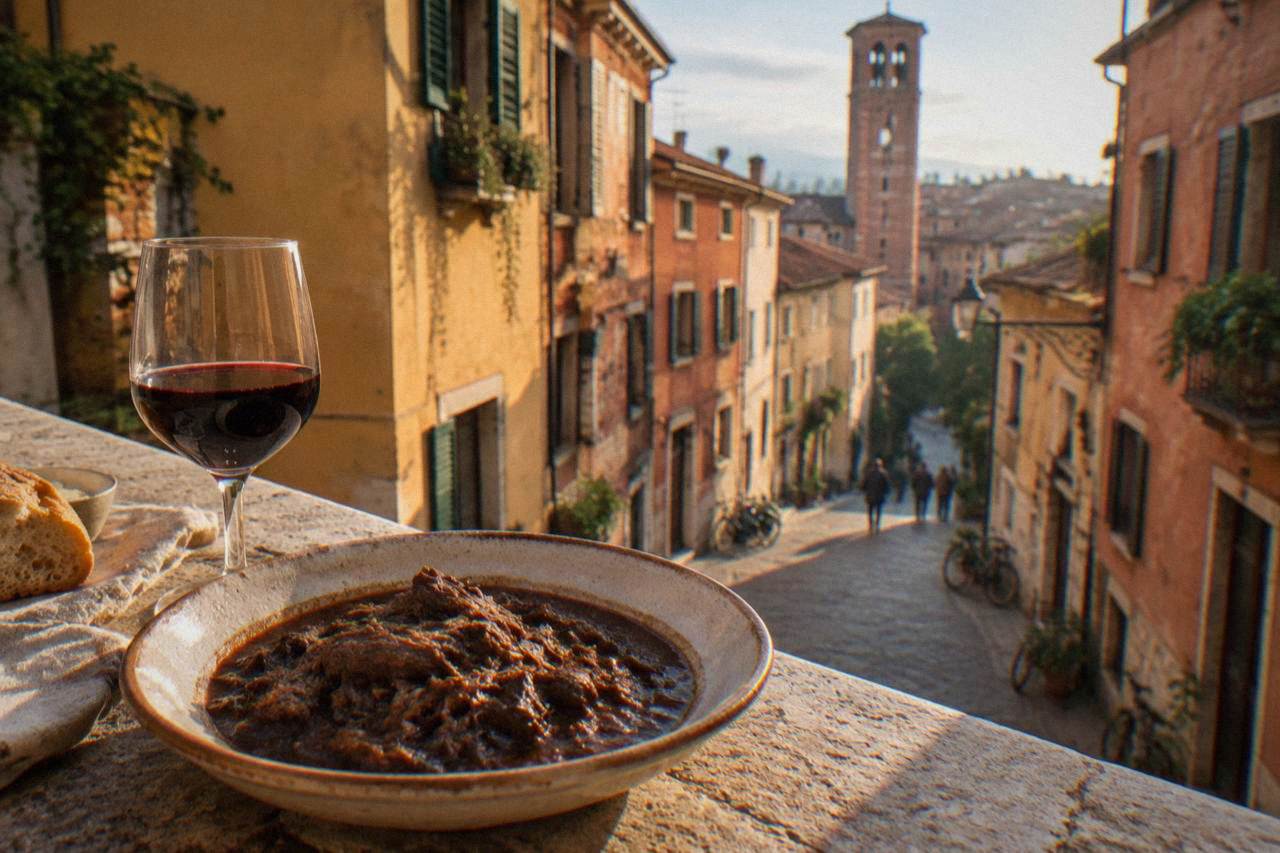
Pastissada de caval is a Veronese stew of horse meat marinated and slow-simmered in red wine with vegetables, spices and tomato, served over polenta or with potato gnocchi. It is a traditional dish of Verona in Veneto, northern Italy.
Pastissada de caval is Verona's slow-cooked horse meat stew, a dish the city's food writers list alongside risotto all'Amarone and bollito con la pearà as one of the cornerstones of Veronese cooking. Verona sits inland on the Adige river in Veneto, northern Italy, two hours from the Alps and half an hour from the Valpolicella wine hills whose reds give the stew its depth. The dish is not a tourist invention: Italian food media, including Gambero Rosso, treat it as a native Veronese speciality, the kind of plate that appears on osteria menus across the old centre once the weather turns cold. This guide sets out what pastissada de caval actually is, what the sources say about its origins, how it is made and how a visitor to Verona can go about tasting it.
What Is Pastissada De Caval In Verona?
Pastissada de caval is a traditional stew of Verona, in Veneto, made from horse meat that is marinated in red wine, then slow-simmered for hours with onion, carrot, celery, spices and tomato until it falls apart into a dark, concentrated sauce. It is served over soft polenta or with potato gnocchi, and Italian food guides list it among the defining dishes of Veronese cuisine, alongside risotto all'Amarone and bollito con la pearà.
The name needs unpicking for anyone arriving from outside Italy. "Caval" is horse: the dish is, plainly, horse meat stew, and it is eaten without embarrassment in Verona and across parts of the Veneto and the north, where horse meat has a long presence in butchery and home cooking. "Pastissada" points to the technique rather than the animal, a long, slow pastissage in wine, the same instinct that produces French daubes and other wine-braised stews of the old continent.
What marks the Veronese version out is the wine. This is Amarone and Valpolicella country: the same air-dried Corvina, Corvinone and Rondinella grapes that produce the region's reds also end up in the cooking pot, and a pastissada simmered in a structured local red takes on a colour and depth that a table wine cannot give. The meat, the wine and the long cooking are the whole idea. Nothing about the dish is fast.
It is also a cold-weather dish by instinct. Stews of this weight belong to the months when Verona's continental climate bites: the ERA5 reanalysis, 1991-2020, puts the January mean daily high at 7.3 C and the January low below freezing at -0.4 C. Menus change with the seasons here as they do across northern Italy, and a January evening in the old centre is exactly when a plate of pastissada with polenta makes sense.
Where Does Pastissada De Caval Come From?
The reported origin story of pastissada de caval ties the dish to Verona's medieval past, with local tradition attributing it to the aftermath of a battle in which fallen horses were salvaged as food, though no primary historical source confirms the tale and Italian food encyclopaedias describe the dish's roots in peasant conservation cooking instead: salting, marinating and wine-stewing meat to preserve it. The romantic battle legend should be read as folklore, while the preservation technique is the real history.
That folk tale circulates widely in Veronese telling, usually set in the era of the city's medieval lords and linked to a battlefield littered with horses. It is a good story, and restaurants and food blogs repeat versions of it freely, but nothing in the verifiable record pins it down, and the honest position is that the legend explains the dish's romance while preservation explains its logic. Wine was abundant in the hills north of the city, meat was scarce, and marinating tough cuts in strong red wine before a multi-hour simmer was a way to make both go further.
The horse itself carries history. Horse meat eating in the Veneto predates the tourist city by centuries, tied to working animals, to wartime scarcity and to a butchery tradition that never carried the taboo found in parts of the English-speaking world. In Verona today horse meat remains a normal butcher's item, and pastissada de caval is its most famous treatment.
The dish also belongs to a wider family of Veronese slow food. Bollito con la pearà, the mixed boiled meats with a bread-crumb and marrow pepper sauce, and risotto all'Amarone, the rice dish cooked in the same wine, all come from the same larder: local meats, local rice, local wine, patience. Together they form the savoury backbone of what the city's food writers call cucina veronese, and any visitor reading a menu in the historic centre will meet at least one of them on almost every page.
For travellers who want the full picture of that table, the site's guide to Veronese food covers the other signature dishes, and the Amarone wine guide explains the wine that gives pastissada its base.
How Is Pastissada De Caval Made?
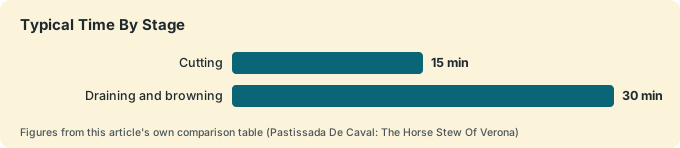
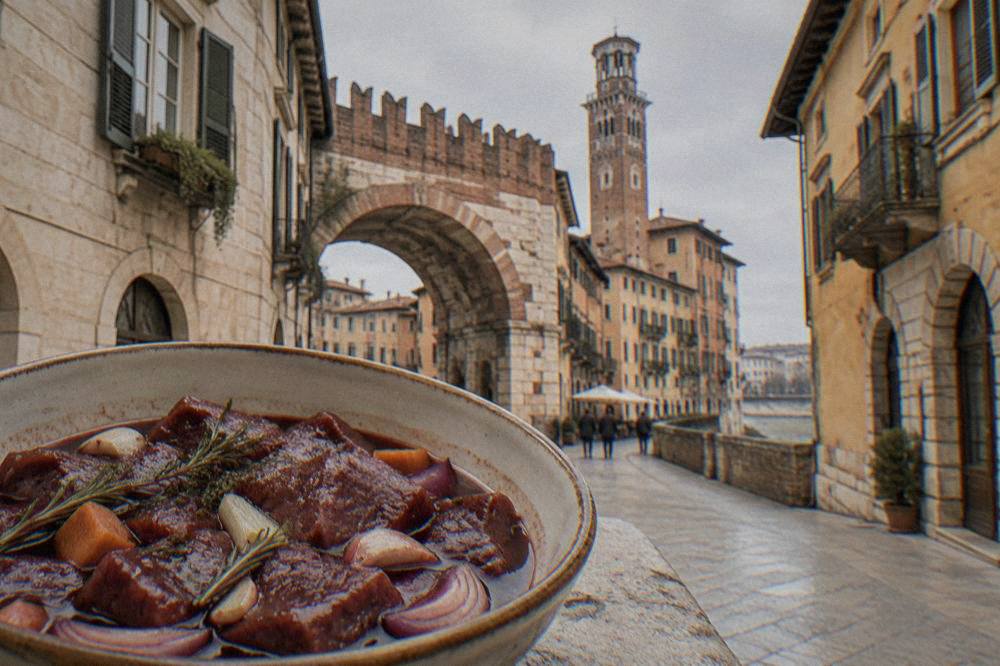
Pastissada de caval is made in two long stages: first the meat is cubed and marinated in red wine, usually with onion, carrot, celery, garlic, bay leaf and spices, for at least several hours and often a full night, then everything is drained, browned, and left to simmer gently with tomato and more wine for three hours or more until the meat shreds and the sauce darkens and thickens. Polenta or gnocchi, not pasta, are the traditional accompaniments.
The marinade is the step that separates a true pastissada from an ordinary stew. Cooks submerge the horse meat completely in a full-bodied red, typically a Valpolicella or a younger Amarone in home versions, and leave it cold with the aromatics. The wine does two jobs: it begins breaking down the muscle fibres of a naturally lean, working meat, and it seeds the sauce with the flavour the dish is known for.
The second stage is patience. After draining and browning the meat, the vegetables from the marinade go in, tomato or concentrato is added, and the wine returns to the pot. A lid, the lowest flame the stove allows, and time do the rest. Italian recipes for pastissada consistently call for a simmer measured in hours rather than minutes, because the goal is meat that comes apart under a fork and a sauce reduced almost to a glaze.
| Stage | What Happens | Typical Time |
|---|---|---|
| Cutting | Horse meat cubed, sinews trimmed | 15 minutes |
| Marinade | Meat submerged in red wine with vegetables, bay, spices | 12 hours or overnight |
| Draining and browning | Meat patted dry, browned in fat; vegetables softened | 30 minutes |
| Simmering | Wine and tomato added, covered low heat until meat shreds | 3 hours or more |
| Resting | Pot rested off heat before serving, sauce skimmed | 20 to 30 minutes |
Home cooks outside Italy sometimes ask what can be substituted, and the honest answer is that the substitutions change the dish. Beef or donkey meat appears in some northern Italian versions of wine-stewed meats, and a lean beef shin stewed the same way produces something recognisable, but the specific texture and leanness of horse meat is part of what the dish is. The wine matters too: a dry, structured red with some ageability stands up to the long cooking where a light wine collapses into sourness.
What Does Pastissada De Caval Taste Like?
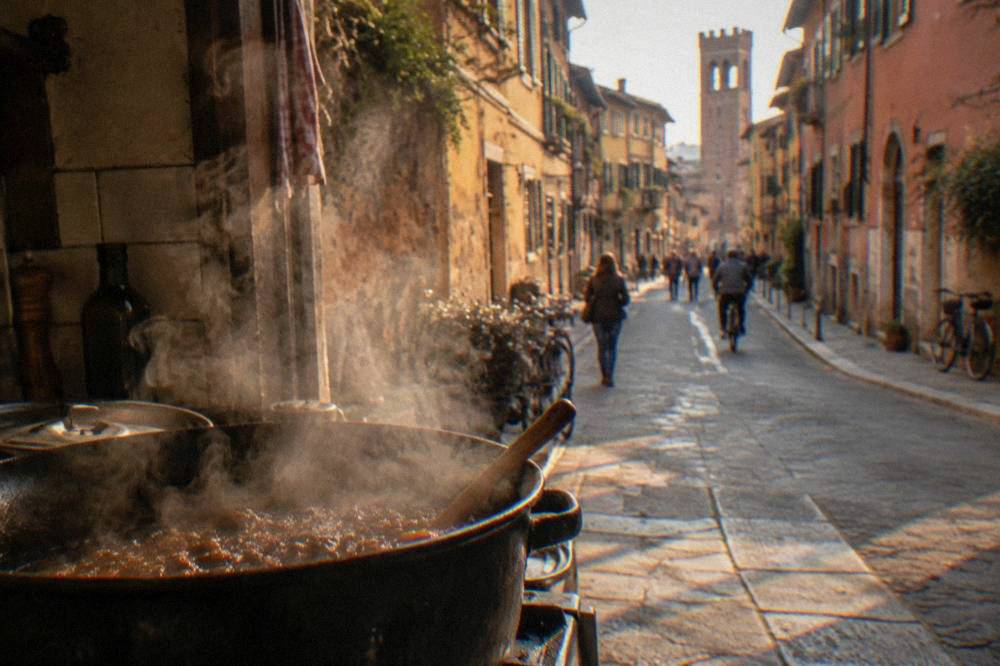
Pastissada de caval tastes dark, dense and wine-forward: the long marinade and simmer give a sauce that is deeply savoury with a sweet-sour edge from reduced red wine, while the horse meat itself is leaner than beef, fine-textured, and takes on a soft, shreddable consistency closer to slow-braised cheek than to any quick-fried meat. There is no gaminess in a well-made version, and the overall impression is of a concentrated, wintry stew rather than an unusual one.
The tomato plays a supporting role, not a leading one. This is not a ragù in the southern Italian sense: the sauce runs dark brown-red rather than bright red, and the spices of the marinade, often clove, cinnamon or juniper in home recipes, sit in the background giving a faintly medieval warmth. Salt and a little sugar or a chunk of dark chocolate appear in some family recipes to round the wine's tannin, a trick shared across the braising traditions of the Veneto.
Texture is half the pleasure. Done properly the meat is not sliced but spooned, collapsed into strands that bind with the sauce, and the polenta underneath is soft, freshly turned and meant to absorb it. In restaurants that serve it with gnocchi, the dumplings take the place of the polenta and the dish reads almost as a ragù, though the sauce is heavier and darker than a gnocchi al ragù further south.
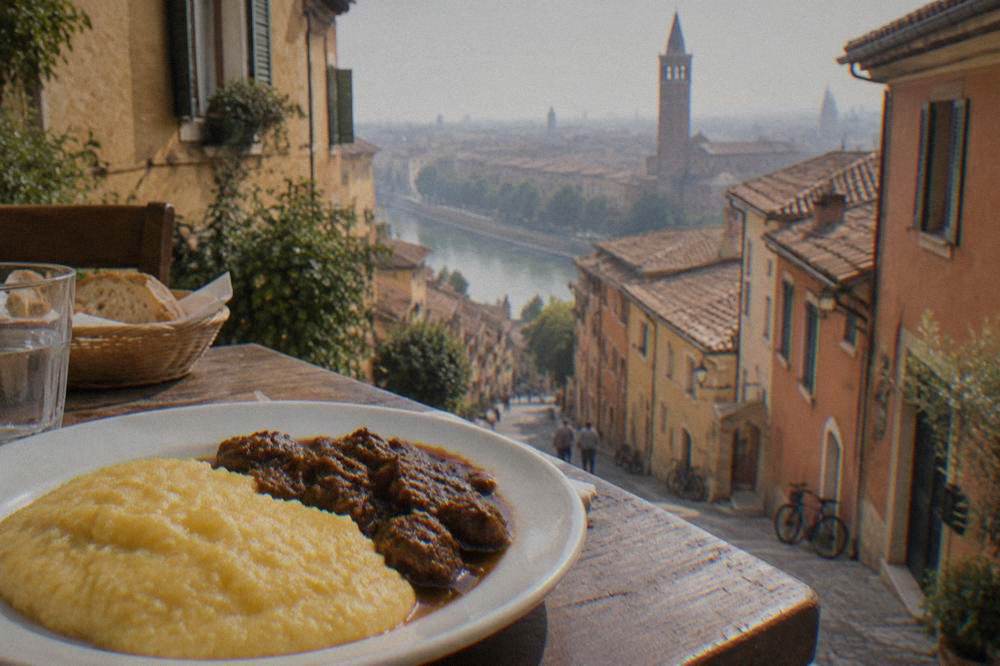
A glass of the same wine that went into the pot is the obvious pour, and the local logic supports it. Valpolicella's reds and Amarone are built from grapes with natural acidity and, in Amarone's case, dried-fruit concentration that stands up to a sauce this rich. The pairing is not a marketing invention: it is simply what grows on the hills 25 minutes' drive from the city and what the dish was designed around.
| Flavour Element | Where It Comes From |
|---|---|
| Deep savoury base | Long browning and hours of reduction |
| Sweet-sour edge | Red wine reduced with tomato |
| Warm background spice | Bay, clove, cinnamon or juniper in the marinade |
| Lean, fine meat texture | Horse meat's low fat and fine grain |
| Soft, absorbent base | Fresh polenta or potato gnocchi |
Where Can You Eat Pastissada De Caval In Verona?
Pastissada de caval is served in Verona's traditional osterie and trattorie, especially in the cold months, and the practical way to find it is to read menus in the historic centre around Piazza delle Erbe and the adjoining streets, where the dish appears as a second course with polenta or gnocchi, so choose a kitchen advertising cucina tipica veronese and ask what is in the pot that day.
That caution is deliberate. Restaurant names, star counts and prices are the most inflated claims on any food page, and this site prints none it has not checked. What can be said is structural: the dish is a winter speciality in a city whose restaurants change menus seasonally, and the odds of finding it rise sharply from late autumn through early spring, the stretch when the ERA5 reanalysis, 1991-2020, shows Verona's mean highs sliding from 12.3 C in November to 7.3 C in January. More of these guides are collected on Verona Italy Travel Guide.
Two practical routes exist for a visitor who wants the dish explained rather than just served. One is a guided food walk through the centre, where local tastings come with context; the Verona food and wine tour with local tastings moves through the city's food traditions with a guide, and the operator's live listing carries the current price and availability:
The other is to cook it, or something adjacent, yourself. Verona has a strong culture of cooking classes aimed at visitors, mostly centred on pasta and tiramisu, and while pastissada's overnight marinade makes it an awkward classroom dish, the classes teach the polenta and gnocchi foundations that the stew sits on. The cooking school class in pasta, tiramisu and Italian dishes is the site's featured option of that kind, and its listing shows the current from-price and dates.
For orientation, the Verona map guide and the walking-friendly layout of the centre cover how the osteria streets of the old city connect, and the best time to visit Verona guide weighs the seasons for food-led travel.
What Do You Serve With Pastissada De Caval?
Pastissada de caval is served with soft white polenta or potato gnocchi as the traditional base, a glass of Valpolicella or Amarone as the wine, and nothing much else: the dish is a complete one-plate meal in Veronese home cooking, though some menus add a simple green vegetable or a sharp side to cut the richness, and full-bodied reds from the Verona wine hills are the pairing that local convention and the dish's own construction both point to.
Polenta is the older partner. Maize arrived in the Veneto centuries ago and became the filler carbohydrate of the poor, and the region's cooking still treats fresh, soft polenta as the natural bed for any long-simmered meat. Gnocchi are the more restaurant-friendly option, easier to plate and portion, and a pastissada served over gnocchi reads as the rustic cousin of the city's more photographed plates.
| Accompaniment | Role On The Plate |
|---|---|
| Soft white polenta | Traditional base, absorbs the reduced sauce |
| Potato gnocchi | Restaurant alternative, dumplings take the sauce |
| Valpolicella Classico | Lighter pour, matches the sauce's freshness |
| Amarone della Valpolicella | Full pairing, echoes the cooking wine |
| Sharp green vegetable | Cuts the richness on richer plates |
The wine deserves a sentence of its own, because it is not an afterthought. The stew is often made with a decent bottle precisely so the same bottle can stand beside it, and the wine guides of the region treat Valpolicella and Amarone as the default pours for slow-cooked horse and beef dishes alike. The site's Verona wine guide and the dedicated Amarone page go deeper for readers who want the grape-by-grape version, and the Valpolicella area guide covers the hills the wine comes from.
One warning worth writing plainly: the dish is heavy, and it punishes an over-ordered table. In Veronese eating it usually stands alone as the main course, following a light primo if anything. Building a whole evening around it, an aperitivo, the stew, and a stroll, fits the local rhythm better than stacking courses, and an evening walk is a Veronese habit the city's layout rewards. The moonlight walking tour is the site's featured way to do that after dinner:
How Does Pastissada Compare With Other Veronese Dishes?
Pastissada de caval sits with risotto all'Amarone, bollito con la pearà and gnocchi as the savoury core of Veronese cooking, and it differs from them mainly in meat and method: it is the city's only signature horse dish, it is the one built on a wine marinade rather than a broth or a rice base, and it is the most strictly seasonal of the four, a cold-month plate while risotto and gnocchi appear year-round.
The comparison is worth a table, because menus present these dishes side by side and first-time visitors often order blind.
| Dish | Main Ingredients | Character |
|---|---|---|
| Pastissada de caval | Horse meat, red wine, polenta or gnocchi | Dark, wine-rich winter stew |
| Risotto all'Amarone | Vialone Nano rice, Amarone, cheese | Wine-forward rice, year-round |
| Bollito con la pearà | Mixed boiled meats, pepper breadcrumb sauce | festive boiled-meat classic |
| Gnocchi | Potato, flour, butter or ragù | Everyday dumpling, many sauces |
| Pandoro | Rich leavened sweet dough | Verona's reported sweet, a winter celebration bake |
Pandoro belongs in the row with an asterisk: the site's sources report it as a Verona sweet without a settled origin date, and the pandoro guide handles it properly. The savoury quartet above it, though, is the everyday answer to what the city's kitchens do with local wine, local rice and local meat, and pastissada is the darkest and most committed of the four.
It is also the dish that most rewards a cold evening. Visitors planning a winter trip will find the seasonal logic laid out in the Verona in winter guide, and the question of which month to come is covered in the seasonal breakdowns across the site.
Can You Make Pastissada De Caval At Home?
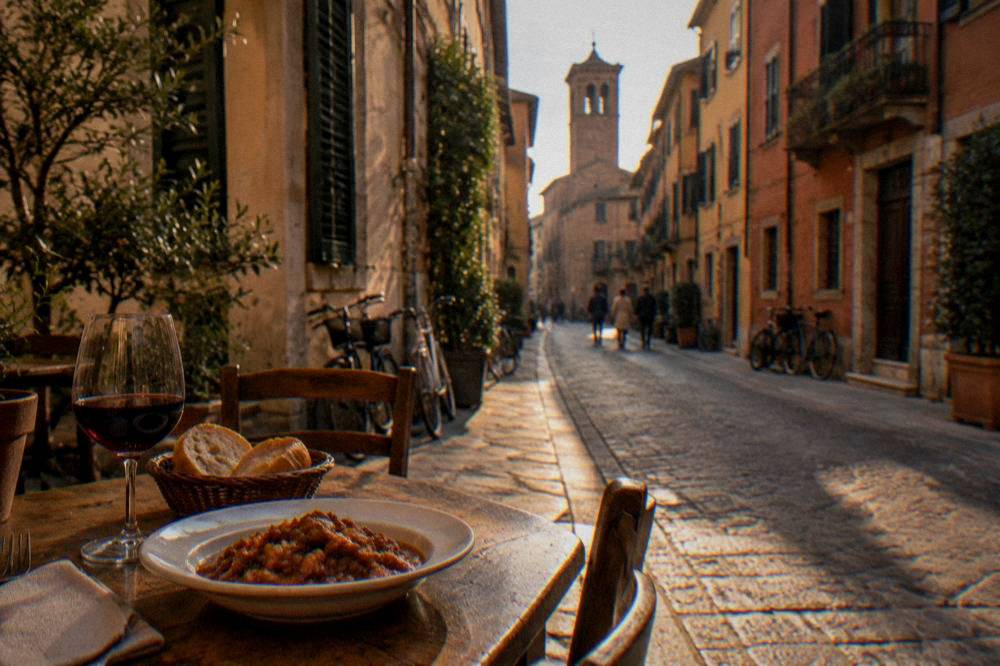
Yes, pastissada de caval can be made at home, and Italian home recipes follow the same pattern everywhere: an overnight red-wine marinade with vegetables and spices, a browning stage, and a covered simmer of three hours or more, with horse meat from a specialist butcher if you can get it and a lean beef substitute if you cannot, and a structured Italian red such as Valpolicella in the pot because the wine is a main ingredient rather than a seasoning.
The shopping is the hard part outside Italy. Horse meat is a normal butcher's item in Verona and parts of northern Europe, and effectively unavailable in the United States and the United Kingdom, where its sale is restricted or absent. Inside Verona, by contrast, butchers selling carne equina are an ordinary feature of the city's food shops, which is one more reason the dish survives here.
The method translates to any kitchen with a heavy pot. Drain the marinated meat, brown it properly in batches, soften the marinade vegetables, return the wine with tomato, then hold the barest simmer until the meat gives up. Salt late. Serve on polenta made fresh, soft and loose rather than set and fried, because the polenta's job is to drink the sauce.
| Home-Cooking Question | Practical Answer |
|---|---|
| Can I substitute the meat? | Lean beef shin works; the dish changes character |
| Which wine? | A dry structured red; Valpolicella is the local choice |
| Marinate how long? | Overnight is the standard |
| Simmer how long? | Three hours or more, covered, lowest heat |
| What alongside? | Soft polenta or gnocchi, the same wine to drink |
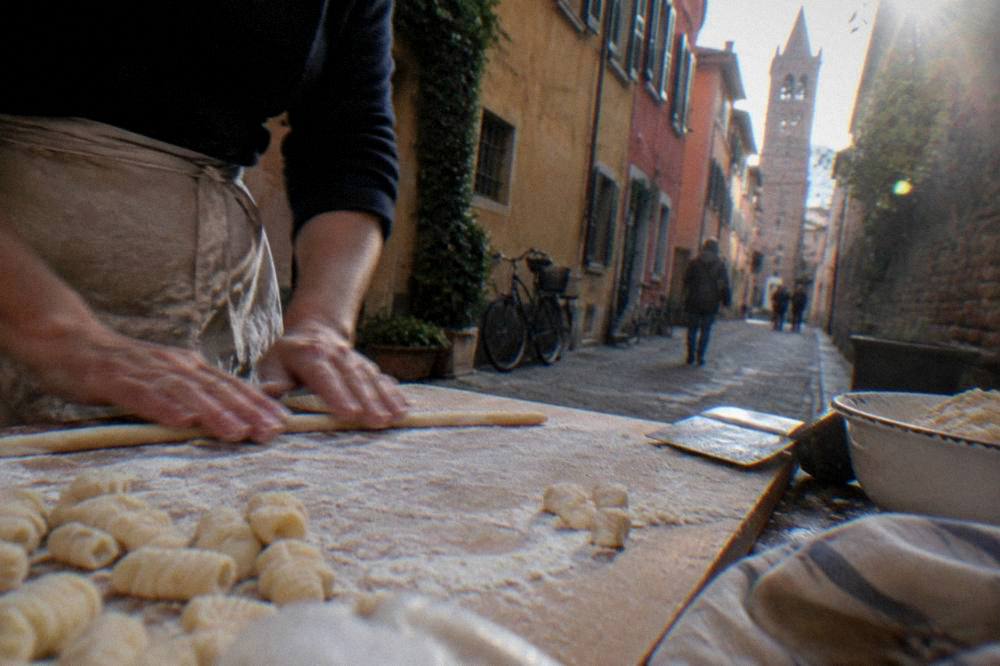
Cooking it in Verona itself is a different pleasure, and one some visitors build a trip around. The city's cooking classes lean toward pasta and tiramisu rather than stews, for the practical reason that a class cannot hold an overnight marinade, but the classes teach the bases, and a visitor who has rolled gnocchi in a Veronese kitchen will understand what the stew is meant to sit on. The site's food tour page and the cooking school option above are the two featured entries into that side of the city's food life.
When Is The Best Time Of Year To Eat Pastissada De Caval In Verona?
The best time to eat pastissada de caval in Verona is late autumn through winter, roughly November to February, when the city's kitchens return heavy braises to the menu and the climate suits them: the ERA5 reanalysis, 1991-2020, puts Verona's November mean high at 12.3 C, January's at 7.3 C with lows below freezing, and rainfall peaks at 118.2 mm in November, all of which points to indoor, slow-cooked eating rather than terrace dining.
That is also the quietest stretch of the Verona visitor year, and the practical gains are real: tables are easier, the osterie of the centre run at a local pace, and the seasonal dishes, pastissada, bollito, risotto all'Amarone, are exactly what the kitchen wants to cook. The Verona in autumn guide and the winter page cover what else the city offers in those months.
Spring changes the menu. By April the ERA5 reanalysis, 1991-2020, shows mean highs of 17.8 C, and the city's kitchens shift toward lighter plates; pastissada can still be found but it stops being the dish of the moment. Summer, with July mean highs of 29.3 C, is opera season and outdoor-eating season, and a wine-heavy horse stew is the wrong plate for a 21:00 start at the Arena, however good the performance. Visitors coming for the Verona Opera Festival should read pastissada as a hearty lunch dish rather than a pre-show dinner.
| Month | Mean High (ERA5 1991-2020) | Suitability For Pastissada |
|---|---|---|
| November | 12.3 C | Season begins |
| December | 7.8 C | Peak season |
| January | 7.3 C | Peak season |
| February | 9.5 C | Still on menus |
| April | 17.8 C | Occasional |
| July | 29.3 C | Wrong weather for it |
Is Horse Meat In Verona Something Visitors Should Know Before Ordering?
Horse meat in Verona is legal, ordinary and openly served, with no taboo attached locally, and a visitor who orders pastissada de caval is eating a dish with centuries of northern Italian butchery behind it; the only preparation worth doing is knowing what the word caval means before the plate arrives, since menus in the historic centre label it plainly and staff will rarely volunteer the translation to English speakers unprompted.
The taboo gap is real and worth naming honestly. In Britain, Ireland, the United States and much of the Anglosphere, horse meat carries a strong cultural aversion, and more than one visitor has ordered a dark stew in Verona and learned its contents afterwards. In the Veneto the reverse holds: horse butchery is a trade with its own shops, the meat is valued as lean and iron-rich, and nobody treats the dish as daring. Neither view is wrong; they are simply different food cultures meeting over the same pot.
The practical advice is to ask. Veronese restaurant staff are used to international guests and will explain any dish without ceremony, and a menu that says pastissada de caval will say horse meat if asked. Visitors with strong feelings on the subject can equally steer toward risotto all'Amarone or the vegetarian-leaning sides of the menu and lose nothing of the city's food culture, which is wide enough for everyone.
For the wider frame, the things to do in Verona page maps the city's sights around its food streets, and the where to stay in Verona guide helps place a base within walking distance of the osterie of the centre.
Common Questions About Pastissada De Caval
What is pastissada de caval?
A traditional Veronese stew of horse meat marinated in red wine and slow-simmered for hours with vegetables, spices and tomato, served over polenta or with potato gnocchi.
Is pastissada de caval really made with horse meat?
Yes. Caval means horse in the local naming, and the dish is a normal, openly served speciality in Verona and the Veneto, where horse meat is a standard butcher's item.
What do you serve with pastissada de caval?
Soft white polenta is the traditional base, potato gnocchi the common restaurant alternative, and a Valpolicella or Amarone red is the standard pour alongside.
When is pastissada de caval in season in Verona?
Roughly November through February. It is a cold-weather dish, and the city's restaurants return heavy braises to their menus as the ERA5 reanalysis, 1991-2020, shows mean highs falling from 12.3 C in November to 7.3 C in January.
Can I make pastissada de caval with beef instead?
Lean beef shin stewed the same way produces a recognisable wine-braised dish, but the texture and leanness of horse meat are part of what the original is, so the result is a cousin rather than the same plate.
Where did pastissada de caval come from?
Its roots are in peasant preservation cooking: marinating and wine-stewing meat to keep it. A medieval battle legend about salvaged horses circulates in Veronese telling, but it is folklore rather than documented history.