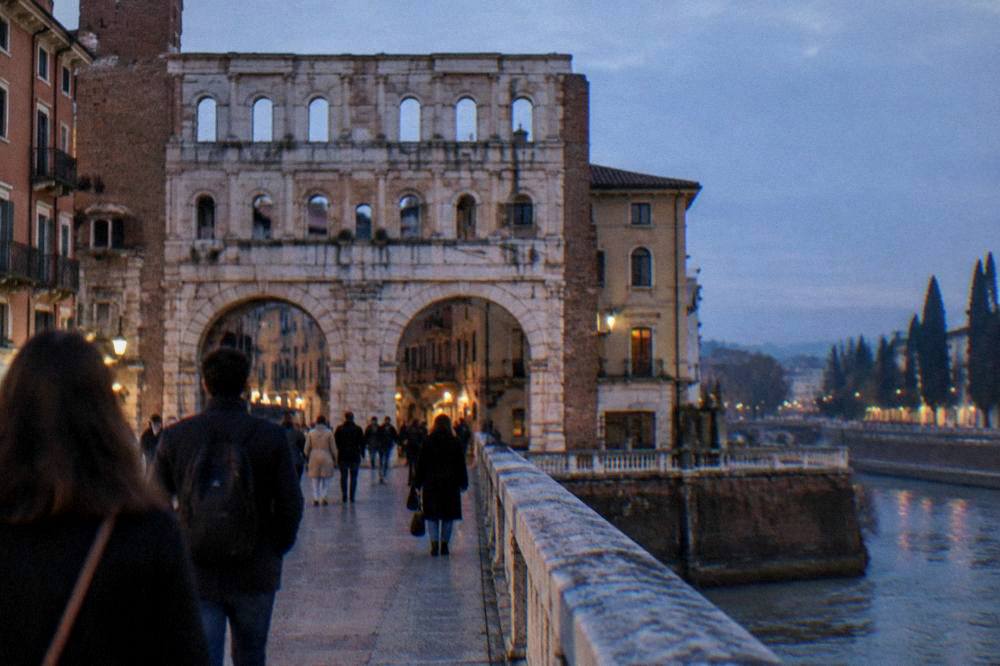
Getting Around Verona: Walking, Buses And Taxis
Verona is a compact inland city on the Adige where the old town sits inside a river loop: nearly everything inside it is reached on foot, an ATV bus single costs 1.50 euro, and a camera-policed ZTL keeps cars out of the centre.
Short answer
Central Verona is best explored on foot: the old town sits inside a loop of the Adige and the main sights cluster within a short walk of Piazza Bra. For longer hops, ATV city buses take a 1.50 euro single ticket valid 90 minutes; the Aerobus line 199 links Verona Villafranca airport to the city for a reported 7 euro; and the VeronaCard, digital since 1 September 2026, bundles sight entries with optional ATV transport.
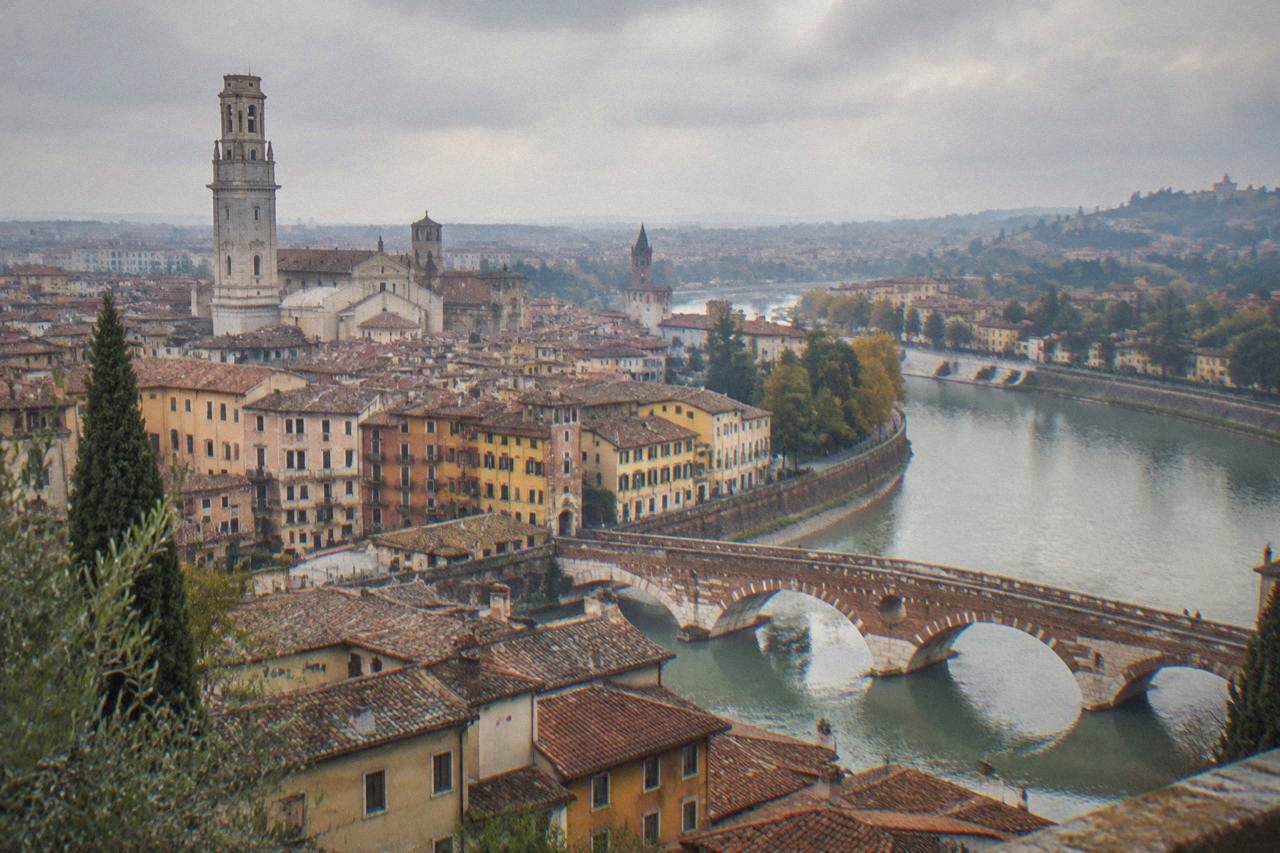
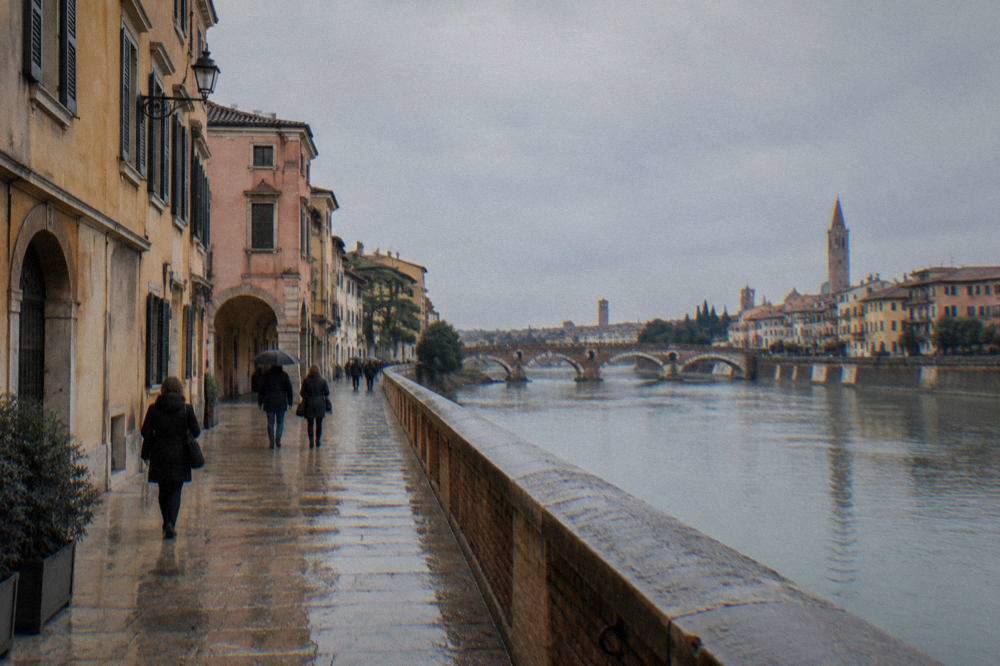
Verona is a small inland city on the Adige river in Veneto, northern Italy, and its historic centre sits entirely inside a loop of that river. That single geographic fact shapes everything about getting around: the old town is compact enough that walking is the main mode of transport, the ATV bus network matters mostly for the station, the airport and the outer districts, and a camera-enforced limited-traffic zone (ZTL) keeps private cars out of the centre almost entirely. Lake Garda is not in Verona at all: the lake towns of Sirmione, Bardolino, Garda and Malcesine lie 22 to 39 km west and are day trips, reached by bus, train or car.
This page lays out how each piece works in 2026: the walkable centre, the bus system and its tickets, the airport connection, the ZTL rules for anyone arriving with a car, and the transport picture for the wine hills and the lake. Prices quoted here come from the Comune di Verona, ATV and the operators' own pages; anything reported rather than officially confirmed is labelled as such, and the standing advice is to confirm live details before travelling.
Is Verona Easy To Get Around Without A Car?
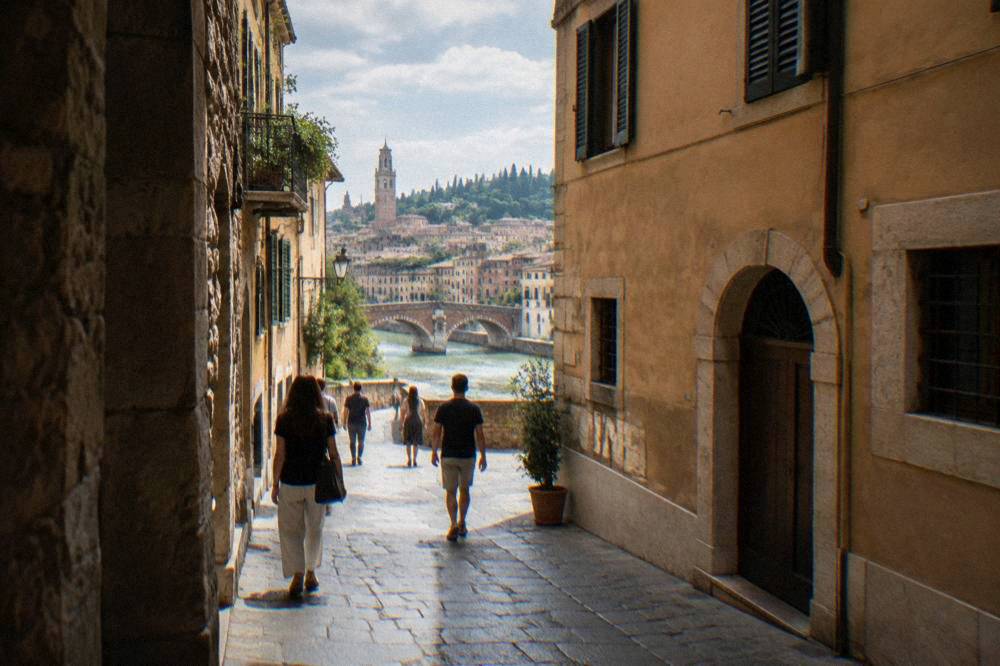
Yes, Verona is one of the easier Italian cities to manage without a car, because the entire UNESCO-listed old town sits inside a loop of the Adige and every major sight, from the Arena in Piazza Bra to Juliet's House and Ponte Pietra, lies within a short walk of the centre. The city-tier landmarks all sit within 5 km of Piazza Bra, per the site's own computed mapping of the city, so a car inside the old town buys nothing but ZTL worry.
The practical arrangement for a typical stay is simple. Arrive by train at Verona Porta Nuova, which sits just south of the centre, walk or take one bus stop into the old town, and do everything inside the river loop on foot. Buses fill the gaps: the station link, the climbs to Castel San Pietro's side of the river if the funicular steps are not appealing, and the outward journeys to Lake Garda or the Valpolicella hills. For the full arrival picture, the companion pages on reaching Verona by train and plane and Verona Porta Nuova station cover the long-distance legs.
Two 2026 changes matter for anyone planning around old blog posts. First, Juliet's courtyard stopped being free on 1 April 2026: the courtyard route now costs 5 euro and the full house and balcony route 12 euro, booked online, with entry via Teatro Nuovo, per the Comune di Verona's own notice. Second, the VeronaCard went digital on 1 September 2026. Neither changes how you move around, but both change what you carry: a phone with tickets, and comfortable shoes, are the real transport kit here.
How Does Verona Public Transport Actually Work?
Verona's public transport is run by ATV, the provincial bus company, and the core unit is the urban single ticket at 1.50 euro, valid for 90 minutes across the city network, as listed on ATV's own fares page. There is no metro or tram: the network is buses, plus the ATV-operated Aerobus line 199 from Verona Villafranca airport, reported at 7 euro one way with a journey of about 15 minutes into the city.
The 1.50 euro single is the figure to anchor on. ATV's urban fares page states it plainly, and it covers transfers within the 90-minute window. Day and network passes exist at several price points, but those figures were reported only loosely in research for this page, so the honest advice is to check the current pass prices on ATV's own site before buying; the single ticket, by contrast, is a settled, published figure.
For visitors, three corridors cover nearly every bus journey worth making:
| Journey | Service | What the sources say |
|---|---|---|
| Verona Villafranca airport to city | Aerobus, ATV line 199 | Reported at 7 euro one way, about 15 minutes, ticket valid 75 minutes, running about every 20 minutes at peak times |
| Verona Porta Nuova to the old town | ATV urban buses | Urban single 1.50 euro, valid 90 minutes, per ATV's fares page |
| Verona to Sirmione and Lake Garda towns | ATV line 164 | Reported at about 55 minutes direct to Sirmione, hourly, also serving Peschiera, Lazise, Bardolino and Garda; fare not confirmed |
The line 164 is the lake lifeline. It runs from the station area west to the Garda shore, and for Sirmione specifically it is the direct option; note that Sirmione itself is in Brescia province, Lombardy, not in the Verona province. The fare for that line was not confirmed in research, so confirm it with the driver or on ATV's site. Trains complement the buses for the wider region: reported journey times from Porta Nuova are 58 to 75 minutes to Venice Mestre, 1 hour 15 to 1 hour 50 to Milano Centrale, and about 3 to 3 hours 30 to Rome. Print no train fares from memory: they vary by train type and booking window, and the operators' own booking pages are the place to check.
The VeronaCard is the one product that mixes transport and sights. Since 1 September 2026 it is digital, delivered through the "Your Verona" web app, at 33 euro for 24 hours or 38 euro for 48 hours with ATV urban buses included, or 29 and 32 euro without transport, per the Comune di Verona's announcement. It covers civic museums including the Arena and, with a separate online booking, Juliet's House. It does not include the airport Aerobus, and no saving should be computed against entries without checking live prices first.
Where Do You Buy Bus Tickets In Verona?
ATV tickets are sold at the station, in tabaccheria shops around the city, from ticket machines and through ATV's own app, and the 90-minute urban single at 1.50 euro is the one to buy for anything inside the city, per the fares page on ATV's site. Buy before boarding where possible: tickets are also reported to be available on board, but buying on the bus can carry a surcharge, so the cheaper and calmer route is a machine or a tabaccheria.
A short checklist works better than a system description here. Validate the paper ticket at the machine on board the moment you board; keep digital tickets ready to show. The 90-minute clock starts at validation, not at purchase. For families, note only that children's concession rules sit on ATV's own pages and should be confirmed there rather than assumed. For the airport leg, the Aerobus accepts the same contactless and app channels reported for the rest of the network.
The single biggest queue-avoidance point is not the bus at all, however. It is Juliet's House. Since the 1 April 2026 change there is no free courtyard stroll and no turn-up-and-see arrangement: the Comune's notice specifies online booking, entry via Teatro Nuovo, 5 euro for the courtyard route and 12 euro for the house and balcony. A fast-track ticket with an audio guide, booked before travel, turns the busiest site in the city into a walk straight to the door.
How Do You Get From Verona Airport To The City Centre?
Verona Villafranca airport (VRN) connects to the city by the Aerobus line 199, reported by ATV and the airport's own site at 7 euro one way, about 15 minutes of travel, with departures roughly every 20 minutes at peak times and every 40 minutes off-peak, from early morning until about 23:10 from the airport. The road distance is 16.4 km, about 26 minutes by car in free-flow traffic, as computed over OpenStreetMap routing.
By road the airport sits south-west of the city, and the Aerobus runs direct with no intermediate stops, which makes it the default choice: cheap, frequent enough and short. A taxi rank operates at the airport, but there is no confirmed fixed fare to the centre, so ask for a quote at the rank rather than accepting a number quoted second-hand anywhere online. The full arrival picture, including what to expect at each end, is on the dedicated airport to city centre page.
One timing note worth planning around: the Aerobus runs a reduced service around Christmas and New Year, per the reported schedule details, so late-night December arrivals should check the last departure rather than assuming one exists. The 7 euro ticket is reported to be valid for 75 minutes on urban buses too, which covers a onward hop from Porta Nuova if your accommodation is on the far side of the centre.
What Is The ZTL And Can You Drive Into Central Verona?
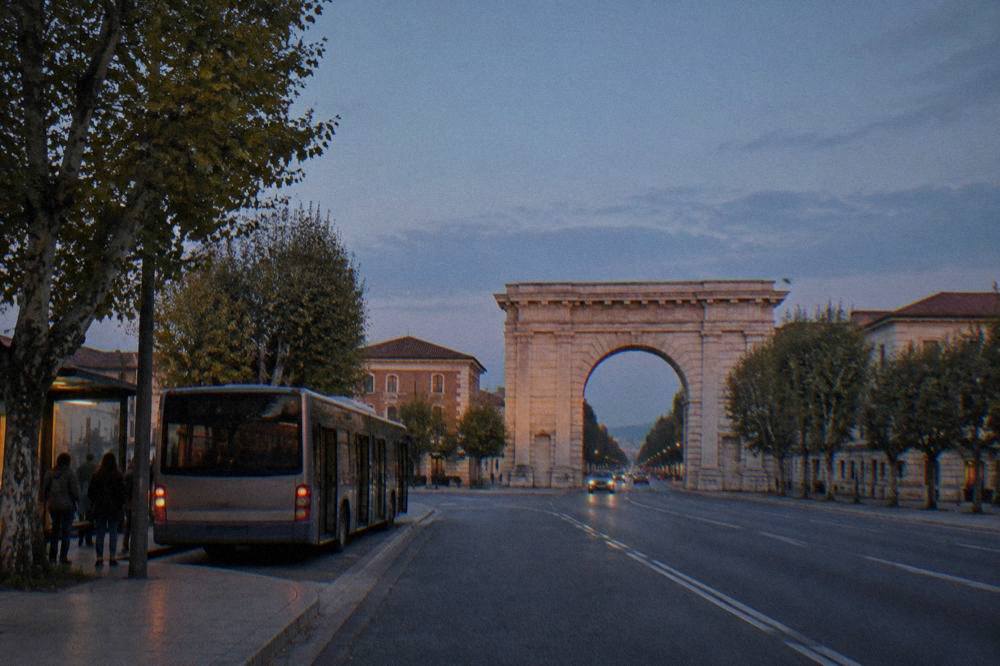
Verona's historic centre is a camera-enforced limited-traffic zone (ZTL), and non-residents are limited to a maximum of four entries per month, made by advance booking, in set windows: Monday to Friday 10:00 to 18:00 and 20:00 to 23:00, and Saturdays, Sundays and holidays from 10:00 to 13:30, per the Comune di Verona's own ZTL notice.
Hotel guests inside the zone get free access if the hotel registers the car's plate with the ZTL manager; short-term rental apartments do not offer this.
The ZTL is the reason driving into central Verona is a planning decision rather than an impulse. Cameras read every plate at the gates, and the fine arrives later through the rental company. The four-entries rule applies to non-residents booking access through the city's system; the windows above are when a booked entry is permitted, with exit deadlines attached. The clean alternative, if your lodging is a rental flat inside the zone, is to park outside and walk or bus in: the centre is small enough that this costs minutes, not hours.
For parking outside the zone, several car parks ring the centre. Specific hourly rates were not confirmed in the research behind this page, so check the operator's own page for the car park you intend to use before driving in. The rules of thumb: park on the station side or the Arena side, keep the car there for the whole stay, and treat the ZTL as a hard boundary rather than a soft suggestion. More detail, including the rental-car angle, sits on driving, renting and parking in Verona companion coverage and the site's practical pages.
| ZTL element | Rule as published by the Comune |
|---|---|
| Who may enter | Residents with permits; non-residents with a booked entry, max 4 per month |
| Weekday windows | Monday to Friday 10:00 to 18:00 and 20:00 to 23:00, exit deadlines apply |
| Weekend windows | Saturdays, Sundays and holidays from 10:00 to 13:30 |
| Hotel guests | Free access if the hotel registers the plate; not available via tourist rentals |
| Enforcement | Camera-read plates at the gates, sanctions issued by post |
Can You Really Walk Everywhere In Central Verona?
Yes, within the old town walking is the transport, not a supplement to it: the historic centre fits inside a loop of the Adige roughly a couple of kilometres across, and every landmark from Piazza Bra and the Arena to Piazza delle Erbe, the Casa di Giulietta, Ponte Pietra and Castelvecchio lies within a short walk of the others, with the computed mapping for this site placing every city-tier sight within 5 km of the centre. Comfortable shoes matter more than a bus pass here.
The geography rewards a simple mental map. Piazza Bra with the Arena anchors the south-west; Via Mazzini, the pedestrian shopping street, runs north from it to Piazza delle Erbe; Juliet's House sits a block east of Piazza delle Erbe; the Adige curves around everything, with Ponte Pietra, the Roman bridge, on the north-east and Castelvecchio and its bridge on the west. The slopes come into play only across the river: Castel San Pietro and its viewpoint sit on a hill reached by steps or the funicular-side path, which is the one climb in the centre worth planning for. The wider set of guides lives on Verona Italy Travel Guide.
Walking also solves the evening. Verona's nightlife and restaurant core sits inside the same compact loop, and the question of walking around Verona at night is answered in detail on its own page; nothing in the centre requires a night bus for anyone staying inside the river loop. For orientation on a first day, a small-group highlights walk covers the same streets with a guide's commentary, and it pairs naturally with a self-guided walking itinerary for the days after.
Do You Need Taxis Or Ride Services In Verona?
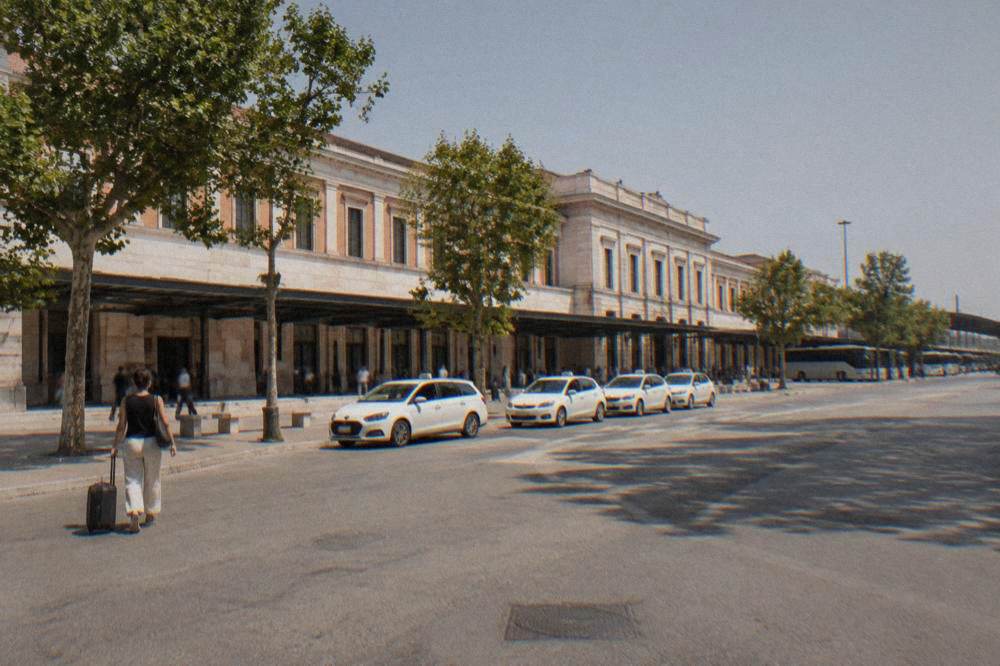
Taxis in Verona are licensed, metered and found at ranks at the airport, at Porta Nuova station and at a few central stands, and no fixed fare exists for any city journey, so the practical advice is to ask for the meter or a quote before setting off; hotel and restaurant staff will call a radio taxi if no rank is near.
Ride-hailing apps operate in the city, but their pricing is dynamic and no figure for a Verona journey appears in the sources for this page.
The honest summary is that taxis are a fill-in, not a system. They earn their place for airport runs outside Aerobus hours, for luggage-heavy moves, and for late returns from outside the centre. For everything inside the river loop, walking beats them on time at peak hours, when the ZTL and the narrow streets slow cars to walking pace anyway. No published Verona taxi tariff is available, so treat any number quoted in older guides or forums with caution.
How Do You Get To Lake Garda Without A Car?
Lake Garda is not part of Verona: it is a day trip west, with the lake towns 22 to 39 km from the city, and the car-free options are the ATV line 164 bus, reported at about 55 minutes direct to Sirmione with an hourly service also serving Peschiera, Lazise, Bardolino and Garda, plus regional trains to the Peschiera and Desenzano stations on the south shore, and the Navigazione Laghi ferries once you are at the water.
Sirmione, on a narrow peninsula at the lake's south end, is the classic first trip, and the 164 drops you close to the historic centre; remember the town is in Brescia province, Lombardy. Bardolino and Garda town, both in the Verona province, sit on the south-east shore. Malcesine, further north at the foot of Monte Baldo, is about 84 minutes' drive from the Arena, per the computed free-flow routing used across this site, and the Monte Baldo cable car from there costs 30 euro round trip for an adult, 28 bought online, per the operator's own fares page.
Two seasonal facts matter for lake planning. The Navigazione Laghi full summer service ran 16 May to 4 October 2026, with a reduced autumn timetable to 1 November and the north-south passenger service then suspended from 2 November 2026 to 12 March 2027, as reported on the operator's timetable pages; the year-round Maderno to Torri car ferry continues. And a full-lake day pass on the ferries costs 39.50 euro for an adult at 2026 fares, per the Navigazione Laghi rates page. Scheduling a lake day inside the summer ferry window is the difference between a boat network and a bus timetable.
| Day trip from the Arena | Distance by road, computed free-flow | Car-free option |
|---|---|---|
| Sirmione | about 40 minutes | ATV line 164 bus, reported about 55 minutes direct |
| Bardolino | about 37 minutes | ATV line 164 bus |
| Garda town | about 42 minutes | ATV line 164 bus |
| Malcesine | about 84 minutes | Bus or train plus ferry connections; confirm locally |
| Valpolicella (Sant'Ambrogio) | about 25 minutes | Bus connections from Verona, confirm times locally |
| Soave | about 33 minutes | Regional transport, confirm locally |
The wine hills are the other half of the day-trip picture. Valpolicella lies about 25 minutes' drive north-west of the Arena, per the same computed routing, and guided wine tours from Verona handle the transport, which matters because winery visits are spread across villages and valleys rather than clustered at one bus stop. The Valpolicella guide covers the region in depth.
Should You Use Bikes Or E-Bikes To Get Around Verona?
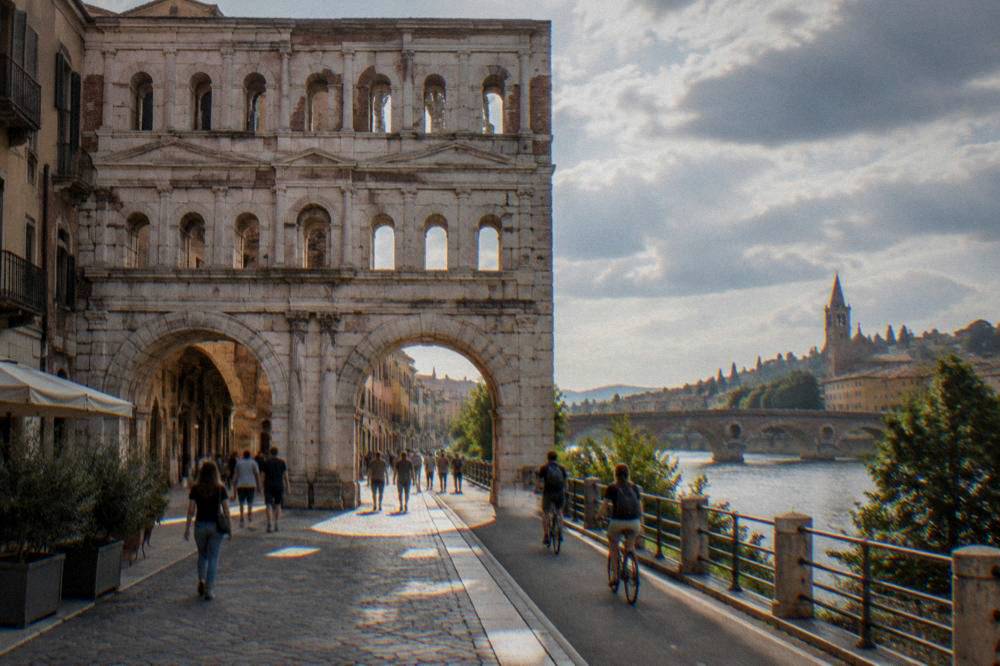
Bikes work well in Verona for the flat old town and the riverside paths along the Adige, and the city's tours include guided city bike tours, an e-bike tour taking in the centre and panoramic viewpoints, and a self-guided e-bike format for the Valpolicella wine hills; for pure transport inside the river loop, however, walking covers nearly everything a bike would, and the bike's real value shows on the hills and the longer loops.
The distinction is between transport and activity. Inside the centre, the streets are pedestrianised enough that a bike adds little over shoes. Out along the river and up toward the viewpoints, an e-bike flattens the only real slopes in the area, and the self-guided Valpolicella e-bike format turns the 25-minute drive to the wine hills into a ride with tastings built in. Product details, prices and durations for those options render from the tour listings themselves, so check the live listing for the format that fits.
What Should You Know About Getting Around During The Opera Season?
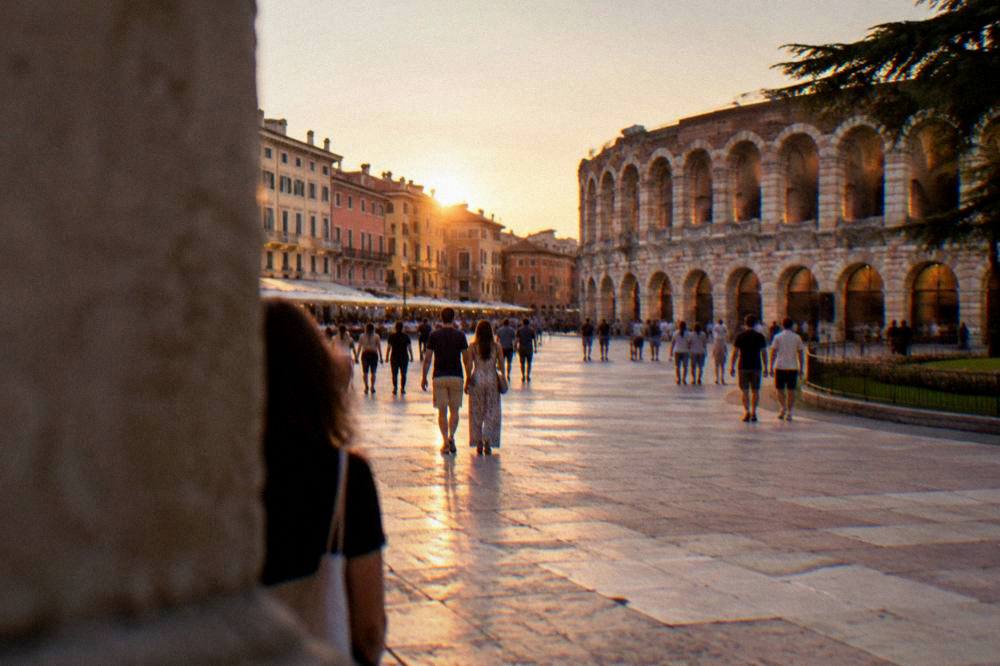
During the Arena Opera Festival, which ran 5 June to 12 September in 2026 and is announced for 11 June to 11 September in 2027, show evenings concentrate tens of thousands of people around Piazza Bra, with gates reported to open about two hours before curtain and performances starting around 21:00 to 21:30 early in the season.
The season is not a July-and-August affair, despite the old cliches: the 2026 edition was the longest in the festival's history and ran well into September. On show days the Arena's daytime visiting hours close early, per the civic museums' calendar, which matters if a daytime visit shares a day with an evening performance. Stone-step tickets start in the 30-euro range, per the Arena's own rates pages, and no dress code beyond ordinary comfort applies, though the stone steps are stone: a cushion is allowed and sensible.
For transport on an opera night the rules do not change, but the volume does. Buses run their evening service, the centre fills on foot after the curtain, and the walk back across the river loop is the normal exit. Anyone staying outside the centre should check the last bus or Aerobus timing for their direction before the evening starts, and the full festival picture sits on the Verona Opera Festival page.
| Opera season fact | Figure and source |
|---|---|
| 2026 season | 5 June to 12 September 2026, 103rd edition, per arena.it |
| 2027 season | 11 June to 11 September 2027, 104th edition, announced on arena.it |
| Curtain times | Reported around 21:00 to 21:30 in June, earlier later in the season |
| Gates | Reported to open about two hours before the performance |
| Bags | Small backpacks allowed; bulky bags reported as prohibited, no cloakroom |
Does The VeronaCard Help With Getting Around?
The VeronaCard helps with getting around only in its with-transport form: since 1 September 2026 the digital card costs 33 euro for 24 hours or 38 euro for 48 hours including ATV urban buses, against 29 and 32 euro without transport, per the Comune di Verona's announcement, and the card also covers civic sites including the Arena and Juliet's House (the latter still needing its own online booking slot). It does not include the airport Aerobus.
Whether the with-transport version pays off depends on how much bus travel a stay actually involves, and no saving figure should be computed against entries without checking every live sight price first. A traveller staying inside the river loop and walking everywhere will find the base card's value sits entirely in the sights; a traveller commuting daily from outside the centre gets more from the transport-inclusive version. The old paper cards remain valid until 31 March 2027, per the same notice, so a card bought before the switchover still works.
The desk's summary of every mode, side by side:
| Mode | Best for | Key figure |
|---|---|---|
| Walking | Everything inside the river loop | Free; every city sight within 5 km of the centre |
| ATV urban bus | Station links and outer districts | 1.50 euro single, valid 90 minutes |
| Aerobus line 199 | Airport to city | Reported 7 euro, about 15 minutes |
| ATV line 164 | Lake Garda towns | Reported about 55 minutes to Sirmione, hourly |
| VeronaCard with transport | Sights plus urban buses | 33 euro (24h) / 38 euro (48h), digital since 1 Sept 2026 |
| Taxi | Luggage and late returns | Metered; no verified fixed fare, ask first |
| Car | Day trips only | ZTL limits centre access to 4 booked entries a month |
Common Questions About Getting Around Verona
Is Verona walkable?
Yes. The historic centre sits inside a loop of the Adige and every major sight lies within a short walk of Piazza Bra, with the computed mapping for this site placing all city-tier landmarks within 5 km of the centre. The only real climb is on the far bank toward Castel San Pietro.
How much is a bus ticket in Verona?
The ATV urban single costs 1.50 euro and is valid for 90 minutes, per ATV's own fares page. Day and network passes exist at several price points, but those figures should be confirmed on ATV's site before buying.
How do I get from Verona airport to the city centre?
The Aerobus line 199 runs direct in about 15 minutes, reported at 7 euro one way, with departures roughly every 20 minutes at peak times. The full detail, including timing caveats, is on the airport transfer guide.
Can I drive into Verona's centre?
Only within strict limits. The historic centre is a camera-enforced ZTL allowing non-residents a maximum of four booked entries per month in set time windows. Hotel guests inside the zone get free access if the hotel registers the plate.
Is Verona on Lake Garda?
No. Verona is an inland city on the Adige river. The lake towns, Sirmione, Bardolino, Garda and Malcesine, are 22 to 39 km west and are day trips by bus, train, ferry or car.
Do buses in Verona run at night?
ATV runs an evening service, but late-night frequency and last-departure times were not confirmed in the sources for this page. Check the live timetable on ATV's site for the specific line and direction before relying on a late bus.
For anyone stitching the transport together with the rest of a trip, the natural next reads are where to stay in Verona, which positions each neighbourhood against the ZTL, and the master things to do in Verona page. The short version of this whole guide: walk inside the loop, bus outside it, book the ZTL or park outside it, and treat the lake and the wine hills as the days when transport becomes a decision worth ten minutes of planning.