Verona Churches Worth Entering And The Churches Ticket
Verona, an inland city on the Adige in Veneto, holds a cluster of historic churches a short walk from Piazza Bra. This guide sets out which ones are reported open to visitors, how the VeronaCard churches coverage works since the card went digital on 1 September 2026, and what a visitor sees inside each.
Short answer
Verona's main visiting churches are the Duomo complex, Basilica di San Zeno, Sant'Anastasia and San Fermo Maggiore, all reported to be covered by the VeronaCard under the Chiese Vive circuit. Church admission prices and hours were not confirmed, so confirm locally. The digital VeronaCard costs 33 euro for 24 hours or 38 euro for 48 hours with ATV transport, 29 and 32 euro without.
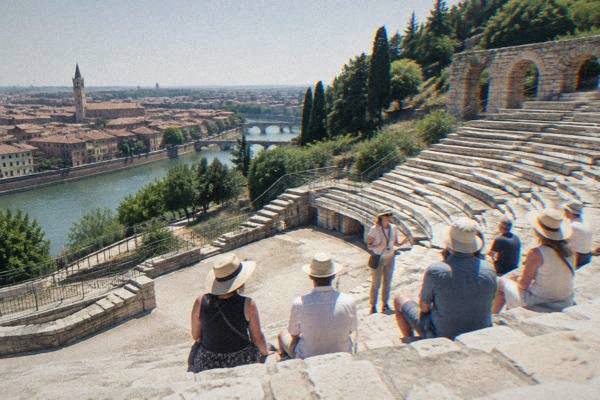
Verona, in the Veneto region of northern Italy, is a city of rose-pink marble and brick wrapped in a loop of the Adige river, and its churches are as much a part of the UNESCO World Heritage listing, inscribed in 2000, as the Roman Arena itself. The Duomo complex, Basilica di San Zeno, Sant'Anastasia and San Fermo Maggiore stand at the centre of a church-visiting circuit that the Comune di Verona ties to the VeronaCard through the Chiese Vive convention. The card changed on 1 September 2026, when it became digital, and the four main churches are reported to be included. What no source in this site's research file confirms is the individual ticket price of any single church or its opening hours, so this guide reports what is sourced, names the churches worth entering, and tells you plainly where to confirm before you go.
Which Verona Churches Can You Actually Enter?
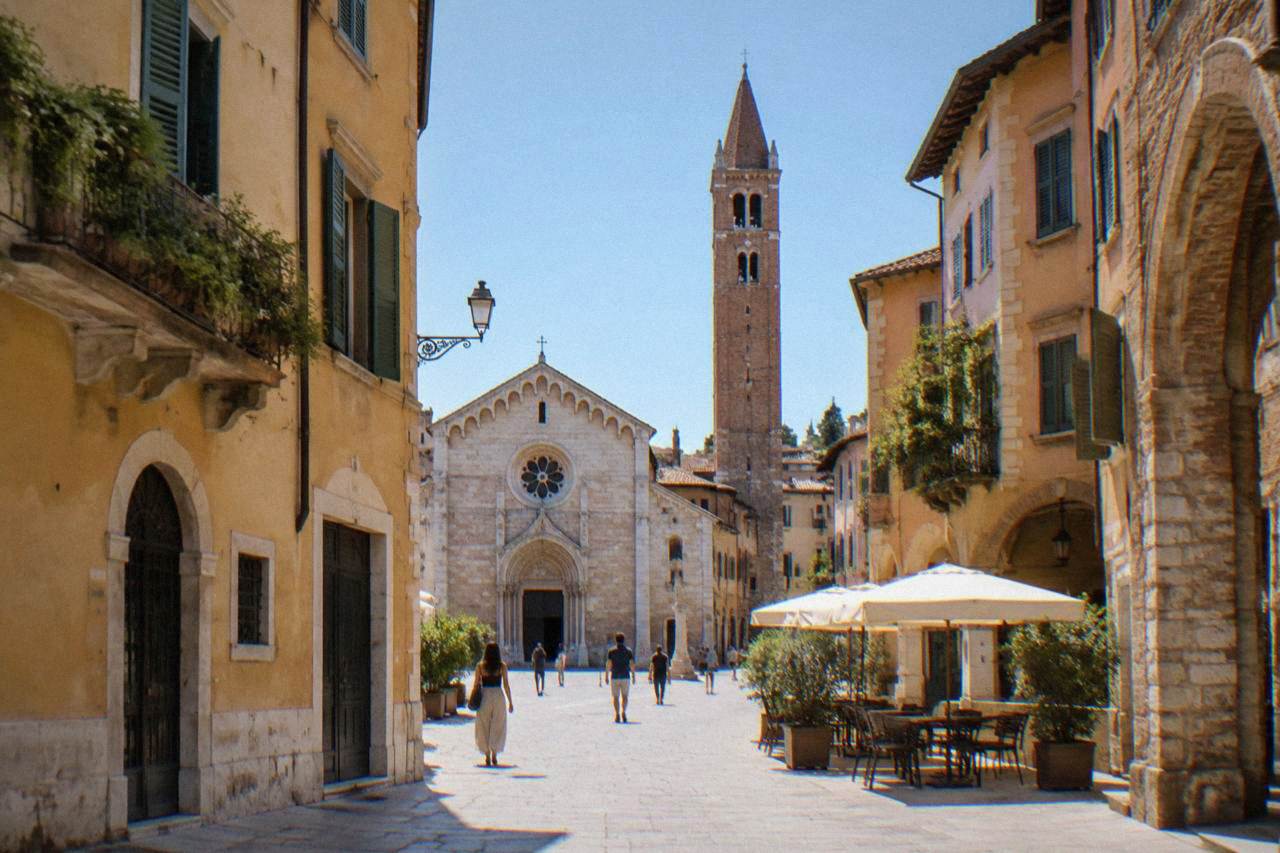
The four Verona churches reported open to visiting are the Duomo complex on the hill above the river bend, Basilica di San Zeno west of the centre, Sant'Anastasia near Piazza dei Signori, and San Fermo Maggiore close to the Adige. The Comune di Verona's VeronaCard notice lists all four under the Chiese Vive convention, which the card reportedly covers at free or reduced terms. Individual church prices and hours were not captured, so confirm at the door before planning.
Each of the four sits inside the historic centre or at its western edge, and every city landmark in this guide's research file sits within 5 kilometres of the centre point at Piazza Bra, so the churches are reachable on foot from the main hotel districts. The Duomo complex stands on the ridge where the Adige bends north; San Zeno is a straight walk west past Castelvecchio and the bridge of the same name; Sant'Anastasia opens onto the lanes between Piazza delle Erbe and the river; San Fermo faces the Adige a short way upstream. None of this requires a bus, though the urban ATV single ticket at 1.50 euro, valid 90 minutes, covers any leg you would rather not walk.
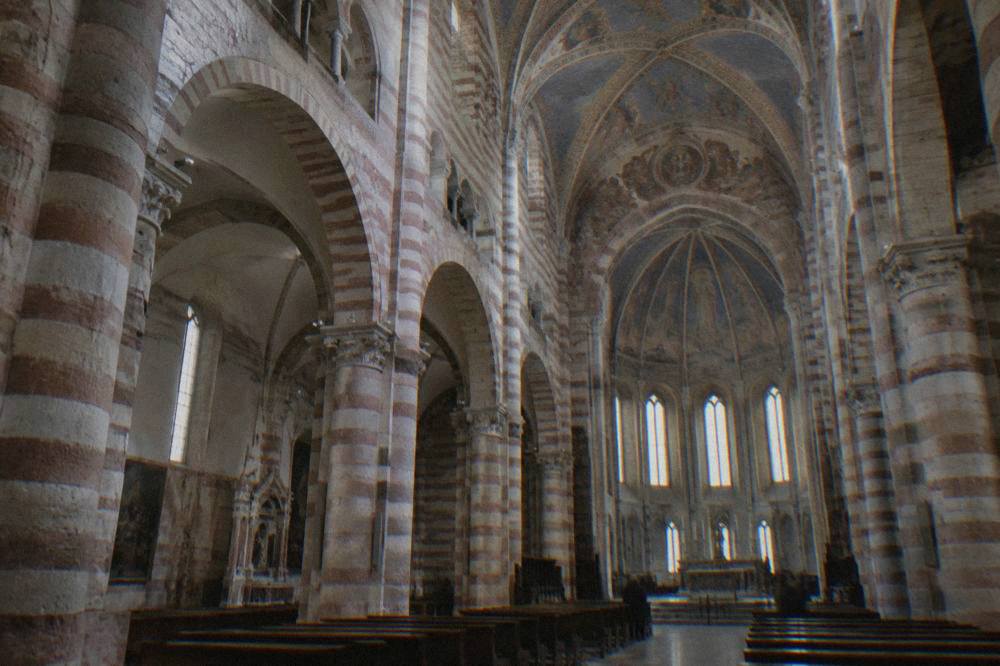
What a visitor sees differs sharply from church to church. The Duomo complex gathers a cathedral with its cloister and baptistery into one roofline of striped stone. San Zeno is the great basilica of the western quarter, famous for its bronze doors and its rose window, though neither the doors nor the window carries a sourced date here, so treat descriptions as what stands before you rather than a chronology. Sant'Anastasia is the largest church interior in the city, a vast painted hall. San Fermo is two churches stacked, a lower Romanesque nave beneath an upper Gothic one, an unusual arrangement described further down this page.
| Church | Where It Stands | What A Visitor Sees |
|---|---|---|
| Duomo complex | Ridge above the Adige river bend | Cathedral, cloister and baptistery in striped stone |
| Basilica di San Zeno | Western quarter, past Castelvecchio | Bronze doors, rose window, wide Romanesque nave |
| Sant'Anastasia | Lanes between Piazza delle Erbe and the river | The city's grandest painted interior |
| San Fermo Maggiore | Facing the Adige, upstream of the bridge | Two stacked naves, Romanesque below and Gothic above |
Beyond the four, Santa Maria Antica and the Scaligeri tombs sit together on the lane behind Piazza dei Signori; the research file reports the tombs are often free or tied to the civic ticket on the same day, with the VeronaCard reported to cover them, and exact hours to confirm on site. A fuller list of the city's sights is on the things to do in Verona page.
What Is The Chiese Vive Churches Ticket And How Does The VeronaCard Cover It?
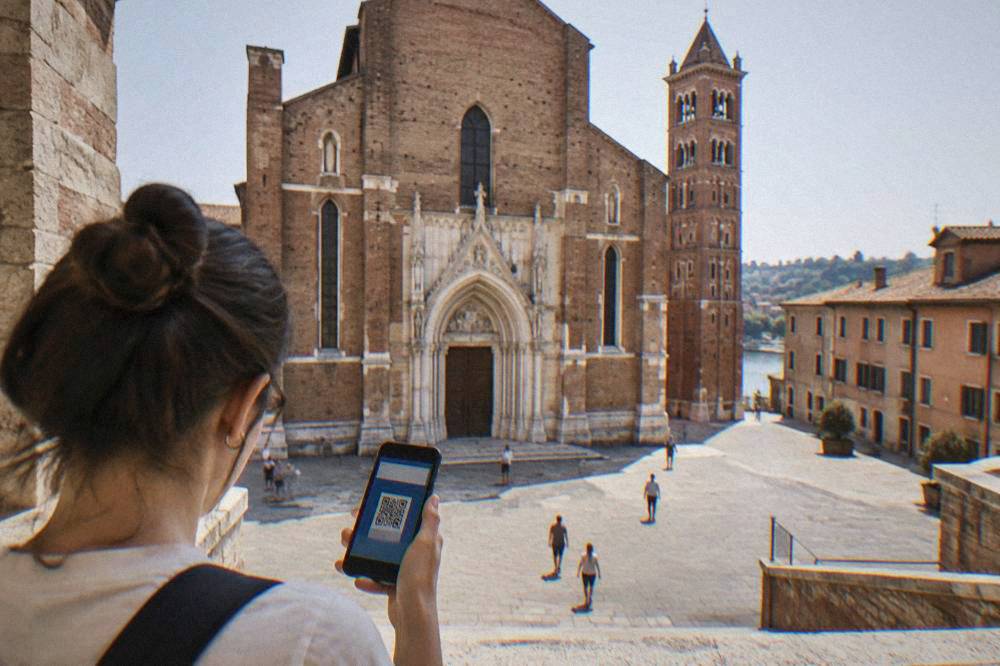
Chiese Vive is the convention under which the VeronaCard reportedly grants free or reduced entry to the Duomo complex, San Zeno, Sant'Anastasia and San Fermo Maggiore, per the Comune di Verona's own VeronaCard notice. The card went digital on 1 September 2026: 24 hours costs 33 euro and 48 hours 38 euro with ATV urban transport, or 29 and 32 euro without. Which churches are free versus reduced is not confirmed, so confirm before you go.
The digital shift is the practical headline. The card now lives in a web app called Your Verona rather than in a paper wallet, activated from first use. Two more reported details from the same notice matter to a church itinerary: old paper cards stay valid until 31 March 2027, and Juliet's House requires an online booking even for card holders, an exception worth remembering because the Casa di Giulietta is a natural pairing with a churches walk through the centre. The Aerobus airport line is reported not to be included in the card.
| VeronaCard Option | Price | What It Includes |
|---|---|---|
| 24 hours, with ATV transport | 33 euro | Reported church circuit entry plus urban buses |
| 48 hours, with ATV transport | 38 euro | Reported church circuit entry plus urban buses |
| 24 hours, without transport | 29 euro | Reported church circuit entry only |
| 48 hours, without transport | 32 euro | Reported church circuit entry only |
The four prices in the table are the only VeronaCard figures the Comune's notice states; the full list of included sights, and which are free rather than reduced, is not confirmed, so the card's own VeronaCard explained page here keeps to the same reported boundary. Do not compute a saving against unknown church prices: the arithmetic cannot be done honestly without a confirmed per-church figure.
A guided walk is a natural way to anchor the churches inside the wider city story, and the Small-Group Highlights Walk covers the centre's landmarks with a local guide; Check availability if that suits your dates.
For visitors who prefer a ticketed arrival at the single most bookable sight in the city, Juliet's House now runs an online-only system, covered in detail on the Romeo and Juliet in Verona guide.
What Do You See Inside The Duomo Complex?
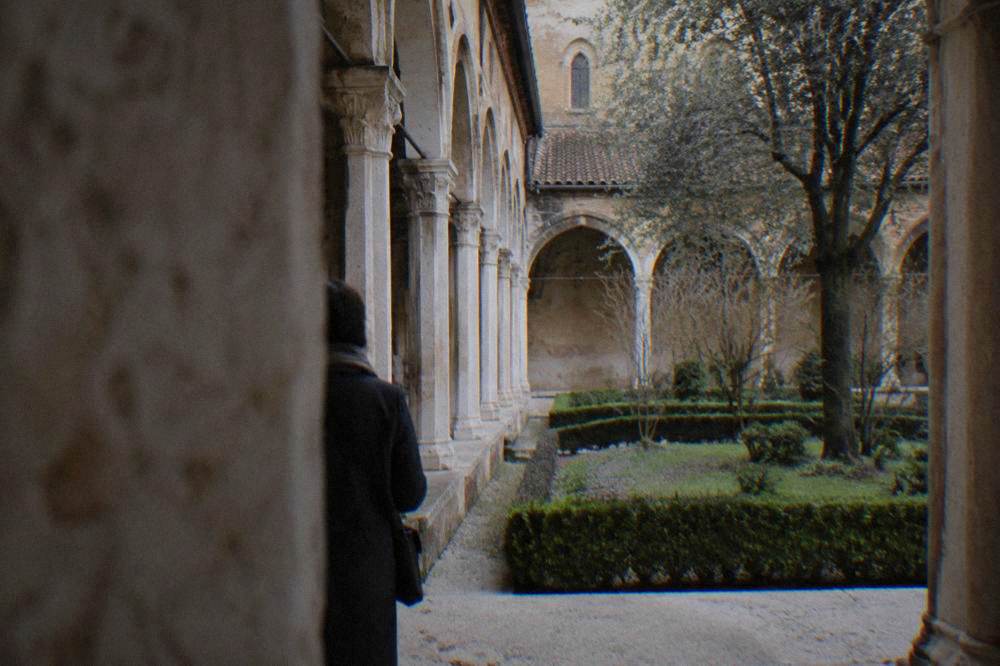
The Duomo complex presents a cathedral with its cloister and baptistery in one continuous visit, on the ridge above the river bend where the historic centre rises to its highest ground. Entry is covered by the VeronaCard under the Chiese Vive convention, per the Comune's notice, with no individual price or hours confirmed. What stands out is the fabric itself: striped stone bands, a carved portal and a quiet cloister, with the baptistery completing the group.
Approach the complex from the river and the sequence reads as a small hilltop campus rather than a single facade. The research file supports no construction dates, architect names or specific artworks for the Duomo, so this guide stays with what the visitor registers without a catalogue: the alternating pale and dark stone that Verona shares with its civic buildings, the columned cloister that interrupts the city noise, and the raised interior lit from clerestory windows. For a taste of what the surrounding lanes serve afterwards, the what to eat in Verona guide covers the dishes to order nearby.
A practical note on timing: church visiting across Italy commonly pauses around midday and restarts in the afternoon, and Sunday hours are typically reduced to worship, but neither pattern is confirmed for Verona in this site's sources, so plan a morning arrival and check the door notice. The historic centre's limited traffic zone does not affect walkers; only drivers need the ZTL rules, which allow non-residents at most four entries a month by booking.
What Makes Basilica Di San Zeno Different From The Others?
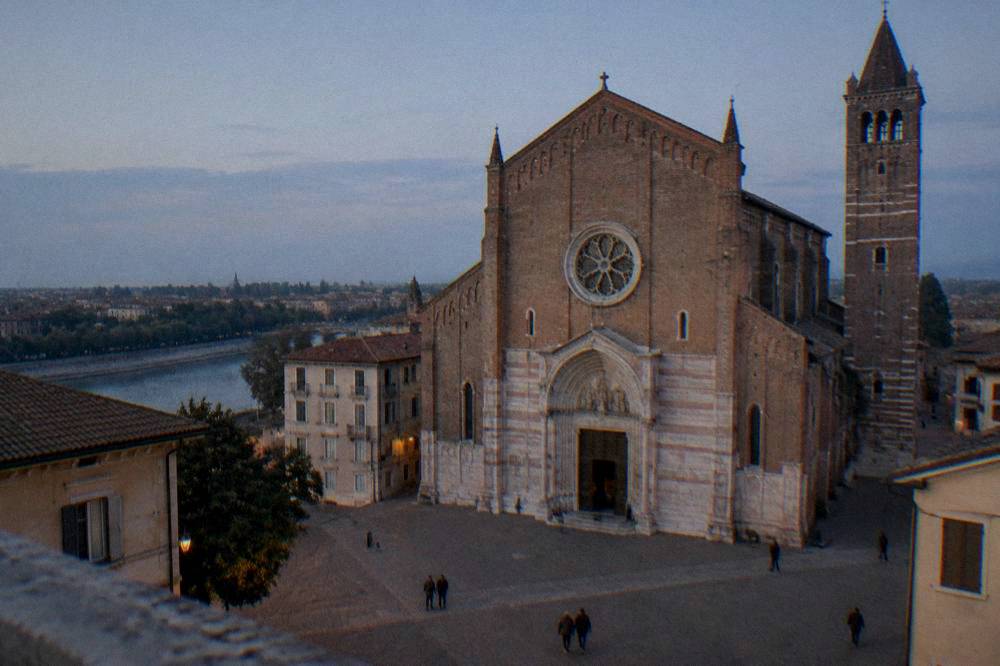
San Zeno is the outlying basilica of the four, a straight walk west of Castelvecchio across the Adige, and it differs from the others in scale and setting: a wide Romanesque nave, celebrated bronze doors and a great rose window, standing over its own piazza rather than packed into the centre's lanes. The VeronaCard is reported to cover it under Chiese Vive. As with every church on this page, no individual price or confirmed hours exist in the sources, so confirm before setting out.
The walk itself is part of the visit. Leaving Piazza Bra, the route passes the Arena, crosses to Castelvecchio and its bridge, and continues into the quieter San Zeno district, whose character is described on the site's own district pages and the Verona map guide. The basilica's facade is the most complete Romanesque front the city shows, and the bronze door panels are the detail visitors remember, though the research file carries no date or attribution for them, so look rather than cite. The interior is wide, plain and luminous by comparison with Sant'Anastasia's painted drama.
San Zeno rewards the traveller who has already seen the centre's dense sights and wants one unhurried monument. Pair it with the Castelvecchio museum, reported at 9 euro full, 6 reduced and 2 for ages 18 to 25, Tuesday to Sunday 10:00 to 18:00 with last entry at 17:15 and closure on Mondays, and reported free with the VeronaCard: those are reported figures per the museum's own listing, to confirm before you go.
Sant'Anastasia: What Should A First Visit Focus On?
Sant'Anastasia is the grandest church interior in Verona, a single vast painted hall a few lanes from Piazza delle Erbe, and a first visit should focus on the scale of the nave, the frescoed walls and the floor tombs rather than hunting individual artworks, since this site's sources name no painters or dates for the interior. Entry is reported covered by the VeronaCard under Chiese Vive; no individual price or hours are confirmed, so check the doorway notice.
The church sits at the heart of the medieval quarter, which makes it the easiest of the four to fold into a walking day: Piazza dei Signori, the Arche Scaligere, Piazza delle Erbe and the Torre dei Lamberti are all within the same few blocks. The Torre's viewing platform is reported at 6 euro full with summer hours to about 21:00, reported free with the VeronaCard, per the tower's own listing; whether it has a lift was not confirmed, so print nothing on that here and ask on site if steps matter to you. More of these guides are collected on Verona Italy Travel Guide.
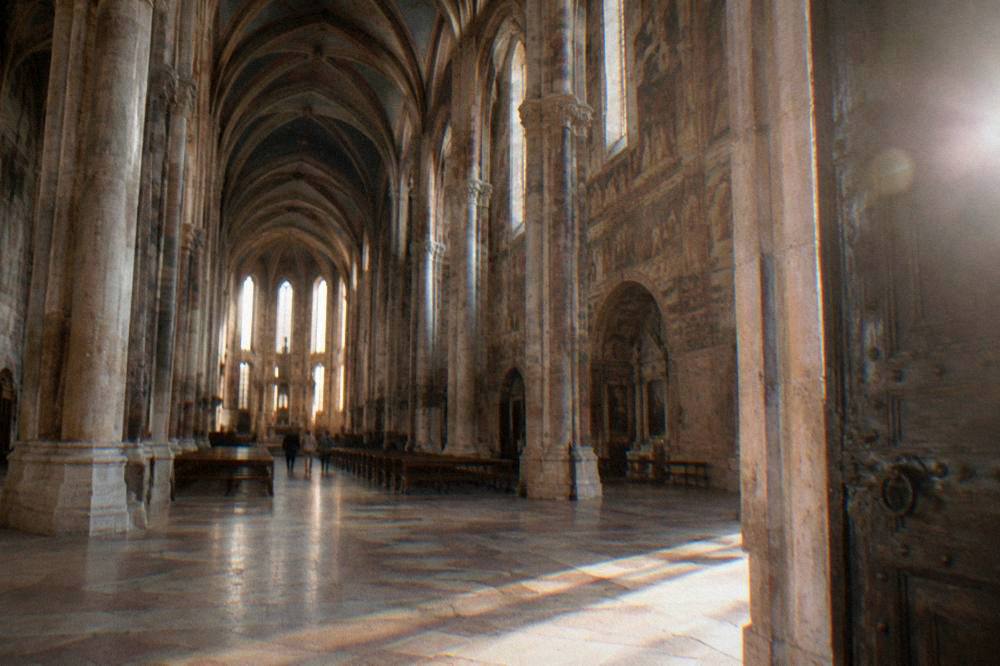
Inside Sant'Anastasia, the honest advice is to slow down. The nave rewards standing at the west door and letting the perspective register before moving; the fresco cycles are best appreciated as an envelope of colour rather than a checklist. Photography without flash is the norm in Italian churches, but rules vary by site and were not confirmed for Verona specifically, so follow the posted notices.
San Fermo Maggiore: Why Two Churches In One?
San Fermo Maggiore is a double-decker: a lower Romanesque church beneath an upper Gothic one, entered as a single monument facing the Adige a short walk upstream from the bridge. The two-nave arrangement is what makes it different from every other church on this page, and the VeronaCard is reported to cover it under the Chiese Vive convention. Prices and hours are not confirmed in the sources; confirm at the entrance.
The lower church is low-vaulted, cool and near silent; the upper church opens above it with taller Gothic proportions. Describing the split is easy; dating it is not, because the research file carries no construction dates or architects for San Fermo, and this site does not guess. The church's position near the river also places it within a short walk of Castelvecchio and the San Zeno route, so a loop of the western sights works naturally: San Fermo, Castelvecchio, the bridge, then San Zeno. The site keeps a fuller page on the church at San Fermo Maggiore.
For travellers structuring a full weekend around the churches and the rest of the centre, the best time to visit Verona guide explains the seasonal trade-offs, from the ERA5 reanalysis, 1991-2020, July mean high of 29.3 C against January's 7.3 C, to the opera-season crowds of June through September.
What Should You Know Before Entering Any Church In Verona?
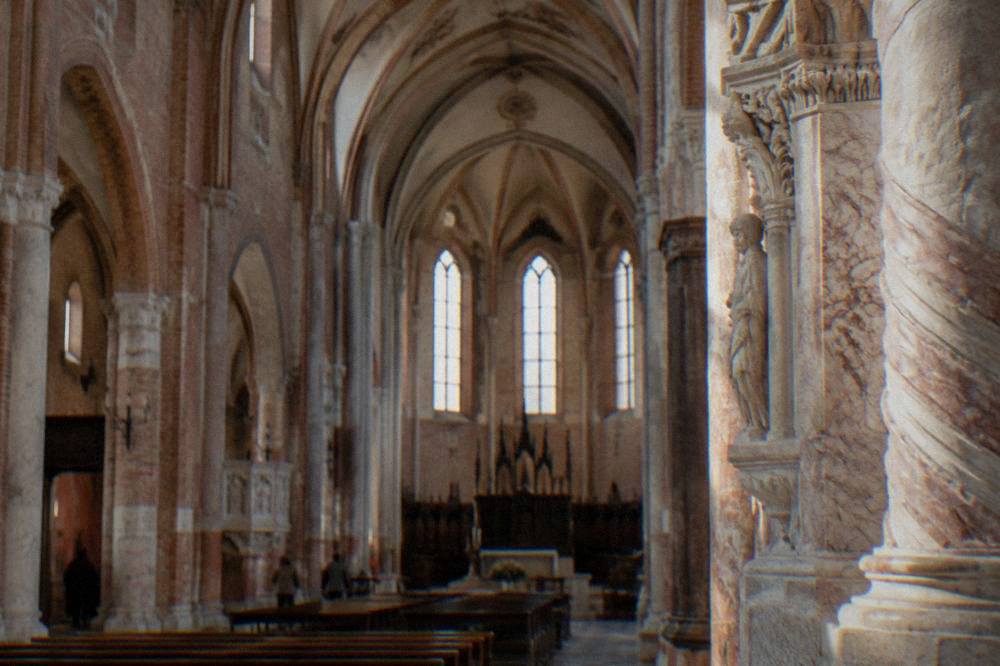
Practical church etiquette in Verona rests on a few reported and sourced points: the four main churches are reported VeronaCard-covered under Chiese Vive, individual prices and hours are unconfirmed and must be checked at the door, worship services take precedence over sightseeing on Sundays, and no step-free access at any of these churches was confirmed in the sources, so ask ahead if access matters. Beyond that, quiet dress and silence are ordinary courtesy in Italian churches, though no Verona-specific dress rule was sourced here.
The confirmed and reported figures that touch a churches itinerary are few and worth setting side by side. The Arena's daytime visit costs 12 euro full, 9 reduced and 3 for ages 18 to 25 from EU and reciprocity countries, per the Comune di Verona's price list, with reported hours Tuesday to Sunday and closure on Mondays. Juliet's House has been ticketed since 1 April 2026: 5 euro for the courtyard route and 12 euro for the house and balcony, booked online, with entry via Teatro Nuovo. Those are the city's two headline ticketed sights, and a VeronaCard day can be built around them plus the churches.
| Sight | Ticket Status | Figure | Notes |
|---|---|---|---|
| Arena di Verona, daytime visit | Ticketed | 12 euro full, 9 reduced, 3 for ages 18-25 | Per the Comune di Verona price list |
| Casa di Giulietta, courtyard route | Ticketed, online booking | 5 euro | Ticketed since 1 April 2026 |
| Casa di Giulietta, house and balcony | Ticketed, online booking | 12 euro | Ticketed since 1 April 2026 |
| The four main churches | Reported VeronaCard coverage | No individual price confirmed | Reported, confirm at the door |
| Torre dei Lamberti | Ticketed | 6 euro full, reported | Reported, confirm before you go |
| Piazza delle Erbe, Ponte Pietra, Porta Borsari | Open access | Free | Open public spaces |
One more planning table helps sequence a day, pairing each church with the free open spaces around it, since the squares and bridges cost nothing and fill the gaps between ticketed entries.
| Church | Free Sights On The Same Walk |
|---|---|
| Duomo complex | Ponte Pietra and the river-bend views |
| Basilica di San Zeno | Castelvecchio bridge and the San Zeno piazza |
| Sant'Anastasia | Piazza dei Signori, Piazza delle Erbe, Porta Borsari |
| San Fermo Maggiore | The Adige riverbank and Castelvecchio exterior |
More free sights are listed on the free things to do in Verona page.
Can You Combine The Verona Churches With A Guided Walk Or A Food Stop?
Yes, and it is the efficient way to do it: the four churches sit inside or beside the same walkable core as the Arena, Juliet's House and Piazza delle Erbe, so a small-group highlights walk with a local guide can anchor the geography in one outing, and a food and wine tasting tour makes a natural afternoon complement. The featured walk on this site covers the centre's landmarks; the tour picks below render live prices and ratings from their own listings.
The pairing logic is simple. Churches are morning sights in Italy, lunch is a Veronese institution, and the two fit the same lanes: risotto all'Amarone, pastissada de caval and bollito with pearà are the traditional dishes of the city, covered on the food pages of this site. A guided morning walk fixes the orientation; a tasting afternoon converts the walk into a full day. The card arithmetic also stays honest this way: with church prices unconfirmed, buy either the card at 33 euro with transport or plan individual entries as you find them.
For a slower second day, the where to stay in Verona guide maps the districts that put you closest to the Duomo complex and San Zeno, and the winter visitor will find seasonal notes, including the unannounced 2026 Christmas-market dates, on the Verona in winter page.
Common Questions About Verona Churches
Are Verona churches free to enter?
Individual church admission prices for the Duomo complex, San Zeno, Sant'Anastasia and San Fermo were not confirmed in this site's sources, so treat them as ticketed until the door notice says otherwise. The Comune di Verona's VeronaCard notice reports the four churches are covered by the card under the Chiese Vive convention, at free or reduced terms it does not specify.
Does the VeronaCard include the churches?
Reportedly yes. The Comune's notice for the digital card, live since 1 September 2026, lists the Duomo complex, San Zeno, Sant'Anastasia and San Fermo under the Chiese Vive convention. The card costs 33 euro for 24 hours or 38 euro for 48 hours with ATV transport, 29 and 32 euro without. Whether each church is free or reduced entry with the card is not confirmed.
What are the opening hours of Verona churches?
No confirmed opening hours for any individual church could be established. Italian churches commonly close around midday and restrict visiting on Sundays for worship, but do not assume the pattern: check the notice at each entrance or the turismo pages before setting a fixed schedule.
Is there a dress code for Verona churches?
A covered-shoulders-and-knees norm is general practice in Italian churches, but no Verona-specific rule was sourced for this site, so treat it as courtesy rather than a published local rule and follow the posted signs at each church.
How many churches are there in Verona?
No church count appears in the sources this site uses, so none is printed. The four that form the reported visiting circuit are the Duomo complex, San Zeno, Sant'Anastasia and San Fermo Maggiore, with Santa Maria Antica and the Scaligeri tombs nearby as a smaller reported addition.
Which Verona church should I visit if I have time for only one?
Sant'Anastasia is the grandest interior and the closest to the Piazza delle Erbe core, so it suits a short visit; San Zeno rewards a traveller with half a day for the walk west past Castelvecchio. Both are reported covered by the VeronaCard under the Chiese Vive convention, and both need their hours confirmed on site.