Verona Card: What It Includes And Whether It Pays Off
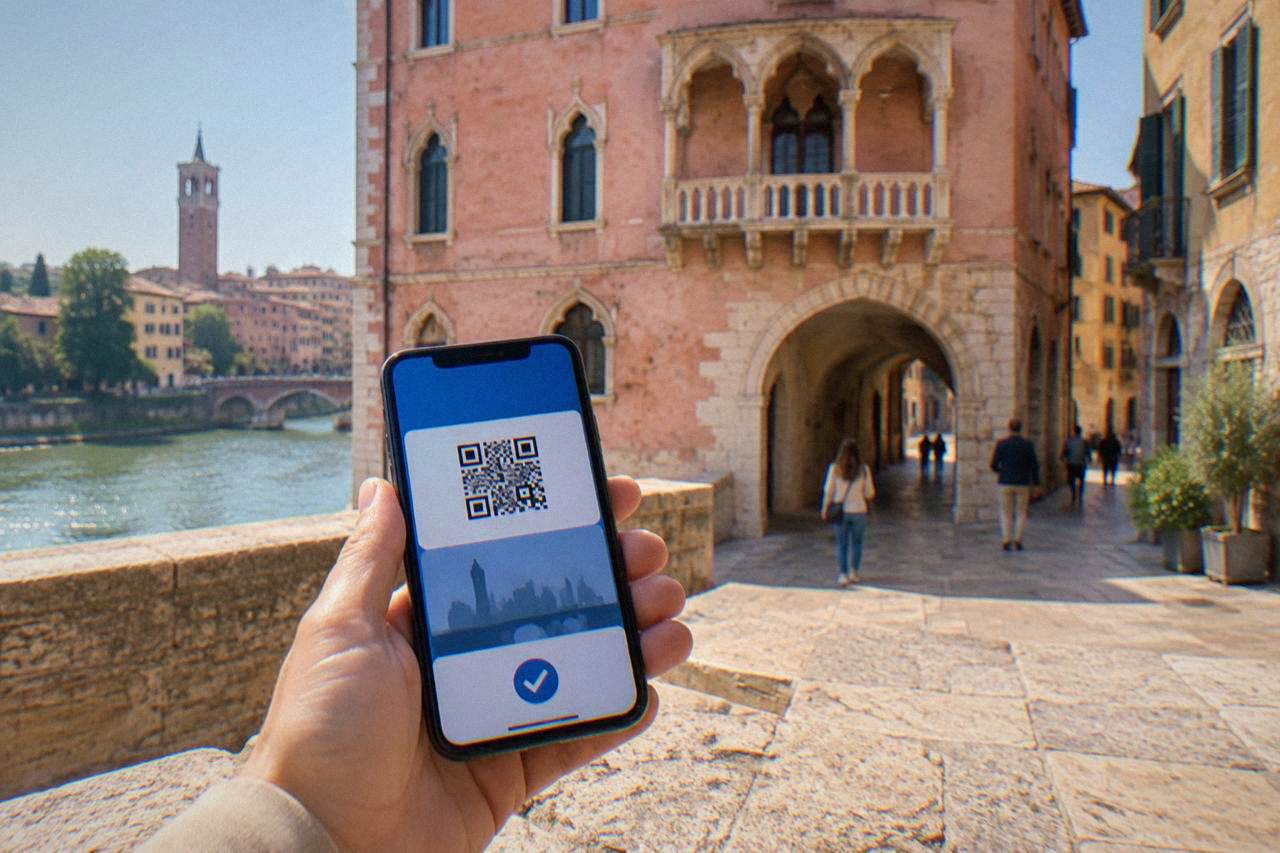
The VeronaCard changed shape in 2026: the paper card is gone, replaced by a digital pass bought through a web app, at new prices. This guide sets out what the Comune di Verona says the card includes, what it does not, and how to judge whether it pays off for the days you have in the city.
Short answer
The VeronaCard costs 33 euro for 24 hours or 38 euro for 48 hours with ATV city buses included, and 29 or 32 euro without transport, per the Comune di Verona. It covers the civic museums, Juliet's House (online booking still required) and the churches of the Chiese Vive circuit. Whether it pays off depends on how many covered sights you visit per day, not on a published formula.
Verona, in Veneto, northern Italy, is an inland city on the Adige river, and since 1 September 2026 its tourist pass has lived on a phone rather than in a wallet. The Comune di Verona's announcement is unambiguous: the VeronaCard became a digital card, sold through a web app, at four new prices. The old paper cards did not vanish overnight, they remain valid until 31 March 2027 according to the same notice, but everything a visitor buys now is digital. This page sets out what the card covers, what it does not, and how to work out whether it pays off, without inventing a saving the city's own notice never states.
What Is The Verona Card And What Changed In 2026?
The VeronaCard is Verona's official city pass, and since 1 September 2026 it is a digital card held in a web app rather than a physical card, sold in 24-hour and 48-hour versions: 33 euro and 38 euro with ATV public transport included, or 29 euro and 32 euro without. The Comune di Verona's notice states all four prices and confirms the card activates at first use, not at purchase. Old paper cards stay valid until 31 March 2027.
The switch to digital is the headline, but the price reset matters just as much. The four figures above are the only VeronaCard prices this site prints, because they are the only ones the Comune's own notice carries. Anything else you read about the card's value should be traced back to that page or to the official tourism channels before you rely on it.
The transport question is the real fork in the road. The with-transport versions include ATV's urban buses, which is useful if your hotel sits outside the walking core or you plan to reach Veronetta or Borgo Trento on wheels rather than on foot. The Aerobus airport line, however, is reported by the same notice to be excluded, so do not buy the card expecting it to cover the ride in from Verona Villafranca airport.
What the card is not: it is not a skip-everything pass and it is not an opera ticket. The Arena's opera festival is a separate box office entirely, and Juliet's House, while covered by the card, still requires an online booking even for card holders, per the Comune's notice. The city card sold through the operator's live listing works the same way in one respect, it bundles entries and front-of-queue access at the Arena, and it can be booked in English before you travel, which the municipal web app does not always make easy for overseas visitors.
How Much Does The Verona Card Cost In 2026?
The VeronaCard costs 33 euro for 24 hours or 38 euro for 48 hours in the versions that include ATV urban buses, and 29 euro for 24 hours or 32 euro for 48 hours in the versions without transport, according to the Comune di Verona's notice of 1 September 2026. There is no child rate, family rate or three-day version in that notice. Any older price you see quoted elsewhere refers to the retired paper card.
Those four numbers are the whole price list this site can stand behind. The notice does not publish concession tiers for the card itself, so if you qualify for reductions at individual sights, the honest comparison is the card's flat price against the reduced door prices you would personally pay.
The clock matters more than the headline. The card runs from first use, reportedly, so a 24-hour card activated at 14:00 on your first afternoon covers the following morning too, which is often worth more than a calendar day. A two-night stay that activates on arrival morning gets more out of the 48-hour card than a one-night stop ever can.
Here is the cost side of the ledger in one place:
| VeronaCard version | Price | What the notice says |
|---|---|---|
| 24 hours, with ATV buses | 33 euro | Digital, from the web app |
| 48 hours, with ATV buses | 38 euro | Digital, from the web app |
| 24 hours, without transport | 29 euro | Digital, from the web app |
| 48 hours, without transport | 32 euro | Digital, from the web app |
For context, the city's separate single ticket prices that are confirmed: the Arena daytime visit at 12 euro full and 9 euro reduced, Juliet's House at 5 euro for the courtyard route or 12 euro for the house and balcony, the Torre dei Lamberti at 6 euro per the tower's reported listing, and Castelvecchio at 9 euro per the museum's civic listing. Add those up in your head and the card arithmetic starts to take shape, which is the next section's job.
Which Sights Does The Verona Card Include?
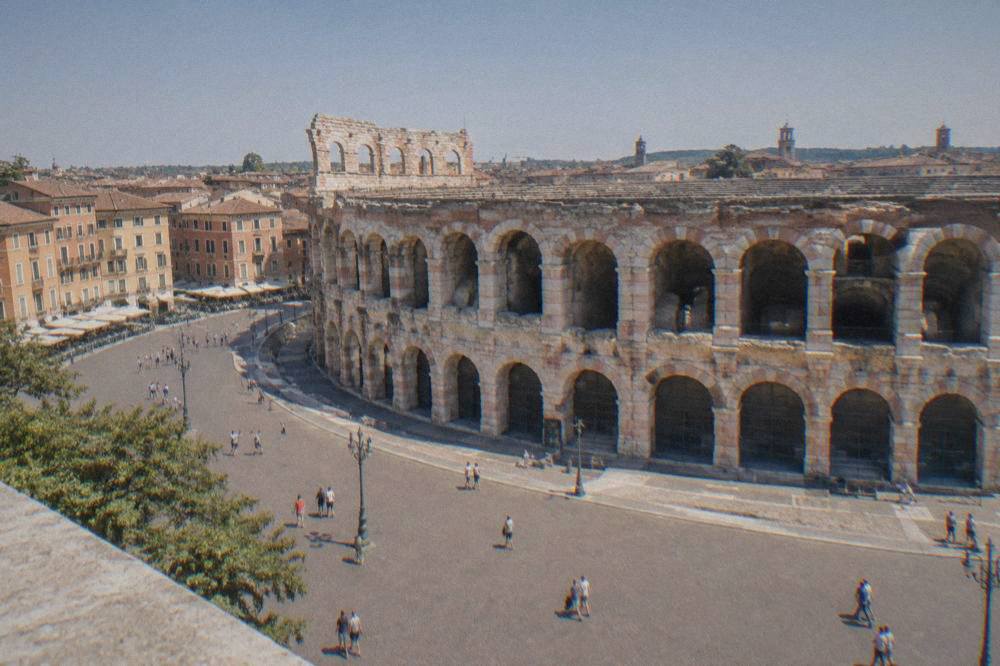
The Comune di Verona's notice lists the civic network: the Arena's daytime visit, Juliet's House, Castelvecchio, the Torre dei Lamberti, the Teatro Romano with its archaeological museum, the Museo Lapidario Maffeiano and the churches of the Chiese Vive circuit including San Zeno, Sant'Anastasia, San Fermo and the Duomo complex, with free or reduced entry reported at each. The notice does not confirm which sights are free versus reduced, so check the card's own list before buying.
That caveat is not a hedge, it is what the source actually says. The practical consequence: treat the card as covering the network broadly, and verify the entry terms for the two or three sights you actually care about at purchase.
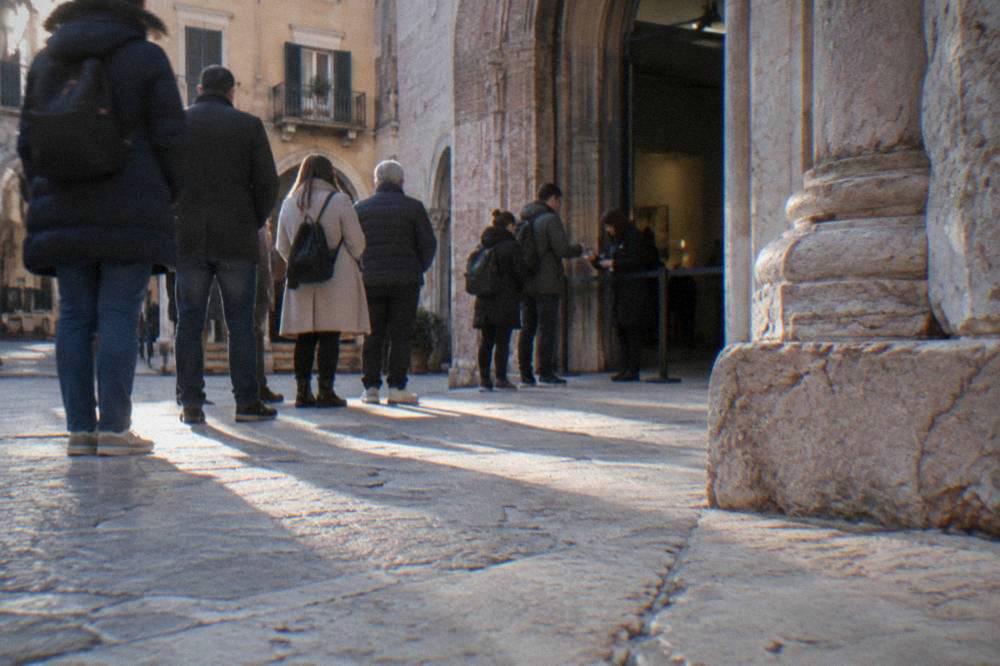
Two special cases deserve their own lines. Juliet's House still requires an online booking even for card holders, per the notice, because the 1 April 2026 changes routed all entry through the Teatro Nuovo with timed slots. And the Arena has its own calendar quirks: the amphitheatre closes on Mondays and shuts early on opera evenings, so a card does not override the building's schedule.
The covered network at a glance, with the standalone door prices where they are confirmed:
| Sight | Standalone entry | Card coverage per the notice |
|---|---|---|
| Arena di Verona (daytime visit) | 12 euro full, 9 euro reduced | Included, reported |
| Juliet's House (house and balcony) | 12 euro, courtyard route 5 euro | Included, online booking still required |
| Castelvecchio Museum | 9 euro full per the civic listing | Included, reported |
| Torre dei Lamberti | 6 euro per the tower's listing | Included, reported |
| Teatro Romano and Museo Archeologico | Confirm on site | Included, reported |
| Chiese Vive churches (San Zeno, Sant'Anastasia, San Fermo, Duomo complex) | Church prices not published | Included via convention, free or reduced |
| Museo Lapidario Maffeiano | Confirm on site | Included, reported |
| Arena opera festival | Separate box office | Not covered |
If the Arena by day is your anchor sight, a guided option bundles the ticket with a local guide instead: Check availability for the skip-the-line version, and see the site's Arena di Verona guide for how a daytime visit works.
Does The Verona Card Include The Arena And Juliet's House?
Yes to both, with strings attached. The notice includes the Arena's daytime visit and Juliet's House in the card network, but it does not confirm the exact entry terms at either, Juliet's House still requires a separate online booking even for card holders, and neither inclusion touches the Arena's evening opera, which is a separate box office with stone-step seats starting in the 30-euro range per the Arena's own rates pages.
The Juliet's House booking rule is the one that catches people out. Since 1 April 2026 the courtyard itself is ticketed, 5 euro for the courtyard route and 12 euro for the house and balcony, with entry via the Teatro Nuovo and online booking, per the city's own announcement. The card covers the entry, reportedly, but not the booking, so reserve your slot the moment you know your dates.
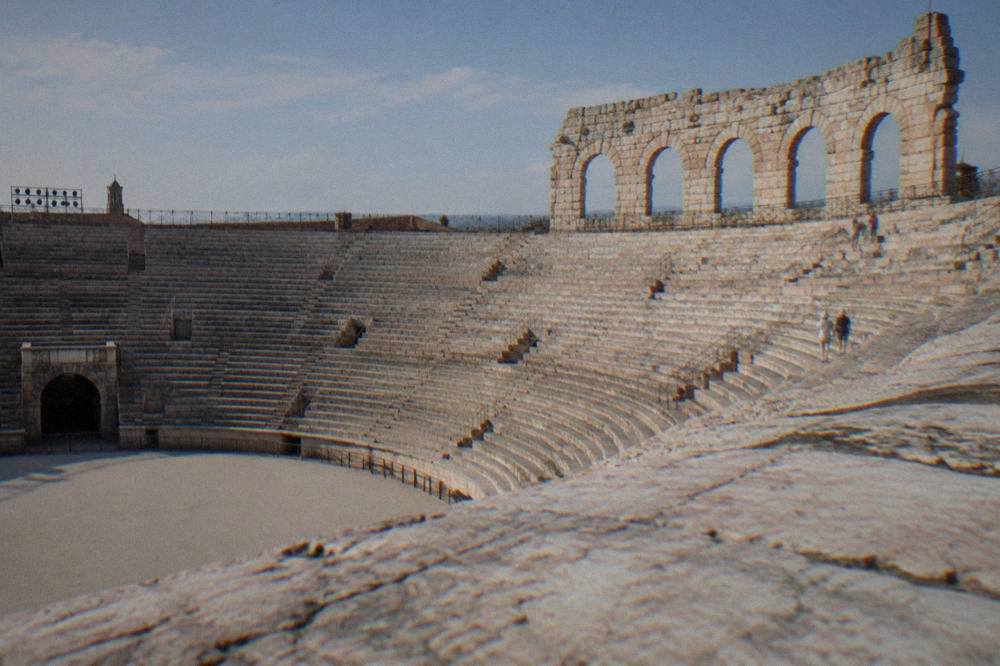
The Arena split is simpler than it looks. By day it is a civic monument with a 12-euro full ticket; by night in summer it is an opera house run by the Fondazione Arena, and the two never share a ticket. The opera season ran 5 June to 12 September in 2026 and returns 11 June to 11 September in 2027, per the Arena's own site, and the site's Verona opera festival guide covers that box office separately.
Does The Verona Card Include Public Transport And The Airport Bus?
The with-transport versions include ATV's urban buses in Verona, the 33-euro and 38-euro cards, while the base versions exclude them. The Aerobus airport line, ATV's line 199 from Verona Villafranca, is not included in any version, per the Comune's notice, and that line is reported at 7 euro one way. Lake Garda ferries, trains and the line 164 bus to Sirmione are all outside the card entirely.
So the transport decision is a city-bus decision and nothing broader. If you are staying inside the ZTL ring, in the historic centre or within walking distance of Piazza Bra, the base card is probably the right one, because central Verona is compact and the urban single, confirmed by ATV at 1.50 euro for 90 minutes, covers the odd ride cheaply. If your base is further out, in Borgo Trento or Veronetta's upper streets, the bus-inclusive card starts earning its 4-to-6-euro premium quickly.
The airport is the trap. Visitors arriving at Verona Villafranca by plane need the Aerobus or a taxi, neither of which the card touches, so budget the airport leg separately. The site's Verona airport to city centre guide covers that transfer in detail.
What the card does and does not ride:
| Transport | Included in the VeronaCard? |
|---|---|
| ATV urban buses in Verona | Yes, in the 33/38-euro versions only |
| Aerobus line 199 (airport) | No, per the Comune's notice |
| Urban single ticket | 1.50 euro for 90 minutes, bought separately (ATV) |
| Trains from Porta Nuova | No |
| Bus 164 to Sirmione and Lake Garda towns | No |
| Navigazione Laghi ferries on Lake Garda | No |
Is The Verona Card Worth It? The Honest Arithmetic
The honest answer is that no published break-even exists, and the Comune's notice computes no saving, so the arithmetic is yours to do: a 33-euro 24-hour card pays off only if your confirmed door prices for that day sum past 33 euro, which in practice means pairing the Arena (12 euro) with Juliet's House (12 euro) and at least one more ticketed sight such as Castelvecchio (9 euro) or the Torre dei Lamberti (6 euro). Two or three free squares alone will never get you there.
Run the 24-hour case first. Arena 12 plus Juliet's House 12 is 24 euro, short of the card. Add Castelvecchio at 9 and you are at 33, level with the transport-free card and past nothing. Add a fourth sight, the tower or a Chiese Vive church at whatever reduced rate applies, and the card edges ahead. That is the shape of the decision: the card is a volume play, and it rewards the visitor who treats Verona as a museum-dense city rather than a stroll. The full index of guides sits on Verona Italy Travel Guide.
The 48-hour card at 38 euro with transport is the easier case on a two-day stay, because four or five ticketed sights across two days is a normal pace and the buses come along for the ride. But note the two things the card cannot buy: an opera evening and a day on Lake Garda, both of which are separate budgets and both of which have their own pages, Sirmione for the lake and the opera guide for the Arena at night.
A worked comparison for a two-day, museum-heavy stay:
| Itinerary item | Standalone cost | Notes |
|---|---|---|
| Arena daytime visit | 12 euro | Full price per the city list |
| Juliet's House, house route | 12 euro | Online booking required either way |
| Castelvecchio Museum | 9 euro | Civic listing |
| Torre dei Lamberti | 6 euro | Reported listing |
| One Chiese Vive church | Confirm on site | Reduced rate with card, reportedly |
| Two-day total, door prices | 39 euro plus | Against a 38-euro 48-hour card with buses |
That table is an illustration of the method, not a promise: the notice leaves church entry terms open, and the reduced-rate question is exactly what to check before buying. If your two days look like the left column, the card is competitive. If they look like two churches and a lot of squares, buy door tickets and skip the pass.
Verona Card Or Guided Tours: Which Suits Your Trip?
A card and a guided tour solve different problems, so the choice is about how you want the hours spent: the card buys entries at your own pace, while a guided tour buys an itinerary, a guide's commentary and, on some listings, priority access, and the two stack rather than compete. A visitor who walks the city with a guide on day one often uses a card or door tickets on day two for whatever the walk skipped.
The pragmatic pattern for a short stay is one structured experience plus independent hours. A small-group highlights walk covers Piazza Bra, Piazza delle Erbe, the Scaliger tombs and the Juliet exterior in one arc, and then the afternoon is yours for the Arena interior or the tower. The site's Verona walking tour guide lays out that pattern in full.
For visitors who want the entry-and-access bundle in English, bookable before departure, the city card with Arena priority entrance is the natural fit:
The guided alternative for a first day:
And for a day given over to the province's table rather than its monuments, a truffle hunt with lunch takes you out of the ticket economy altogether:
How Do You Buy And Use The Digital Verona Card?
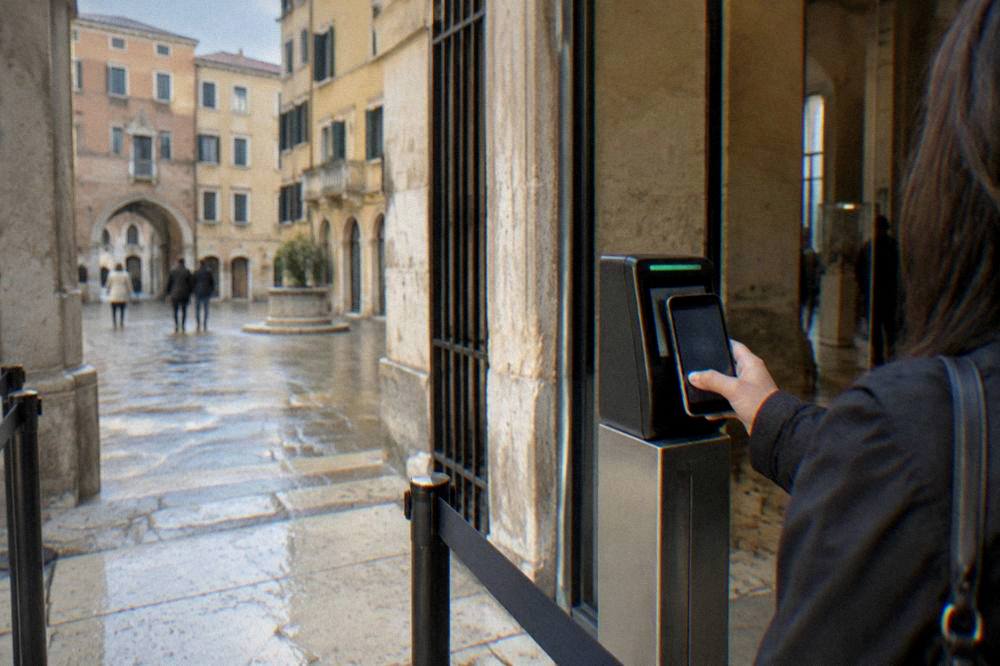
You buy the digital VeronaCard through the "Your Verona" web app, per the Comune's notice, or reportedly in person at the IAT tourist office, and it activates at first use at a participating sight rather than at the moment of purchase. At each entrance you show the digital pass; at Juliet's House you also show the separate online booking the house now requires from everyone, card holders included.
Two practical points from the notice. First, old paper cards keep working until 31 March 2027, reportedly, so a card bought earlier in 2026 is still valid, do not rebuy. Second, if your phone dies, the card dies with it in the sense that there is no paper fallback in the new system, so carry a charged phone or a screenshot of whatever the app permits.
Where the digital pass intersects the city's other systems, three things to hold in mind: the ZTL has nothing to do with the card and everything to do with your hotel registering a car plate if you drive in, covered in the Verona ZTL and parking guide; the tourist tax is collected by your accommodation and capped at four nights per person per month, separate from the card; and the museums close Mondays, which can gut a card's first 24 hours if you time it badly.
What Are The Common Verona Card Mistakes?
The common mistakes are buying the card for a one-square-and-two-churches day it cannot pay off on, expecting it to cover the Aerobus from the airport or the opera at the Arena, forgetting that Juliet's House needs its own online booking even with the card, activating a 24-hour card on a Monday when the civic museums are shut, and comparing the new digital prices against old paper-card figures quoted on outdated pages around the web.
Each mistake has a one-line fix. Plan the card around the ticketed core, the Arena, Juliet's House, Castelvecchio and the tower, and buy door tickets for the light days. Budget the airport transfer separately. Book Juliet's slot when you book the card. Start the clock on a Tuesday-to-Sunday stretch. And treat any price that is not 33, 38, 29 or 32 euro as stale.
A sixth, quieter mistake: treating the card as a queue strategy. It smooths entries at covered sights, but the Arena on an opera day closes early and Juliet's House runs on timed slots regardless, so the calendar beats the card every time. Pair the pass with a plan, not with expectations.
Verona Card Compared With Simply Buying Tickets
Buying door tickets wins on flexibility and on light itineraries, while the card wins on dense museum days and on any stay that will use the ATV buses enough to justify the transport premium; the deciding figures are the four card prices against the confirmed door prices of 12 euro at the Arena, 12 euro for Juliet's House route, 9 euro at Castelvecchio and 6 euro at the Torre dei Lamberti, with church entry terms to be confirmed locally.
Side by side:
| Scenario | Better option | Why |
|---|---|---|
| One day, Arena and Juliet's House only | Door tickets | 24 euro against a 29-euro card |
| One day, four ticketed civic sights | Card | Door prices pass 29 euro |
| Two days, museums plus buses from an outer hotel | 48-hour card with transport | Buses plus entries in one price |
| Visit centred on opera evening and squares | Door tickets or nothing | Opera is outside the card |
| Day trip into Verona from Lake Garda | Door tickets | Hours too short to activate fully |
The day-tripper row deserves a flag. If you are basing on the lake and coming in for a day, the arithmetic usually collapses, because a 24-hour card spends most of its life asleep while you travel. The Verona in one day guide is built for exactly that visitor, and it does not assume a pass.
What Else Should You Plan Around The Card?
Plan around three fixed points the card does not touch: the Arena's daytime visit costs 12 euro full and closes Mondays and early on opera evenings, Juliet's House has been ticketed and online-booked since 1 April 2026, and the card itself went digital on 1 September 2026, so everything from prices to delivery changed inside one year. Beyond the pass, Verona rewards the shoulder months, with ERA5 reanalysis 1991-2020 showing April highs of 17.8 C and September highs of 23.7 C against July's 29.3 C.
The card covers the indoors; the weather covers the rest. November is the wettest month in the normals at 118.2 mm and January the driest at 52.3 mm, both from the ERA5 reanalysis, 1991-2020, and the Verona weather guide unpacks the full table. For when to come at all, the best time to visit Verona guide weighs the opera season against the crowds.
If the card has done its job, the rest of the stay opens up: the food angle is covered in what to eat in Verona and the Valpolicella wine tour guide for the Amarone hills 25 minutes' drive away. And for the full picture of the city the card unlocks, start with things to do in Verona, this site's root guide, then come back here before you buy.
Common Questions About The Verona Card
How much does the VeronaCard cost in 2026?
Since 1 September 2026 it costs 33 euro for 24 hours or 38 euro for 48 hours with ATV urban buses included, and 29 or 32 euro without transport, per the Comune di Verona's notice. These are the only four prices to trust; anything cheaper quoted online refers to the retired paper card.
Is the VeronaCard still a paper card?
No. The card became digital on 1 September 2026 and is held in the "Your Verona" web app. Old paper cards reportedly remain valid until 31 March 2027, but everything sold now is digital.
Does the VeronaCard include the Arena?
The Arena's daytime visit is in the card network per the Comune's notice, reportedly with free or reduced entry. The evening opera festival is a separate box office run by the Fondazione Arena and is never covered by the card.
Does the VeronaCard include the airport bus?
No. The notice states the Aerobus airport line is not included in any version. The line 199 Aerobus is reported at 7 euro one way and must be bought separately.
Does the VeronaCard include Juliet's House?
Juliet's House is in the card network, but the house still requires an online booking even for card holders, a rule that came in with the 1 April 2026 ticketing change. Book your slot before you arrive.
Is the VeronaCard worth it for one day?
Only on a dense day. A 29-euro 24-hour card needs confirmed door prices above 29 euro, which means the Arena (12 euro), Juliet's House (12 euro) and at least one more ticketed sight. A lighter day is cheaper on individual tickets.
Before you go, the pick for this guide:
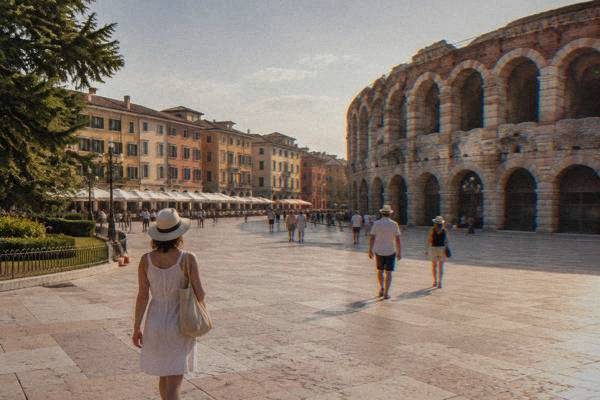
City Card, Arena Priority Entry
★ 4.6 9,682 reviews · From $37
Check availability →