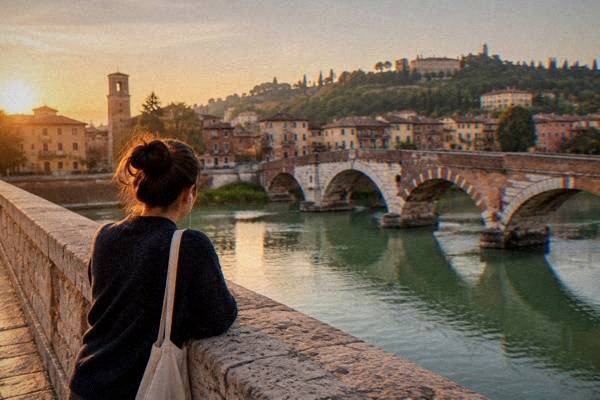
Basilica Di San Zeno: Bronze Doors And The Crypt
The Basilica di San Zeno stands west of Verona's centre, in its own district on the far side of the Adige loop, and it is the one church in the city whose bronze doors and sunken crypt give it a character no other Veronese monument shares.
Short answer
The Basilica di San Zeno is Verona's great Romanesque church, set in the San Zeno district west of the old town. Its bronze doors carry biblical scenes in relief, its nave stands above a columned crypt, and the church is reported to be covered by the VeronaCard under the Chiese Vive circuit. No church ticket price or opening hours could be sourced, so confirm locally before you go.
The Basilica di San Zeno sits in its own quiet quarter west of the Adige, away from the Arena and the crowded lanes around Piazza Bra. Verona, in Veneto, is an inland city on the Adige river, a UNESCO World Heritage Site since 2000, and San Zeno is the piece of it that feels furthest from the postcard: a great Romanesque basilica with a striped facade, a rose window, bronze doors worked in relief, and a crypt that drops below the nave between rows of columns. This page gathers what the sources say about the church, what a visitor actually sees, and how to fit it into a day in the city. For the wider picture, start with the site's Verona Italy Travel Guide and its overview of things to do in Verona.
What Is The Basilica Di San Zeno In Verona?
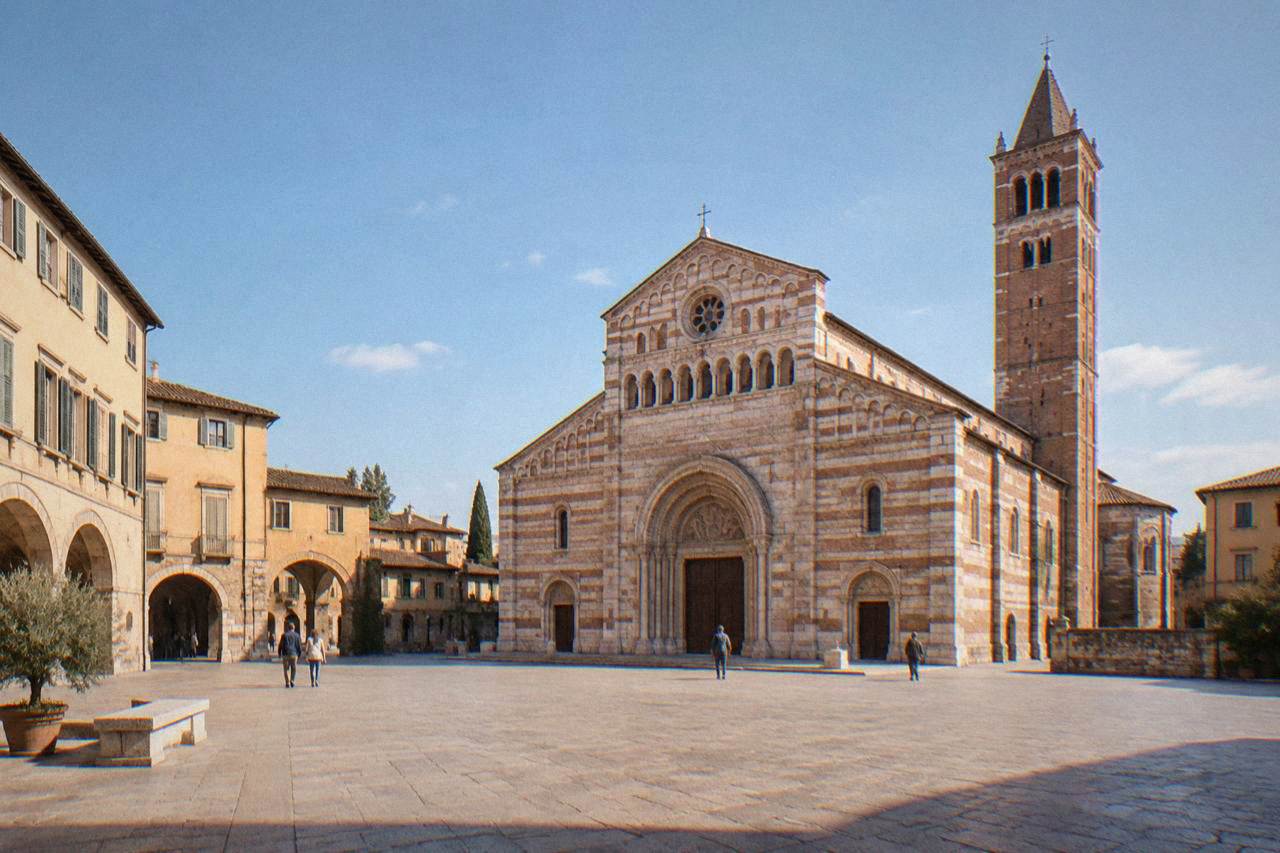
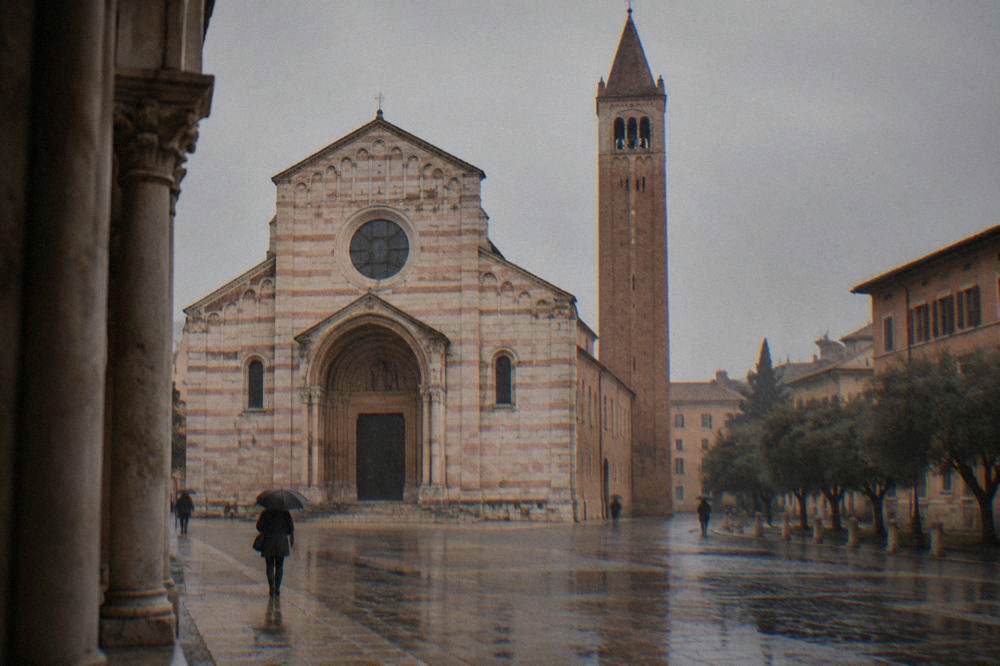
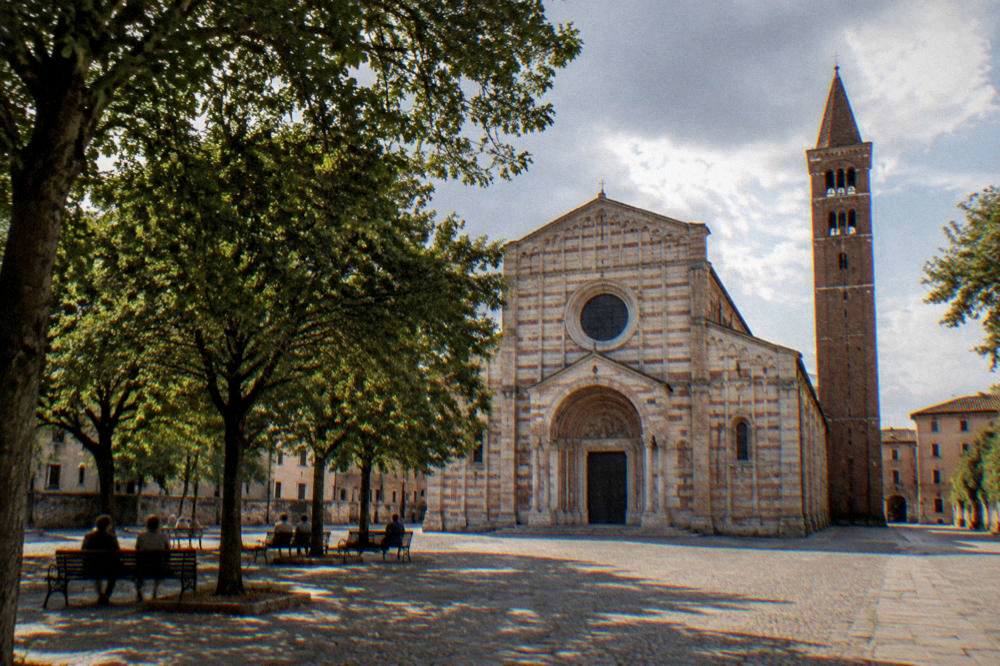
The Basilica di San Zeno is the principal church of the San Zeno district, the quarter west of Verona's historic centre on the far side of the Adige loop, and it is the city's landmark work of Romanesque architecture. A visitor sees a broad sloping square, a facade banded in brick and pale stone, a great wheel window, a bell tower alongside, and a cloister attached to the church. The church gives its name to the whole district around it.
Verona's old town wraps around the bend of the Adige, with Piazza Bra and the Arena at its heart, and the San Zeno district lies beyond the river loop to the west. The city's map places it as one of five named areas: Citta Antica, the old town inside the loop; Veronetta across the river to the east; Borgo Trento to the north; the San Zeno district to the west; and the Porta Nuova station area to the south. The basilica is the district's anchor, and for many travellers it is the reason to cross out of the old town at all.
What sets the church apart is its completeness. The facade, the porch, the bronze doors, the nave, the crypt below and the cloister beside it survive together as a single complex, which is unusual in a city where so much was rebuilt after the 1117 earthquake that damaged the Arena's outer ring. The basilica is dedicated to San Zeno, Verona's patron saint, whose name also marks the district, the square and the surrounding streets.
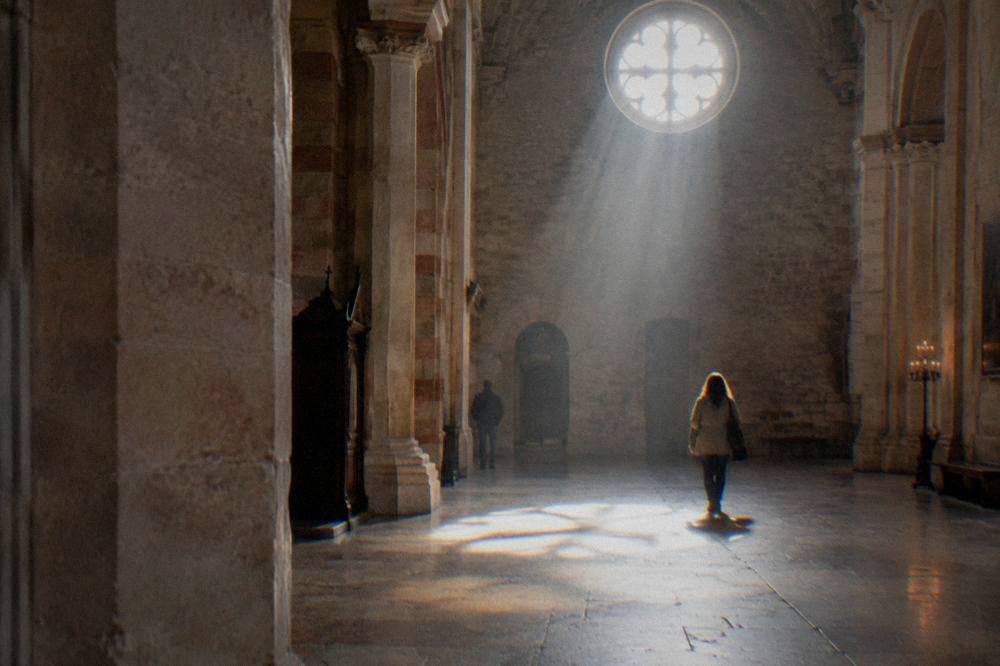
The interior rewards slow looking. The nave is wide and austere, the colour coming from stone and stripped wall rather than heavy decoration, and the floor level of the church sits above a crypt reached by steps down from the crossing. Light falls from the rose window and the clerestory, and on quiet afternoons the whole building can feel like a piece of the countryside brought inside the city walls. For how the church fits into a route around the city, see the site's one day in Verona itinerary, which pairs the centre with a crossing to the lesser-visited quarters.
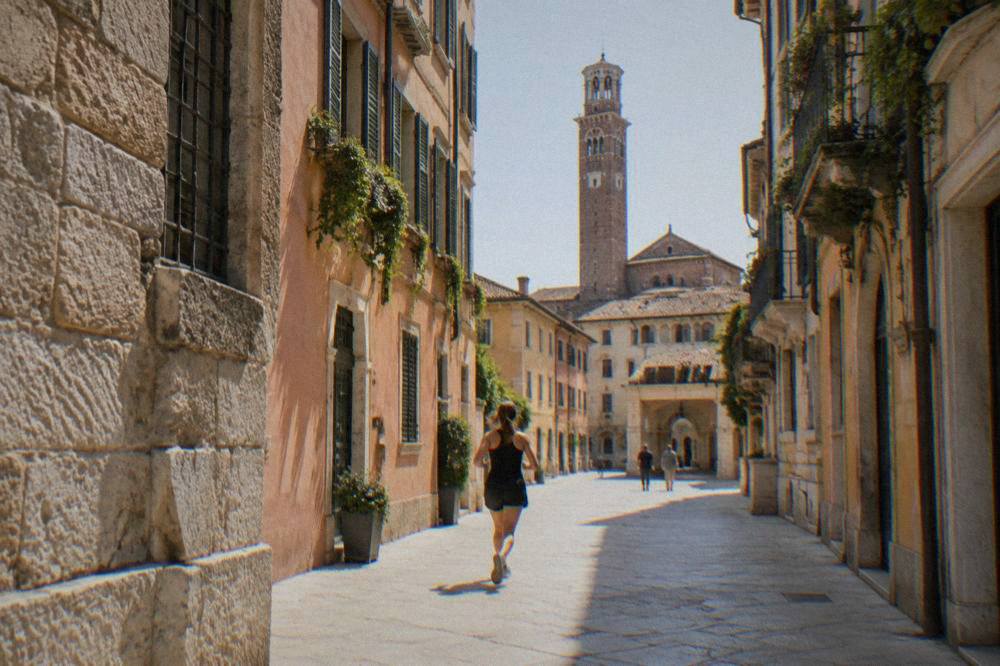
What Do The Bronze Doors Of San Zeno Verona Show?
The bronze doors of the Basilica di San Zeno are relief panels set into the great west doorway, worked with scenes from biblical stories and Christian iconography in stacked rows of figures. They are the church's single famous feature and the reason the basilica appears on itineraries alongside the Arena and Juliet's House. No date, workshop or artist for the doors is carried in this site's sources, so their story is best read on the panels themselves or from a guide.
The doors face the square, sheltered by the porch, and they are the first thing a visitor walks toward. Each panel is a small composition: figures, animals, trees and buildings modelled in shallow relief, arranged in horizontal bands so that the whole doorway reads like a picture book laid out in metal. Bronze darkens with centuries of hands and weather, and the doors carry that deep uneven patina that photographs far less well than it deserves.
Because no attribution for the doors is sourced here, this guide will not add the usual legends about workshops and dates. What can be said plainly is that figurative bronze doors of this kind are rare in Italy, that these are the reason the basilica is internationally known, and that thecrypt and the doors together make the trip west of the centre worthwhile. Guides who walk the city's stranger corners know the stories attached to them, and a themed walk is one way to hear them told properly. The Dark Historical Verona Walking Tour is this site's featured pick for that angle, and its listing covers the legends and the darker chapters of the city's past.
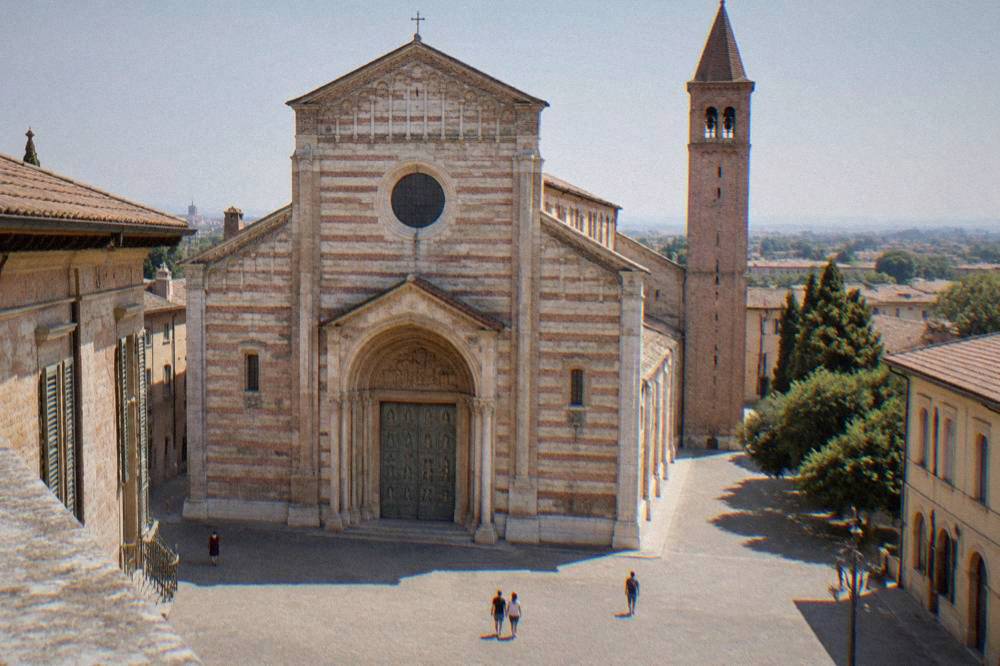
Between the doors and the crypt, the fabric of the building itself deserves attention. The alternating courses of brick and pale stone that stripe the facade continue inside, the porch rests on columns resting on carved creatures, and the rose window, called by locals the Wheel of Fortune for the figure at its centre, casts a slow circle of light across the floor as the afternoon passes. None of this needs a date or an architect's name to work on a visitor; it simply needs an unhurried hour.
How Much Does It Cost To Visit San Zeno In Verona?
No ticket price or opening hours for the Basilica di San Zeno could be captured from official sources, so this guide prints none. What is reported is that the church is covered by the VeronaCard under the Chiese Vive convention, which also lists the Duomo complex, Sant'Anastasia and San Fermo. The VeronaCard became digital on 1 September 2026 and costs 33 euro for 24 hours or 38 euro for 48 hours with ATV urban transport included, per the Comune di Verona's own notice.
The VeronaCard is the practical hinge for church visiting in Verona. From 1 September 2026 it lives in a web app rather than on paper, with the base card at 29 euro for 24 hours and 32 euro for 48 hours without transport. Old paper cards remain valid until 31 March 2027. The card covers the civic museums, the Arena, the Torre dei Lamberti and Juliet's House alongside the churches, though the Comune's notice states that Juliet's House still requires an online booking even for card holders, and the Aerobus from the airport is not included.
For the churches specifically, the coverage is reported rather than printed on a price board this site could read, so treat it as a planning aid and confirm before you go. Check whether the church is open at the hour you intend to visit, especially on Sundays and religious holidays, when church opening patterns anywhere in Italy shift around services.
| VeronaCard option | With ATV transport | Without transport |
|---|---|---|
| 24 hours | 33 euro | 29 euro |
| 48 hours | 38 euro | 32 euro |
For comparison, here is what the card and the city's other headline sights cost on their own, all figures from the Comune di Verona and official listings:
| Sight in Verona | Standalone admission |
|---|---|
| Arena di Verona (daytime visit) | 12 euro full, 9 euro reduced, 3 euro ages 18 to 25 |
| Casa di Giulietta (from 1 April 2026) | 5 euro courtyard route, 12 euro house and balcony |
| Torre dei Lamberti | 6 euro full, reported |
| Castelvecchio Museum | 9 euro full, reported |
| Basilica di San Zeno | Covered by VeronaCard per the Chiese Vive convention, reported; no standalone price sourced |
A card pays its way when several of these stack up in a day or two; a visitor coming only for San Zeno and a wander should simply check the church's own arrangements on arrival. If a guided day in the city appeals more than ticket arithmetic, see the walking options in the band below.
Guided walks and concerts can be booked with free cancellation, and payment options at checkout usually include pay-later, so there is little risk in reserving ahead of a Verona trip. The themed walk below pairs a legend-rich route through the city with the stories that a bronze doorway only hints at.
What Is Inside The Crypt Of The Basilica Di San Zeno?
The crypt is a lower church beneath the basilica's nave, reached by steps down from the main floor, its vaults carried on rows of short columns with carved capitals. It holds the tomb of San Zeno himself, the saint to whom the whole church is dedicated, and its raised position means the nave above sits unusually high for a Romanesque church. No relic, artwork or construction date beyond this is sourced here, so the crypt is best described by what a visitor stands among.
Walking down into it changes the atmosphere entirely. The light is lower, the stone cooler, the ceiling closer, and the forest of columns gives the space a rhythm the bright nave above does not have. Visitors circle the tomb of the saint, which sits at the heart of the crypt, and the contrast between the two levels of the church is the basilica's strongest single impression: doors of worked bronze at the west end, a saint's tomb in the stone dark beneath the altar.
The crypt also explains the church's famous silhouette. Because the lower church lifts the main floor, the facade rises in two great tiers, the porch and doors below, the rose window above, and the interior steps up from the entrance to the choir. It is a piece of engineering logic that produces the building's most photographed profile, and understanding it makes the architecture easier to read.
Church crypts in Verona are not unique, but this is the grandest. The Tomba di Giulietta offers another underground stop on the Romeo and Juliet trail, in a former monastery setting, though no hours or fee for it were sourced either. San Zeno's crypt asks for nothing but attention: it is a working church space, quiet, dim and unhurried, and a visit of twenty minutes feels right before climbing back into the light of the nave.
How To Get To The Basilica Di San Zeno In Verona?
The Basilica di San Zeno lies in the San Zeno district, west of the historic centre across the Adige loop, and reaching it from Piazza Bra or Piazza delle Erbe means leaving the old town on foot or by ATV urban bus, whose single ticket costs 1.50 euro and is valid for 90 minutes per ATV's own fare page. The district sits outside the camera-policed ZTL of the historic centre, so drivers park outside the old town and walk or ride in.
On foot, the route out of the centre is straightforward: leave the old town across one of the Adige bridges west of the Arena, and the basilica's campanile comes into view over the rooftops of the district. The walk links naturally with other sights across the river. The Castel San Pietro viewpoint sits across the Adige to the east on the Veronetta side, and the Ponte Pietra Roman bridge anchors the northern river loop, so a walker can build a full circuit of the river and the west quarter in a morning.
By bus, ATV's urban network serves the district; the 1.50 euro single is the standard fare, and day passes also exist. Confirm the stop and line on the ATV site or app before setting out, since service patterns shift on Sundays and holidays. Drivers should note the ZTL rules carefully: non-residents may enter the historic centre's restricted zone at most four times a month on a booking, in windows such as Monday to Friday 10:00 to 18:00 and 20:00 to 23:00, and hotel guests enter free only if the hotel registers their plate, per the Comune di Verona. Parking outside the zone and walking in is the simpler plan.
For travellers arriving from further afield, the geography of the region keeps San Zeno reachable. Verona Porta Nuova is the main station, with Venice Mestre 58 to 75 minutes away by train and Milano Centrale 1 hour 15 to 1 hour 50, times only, reported. Within the city, distances are compact; the city's own computed drive times, for orientation rather than walking, are tabulated below.
| From the Arena (drive time, free-flow, computed) | Minutes |
|---|---|
| Valpolicella (Sant'Ambrogio) | about 25 |
| Soave | about 33 |
| Bardolino | about 37 |
| Sirmione | about 40 |
| Garda town | about 42 |
| Vicenza | about 48 |
| Mantua | about 54 |
| Padua | about 67 |
What Else To See Near The Basilica Di San Zeno Verona?
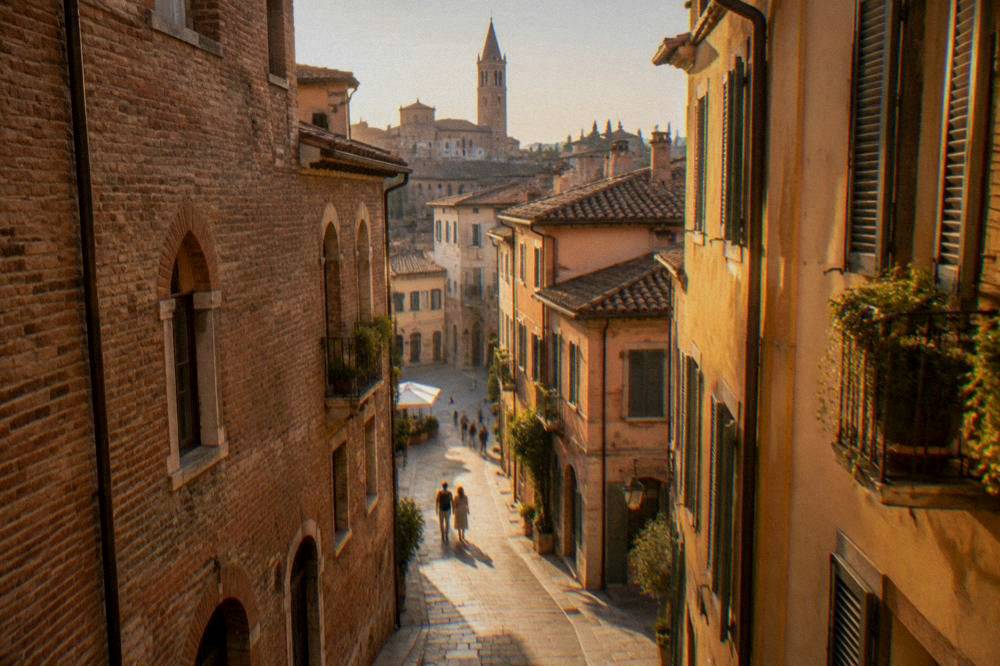
The San Zeno district around the basilica is a low, residential quarter of brick buildings and small squares, and the obvious pairings are back across the river: the Arena and Piazza Bra to the east, and the riverside sights of the old town, all within a compact loop. The district is mapped in the site's own San Zeno district guide, and the basilica plus the riverside walk makes a natural half-day route for a first visit.
West of the Adige, the district itself asks to be wandered rather than scheduled. The square in front of the basilica slopes gently, holds a few trees and benches, and on weekdays has the unhurried feel of a neighbourhood rather than a monument precinct. Cafes and shops here serve locals first, and prices reflect that, though this site sources no individual names or figures for them. The San Zeno district guide lays out the quarter street by street.
Crossing back toward the centre, the ladder of Verona's headline sights runs in a compact line. The Arena di Verona anchors Piazza Bra at the edge of the old town, visitable by day for 12 euro full and 9 euro reduced. From there, Piazza delle Erbe and Piazza dei Signori string together the market square and the civic heart, with the Torre dei Lamberti tower rising between them, entry 6 euro, reported. The Duomo di Verona complex and Sant'Anastasia complete the church circuit that the VeronaCard is reported to cover, alongside San Fermo Maggiore closer to the river.
For travellers with more time, the city's day-trip reach is wide, and the wine hills sit closest. The Valpolicella zone lies about 25 minutes' drive northwest of the Arena, and wine experiences there can be booked as tours; one evening alternative inside the city is a classical concert in a historic palace, which pairs well with a church-heavy day. The picks below cover both angles.
A food-and-wine walk through the old town is another strong pairing with a morning at the basilica, since the San Zeno district has few evening options of its own. The guided tastings below cover the city's kitchens and wine bars.
When Is The Best Time To Visit San Zeno Verona?
The most comfortable months to visit Verona, by the ERA5 reanalysis for 1991-2020, are April through June and September through October, when mean daily highs run from about 17.8 C to 26.6 C and back down to 18.1 C. July and August average 29.3 C and 29.1 C highs with high humidity, and November is the wettest month at 118.2 mm. For the church itself, weekday mornings are the calm window.
The climate table below gives the full monthly picture. Verona sits inland in the Po basin, so winters are cold and damp, with January mean highs of 7.3 C and mean lows below freezing at -0.4 C, and summers are hot. Church interiors stay cool in summer, which makes San Zeno a genuine hot-afternoon refuge, and the crypt in particular holds the cold of the stone year-round.
| Month | Mean high C | Mean low C | Rain mm |
|---|---|---|---|
| Jan | 7.3 | -0.4 | 52.3 |
| Feb | 9.5 | 0.4 | 58.8 |
| Mar | 14.0 | 3.6 | 67.4 |
| Apr | 17.8 | 7.6 | 93.5 |
| May | 22.3 | 12.2 | 109.7 |
| Jun | 26.6 | 16.5 | 92.3 |
| Jul | 29.3 | 19.1 | 79.4 |
| Aug | 29.1 | 19.4 | 84.1 |
| Sep | 23.7 | 15.1 | 99.7 |
| Oct | 18.1 | 10.5 | 107.2 |
| Nov | 12.3 | 5.3 | 118.2 |
| Dec | 7.8 | 0.8 | 71.1 |
Figures are ERA5 reanalysis, 1991-2020, a modelled grid cell rather than a weather station record, so use them for planning shape, not for what any given week will do. Two seasonal notes matter for the district. First, the Arena Opera Festival runs through the summer, in 2026 from 5 June to 12 September, and on opera evenings the city centre fills toward Piazza Bra while San Zeno stays quiet. Second, if a winter trip coincides with the Christmas markets, keep an eye on the Comune's pages: no official 2026 market dates have been published, so confirm locally.
How Does San Zeno Compare With Verona's Other Churches?
Verona's church destinations that dominate the itineraries number four: the Basilica di San Zeno, the Duomo complex, Sant'Anastasia and San Fermo Maggiore, all reported to share VeronaCard coverage under the Chiese Vive circuit. San Zeno is the one of the four that sits outside the old town, which makes it both the least crowded and the only one that adds a district walk to the visit. No church hours or standalone prices were captured for any of them, so plan on confirming each on site.
The comparison is really about geography and mood. The Duomo complex and Sant'Anastasia sit inside the old town's lanes, close to Piazza delle Erbe and the Adige, and they absorb the crowds moving between the Arena and Juliet's House. San Fermo lies near the river toward the south of the loop. San Zeno stands alone in the west, reached across the water, and rewards the crossing with the bronze doors, the crypt and a square that belongs to the neighbourhood.
| Church in Verona | Position | VeronaCard | Distinct feature |
|---|---|---|---|
| Basilica di San Zeno | San Zeno district, west of the Adige loop | Reported, Chiese Vive | Bronze doors and the crypt |
| Duomo complex | Old town, east of the Adige | Reported, Chiese Vive | Cathedral group on one ticket circuit |
| Sant'Anastasia | Old town, near the river | Reported, Chiese Vive | Vast Gothic interior close to the centre |
| San Fermo Maggiore | Near the Adige, south of the loop | Reported, Chiese Vive | Two-level church by the river |
A reasonable day pairs San Zeno in the morning with the old-town churches after lunch, or the reverse in opera season, when the evening pulls toward the Arena seating guide and the question of how many people the Arena di Verona can seat. For those with two or three days, the split is easier still: give the west quarter and the river its own half-day, then keep the old town for another.
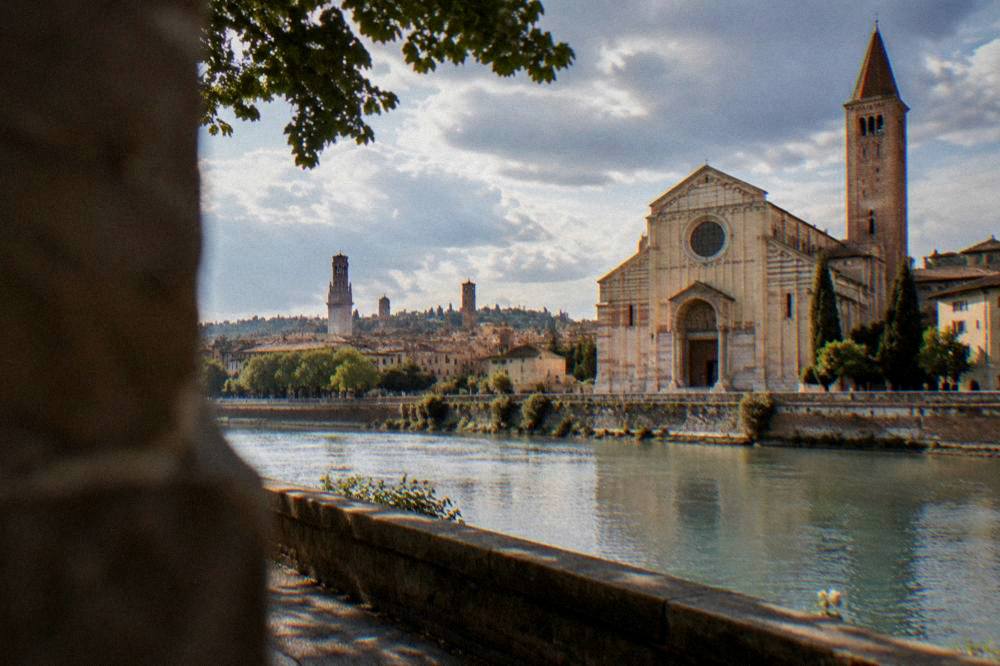
Before leaving the district, it is worth repeating the one caution that runs through this page: church hours and any standalone ticket for San Zeno are not captured here, so check the current arrangements locally or at the VeronaCard channels before committing a morning. The Basilica di San Zeno asks little of a visitor and gives a great deal back: bronze doors that read like a manuscript in metal, a crypt that holds the city's patron saint, and a district that shows the Verona behind the postcards.
Common Questions About The Basilica Di San Zeno
Is the Basilica di San Zeno included in the VeronaCard?
Yes, the church is reported to be covered by the VeronaCard under the Chiese Vive convention, alongside the Duomo complex, Sant'Anastasia and San Fermo. The card has been digital since 1 September 2026 and costs 33 euro for 24 hours or 38 euro for 48 hours with ATV transport, per the Comune di Verona. Confirm coverage before you go.
How far is the Basilica di San Zeno from the Arena in Verona?
The basilica lies west of the historic centre, across the Adige loop, in the San Zeno district. It is a walkable crossing from the Piazza Bra area, or a short ride on the ATV urban network, whose 90-minute single ticket costs 1.50 euro. No exact walking time for this route is sourced, so allow a relaxed half-hour each way on foot.
Can you see the bronze doors without entering the church?
The doors face the square under the church's porch, so the doorway and its relief panels can be viewed from outside during a visit to the piazza. Reading the scenes closely and seeing the crypt require entry, and opening arrangements are not sourced here, so check locally before travelling out to the district for the doors alone.
Is there a dress code for the Basilica di San Zeno?
Churches in Italy commonly expect covered shoulders and knees, but no Verona-specific rule was sourced for this basilica, so this page states no dress code as fact. As working church practice, modest clothing is a safe default. Confirm current requirements on site.
What is the best month to visit San Zeno Verona?
By the ERA5 reanalysis for 1991-2020, May and June offer mean highs of 22.3 C and 26.6 C with the church interior cool either way, while September at 23.7 C and October at 18.1 C pair well with the riverside walk back to the centre. November is the wettest month at 118.2 mm, so bring a plan for rain if visiting then.
Is the Basilica di San Zeno suitable for a short Verona trip?
Yes, if the trip is a full day or more, since the basilica sits outside the old town and needs a crossing of the Adige loop to reach. For a single day, pair it with the Arena, Piazza delle Erbe and one other church; for two or three days it slots easily into a quieter morning alongside the riverside and Castel San Pietro.