Northern Italy Itinerary: Milan, Verona And Venice
A northern Italy itinerary does not need to be complicated: Milan, Verona and Venice sit on one fast rail axis, with Lake Garda and the Valpolicella wine hills on Verona's doorstep.
Short answer
Seven to ten days is the working range for a Milan, Verona and Venice route: two nights in Milan, three or four in Verona as a base for Lake Garda and Valpolicella, and two in Venice, all connected by direct trains of roughly one hour to one hour 15 between Verona and Venice and one hour 15 to one hour 50 between Verona and Milan.
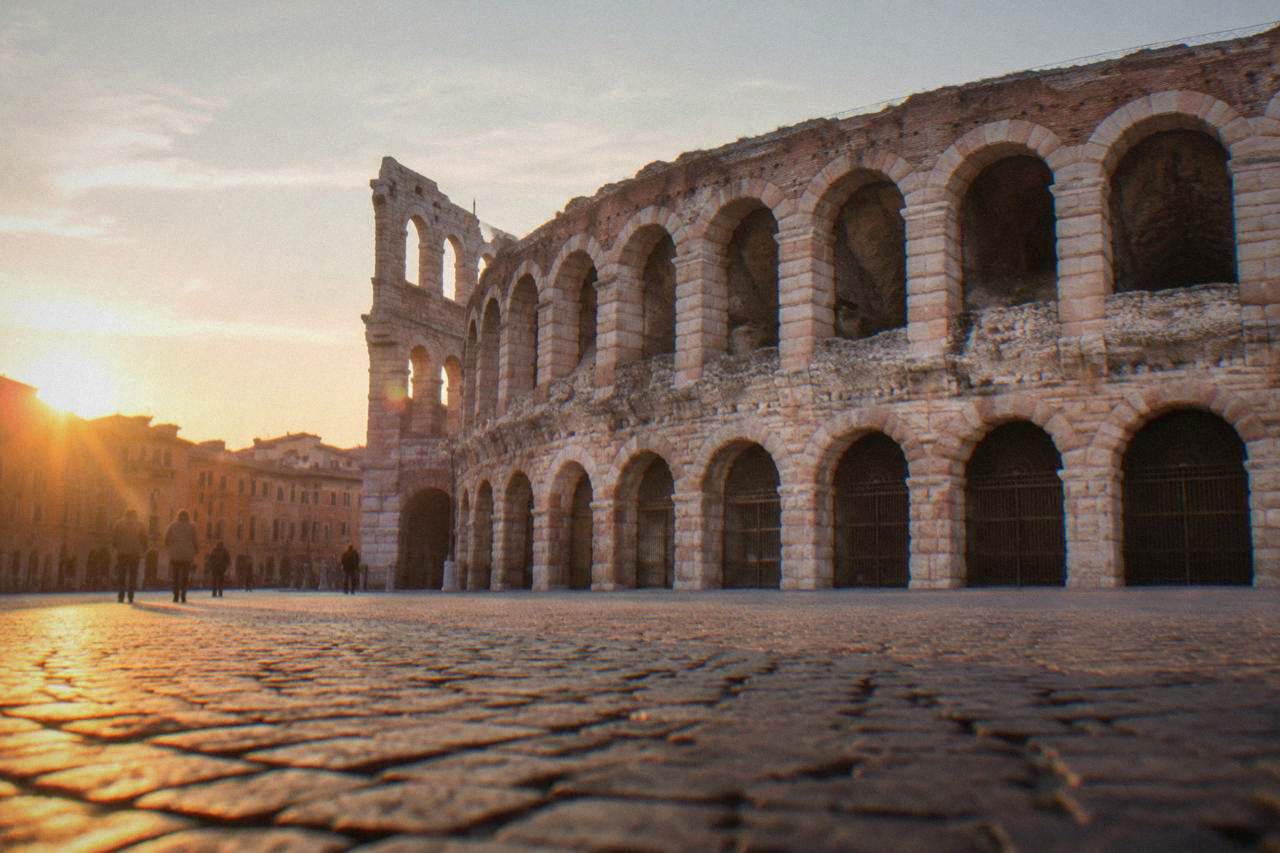
Verona sits in the middle of the classic northern Italy triangle, an inland city on the Adige river in Veneto, roughly one hour by rail from Venice and under two from Milan, with the Lake Garda towns of Sirmione, Bardolino, Garda and Malcesine 22 to 39 km to the west. That geography is the reason a northern Italy itinerary keeps landing on Verona as its hub: the city itself holds a first-century Roman Arena in Piazza Bra, the Romeo and Juliet legend and a UNESCO World Heritage listing from 2000, while the wine hills of Valpolicella start about 25 minutes away by road. The plan below is built the way the rail map actually works, not the way a brochure wishes it did.
How Many Days Does A Northern Italy Itinerary With Verona Need?
Seven days is the practical minimum for a Milan, Verona and Venice route that does not feel like a checklist: two nights in Milan, three or four in Verona used as a base for Lake Garda and Valpolicella, and two in Venice. Five days works if Lake Garda is dropped. Ten days adds Bologna, Padua or the Dolomites. Shorter combinations exist, but a rushed day is not the same as an itinerary.
The logic is arithmetic rather than taste. The trains between the three anchor cities are direct and frequent, so the transit cost in hours is low: about one hour to one hour 15 from Verona Porta Nuova to Venice Mestre, and one hour 15 to one hour 50 to Milano Centrale, both reported by rail aggregators and worth confirming when booking. What eats time is the day-trip ring around Verona, because Sirmione, Valpolicella and the opera season at the Arena are each half-day or full-day commitments.
A shorter trip is better spent in fewer bases. The site's Verona In One Day and Verona In Two Days plans cover the city alone, and the Verona And Lake Garda Itinerary stretches the same idea across the lake towns. The single-city pairing is covered on Can You Do Verona And Venice In One Day?. This page is for the traveller whose real question is the whole northern arc.
| Trip length | Realistic shape | What gets cut |
|---|---|---|
| 5 days | Milan 2 nights, Verona 3 | Venice, Lake Garda |
| 7 days | Milan 2, Verona 3, Venice 2 | Padua, Mantua, slow afternoons |
| 8 days | Milan 2, Verona 4, Venice 2 | Nothing major; one lake day added |
| 10 days | Milan 2, Verona 4, Venice 2, Padua or Bologna 2 | Nothing; the trip breathes |
What Does A Seven-Day Milan, Verona And Venice Route Look Like?
Days one and two go to Milan, arriving at Milano Centrale and using the city's cathedral and its gallery as the warm-up. Days three to five move to Verona by direct train, with one full day inside the city walls, one day in Valpolicella or Sirmione, and an evening at the Arena if the opera season is running. Days six and seven finish in Venice, one hour to one hour 15 from Verona by rail, before flying out of Venice or returning. It is a loop that never backtracks.
Milan rewards the front of the trip because it is the most workmanlike of the three cities and the easiest to leave. Verona goes in the middle because it is the base: the day trips radiate outward from Porta Nuova station, and the city itself is compact enough that a single well-planned day, the shape laid out in the site's Verona In Three Days guide, covers the Arena, Juliet's House, Piazza delle Erbe and the river crossings at Ponte Pietra.
Two 2026 changes matter for the middle block. Juliet's courtyard stopped being free on 1 April 2026: the courtyard route now costs 5 euro, the full house and balcony route 12 euro, booked online with entry via Teatro Nuovo. And the Arena is very much a daytime sight as well as an opera house, 12 euro full price, 9 euro reduced for groups of 15 or more and over-65s, 3 euro for visitors aged 18 to 25 from EU and reciprocity countries, per the Comune di Verona's own price list.
The Valpolicella day is the one worth booking ahead, because the tasting rooms in the Amarone hills sit about 25 minutes and 21 km by road from the city, and a guided half-day with transport solves both the driving and the booking question at once.
Venice closes the trip because leaving from there is easier than arriving into it: Marco Polo flights out, or a train back toward Milan if the outbound flight is from there. The lake day can swap into the Venice block if the weather forecast says otherwise.
Why Should Verona Anchor A Northern Italy Itinerary?
Verona earns the anchor slot on geography and cost of movement: it lies on the direct Milan to Venice rail axis, so every transfer in a northern Italy itinerary passes through or near it anyway, and its day-trip ring, Lake Garda, Valpolicella, Soave, Vicenza, Mantua and Padua, is denser than anything Milan or Venice can offer without a longer ride. The city itself is a UNESCO World Heritage Site, inscribed in 2000, and walkable end to end.
The comparison questions travellers actually ask are already answered elsewhere on this site, including Which Is Nicer, Venice Or Verona? and Which City Is Better To Visit, Milan Or Verona?. For itinerary purposes the answer is structural: Venice is a terminus, a city you go to and come back from, while Verona is a junction. Trains from Porta Nuova reach Venice in a reported one hour to one hour 15 and Milan in one hour 15 to one hour 50, with Rome about three to three and a half hours away, times worth confirming against live schedules before booking.
Inside the city, the sight list is short and central. The Arena's daytime visit is 12 euro full, the Juliet's House full route 12 euro, the Torre dei Lamberti is reported at 6 euro, and Castelvecchio at 9 full and 6 reduced, both reported and worth confirming on the museums' own pages. The VeronaCard, digital since 1 September 2026, prices at 33 euro for 24 hours or 38 euro for 48 hours with ATV city buses included, or 29 and 32 euro without transport, per the Comune di Verona's card notice; the card does not include the airport Aerobus, and Juliet's House still needs its own online booking even for card holders.
An evening decision point is the Arena's opera festival. The 2026 season, the 103rd edition, ran 5 June to 12 September, and the 104th is announced for 11 June to 11 September 2027, so this is a summer-and-early-autumn option, not a year-round one; stone-step seats start in the EUR 30s, with exact sector prices on the Arena's own ticket pages. The site's Opera Night In Verona page covers the practical detail.
| Verona sight | 2026 admission | Notes |
|---|---|---|
| Arena daytime visit | 12 EUR full, 9 EUR reduced, 3 EUR ages 18-25 | 1 EUR first Sunday Nov to Mar; closed Mondays; early close on show days |
| Juliet's House | Courtyard 5 EUR, house and balcony 12 EUR | Online booking, entry via Teatro Nuovo since 1 April 2026 |
| Torre dei Lamberti | Reported 6 EUR | Free with VeronaCard; hours vary, check torredeilamberti.it |
| Castelvecchio | Reported 9 EUR full, 6 EUR reduced | Closed Mondays; free with VeronaCard |
| Ponte Pietra, Piazza delle Erbe, Porta Borsari | Free, open access | No ticket needed at any time |
Where Does Lake Garda Fit Into A Verona-Based Northern Italy Itinerary?
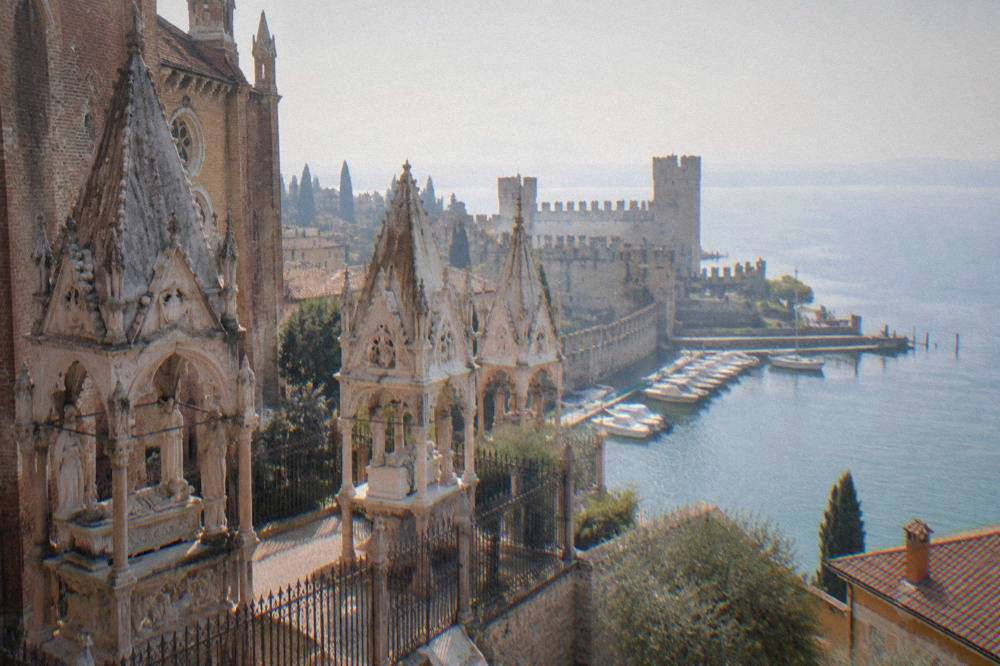
Lake Garda is a day trip from Verona, not a neighbourhood of it: the lake towns sit 22 to 39 km west of the city, Sirmione about 40 minutes by road and Malcesine about 84, computed over free-flow routing, and the choice is between a half-day boat-and-town excursion or a full day combining Sirmione's Roman ruins and Scaliger Castle. Sirmione is in Brescia province, Lombardy, reached from Verona by ATV line 164 bus in a reported 55 minutes.
The names trip people up, so they are worth fixing early. The town of Garda is in Verona province; Riva del Garda is a different town in Trentino, 51 km away, covered on the site's Riva Del Garda page. Sirmione belongs to Lombardy administratively even though every Verona itinerary visits it. None of this affects the travelling, but it affects how ferry zones and bus tickets are priced.
On the water, the Navigazione Laghi 2026 fare table lists a full-lake day pass at 39.50 euro for an adult, with the summer full service running 16 May to 4 October 2026 and the north-south passenger service suspended from 2 November 2026 to 12 March 2027, per the operator's own timetable pages, so a shoulder-season ferry day needs a schedule check first. In Malcesine the Monte Baldo cable car costs 30 euro round trip for an adult, 28 online, and 18 for juniors born 2012 or later, 16 online, running a season of about 4 April to 1 November.
A guided lake day bundles the boat leg and the timing, which is the part that is easy to get wrong on public transport.
What Can Day Trips From Verona Add To The Route?
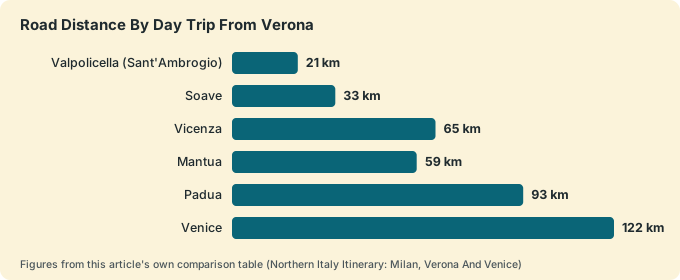
Five day trips sit inside an hour of Verona by road: Valpolicella at about 25 minutes, Soave at 33, Vicenza at 48, Mantua at 54 and Padua at 67, with Venice itself about 85 minutes by car, all computed over free-flow routing. The wine hills are the signature addition; the small art cities, Vicenza, Mantua, Padua, are what turn a three-city itinerary into a genuinely northern Italian one without adding hotel changes.
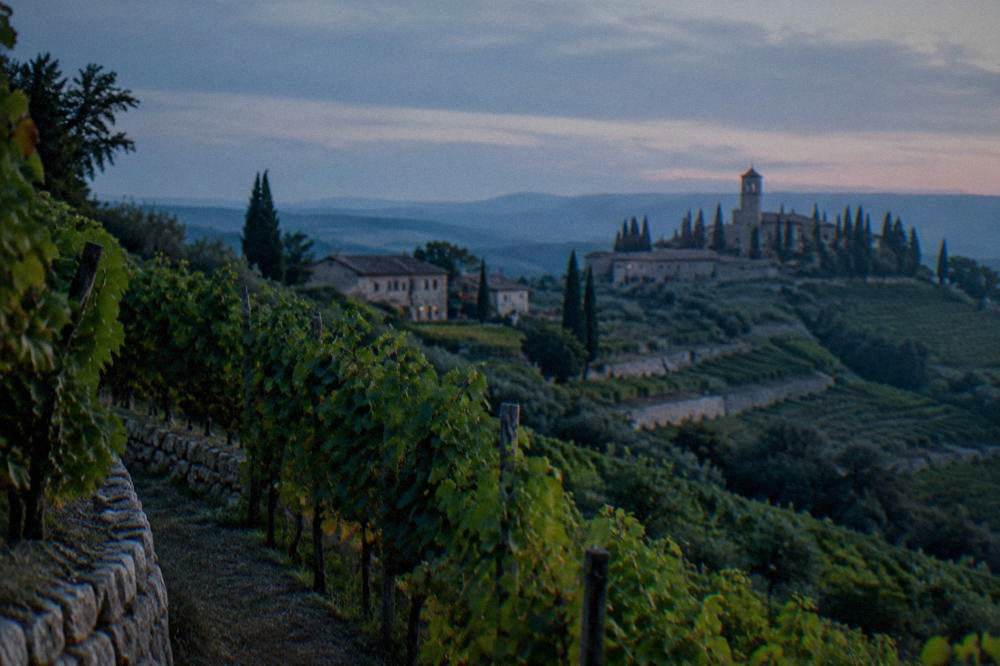
The wine day needs no persuasion. Valpolicella is the Amarone zone, where the Corvina, Corvinone and Rondinella grapes are dried in the appassimento process before fermentation, and the consorzio's hills begin about 21 km from the Arena. Soave, with its Garganega whites, lies 33 km east. Both are reachable independently, but tasting with transport removes the driving question entirely, which is why the related tour below is the half-day Amarone experience with round-trip travel included.
For the art cities, sight details thin out: the pack carries no prices or hours for Vicenza's Teatro Olimpico, Mantua's palaces or Padua's Scrovegni Chapel, so the planning rule is to confirm bookings on each city's own site before committing a day. Padua sits on the same rail line as Venice, which makes it a natural stop on the Verona to Venice transfer day rather than a separate excursion.
| Day trip from Verona | Road distance | Free-flow drive time | Rail alternative |
|---|---|---|---|
| Valpolicella (Sant'Ambrogio) | 21 km | About 25 min | Bus or guided tour |
| Soave | 33 km | About 33 min | Regional rail |
| Vicenza | 65 km | About 48 min | Direct train |
| Mantua | 59 km | About 54 min | Regional train, reported 30-45 min |
| Padua | 93 km | About 67 min | On the Venice line |
| Venice | 122 km | About 85 min | Reported 1 h to 1 h 15 |
Travellers with children should know the balance tilts: the lake and gelato options beat third-church-of-the-day, and the site's Verona With Kids page handles that version of the trip.
When Is The Best Time Of Year For A Northern Italy Itinerary?
The two shoulder windows, April to June and September to October, fit a Milan, Verona and Venice route best: the ERA5 reanalysis for Verona, 1991-2020, shows April mean highs of 17.8 C and September highs of 23.7 C against July and August highs of 29.3 and 29.1 C, and the Arena's opera season, 11 June to 11 September in 2027, bridges the whole warm stretch. November is the wettest month at 118.2 mm of rain, and January nights average -0.4 C.
Summer is the season with the most going on and the most demand: the opera in Verona, the lake ferries at full frequency, everything open late. The trade is heat and crowds in the three most visited cities in the north. The climate figures above are modelled normals for the Verona grid cell, not a station record, but they frame the decision well enough: a July walk between Milan's cathedral and Verona's Arena is a hot-walk business, plan the sightseeing around morning and evening.
Winter has its own case. January mean temperature in Verona is 3.1 C, the Christmas markets have run from late November to late December in past years, though 2026 dates had not been published by the Comune when this page was prepared, and the cities are quiet. The lake ferries drop to the reduced winter service, and the north-south passenger service is suspended from 2 November 2026 to 12 March 2027, so a winter lake day means buses and towns, not boats.
| Month | Mean high C | Rain mm | Itinerary note |
|---|---|---|---|
| April | 17.8 | 93.5 | Shoulder season; lake towns waking up |
| June | 26.6 | 92.3 | Opera season opens; ferries full service |
| July | 29.3 | 79.4 | Peak heat; book Arena and lake trips early |
| September | 23.7 | 99.7 | Opera closes the season; lake still warm |
| November | 12.3 | 118.2 | Wettest month; indoor-heavy plan |
| January | 7.3 | 52.3 | Quietest; some lake services suspended |
Rain should be planned for in any month; the site's Verona In The Rain and Verona In Winter pages exist for exactly that.
How Do Trains And Driving Work On The Milan, Verona And Venice Axis?
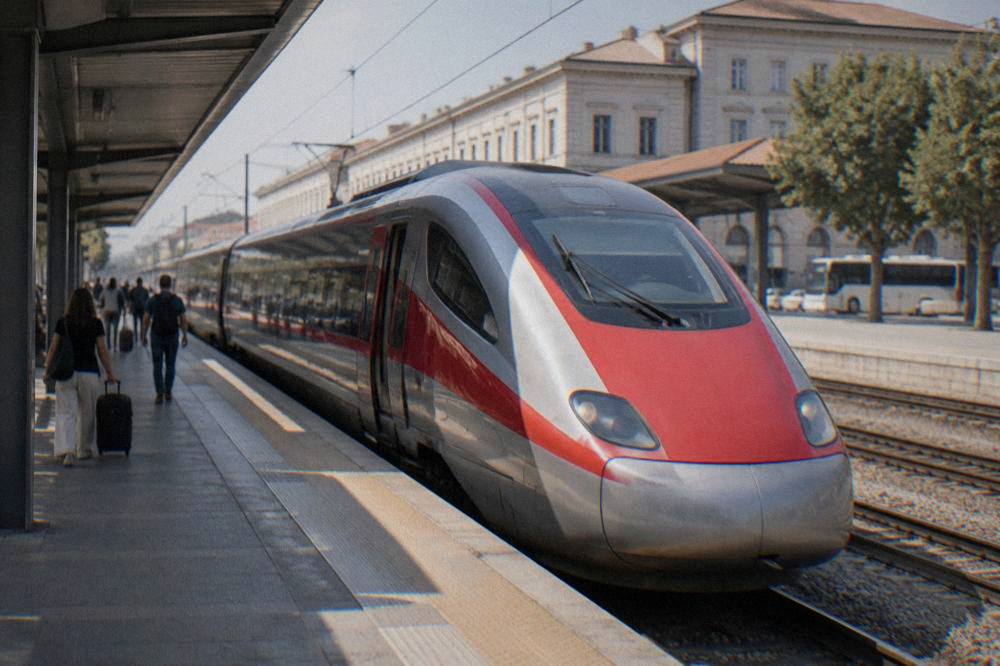
Trains are the correct default for this route: high-speed services connect Milan, Verona and Venice directly, with reported times of one hour 15 to one hour 50 between Milano Centrale and Verona Porta Nuova and one hour to one hour 15 between Verona and Venice Mestre, plus about three to three and a half hours to Rome. A car helps only for the day-trip ring, Valpolicella, Soave, the smaller lake towns, and Verona's historic centre is a camera-policed ZTL that should not be driven into at all.
The ZTL rules are worth spelling out because fines arrive by mail. Non-residents are limited to four entries a month into the historic-centre zone, booked in advance in set windows: Monday to Friday 10:00 to 18:00 and 20:00 to 23:00, and weekends and holidays from 10:00 to 13:30, per the Comune di Verona's ZTL notice. Hotel guests are exempted if the hotel registers the plate with the authority; short-term rental guests are not. The practical translation: park outside the centre and walk, the shape the site's Verona Car Rental And Driving material covers in detail.
Inside Verona the urban bus single is 1.50 euro for 90 minutes, and the airport Aerobus from Verona Villafranca is reported at 7 euro for the roughly 15-minute run into the city, a figure to confirm on the airport's site. The Verona Airport To City Centre and Getting Around Verona pages carry the full transport picture.
For the triangle itself, buy rail tickets in advance for the high-speed legs, and confirm every time quoted here against the operators' live schedules, because the figures above are reported ranges rather than a timetable.
What Should You Budget For A Northern Italy Itinerary?
The fixed, verifiable costs of a Milan, Verona and Venice route are modest: Verona's headline sights run 12 euro for the Arena, 12 euro for the full Juliet's House route and 9 euro reported for Castelvecchio, the digital VeronaCard is 33 or 38 euro with transport, the Monte Baldo cable car is 30 euro round trip, and the lake day pass is 39.50 euro. Venice and Milan sight pricing should be checked on each city's own pages, as should every hotel rate.
The honest framing is that the skeleton of this itinerary is cheap and the flesh is whatever the traveller adds. A day of Verona sightseeing at civic prices costs less than a single dinner in a Milan restaurant, and the biggest single-ticket items on the route, the opera in Verona and the lake excursions, each have cheap and expensive versions: stone steps at the Arena start in the EUR 30s, and a Sirmione half-day tour costs a fraction of a full private lake charter.
What the pack does verify, this page prints. What it does not, hotel rates, restaurant prices, train fares beyond the reported time ranges, Venice access fees, this page refuses to guess, and the right move is to confirm each at booking. The tourist tax exists, is collected by the accommodation, and is capped at four nights per person per month; no rate is printed. The site's How Expensive Is Verona? page does the same discipline for the city alone.
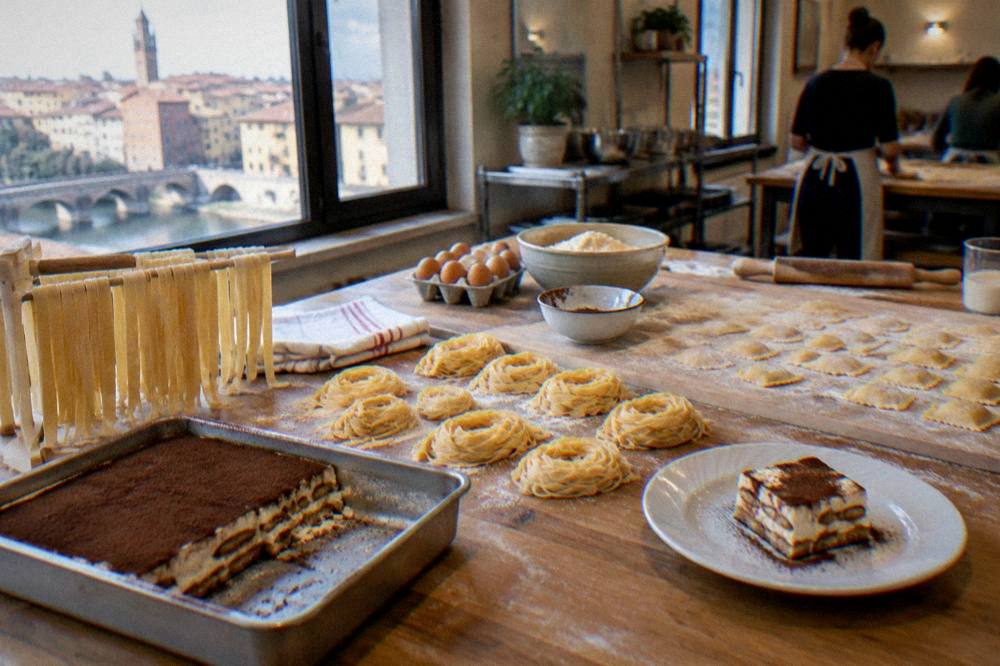
Cooking classes and food tours are the mid-range extras that reliably earn their slot on a food-focused version of this route, and they book out in the July and September peaks.
Which Verona Experiences Are Worth Booking Before The Trip?
Three Verona bookings deserve to be made in advance rather than on arrival: the Juliet's House slot, mandatory online since 1 April 2026 even for VeronaCard holders; the opera seat at the Arena for any night between mid-June and mid-September, where the cheap stone-step sectors sell first; and a Valpolicella half-day with transport, because the tasting rooms outside the city need reservations and the good ones fill in high season. Everything else in Verona can be decided on the ground.
The Juliet's House point is the one with a hard rule attached. Since 1 April 2026 there are no on-site sales: the courtyard route at 5 euro and the house and balcony route at 12 euro are booked online, with entry via Teatro Nuovo in Piazzetta Navona, per the Comune's own notice, and the balcony itself is a 1940 addition rather than a medieval original, a fact the city's tourism pages state plainly.
The Arena's daytime visit is the flexible one: 12 euro full, closed Mondays, with early closes on show days, so an opera night and a daytime visit need separate planning. For a first visit with limited time, a guided walk that includes the Arena and the city's other landmarks compresses the orientation problem into a single morning, and the site's Verona Walking Tour roundup compares the options.
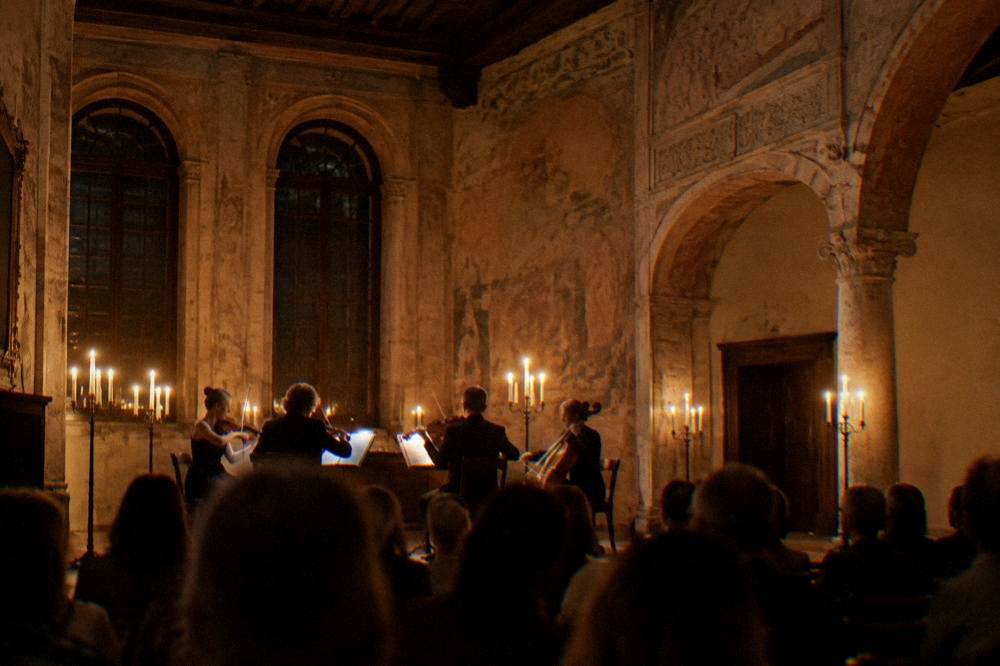
An evening concert in a Verona palace is the opera alternative for trips outside the summer season, when the Arena's stage is dark between mid-September and mid-June.
Common Questions About A Northern Italy Itinerary
Can you do Milan, Verona and Venice in one week?
Yes, and seven days is the working minimum: two nights in Milan, three in Verona and two in Venice, joined by direct trains of a reported one hour 15 to one hour 50 from Milan to Verona and one hour to one hour 15 from Verona to Venice. Confirm live times when booking.
Is Verona a good base for northern Italy?
Verona works as the hub of this route because it sits on the Milan-Venice rail axis and its day-trip ring, Valpolicella at about 25 minutes by road, Soave at 33, Vicenza at 48, Mantua at 54 and Padua at 67, is unusually dense for one base.
How many days in Verona on a northern Italy itinerary?
Three days for the city alone, four if a Lake Garda day is included. The city centre is compact, but the Arena, Juliet's House, the churches and the wine hills each take real time; the site's Verona In Three Days page gives the day-by-day shape.
Do you need a car for a northern Italy itinerary?
No for the triangle itself, the trains are direct and fast, and Verona's centre is a restricted ZTL that should not be driven into. A car, or guided transport, helps only for Valpolicella, Soave and the smaller lake towns.
Is Lake Garda part of a Verona itinerary?
As a day trip, yes: the lake towns are 22 to 39 km west of Verona, with Sirmione about 40 minutes by road and Malcesine about 84. The lake ferries run a full summer service and suspend the north-south passenger route from 2 November 2026 to 12 March 2027.
What is the best month for a Milan, Verona and Venice trip?
May, June or September, using the ERA5 1991-2020 normals for Verona as the guide: May highs average 22.3 C, June 26.6 C and September 23.7 C, and the opera season runs from mid-June to mid-September. July and August average 29.3 and 29.1 C highs.
The shape that survives contact with real travel is the one built around one hub: sleep in Verona, day-trip outward, and let the fast trains handle Milan and Venice. More on the city's own deep planning, including arrival and station logistics, sits on the Venice To Verona and Milan To Verona pages, and the Venice and Milan day-trip guides cover the two ends of the arc, with the wider Verona Italy Travel Guide home page as the index for everything between.