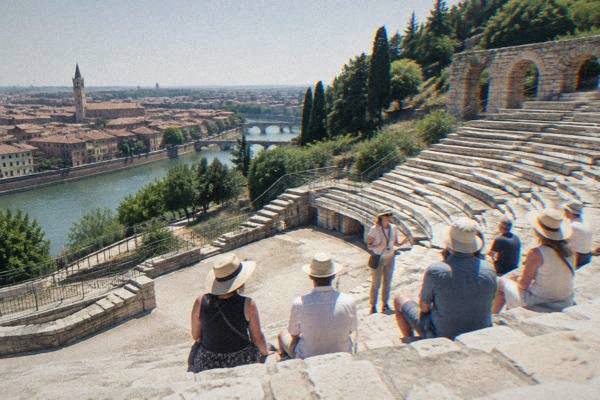
Arche Scaligere: The Gothic Tombs Of The Della Scala Family
The Arche Scaligere are the suspended Gothic tombs of the Della Scala family, standing in an iron railing beside the small church of Santa Maria Antica in the heart of Verona, and this guide covers what they are, how to see them and how they fit a day in the city.
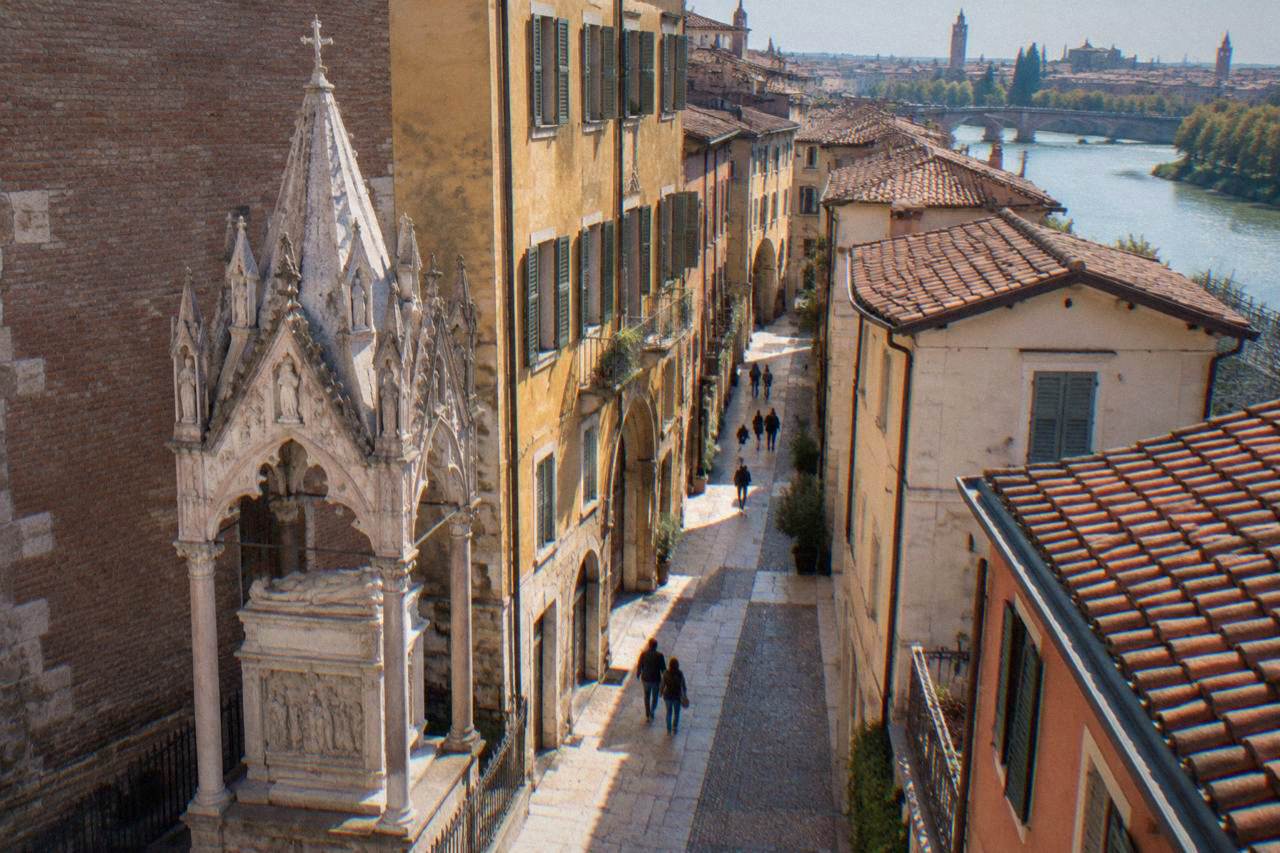
Short answer
The Arche Scaligere are a group of Gothic stone tombs of the Della Scala family, set inside a fenced enclosure next to Santa Maria Antica in central Verona, a short walk from Piazza delle Erbe and Piazza dei Signori.
The Arche Scaligere in Verona are among the most photographed medieval monuments in the city, and they are also among the easiest to miss. The Scaligeri tombs stand inside a wrought-iron railing on Via Santa Maria Antica, a narrow brick street that runs behind Piazza dei Signori, a few minutes on foot from Piazza delle Erbe. Verona itself is an inland city in Veneto, northern Italy, built on the Adige river and inscribed on the UNESCO World Heritage List in 2000; Lake Garda and its towns are a separate day trip, not part of this walk. What follows is a full guide to the tombs: what they are, what a visit involves, how the VeronaCard treats them, and how to fold them into a day that also takes in the Arena, Juliet's House and the squares of the old centre.
What Are The Arche Scaligere In Verona?
The Arche Scaligere are a cluster of Gothic stone tombs of the Della Scala family, the medieval dynasty that ruled Verona, raised on pillars above street level inside a fenced enclosure beside the small church of Santa Maria Antica, a short walk from Piazza delle Erbe. They are monuments you view from the street rather than a museum you enter, and the whole group takes minutes to see unless you join a guided walk.
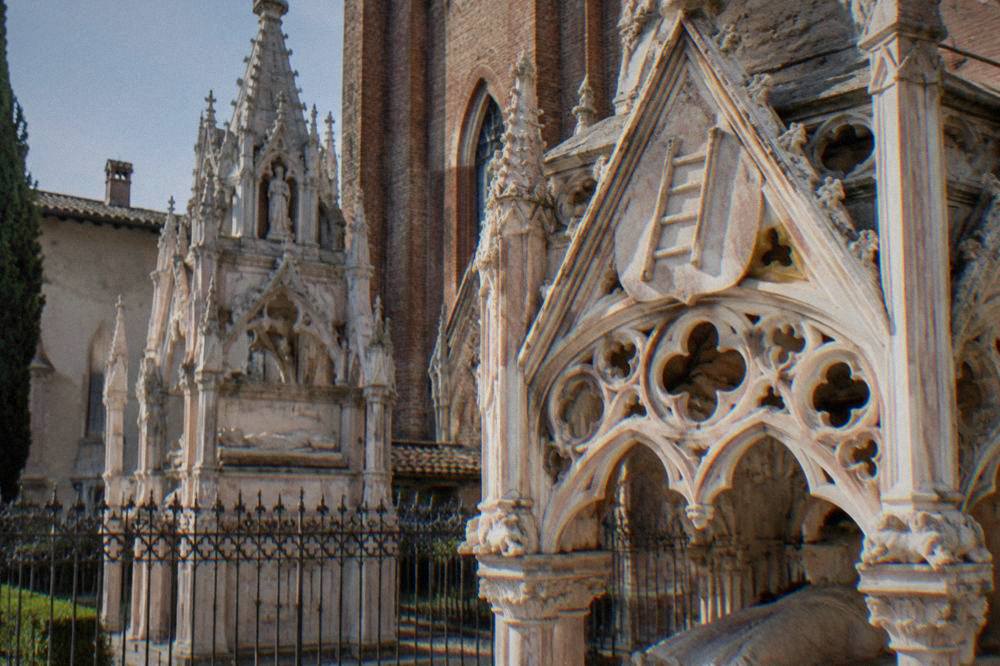
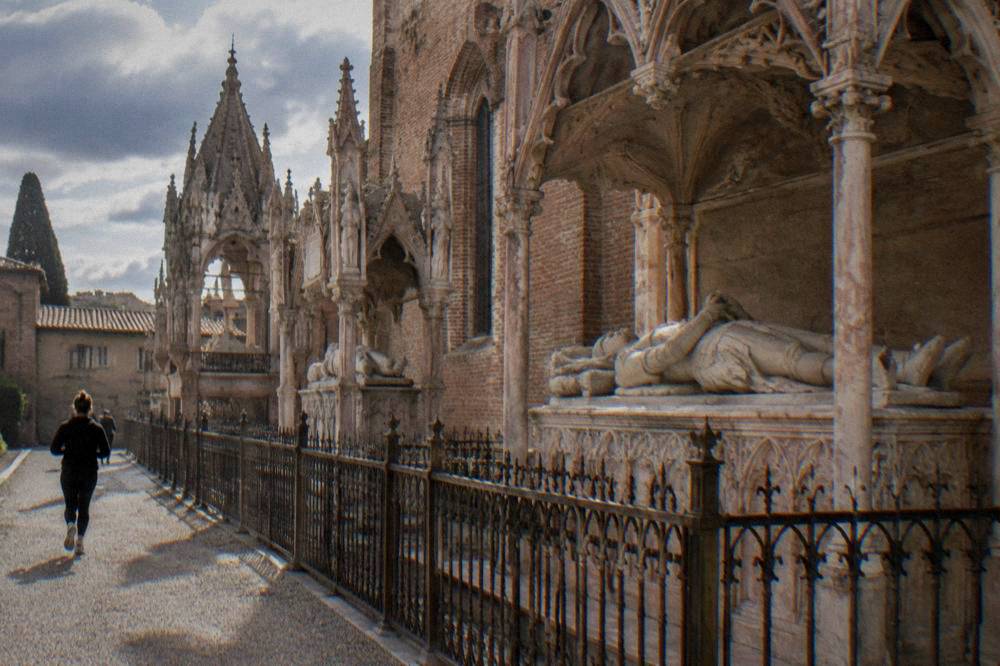
The name needs a little unpacking. "Arche" simply means chests or tombs in Italian, and these are indeed stone chests, each carrying a recumbent effigy of its occupant under an openwork canopy mounted on slender supports. The Della Scala family, called the Scaligeri in Italian, gave the city its medieval golden age and its enduring heraldic symbol: a ladder, "scala" in Italian, which appears again and again on the monuments themselves. Look closely at the railings and the tomb chests and the ladder motif repeats in the carved decoration, which is one of the reasons the enclosure rewards a slow circuit even though it is small.
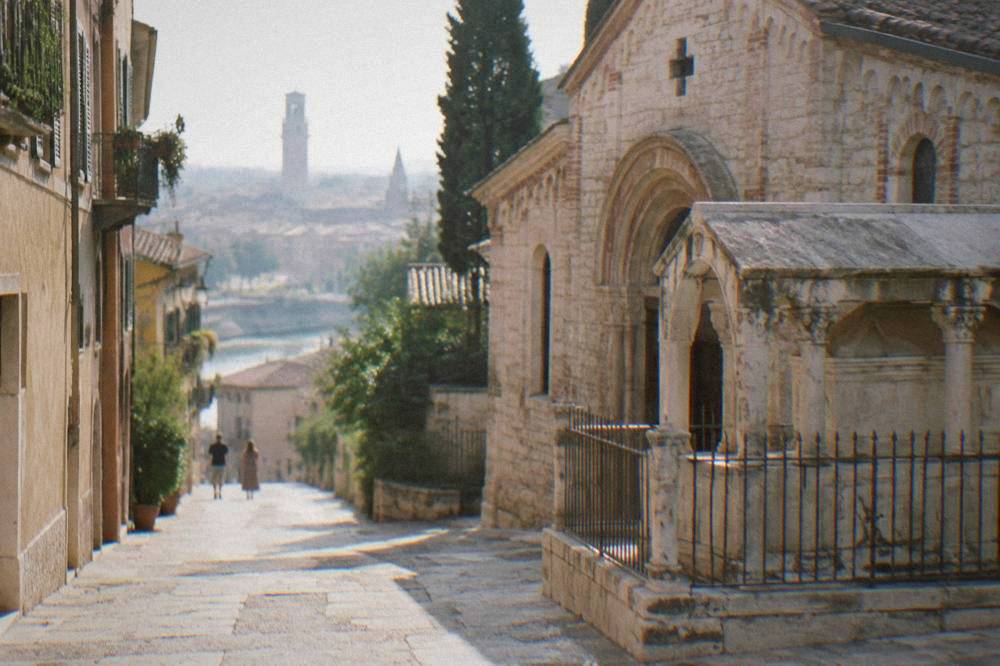
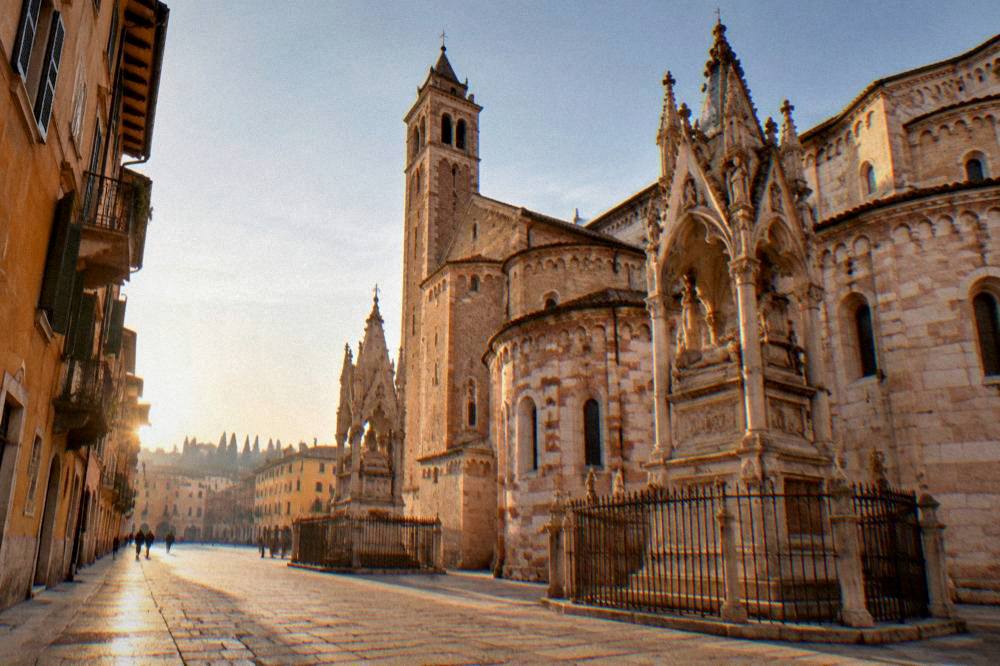
The setting matters as much as the tombs. Santa Maria Antica is a modest Romanesque parish church, and the tombs cluster against its flank and over its portal in a way that has no real parallel elsewhere in Italy: funerary monuments that became part of the street furniture of a working medieval quarter. The stones sit within arm's reach of passers-by, separated only by the low iron railing, which is why the enclosure turns up in so many photographs of Verona. The street is narrow, brick-paved and usually quiet in the first hours of the morning, and the light in late afternoon rakes across the carvings.
What this page cannot do is date the individual tombs or name their occupants one by one, and inventing them would be exactly the kind of confident error a guide should refuse. What a visitor can rely on is what the city's tourism apparatus itself publishes about access, which is covered in the sections below. For the dynastic background and the wider story of medieval Verona, the site's Verona history guide carries the narrative, and a guided walk is the other honest way to fill the gap, since a local guide walks past these tombs daily and narrates them for a living.
Where Are The Scaligeri Tombs And When Can You See Them?
The Scaligeri tombs stand on Via Santa Maria Antica, immediately beside the church of the same name, roughly halfway between Piazza Bra and the Adige river bends, a short walk from Piazza delle Erbe and Piazza dei Signori. The enclosure is visible from the public street at any hour, so in practical terms the tombs can be seen whenever the street is open, which is always.
That last point deserves emphasis because it shapes how you plan. The Arche Scaligere are an outdoor monument behind a railing, not a ticketed interior in the way the Arena di Verona or Casa di Giulietta are. You do not queue for them, and there is no timed slot. What the city's own listings add is that closer entry to the enclosure and the tied-in civic visiting arrangements are limited and seasonal, reported by the municipal museums system, and that the VeronaCard covers the Scaligeri tombs through a same-day ticket tie-in with the civic museums. Confirm the current arrangement locally or on the city's ticketing pages before counting on entering the enclosure itself.
Timing your photographs is worth a sentence. Via Santa Maria Antica faces roughly north-east, so mid-morning to early afternoon tends to light the facades and tomb canopies evenly, while early morning gives a cooler, softer street with fewer people in frame. In July and August the mean daily high sits at 29.3 C and 29.1 C respectively in the ERA5 reanalysis for Verona, 1991-2020, so a morning circuit of the medieval quarter is the comfortable plan in summer; January, with a mean high of 7.3 C in the same dataset, is cold rather than closed, and the tombs look exactly the same.
A reasonable walking frame for the streets around the tombs:
| Walk stage | What you pass | Time on foot |
|---|---|---|
| Piazza Bra to Piazza dei Signori | Via Mazzini shopping street, then Piazza delle Erbe | About 10 minutes |
| Piazza dei Signori to the Arche Scaligere | Under the della Scala arch via Via Santa Maria Antica | About 2 minutes |
| Arche Scaligere to the Duomo | Back lanes past Piazza dei Signori, then east | About 8 minutes |
| Arche Scaligere to Ponte Pietra | North through the old quarter to the river | About 10 minutes |
The street itself is marble-paved and polished like the rest of the old town, which is worth knowing for anyone with mobility concerns: the site's sources confirm the paving character but do not document step-free arrangements for nearby interiors, so contact each venue directly for those details.
What Does A Visit To The Arche Scaligere Actually Involve?
A visit to the Arche Scaligere is short and street-level: you view the fenced Gothic monuments from Via Santa Maria Antica, walk a full circuit of the railing to see each tomb face, and read whatever seasonal information the civic museums system has posted, typically fifteen minutes for the enclosure itself. Anything longer comes from pairing the tombs with Santa Maria Antica, Piazza dei Signori and the surrounding medieval quarter in a single loop.
The practical rhythm is simple. Arrive from Piazza dei Signori, the formal square that served as the Della Scala family's seat of power, pass under the brick arch that links the square to Via Santa Maria Antica, and the tombs are immediately on the left against the church wall. The enclosure is compact: three principal freestanding monuments plus the tomb set over the church portal, all within a few paces of each other. Visitors typically walk the railing once slowly, photograph the canopies against the sky, then step back into the street to see how the group reads as architecture, which is the whole point: these are monuments designed to be seen by a whole city walking past.
Two honest limits should be stated plainly. First, no English-language panel-by-panel guide to the individual tomb inscriptions appears in the sources behind this site, so a self-guided visitor will see magnificent stones without full captions. Second, entry inside the railing is not a reliable everyday option: the municipal listings describe limited, seasonal access and a same-day tie-in with the civic museums system, reported rather than guaranteed, so check the city's ticketing pages before promising yourself a look inside the fence. A guided walking tour solves the first limit directly, since the Scaligeri tombs sit on the standard route of nearly every historical walk in the city, and the self-guided audio walking tour of Verona, this site's featured pick for the medieval quarter, covers the Della Scala monuments with an audio and written commentary you carry on your phone. Check availability
For visitors who want the deepest single add-on, the Torre dei Lamberti rises from the courtyard of the Palazzo del Podestà just off Piazza dei Signori, and its viewing platform looks straight down on the rooftops around the tombs, putting the enclosure and the church of Santa Maria Antica into their street context.
Are The Arche Scaligere Free, And Is The VeronaCard Worth It Here?
The Scaligeri tombs are free to view from the public street, and the municipal listings report that the enclosure itself is often free or tied to a same-day civic-museum ticket, with VeronaCard holders covered; the VeronaCard went digital on 1 September 2026 and costs 33 euro for 24 hours or 38 euro for 48 hours with ATV city buses included, or 29 and 32 euro without transport.
That is the whole price picture in one paragraph, and it is worth reading twice because the 2026 change trips up guides written earlier. The Comune di Verona's own VeronaCard notice states the card became digital on 1 September 2026, delivered through the "Your Verona" web app, with old paper cards valid only to 31 March 2027. The card's attraction list, as published by the comune, includes the Arena, Castelvecchio, the Torre dei Lamberti, Juliet's House, the Teatro Romano and the Scaligeri tombs, alongside the Chiese Vive church circuit that covers the Duomo complex, San Zeno, Sant'Anastasia and San Fermo. The Aerobus from the airport is not included, and the card does not remove the need to book Juliet's House online even for card holders. Other pages covering the same trip are gathered on Verona Italy Travel Guide.
| VeronaCard option | Price | Transport included |
|---|---|---|
| 24 hours, with ATV buses | 33 euro | Yes, urban ATV network |
| 48 hours, with ATV buses | 38 euro | Yes, urban ATV network |
| 24 hours, without transport | 29 euro | No |
| 48 hours, without transport | 32 euro | No |
Whether the card pays off depends entirely on the pace of your sightseeing, and this site does not compute savings because entry combinations change with seasons and booking rules. The honest framing is arithmetic any reader can do: set the card price against the sights you genuinely intend to enter, using the prices in the table below, all of which come from the city's own published lists.
| Sight near the Arche Scaligere | Published entry price | Status in the city's list |
|---|---|---|
| Arena di Verona, daytime visit | 12 euro full, 9 euro reduced, 3 euro for ages 18-25 | Civic price list |
| Casa di Giulietta | 5 euro courtyard, 12 euro house and balcony, booked online | Official since 1 April 2026 |
| Torre dei Lamberti | 6 euro full, reported | Reported by the city's tourism pages |
| Castelvecchio museum | 9 euro full, 6 euro reduced, 2 euro ages 18-25, reported | Reported by the civic museums |
| Arche Scaligere enclosure | Street view free; enclosure often free or tied to same-day civic ticket, reported | Reported |
One caution applies to every reported figure above: hours and access windows move with the seasons and with event calendars, and the city's pages carry the current versions, so confirm before you build an itinerary around any single interior. The street view of the tombs, by contrast, is the one part of Verona that never closes.
How Do The Scaligeri Tombs Fit Into One Day In Verona?
The Scaligeri tombs fit a one-day Verona itinerary as a fifteen-minute stop between Piazza delle Erbe and the Duomo, since Via Santa Maria Antica sits directly on the natural walking line from the Arena through the medieval core to the river; a realistic order is Arena first, Piazza Bra, Via Mazzini, Piazza delle Erbe, Piazza dei Signori, the Arche Scaligere, then the Duomo and Ponte Pietra.
The reason this ordering works is geography. Verona's old centre is compact and largely pedestrian, with the Piazza Bra and the Arena at its south-western edge, the market squares of the medieval commune at its heart, and the river loop enclosing everything. The tombs sit at the exact hinge between the civic squares and the quieter lanes toward the Duomo, so they cost almost no walking time in a route that would pass within fifty metres of them anyway. Visitors with two or three days can spread this loop out; the site's guides to one, two and three days cover those plans in detail.
| Time of day | Stop | Notes for the stop |
|---|---|---|
| Morning, first hours | Arena di Verona | 12 euro daytime visit, closed Mondays, early close on show days, reported hours |
| Mid-morning | Via Mazzini and Piazza delle Erbe | Open access, free |
| Late morning | Piazza dei Signori and Arche Scaligere | Street view free; statue of Dante in the square |
| Midday | Lunch in the old quarter | Veronese dishes: risotto all'Amarone, pastissada de caval |
| Afternoon | Casa di Giulietta | 5 euro courtyard, 12 euro with house, online booking since April 2026 |
| Late afternoon | Duomo, then Ponte Pietra | Duomo complex on the VeronaCard Chiese Vive circuit; bridge open access |
Families should know the loop is stroller-friendly in width but not always in surface: the marble paving of the old town is polished and can be slick in rain, which is the one accessibility statement the sources support. The site's Verona with kids itinerary adapts the same walk for younger legs. Rainy-day alternatives sit indoors all around this route, from Castelvecchio to the frescoed interiors of Sant'Anastasia, and the Palazzo della Ragione and its courtyard sit one block north of the tombs.
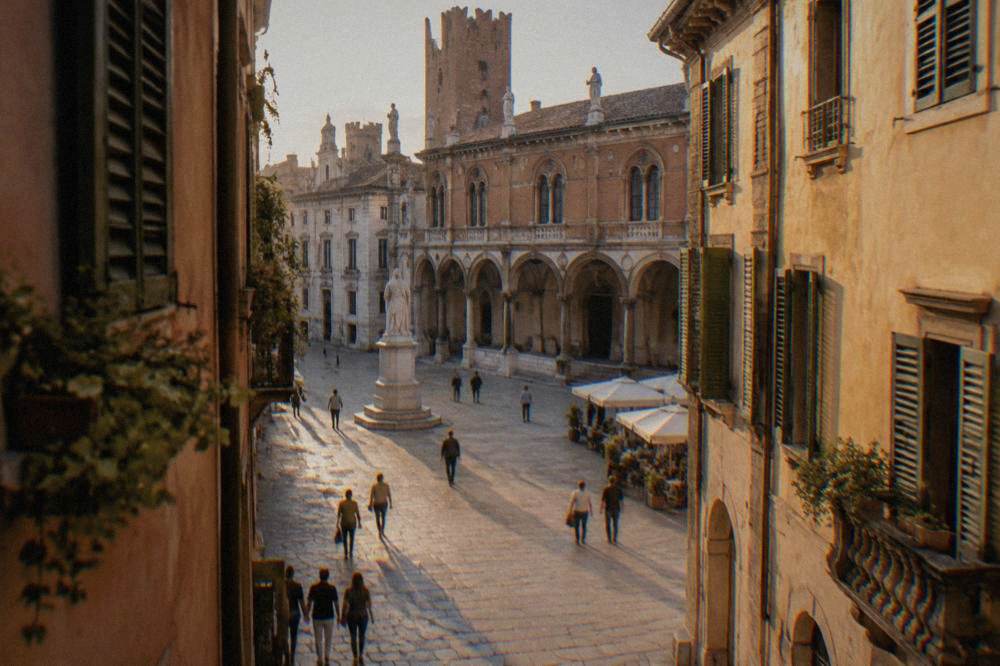
What Do The Arche Scaligere Look Like, And Why Do They Matter?
The Arche Scaligere look like suspended stone canopies: each tomb is a carved marble chest bearing a reclining armoured figure, raised on columns and covered by a pyramid or tabernacle roof pierced with Gothic tracery, with the Della Scala ladder emblem worked into the railings and the stonework. They matter because Verona's ruling family chose to be buried in the open street beside their parish church, turning private tombs into public monuments.
That choice is the historical hook. Rather than placing their monuments inside the church, as dynasties across Italy did, the Della Scala family built theirs against and above the exterior, where the whole city would pass beneath them daily. The result reads today as an ensemble: the small Romanesque church, the portal tomb above its entrance, the freestanding monuments in the railed enclosure, and the arch overhead that carries the walking route onward toward Piazza dei Signori. Photographers should work the street corners as well as the railing: the view back along Via Santa Maria Antica with the canopy spires against the sky is the composition that appears on half the postcards of medieval Verona.
The carving rewards attention. The effigies wear armour of their period and rest with hands folded, the canopies carry crockets and tracery that show the northern Gothic style arriving in an Italian city better known for Roman and Renaissance work, and the ladder emblem of the family repeats on the enclosure railings themselves. No attributions to named sculptors or workshops appear in the sources behind this site, so this page leaves the carving unnamed rather than guessing; what can be said is that the ensemble stands with the finest secular Gothic funerary monuments in the country, and a guided walk will usually say exactly that as it passes.
The surrounding quarter deepens the picture. Piazza dei Signori, formally the seat of the Della Scala regime, keeps its statue of Dante, who lived in Verona in the years after his exile from Florence, and the lane from the square to the tombs passes under an arch that tied the family's palaces together across the street. Nearby stand the Scaliger-built fortifications of Castelvecchio to the west and the brick apses of Sant'Anastasia to the east, so a visitor interested in the dynasty can trace its whole architectural footprint without leaving the old centre.
Which Verona Sights Pair Best With The Scaligeri Tombs?
The sights that pair best with the Scaligeri tombs are those inside a ten-minute walk: Piazza dei Signori and Piazza delle Erbe for open-access medieval squares, the Torre dei Lamberti for the rooftop view over the quarter, Juliet's House for the city's other famous medieval name, and the Duomo complex for the Chiese Vive church circuit, all reachable on one loop without transport.
The pairing logic is simply radius. Everything in the table below lies within the old centre's walking core, and the urban bus single fare of 1.50 euro, valid 90 minutes on the ATV network, exists for the longer legs such as the Teatro Romano across the river or Castel San Pietro on the hill above it, but none of the core pairings needs a bus. Visitors arriving at Porta Nuova station can walk to Piazza Bra in about twenty minutes and start the loop from the Arena end.
| Pairing sight | Walk from the Arche Scaligere | Entry situation |
|---|---|---|
| Piazza dei Signori | 2 minutes | Open access, free |
| Piazza delle Erbe | 4 minutes | Open access, free |
| Torre dei Lamberti | 3 minutes | 6 euro, reported; VeronaCard covered |
| Casa di Giulietta | 7 minutes | 5 euro courtyard, 12 euro with house, online booking |
| Sant'Anastasia | 6 minutes | VeronaCard covered via Chiese Vive; no price printed |
| Duomo complex | 8 minutes | VeronaCard covered via Chiese Vive; no price printed |
| Castelvecchio | 12 minutes | 9 euro full, reported; closed Mondays |
| Ponte Pietra | 10 minutes | Open access, free |
Two of these pairings deserve a caution. Juliet's House has required online booking and paid entry for the courtyard since 1 April 2026, so it cannot be treated as a spontaneous free peek any more; the details, and the myth of the balcony itself, are covered in the site's dedicated Casa di Giulietta guide. And the Monday closures matter: the Arena's daytime visit is reported as closed Mondays, and the civic museums including Castelvecchio follow the same pattern, so a Monday in Verona is best built around the open-access squares, the tombs among them, plus any interiors that confirm Monday opening on their own pages.
For the evening, the pairing shifts from stones to seats. The Arena's opera festival ran 5 June to 12 September 2026 in its 103rd edition, and the 104th is announced for 11 June to 11 September 2027, with stone-step seats starting in the 30-euro range and full sector prices on the Arena's own ticket pages; an opera night pairs naturally with a daytime spent in the medieval quarter, since the walk from Via Santa Maria Antica to Piazza Bra takes under ten minutes.
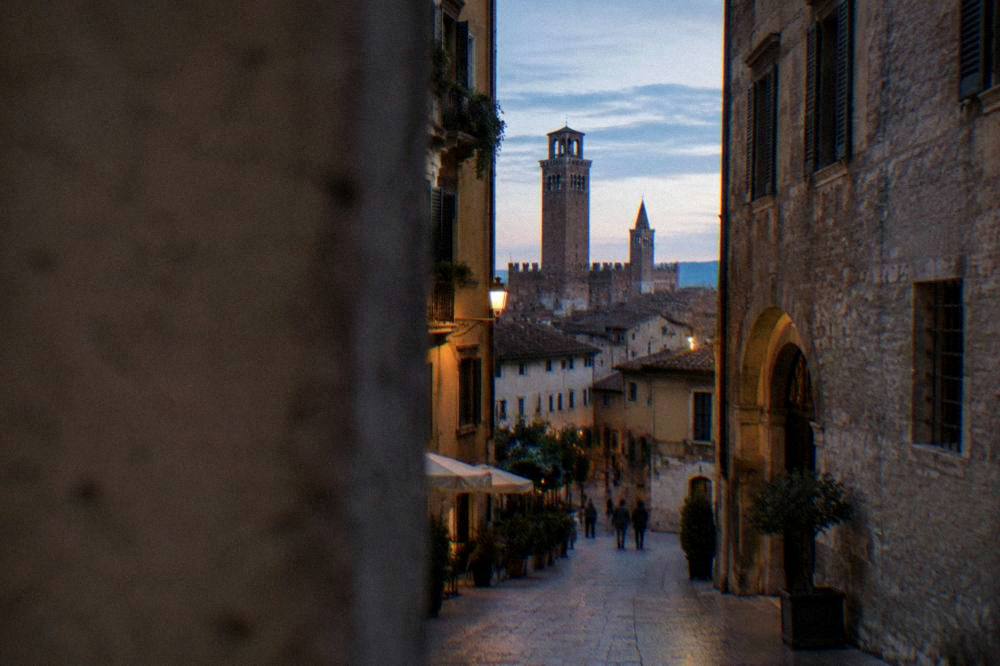
What Should You Know Before Visiting The Scaligeri Tombs?
Before visiting the Scaligeri tombs you should know five things: they are a street monument with no queue, the enclosure interior has only limited reported access, the surrounding quarter carries the city's densest cluster of sights, the polished marble paving calls for sensible shoes, and everything else on your list, from the Arena to Juliet's House, has its own booking rule that changed in 2026, so check each sight's own page before the day.
Seasons shape the visit less here than anywhere in Verona. The tombs look the same in January fog and July heat, and the ERA5 reanalysis for Verona, 1991-2020, puts November as the wettest month at 118.2 mm of rain against January's 52.3 mm, so an umbrella matters more in late autumn than a timetable. The practical variables are light and crowds: midsummer mornings are warm, with a July mean low of 19.1 C in the same dataset, and the narrow street fills with walking groups by late morning, so the early hours give the cleanest photographs and the emptiest frames.
Money-wise, the visit can cost nothing at all. Viewed from Via Santa Maria Antica the monument is free, the two adjoining squares are free, and the city's wider list of free open-access sights includes the Porta Borsari, the Roman gate on the old decumanus, and the Ponte Pietra, the Roman bridge footpath at the river. Visitors who want interiors on the same day should budget for the Arena and Juliet's House at the published prices above, or weigh the VeronaCard against their list. The complete free-and-paid picture is in the site's things to do in Verona round-up.
A note on being a good guest on a working street: Via Santa Maria Antica is a lane people live on, and the enclosure is small, so the courteous pattern is a quiet circuit, photographs without climbing the railing, and moving on. There is no bag check, no ticket gate and no closing time, which is precisely the charm: of all the monuments in a city of monuments, the Scaligeri tombs are the ones that simply belong to the street.
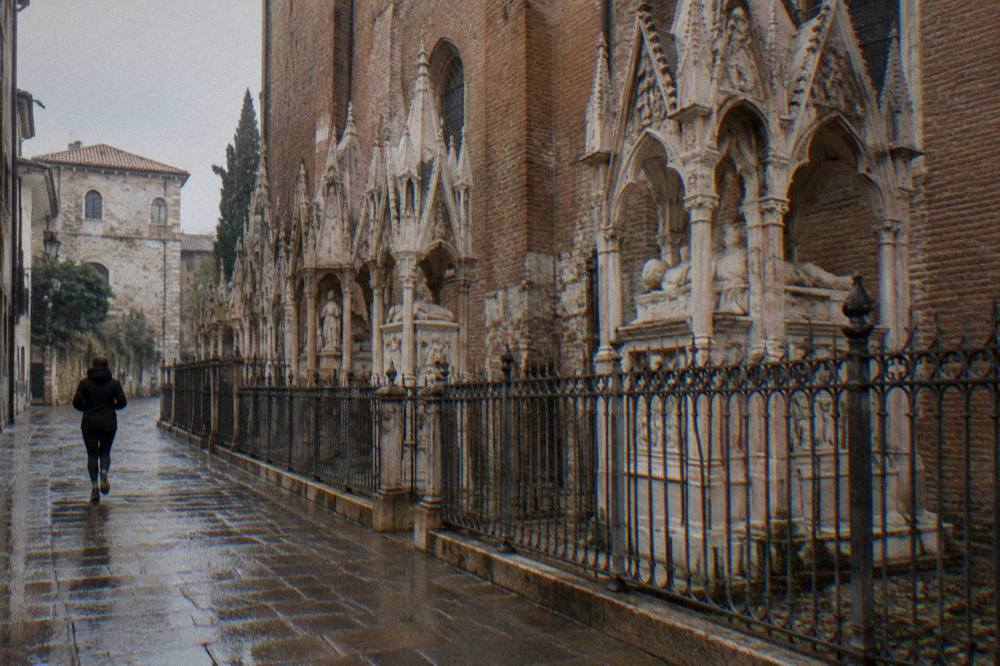
Common Questions About The Arche Scaligere
Are the Arche Scaligere free to visit in Verona?
Viewing the tombs from Via Santa Maria Antica is free at any hour, since the monument stands on a public street behind a railing. The municipal listings report that entry inside the enclosure is often free as well or tied to a same-day civic museum ticket, with VeronaCard coverage; confirm the current arrangement on the city's ticketing pages before you go.
Where exactly are the Scaligeri tombs in Verona?
They stand on Via Santa Maria Antica, directly beside the church of Santa Maria Antica, about two minutes on foot from Piazza dei Signori and four from Piazza delle Erbe, roughly in the centre of Verona's old town.
Who is buried in the Arche Scaligere?
The tombs belong to the Della Scala family, the medieval dynasty that ruled Verona and whose ladder emblem appears throughout the enclosure's carvings and railings. The individual occupants and dates of each monument are not printed on this site; a guided walk narrates the dynasty in full.
Does the VeronaCard include the Arche Scaligere?
Yes, the Comune di Verona's VeronaCard notice lists the Scaligeri tombs among the covered sights, through a same-day tie-in with the civic museums system. The card has been digital since 1 September 2026 and costs 33 euro for 24 hours or 38 euro for 48 hours with ATV transport included.
How long does a visit to the Arche Scaligere take?
The enclosure itself takes about fifteen minutes to view from the street, walking a circuit of the railing. Pair it with Piazza dei Signori, Piazza delle Erbe and the walk to the Duomo and the whole loop runs comfortably inside two hours at a normal pace.
Can you enter the enclosure around the Scaligeri tombs?
Entry inside the railing is reported as limited and seasonal, sometimes free and sometimes tied to a same-day civic museum ticket. There is no standing daily access, so check the city's ticketing pages or ask at a civic museum desk before counting on going inside the fence.
How To Plan The Rest Of Your Verona Trip Around The Arche Scaligere
To plan the rest of a Verona trip around the Arche Scaligere, treat them as the anchor of the medieval-centre half-day, book the two sights that now require tickets in advance, the Arena's daytime visit and Juliet's House, and give any remaining days to the river loop, the churches of the Chiese Vive circuit and one day trip west to Lake Garda or north to the Valpolicella hills.
The booking point is the one that changed the city in 2026. Juliet's House sells its 5 euro courtyard and 12 euro house routes online only, with access via the Teatro Nuovo, and even VeronaCard holders must reserve a slot. The Arena's daytime visit at 12 euro can be bought on the day, but show evenings close the amphitheatre early, reported by the city's own pages, so check the Arena's calendar against your dates. The tombs themselves need nothing: no ticket, no slot, no queue, which makes them the flexible filler in any plan.
Beyond the centre, the distances are short and well defined. The Valpolicella wine hills at Sant'Ambrogio are about 25 minutes by car from the Arena, Soave about 33, and the Lake Garda towns of Bardolino, Sirmione, Garda and Malcesine run about 37, 40, 42 and 84 minutes respectively, computed over standard routing. Venice is about 85 minutes by car, or 58 to 75 minutes by direct train from Porta Nuova to Venice Mestre, reported by rail aggregators, which is why the site's Venice guide treats it as a feasible add-on rather than a rival base.
For a fuller read on the city these tombs anchored, start with the Verona history guide and the basilica of San Zeno page, then decide how many of the interiors above belong on your list; the medieval quarter around Via Santa Maria Antica will still be there, free and open, whenever your day's other slots run long.