Risotto All'amarone: The Verona Rice Dish
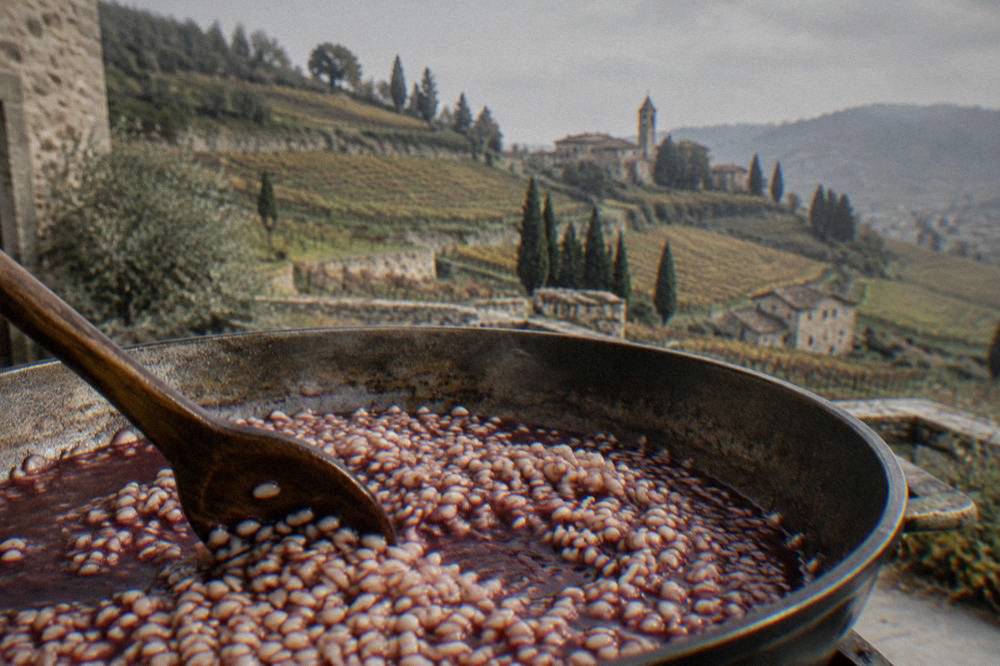
Risotto all'Amarone is the rice dish Verona calls its own: Vialone Nano rice simmered with the city's dried-grape red wine until the grains turn the colour of the Valpolicella hills that grow it.
Short answer
Risotto all'Amarone is a Veronese first course in which Vialone Nano rice is cooked slowly with Amarone della Valpolicella DOCG, the strong red wine made from Corvina, Corvinone and Rondinella grapes dried before pressing. The wine's colour and dried-fruit depth carry the whole dish, and it is a staple of traditional Veronese cooking alongside pastissada de caval and bollito with pearà.
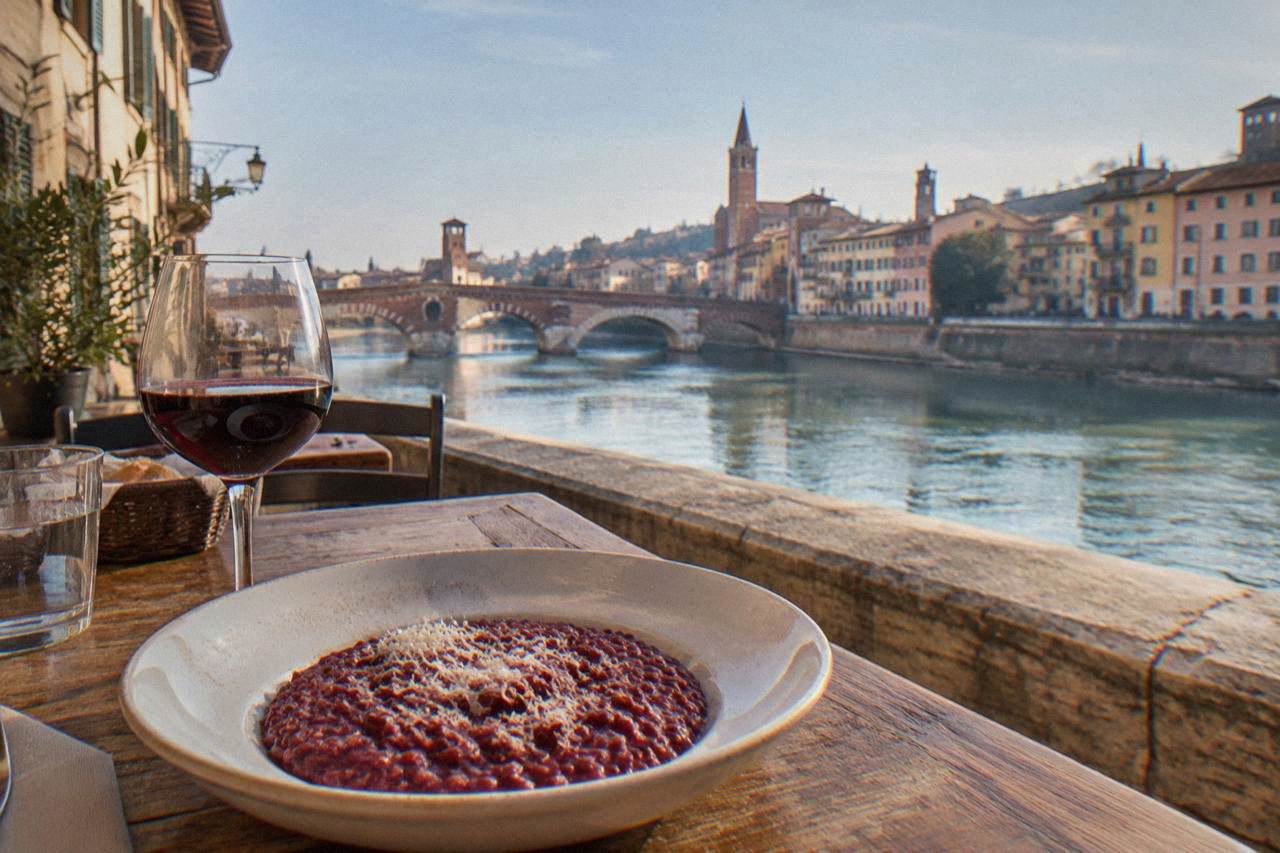
Risotto all'Amarone is Verona's signature rice dish: Vialone Nano rice from the Veneto plain, simmered slowly with Amarone della Valpolicella DOCG until the grains take on the wine's deep garnet colour and its dried-fruit, bitter-almond depth. The dish belongs squarely to Verona, in Veneto, northern Italy, an inland city on the Adige river whose food and wine traditions are tied to the Valpolicella hills about 25 minutes' drive to the north. It sits on Veronese menus beside pastissada de caval and bollito with pearà, and it is one of the few first courses anywhere in Italy named after a single wine.
The wine does the heavy lifting. Amarone is made mainly from Corvina, Corvinone and Rondinella grapes that are dried on racks in ventilated lofts for months before pressing, a process the consorzio sites call appassimento, and the result is a strong, dry red with a character no ordinary table wine reproduces. What follows is a working guide to the dish: what it is, how Veronese cooks build it, which bottle to cook with, where the style fits a visit to the city, and how the seasons change both the dish and the appetite for it.
What Is Risotto All'Amarone In Verona?
Risotto all'Amarone is a first course native to Veronese cooking in which Vialone Nano rice is toasted, then cooked in stock with a generous measure of Amarone della Valpolicella DOCG added through the cooking, so the finished rice is tinted deep red and carries the wine's dried-cherry and almond notes. The dish is reported by regional food writers as a standard of the Veronese repertoire, together with pastissada de caval, bollito with pearà, gnocchi and pandoro. It is a winter-leaning dish that now appears year round.
The pairing of rice and strong wine is old logic in the Veneto. The region grows Vialone Nano, a semi-fine rice that absorbs liquid steadily without collapsing, and the plain around Verona has supplied the city's kitchens for centuries. Amarone, for its part, is the product of the Valpolicella hills immediately northwest of the city, reported by the consorzio as a wine made from Corvina, Corvinone and Rondinella grapes dried before pressing to concentrate sugar and aroma. When the two meet in a pan, the rice drinks the wine twice: once early, when a splash goes into the toasted rice, and again at the finish, when the final glass is folded in off the heat.
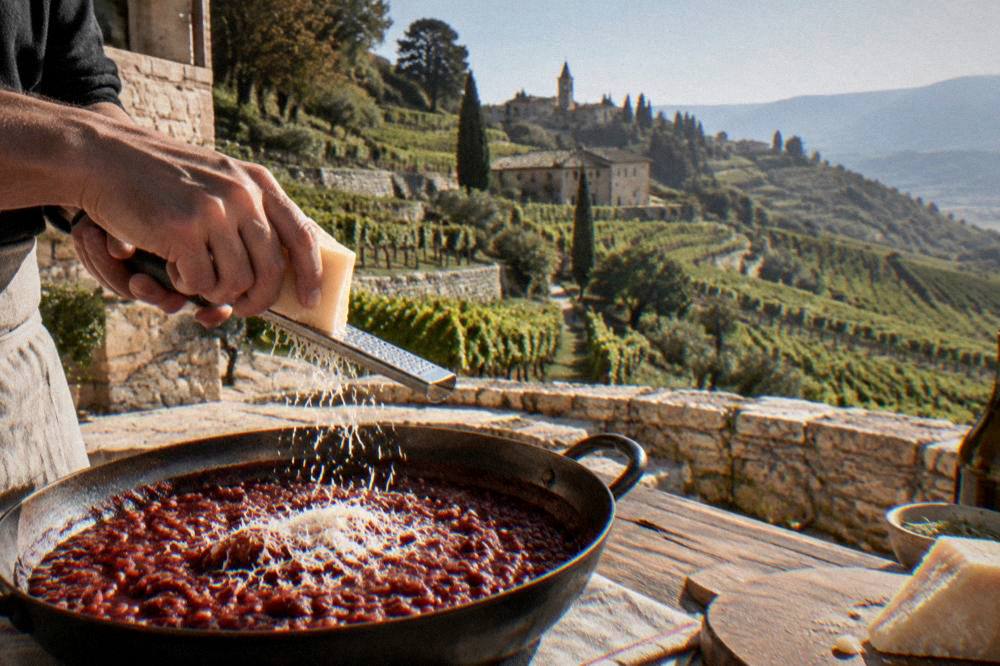
What distinguishes the dish from an ordinary red-wine risotto is concentration. Amarone is already a wine of dried fruit and notable alcohol, so the risotto needs no cream and little cheese: a dusting of Monte Veronese, the local aged cheese, is the reported traditional finish, and anything heavier buries the wine. The colour is the tell. A properly finished plate is a deep brick red, glossy from the starch of the rice and the last addition of wine, not pale pink.
The dish also anchors a wider Veronese first-course family. Gnocchi appear on the same menus, often sauced with the horse stew pastissada de caval; risotto all'Amarone is the rice branch of that tradition. The Verona food guide covers the full repertoire, and pandoro, the city's reported signature sweet, is the traditional way the meal ends.
How Is Risotto All'Amarone Made?
The classic method reported by Veronese cooks runs in five moves: soften a fine dice of onion in butter, toast the Vialone Nano rice until the grains turn translucent at the edges, add Amarone and let it absorb, then add hot stock a ladle at a time for roughly eighteen minutes, and finish off the heat with a final splash of Amarone, butter and grated Monte Veronese cheese. The wine is used twice, early and late, because heat drives off its aroma and only the last addition preserves it.
The onion base is kept deliberately mild. The reported tradition uses butter, not olive oil, because the dish is northern Italian and the fat carries the wine's fruit better. Some cooks add a scrap of beef marrow, a habit shared with other northern risotti, but the essential structure is onion, butter, rice, wine, stock. The stock itself is usually light: a clear beef or vegetable broth, since a heavy stock fights the wine.
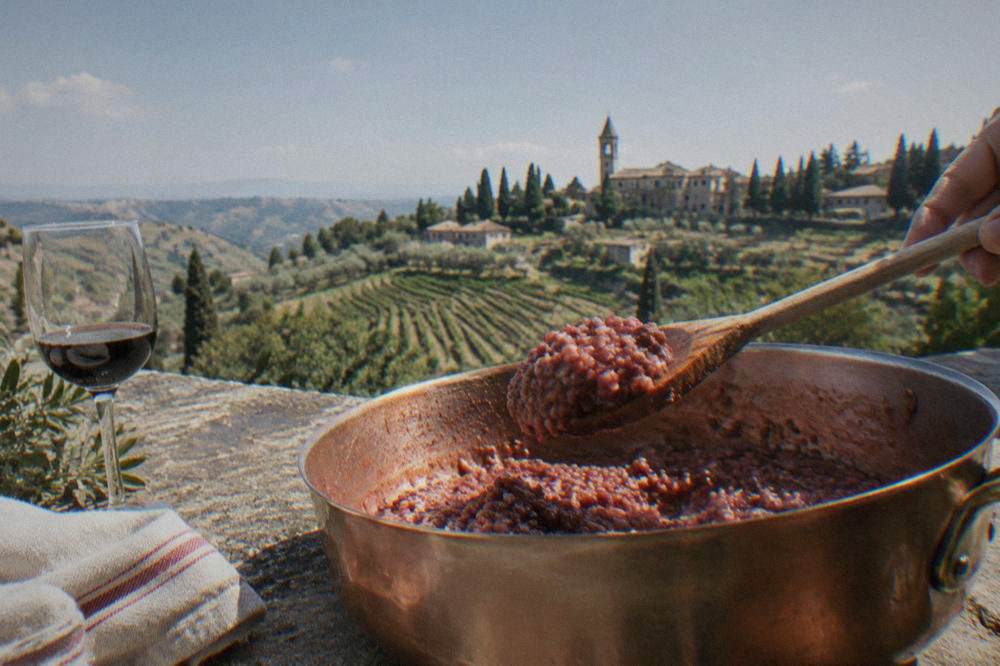
Timing matters more than technique. Vialone Nano is a semi-fine grain that holds a firm core for roughly eighteen minutes of gradual stock additions; the rice should still resist the tooth at seventeen, because the final rest in the wine and butter continues the cooking. The last pour of Amarone goes in when the pan is off the flame, which is why the dish tastes of wine rather than merely of the colour of wine.
Cooking it under supervision shortens the learning curve considerably. A pasta and tiramisu class at a Verona cooking school covers the city's hands-on kitchen repertoire, and the same booking desks list the food and wine walk that pairs Amarone with local tastings across the historic centre: the Verona Food & Wine Tour is this site's featured pick for eating the dish in context, and Check availability before locking a date, since food walks fill on weekends.
| Step | What Happens | Rough Timing |
|---|---|---|
| Soffritto | Onion diced fine, softened in butter without colouring | 5 to 8 minutes |
| Tostatura | Rice toasted until edges turn glassy | 2 to 3 minutes |
| Sfumatura | First addition of Amarone, absorbed fully | 2 to 3 minutes |
| Cottura | Hot stock a ladle at a time, stirred steadily | about 18 minutes |
| Mantecatura | Off heat: final Amarone, butter, Monte Veronese | 1 minute, then rest |
Where Do You Eat Risotto All'Amarone In Verona?
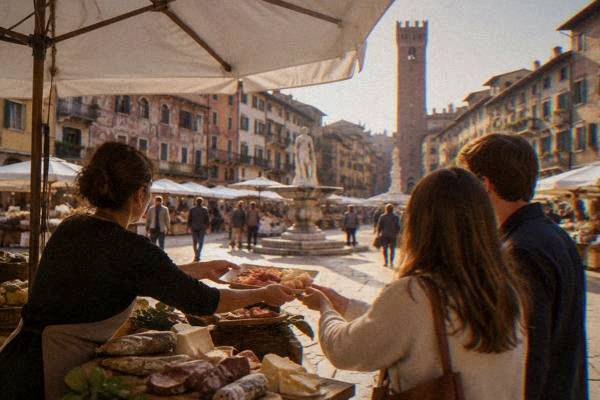
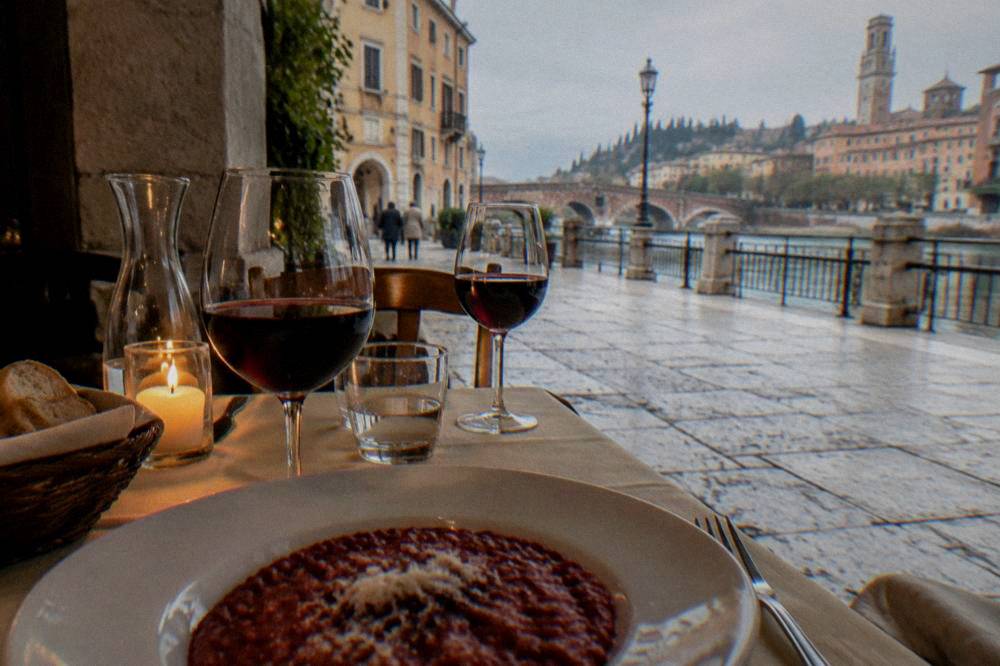
The dish appears on traditional Veronese menus across the historic centre, from osterie around Piazza delle Erbe to trattorie in the San Zeno and Veronetta districts, usually listed among the primi and usually in autumn and winter, though the reported tradition keeps it available year round. This site names no individual restaurant, because no current recommendation exists in its sources; the practical approach is to look for the dish on a menu that also lists pastissada de caval and bollito with pearà, the other anchors of the same repertoire.
That cluster is the reliable signal. A kitchen cooking the whole Veronese canon is cooking the risotto from raw rice rather than reheating it, and the wine by the glass will come from the Valpolicella hills 25 minutes up the road. Lunch service in Verona generally runs early afternoon and dinner from early evening, per the general practical sources; confirm hours with the venue when booking, since this site's sources carry no restaurant hours.
A guided walk solves the choice problem for one evening. The food and wine tour's listing pairs an Amarone tasting with stops at small producers and hidden corners of the centre, which is a reasonable way to taste the wine straight before tasting it in the rice. The best restaurants guide on this site explains in detail how to read a Veronese menu, and free ways to fill the rest of a day are listed in free things to do in Verona.
For travellers who would rather cook than choose, the same booking desks list classes in Verona homes and schools where the city's dishes are taught hands-on, and Check availability for the cooking-school option, which covers pasta, tiramisu and the broader repertoire the risotto belongs to.
Which Amarone Should You Cook With?
Cook with an Amarone della Valpolicella DOCG you would also drink, because the dish's flavour is the wine's flavour concentrated: a wine too thin to enjoy by the glass makes a flat risotto. The grapes are the fixed part, Corvina, Corvinone and Rondinella dried under appassimento; the variable is age, and a bottle with a few years of cellar time gives the softer, rounder finish the rice needs.
No specific producer, vintage or price appears in this site's sources, so confirm bottles at a Verona wine shop or tasting room.
The DOCG discipline is what makes substitution risky. Amarone's dried-grape method yields a wine of high alcohol, low residual sugar and a distinctive bitter-almond edge, the "amaro" the name carries. A standard Valpolicella, made from the same grapes without drying, is lighter and brighter and produces a pleasant but different dish; a Ripasso, reported as Valpolicella refermented on Amarone lees, sits between the two and is the common kitchen compromise when Amarone is being saved for the glass.
| Wine | Dried Grapes | Character In The Pan | Reported Kitchen Role |
|---|---|---|---|
| Amarone della Valpolicella DOCG | Yes, months of appassimento | Deep red, dried fruit, firm structure | The classic choice, used twice |
| Valpolicella Ripasso | Lees of the dried grapes | Rounder than Valpolicella, less depth | Common substitute |
| Valpolicella DOC | No | Light, cherry-bright, thinner colour | Everyday alternative |
| Recioto della Valpolicella | Yes, fermentation stopped sweet | Sweet, port-like | Not used; dessert wine |
The wider Amarone story, including the appassimento method in detail, is covered in this site's Amarone wine guide. The practical way to buy is at the source: the Valpolicella towns sit about 25 minutes and 21 km by road from the Arena, per this site's computed drive times, and the Valpolicella day-trip guide covers getting there.
Can You Make Risotto All'Amarone At Home?
Yes, and the dish is forgiving provided three things are respected: Vialone Nano or another semi-fine rice rather than long-grain, a good stockpot of light stock kept at a simmer, and the split addition of Amarone, one splash to toast the rice and one off the heat at the end.
The ingredient list is short, onion, butter, rice, Amarone, light stock and Monte Veronese or a similar aged cheese, and the reported ratio is roughly one part rice to three and a half parts liquid by volume, with about a third of a bottle of wine in the pan. The wider set of guides lives on Verona Italy Travel Guide.
The cheese deserves a note. Monte Veronese is the aged cow's milk cheese of the Verona hills; where it is unavailable, a hard aged cheese with some sweetness stands in, but the dish wants less cheese than a standard risotto, a spoonful rather than a snowdrift, because the wine's bitterness and the cheese's salt compound quickly. Salt goes in at the end only, after tasting, since the reduced wine concentrates any early seasoning.
| Ingredient | Quantity For 4 | Notes |
|---|---|---|
| Vialone Nano rice | one standard pack for four | Semi-fine grain; carnaroli is the fallback |
| Amarone della Valpolicella | a third of a bottle | Split: half early, half at the finish |
| Light beef or vegetable stock | about 1 litre | Kept at a bare simmer throughout |
| Onion, finely diced | 1 small | Softened, never browned |
| Butter | 60 g, plus more to finish | Divided between soffritto and mantecatura |
| Aged Monte Veronese | 40 g, grated | Added off the heat, sparingly |
Home cooks who want the full repertoire taught rather than read can book a class; the pasta, tiramisu and Italian-dishes course at a Verona cooking school is listed on the operator's live listing, and Check availability for dates close to a hotel in the centre, since classes start within walking range of Piazza Bra. Where to base yourself is covered in where to stay in Verona.
Where Does The Wine Come From? Verona And The Valpolicella Hills
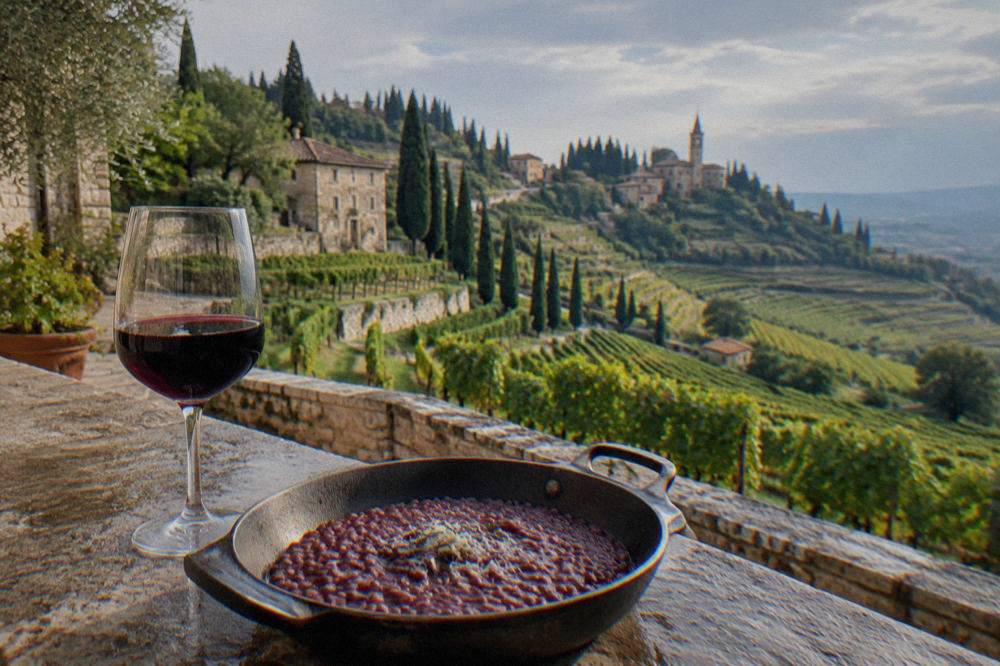
The Amarone in the risotto comes from the Valpolicella hills about 25 minutes and 21 km by road northwest of the Arena, a wine zone reported by the consorzio as the home of the Corvina, Corvinone and Rondinella grapes and the appassimento drying method.
The zone's main towns, Negrar, Fumane and Sant'Ambrogio, are reachable from Verona by local transport in roughly half an hour to an hour, and organized wine tours run there daily; for individual winery names and tasting fees, book through an operator or confirm with a cellar.
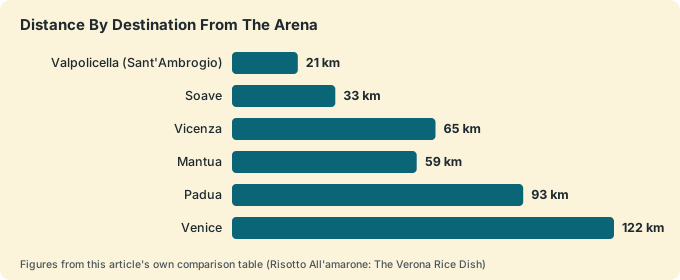
The geography is the point of the dish. Verona is an inland city on the Adige; its wine country starts at the city's own foothills and rolls north and west, with Soave's white-wine DOCG a similar short hop to the east, about 33 minutes and 33 km by road from the Arena, per the same computed distances. A day in the hills pairs naturally with a risotto evening back in town, and the tasting rooms pour the same bottles the kitchens cook with.
| Destination From The Arena | Drive Time | Distance |
|---|---|---|
| Valpolicella (Sant'Ambrogio) | about 25 minutes | 21 km |
| Soave | about 33 minutes | 33 km |
| Vicenza | about 48 minutes | 65 km |
| Mantua | about 54 minutes | 59 km |
| Padua | about 67 minutes | 93 km |
| Venice | about 85 minutes | 122 km |
Guided options save the driving. A half-day Valpolicella and Amarone experience from Verona visits vineyards and cellars with transport included, and Check availability for the Amarone tour with transportation; the fuller comparison of vineyard visits, chateau tastings and half-day tours is in this site's Valpolicella wine tour guide.
When Is The Best Season For Risotto All'Amarone In Verona?
The dish belongs by tradition to Verona's cold months, and the climate record backs the instinct: the ERA5 reanalysis for Verona, 1991-2020, puts January's mean daily high at 7.3 C and its mean low at minus 0.4 C, prime weather for a butter-rich rice dish, while July's mean high of 29.3 C pushes appetites toward lighter courses.
November is the wettest month at 118.2 mm of rain and October follows at 107.2 mm, so a steaming plate is the practical answer to an autumn evening indoors.
That said, the dish stays on menus through the year, and summer visitors eat it on opera nights, when the Arena's season, announced for 11 June to 11 September 2027, runs late into the evening and a hearty primo before the performance is a reported local habit. The Verona opera festival guide covers those evenings, and the month-by-month detail, including the best time to visit Verona and the Verona weather breakdown, gives the full table.
| Season | Mean High (ERA5 1991-2020) | Typical Monthly Rain | Fit For The Dish |
|---|---|---|---|
| January | 7.3 C | 52.3 mm | Classic season |
| April | 17.8 C | 93.5 mm | Good, cooler evenings |
| July | 29.3 C | 79.4 mm | Lighter appetite, opera nights |
| October | 18.1 C | 107.2 mm | Strong season, wet evenings |
| November | 12.3 C | 118.2 mm | Peak comfort food weather |
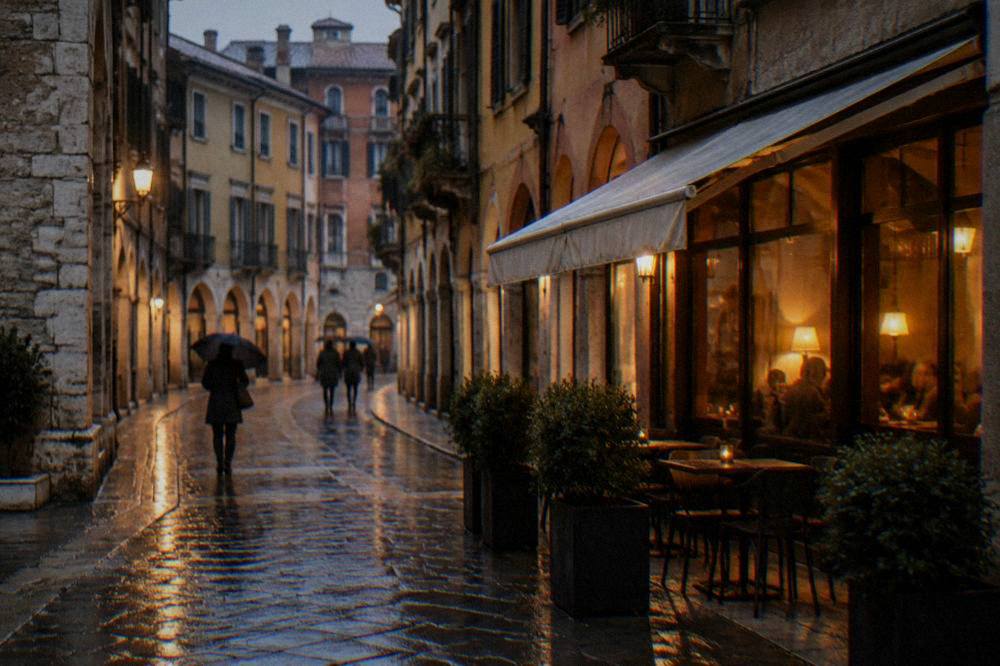
Winter visitors get a double return. The Christmas markets of past editions have run from late November into late December, per the general pattern in this site's sources, though no official 2026 dates had been announced at the time this page was planned, so confirm locally; the Verona in winter guide collects what is known. A bowl of the risotto after a cold walk along the Adige is the season in one plate.
For travellers building a whole trip around Veronese food, the wider planning pages on this site, starting with things to do in Verona, fold the kitchens and the cellars into itineraries from one day to three.
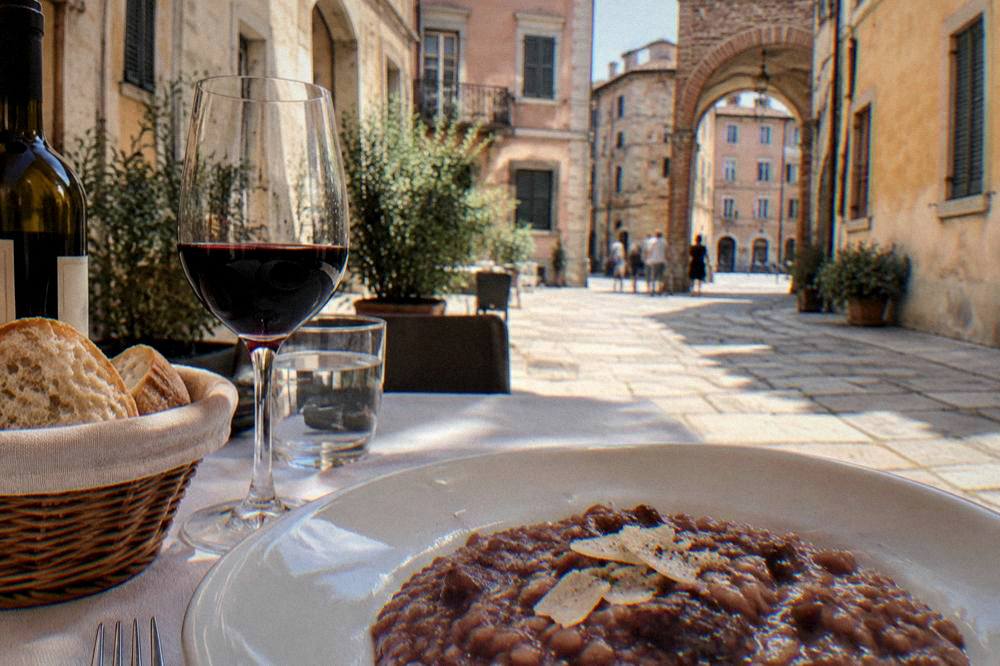
How Does Risotto All'Amarone Fit A Day In Verona?
The dish slots most naturally into the evening of a Verona day: a morning at the Arena or Piazza delle Erbe, a midday walk across the Ponte Pietra or up to Castel San Pietro, an afternoon tasting in the Valpolicella hills 25 minutes away, and the risotto as the primo of the dinner that follows, with the same Amarone by the glass that went into the pan.
Everything in that chain sits inside the historic centre or a short drive from it, so no part of the day needs a second hotel base.
The logic is wine first, rice second. Travellers who have tasted Amarone at a cellar in the afternoon recognise it in the evening's risotto immediately, which is why the food-and-walk and cellar-tour pairings above work as a single day's arc. Those arriving from further afield will find the practical routes in how to get to Verona and the Verona train station guide, and the dish is worth planning around: it is the one plate on a Veronese menu that tastes of the exact hills on the city's doorstep.
| Veronese Dish | What It Is | Reported Pairing Logic |
|---|---|---|
| Risotto all'Amarone | Vialone Nano rice cooked with Amarone | Wine and dish from the same hills |
| Pastissada de caval | Horse meat stewed long in wine | Served with gnocchi or polenta |
| Bollito con la pearà | Mixed boiled meats, pepper-bread sauce | Winter Sunday tradition |
| Gnocchi | Potato dumplings, Veronese style | Often sauced with pastissada |
| Pandoro | Butter-rich leavened sweet | The reported Verona dessert |
Common Questions About Risotto All'Amarone
What wine is in risotto all'Amarone?
Amarone della Valpolicella DOCG, the strong red made mainly from Corvina, Corvinone and Rondinella grapes dried for months before pressing, per the consorzio's description of the appassimento method. The wine is added twice: once to the toasted rice and once off the heat at the finish.
What rice is used for risotto all'Amarone?
Vialone Nano, the semi-fine rice of the Veneto plain, is the reported traditional grain. It absorbs the wine and stock steadily and keeps a firm core through roughly eighteen minutes of cooking; carnaroli is the usual substitute outside Italy.
Can I use a cheaper wine instead of Amarone?
A Valpolicella Ripasso, reported as Valpolicella refermented on the dried grapes' lees, is the standard kitchen compromise. A plain Valpolicella makes a lighter, paler dish. The rule of thumb is to cook with a wine you would drink, because the dish concentrates whatever the bottle holds.
When is risotto all'Amarone in season in Verona?
The dish is a cold-weather tradition, and the ERA5 reanalysis for Verona, 1991-2020, shows why, with January mean highs of 7.3 C and the wettest months from October to November. It nonetheless stays on traditional menus year round, including summer opera evenings.
Is risotto all'Amarone hard to make at home?
No. The method is a standard risotto: softened onion, toasted rice, wine, then hot stock a ladle at a time for about eighteen minutes, finished off the heat with the last of the Amarone, butter and a little aged Monte Veronese. The only real requirement is a decent bottle and the patience to add stock gradually.
Risotto all'Amarone remains the most direct edible link between Verona's tables and its wine hills: one plate, one bottle, twenty-five minutes of road between them, and a method any home cook can carry home from the city.