Vinitaly In Verona: Dates, Tickets And Hotel Prices
Vinitaly is the international wine exhibition held every April at the Veronafiere fairground in Verona, the UNESCO-listed city in Veneto, northern Italy. The 2027 edition runs 11 to 14 April. This guide covers the dates, how access to the fair works, what the week does to hotel availability, and how to fill the days in between with the Arena, Amarone cellars and the Valpolicella hills.
Short answer
Vinitaly 2027 runs 11 to 14 April 2027 at Veronafiere, on the eastern edge of central Verona, Veneto. It is a trade fair first and a public spectacle second, and the whole city feels it: hotel rooms tighten, restaurants fill, and the wine world takes over the town for four days.
Every April, the international wine trade packs its bags for Verona, the inland city on the Adige in Veneto, northern Italy, and for four days the town that gave the world Amarone becomes the centre of the global wine calendar. Vinitaly is the international wine exhibition held at the Veronafiere fairground, a vast complex a short way east of the historic centre, and its 2027 edition is set for 11 to 14 April. The fair itself is a professional event, but its effects spill into every piazza, osteria and hotel corridor in the city, which is why even travellers with no trade badge should know exactly when it runs. This guide lays out the dates, the access rules, the lodging realities and the wine geography, all reported from primary sources rather than folklore.
When Is Vinitaly Held In Verona?
Vinitaly runs 11 to 14 April 2027 at the Veronafiere exhibition centre in Verona, per the fair's own site. It is an annual spring event: the 2027 edition is the currently confirmed one, and it always occupies four days in April. Travellers should treat 11 to 14 April 2027 as the fixed window and confirm any further editions on the official Vinitaly channels before booking anything non-refundable.
The fair's own site carries the 2027 dates, which is the only place they should be checked. The exact days are reported rather than independently re-read, so a quick confirmation on vinitaly.com before locking in flights is the sensible move. April in Verona is no accident as a slot: the fair sits after the winter and before the summer opera crowd, in a month the trade can travel.
For context, the other fixed spring events in the city's calendar are thin. The Arena opera season does not start until June, so Vinitaly week is, in effect, the biggest thing happening in Verona in April. That has knock-on effects on beds, tables and traffic that the rest of this guide covers in turn.
| Event | Dates | Source |
|---|---|---|
| Vinitaly 2027 | 11 to 14 April 2027 | Per vinitaly.com; exact days reported, confirm before booking |
| Arena Opera Festival 2027 | 11 June to 11 September 2027 | Per arena.it |
| Tocati street-games festival | Ran 18 to 20 September 2026; 2027 not published | Annual, free, latest edition confirmed |
| Verona in Love | Ran 13 to 15 February 2026; 2027 not found | Annual February event |
| Christmas market, Piazza Bra | Ran 21 November to 28 December 2025; 2026 not announced | Annual, dates vary |
Can The General Public Get Into Vinitaly In Verona?
Vinitaly is a trade fair: entry is structured around professional accreditation for producers, buyers, sommeliers and press, and it is not a general public wine festival in the way the street marketing suggests. Public access arrangements vary year to year, with some sessions and connected events open beyond the trade, so the only reliable route is to check the access pages on the fair's own site for the 2027 edition before travelling. Do not assume a ticket bought at the gate will exist.
This is the single biggest misunderstanding about the week. The pavilions at Veronafiere hold tens of thousands of exhibitors and buyers across the Italian and international wine sectors, and the fair's core business is deal-making between them. The organisers have, in recent editions, run consumer-facing sessions alongside the trade days, but the format, the days and the pricing of any public session are published by the fair itself and change between editions.
What is safe to say is that the city around the fair is fully open and, for four days, unusually full of people who know a great deal about wine. Bars and restaurants near the centre host informal tastings, producer nights and after-parties that no badge controls. For a traveller whose real interest is drinking well rather than doing business, that surrounding programme, plus a day in the Valpolicella hills, often delivers more pleasure than the fairground itself.
For exactly that reason, the strongest wine experiences to book around Vinitaly week are the ones that take you out of the halls and into the vineyards the fair celebrates. A tasting in the hills the fair is named around is a different thing from a stand sample, and the hills are close: the Valpolicella zone starts about 25 minutes' drive from the Arena.
What Should You Know About Wines Of The Verona Region Before Vinitaly?
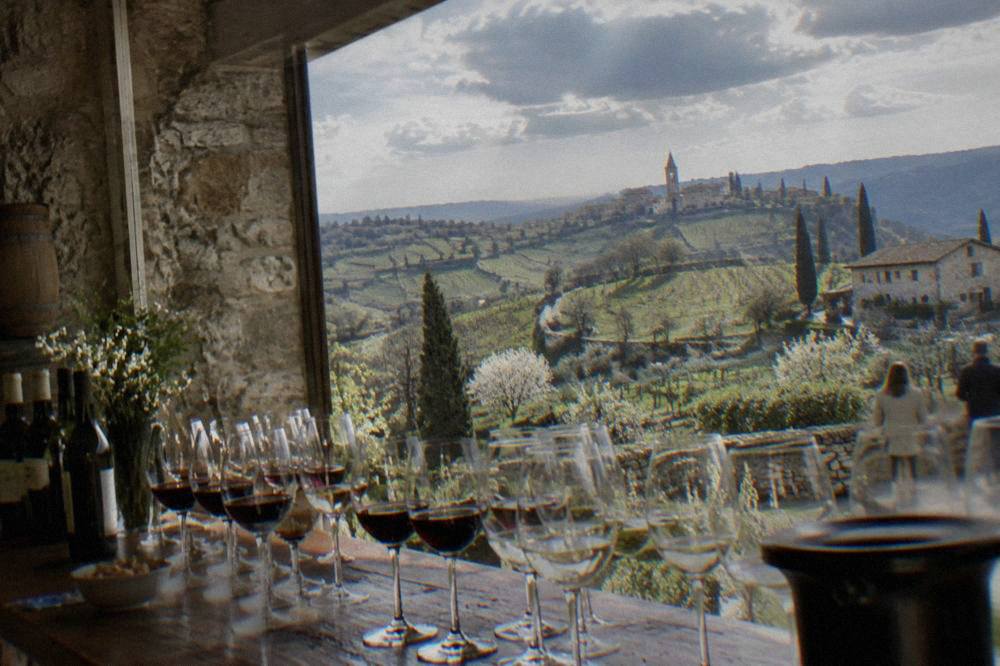
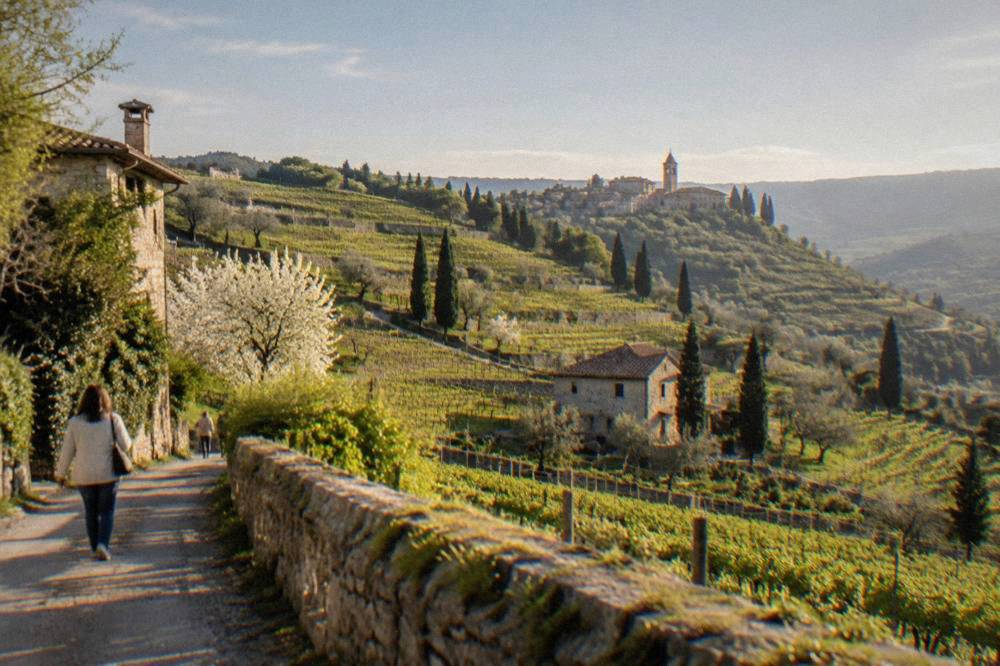
Verona sits between two famous DOCG zones: Valpolicella to the north-west, whose Amarone is made mainly from Corvina, Corvinone and Rondinella grapes dried before pressing in the appassimento method, and Soave, a separate white-wine DOCG east of the city built on Garganega. These are reported by the regional consortium sources and are the baseline vocabulary of every conversation at the fair. Knowing the two names and one method puts a visitor on the same page as the trade.
Amarone is the region's flagship, and the drying process is what makes it: grapes are laid out to partially dry after harvest, concentrating sugars and flavours before fermentation, which produces a powerful, dry red. Soave, to the east, is the other pillar, a white made principally from Garganega. Both zones are close enough to reach from the city in under an hour by road, which is why a Vinitaly trip and a cellar visit pair so naturally.
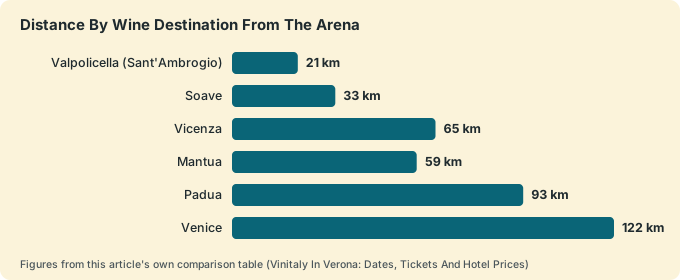
The drive times below are computed routing figures, not estimates from memory, and they hold for a visitor based anywhere in the historic centre.
| Wine destination from the Arena | Drive time by road | Distance |
|---|---|---|
| Valpolicella (Sant'Ambrogio) | about 25 minutes | 21 km |
| Soave | about 33 minutes | 33 km |
| Vicenza | about 48 minutes | 65 km |
| Mantua | about 54 minutes | 59 km |
| Padua | about 67 minutes | 93 km |
| Venice | about 85 minutes | 122 km |
The pairing of food and wine in Veronese tradition leans on a handful of dishes that appear on menus all over the old town during fair week: risotto all'Amarone, pastissada de caval, bollito with pearà sauce, and the city's gnocchi. Pandoro, the butter-rich Christmas yeast cake, is also a Verona original, though it belongs to December rather than April. The deep dive on the city's food, dish by dish, sits in the what to eat in Verona guide, and the red wine itself is covered in the Amarone wine guide.
If the goal for one free afternoon is a single, well-run introduction to Amarone straight from a producer in the hills, the half-day Pagus tasting tour is the one to look at first: it exists precisely for visitors who want the cellar-and-glass experience without organising a car, and its from-price and guest rating render live on the listing. Check availability
How Does Vinitaly Affect Hotel Prices In Verona?
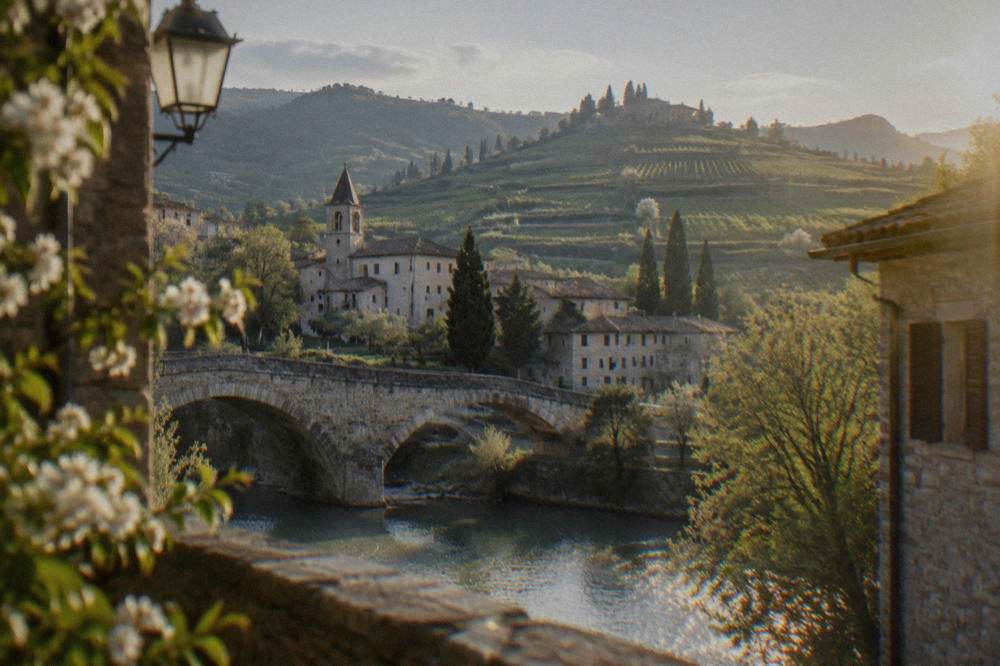
No nightly hotel rate for Vinitaly week appears in the sources this site uses, so no figure can responsibly be printed. What is certain is structural: the fair brings the global wine trade into a mid-sized city at once, demand for rooms in and around the historic centre surges for those four nights, and Verona applies its tourist tax, collected by the accommodation, capped at four nights per person per month. Book early and confirm the tax at booking.
The honest answer about prices is that the rate table for Verona's imposta di soggiorno sits in a municipal PDF that has not been read, and no per-night, per-star or seasonal hotel rate was found. Anyone quoting a number for a Vinitaly-week room is guessing. What a planner can rely on is the pattern: four trade days, a city of modest size, and tens of thousands of arrivals.
Practical consequences follow. Rooms in the Citta Antica, the old town inside the Adige loop, go first, because the fairground is reachable from there and the evening programme happens on its streets. The Porta Nuova station area and Borgo Trento give more options at typically saner availability, though again, no firm price level can be attached to any neighbourhood. The city's area-by-area breakdown, with positions relative to the Arena, is in the where to stay in Verona guide.
Three rules of thumb survive contact with the facts. Book refundable where possible until the fair's access arrangements are confirmed. Check the tourist tax line at booking, since the accommodation collects it and the cap is four nights per person per month. And if the city is full, the lake towns and Valpolicella villages to the west are realistic bases: Sirmione is about 40 minutes' drive from the Arena, Bardolino about 37.
How Do You Get To Verona For Vinitaly?
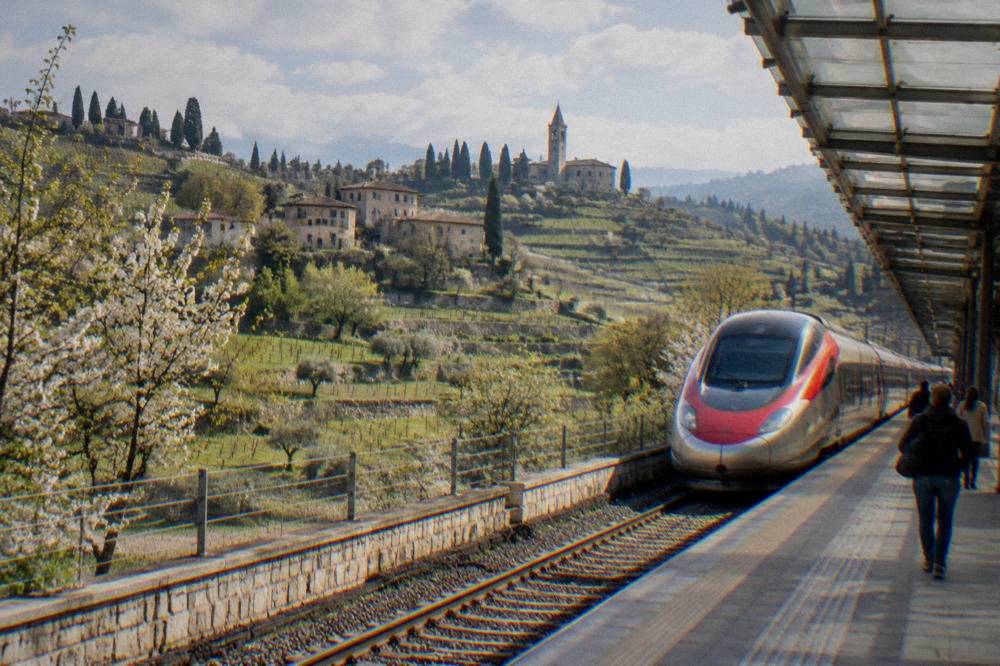
Verona is reached by air through Verona Villafranca airport, about 26 minutes by road from the Arena, or by train into Porta Nuova station, which sits on the high-speed lines from Venice, Milan and Rome. The reported Aerobus airport line runs about 15 minutes into the city at a reported 7 euro one way, and the urban ATV bus single costs 1.50 euro and lasts 90 minutes. Trains from Venice take 58 to 75 minutes, from Milan 1 hour 15 to 1 hour 50.
The airport connection, the Aerobus line 199, is a reported figure from the operator's own channels: about 15 minutes, a 7 euro flat fare, and frequent departures through the day, with confirm-before-you-go applying to the timetable. The 1.50 euro urban single, valid 90 minutes, appears on the ATV ticketing page. No other bus fare, taxi fare or train fare should be quoted, because none was confirmed.
Getting to Verona in the first place is covered in depth on the route pages: the Venice to Verona guide and the Milan to Verona guide handle the two most common arrivals, and the Verona train station guide covers Porta Nuova itself. The airport run has its own page in the airport to city centre guide.
One warning for drivers: the historic centre is a camera-policed limited-traffic zone, with non-resident access capped at four entries a month in booked windows, and hotel guests exempt only if the hotel registers their plate. During fair week the streets around the fairground also carry heavy traffic. The details, and the parking logic, are laid out in the getting around Verona guide, and the ZTL rules deserve a read before anyone rents a car.
| Arrival route | Method | Time | Fare |
|---|---|---|---|
| Verona Villafranca airport to city | Aerobus line 199, reported | about 15 minutes | reported 7 euro one way |
| Venice Mestre to Verona Porta Nuova | High-speed train, reported | 58 to 75 minutes | not printed, confirm at booking |
| Milano Centrale to Verona Porta Nuova | High-speed train, reported | 1 h 15 to 1 h 50 | not printed, confirm at booking |
| Rome to Verona | High-speed train, reported | 3 h to 3 h 30 | not printed, confirm at booking |
| Any urban bus ride in Verona | ATV single ticket | valid 90 minutes | 1.50 euro |
What Is The Weather Like In Verona In April?
April in Verona, per the ERA5 reanalysis for 1991 to 2020, averages a mean daily high of 17.8 C with overnight lows around 7.6 C and about 93.5 mm of rain across the month, a modelled grid-cell figure rather than a station record. In plain terms: mild, variable days, cool evenings, and a real chance of showers, so layers and a rain layer beat summer clothes. It is a spring month, not a warm one.
That number deserves its label. The ERA5 reanalysis is a modelled reconstruction for a grid cell near Verona at about 66 m elevation, and it is the only climate source this site prints. The pattern it shows is a steady climb out of winter: March highs average 14.0 C, April 17.8 C, May 22.3 C. Rain builds through the season too, from 67.4 mm in March to 109.7 mm in May, with November the heaviest month of the year at 118.2 mm.
For fair-goers the practical reading is straightforward. The walk from the centre to the fairground and the evening movements between osterie happen outdoors, and an April evening in Verona after sundown feels nothing like the afternoon. The month-by-month picture, including how April compares with the rest of the year, is in the best time to visit Verona guide and the Verona weather guide.
| Month | Mean high C | Mean low C | Rain mm | |---|---|---| | February | 9.5 | 0.4 | 58.8 | | March | 14.0 | 3.6 | 67.4 | | April | 17.8 | 7.6 | 93.5 | | May | 22.3 | 12.2 | 109.7 |
What Can You Do In Verona Between Vinitaly Sessions?
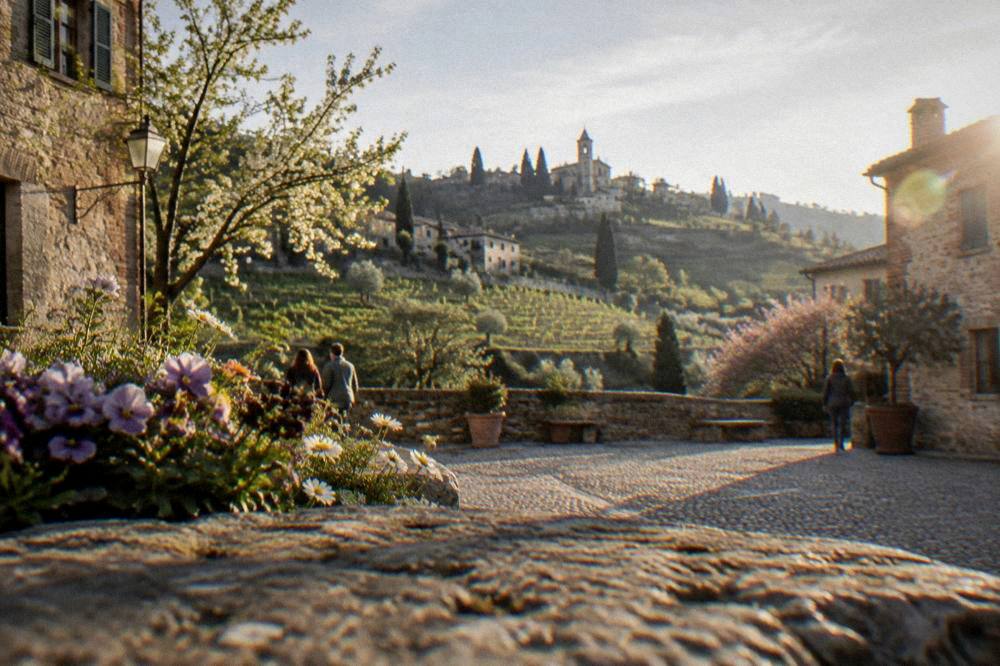
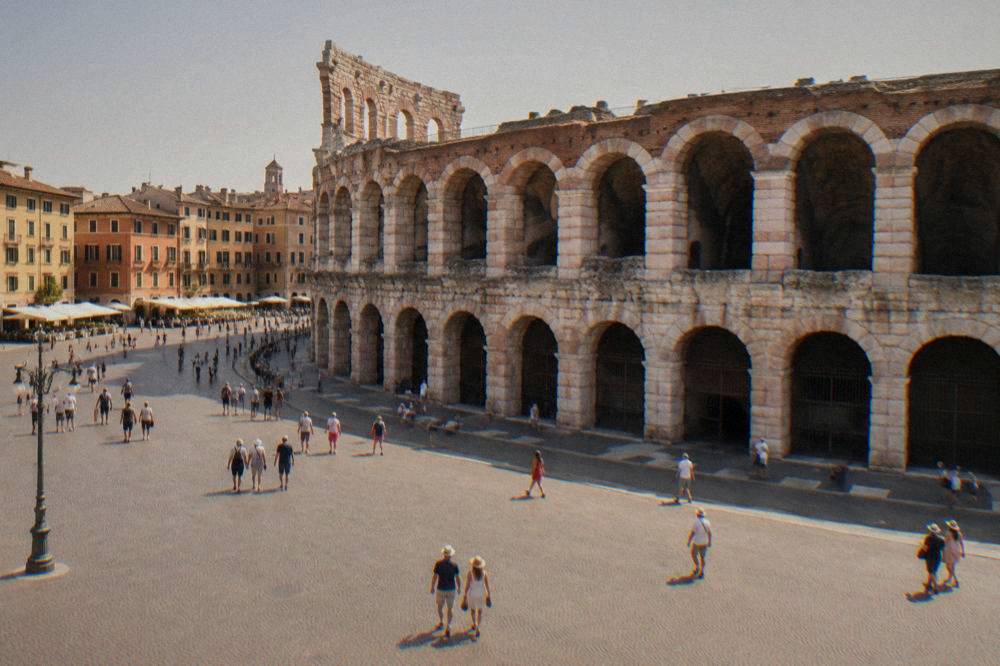
The historic centre of Verona packs a first-century Roman Arena, the ticketed Casa di Giulietta, Castelvecchio, the Torre dei Lamberti and the Piazza delle Erbe market square into a walkable loop of the Adige, all within a short distance of Piazza Bra. The Arena costs 12 euro full for a daytime visit, Juliet's courtyard route costs 5 euro or 12 euro with the house since 1 April 2026, and the digital VeronaCard runs 33 euro for 24 hours or 38 for 48 hours with ATV transport included.
Those three prices are the spine of sightseeing in the city, and they matter in fair week because daytime hours are the quiet hours. Two traps catch out returning visitors. Juliet's courtyard is no longer free: since 1 April 2026 it is ticketed at 5 euro for the courtyard route, 12 euro for the house and balcony, booked online with entry via the Teatro Nuovo. And the VeronaCard changed shape on 1 September 2026: it is now a digital card in a web app, at 33 euro for 24 hours or 38 euro for 48 hours with ATV transport, or 29 and 32 euro without. The old paper cards stay valid until 31 March 2027, reported by the Comune.
The Arena's own daytime visit costs 12 euro full, 9 euro reduced, with ages 18 to 25 paying 3 euro, and it is reported closed on Mondays with early closing on show days, so confirm the calendar. The sights themselves have their own pages: the Verona Opera Festival guide for the summer season, and the VeronaCard guide for what the digital card does and does not cover, including the reported fine print that it does not include the Aerobus.
Between tastings, the free sights carry the day: Ponte Pietra, Piazza dei Signori, Porta Borsari and the Adige embankments cost nothing. A fuller list sits in the free things to do in Verona guide, and if a spare half-day opens up, the trade-family option is Gardaland, covered in the Gardaland day-trip guide.
| Sight or pass | Price | Notes |
|---|---|---|
| Arena di Verona, daytime visit | 12 euro full, 9 euro reduced, 3 euro ages 18 to 25 | Reported closed Mondays; early close on show days, confirm first |
| Casa di Giulietta, courtyard route | 5 euro | Ticketed, online booking, entry via Teatro Nuovo |
| Casa di Giulietta, house and balcony | 12 euro | Same booking system as the courtyard route |
| VeronaCard 24 h, with ATV transport | 33 euro | Digital web app since 1 September 2026 |
| VeronaCard 48 h, with ATV transport | 38 euro | Old paper cards valid to 31 March 2027, reported |
| Urban bus single | 1.50 euro | Valid 90 minutes, verified on the ATV ticketing page |
When the evening comes and the trade crowd disperses into the city, Verona's food and nightlife hold their own. A guided dinner walk that strings together the old town's kitchens with wine and gelato is a good fit for a night when restaurant tables are scarce, and the operator's listing carries the live price and rating. Check availability
How Should You Plan A Vinitaly Trip Around The Wine Country?
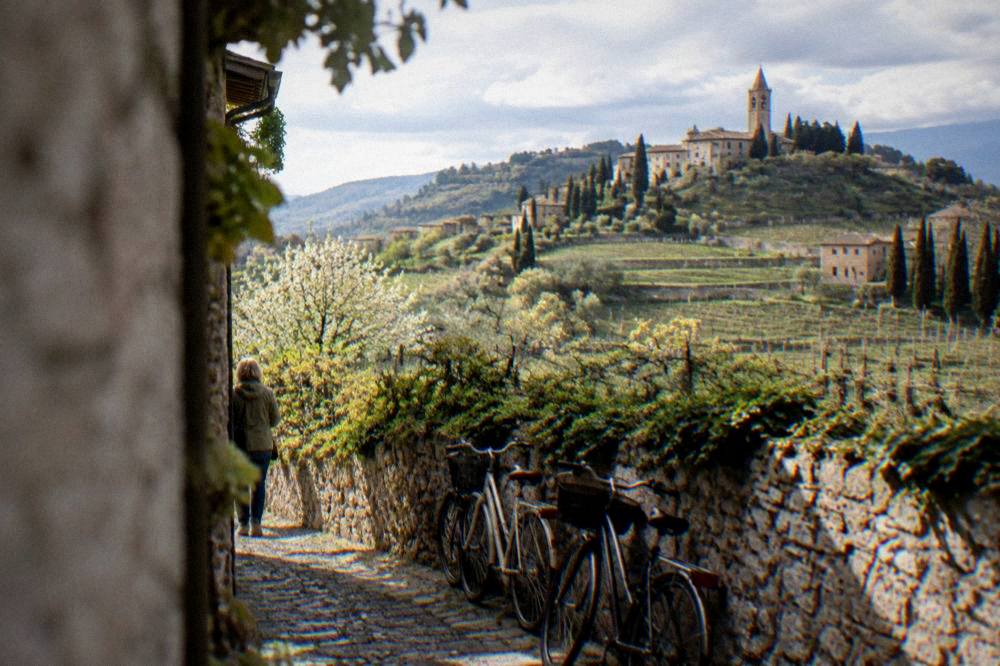
The smart Vinitaly itinerary splits the visit between the city and the hills: fair sessions and city sightseeing in the old town, with at least one day given to Valpolicella, about 25 minutes' drive from the Arena, or Soave, about 33 minutes east. Both are the DOCG zones the fair is built around, both are reachable without a car through organised tours, and a cellar visit is the version of Vinitaly that stays open to every traveller regardless of accreditation.
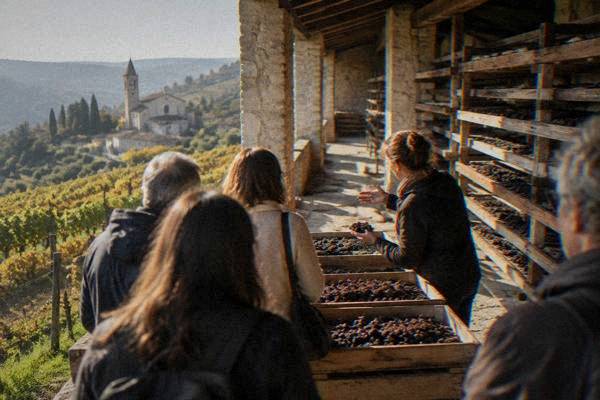
The distinction matters more than it sounds. Inside the fairground, access depends on the fair's own rules, which shift between editions. Out in the hills, the doors are simply open: a vineyard walk, an appassimento drying loft and a guided tasting of Amarone require no badge, and the drive-time figures above are computed from actual road routing. The full hill-country picture, zone by zone, is in the Valpolicella guide and the Soave guide.
For travellers who like independence, a self-guided e-bike loop through the Valpolicella vineyards with tastings built in covers the same ground at a cyclist's pace, and the listing carries its own from-price, rating and inclusions. Check availability
A second afternoon can go to the themed walks inside the city: the standard small-group highlights walk, the evening moonlight circuit, or the guided food route. The options are compared in the things to do in Verona round-up, which also carries the food-tour and bike-tour category pages. Fair week rewards booking anything guided well ahead, because the whole trade is in town and thinking the same thoughts.
How Much Does A Vinitaly Trip To Verona Cost?
The fixed, verifiable costs are modest: 1.50 euro per urban bus ride, a reported 7 euro airport bus, 12 euro for a daytime Arena visit, 5 or 12 euro for Juliet's House depending on route, and 33 or 38 euro for the digital VeronaCard with transport. Fair entry pricing and hotel rates are not verifiable here, and the tourist tax is collected by the accommodation at unpublished per-night rates capped at four nights per person per month.
The table below gathers only figures that the sources actually attach to these items. Anything absent from it is absent because no figure exists, and the correct move for a traveller is to check the operator's or venue's own page at booking time. For a longer view of the city's cost profile outside fair week, the how expensive is Verona question is covered separately on this site.
| Item | Figure | Where it comes from |
|---|---|---|
| Urban bus single, ATV | 1.50 euro, valid 90 minutes | ATV ticketing page |
| Airport bus, Aerobus line 199 | reported 7 euro, about 15 minutes | Reported, confirm before travel |
| Arena daytime visit | 12 euro full, 9 euro reduced, 3 euro 18 to 25 | Verified price list |
| Juliet's House | 5 euro courtyard, 12 euro house | Comune di Verona, ticketed since 1 April 2026 |
| VeronaCard digital | 33 euro 24 h, 38 euro 48 h with transport | Comune di Verona |
| Tourist tax | exists, four-night cap, no published rate here | Comune di Verona, confirm at booking |
The honest framing for the whole week: flights, hotel nights and fair access are the three unknowns, and all three move with the trade calendar. The verifiable floor, the sightseeing and the buses, is cheap. The cheapest good decision is early booking; the second cheapest is staying outside the centre and riding the 1.50 euro bus in.
For more on how the city's seasons shape the experience, the spring-specific picture is in the Verona in spring guide, and the December counterpoint, mulled wine and pandoro rather than Amarone, is in the Verona Christmas markets guide. The essential background on the city as a whole, from the Arena to the Romeo and Juliet legend, sits in the Romeo and Juliet in Verona guide and across the pages of this Verona Italy Travel Guide.
Common Questions About Vinitaly In Verona
When is Vinitaly 2027 in Verona?
Vinitaly 2027 runs 11 to 14 April 2027 at the Veronafiere fairground in Verona, per the fair's own site. The exact days are reported, so confirm on the official Vinitaly channels before booking non-refundable travel.
Can the public visit Vinitaly?
Vinitaly is a trade fair built around professional accreditation, and any public sessions, open days or consumer tickets are arranged edition by edition. Check the access pages on the fair's own site for 2027 before travelling; do not assume gate tickets exist.
Does Vinitaly affect hotel prices in Verona?
Yes, through demand: the fair fills the city for four nights in April. No nightly rate for fair week appears in the sources this site uses, so no figure is printed. Book early, prefer refundable rates, and confirm the tourist tax at booking; it is capped at four nights per person per month.
What wine region is Verona in?
Verona sits between the Valpolicella DOCG zone to the north-west, home of Amarone made from Corvina, Corvinone and Rondinella by the appassimento drying method, and the Soave DOCG zone to the east, built on the Garganega grape. Both are within about 25 to 33 minutes' drive of the Arena.
Is Verona worth visiting outside Vinitaly week?
Verona is a UNESCO World Heritage city, inscribed in 2000, with a first-century Roman Arena that can be visited by day for 12 euro full, the ticketed Casa di Giulietta, and the Valpolicella wine hills on the doorstep. The full argument is laid out in the site's guide to whether Verona is worth visiting, and the answer does not depend on the fair.
How do you get from Verona airport to Vinitaly?
Verona Villafranca airport lies about 26 minutes by road from the Arena, and the reported Aerobus line 199 runs to the city in about 15 minutes for a reported 7 euro. From the centre, the fairground is reachable by urban ATV bus at 1.50 euro a single. Confirm the Aerobus timetable before travel.