Florence To Verona: Train Times And Changes
Verona sits north of Florence on the main rail line through Bologna, and the route rewards a stop with a Roman Arena, a UNESCO-listed centre and the Valpolicella wine hills.
Short answer
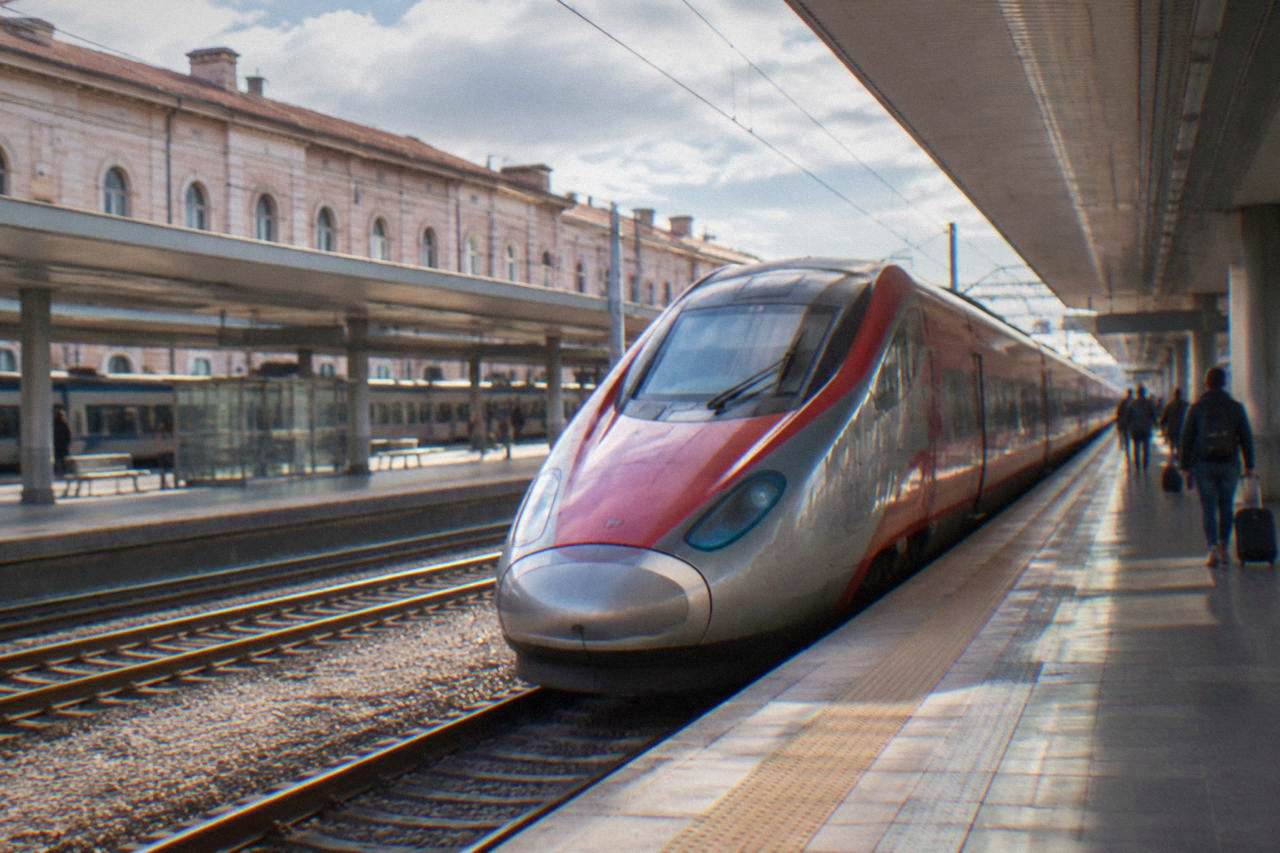
Trains from Florence reach Verona Porta Nuova with a change at Bologna in almost every case; exact durations and fares vary by service, so confirm on the operator's own site before booking, and allow a full day for Verona itself.
Verona is an inland city on the Adige river in Veneto, northern Italy, reached from Florence by rail through the Bologna hub, and it rewards the journey with a first-century Roman amphitheatre, a UNESCO World Heritage centre inscribed in 2000 and the Valpolicella wine hills on its doorstep. The Florence to Verona route is one of the classic north Italian rail connections, linking Tuscany's regional capital with Veneto's city of Romeo and Juliet. This page lays out what the sources say about the journey, what changes to expect, where the train arrives, and how to plan the hours after you step off.
How Do You Travel From Florence To Verona?
The practical answer is the train: Florence and Verona are connected by the national rail network via Bologna, with services arriving at Verona Porta Nuova station, which sits about 20 minutes on foot south of the Arena. Published schedules and fares change by date and by service type, so the operator's own booking site is the only place to confirm a specific departure, and no fare figure is reproduced here because none is confirmed for this exact route.
Florence's Santa Maria Novella station is the origin for the northbound journey. The routing runs up through the Apennines to Bologna, the hub for the whole corridor, and from Bologna the line continues north across the plain to Verona. Trains arriving at Porta Nuova are described in the site's wider guide to reaching Verona, which covers the same station from every direction.
Driving the route is possible but a different proposition. The pack's computed road distances cover the cities around Verona rather than the Florence corridor itself, so no driving time for Florence is quoted here. What the pack does confirm, as computed free-flow routing over OpenStreetMap, is the drive time from the Arena to Venice at about 85 minutes for 122 km, which gives a sense of the scale of the plain Verona sits on. For a fuller comparison of the two cities as destinations, the site's Florence or Verona comparison covers the question directly.
Flying is not a factor on this route in any practical sense. Verona's own airport, Verona Villafranca (VRN), lies about 26 minutes by road from the centre, and its airport transfer guide covers the Aerobus connection, but Florence to Verona is a rail journey in practice. If the return or onward trip involves Venice or Milan instead, the site's dedicated pages for Venice to Verona and Milan to Verona carry the reported timings for those legs.
Do You Need To Change Trains Between Florence And Verona?
Yes, in nearly every booking the change happens at Bologna Centrale, where the Florence service terminates and a northbound train to Verona continues the journey; a small number of through services have run at times, but the pack does not confirm any current direct train, so treat Bologna as the working assumption and check the operator's site for the date you want. Bologna Centrale is a single large hub where the change is a platform-to-platform transfer.
Bologna is the natural pivot of the whole corridor. The city lies about 109 km from Verona by straight line, a distance confirmed in the site's distance data, and it is also covered in its own Bologna to Verona guide. If a layover in Bologna stretches long, the station itself is well served, though no specific facility there is confirmed, so plan a simple platform change rather than an excursion.
No reliable journey time for the Florence leg is available, and inventing one would mislead. What is reported, with attribution, are the timings for the neighbouring legs: Venice Mestre to Verona runs 58 to 75 minutes and Milano Centrale to Verona 1 hour 15 to 1 hour 50, per reported schedule data, and Rome to Verona about 3 to 3 hours 30. Confirm every timing before you travel, since schedules shift with the season.
The question of how long the whole day needs also depends on what happens after arrival, and that is where a tour booking can anchor the plan. Wine travellers coming from Tuscany often want the Valpolicella contrast immediately, and the Amarone tasting tour with transport handles the hills without a hire car; Check availability for your date.
Where Do Trains From Florence Arrive In Verona?
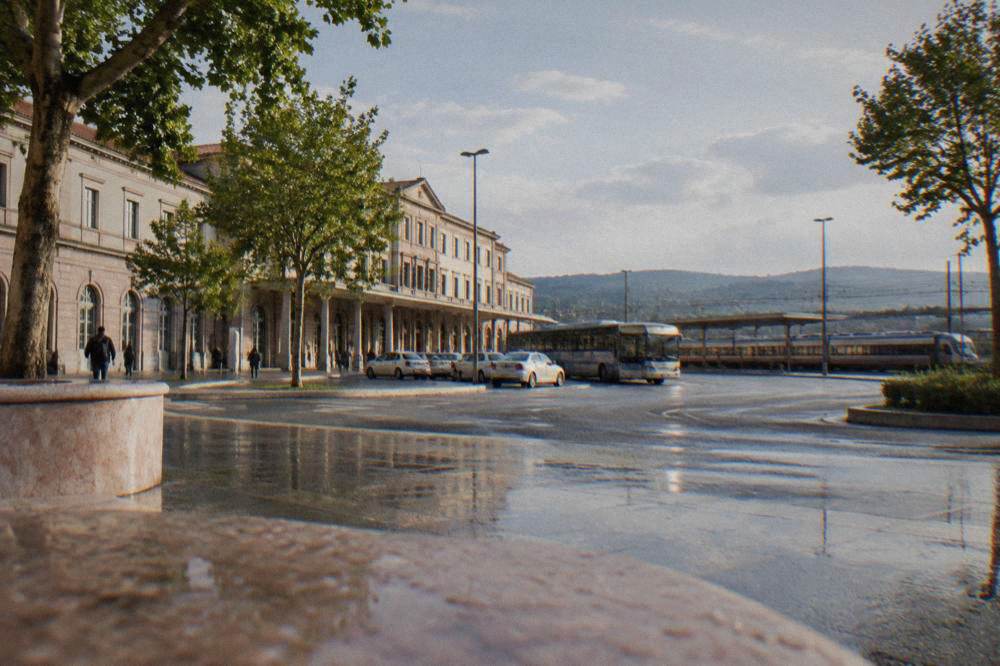
Every long-distance train from the south arrives at Verona Porta Nuova, the city's main station, which stands about 1.5 km south of Piazza Bra and the Arena, a walk of roughly 20 minutes through the station district, or a short hop on the urban bus network with a 1.50 euro single ticket valid for 90 minutes. The station is covered in detail in the site's Porta Nuova guide.
Porta Nuova is the front door to the city for rail arrivals from every direction, and the Verona train station guide covers its layout and connections. The urban bus single at 1.50 euro for 90 minutes is the fare for the ATV network, confirmed on the operator's own ticketing page. No luggage-storage operator, fee or position at the station is confirmed in the site's sources, so if you need storage, confirm arrangements locally before relying on it.
The walk north from the station runs straight up into the historic centre, which is a camera-policed limited-traffic zone (ZTL). Non-resident drivers are limited to at most four entries a month into the ZTL, booked in advance in set windows, and hotel guests drive in free only if the hotel registers the plate with the system. This matters if you pick up a hire car after arriving by train; the sensible pattern is to leave the car outside the centre.
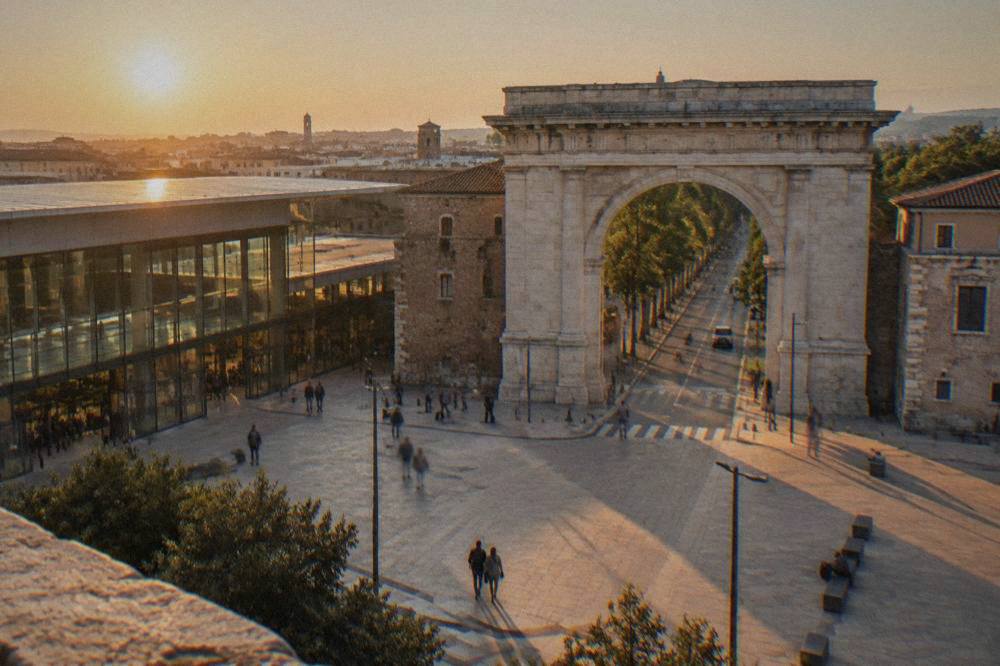
Getting from the station into town is straightforward, and a walk that ends at Piazza Bra sets up the whole first day.
| Option from Porta Nuova | What the sources say |
|---|---|
| On foot | About 20 minutes north to Piazza Bra and the Arena |
| Urban bus (ATV) | 1.50 euro single, valid 90 minutes, verified on the operator's ticketing page |
| Taxi | No verified fare from the station; agree or meter, confirm locally |
| Hire car | ZTL rules apply to the centre: max four entries a month for non-residents, booked in set windows |
Arriving from Florence by rail also opens the question of what to book for the first afternoon, and two options from the site's roster fit a same-day arrival well.
What Can You Do With A Day In Verona After Arriving?
A first day in Verona can cover the Arena's daytime visit at 12 euro full price, the Piazza Bra and Piazza delle Erbe squares, the Casa di Giulietta with its ticketed courtyard at 5 euro or 12 euro with the house, and still leave room for an evening walk to Castel San Pietro's viewpoint, because the historic centre is compact and walkable end to end. The Arena's daytime visit costs 12 euro full price, 9 euro reduced and 3 euro for visitors aged 18 to 25 from EU and reciprocity countries.
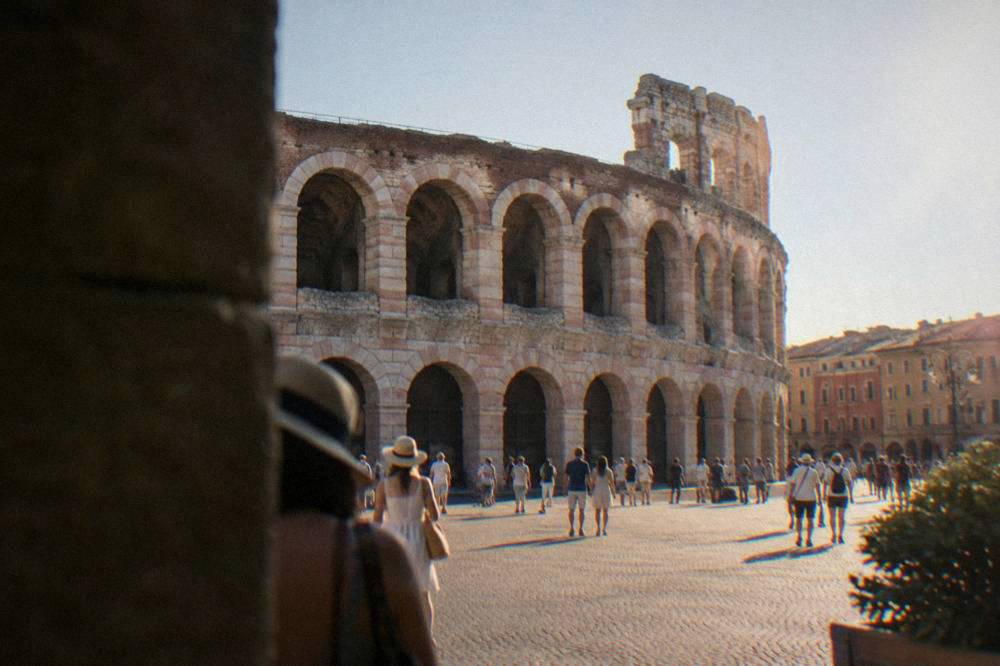
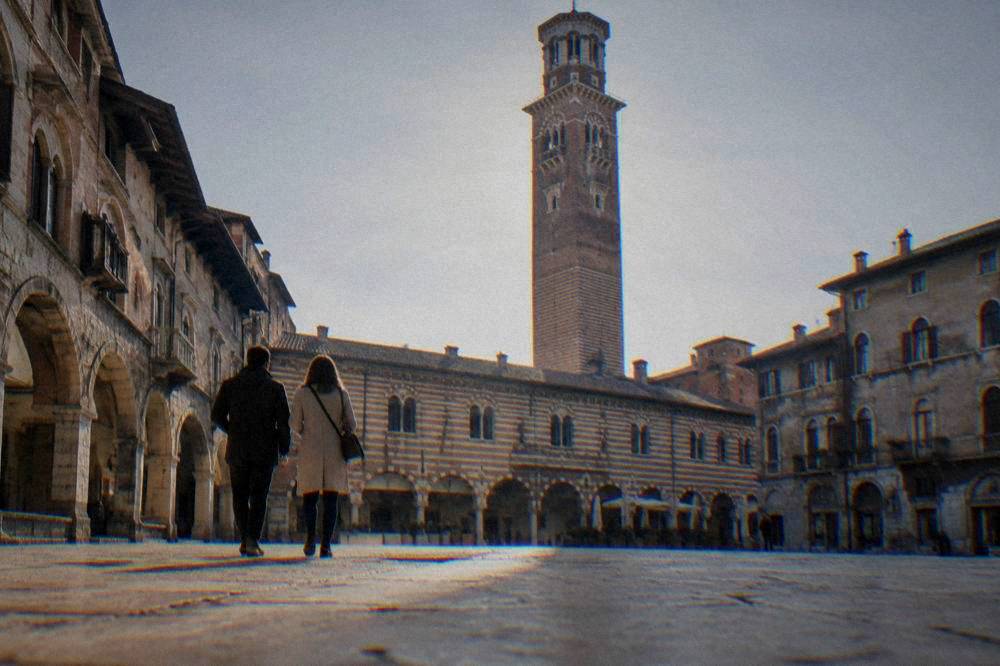
The full list of things to do in Verona on this site covers the centre in depth, but a rail-arrival day has a natural shape. Start at the Arena in Piazza Bra, whose own guide covers the amphitheatre's history and ticketing; per the Arena's own site, it was built around 30 AD and seats 30,000 for opera. Juliet's House, covered in its Casa di Giulietta guide, now requires online booking since the April 2026 change, and the balcony itself was added in 1940, so it is not original to any real Juliet.
Food shapes the afternoon as much as sights. The city's signature dishes are pastissada de caval, risotto all'Amarone and bollito with pearà sauce, covered in the site's guide to eating in Verona, and the pandoro tradition also belongs to Verona. No restaurant name is confirmed in the site's sources, so no establishment is recommended here; confirm current openings locally.
| Sight | Admission the sources confirm |
|---|---|
| Arena di Verona (daytime visit) | 12 euro full, 9 euro reduced, 3 euro ages 18 to 25; 1 euro first Sunday Nov to Mar |
| Casa di Giulietta | Courtyard route 5 euro, house and balcony route 12 euro, online booking, via Teatro Nuovo |
| Torre dei Lamberti | Reported at 6 euro full; free with VeronaCard; confirm before you go |
| Castelvecchio | Reported at 9 euro full, 6 euro reduced; closed Mondays; confirm before you go |
| Ponte Pietra, Piazza delle Erbe, Porta Borsari | Open access, free |
A walking tour compresses the orientation problem of a one-day visit, and the small-group Verona walking tour guide explains what a guided circuit adds. For travellers arriving from Florence with an evening free, a themed walk works well as a first-night activity.
How Far Is Verona From The Cities Around It?
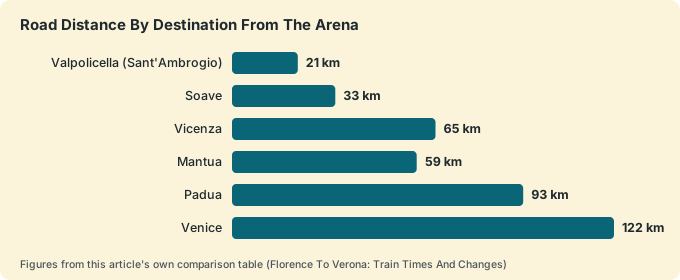
By computed road routing from the Arena, Verona lies about 25 minutes from the Valpolicella hills, 33 minutes from Soave, 48 minutes from Vicenza, 54 minutes from Mantua, 67 minutes from Padua and 85 minutes from Venice, and Venice is also reported at 1 hour to 1 hour 15 by train from Porta Nuova, which makes Verona a practical base for half the Veneto rather than a single-stop destination.
These figures are computed over OpenStreetMap routing at free-flow speeds, so they are indicative drives, not timetables. Lake Garda is not in Verona: the lake towns sit west of the city, with Sirmione about 40 minutes, Bardolino 37, Garda 42 and Malcesine 84 by the same method. The site's Verona and Lake Garda itinerary covers how to split time between the two.
| Destination from the Arena | Drive time (computed) | Road distance |
|---|---|---|
| Valpolicella (Sant'Ambrogio) | about 25 min | 21 km |
| Soave | about 33 min | 33 km |
| Vicenza | about 48 min | 65 km |
| Mantua | about 54 min | 59 km |
| Padua | about 67 min | 93 km |
| Venice | about 85 min | 122 km |
| Verona Villafranca airport | about 26 min | not stated |
Bologna lies about 109 km from Verona by straight line, and Brescia about 58 km. No Florence distance is stated because the pack does not attach one to that exact pairing.
Is A Verona Stop Worth Adding To A Florence Trip?
Verona is a UNESCO World Heritage city inscribed in 2000, with a Roman amphitheatre still in operatic use, a compact walkable centre and a wine region 25 minutes from the main square, and the site's own assessment is that a stop between Florence and the north is a genuine addition rather than a detour, especially for anyone whose Florence leg already covers Renaissance art and wants Roman antiquity, opera and Amarone as a contrast. The 2027 opera season runs 11 June to 11 September.
The case rests on contrast. Florence delivers the Renaissance; Verona delivers a first-century Arena that the Arena's own site says was built around 30 AD, plus the Romeo and Juliet legend, covered in the site's Romeo and Juliet in Verona guide. The opera festival, detailed in the Verona opera festival guide, ran 5 June to 12 September in 2026, and stone-step seats start in the 30-euro range, per the reported rates pages; exact sector prices sit on the Arena's own ticket site.
Timing matters for the answer. The best time to visit Verona is the shoulder seasons, and the Verona weather guide carries the ERA5 reanalysis normals, 1991-2020: July's mean daily high is 29.3 C, January's mean low is -0.4 C, and November carries the heaviest rainfall at 118.2 mm. Pack for the month, not the average Italian cliché.
| Month | Mean daily high | Mean daily low | Rainfall |
|---|---|---|---|
| January | 7.3 C | -0.4 C | 52.3 mm |
| April | 17.8 C | 7.6 C | 93.5 mm |
| July | 29.3 C | 19.1 C | 79.4 mm |
| October | 18.1 C | 10.5 C | 107.2 mm |
Figures are ERA5 reanalysis, 1991-2020, a modelled grid cell rather than a station record.
Wine is the other half of the case. The Valpolicella hills produce Amarone from dried Corvina, Corvinone and Rondinella grapes, a method no Tuscan red shares, and the site's Amarone guide explains the appassimento process. A half-day in the hills is the natural bookend to a Renaissance-city itinerary, and the trio of tours below covers city, Arena and cellar in one sweep.
What Should You Know About Verona Before You Arrive?
Verona uses the euro, is in the Schengen area and speaks Italian, its historic centre is a camera-enforced ZTL with at most four booked entries a month for non-resident drivers, and a tourist tax is collected by your accommodation for a maximum of four nights per person per month.
The digital VeronaCard is the year's biggest change for visitors. It now costs 33 euro (24 hours) or 38 euro (48 hours) with ATV urban buses included, or 29 and 32 euro without transport, per the Comune di Verona's own notice, and old paper cards stay valid until 31 March 2027. The card does not include the airport Aerobus, and the Comune's notice states Juliet's House still needs an online booking even for card holders. The site's VeronaCard guide works through the arithmetic.
| VeronaCard option | With ATV transport | Without transport |
|---|---|---|
| 24 hours | 33 euro | 29 euro |
| 48 hours | 38 euro | 32 euro |
Getting around once you arrive is mostly on foot, and the getting around Verona guide covers buses, bikes and the ZTL in one place. Where to sleep is covered in the where to stay in Verona guide, and no hotel name or rate is confirmed in the site's sources, so none is printed.
Can You Continue From Verona To Lake Garda Or Venice?
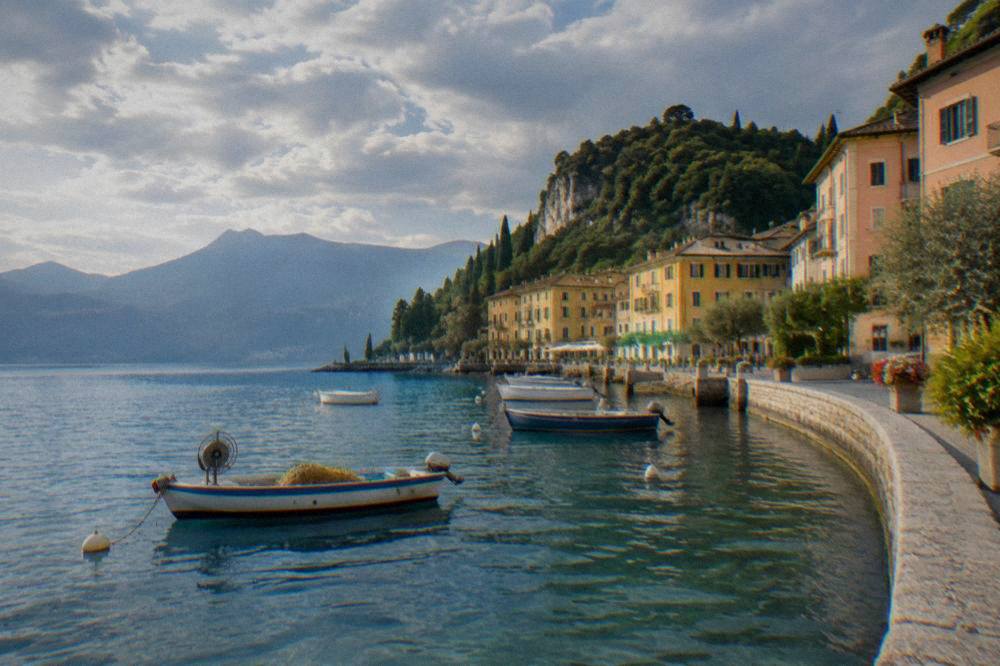
Yes, and both are easy extensions: Lake Garda's towns lie 22 to 39 km west of the city with Sirmione about 40 minutes and Malcesine 84 minutes by road from the Arena, Venice is reported at 1 hour to 1 hour 15 by train from Porta Nuova, and the Monte Baldo cable car at Malcesine costs 30 euro round trip for an adult, or 28 euro booked online, per the operator's own fares page. Verona is inland on the Adige, so every lake trip is exactly that, a trip.
The lake deserves its own day. Sirmione, on its narrow peninsula in Brescia province, Lombardy, is reachable from Verona by the ATV 164 bus, reported at about 55 minutes direct, and the Grotte di Catullo Roman villa there is reported at 10 euro full admission. The Navigazione Laghi ferry network runs a full summer service to 4 October 2026, with the north-south passenger service suspended from 2 November 2026 to 12 March 2027; the full-lake day pass is 39.50 euro for an adult at 2026 fares.
Venice, by contrast, is a train ride. Reported timings put it at 1 hour to 1 hour 15 from Porta Nuova, and the site's Venice day-trip guide covers the arrival side. No Venice access-fee dates or prices are confirmed in the site's sources, so confirm those before planning a day there. Milan runs 1 hour 15 to 1 hour 50 by train, reported, and the Milan guide covers that direction.
A themed evening walk closes a Verona day differently, and the city's darker history suits the after-opera hours.
Common Questions About Travel From Florence To Verona
Do trains from Florence to Verona require a change?
In almost every case the change is at Bologna Centrale, where the northbound service continues toward Verona. No current direct service is confirmed in the site's sources, so check the operator's booking site for your date before planning the connection.
Where does the train from Florence arrive in Verona?
At Verona Porta Nuova, the city's main station, about 20 minutes on foot south of Piazza Bra, or one urban bus ride at 1.50 euro for a 90-minute ticket.
How long is the train from Florence to Verona?
No journey time for this exact route is confirmed in the site's sources, so none is stated. Reported timings for neighbouring legs include Venice Mestre to Verona at 58 to 75 minutes and Milan to Verona at 1 hour 15 to 1 hour 50; confirm the Florence leg on the operator's own site.
Is Verona worth stopping in between Florence and Venice?
Yes: Verona is a UNESCO World Heritage city with a Roman Arena that can be visited by day for 12 euro full price, a ticketed Juliet's House, and the Valpolicella wine hills about 25 minutes away by road.
Can you visit Lake Garda from Verona?
Yes, as a day trip. Verona is inland on the Adige river, and the lake towns lie west: Sirmione about 40 minutes, Bardolino 37, Garda 42 and Malcesine 84 minutes by computed road routing from the Arena.
Does the VeronaCard include the airport bus?
No. The Comune di Verona's notice on the card, digital since 1 September 2026, states the Aerobus is not included. The card covers civic museums and the churches under the Chiese Vive convention, plus ATV urban buses on the transport-inclusive versions.
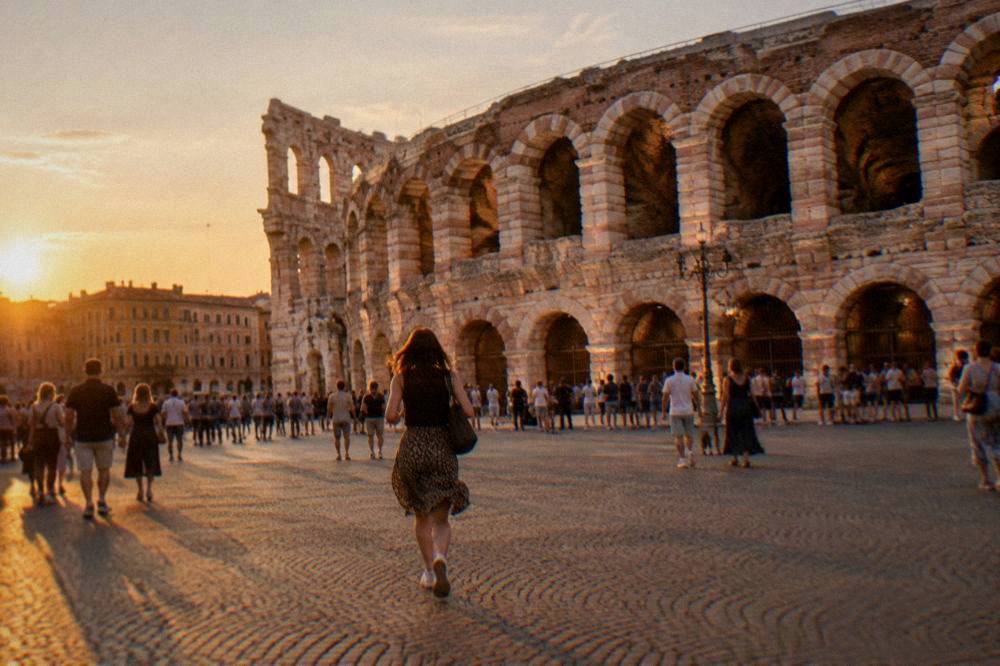
The short version of the whole route: book the rail leg on the operator's site for a true time and fare, expect a change at Bologna, land at Porta Nuova, and give Verona at least a full day plus an evening, with a Valpolicella glass booked for the afternoon the schedule allows. More planning help sits on the Verona Italy Travel Guide homepage, from the station district to the opera season's stone steps.