Free Walking Tour Verona: Tip-Based Walks Compared
Verona, an inland city on the Adige in Veneto, has a genuine pay-what-you-want walking tour, and this guide compares it with the paid walks it competes against.
Short answer
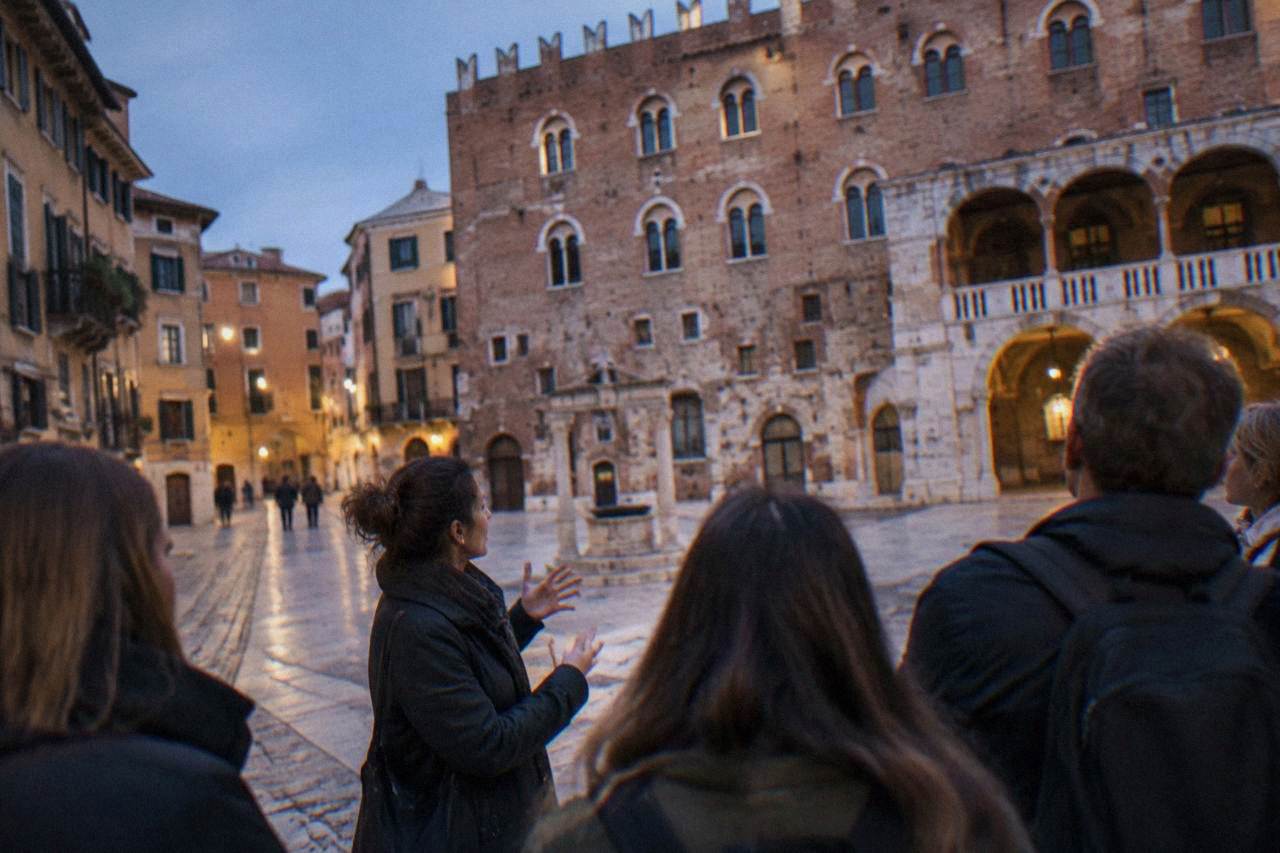
A free walking tour in Verona is a tip-based walk: the GuruWalk listing 'Free Walking Tour Verona, the real one!' costs nothing to join and you pay what you want at the end, covering Piazza Bra, the Arena, Juliet's House quarter and Piazza delle Erbe with a local guide.
Verona, in the Veneto region of northern Italy, is a compact Roman-era city wrapped in a loop of the Adige river, and its entire historic centre, a UNESCO World Heritage Site since 2000, sits within comfortable walking distance of Piazza Bra. That geography is exactly why a free walking tour works so well here: the Arena, Piazza delle Erbe, Juliet's House quarter and the Scaliger tombs line up along a route a guide can cover on foot without a bus, a tram or a timetable. This page explains how the pay-what-you-want model works in Verona, what the walk actually covers, how tipping is handled, and where a paid tour earns its price instead.
What Is A Free Walking Tour In Verona?
A free walking tour in Verona is a guided walk with no fixed ticket price: you reserve a place, join the group at the stated meeting arrangements, and at the end you pay the guide what you think the walk was worth. Verona's option in this format is the pay-what-you-want walk listed on GuruWalk, a platform built specifically for tip-based tours, and it is genuinely free to join rather than a discounted or partially paid product.
The model is straightforward. The operator publishes a walk with a set route and meeting arrangements, and the listing carries its own rating, review count and duration, which the booking block on this page renders. Nothing is charged at reservation. At the end of the walk, each participant hands the guide a tip in cash or by app, in an amount they choose.
This is not the same as a free sight. Verona has several genuinely free public spaces, which this page covers in full further down, but its two headline attractions are ticketed. The Arena di Verona charges 12 euro for a full daytime ticket, and Juliet's courtyard has required a 5 euro ticket, or 12 euro with the house, since 1 April 2026. A free walking tour passes these places and explains them, but does not include entry, and that distinction is the single thing to understand before booking.
Why does the format exist at all? Because it aligns the guide's incentive with the walker's satisfaction, and because it lets a traveller on any budget get an orientation and a local narrative on day one. The trade-off, covered below, is that group sizes can run larger than on a paid small-group walk, and the depth on any single monument is shallower than a specialist tour offers.
For a broader roundup of what the city offers beyond walking tours, see the site's things to do in Verona overview, and for attractions that cost nothing at all, the free things to do in Verona guide lists them in detail.
Which Free Walking Tour In Verona Can You Book?
Verona has one free, pay-what-you-want walking tour available to English-speaking visitors: Free Walking Tour Verona, the real one!, listed on GuruWalk, the tip-based tour platform. It is free to join, you pay what you want at the end, and its rating, review count and duration are printed by the booking block below from the listing data rather than quoted here in prose.
The listing describes a walk through the heart of the city with a local guide. Under the site's rules for this product, no price is ever printed for it, no meeting point is invented here, and it is never described as a paid tour, because it is not one: it is a tip-based walk, and the platform name, GuruWalk, is the one booking brand this site is permitted to name precisely because the walk is free.
The trio above is not three versions of the same thing. It pairs the free GuruWalk with the two paid products that walkers on a budget most often add around it: a priority-access guided tour of the Arena, which folds a monument ticket problem into a guided visit, and a pasta-and-tiramisu cooking class, which turns an evening in Verona into a meal you cook yourself. Reading the three side by side is the fastest way to see where the free walk stops and paid depth begins.
If you would rather compare a wider field of paid guided walks, the site's Verona walking tour round-up covers the small-group and themed options, including evening and history-focused walks.
What Will You See On A Verona Free Walking Tour?
A Verona free walking tour route runs through the historic centre's headline squares and monuments: Piazza Bra with the Arena's exterior, Via Mazzini, Piazza delle Erbe, Piazza dei Signori with the Scaliger tombs, the Casa di Giulietta quarter from the outside, and typically the Adige riverfront toward Ponte Pietra, all of which are within a short walk of one another inside the river loop.
The exact order and inclusions belong to the listing, and the booking block prints the confirmed specifics. What the route geography looks like, and what each stop costs if you want to enter, is a fair thing to lay out in a table, because the free walk itself enters nothing:
| Stop on a typical Verona walk | What you see from outside | Entry cost if you go inside |
|---|---|---|
| Piazza Bra | Verona's largest piazza, ringed by listed buildings | Free, open public space |
| Arena di Verona | The first-century Roman amphitheatre's exterior arcades | 12 euro full daytime ticket, 9 euro reduced |
| Via Mazzini | The paved main shopping street | Free |
| Piazza delle Erbe | Market square on the Roman forum site | Free, open public space |
| Piazza dei Signori and Arche Scaligere | Renaissance square and the Scaliger tombs | Free; check locally for tomb access |
| Casa di Giulietta quarter | The medieval lane and courtyard entrance | 5 euro courtyard, 12 euro with house (since 1 April 2026) |
| Ponte Pietra | Roman-founded river bridge | Free, open to pedestrians |
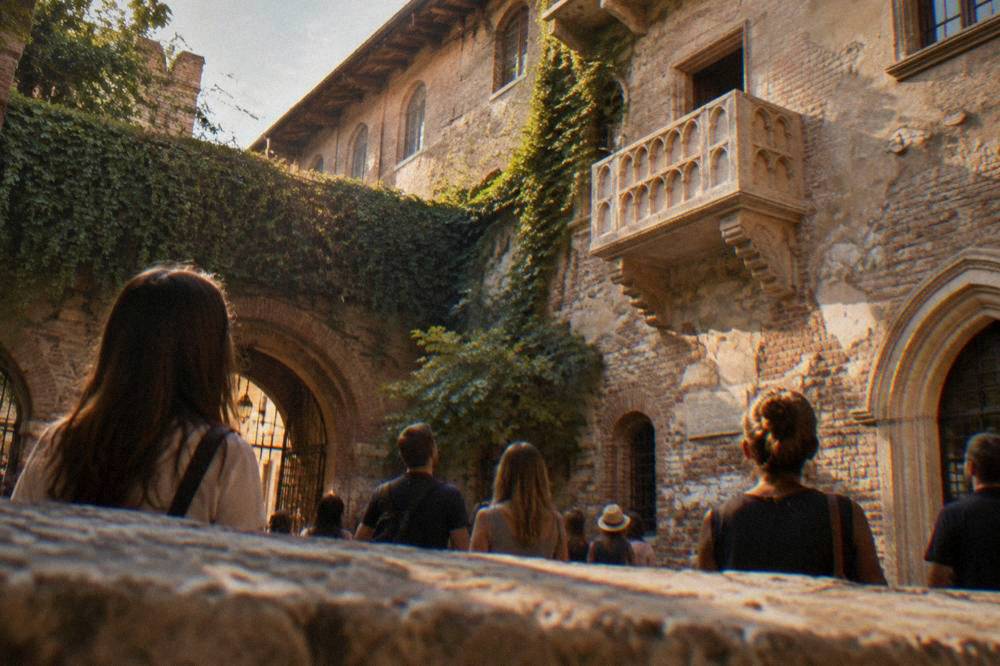
Two notes on that table. The Arena's about-30-AD origin, its roughly 30,000-seat opera capacity and its age relative to the Colosseum are figures reported by the Arena's own site, so treat them as reported and confirm before repeating them as settled. Juliet's prices, by contrast, are stated on the City of Verona's own visitor pages: the courtyard route is 5 euro, the house-and-balcony route is 12 euro, booking is online only, and entry is via the Teatro Nuovo in Piazzetta Navona. The balcony itself is not original; it was added in 1940, per the city's tourism pages.
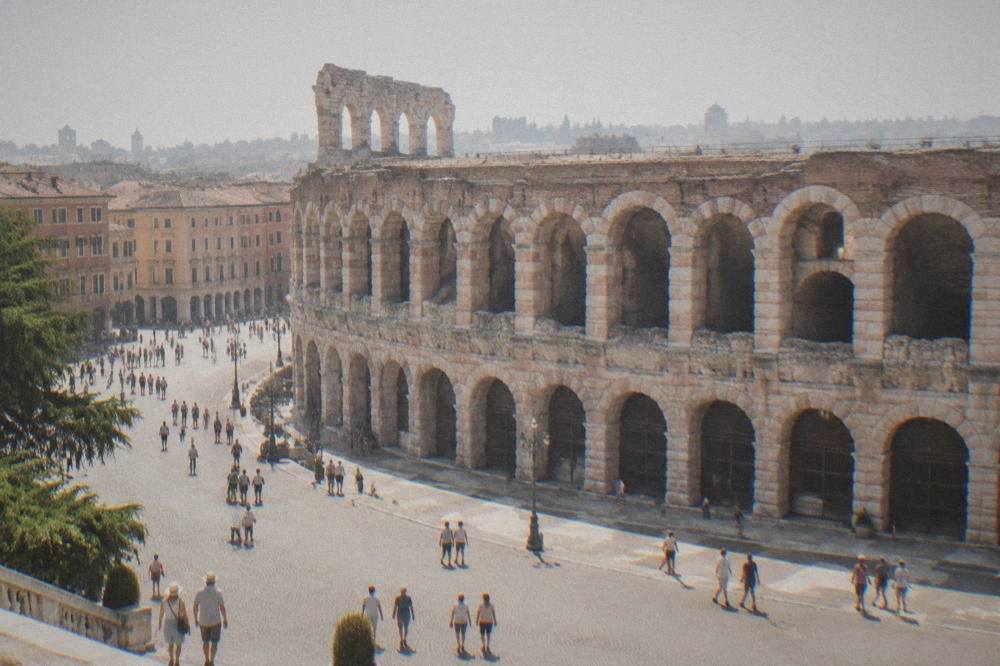
The depth question is where free and paid diverge. A tip-based walk gives each stop minutes, not an hour: the guide tells you what the Arena is, when it was built and how the opera festival uses it, then moves on. A dedicated Arena tour takes you inside the amphitheatre with a guide, which is a different product entirely. Deeper pages on the individual stops live at Arena di Verona, Casa di Giulietta, Piazza delle Erbe and Ponte Pietra.
For walkers who want the interior visit without queuing, the Arena priority-access tour is the direct upgrade:
The guided version suits anyone whose main interest is the amphitheatre itself, Roman Verona generally, or a visit that needs to fit around a tight schedule. The free walk remains the right first move for a traveller who wants the whole city explained in one sweep.
Is A Free Walking Tour In Verona Really Free?
Yes, in the sense that no payment is required to join: the GuruWalk listing for Verona's free walk reserves at zero cost and the guide is paid by tips alone, so the walk is free in the way a busker's performance is free. What is not free are the monuments the walk passes: the Arena's daytime ticket is 12 euro full, and Juliet's courtyard has cost 5 euro, or 12 euro with the house, since the city ticketed it on 1 April 2026.
That second half of the sentence is where travellers get caught. The walk itself costs nothing beyond the tip you choose to give. The sights it shows you from outside charge admission, and two of Verona's biggest names changed their access rules in 2026 in ways older guidebooks do not reflect.
Juliet's courtyard was free to enter for years. It is not any more: since 1 April 2026 the courtyard route is ticketed at 5 euro, the full house-and-balcony route is 12 euro, booking is online, and everyone enters through the Teatro Nuovo. The site's dedicated answer page, is Juliet's courtyard free, covers the change in detail.
The VeronaCard changed too. Since 1 September 2026 the card is digital, delivered through the city's web app, at 33 euro for 24 hours or 38 euro for 48 hours with ATV urban buses included, or 29 and 32 euro without transport, per the Comune di Verona's own notice. The card covers civic museums and, through the Chiese Vive convention, several churches; it does not include the airport Aerobus, and Juliet's House still needs an online booking even for card holders. The city's notice is the source for all of this, and confirming current details on it before you buy is the sensible move.
| Verona sight or pass | Free or paid in 2026 | The figure that matters |
|---|---|---|
| GuruWalk free walking tour | Free, pay what you want | Tip is your choice, never a set price |
| Arena daytime visit | Paid | 12 euro full, 9 euro reduced, 3 euro for ages 18 to 25 from EU and reciprocity countries |
| Juliet's courtyard route | Paid since 1 April 2026 | 5 euro, online booking, entry via Teatro Nuovo |
| Juliet's house and balcony route | Paid | 12 euro, online booking |
| VeronaCard 24h with transport | Paid | 33 euro, digital since 1 September 2026 |
| VeronaCard 48h with transport | Paid | 38 euro, digital since 1 September 2026 |
| Piazza Bra, Piazza delle Erbe, Piazza dei Signori, Ponte Pietra, Porta Borsari | Free | Open public space, no ticket |
What Should You Tip On A Tip-Based Verona Walk?
No tip amount is set or published for Verona's free walk, and this site will not invent one: the tour is listed on GuruWalk as free with pay-what-you-want tipping, the amount is entirely each walker's decision, and any specific figure quoted anywhere should be treated as that writer's opinion rather than a rule. What can be said is structural: tip in cash where possible, tip the guide directly, and decide the amount on the walk's length and quality rather than on pressure.
Why the refusal to name a number? Because a tip is a voluntary payment in a voluntary system, and printing a figure would turn a free tour into a priced one by implication. The listing's own rating and review data, which the booking block renders, tell you what other walkers thought of the product; they do not tell you what those walkers paid, and no source available to this page does either. More of these guides are collected on Verona Italy Travel Guide.
A few practical notes make the tipping smoother. Bring cash: guides on tip-based walks move quickly at the end, and card readers are not a given. Tip each person in your own party individually rather than one payment for a group of strangers. And if a walk genuinely disappointed, a small tip with a word to the guide is more honest than a generous one and a scathing review.
Reserving matters even on a free product. Guides plan group size around bookings, a place held and unused can displace someone else on a busy summer evening, and the meeting arrangements are only sent to booked walkers. The button above reserves through the operator's live listing at no cost.
When Is The Best Time Of Year For A Verona Walking Tour?
The ERA5 reanalysis for Verona, 1991-2020, shows the mildest walking weather in April to June and September to October, with mean highs of 17.8 to 26.6 degrees in spring and 23.7 to 18.1 in early autumn, while July and August average highs of 29.3 and 29.1 degrees and November is the wettest month at 118.2 mm of rain, so shoulder-season months give a tip-based walk the best conditions.
The full picture, from the same modelled normals:
| Month | Mean high C | Mean low C | Rain mm | Walking-tour read |
|---|---|---|---|---|
| January | 7.3 | -0.4 | 52.3 | Cold but dry; wrap up |
| March | 14.0 | 3.6 | 67.4 | Comfortable by afternoon |
| April | 17.8 | 7.6 | 93.5 | Mild, showers possible |
| May | 22.3 | 12.2 | 109.7 | Warm, one of the wetter months |
| June | 26.6 | 16.5 | 92.3 | Warm; opera season begins |
| July | 29.3 | 19.1 | 79.4 | Hot; pick morning starts |
| August | 29.1 | 19.4 | 84.1 | Hot; opera season peaks |
| September | 23.7 | 15.1 | 99.7 | Warm and pleasant |
| October | 18.1 | 10.5 | 107.2 | Mild, rain increasing |
| November | 12.3 | 5.3 | 118.2 | Wettest month; check forecast |
| December | 7.8 | 0.8 | 71.1 | Cold; Christmas-market season |
These are modelled climate normals, not a weather-station record, so treat them as planning ranges rather than forecasts. Two seasonal factors sit outside the climate table. The Arena opera season, which shapes the city's evening rhythm, ran 5 June to 12 September in 2026 and is announced for 11 June to 11 September in 2027, so midsummer means both heat and a city tuned to opera nights. And the Tocati street-games festival, free, ran 18 to 20 September 2026, filling the Veronetta quarter with traditional games; its 2027 dates had not been announced.
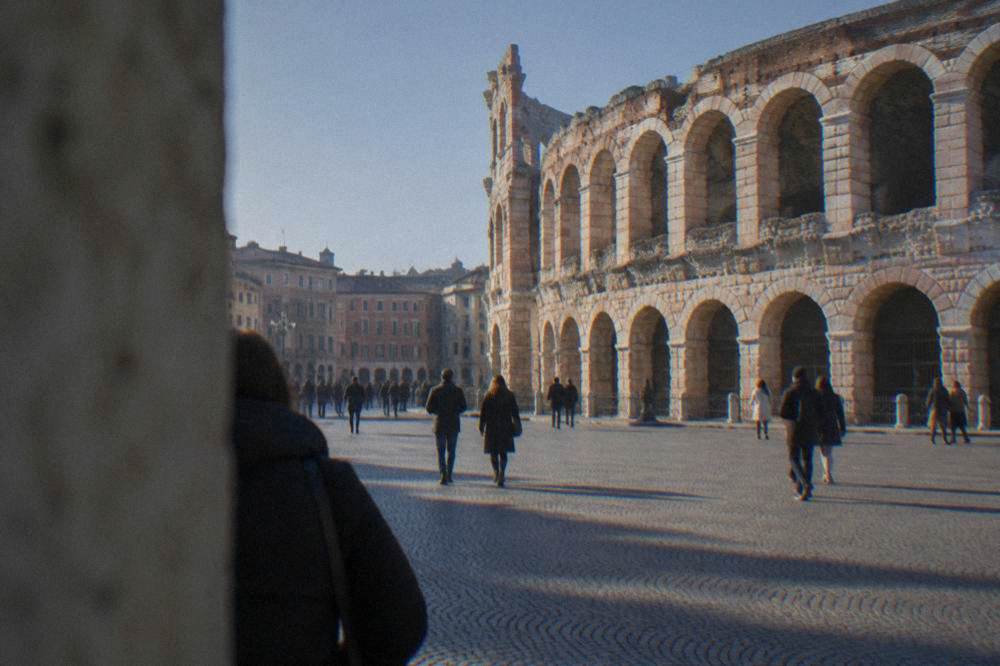
Winter deserves a word in its own favour. A cold, dry January day at 7.3 degrees mean high is perfectly walkable weather for a city whose route is short, and the season brings the Christmas markets, which in past years have run from late November into late December, though the city had not published 2026 dates. Confirm locally before planning around them.
Free Walk Versus Paid Tour In Verona: Which Suits You?
Choose the free GuruWalk if you want a first-day orientation of Verona at no fixed cost with a local guide and are happy to tip what it was worth; choose a paid tour if you need a small group, a set specialist theme, or a monument interior folded into the visit, because those are the three things a tip-based city walk does not deliver. Budget alone should not decide it: a walker who tips fairly often spends close to a paid walk's from-price anyway.
The honest comparison, category by category:
| Factor | Free GuruWalk | Paid small-group walk | Paid themed tour |
|---|---|---|---|
| Upfront cost | Zero, tip at the end | From-price on the listing | From-price on the listing |
| Group size | Larger, tip-based format | Small group by design | Varies by product |
| Coverage | City overview, outside views | City overview, smaller group | One theme or monument in depth |
| Monument entry | Not included | Varies; check the listing | Often the point of the tour |
| Best for | First day, any budget | Families, photography, pace control | Arena, food, wine, dark history fans |
The Arena example makes the difference concrete. The free walk tells you about the amphitheatre from Piazza Bra; the priority-access guided tour takes you inside it with a guide and the entry handled. Neither is better in the abstract: a traveller with one evening and a modest budget rationally picks the first, a Roman-history enthusiast rationally picks the second. The site's round-ups of Verona walking tours and Verona food tours sort the paid field by kind.
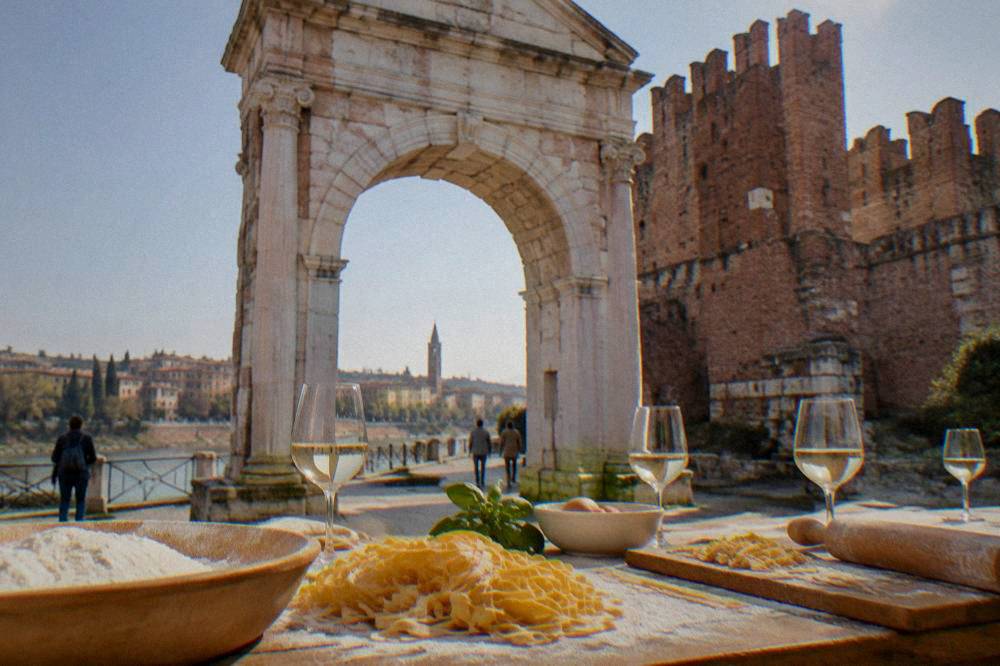
Then there is the evening. Verona's food culture, pastissada de caval, risotto all'Amarone, bollito with pearà, is a reason in itself to spend a night in the city, and a cooking class turns it participatory:
A pasta-and-tiramisu class is the natural companion to a free orientation walk: the walk maps the city by day, the class feeds you in it by evening, and between them a one- or two-day visit fills out completely.
What Free Sights In Verona Pair Well With The Walk?
Verona's free public sights are its squares, bridges and gates: Piazza Bra, Piazza delle Erbe, Piazza dei Signori, Ponte Pietra and Porta Borsari all have no ticket and no admission, and each sits on or beside a typical walking-tour route, so a visitor can string a full free day together by walking between them and adding the riverbank path along the Adige.
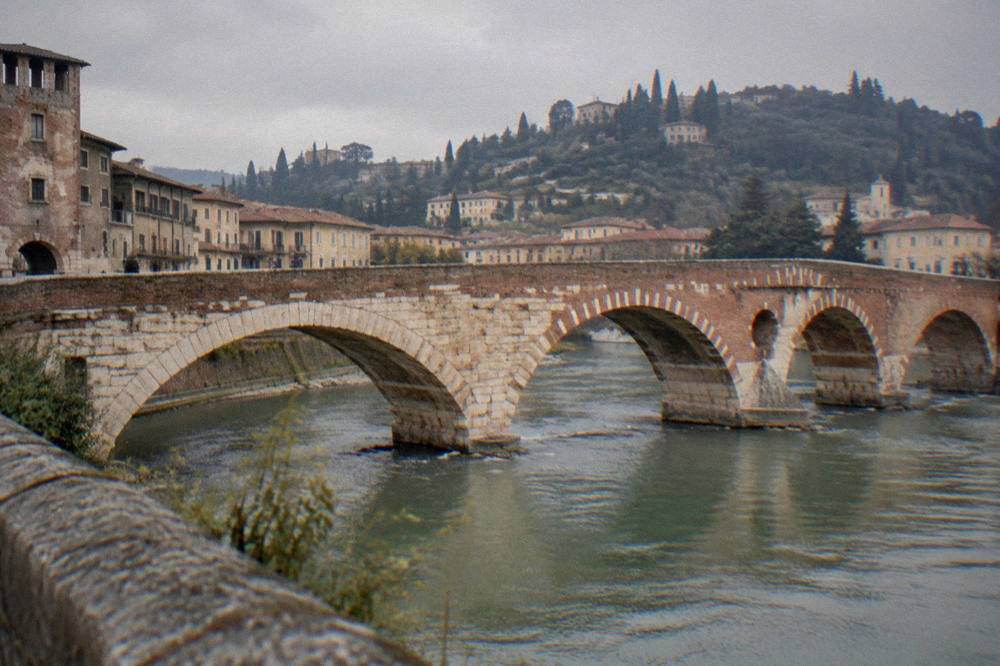
The route practically draws itself. Start at Piazza Bra and the Arena's exterior, cut up Via Mazzini to Piazza delle Erbe, pass under the Arche Scaligere at Piazza dei Signori, and follow the lanes toward the Adige and Ponte Pietra, whose Roman foundations face the Teatro Romano hillside across the river. Porta Borsari, the Roman gate on the old decumanus, anchors the western end. The whole chain sits inside the river loop, and every city-tier landmark lies within a short walk of the centre.
What costs money inside that radius, so nothing surprises you:
| Sight within the walking zone | Source | Notes |
|---|---|---|
| Piazza Bra | Free | Open piazza, the usual walk starting area |
| Piazza delle Erbe | Free | Market square, the Roman forum site |
| Piazza dei Signori | Free | Open square beside the tombs |
| Ponte Pietra | Free | Pedestrian river bridge |
| Porta Borsari | Free | Roman gate, open access |
| Arena interior | 12 euro full, 9 reduced | Closed Mondays per the reported schedule |
| Juliet's courtyard | 5 euro | Online booking since 1 April 2026 |
| Juliet's house and balcony | 12 euro | Same booking system |
| Torre dei Lamberti | Reported at 6 euro | Confirm on the tower's own site |
| Castelvecchio | Reported at 9 euro | Closed Mondays; confirm before you go |
The reported figures for Torre dei Lamberti and Castelvecchio carry their attribution: they come from live-search readings of the civic museum pages and should be confirmed before you go, as should the Arena's reported Tuesday-to-Sunday daytime hours, which shorten on opera evenings. Deeper pages on each sight, including Torre dei Lamberti, Castelvecchio and Basilica di San Zeno, carry the details.
Verona is also a safe-feeling city to walk, but the general advisory picture, pickpocket risk around the Arena, Piazza Bra, Piazza delle Erbe, Via Mazzini and Juliet's House, applies to any crowded tourist route, and the Verona safety guide covers the specifics without inventing statistics.
Can A Free Walk Fit Into A Day Trip Or A Longer Stay?
A free walking tour fits a day trip easily, because Verona's core is small and the walk maps it in one pass, but the surrounding region is where free ends: Lake Garda's towns sit 22 to 39 km west and need transport, with Sirmione about 40 minutes and Bardolino about 37 by car from the Arena, and the Valpolicella wine hills about 25 minutes, so plan the walk for the city and budget separately for the lake or the vineyards.
Verona is an inland city on the Adige; the lake is a day trip, not a neighbourhood. That matters for itinerary planning, because a traveller who expects to walk from the Arena to a lakeside promenade will be disappointed by geometry rather than by any tour. The computed drive times from the Arena, over free-flow routing, put the region in perspective:
| Day trip from Verona | Drive time from the Arena | What it is |
|---|---|---|
| Valpolicella (Sant'Ambrogio) | about 25 minutes | Amarone wine hills |
| Bardolino | about 37 minutes | Lake Garda wine town |
| Sirmione | about 40 minutes | Peninsula town on Lake Garda |
| Garda | about 42 minutes | Lake Garda town |
| Soave | about 33 minutes | Walled castle wine town |
| Vicenza | about 48 minutes | Palladio's city |
| Mantua | about 54 minutes | Renaissance lakeside city |
| Padua | about 67 minutes | Frescoed city, Scrovegni Chapel |
| Malcesine | about 84 minutes | Lake Garda's north shore, cable car |
| Venice | about 85 minutes | The lagoon city, also 58 to 75 minutes by train |
Sirmione deserves one geographic flag: it lies in Brescia province, in Lombardy, not in the Verona province, reached from Verona by the ATV line 164 bus in a reported 55 minutes direct. The Monte Baldo cable car above Malcesine, at 30 euro round trip for an adult or 28 bought online, is the region's big-ticket viewpoint and pairs with a Malcesine day rather than a city day. For lakeside planning the Riva del Garda page covers the north shore.
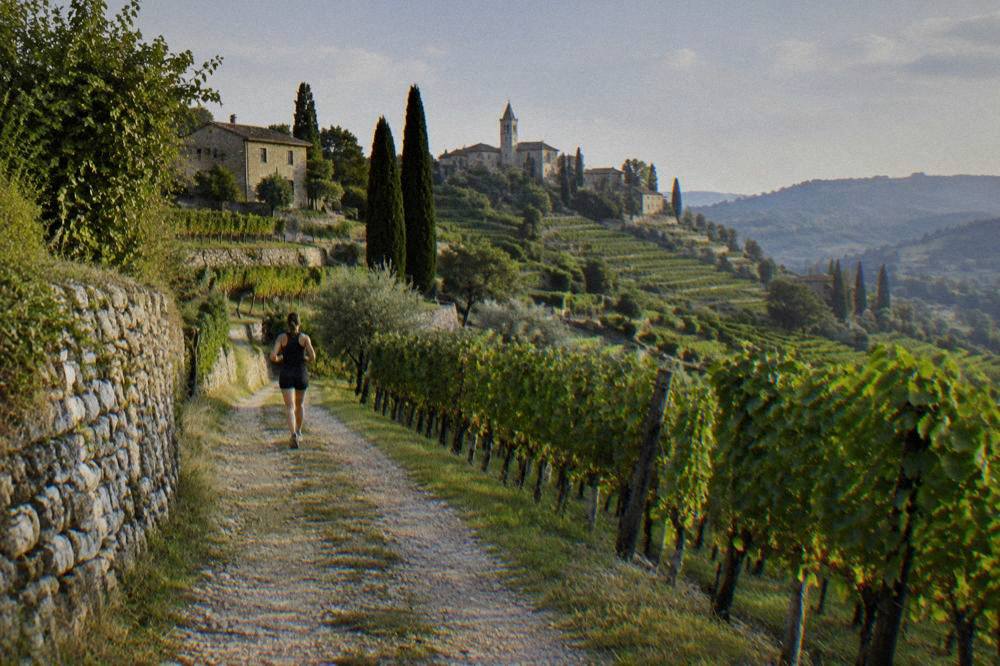
For a longer stay, the free walk earns its place on day one and the paid products slot in after it: an Arena tour for the amphitheatre, a food or cooking experience for the evenings, a Valpolicella half-day for the wine hills, covered in the site's Valpolicella wine tour round-up. Visitors arriving from the lagoon city can start with the Venice to Verona guide, and anyone planning to ride the city's buses before or after a walk should read getting around Verona, which explains the 1.50 euro single and everything the sources verify about the ZTL driving restrictions.
How Do You Book And Prepare For The Free Walk In Verona?
Reserve the GuruWalk free tour through the operator's live listing at zero cost, read the meeting arrangements the listing sends you, wear shoes that handle cobbles, bring cash for the tip, and add an Arena or Juliet's ticket only if you plan to enter, because the walk itself includes no admissions and no transport.
The practical checklist is short. Reserve rather than turning up, so the guide can size the group. Check the listing's own stated meeting details rather than any second-hand description, including on this page. Time the walk against your other bookings: a daytime walk and an evening opera or concert ticket combine well, while a walk that ends near the Arena in the late afternoon runs into show-day crowds. And confirm anything time-sensitive, opening hours especially, on the official pages, since reported hours shift with the opera calendar.
The second tour-picks band below restates the trio one final time, because the comparison it frames, free orientation walk, Arena interior tour, cooking class, is the honest shape of a Verona visit built around this page's topic:
One related product rounds the picture out for walkers who enjoy the guided format but want it paid, themed and small:
Whichever combination fits, the underlying advice holds: reserve the free walk for the map, pay for the depth you actually want, and confirm every ticket price and opening hour on the official page before you go, because 2026 rewrote several of them.
Common Questions About Free Walking Tours In Verona
Is a free walking tour in Verona actually free?
Yes, in the reservation sense: the GuruWalk listing costs nothing to join and you pay what you want at the end. Monument entry is separate, and the Arena at 12 euro and Juliet's courtyard at 5 euro are not included.
How much should you tip on a free walking tour in Verona?
No amount is published or required, and this page will not invent one. Tip what the walk was worth to you, in cash, directly to the guide, decided on length and quality.
Does the free walking tour include the Verona Arena?
The walk covers the Arena from outside as part of the Piazza Bra route; entry is a separate 12 euro daytime ticket, or a paid guided Arena tour can fold the visit in with priority access.
Can you join a free walking tour in Verona without booking?
The reliable route is to reserve through the operator's live listing: guides plan group size around bookings and send meeting arrangements only to booked walkers, so an unbooked arrival risks a full group.
When is the best time of year for a walking tour in Verona?
Per the ERA5 reanalysis for Verona 1991-2020, April to June and September to October offer mean highs between roughly 18 and 27 degrees; July and August average 29-plus and November is the wettest month at 118.2 mm.
What is free to see in Verona without any tour?
Piazza Bra, Piazza delle Erbe, Piazza dei Signori, Ponte Pietra and Porta Borsari are open public spaces with no ticket, and all sit within walking distance of one another inside the river loop.