Verona Photography Spots: Where To Stand For The Best Shots
Verona, the inland Roman city on the Adige in Veneto, photographs well from a handful of precise standing points, and this guide lists them with the tickets, prices and light each one needs.
Short answer
The five standing points that define a Verona photo set are Ponte Pietra for the river and hills, the Piazza Bra edge for the Arena facade, the courtyard of Casa di Giulietta for the balcony, the top of the Torre dei Lamberti for the rooftop panorama, and the Castel San Pietro hillside across the Adige for the classic postcard of the whole city. Two of the five need a ticket, and one of those, Juliet's courtyard, has been paid-entry and online-booked since 1 April 2026.
Verona, in Veneto in northern Italy, is an inland city on the Adige river built of rose-pink marble and brick around a first-century Roman amphitheatre, and its photographs divide cleanly into a short list of standing points. This guide, from the Verona Italy Travel Guide editorial desk, works through each one with the ticket it needs, the figure the official sources print, and the practical traps that changed in 2026. The city is not on Lake Garda; the lake towns of Sirmione, Bardolino, Garda and Malcesine sit 22 to 39 km west and are covered here as day-trip photo destinations, not as part of Verona itself.
Where Are The Best Photo Spots In Verona?
The five standing points that carry a Verona photo set are Ponte Pietra for the Roman bridge and the hillside, the Piazza Bra edge for the Arena facade, the courtyard of Casa di Giulietta for the balcony, the top of the Torre dei Lamberti for the rooftop panorama, and the Castel San Pietro hill on the Veronetta side for the wide view across the whole city. Two of the five need a ticket, and one of those, Juliet's courtyard, has been paid entry with online booking since 1 April 2026.
Each of these five works because of geometry rather than luck. Ponte Pietra puts Roman arches in the foreground and the wooded hill behind; the Torre dei Lamberti looks straight down the roofline of the medieval centre; Castel San Pietro faces the city from across the Adige bend, which is the angle the postcards use. The spacing matters too: the first four sit within a fifteen-minute walk of each other, while Castel San Pietro needs the crossing of the river, which is why the Verona map guide is worth a look before planning a route between them.
What follows is the working summary. Costs below are the figures the official sources print; where a figure is reported rather than stated on a page this desk fetched directly, the text says so.
| Photo spot | What it gives you | Access |
|---|---|---|
| Ponte Pietra | Roman arches over the Adige, hill behind | Open access, free |
| Piazza Bra edge | Arena facade with the piazza in front | Open access; Arena interior 12 EUR full |
| Casa di Giulietta courtyard | The balcony and bronze statue | 5 EUR courtyard route, 12 EUR with the house, online booking |
| Torre dei Lamberti | Rooftop panorama over the centre | Reported at 6 EUR full, free with VeronaCard |
| Castel San Pietro hill | Wide city view across the Adige | Hilltop viewpoint, no ticket figure printed |
Two more things shape the whole exercise. The historic centre is a camera-policed ZTL with at most four entries a month for non-resident cars, so a photography route on foot is not a style choice but the practical one, and the getting around Verona guide covers the 1.50 EUR urban bus single that stitches the outer points together. And the light changes hard across the year, which the section on weather and light below breaks down from the ERA5 reanalysis, 1991-2020.
Why Is Ponte Pietra The Defining Verona Photograph?
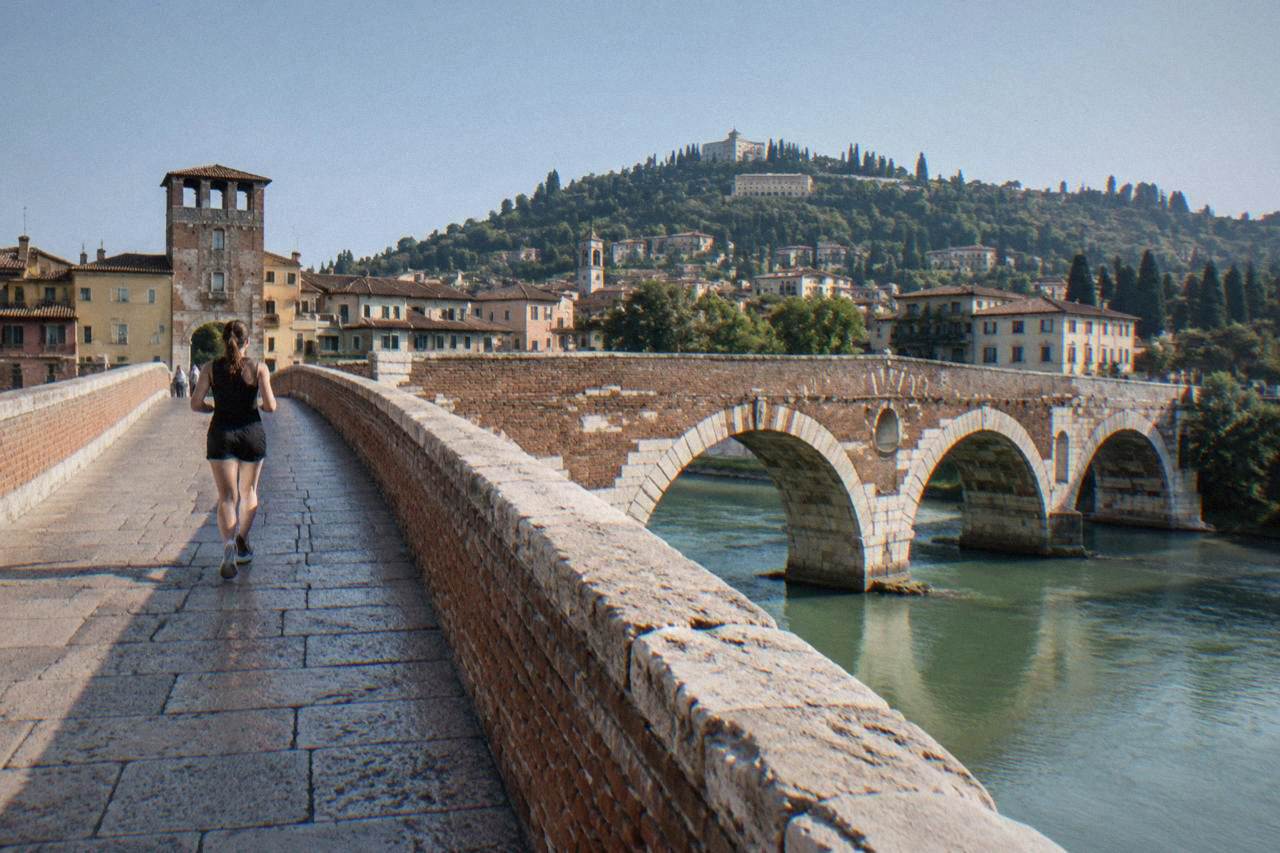
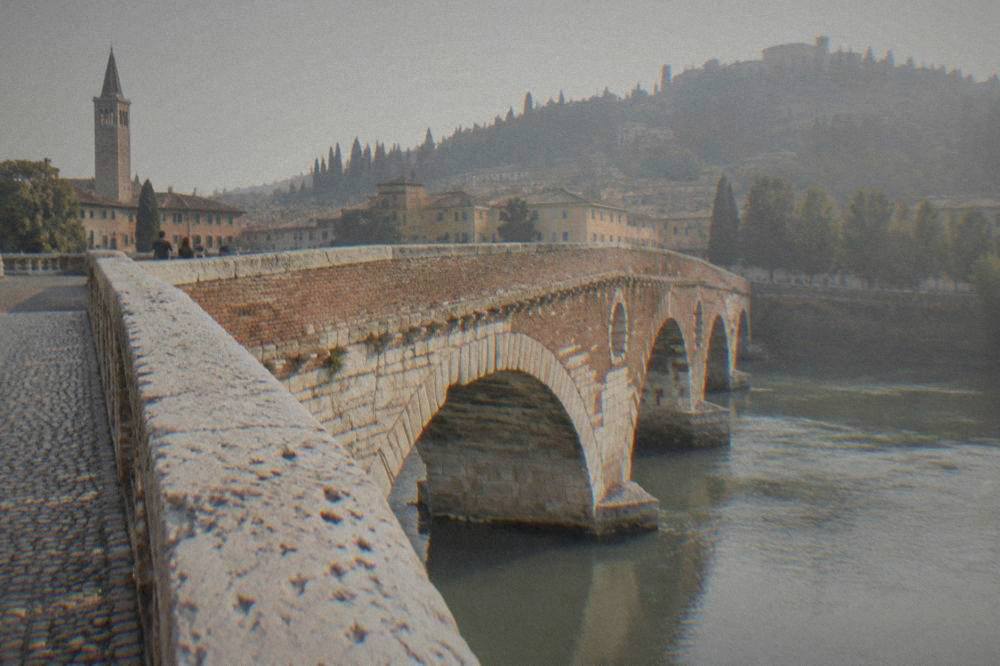
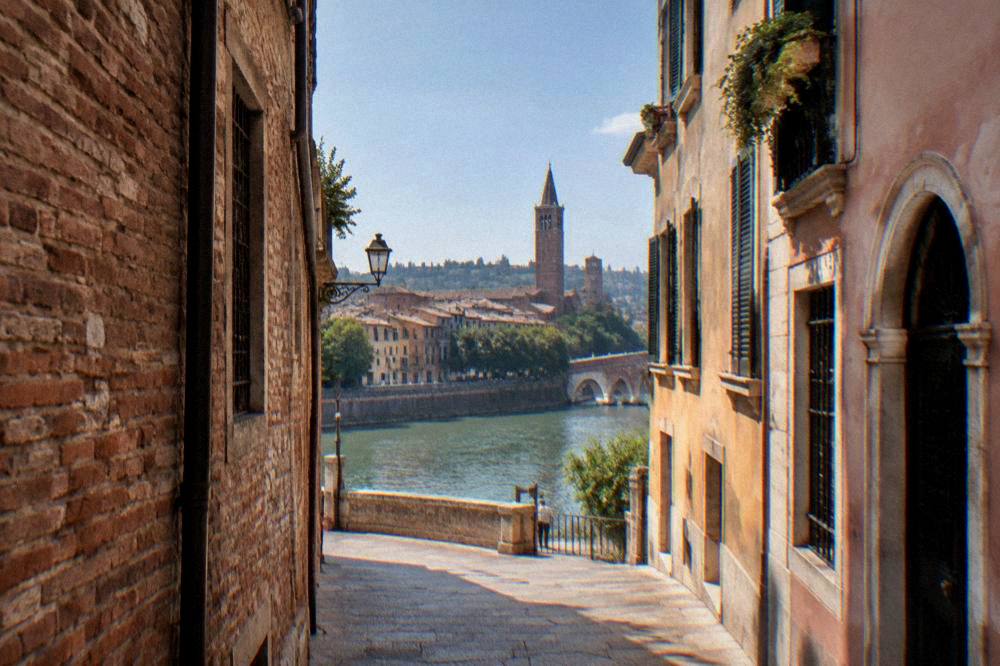
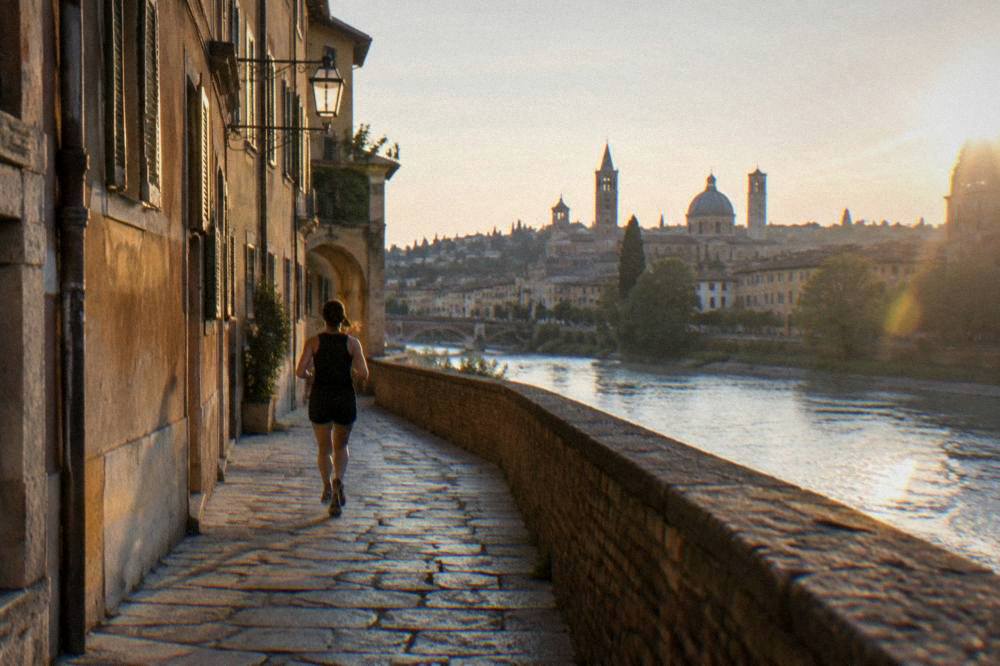
Ponte Pietra is Verona's defining photograph because it is the one frame that holds the Roman city, the river and the hills at once: the bridge's surviving arches cross the Adige in the foreground, the steep wooded slope rises behind, and the left bank leads the eye toward the Teatro Romano terraces, all from open public ground that costs nothing to stand on. The bridge is open access around the clock and needs no ticket, no booking and no timing rule beyond the light itself.
The name means stone bridge, and the structure is the oldest crossing of the Adige in the city in the sense its surviving fabric is Roman, though this desk prints no construction date for it and no superlative about age beyond what the sources above support. The photographic logic is simple: stand on the right-bank side upstream, put the arches against the hill, and the hillsideward frames fill themselves. Walk onto the bridge and the view rotates to the Adige bending around the whole historic centre.
The hill behind the bridge is the one Castel San Pietro sits on, so a route that photographs Ponte Pietra from below and then climbs the far bank to photograph the city from above is the natural pairing, covered in its own section below. The Ponte Pietra guide territory note applies in reverse here: the Veronetta side of the river, where the climb begins, is quieter than the Arena side, and its lanes appear in far fewer photographs, which for some photographers is the point.
Confirm prices on the civic museums' own pages before planning a paid stop there.
How Do You Photograph The Arena Di Verona?
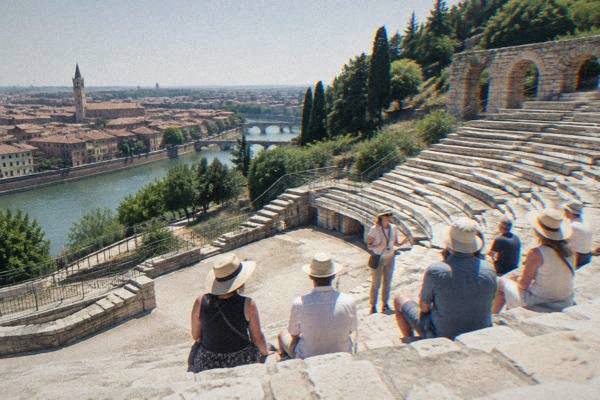
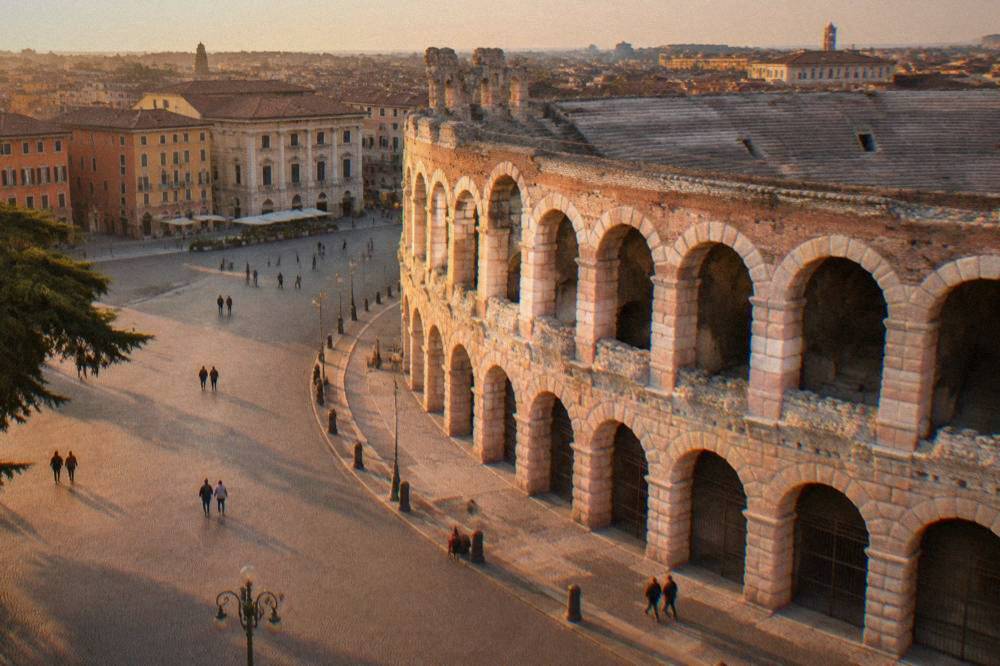
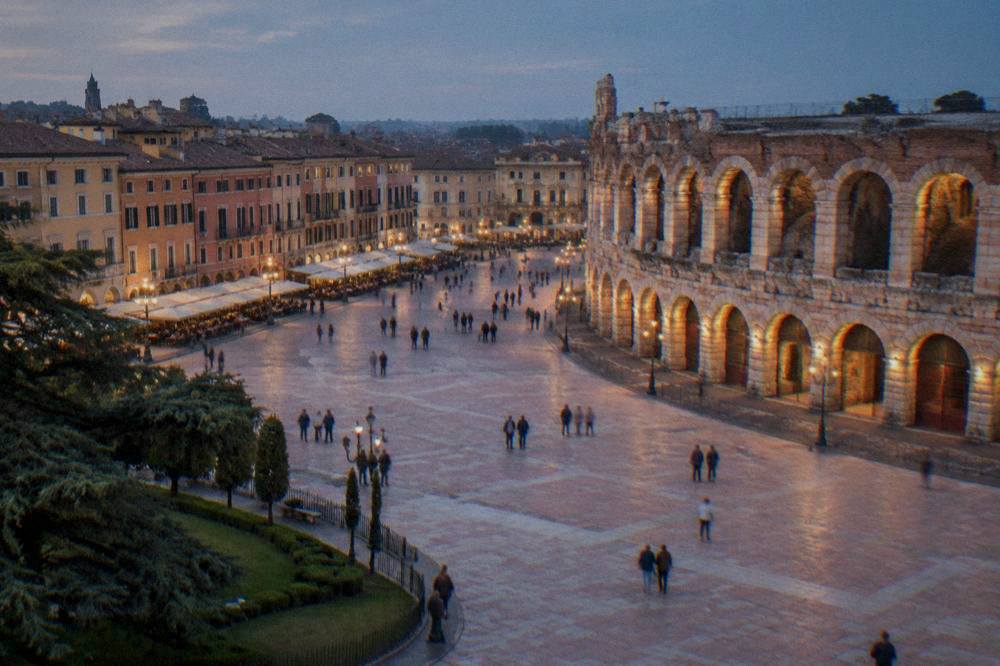
The Arena photographs from two very different positions: from the Piazza Bra edge, where the full pink facade fills the frame from open public ground for free, and from inside, where the intact cavea and stage are open to daytime visitors for 12 EUR full, 9 EUR reduced for groups of 15 or more, over-65s and other concessions, and 3 EUR for visitors aged 18 to 25, per the Comune di Verona's own civic price list.
The interior visit is reported to run Tuesday to Sunday with Monday closure, closing early on show days, so confirm the calendar before going.
The exterior needs no plan at all. Piazza Bra is a wide open square and the facade fills the north side of it; the long edge opposite gives the full elevation, and the corners give the diagonals that make the building read as an ellipse rather than a wall. The listing for the interior is where the 2026 facts matter: this is a building that hosts the opera festival, and on performance days the daytime visit shortens, with last entry reported half an hour before closing.
Inside, the photographic subject is scale. The Fondazione Arena's own pages describe an effective seating capacity of 30,000 for the festival and a first-century origin, around 30 AD by the coin evidence the Arena's site cites, and both figures are best used with that attribution. The Arena di Verona seating guide covers the festival itself, whose 2026 edition ran 5 June to 12 September and whose 2027 edition is announced for 11 June to 11 September, with stone-step seats reported to start in the EUR 30s.
A guided option pairs well here, because the walk between the Arena, the river and the viewpoints is the whole product. The related tour on this site, the Walk with Arena and Cable Car, moves through the centre with an Arena entry and a cable-car element, and its live listing carries the current price and dates: Check availability.
| Arena photo position | What the frame holds | Cost |
|---|---|---|
| Piazza Bra long edge | Full facade elevation | Free, open square |
| Piazza Bra corners | Diagonal, reads the ellipse | Free, open square |
| Interior cavea | Seating rings and stage from above | 12 EUR full, 9 EUR reduced, 3 EUR 18-25 |
| Interior at stage level | Arch openings toward Piazza Bra light | Same ticket |
Can You Still Photograph Juliet's Balcony For Free?
No: since 1 April 2026 the courtyard of Casa di Giulietta is ticketed, at 5 EUR for the courtyard route and 12 EUR for the full house and balcony route, with online booking and entry via the Teatro Nuovo, per the official VisitVerona notice, so even standing in the courtyard to photograph the balcony now requires a paid, pre-booked slot. The balcony itself is not an original feature; the Comune's tourism pages state it was added in 1940.
That is the sharpest of the three 2026 changes for photographers. The courtyard was free to enter for years, and guides published before April 2026 describing a free courtyard photograph are simply out of date. The booking rule bites hardest in the Verona in summer months, when slots go first, and it applies even to VeronaCard holders, who enter free but still book online, per the Comune's card notice.
What the frame gives you: the balcony above, the bronze statue of Juliet in the courtyard, and the layers of love notes on the entrance walls. The statue is Nereo Costantini's, placed in the courtyard in 1972 with a new copy from 2014 and the original moved inside, and the Comune's own page records the right-breast touch custom that has polished the bronze, all of which a photograph from the crowd will show whether the photographer wants it or not. The Romeo and Juliet in Verona guide carries the full story, including the literary chain from Luigi da Porto in 1531 to Shakespeare's sources.
The house hours are reported as Monday 14:00 to 19:00 and Tuesday to Sunday 9:00 to 19:00; confirm them at booking. A fast-track ticket product exists on this site's roster for photographers who want the balcony without the queue, and its listing prints the current price.
Which Piazza Gives The Best Street Photography In Verona?
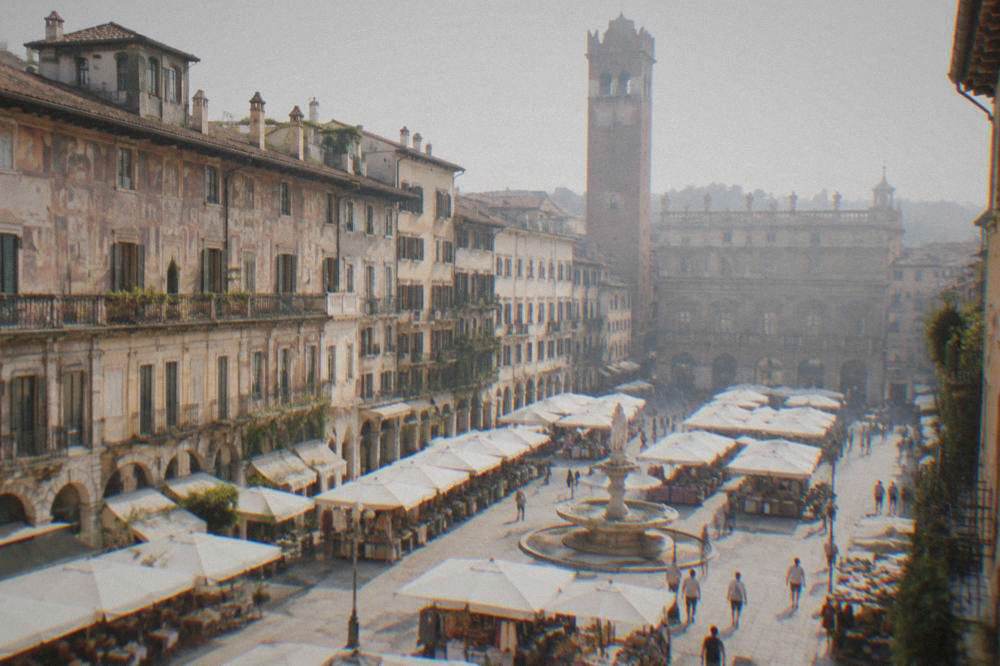
Piazza delle Erbe is the strongest piazza for street photography in Verona, because it stacks a Roman forum footprint, market stalls, the frescoed Maffei palace facade, a carved pillar and the Torre dei Lamberti in one frame, and it is open public ground with no admission; Piazza dei Signori, one arch away, gives the quieter statued courtyard, and Piazza Bra gives the monumental Arena edge, so the three together cover the full range from market chaos to imperial stillness, all free to stand in.
Piazza delle Erbe, the herb market piazza, is where the market life actually is, and its stalls, awnings and fountain give street photographers foreground that the monumental squares lack. The frescoed buildings and the painted facades survive on the northern side, and the tower closes the southern end. A street away, Piazza dei Signori, the Dante statue at its centre, reads as a Renaissance stage set, and the Arche Scaligere tombs sit just beyond it behind wrought-iron gates, viewable from the street.
The tower is the piazza's own viewpoint. The Torre dei Lamberti is reported at 6 EUR full for the climb, free with the VeronaCard, and its hours vary by season, with late-summer hours reported to 21:00; the Torre dei Lamberti guide note applies: card holders still book Juliet's House separately, and the card itself went digital on 1 September 2026 at 33 EUR for 24 hours and 38 EUR for 48 hours with ATV buses included, 29 and 32 EUR without.
| Piazza | Photographic character | Admission |
|---|---|---|
| Piazza delle Erbe | Market stalls, frescoed facades, tower closing the view | Free, open |
| Piazza dei Signori | Statued courtyard, sculpture against stone | Free, open |
| Piazza Bra | Arena facade, wide monumental edge | Free, open |
A food-and-walk pairing works in this quarter, since the tastings sit inside the same streets. The Food Tour with Amarone Tasting on this site's roster runs through exactly these lanes:
Where Do You Shoot Verona From Above?
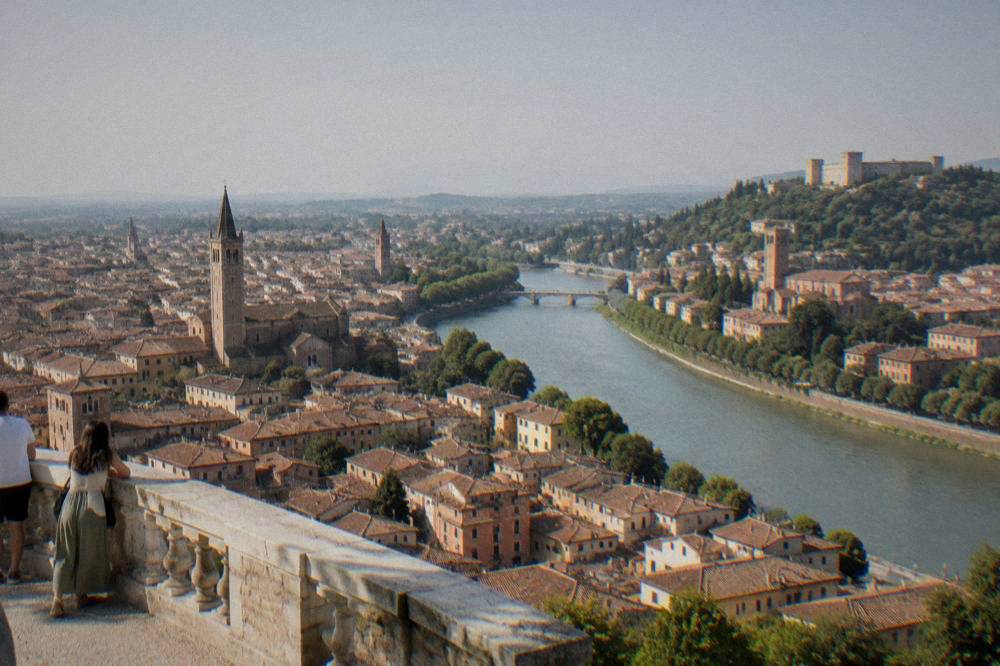
The two elevated photo positions in Verona with sourced access facts are the Torre dei Lamberti, reported at 6 EUR full and free with VeronaCard, which looks down the roofline from the heart of the centre, and the Castel San Pietro hillside across the Adige, a hilltop viewpoint with no sourced ticket, hours or funicular information, so confirm access arrangements on site.
Between them they give the tight rooftop frame and the wide postcard of the whole city bent around the river.
The Torre dei Lamberti frame is vertical: roofs, terracotta, the Adige slicing past, the Arena's ellipse readable from height. Its hours move with the season and its reported late-summer closing sits at 21:00, which puts a dusk slot within reach for part of the year. The Castel San Pietro frame is horizontal: the whole historic centre stacked on the river bend, Ponte Pietra in the mid-ground, the Alps faint on clear northern horizons. The climb to it starts from the Ponte Pietra side through Veronetta, whose own lanes fill a separate roll of film, covered in the site's Veronetta and Castel San Pietro coverage.
Between the two, the riverbank itself supplies low angles: the Adige's curves put water in the foreground at several points between Ponte Pietra and the Castelvecchio bridge, and the whole stretch is public walkway. The e-bike and bike tours on this site's roster reach the panoramic terraces faster than walking does, and their listings print current prices and durations.
What Light And Weather Should You Plan Verona Photos Around?
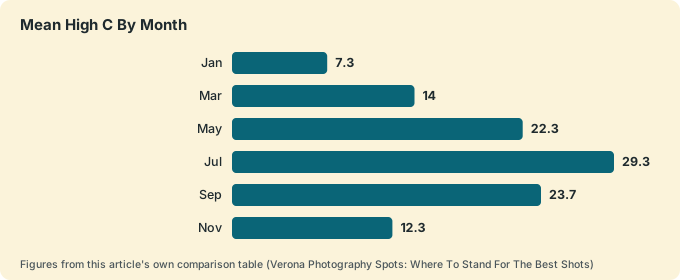
Verona's light, per the ERA5 reanalysis for 1991-2020, gives July a mean daily high of 29.3 C against January's 7.3 C, with November the wettest month at 118.2 mm of rain and January the driest at 52.3 mm, so the shoulder months of April, May, September and October combine mid-range temperatures with a light angle photographers usually prefer, while July and August bring heat, opera-festival crowds in the centre and hard overhead light.
The climate table below is the planning core, and the full breakdown lives in the Verona weather guide. Read the rainfall column honestly: the wettest stretch runs October into November, and a wet Verona photographs well, wet stone reading darker and richer than dry stone, but a planned rooftop or hill climb needs a fallback.
| Month | Mean high C | Mean low C | Rain mm |
|---|---|---|---|
| Jan | 7.3 | -0.4 | 52.3 |
| Mar | 14.0 | 3.6 | 67.4 |
| May | 22.3 | 12.2 | 109.7 |
| Jul | 29.3 | 19.1 | 79.4 |
| Sep | 23.7 | 15.1 | 99.7 |
| Nov | 12.3 | 5.3 | 118.2 |
ERA5 reanalysis, 1991-2020. These are modelled normals for the grid cell near Verona, not a station record, and no sunshine figures are printed because the source does not support them.
The best time to visit Verona question and the photography question overlap but are not identical: the festival months put 30,000 opera seats and their audiences into the Arena on show nights, which is a photographic subject in itself, and the 2027 season runs 11 June to 11 September, while the free Tocati street-games festival filled the Veronetta lanes from 18 to 20 September 2026 as its latest edition and is an annual event worth checking the Comune's pages for. Sunrise and sunset times must remain the photographer's own calculation on the day, as no sourced figures exist in this desk's pack.
Which Day Trips From Verona Give The Best Photos?
The lake Garda towns give the strongest day-trip photography within an hour of Verona: Sirmione, whose Scaliger castle is reported at 10 EUR full with the Grotte di Catullo Roman villa at 10 EUR and a 20 EUR combined ticket, is about 40 minutes by car from the Arena; Bardolino is about 37, the town of Garda about 42, and Malcesine about 84 minutes, with the Monte Baldo cable car above Malcesine at 30 EUR round trip for an adult, 28 EUR online, lifting photographers above the lake itself.
Those drive times are computed over OpenStreetMap routing in free-flow conditions, so treat them as about figures and check live traffic. Sirmione sits in Brescia province, Lombardy, not Verona's province, a distinction that matters for planning but not for the photograph: the castle's crenellated base in the water is the most published lake image reachable from Verona. The Navigazione Laghi full-lake day pass is 39.50 EUR for an adult at 2026 fares, and the north-south passenger service is reported suspended from 2 November 2026 to 12 March 2027, so ferry-based photo plans need the timetable checked against that window.
| Day-trip photo destination | Drive from the Arena | Photo subject | Ticket figure |
|---|---|---|---|
| Sirmione | about 40 min | Scaliger castle, lake, Grotte di Catullo | 10 EUR each, 20 EUR combined, reported |
| Bardolino | about 37 min | Lakefront and olive hills | None printed |
| Garda town | about 42 min | Promenade and headland | None printed |
| Malcesine and Monte Baldo | about 84 min | Castle town and lake from altitude | Cable car 30 EUR round trip, 28 online |
| Valpolicella hills | about 25 min | Vineyards and cellars | Varies by winery, confirm at booking |
The Valpolicella wine hills, about 25 minutes out, are the inland alternative: rows on terraces, cellar doors, and the Amarone country covered in the site's Amarone wine guide. No winery names or tasting prices are given; confirm directly with the winery when booking. The lake towns in full have their own pages, including Sirmione, Bardolino and Malcesine, on this site.
How Do You Build A One-Day Verona Photo Route?
A workable one-day photo route in Verona runs Piazza Bra and the Arena facade at first light, the Arena interior on the 12 EUR daytime ticket when it opens, then Piazza delle Erbe and the Torre dei Lamberti for the rooftop frame, Juliet's booked courtyard slot mid-day, Ponte Pietra in the afternoon, and the climb to Castel San Pietro for the evening panorama.
The binding constraint is that Juliet booking. Everything else on the route is either open ground or a ticket bought on the day, but the courtyard slot fixes the day's skeleton, so book it first and build outward. The ZTL closes the centre to unregistered cars, with at most four entries a month for non-residents, so the route is walked, and the 1.50 EUR, 90-minute urban bus single covers the legs that save time, per ATV's own fares page. The Verona in one day and itinerary pages on this site carry the fuller walking plans.
A guided small-group walk is the efficient version of this route for photographers who would rather follow a local than read a map, and the City of Love walk on this site's roster covers the highlights end of it:
What Camera Gear Suits Verona's Streets And Views?
Verona's streets and viewpoints suit a light kit: a wide lens for the Arena's interior and the Ponte Pietra frames, a short telephoto for the Torre dei Lamberti's compressed rooftop layers and the Castel San Pietro distance shots, and fast glass or a tripod slot for the evening, though tripod rules inside ticketed civic sites vary, so confirm on site before carrying one in, and the stone surfaces and riverbanks are walkable in any ordinary shoe.
No specific camera settings or named products appear, because none are sourced; what the sources do support is the access logic. Ticketed interiors, the Arena cavea and the tower among them, are working cultural venues, and their photography policies sit with the venue, not with a guide. The free ground, the piazzas, the bridge and both riverbanks, has no such ambiguity. For night work, the Verona nightlife guide covers the streets after dark, and the evening light on the Arena facade from Piazza Bra is public ground whenever the square is open.
Practical protections worth one line each: crowds concentrate around the Arena, Piazza Bra, Piazza delle Erbe, Via Mazzini and Juliet's House, and general advisories flag pickpocketing in exactly those spots, so a camera on a strap in front of the body is the standard habit. The emergency number in Italy is 112.
Common Questions About Verona Photo Spots
Is Juliet's courtyard free to photograph from?
No. Since 1 April 2026 the courtyard route costs 5 EUR and the full house and balcony route 12 EUR, with online booking and entry via the Teatro Nuovo, per the official VisitVerona notice. Even VeronaCard holders, who enter free, must book online.
Can you photograph inside the Arena by day?
Yes. The daytime visit costs 12 EUR full, 9 EUR reduced and 3 EUR for visitors aged 18 to 25, per the Comune di Verona's civic price list, with hours reported Tuesday to Sunday and early closing on opera show days, so check the calendar before going.
Where is the classic view over Verona?
From the Castel San Pietro hillside across the Adige, which faces the whole historic centre on its river bend, with Ponte Pietra in the mid-ground. The hilltop position is confirmed in the available data; ticket and access details should be confirmed on site.
Is the Torre dei Lamberti worth it for photographers?
It is the only elevated viewpoint inside the centre itself, giving a straight-down frame over the rooftops. Entry is reported at 6 EUR full and free with the VeronaCard, and hours vary by season, so check the tower's own site before planning a dusk slot.
Is Verona photogenic in winter?
Yes, and quieter. The ERA5 reanalysis, 1991-2020, gives January a mean high of 7.3 C and 52.3 mm of rain, the lowest monthly rainfall of the year, and the Verona in winter guide covers the season in full, including the Christmas markets, whose 2026 dates had not been published on official pages.
Can you photograph Lake Garda on a day trip from Verona?
Yes. Sirmione is about 40 minutes by car from the Arena, Bardolino about 37, Garda town about 42 and Malcesine about 84, all computed free-flow drive times, and the Monte Baldo cable car above Malcesine costs 30 EUR round trip for an adult, 28 EUR online.
The standing points above are the whole set a first photographic visit needs, and the two 2026 changes, Juliet's ticketed courtyard and the digital VeronaCard, are the ones to check at booking. Book the courtyard slot, buy the Arena ticket on the day, climb the hill for the last light, and the city does the rest.