Verona Accessibility: Cobbles, Lifts And Step-Free Routes
Verona, in Veneto, northern Italy, is an inland Roman city of polished marble paving, stone bridges and hills, and this page reports what the official sources actually say about getting around it with limited mobility, a stroller or a wheelchair.
Short answer
Verona's historic centre is compact and largely pedestrian, but its lanes are marble-paved and polished smooth, several bridges cross the Adige, and the sources confirm no step-free access detail at the major sights, so visitors with mobility needs should contact each venue directly before travelling.
Verona, in Veneto, northern Italy, is a UNESCO World Heritage city, inscribed in 2000, built on a bend of the Adige river around a first-century Roman amphitheatre. Its historic centre is compact, largely pedestrian and walkable in a day, which makes it attractive for slow travellers. It also sits on layers of polished marble, cobblestone and hillside staircases, which makes honest planning essential. This page reports what the official and operator sources say about accessibility in Verona: which surfaces to expect, what is confirmed about step-free access at the major sights, which transport figures are published, and which tours and cards suit visitors who set their own pace. Where a source does not confirm a detail, this page says so plainly and advises contacting the venue, because an invented ramp is worse than an honest gap.
Is Verona Easy To Get Around With Limited Mobility?
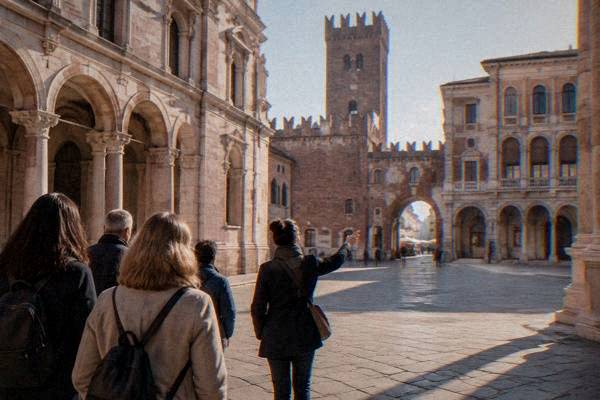
Verona's historic centre is compact and largely car-free, with the Arena, Piazza delle Erbe, Juliet's House and the Adige bridges all within a short walk of one another, but the streets are marble-paved and polished, the river is crossed by stone bridges, and the two hillsides, Castel San Pietro and the Teatro Romano side, rise in stepped lanes. No official source confirms step-free access at the major sights, so contact each venue before travelling.
That is the honest summary of what the sources support. The city's core, the UNESCO-inscribed old town inside the Adige bend, functions as a pedestrian zone in practice, with the camera-policed ZTL keeping non-resident cars to a maximum of four entries a month. Distance is rarely the problem. Surface and slope are.
The paving deserves specific attention. The old town's lanes and squares are laid with local stone, worn by centuries of foot traffic into a high polish. That polish is beautiful and, in rain or the frost of a January whose mean daily low sits at -0.4 C per the ERA5 reanalysis for 1991-2020, genuinely slippery. Visitors who use walking aids, or who push strollers, should expect low-friction surfaces in the historic core and plan footwear accordingly.
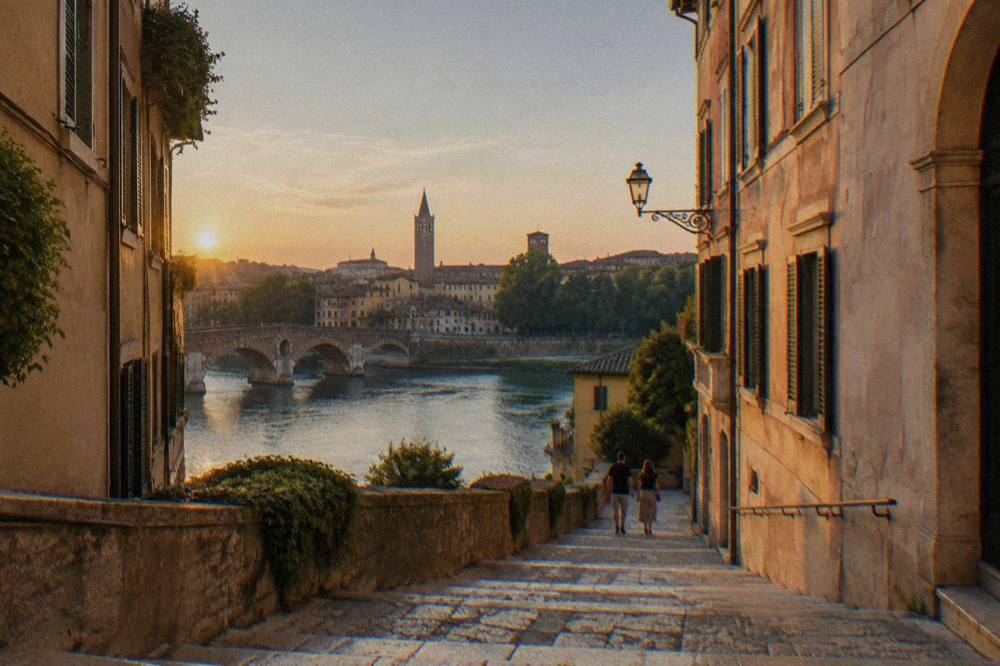
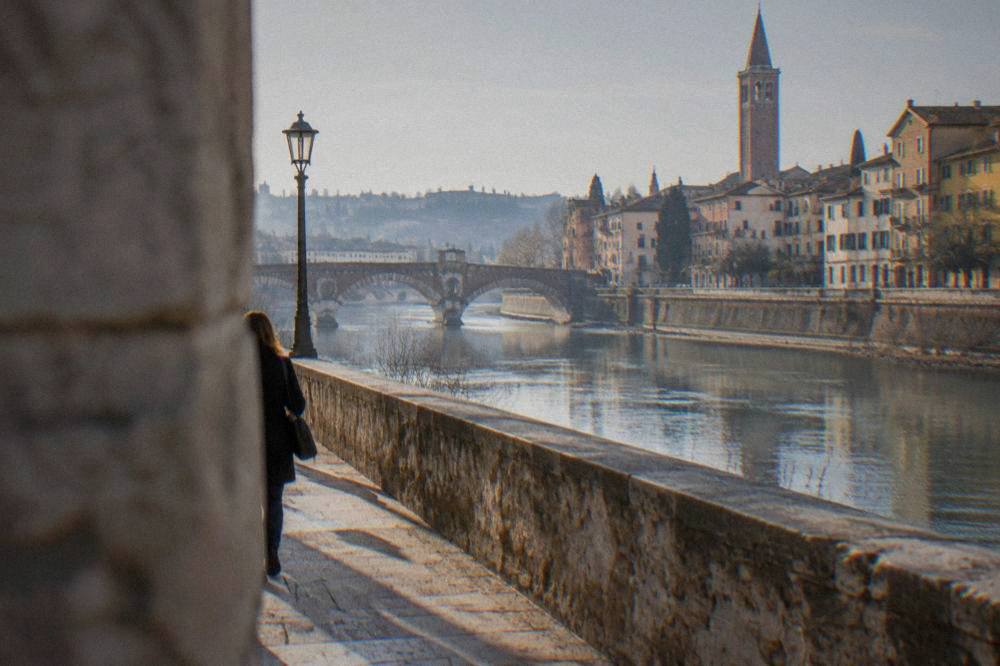
The river adds a second layer. The Adige cuts a deep curve through the city, and the centre sits inside the bend. Ponte Pietra, the Roman footbridge to the Teatro Romano and the funicular-side hill, is open access and free, but it is a stone bridge crossing a valley, which means ramps or slopes at either end. The sources give no gradient detail. The same caution applies to Castel San Pietro above it: no price or hours figure was found for the viewpoint itself, and no access statement exists either.
For orientation before you go, the site's guide to getting around Verona covers the transport network, and things to do in Verona maps the sights against that geography.
| Area of Verona | Surface and slope | What the sources confirm |
|---|---|---|
| Piazza Bra and the Arena quarter | Flat, wide, marble-paved and polished | Open public space at Piazza Bra; Arena is a ticketed visit |
| Via Mazzini shopping street | Flat, pedestrian, smooth paving | Pedestrian route between Piazza Bra and Piazza delle Erbe |
| Piazza delle Erbe and Piazza dei Signori | Flat squares, cobbled side lanes | Open public squares, no ticket |
| Juliet's House area | Narrow lanes off the squares | Ticketed since 1 April 2026, entry via Teatro Nuovo |
| Ponte Pietra and the far bank | Stone bridge, rising ground to the Teatro Romano | Open access, free; no step-free detail confirmed |
| Castel San Pietro hillside | Stepped lanes climbing the hill | No price, hours or access figure found |
Which Verona Streets Are Cobbled And Which Are Smooth?
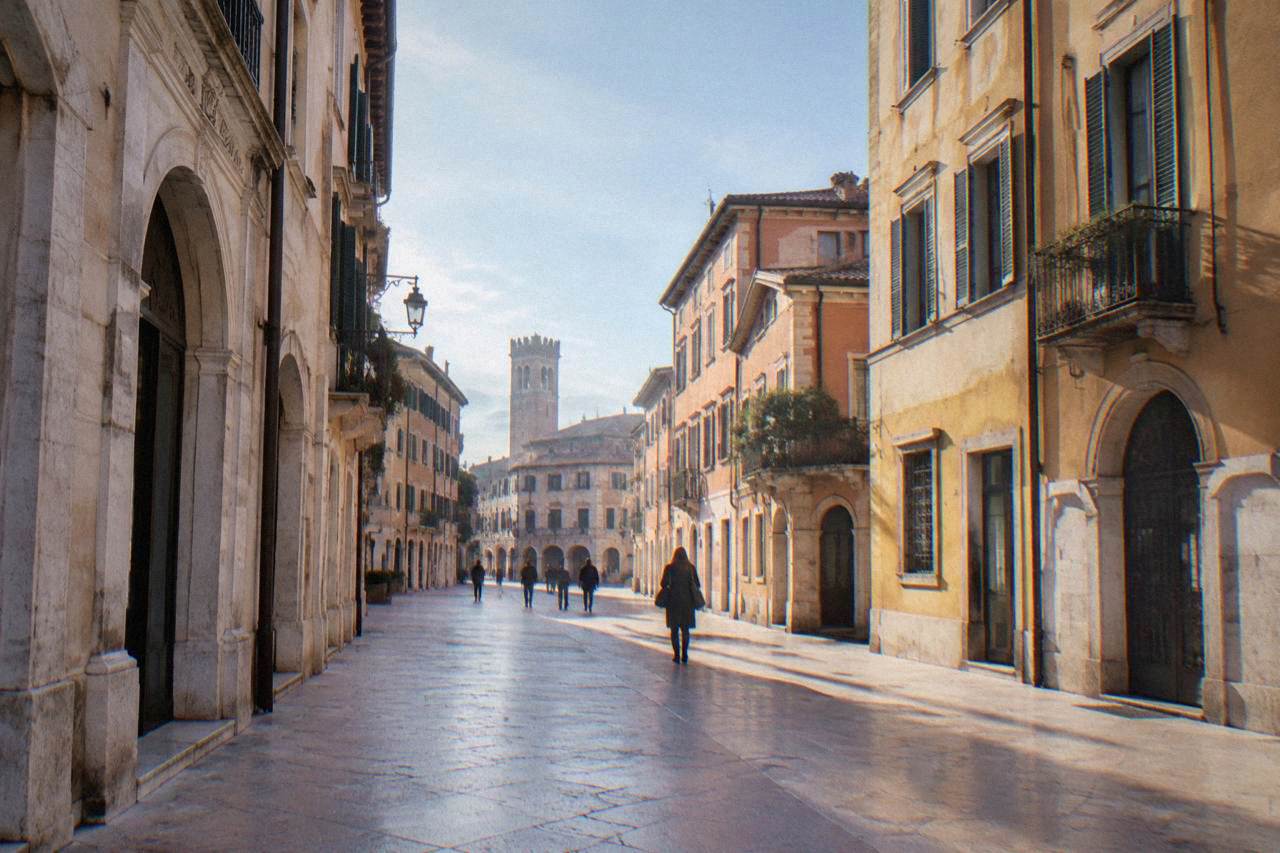
The historic centre is paved throughout with local stone, polished smooth by foot traffic rather than rough-cobbled, and the differences that matter are slope and width, not surface type: Piazza Bra, Piazza delle Erbe and Via Mazzini are flat and wide, while the lanes climbing to Castel San Pietro and the Teatro Romano side narrow, step and rise steeply. That single statement is everything the sources support about street surfaces.
No published map of accessible routes in Verona is known to exist. What exists is geography. The Roman city inside the river bend is essentially flat: the Arena at Piazza Bra, the shopping spine of Via Mazzini, Piazza delle Erbe, Piazza dei Signori and Juliet's House all sit within a few gentle metres of one another. A visitor rolling or walking slowly can cover all of it without a hill.
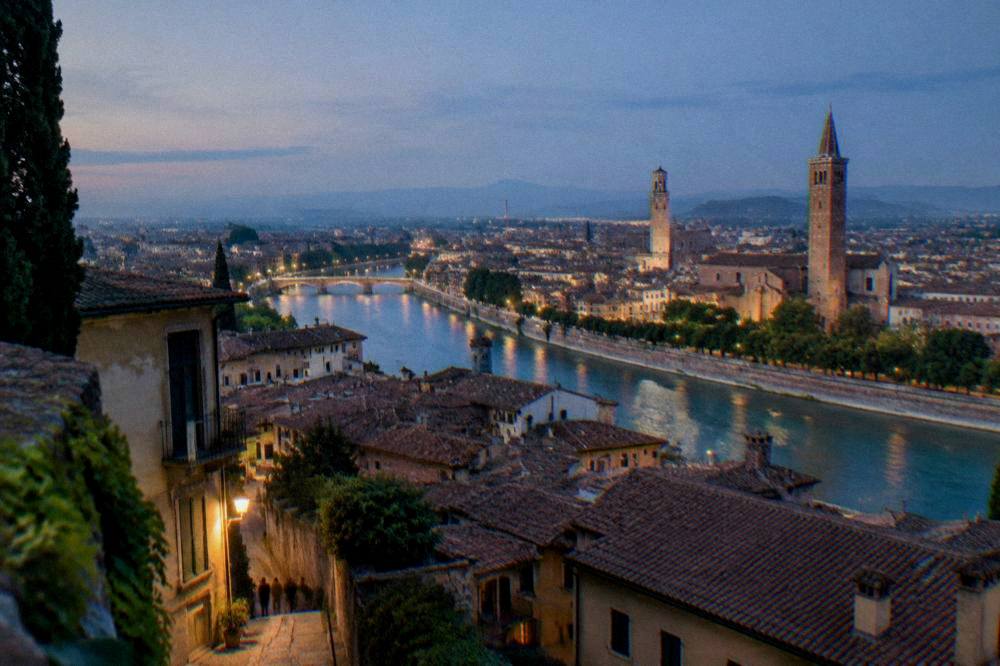
Cross the river and that changes. The right bank, Veronetta, rises toward the Teatro Romano, and the climb to Castel San Pietro is a genuine hillside of stepped lanes. The sources confirm nothing about lifts, ramps or step-free routes on that side, so the working assumption should be stairs and slopes, and visitors who cannot manage them should treat the hill viewpoint as a skip rather than a goal.
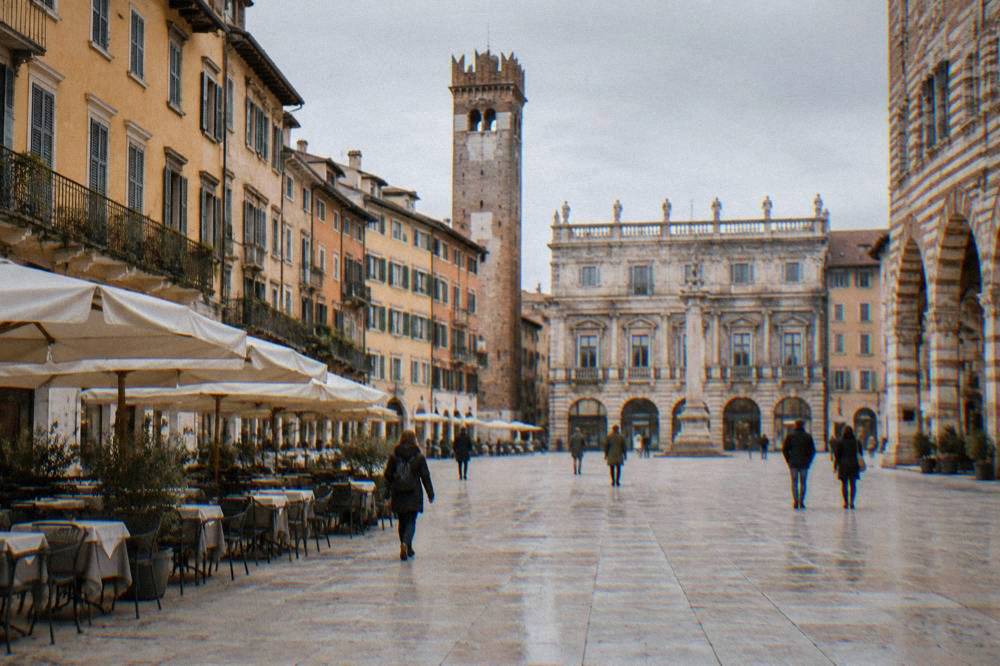
Rain changes the calculus everywhere. The ERA5 reanalysis, 1991-2020, puts November at 118.2 mm of rain, October at 107.2 mm and May at 109.7 mm, the three wettest months. Polished stone plus rain is the single most consistent access hazard in this city, and the best months for firm footing are the drier ones, per the site's guide to the best time to visit Verona and its Verona weather page.
For visitors who want a guide's eyes on the ground without committing to a fixed group pace, the site's featured related tour is a self-guided option: the Verona Walking Tour with Audio and Written Guide by a Local, a digital audio walk you follow at your own speed, resting or rerouting whenever the surface demands it, and you can Check availability alongside it.
For structured choices, these are the site's current picks for this page:
Is The Arena Di Verona Accessible For Visitors With Mobility Needs?
The Arena's daytime visit is a ticketed entry at 12 euro full, 9 euro reduced and 3 euro for visitors aged 18 to 25 from EU and reciprocity countries, per the Comune di Verona's price list, and it is open Tuesday to Sunday with reported hours of 9:00 to 19:00, closed Monday, but no official source confirms step-free access, a lift or a ramp inside, so visitors with mobility needs should contact the Arena directly before booking.
That last clause is not a disclaimer, it is the finding. The research for this page found no published statement of step-free access at the Arena. The amphitheatre is a Roman structure of about 30 AD, reported by the Arena's own site, with seating tiers of stone and an outer ring destroyed by the 1117 earthquake. Nothing in that archaeology suggests an easy interior, and nothing in the sources permits this page to promise otherwise.
The practical comfort is that the Arena sits directly on Piazza Bra, the flattest, widest part of the old town. Approaching it, resting on its steps and seeing the exterior involve no hill at all. What the interior visit demands of legs and wheels is a question only the venue can answer, and the same applies to the opera festival: the 2027 season is announced for 11 June to 11 September, and accessible-seating arrangements for it are a box-office question, covered further in the site's Verona Opera Festival guide.
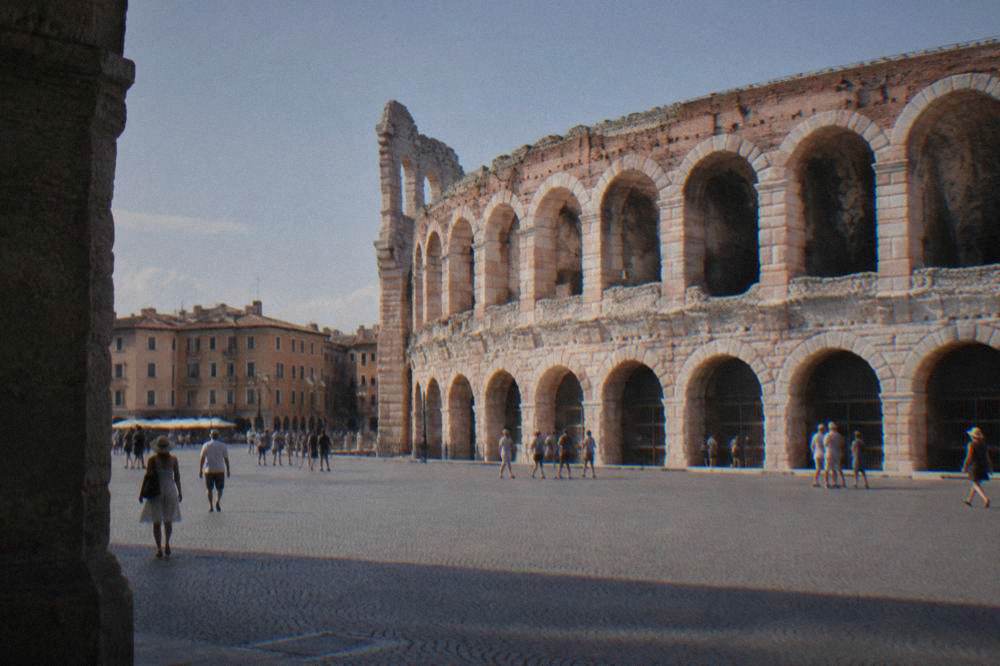
One route into the Arena worth comparing is a ticketed guided entry rather than a plain admission, because a guide can front-load the practical questions. The site lists this option:
For visitors planning several ticketed sights, the VeronaCard also enters the picture. Since 1 September 2026 it is digital, at 33 euro for 24 hours or 38 euro for 48 hours with ATV urban buses included, and 29 or 32 euro without transport, per the Comune di Verona's notice. It covers the Arena and Juliet's House among other sites, though Juliet's House still requires an online booking even for card holders, and the card never includes the airport Aerobus. The site's full VeronaCard guide has the detail, and a card-and-Arena product sits in the picks below:
For structured choices, these are the site's current picks for this page:
Is Juliet's House Accessible, And What Changed In 2026?
Juliet's courtyard stopped being free on 1 April 2026: the courtyard route costs 5 euro, the full house and balcony route 12 euro, booking is online and entry is via the Teatro Nuovo on Piazzetta Navona, per the Comune di Verona, but no source confirms step-free access or a lift inside the medieval house, so visitors with mobility needs should ask before booking.
The 2026 change matters for planning beyond price. Entry via the Teatro Nuovo replaced the old direct courtyard door, which reshapes the walking approach through narrow lanes. The house itself is medieval fabric; the famous balcony is not even original, added in 1940 per the Comune's tourism pages, and nothing in the sources describes the interior as step-free. The bronze statue of Juliet, cast by Nereo Costantini and placed in 1972 with a 2014 copy now standing in the courtyard, sits at ground level in an open space, but that space is now inside the ticket line rather than a free pass-through. The rest of the planning pages sit on Verona Italy Travel Guide.
The broader Romeo-and-Juliet geography is on the site's Romeo and Juliet in Verona page, and the courtyard ticket question specifically is answered at is Juliet's courtyard free.
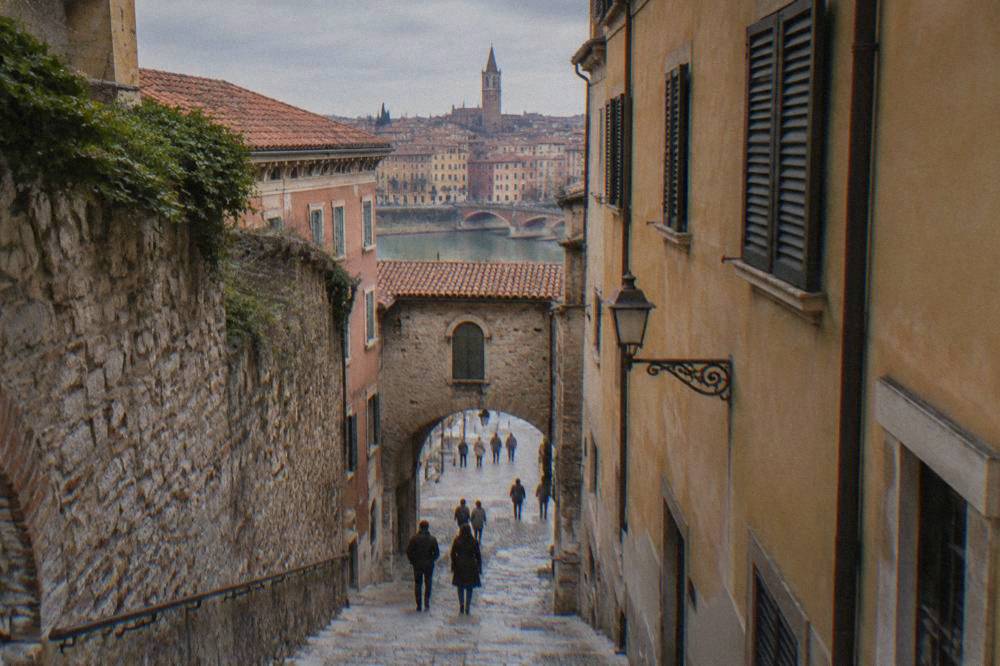
A fast-track ticketed option with an audio guide exists for visitors who want to control their own timing through the house, and the site lists it here:
| Verona sight | Admission | Access detail in the sources |
|---|---|---|
| Arena (daytime visit) | 12 euro full, 9 reduced, 3 for 18 to 25, per the Comune | No step-free or lift statement found; contact the venue |
| Juliet's House and courtyard | 5 euro courtyard route, 12 euro house and balcony, online booking, since 1 April 2026 | No step-free statement found; contact the venue |
| Piazza Bra, Piazza delle Erbe, Piazza dei Signori | Open public space, no ticket | Flat, wide, marble-paved |
| Ponte Pietra, Porta Borsari | Open access, free | Stone bridge and Roman gate; no gradient detail found |
| Torre dei Lamberti | Reported 6 euro full, reported free with VeronaCard | No lift or access statement confirmed |
| Castelvecchio | Reported 9 euro full, 6 reduced, 2 for 18 to 25, closed Monday | No step-free statement found |
What Does Accessible Transport In Verona Look Like?
The published figures are an urban bus single at 1.50 euro valid 90 minutes, per ATV's own fares page, and a reported airport Aerobus fare of 7 euro for the line 199 shuttle taking about 15 minutes from Verona Villafranca to the station, while the ZTL keeps the historic centre largely car-free for non-residents at a maximum of four entries a month, and no source confirms low-floor or ramp provision on specific routes, so confirm vehicle access with ATV before relying on a bus.
The bus network is the one part of Verona a mobility planner can lean on, with a caveat. ATV runs the urban services, the 1.50 euro single is the standard fare, and the VeronaCard's with-transport tiers include those urban buses. What the sources do not contain is any route-by-route statement of low-floor vehicles or boarding ramps. That is a question for ATV directly, and the answer in Italy is generally better than the silence suggests, but this page prints only what it can source.
The airport link is the reported Aerobus line 199: about 15 minutes, 7 euro, running roughly every 20 minutes at peak times, per ATV's site as reported, and confirm current times before you fly. The full transfer picture, including the station and onward options, is in the site's Verona airport to city centre and Verona train station guides.
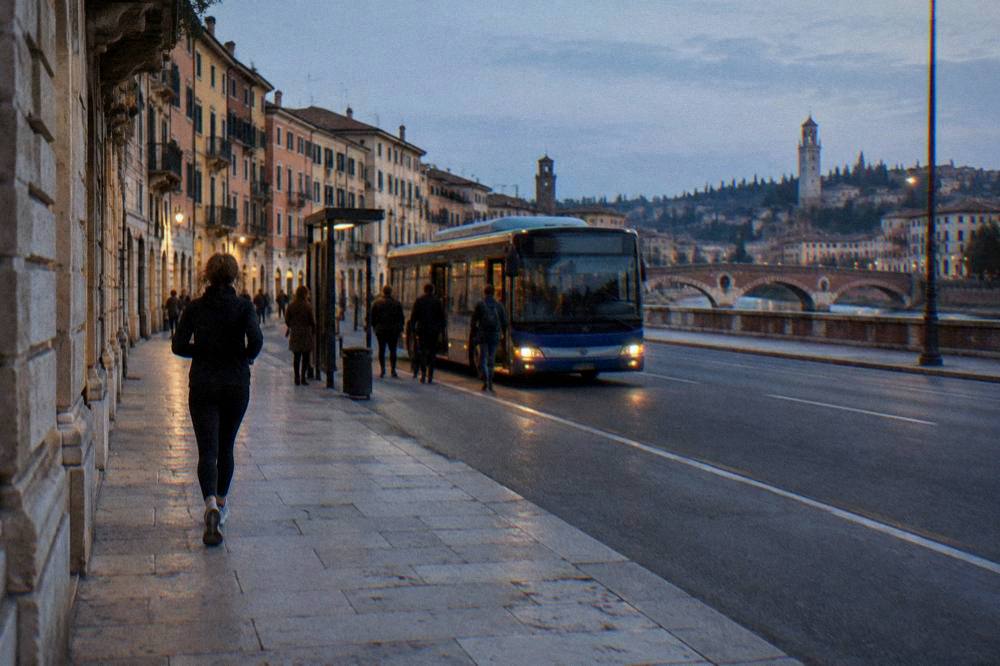
The ZTL, the limited-traffic zone, is an accidental ally. Because the historic centre is camera-policed, with hotel guests exempt when the hotel registers their plate, the streets inside the bend carry far less traffic than a city of this size would otherwise suggest. Taxis can serve hotels and permitted addresses; no fixed VRN-to-centre taxi fare was found in the sources, so ask the operator for a quote.
| Transport in Verona | Figure | Source |
|---|---|---|
| ATV urban single ticket | 1.50 euro, valid 90 minutes | Stated on ATV's own fares page |
| Aerobus line 199, airport to station | 7 euro, about 15 minutes | Reported by ATV's site; confirm before travel |
| VeronaCard 24 h with urban buses | 33 euro, digital since 1 September 2026 | Stated in the Comune di Verona notice |
| VeronaCard 48 h with urban buses | 38 euro | Stated in the Comune di Verona notice |
| VeronaCard without transport (24 h / 48 h) | 29 / 32 euro | Stated in the Comune di Verona notice |
| ZTL entries for non-residents | Max 4 per month, booked in advance | Stated by the Comune di Verona |
Which Verona Tours And Experiences Suit A Slower Pace?
The experiences that suit a slower pace are the self-paced and seated ones: the digital audio walk that this site features, a river trip on the Adige that floats past the historic bridges instead of crossing them on foot, and card-based independent sightseeing, while group walking tours cover the same flat core but at the operator's pace, and every mobility question should go to the operator's listing before booking, because none of the listings publish a step-free guarantee.
Each of those three works for a different reason. The audio walk, Verona Walking Tour with Audio and Written Guide by a Local, is self-guided by design: the route is yours to shorten, the pauses are yours to take. The Adige rafting trip, Guided Adige River Rafting Past Historic Bridges, replaces the bridge-climbing problem with a water-level view of it, boarding questions included in the listing. And the city card with Arena priority entrance, Verona City Card with Arena Priority Entrance, converts the queue at the busiest sight into a booked slot.
The food-and-wine side of Verona also has a pace argument. A tasting is a seated hour in a fixed place, whether it is an Amarone tasting in the city or a Valpolicella vineyard visit in the hills 25 minutes' drive from the Arena, per routing computed over OpenStreetMap. The drive itself, in a vehicle, removes the surface problem entirely. The site's Valpolicella wine tour page covers that direction, and what to eat in Verona covers the table you will sit at.
| Day trip from the Arena | Drive time | Access note in the sources |
|---|---|---|
| Valpolicella (Sant'Ambrogio) | About 25 minutes | Vehicle transfer; winery access varies, confirm with the operator |
| Bardolino, Lake Garda | About 37 minutes | Lakefront town; ferry info on the site's Bardolino guide |
| Sirmione, Lake Garda | About 40 minutes | Town of Garda region; castle and Roman villa are ticketed visits |
| Garda town, Lake Garda | About 42 minutes | Lakefront; ferries run by Navigazione Laghi |
| Malcesine, Lake Garda | About 84 minutes | Cable car junior round trip 18 euro, 16 online, per the operator |
| Vicenza | About 48 minutes | Train times only in the sources; sight access to confirm |
Drive times are computed over OpenStreetMap routing in free-flow conditions; they are planning figures, not schedules.
How Should A Visitor With Mobility Needs Plan A Verona Trip?
Plan around the flat core, book everything online in advance, put the hills and bridges on a maybe list, and write to each venue before you pay: base yourself inside the ZTL bend near Piazza Bra, buy the digital VeronaCard if the sums work for your sight list, book Juliet's House online as the rules now require, and treat the Teatro Romano hillside and Castel San Pietro as optional extras whose access nobody has published.
Accommodation location does the heaviest lifting. A base inside the river bend puts the whole flat old town within reach on foot or wheels, and the ZTL's hotel-plate registration means a taxi or a licensed vehicle can reach the door. The site's where to stay in Verona guide frames the districts; the ones inside the bend are the ones that avoid the bridges.
Season matters twice over. The ERA5 reanalysis, 1991-2020, gives July a mean daily high of 29.3 C and August 29.1 C, which is hard work on polished stone, while January sits at a mean daily low of -0.4 C, when the same stone can frost.
Finally, use the flexibility every listing here carries. The tours on this page render with live prices and cancellation terms on their own pages, so a plan that rests on booked slots rather than improvised arrivals can be reshaped without penalty when a cobbled lane or a stair turns out to be the day's obstacle. The site's free things to do in Verona page rounds out the flat, open, no-ticket options, and Verona in winter covers the season when the polished stone asks the most of your footwear.
Common Questions About Verona Accessibility
Is central Verona wheelchair accessible?
The flat core, Piazza Bra, Via Mazzini, Piazza delle Erbe and Piazza dei Signori, is wide, pedestrian and paved with polished stone, and it is realistic to cover on wheels in dry weather. No official source publishes step-free routes or confirms access inside the major sights, so contact each venue directly before travelling.
Are the streets in Verona cobbled?
The historic centre is paved with local stone worn smooth rather than rough cobblestone. The surface is polished and can be slippery in rain or frost; the hills across the river add steps and steep lanes.
Does the Verona Arena have step-free access?
No official statement of step-free access, a lift or a ramp at the Arena was found. The amphitheatre is a Roman structure of about 30 AD with stone seating tiers. Contact the Arena directly before booking a daytime visit or an opera ticket.
Is Juliet's House accessible for visitors with limited mobility?
Juliet's House is a medieval building, ticketed since 1 April 2026 with online booking and entry via the Teatro Nuovo, and no source confirms step-free access inside. Ask the venue about access before booking the 5 euro courtyard route or the 12 euro house route.
Can you avoid the hills in Verona?
Yes, largely. Everything inside the Adige bend, the Arena, the two main squares and Juliet's House, sits on flat ground. The hills, Castel San Pietro and the Teatro Romano side, are across Ponte Pietra and can be skipped without losing the core of a visit.
Are Verona's buses usable with a mobility aid?
ATV runs the urban network and the single fare is 1.50 euro for 90 minutes, but the sources carry no route-by-route statement of low-floor or ramp provision. Confirm vehicle access with ATV before relying on a specific bus.