Verona History: Romans, Scaligeri And Venice
Verona, an inland city on the Adige in Veneto, northern Italy, layers two thousand years of history: a first-century Roman amphitheatre, medieval rule by the Scaligeri family, centuries under Venice, and a Romeo and Juliet legend that Shakespeare set here without ever visiting.
Short answer
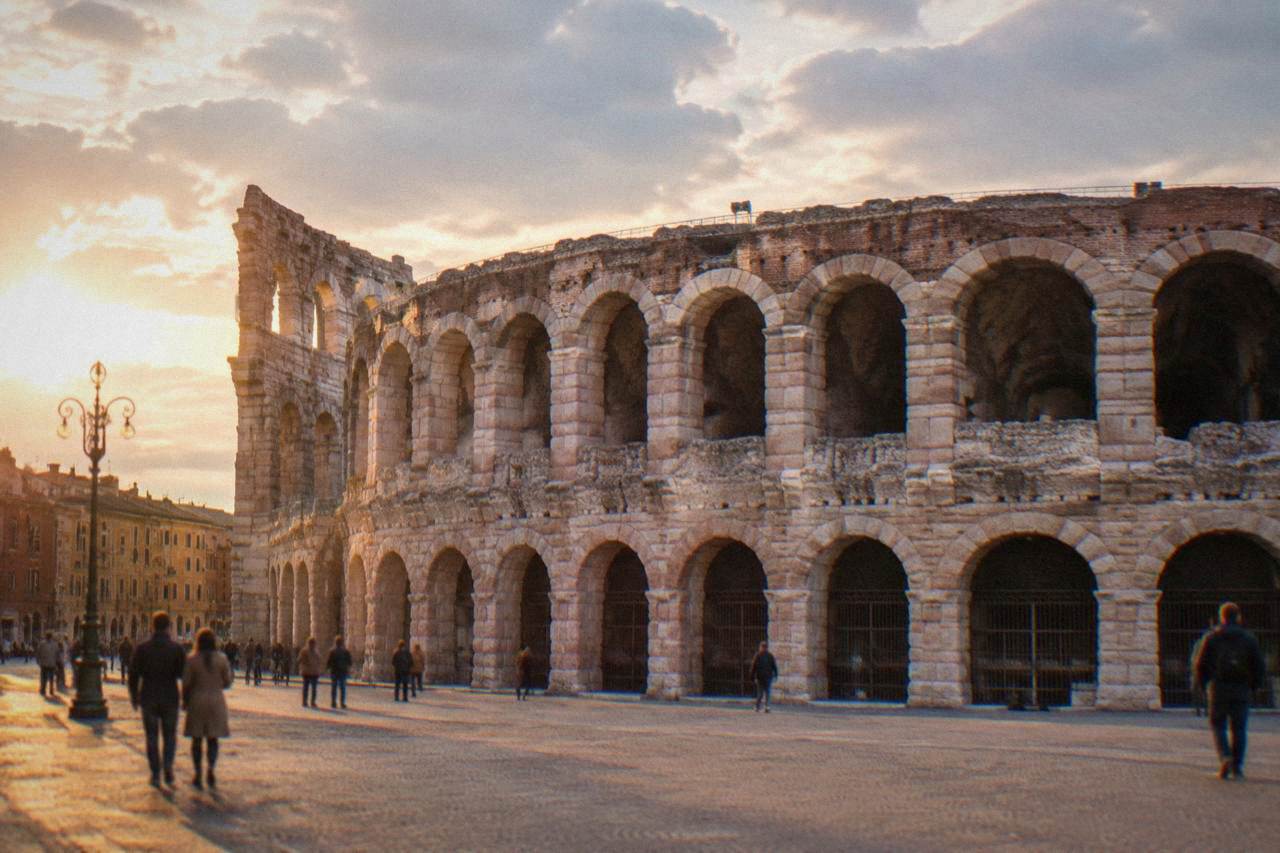
Verona was founded as a Roman city in northern Italy, its Arena built about 30 AD. After the 1117 earthquake and the fall of the outer ring, the city passed through Scaligeri, Venetian and Austrian rule, and was inscribed by UNESCO in 2000.
Verona sits inland on the Adige river in Veneto, northern Italy, and its history is readable in the stone of the streets: a first-century Roman amphitheatre at Piazza Bra, a Roman theatre across the river in Veronetta, medieval towers and family tombs in the centre, and the brick and rose-pink marble of a city that spent centuries under Venetian influence. The "City of Verona" was inscribed on the UNESCO World Heritage List in 2000, recognized under criteria (ii) and (iv) for its urban evolution and its surviving fortified core. Lake Garda and its towns, Sirmione, Bardolino, Garda and Malcesine, lie 22 to 39 km west and belong to Verona's story as day-trip country, not as the city's setting. This page follows what the primary sources actually say about each era, from the Arena's reported about-30-AD origin to the ticketed courtyard of Juliet's House in 2026.
The editor's desk behind this site, Verona Italy Travel Guide, reports only what official pages and computed data support. Where a figure is reported by an operator's own site rather than independently confirmed, the wording says so, and the advice is always to confirm before travelling.
Who Built Verona And When Was The City Founded?
Verona was already a Roman city by the first century AD, and its defining monument, the Arena, was built about 30 AD according to the Fondazione Arena's own history pages, which cite coin evidence from 30 to 42 AD. The same source describes the building as older than Rome's Colosseum, dated about 80 AD, and as the third-largest surviving Roman amphitheatre after the Colosseum and Capua. No architect's name survives, and none is invented.
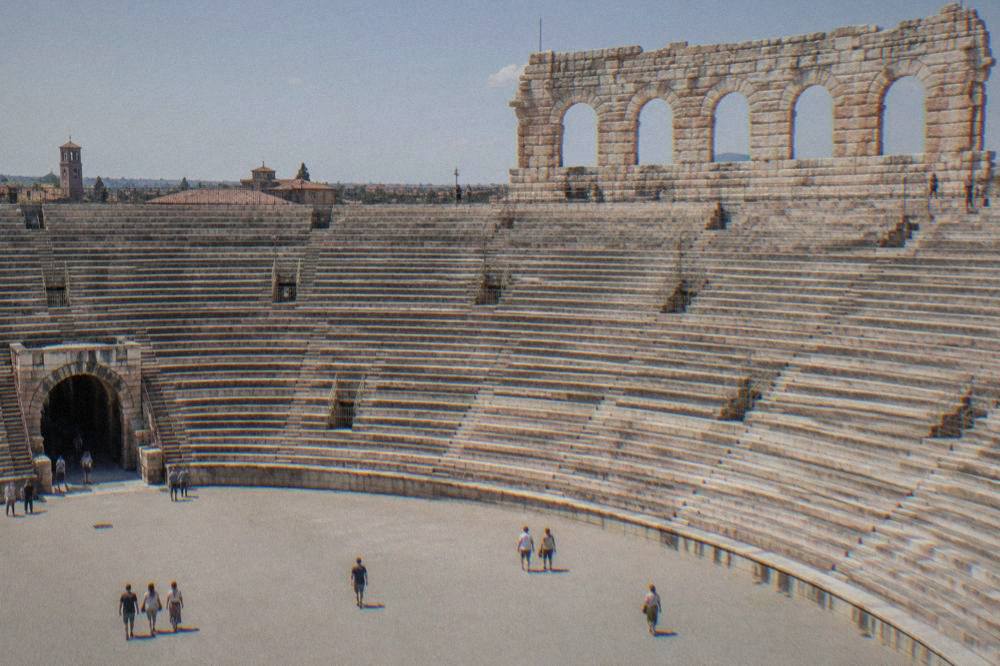
That reported age gap matters more than it sounds. A visitor standing on the Arena's stone steps is standing in a building that predates the Colosseum, per the Fondazione Arena's own account, and that has been in continuous use for spectacles in one form or another since antiquity. The Arena's own materials describe gladiator games and animal hunts as its original entertainments, and the Museo Lapidario Maffeiano's collections, cited by the same sources, document the epigraphic culture of Roman Verona that grew up around the amphitheatre and the city walls.
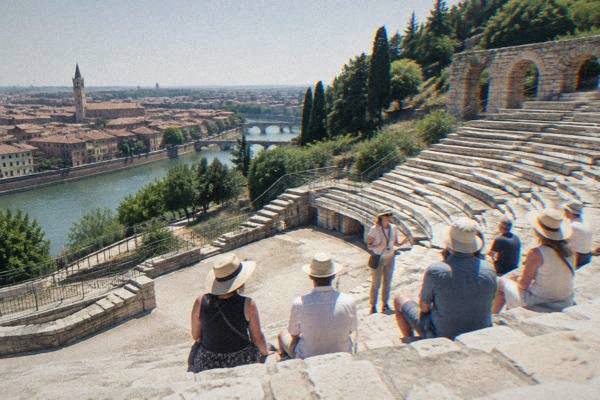
Beyond the Arena, Roman Verona survives in pieces a visitor can walk between in under an hour: the Roman Theatre on the left bank of the Adige with its archaeological museum, the Porta Borsari gate, and the Ponte Pietra footbridge. The construction dates and ages of Ponte Pietra and Porta Borsari are not given on this page. What the record does show is a grid-planned Roman city whose imprint still shapes the street pattern between Piazza Bra and Piazza delle Erbe, the same area that gave the city its UNESCO inscription in 2000.
What Can You Still See Of Roman Verona Today?
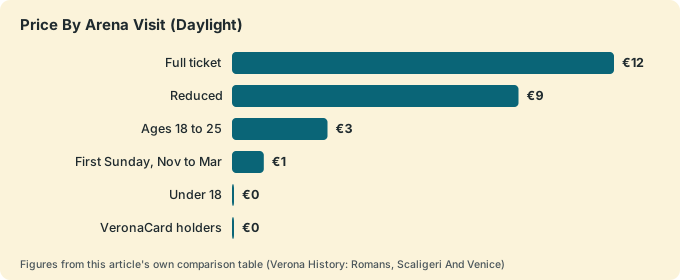
The Arena di Verona can be visited in daylight for 12 euro full, 9 euro reduced for groups of 15 or more, over-65s and other concessions, and 3 euro for visitors aged 18 to 25 from EU and reciprocity countries, per the Comune di Verona's own price list, updated 10 September 2026. Under-18s enter free, and the first Sunday of the month from November to March costs 1 euro. Reported opening is Tuesday to Sunday, about 9:00 to 19:00, closed Monday, with earlier closing on show days.
The Amphitheatre is not an opera-only venue, and that is the single commonest mistake in guides to the city. By day it is a civic museum site on the Comune's ticket list; by night in summer it becomes the stage of the Opera Festival, which ran 5 June to 12 September 2026 in its 103rd edition and is announced for 11 June to 11 September 2027. The Fondazione Arena states an effective opera capacity of 30,000 seats. Stone-step seats for opera start in the 30-euro range, per the festival's rates page; the top-stall price tables should be read on the Arena's own ticket pages before booking.
| Arena visit (daylight) | Price | Who it applies to |
|---|---|---|
| Full ticket | 12 EUR | Standard adult |
| Reduced | 9 EUR | Groups of 15+, over 65, concessions |
| Ages 18 to 25 | 3 EUR | EU and reciprocity countries |
| First Sunday, Nov to Mar | 1 EUR | All visitors |
| Under 18 | Free | All children |
| VeronaCard holders | Free | Card includes Arena entry |
The price list above is the Comune di Verona's own; hours are reported by the Arena's civic-museum pages and can shift on performance days, so check the Arena's own ticket page for the calendar before planning a morning visit. The rest of Roman Verona, the Roman Theatre and its museum, Porta Borsari, Ponte Pietra and the open squares, is covered in the things to do in Verona overview, which groups the sights by period.
What Happened To Verona After The Roman Empire Fell?
An earthquake in 1117 destroyed the Arena's outer stone ring, of which only the Ala wing survives today, per the Arena's own history pages, and the centuries that followed rebuilt the cavea in stages, with documented seating works from 1568 and the 1580s onward. Verona then passed through the rule of the Scaligeri family, the Republic of Venice and the Austrian Empire before joining Italy. The sources used here carry no dates for those political transitions, so none are printed.
What a visitor can verify on the ground is the physical record. The Scaligeri left the Arche Scaligere, the family's Gothic tombs by Santa Maria Antica, fenced behind wrought-iron gates a visitor can view from the street and read about on the Arche Scaligere page; they are tied to the civic ticket system and free with the VeronaCard. Venetian rule and the Austrian period, which the historical literature places between the Scaligeri era and Italian unification, shaped the city's fortifications, the Bastioni that still ring the hill of Castel San Pietro, and the military rebuilding that gave Verona its place in the defensive landscape of northern Italy under Austrian rule. Those period labels are safe; exact years, treaties and rulers' names stay off this page.
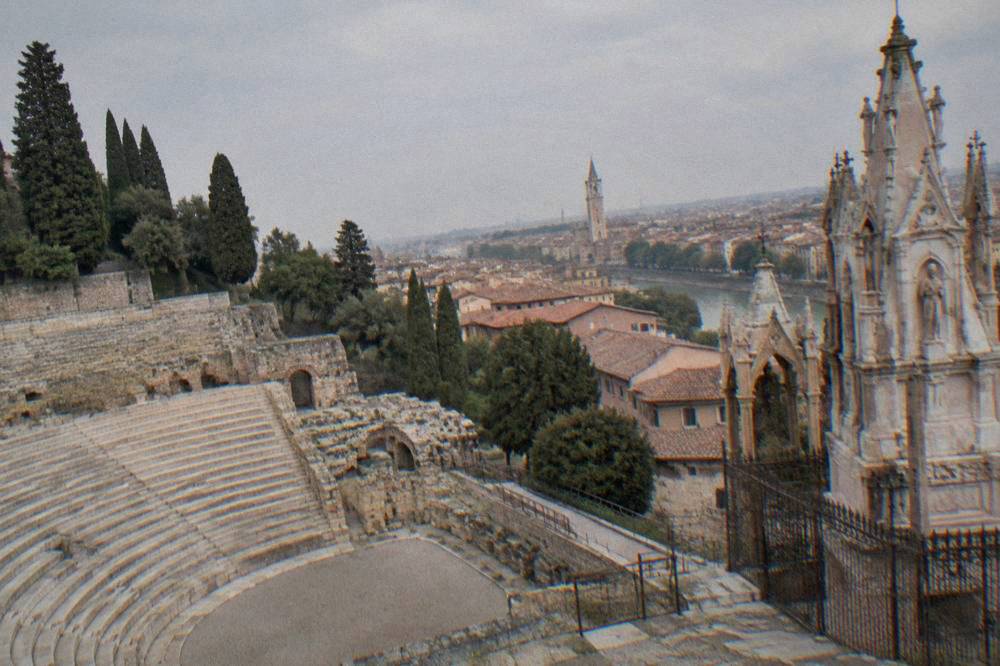
The 1945 destruction of Verona's bridges is part of the same layering: the city's crossings over the Adige, including the Ponte Pietra, were destroyed in the war and rebuilt afterwards. The pack carries no reconstruction dates for individual bridges, so this page records only that the rebuilding happened after the destruction and that today's crossings are modern reconstructions on ancient lines.
For travellers who want the era-by-era story told on location, the Small-Group History Tour of Highlights & Hidden Gems covers the Roman, Scaligeri and Venetian layers in one walk, with entry options; details and current pricing render on its own listing below.
Why Is Romeo And Juliet Part Of Verona History At All?
The Romeo and Juliet story reached Verona through literature, not the other way round: Luigi da Porto wrote the first version set in Verona in 1531, Matteo Bandello adapted it in 1554, and Arthur Brooke's 1562 poem was Shakespeare's main source, per the historical accounts published by Verona's tourism office. Shakespeare never visited Verona, and the balcony at Juliet's House was added in 1940, from a Roman sarcophagus, so it is not original to any medieval house.
The city's own tourism pages are blunt about the mechanics of the legend. Da Porto chose Verona as the setting, drawing on Dante's reference to the Montecchi and Cappelletti factions, and Shakespeare followed his sources without ever travelling to Italy for the play. The bronze statue of Juliet in the courtyard is by Nereo Costantini, dated 1969 and placed in the courtyard in 1972, with a replacement copy now standing outside and the original kept indoors; the tourism office also documents the custom of touching the statue's right breast for good fortune, which is why the bronze is polished smooth at that spot.
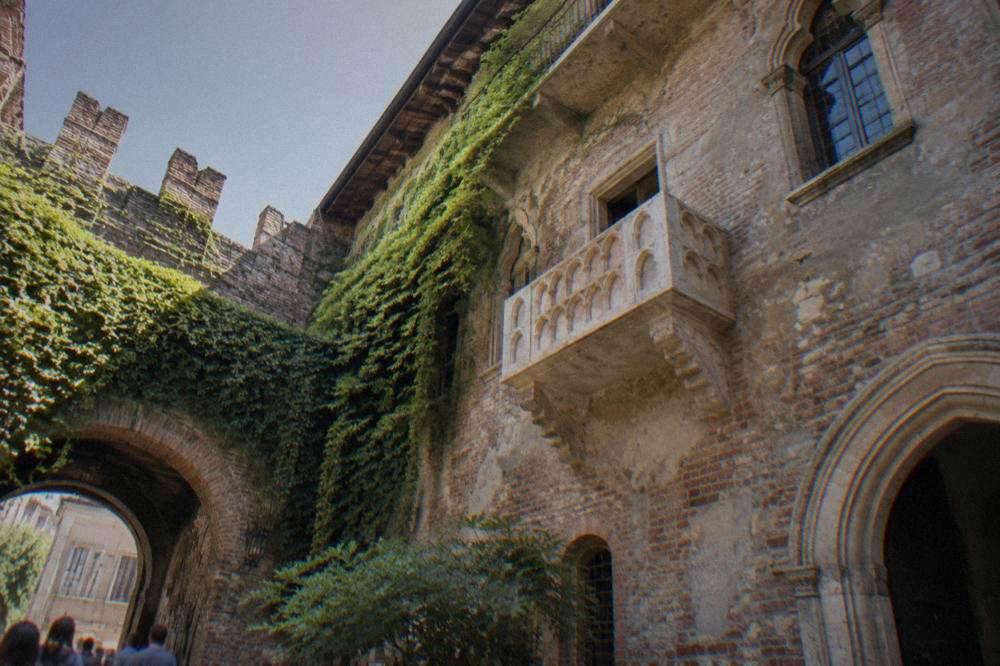
Since 1 April 2026 the courtyard itself is ticketed, a change many older guides still get wrong. Access is via the Teatro Nuovo on Piazzetta Navona, with online booking required even for VeronaCard holders.
| Casa di Giulietta (from 1 April 2026) | Price | Notes |
|---|---|---|
| Courtyard route | 5 EUR | Online booking required |
| House and balcony route | 12 EUR | Includes courtyard |
| Under 5 | Free | Per the city's pages |
| VeronaCard holders | Free | Booking still required online |
The full story of the legend, the literary chain and the courtyard's changes is told on the Romeo and Juliet in Verona page, which carries the same sourced figures in more detail.
What Medieval And Renaissance Verona Can You Visit Now?
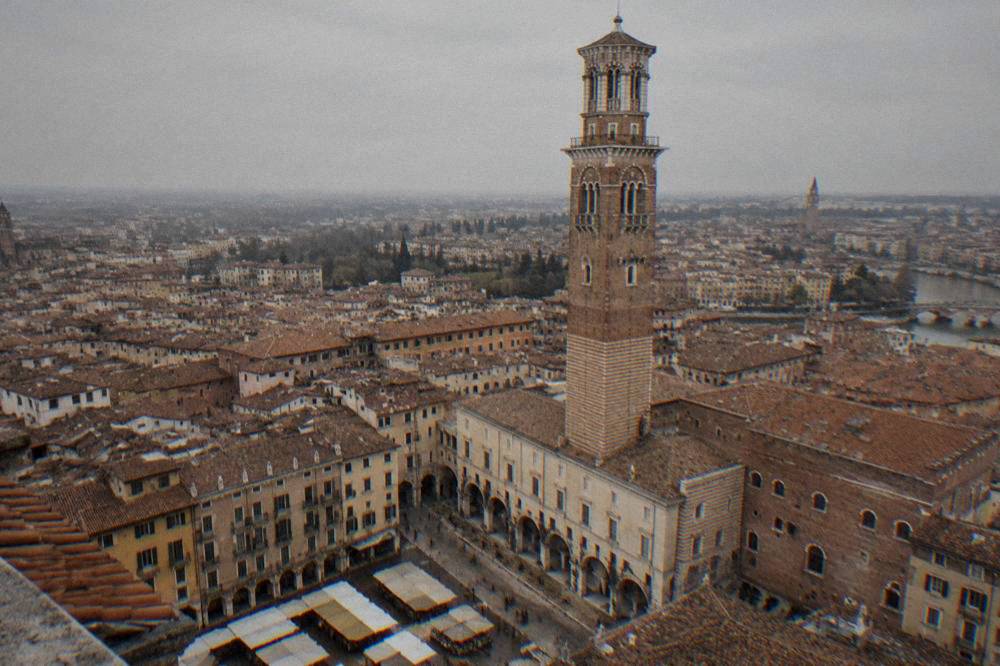
Four named civic sights carry the medieval and later city: the Torre dei Lamberti, reported at 6 euro full and free with VeronaCard per the tower's own site; the Castelvecchio museum, reported at 9 euro full, 6 euro reduced and 2 euro for ages 18 to 25; the Teatro Romano with its archaeological museum, reported at about 9 euro; and the Scaligeri tombs, tied to the same-day civic ticket. Church interiors are covered by the VeronaCard's Chiese Vive convention.
The Torre dei Lamberti tower over Piazza delle Erbe and the Castelvecchio castle-museum by the Adige are the two landmarks where medieval Verona is most legible. Reported hours for the tower stretch to about 21:00 in the summer season, per torredeilamberti.it, and the Castelvecchio museum is reported open Tuesday to Sunday, 10:00 to 18:00, closed Monday. Both figures are reported by their own sites, not independently confirmed, so check the current hours before a dedicated trip. No architect, construction date or restoration year for either building appears in the source material, and this page invents none. Church interiors, including the Duomo complex, San Zeno, Sant'Anastasia and San Fermo, fall under the card's church coverage, and no separate church prices are given.
| Civic sight | Reported entry | Reported hours | VeronaCard |
|---|---|---|---|
| Torre dei Lamberti | 6 EUR full | Daily, summer to about 21:00 | Free |
| Castelvecchio museum | 9 / 6 / 2 EUR | Tue to Sun 10:00 to 18:00 | Free |
| Teatro Romano and museum | About 9 EUR | Tue to Sun, about 10:00 to 18:00 | Free |
| Museo Lapidario Maffeiano | Civic ticket | Tue to Sun, about 10:00 to 18:00 | Free |
| Arche Scaligere | Civic same-day tie-in | Limited | Free |
All rows above are reported by the sites named in the city's own listings; hours shift with seasons and events, and the Arena's show calendar can move closing times across the civic network, so the standing advice is to confirm on each site the same week you travel.
What Does UNESCO Recognition Mean For Verona's Historic Centre?
The "City of Verona" was inscribed on the UNESCO World Heritage List in 2000, under criteria (ii) and (iv), recognizing the city's urban evolution and its exceptional preserved fortified core, per the official listing and the Comune di Verona's UNESCO pages. The inscription covers the historic centre inside the Adige loop, the same area that today operates as a camera-enforced limited-traffic zone, with non-resident car entry capped at four entries a month in booked windows.
The Comune's own notice sets out the ZTL rules: Monday to Friday entries are possible in windows from 10:00 to 18:00 and 20:00 to 23:00, with weekend and holiday windows from 10:00 to 13:30, and hotel guests drive in free when the hotel registers the plate. For a history-focused visit this matters little, since the entire inscribed centre is walkable, and the getting around Verona page covers the 1.50 euro urban bus single and the ATV network that frames any walking plan.
The VeronaCard ties the historic sites together. Since 1 September 2026 the card is digital, issued through the "Your Verona" web app.
| VeronaCard (from 1 Sept 2026) | With ATV transport | Without transport |
|---|---|---|
| 24 hours | 33 EUR | 29 EUR |
| 48 hours | 38 EUR | 32 EUR |
Per the Comune's notice, the card covers the Arena, Castelvecchio, the Torre dei Lamberti, Juliet's House (online booking still required), the Teatro Romano, the Lapidario Maffeiano and the Scaligeri tombs, plus the Chiese Vive churches; the airport Aerobus is not included. The VeronaCard guide weighs whether the maths works for a history itinerary; the opera side of the Arena has its own Verona Opera Festival page.
How Do You Explore Verona History On Foot In One Or Two Days?
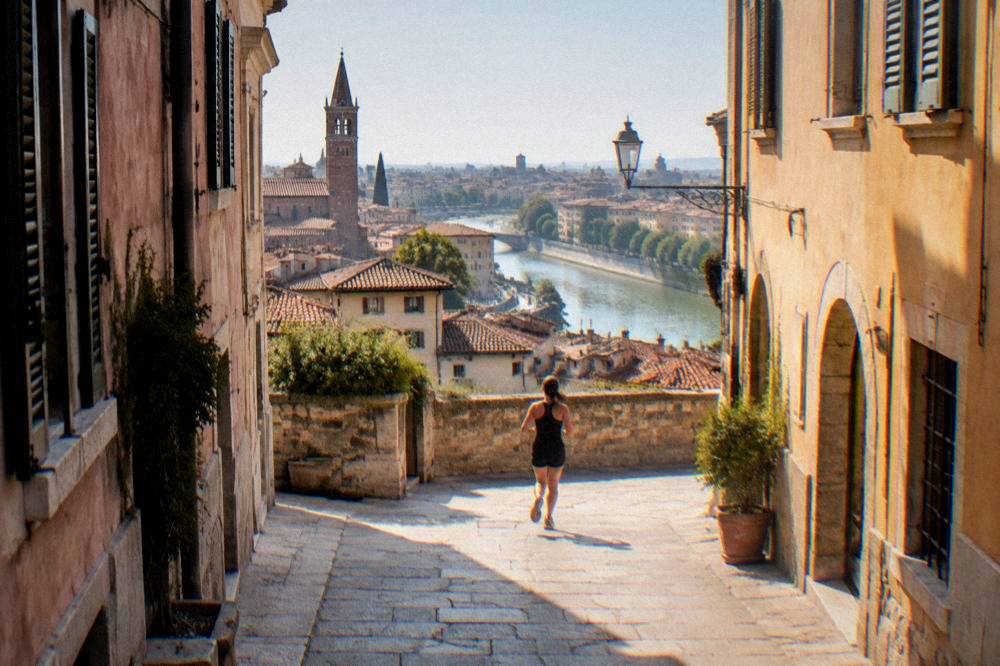
A history walk of Verona runs naturally from Piazza Bra and the Arena east along Via Mazzini to Piazza delle Erbe, the Torre dei Lamberti and the Scaligeri tombs, then across the Ponte Pietra to the Roman Theatre and up to Castel San Pietro, a route the historic centre's compact inscribed core makes possible without transport. The urban bus single is 1.50 euro, per ATV's own fare page, and the whole centre sits inside the limited-traffic zone, so walking is the default.
Two eras pair well with a lunch break: the Roman morning, Arena and theatre, and the medieval afternoon, squares, tower and castle-museum. A guided option with priority entry to the Arena covers the amphitheatre's history with a local guide, and its listing carries the current price and availability.
For travellers splitting history with the table, a food walk through the historic lanes pairs traditional Veronese cooking, pastissada de caval, risotto all'Amarone and bollito with pearà, with the osterie of the old centre; the what to eat in Verona and best restaurants in Verona pages carry that side of the city, and the city's own Christmas sweet, pandoro, has its own pandoro history page.
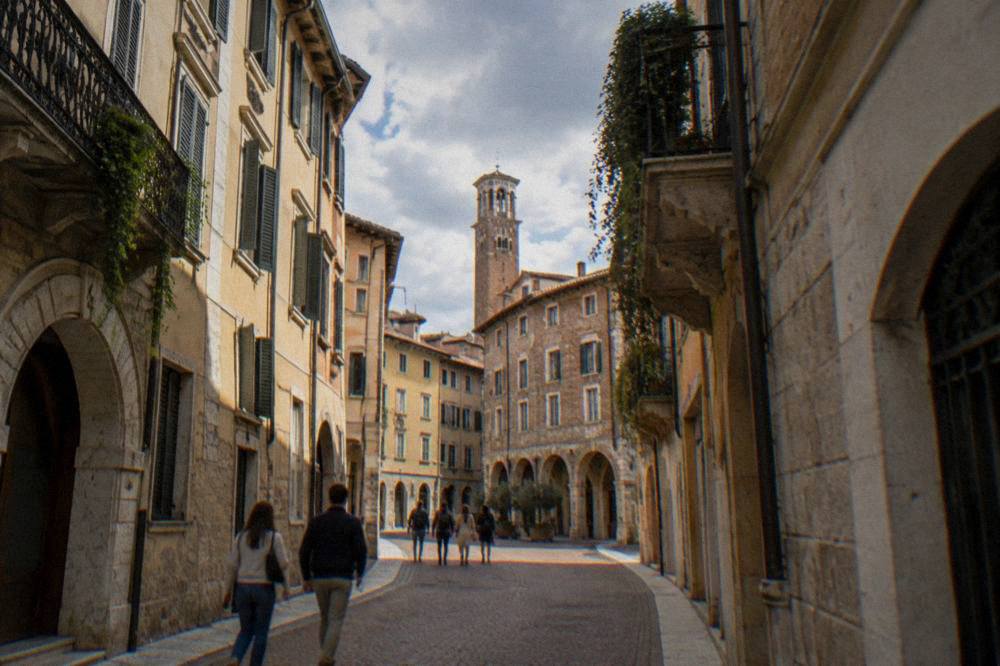
Longer stays fit the pattern into the one day in Verona from Venice itinerary or the wider northern Italy itinerary, and the Venice connection is a frequent question, covered on can you do Verona and Venice in one day and which is nicer, Venice or Verona.
Which Day Trips Add Context To Verona's History?
The historical countryside around Verona sits within an hour by road: Valpolicella's wine hills about 25 minutes and 21 km away, the walled town of Soave about 33 minutes and 33 km, Vicenza about 48 minutes, Mantua about 54 minutes and Padua about 67 minutes, all computed over standard road routing in free-flow conditions, with Venice about 85 minutes and 122 km and a reported 1 hour to 1 hour 15 minutes by train from Porta Nuova.
Those figures are computed road times, not timetables, and rail and bus schedules vary. Sirmione, on Lake Garda about 40 minutes' drive away, adds a Roman villa to the picture, the Grotte di Catullo, reported at 10 euro full with a 20 euro combined ticket that includes the Scaliger Castle; the lake's own history, ferries and towns are covered on the Venice day-trips page context and the wider regional guides, including Venice to Verona for the rail route that connects the two historic cities.
| Day trip from Verona | Road distance | Drive time (free-flow) |
|---|---|---|
| Valpolicella (Sant'Ambrogio) | 21 km | About 25 min |
| Soave | 33 km | About 33 min |
| Vicenza | 65 km | About 48 min |
| Mantua | 59 km | About 54 min |
| Padua | 93 km | About 67 min |
| Venice | 122 km | About 85 min |
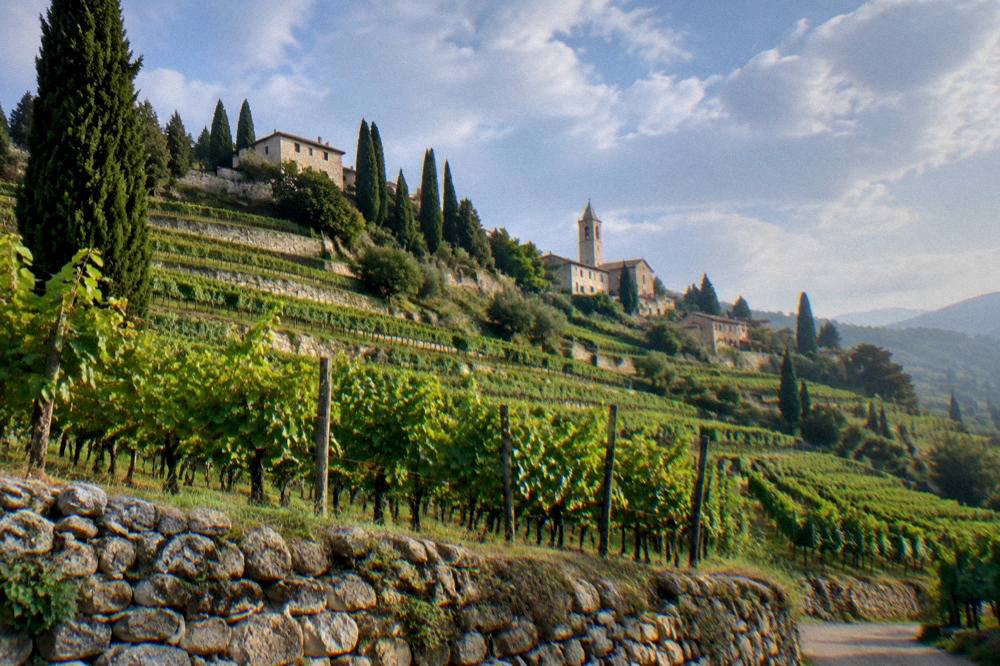
The Valpolicella hills, where the Amarone DOCG is made from dried Corvina, Corvinone and Rondinella grapes, carry the rural half of Veronese history, and a truffle-hunting excursion with lunch in the countryside gives the food-history thread a guided anchor; its listing carries the current details.
Planning the timing around the seasons is worth a paragraph: the best time to visit Verona and Verona weather pages carry the ERA5 reanalysis normals for 1991 to 2020, which show January mean highs of 7.3 C and July mean highs of 29.3 C, with November the wettest month at 118.2 mm. The Arena opera season runs through the summer, and the winter months bring the 1-euro first-Sunday Arena pricing from November to March, a quiet fit for a history-focused off-season visit.
Common Questions About Verona History
How old is the Verona Arena?
The Arena was built about 30 AD, per the Fondazione Arena's own history pages, which cite coin evidence from 30 to 42 AD. The same source describes it as older than the Colosseum, dated about 80 AD, and as the third-largest surviving Roman amphitheatre after the Colosseum and Capua.
Did gladiators fight in the Verona Arena?
Yes. The Arena's own historical materials describe gladiator games and animal hunts as the building's original entertainments in the Roman period.
What destroyed the outer ring of the Arena?
An earthquake in 1117 destroyed the outer stone ring; only the Ala wing of the facade survives today, per the Arena's own history pages. Seating areas were rebuilt in stages from the sixteenth century onward.
Did Shakespeare ever visit Verona?
No. The historical accounts published by Verona's tourism office state that Shakespeare never visited the city, and that he set Romeo and Juliet there by following his literary sources: Luigi da Porto's 1531 novella, Matteo Bandello's 1554 version and Arthur Brooke's 1562 poem.
Is Juliet's balcony original?
No. The balcony was added in 1940, using stone from a Roman sarcophagus, per the city's tourism pages, so it is not original to any medieval house.
When did Verona become a UNESCO World Heritage Site?
The "City of Verona" was inscribed on the UNESCO World Heritage List in 2000, under criteria (ii) and (iv), recognizing its urban evolution and fortified historic core.